Mississippi Jury Instruction - Product Liability
About this form
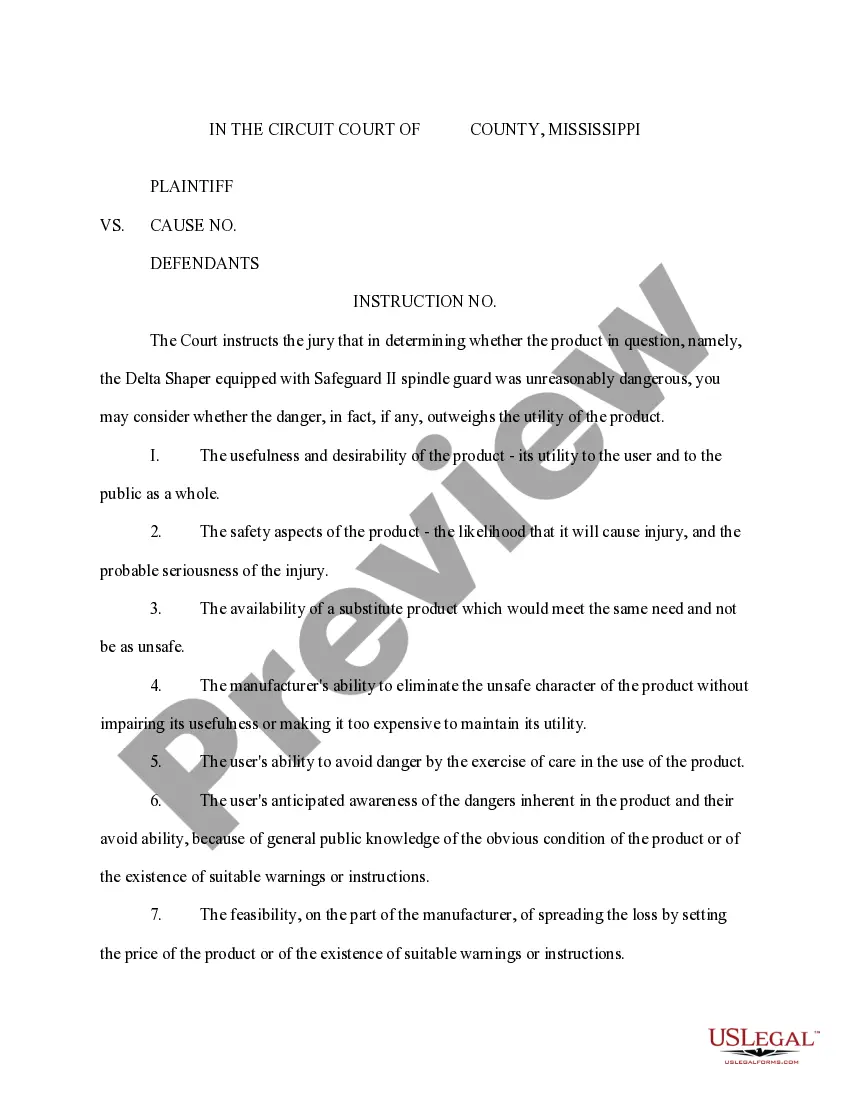
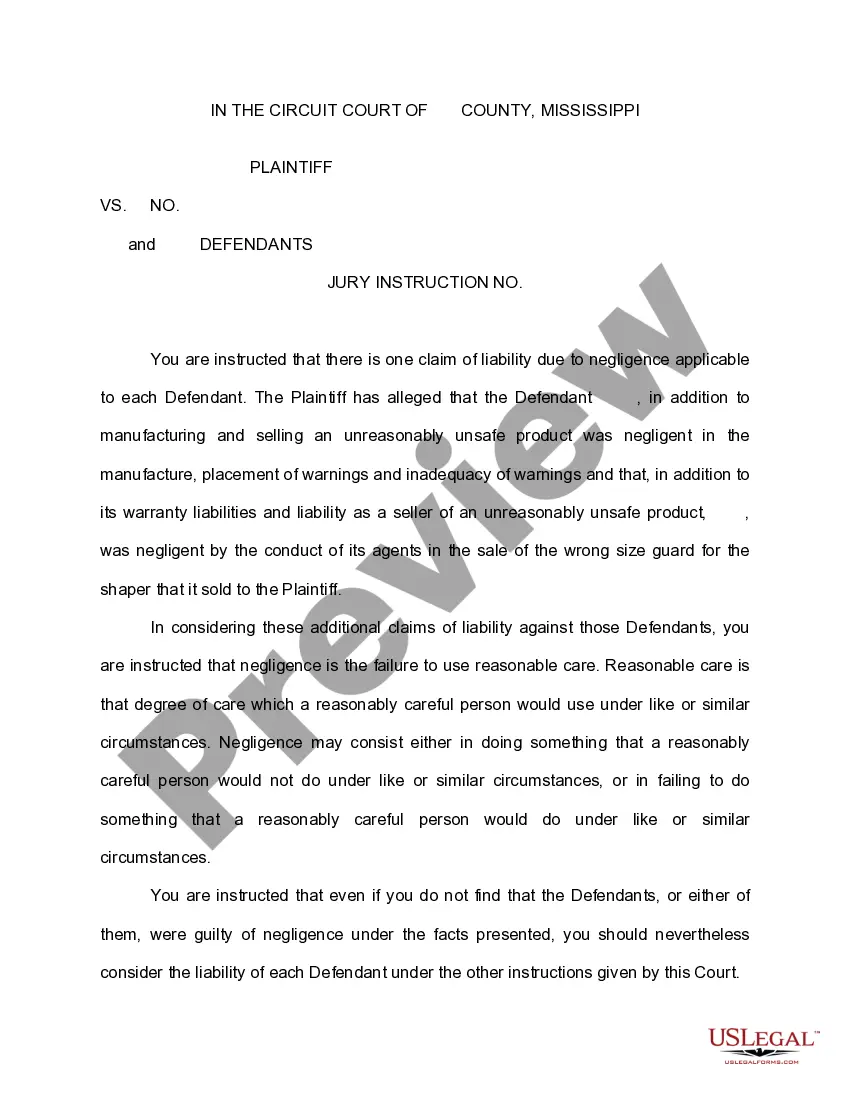
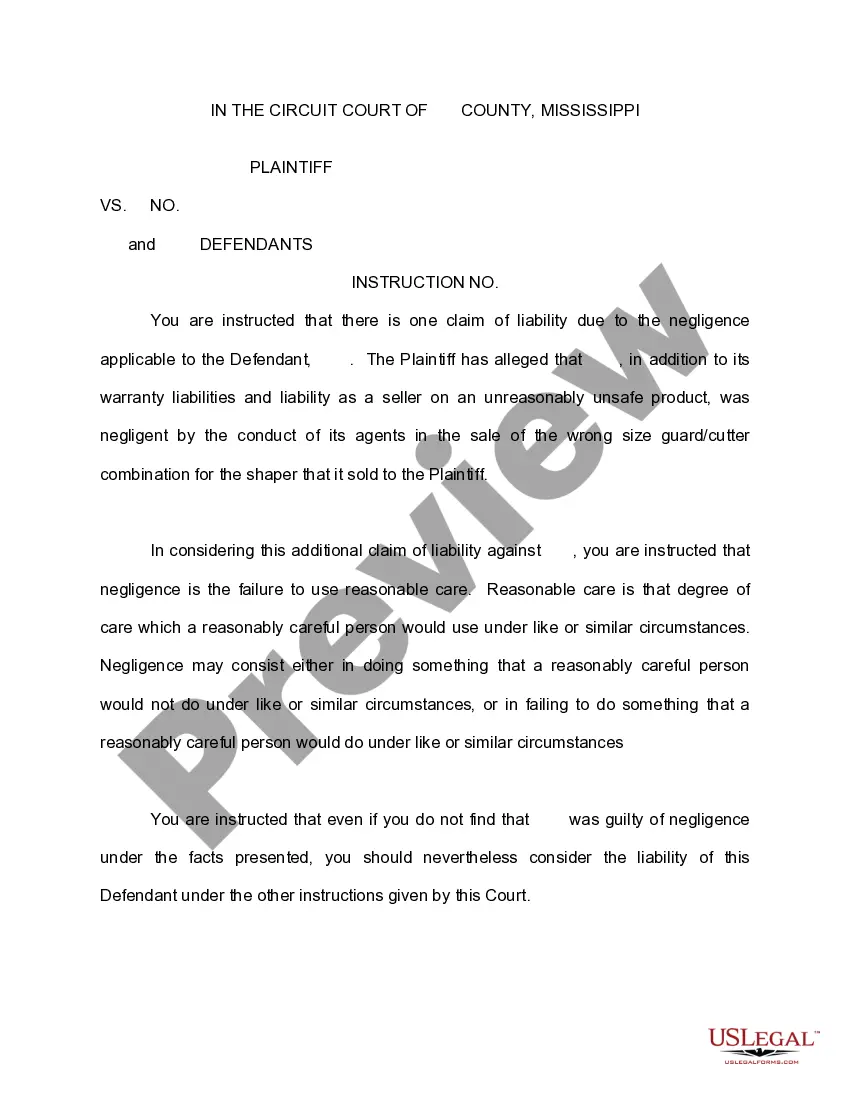
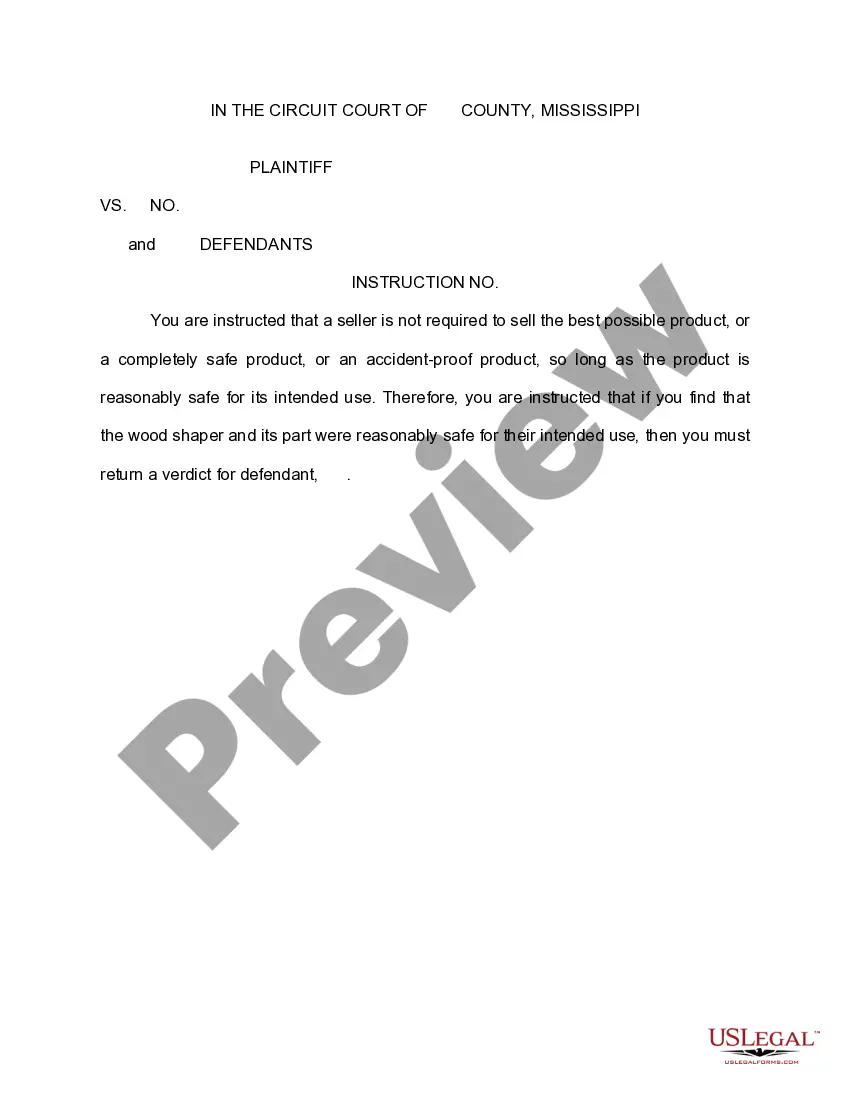
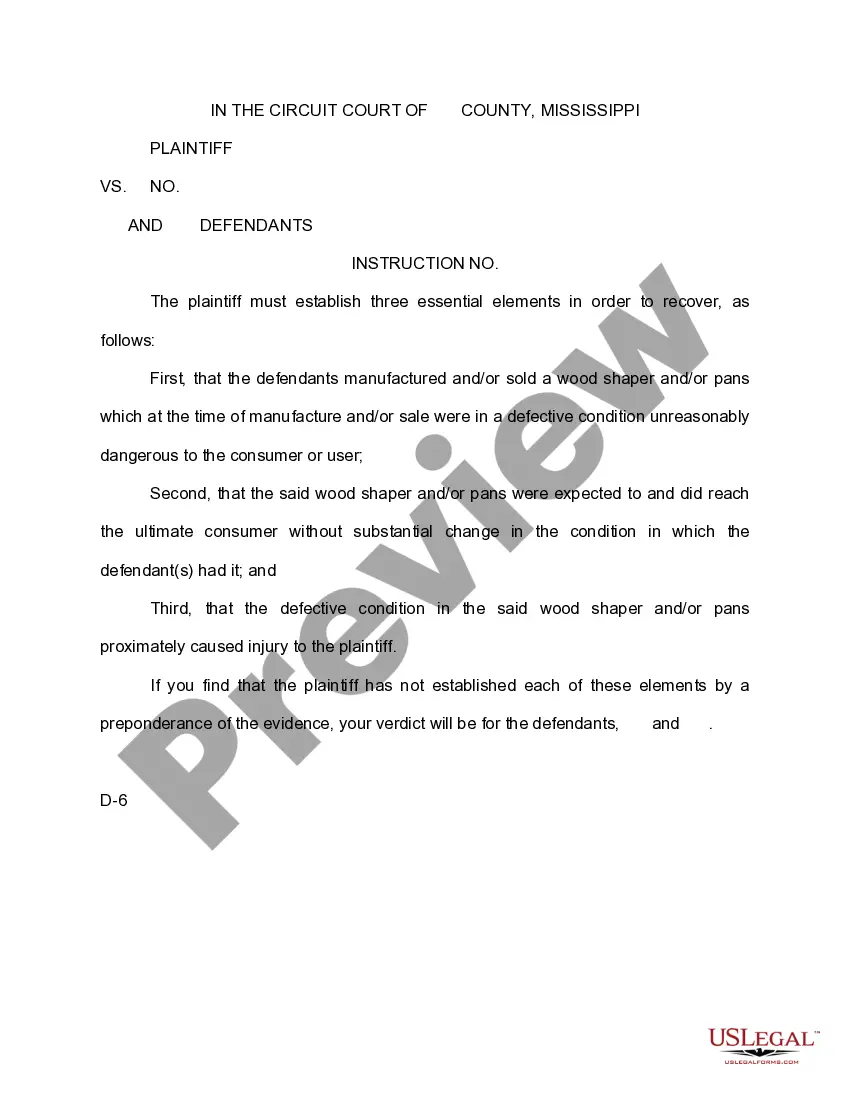
This Jury Instruction - Product Liability form provides sample language for jury instructions specifically related to product liability cases in Mississippi. It outlines factors the jury should consider to determine whether a product is deemed defective or unreasonably dangerous. Understanding this form is crucial for legal professionals, particularly in cases involving mishaps related to product usage.
Main sections of this form
- Usefulness and desirability of the product, considering its utility to users and the public.
- Safety aspects, focusing on the likelihood and seriousness of potential injuries.
- Availability and feasibility of substitute products that are safer.
- Manufacturer's ability to eliminate unsafe characteristics without compromising product utility.
- User's capacity to avoid danger through careful use of the product.
- User's awareness of inherent dangers and their ability to avoid them based on public knowledge and warnings.
- Manufacturer's potential for spreading financial loss through pricing or adequate warnings.
Common use cases
This form is useful in any product liability trial where jury instructions are needed. It can be employed in cases involving defective products that have resulted in injury or damage, guiding jurors in their deliberation by presenting legal standards and considerations specific to product safety and liability.
Who this form is for
- Attorneys handling product liability cases in Mississippi.
- Judges who need standardized jury instructions for product liability trials.
- Legal professionals seeking guidance on product liability issues.
- Law students studying the intricacies of jury instructions in tort law.
Instructions for completing this form
- Review the sample language to ensure it aligns with current case law in Mississippi.
- Determine the facts of your case and identify relevant safety aspects unique to the product in question.
- Adapt the instruction language as per the specifics of your case, ensuring clarity and legal compliance.
- Present the final instruction for approval or use in the trial setting.
- Ensure all parties involved in the trial have a copy of the jury instructions to facilitate understanding.
Is notarization required?
This form does not typically require notarization to be legally valid. However, some jurisdictions or document types may still require it. US Legal Forms provides secure online notarization powered by Notarize, available 24/7 for added convenience.
Get your form ready online
Our built-in tools help you complete, sign, share, and store your documents in one place.
Make edits, fill in missing information, and update formatting in US Legal Forms—just like you would in MS Word.
Download a copy, print it, send it by email, or mail it via USPS—whatever works best for your next step.
Sign and collect signatures with our SignNow integration. Send to multiple recipients, set reminders, and more. Go Premium to unlock E-Sign.
If this form requires notarization, complete it online through a secure video call—no need to meet a notary in person or wait for an appointment.
We protect your documents and personal data by following strict security and privacy standards.

Make edits, fill in missing information, and update formatting in US Legal Forms—just like you would in MS Word.

Download a copy, print it, send it by email, or mail it via USPS—whatever works best for your next step.

Sign and collect signatures with our SignNow integration. Send to multiple recipients, set reminders, and more. Go Premium to unlock E-Sign.

If this form requires notarization, complete it online through a secure video call—no need to meet a notary in person or wait for an appointment.

We protect your documents and personal data by following strict security and privacy standards.
Common mistakes to avoid
- Using outdated language that does not comply with current Mississippi case law.
- Failing to address all relevant safety aspects of the product.
- Neglecting to tailor the instructions to the specifics of the case being tried.
Why use this form online
- Convenience of downloading and editing the form to fit specific case needs.
- Access to reliable templates drafted by licensed attorneys.
- Immediate availability, allowing timely preparation for trials.
Legal use & context
- This form serves as guidance for jury instructions based on product liability laws in Mississippi.
- Jury instructions are crucial in ensuring jurors understand the legal framework surrounding product defects.
- Properly structured instructions can significantly impact the outcome of product liability cases.
Looking for another form?

Form popularity
FAQ
Product liability refers to a manufacturer or seller being held liable for placing a defective product into the hands of a consumer. Responsibility for a product defect that causes injury lies with all sellers of the product who are in the distribution chain.
Product Liability: What You Need To Know About Manufacturer's Warranties. Product liability allows a person injured by a product to bring a claim against the manufacturer and/or the supplier of the product. These claims can be based on different theories such as negligence, strict liability, and warranty.
Products Liability is a field of tort law which concerns the responsibility of the manufacturer or vendor of a product to ensure that products are safe and do not cause injury.Contact a product liability lawyer to consult your case.
Product liability negligence occurs when a supplier, such as a wholesaler, retailer, distributor, manufacturer, or other party in the supply chain, places a product the stream of commerce with inaccurate or inadequate labeling, or manufacturing or design defects or flaws.
Although the particulars vary from state to state, products liability law usually requires that you prove all of the following things (these are called the "elements" in your claim) in order to win: You were injured or suffered losses. The product is defective. The defect caused your injury.
Yes, in many cases a retailer can, indeed, be held liable for a defective product at least if an injury or a death resulted.
There are three types of product defects that can result in product liability cases: Design defects, Manufacturing defects, and Marketing defects.
Generally, any manufacturers as well as any sellers down the distribution chain (i.e., distributors, wholesalers, and retailers) can be held legally responsible for a defective product causing injury.