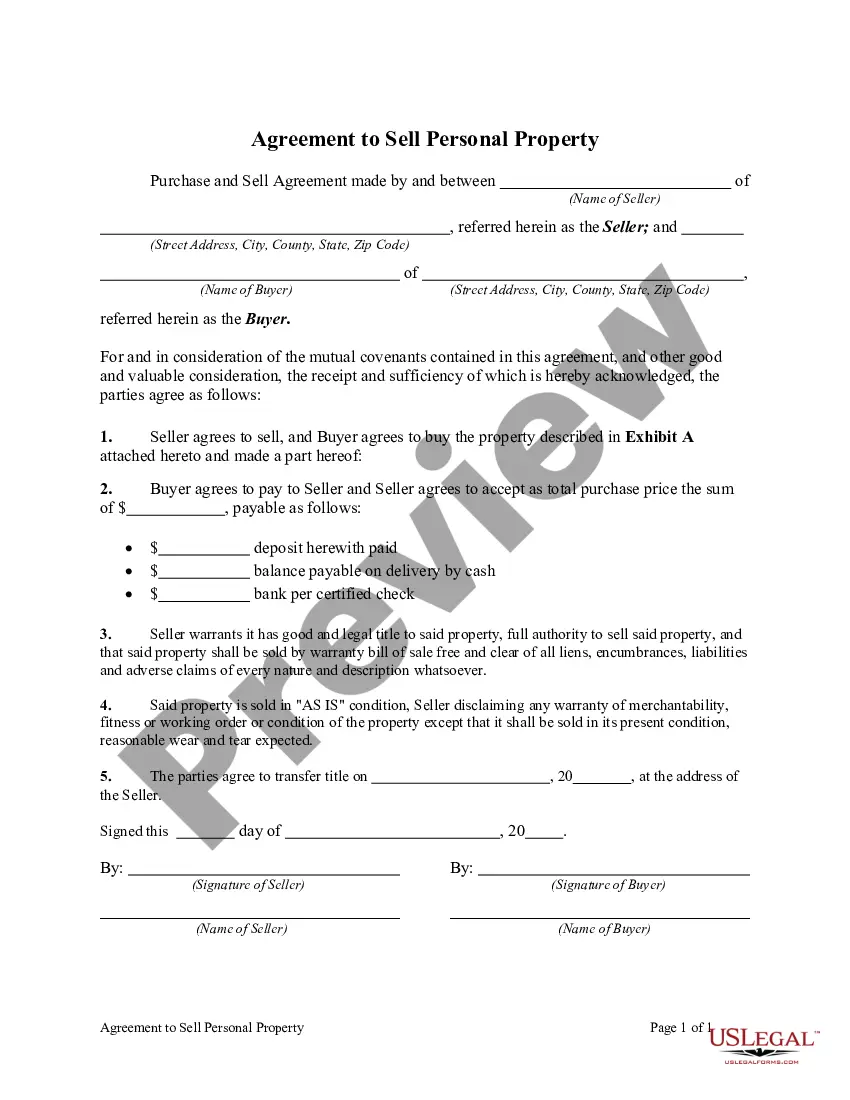
Agreement to Sell Personal Property
What this document covers
The Agreement to Sell Personal Property is a legal document that outlines the terms and conditions under which personal property is sold from one individual (the Seller) to another (the Buyer). This form differentiates from other agreements by specifically addressing the transfer of movable assets, also known as personalty, rather than real estate or financial investments.
Key components of this form
- Identification of the parties involved: Seller and Buyer details.
- Description of the property being sold: outlined in Exhibit A.
- Price and payment terms: details regarding how and when payment is to be made.
- Mutual covenants: obligations and rights of both parties defined in the agreement.
- Signatures: space for both parties to sign, indicating acceptance of terms.
When to use this form
You should use the Agreement to Sell Personal Property when you are looking to sell or purchase movable personal assets. This includes items such as vehicles, furniture, electronics, or other tangible goods. It is particularly useful when a formal agreement is required to prevent misunderstandings between the buyer and seller regarding the specifics of the transaction.
Who should use this form
- Individuals looking to sell personal property to another person.
- Buyers interested in purchasing specific items from a seller.
- People engaged in transactions involving valuable assets that require documentation.
How to complete this form
- Identify the parties: fill in the names and addresses of the Seller and Buyer.
- Describe the property: provide complete details about the property being sold in Exhibit A.
- Specify the sale price: include the agreed amount and payment method.
- Include terms of the agreement: outline any warranties or covenants.
- Sign and date the document: ensure both parties sign to indicate acceptance of terms.
Notarization requirements for this form
In most cases, this form does not require notarization. However, some jurisdictions or signing circumstances might. US Legal Forms offers online notarization powered by Notarize, accessible 24/7 for a quick, remote process.
Get your form ready online
Our built-in tools help you complete, sign, share, and store your documents in one place.
Make edits, fill in missing information, and update formatting in US Legal Forms—just like you would in MS Word.
Download a copy, print it, send it by email, or mail it via USPS—whatever works best for your next step.
Sign and collect signatures with our SignNow integration. Send to multiple recipients, set reminders, and more. Go Premium to unlock E-Sign.
If this form requires notarization, complete it online through a secure video call—no need to meet a notary in person or wait for an appointment.
We protect your documents and personal data by following strict security and privacy standards.

Make edits, fill in missing information, and update formatting in US Legal Forms—just like you would in MS Word.

Download a copy, print it, send it by email, or mail it via USPS—whatever works best for your next step.

Sign and collect signatures with our SignNow integration. Send to multiple recipients, set reminders, and more. Go Premium to unlock E-Sign.

If this form requires notarization, complete it online through a secure video call—no need to meet a notary in person or wait for an appointment.

We protect your documents and personal data by following strict security and privacy standards.
Common mistakes to avoid
- Failing to accurately describe the property, leading to disputes over what is sold.
- Overlooking signatures, making the agreement invalid.
- Not specifying payment terms clearly, which may cause confusion later.
Benefits of using this form online
- Convenience: download the form instantly from anywhere at any time.
- Editability: customize the form easily to fit your specific transaction.
- Reliability: created by licensed attorneys to ensure legal soundness.
Legal use & context
- The Agreement to Sell Personal Property is enforceable in a court of law if properly executed.
- It serves as a clear record of the transaction, reducing the risk of disputes.
Key takeaways
- The Agreement to Sell Personal Property formalizes the sale of movable assets.
- Accurate completion of the form protects both parties in the transaction.
- Review state requirements for potential notarization and legal compliance.
Looking for another form?
Form popularity
FAQ
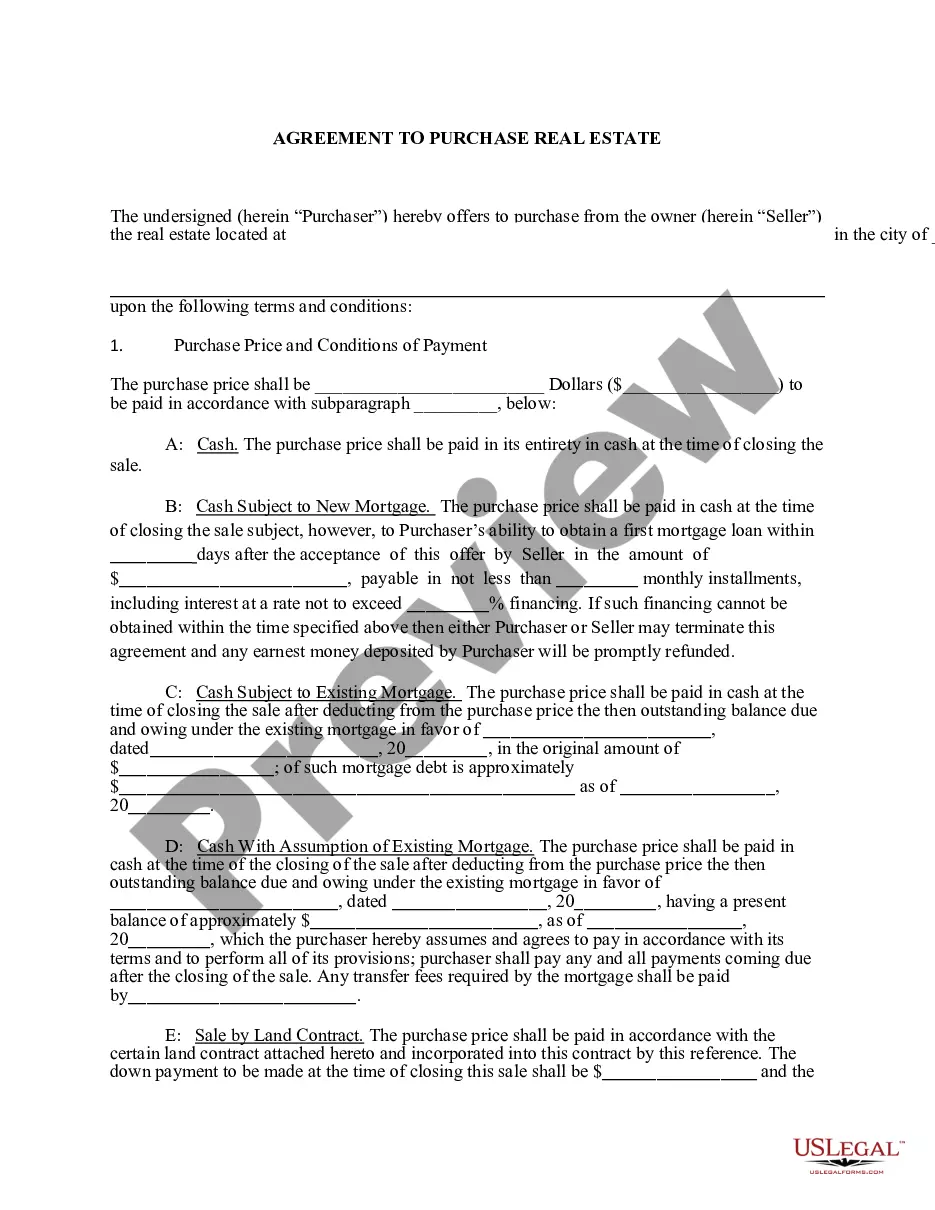
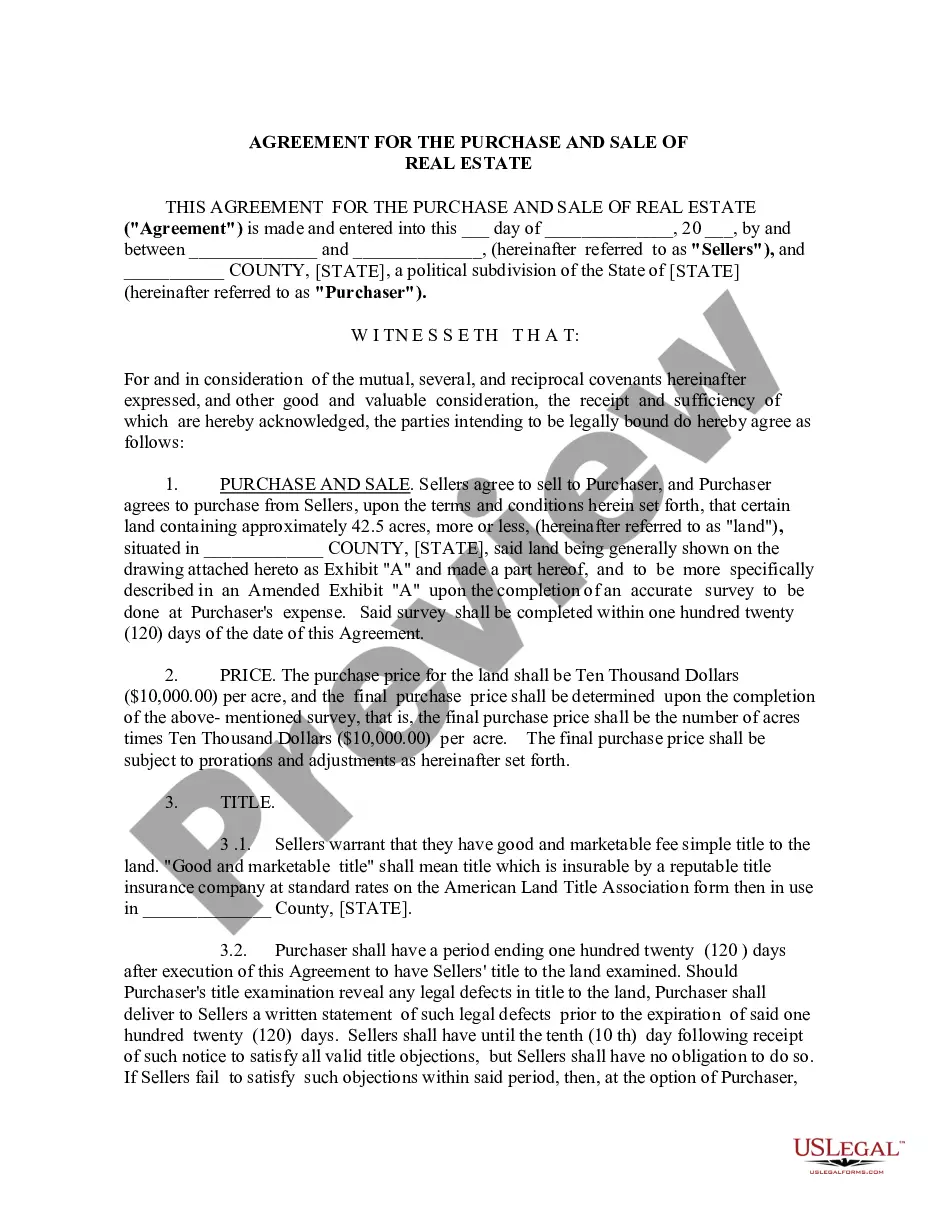
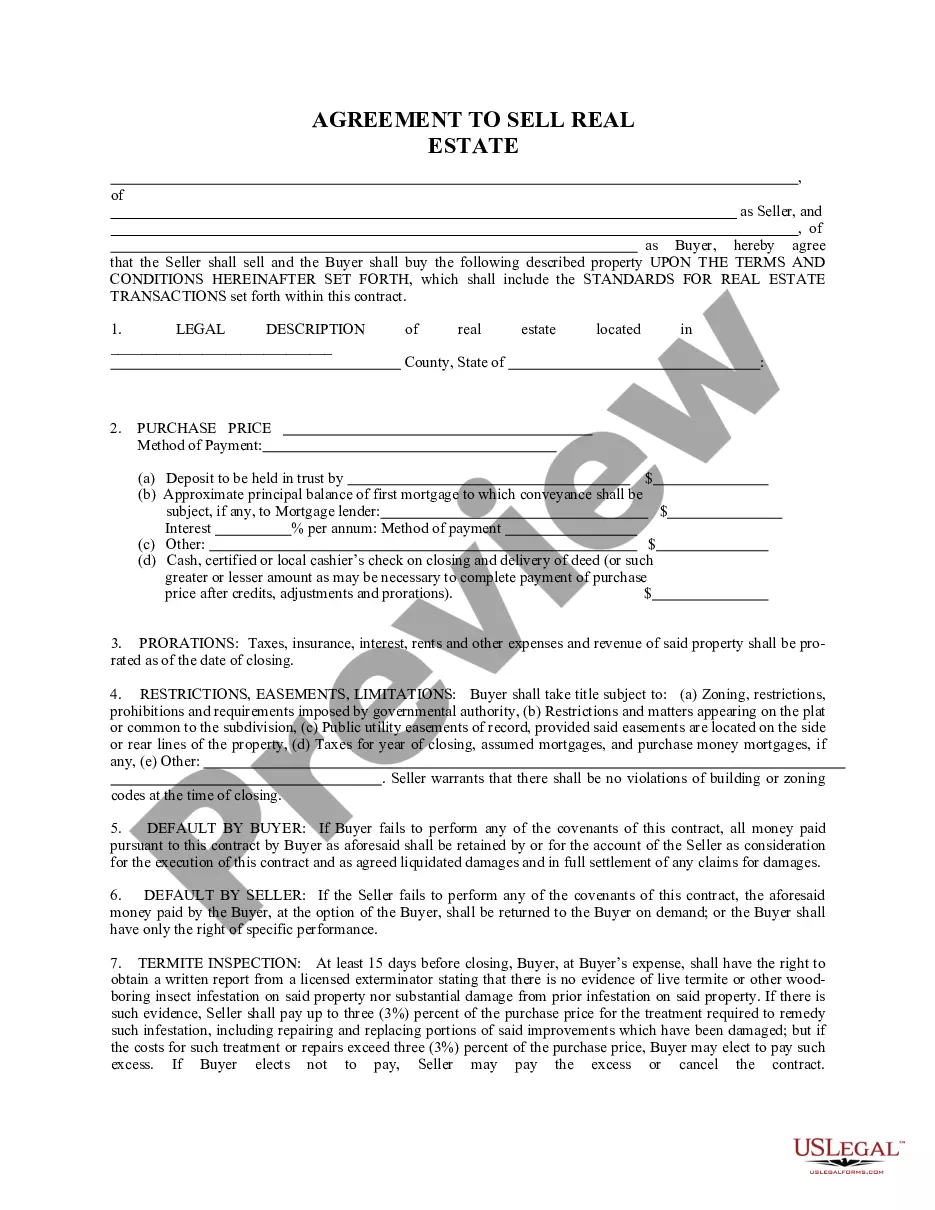
A real estate deal can take a turn for the worst if the contract is not carefully written to include all the legal stipulations for both the buyer and seller.You can write your own real estate purchase agreement without paying any money as long as you include certain specifics about your home.
A real estate deal can take a turn for the worst if the contract is not carefully written to include all the legal stipulations for both the buyer and seller.You can write your own real estate purchase agreement without paying any money as long as you include certain specifics about your home.
The identity of the buyer and seller. A description of the property being purchased. The purchase price. The terms as to how and when payment is to be made. The terms as to how, when, and where the goods will be delivered to the purchaser.
A real estate deal can take a turn for the worst if the contract is not carefully written to include all the legal stipulations for both the buyer and seller.You can write your own real estate purchase agreement without paying any money as long as you include certain specifics about your home.
_________/- (Rupees ____________________________), will be received by the FIRST PARTY from the SECOND PARTY, at the time of registration of the Sale Deed, the FIRST PARTY doth hereby agree to grant, convey, sell, transfer and assign all his rights, titles and interests in the said portion of the said property, fully
1 Access The Desired Real Estate Template To Record A Purchase Agreement. 2 Introduce The Agreement, Seller, Buyer, And Concerned Property. 3 Define The Basic Terms Of The Real Estate Purchase. 4 Record Any Property The Buyer Must Sell To Complete This Purchase.
The seller's agent is typically the person who draws up a real estate purchase agreement.
1 Stating Basic Information in Your Contract. 2 Setting Forth the Payment Terms. 3 Disclosing Important Information to the Buyer. 4 Advising Parties About Closing Procedures.