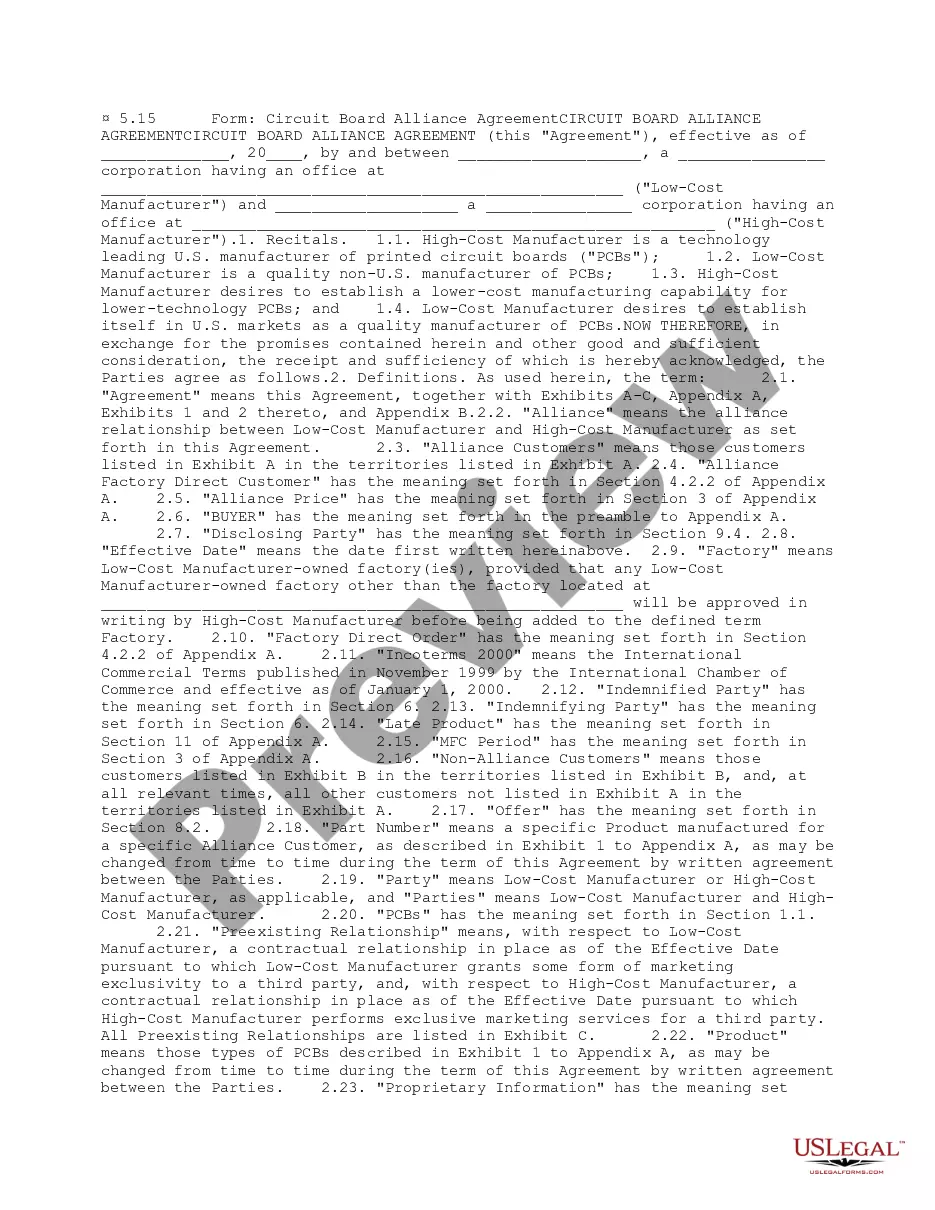
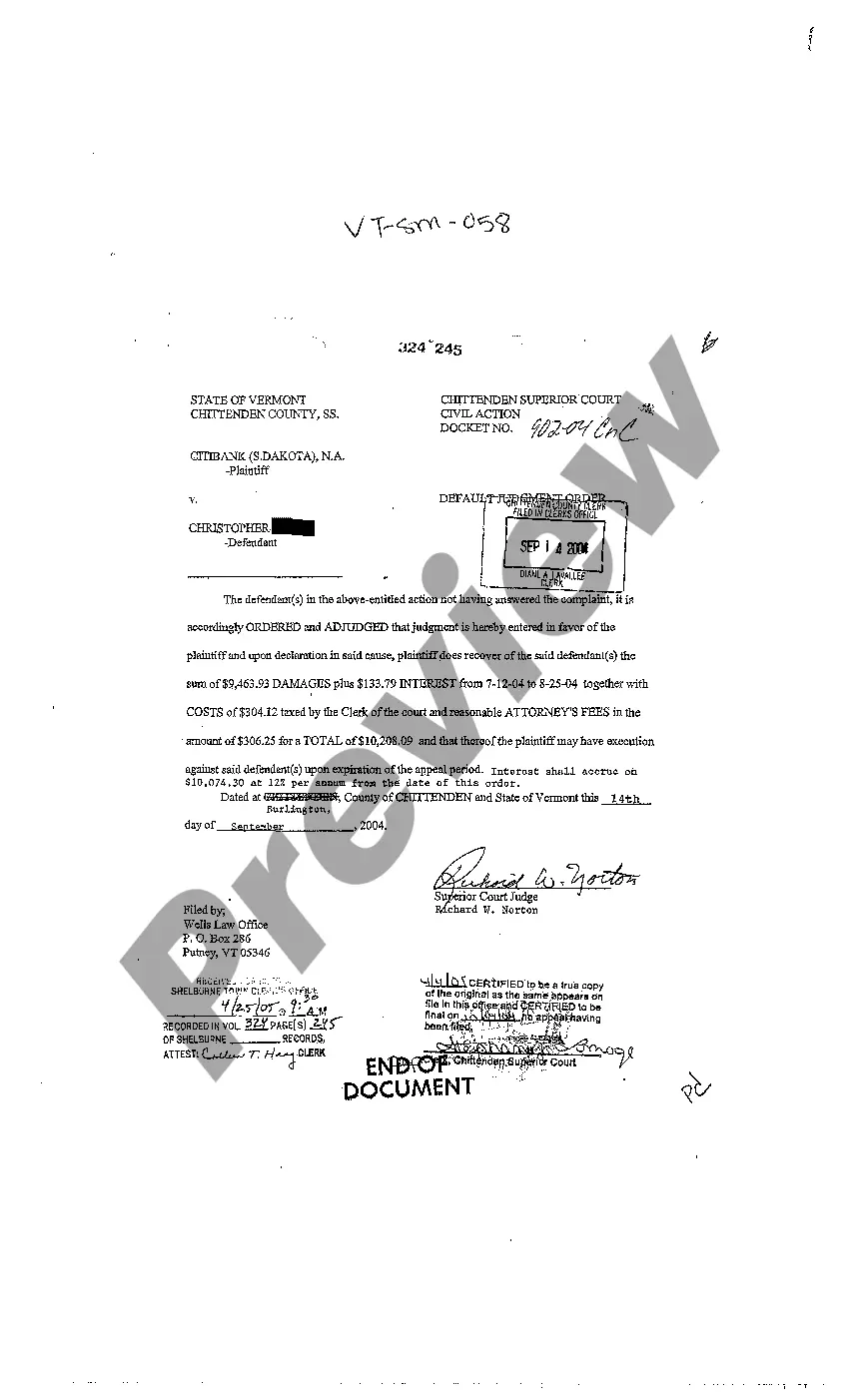
Vermont Default Judgment Order
Description
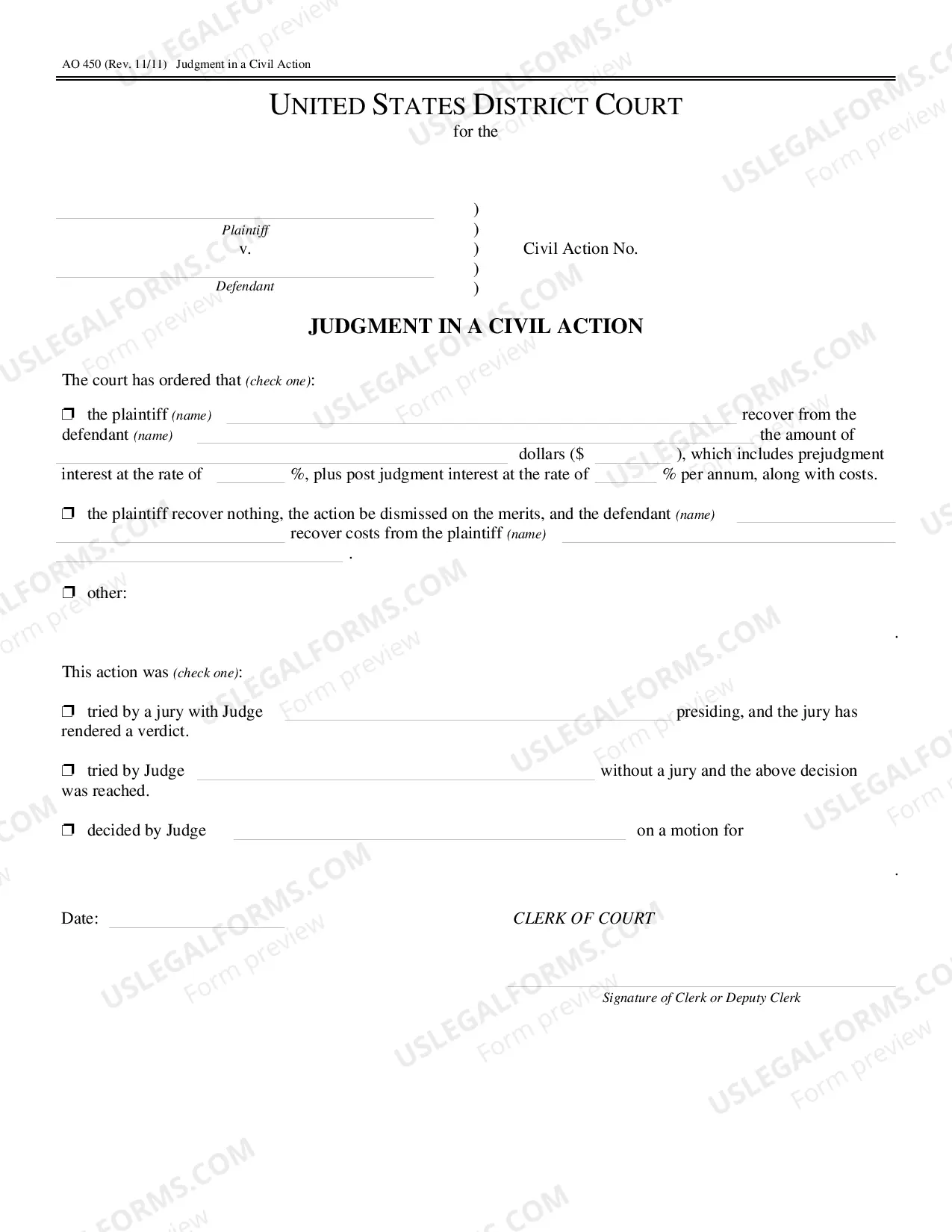
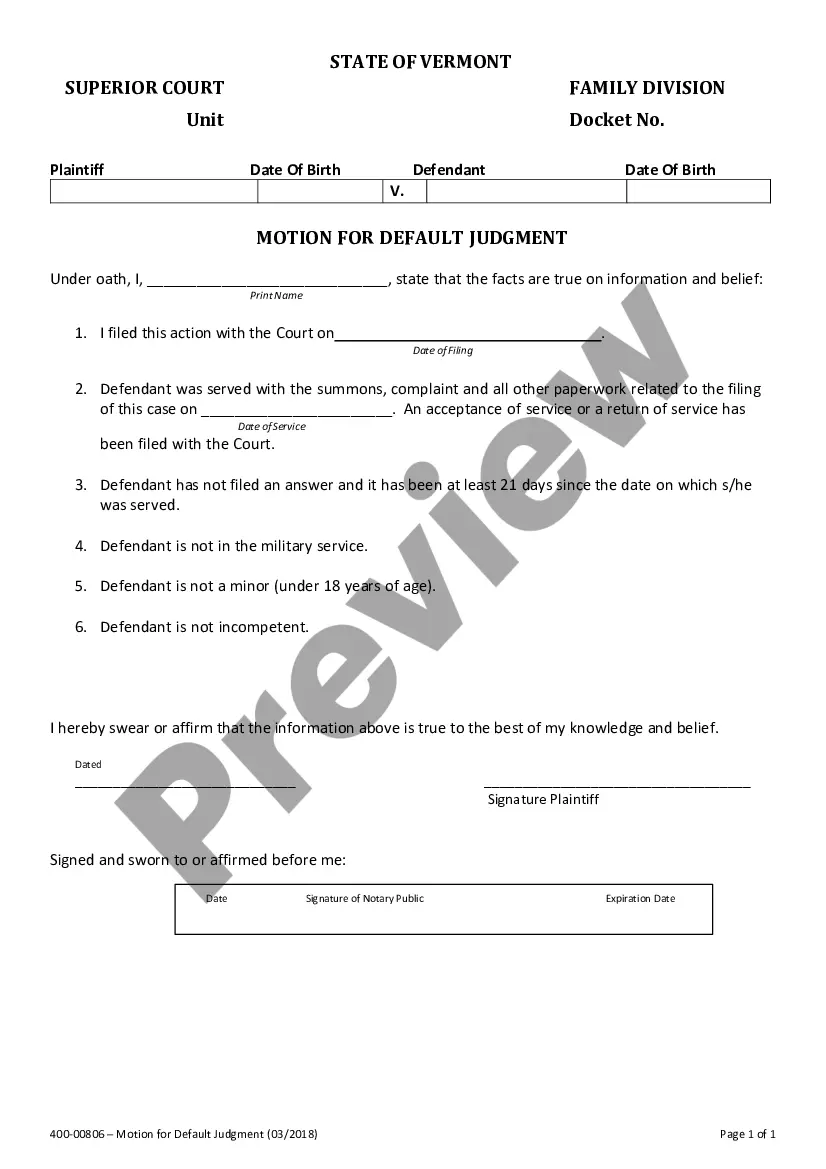
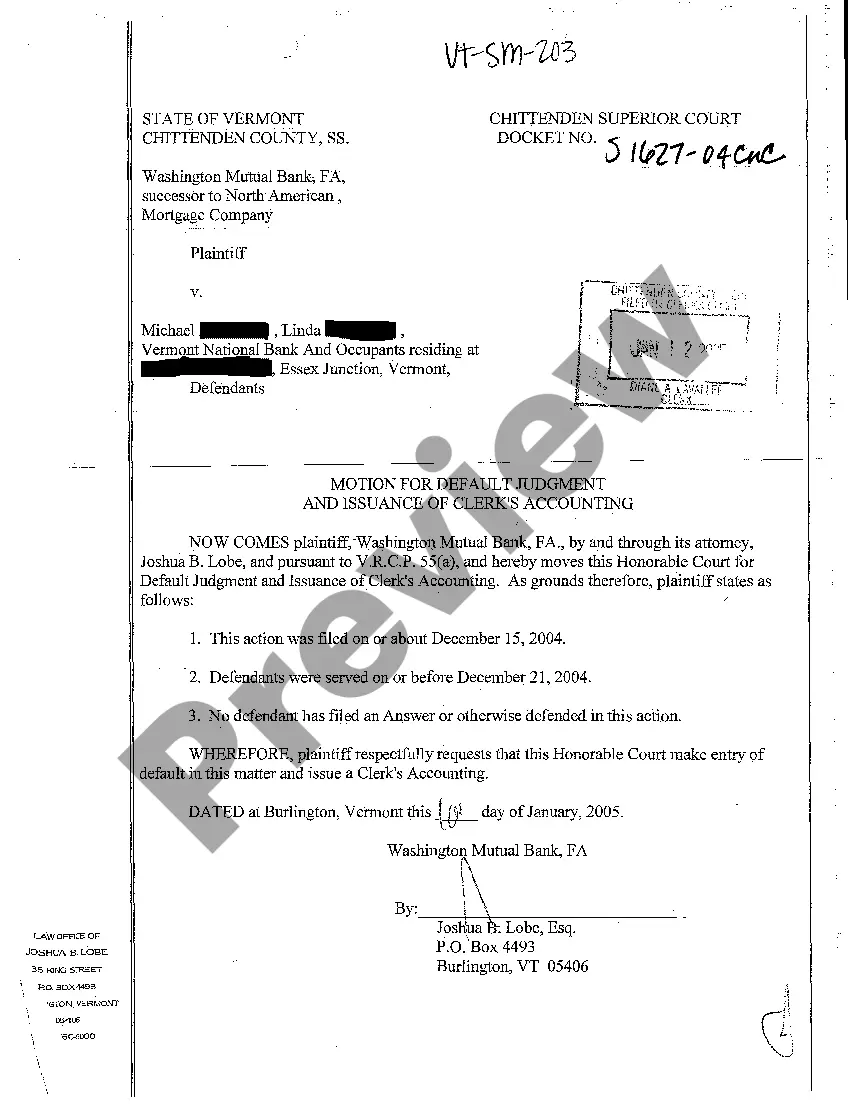
How to fill out Vermont Default Judgment Order?
Searching for a Vermont Default Judgment Order online can be stressful. All too often, you see documents that you simply think are ok to use, but discover afterwards they’re not. US Legal Forms offers more than 85,000 state-specific legal and tax documents drafted by professional legal professionals in accordance with state requirements. Have any form you are searching for in minutes, hassle-free.
If you already have the US Legal Forms subscription, just log in and download the sample. It’ll immediately be added in in your My Forms section. In case you don’t have an account, you must register and select a subscription plan first.
Follow the step-by-step instructions listed below to download Vermont Default Judgment Order from our website:
- Read the form description and press Preview (if available) to check whether the form meets your expectations or not.
- If the form is not what you need, find others using the Search engine or the listed recommendations.
- If it is right, click Buy Now.
- Choose a subscription plan and create an account.
- Pay with a credit card or PayPal and download the document in a preferable format.
- Right after getting it, you may fill it out, sign and print it.
Get access to 85,000 legal templates straight from our US Legal Forms library. Besides professionally drafted samples, users will also be supported with step-by-step guidelines concerning how to find, download, and complete forms.
Form popularity
FAQ
If you do not think the default judgment was appropriately entered against you, you must file a motion with the court asking the judge to set aside (void or nullify) the judgment. If the judge grants your motion, the case starts back up again.
First, you can ask the court to set aside the default judgment and give you an opportunity to contest it. Next, you can settle the debt with the debt buyer for an amount less than what the default judgment is for. And finally you can eliminate the default judgment completely by filing for bankruptcy.
You cannot appeal this kind of judgment and have a new trial until you vacate the default judgment, that is, until you have the judgment removed or erased. To vacate a default judgment, do the following:Get the form called Notice of Motion to Vacate Judgment from the small claims clerk.
The danger of allowing a default judgment against you is once this occurs the debt buyer can garnish your wages and your bank accounts.If you don't submit a written answer to the lawsuit the court can enter a default judgment giving the debt buyer everything they are asking for.
Generally, if a defendant fails to respond to a complaint you can get a default judgment after 45 days. However, the court system is very slow these days and it can take several months to get the court to issue the default judgment.
Default judgments happen when you don't respond to a lawsuit often from a debt collector and a judge resolves the case without hearing your side. In effect, you're found guilty because you never entered a defense. Default judgments are sometimes called automatic judgments because of how fast they can happen.
In order to vacate a judgment in California, You must file a motion with the court asking the judge to vacate or set aside the judgment. Among other things, you must tell the judge why you did not respond to the lawsuit (this can be done by written declaration).
A default judgment means that the court has decided that you owe money. This a result of the person suing you in small claims court and you failed to appear at the hearing.