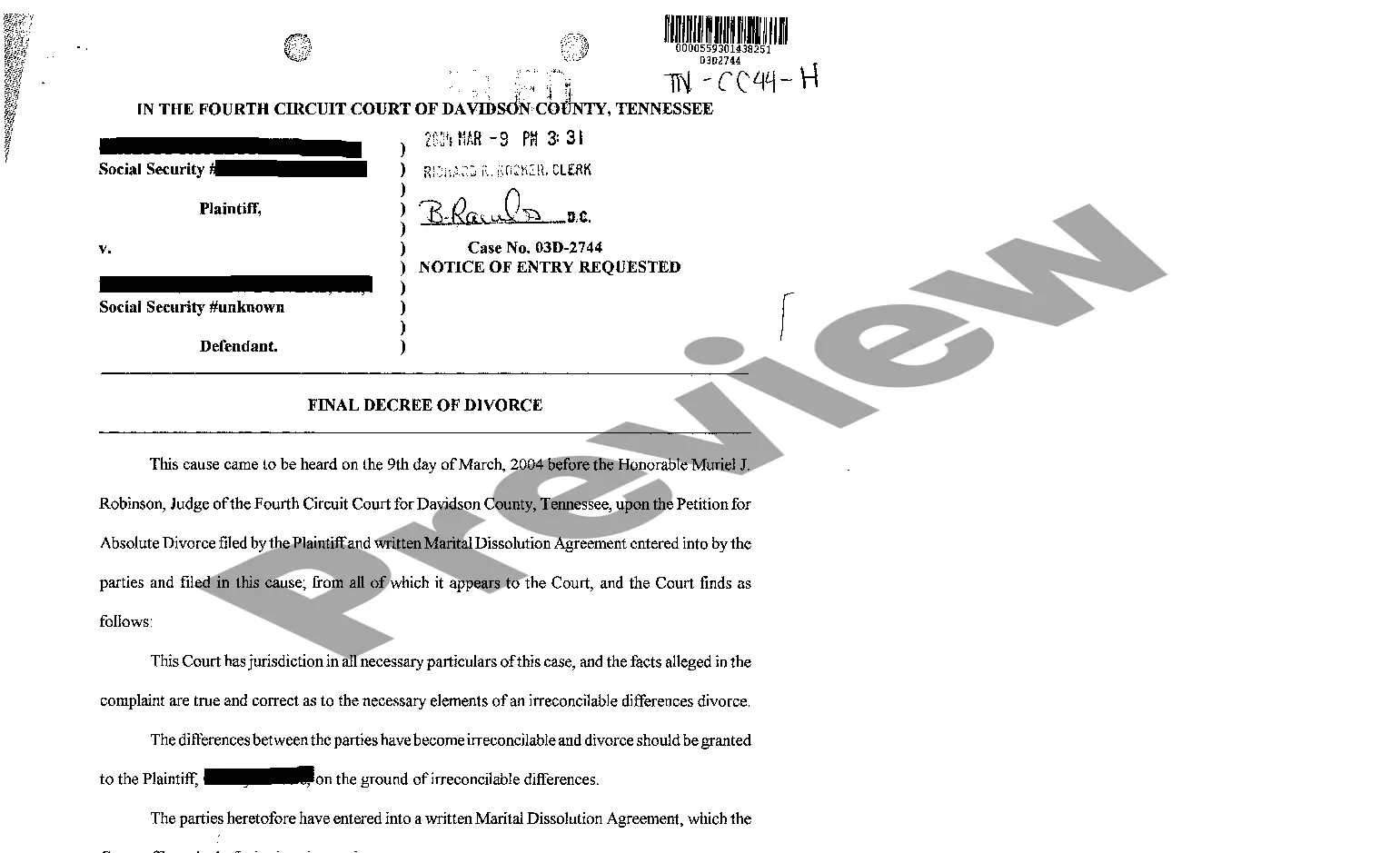
Utah Decree of Dissolution - no children
Overview of this form
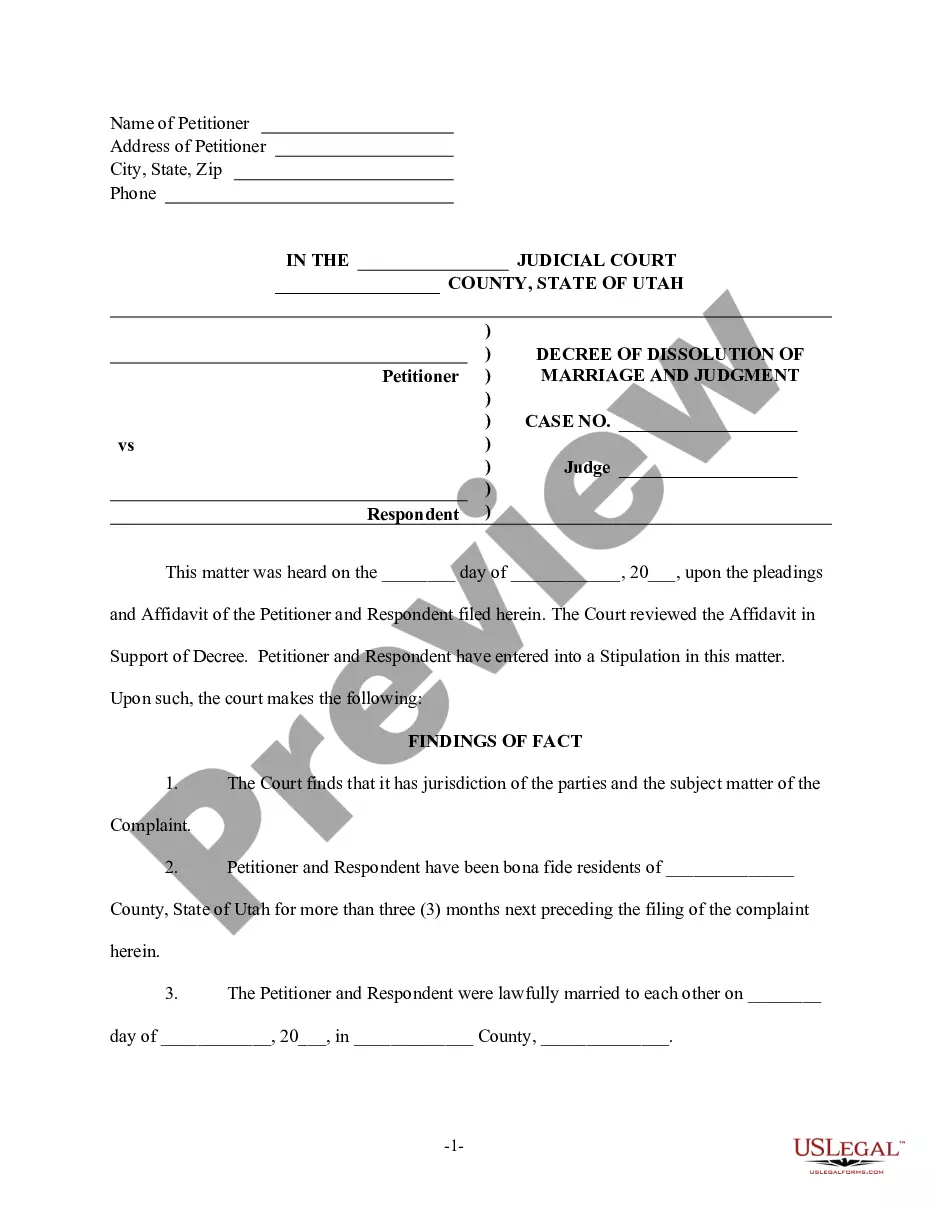
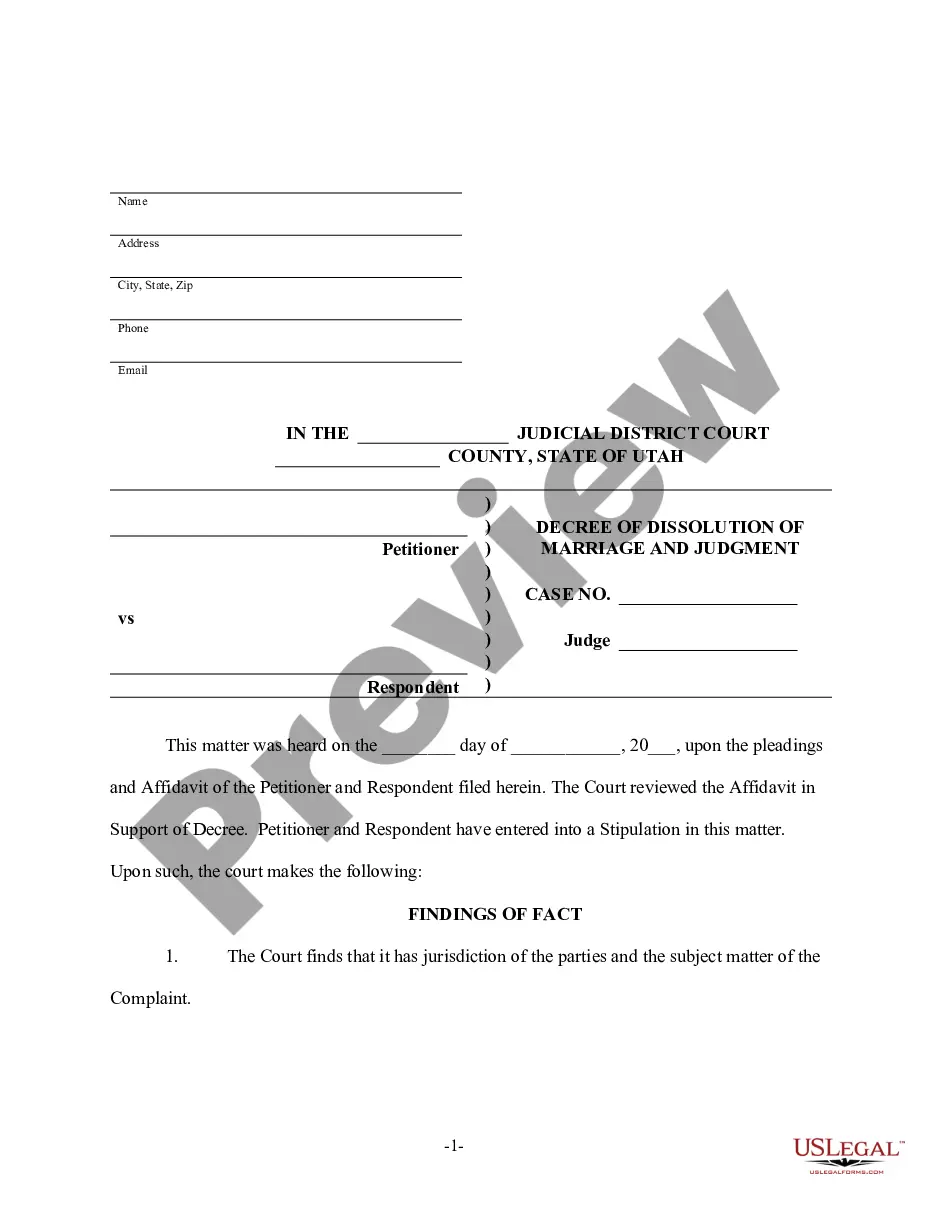
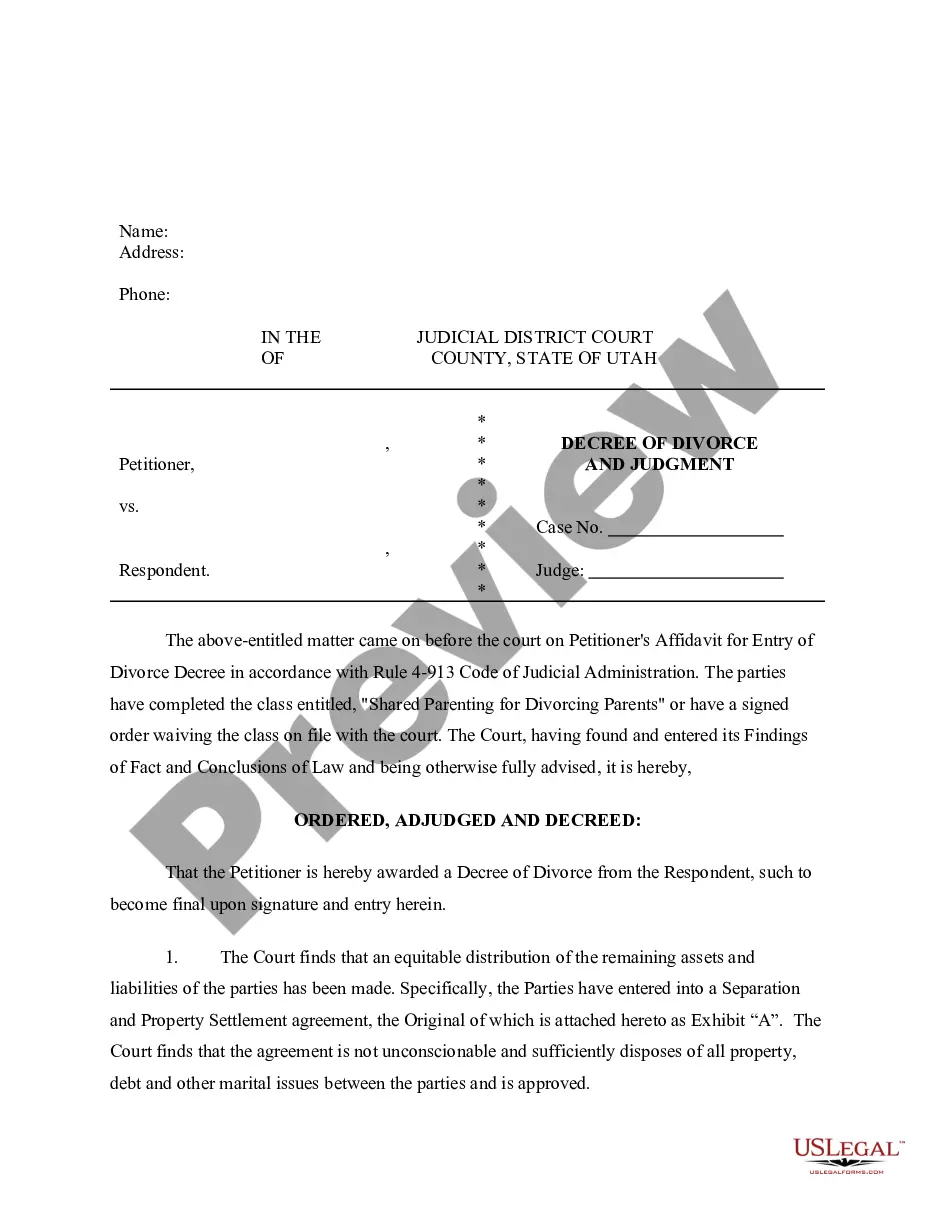
The Decree of Dissolution is a legal document used in Utah divorce proceedings for couples who do not have children. This form formalizes the divorce, outlining the agreed-upon terms regarding property and financial matters between the spouses. Unlike other divorce forms, this decree specifically addresses situations where there are no children involved, streamlining the process for couples looking to finalize their separation amicably.
Key components of this form
- Findings of Fact: Establishes jurisdiction and confirms the absence of children.
- Conclusions of Law: States the grounds for dissolution of marriage.
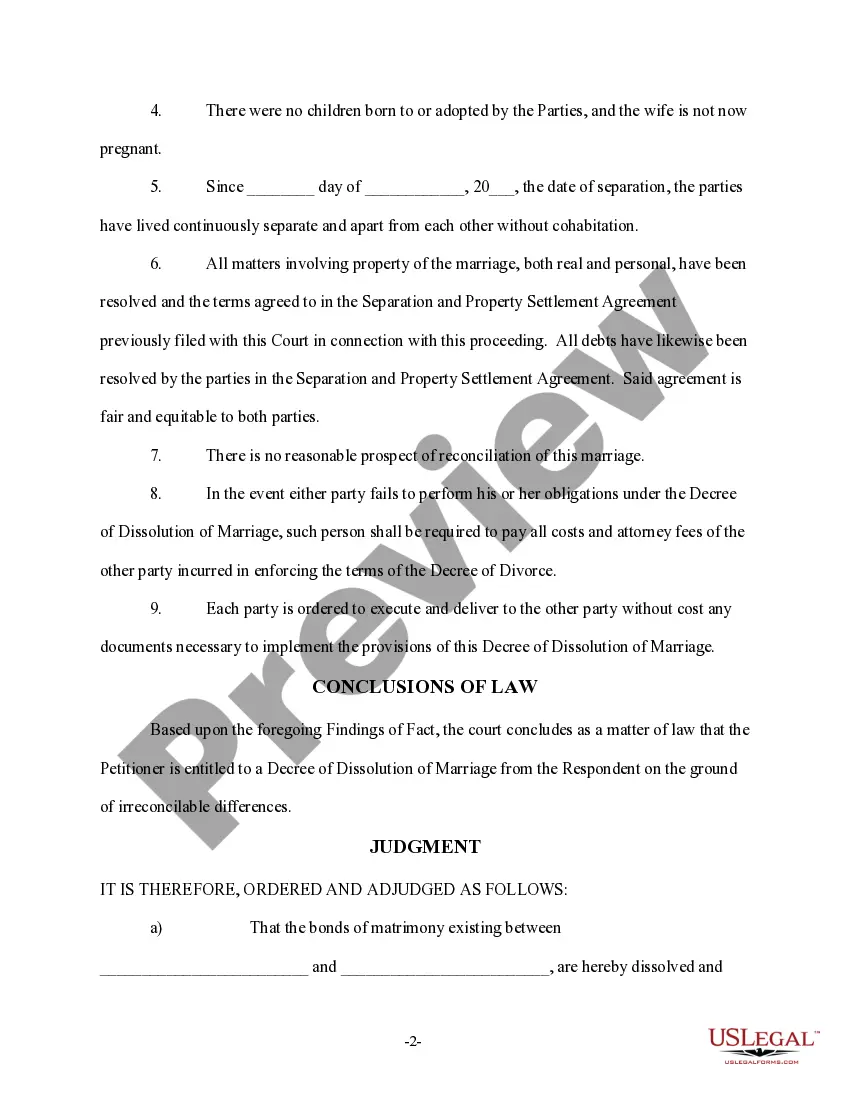
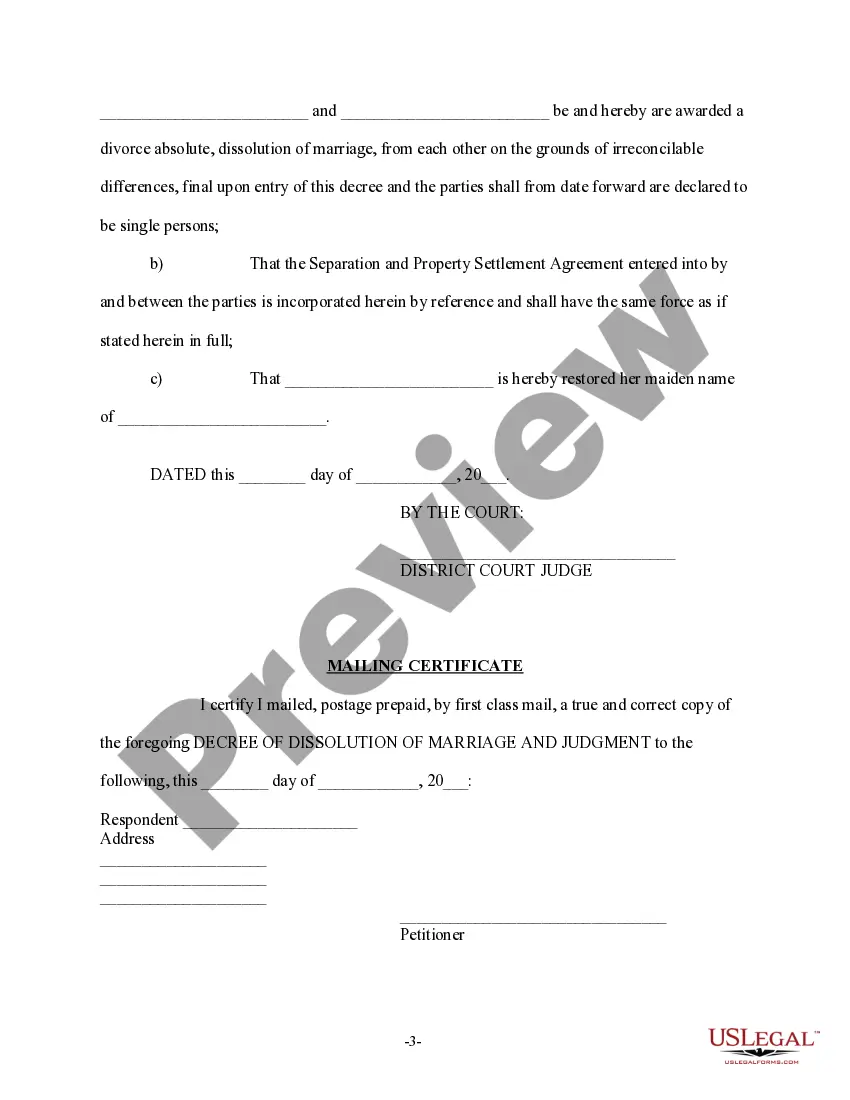
- Judgment: Officially dissolves the marriage and outlines terms of the divorce.
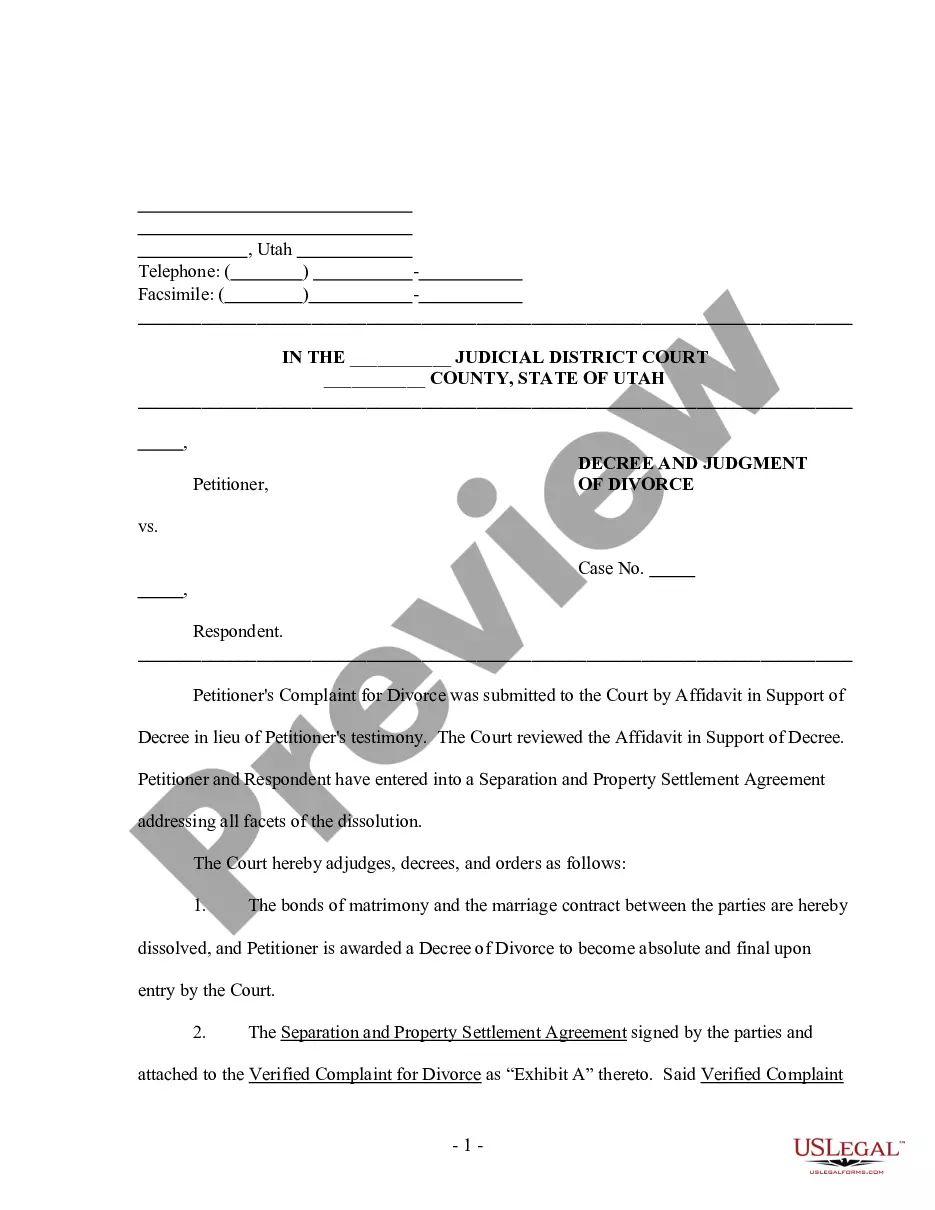
- Incorporation of Separation Agreement: References a previously filed agreement regarding property and debts.
- Restoration of Maiden Name: Allows the spouse to regain their previous name, if desired.
When to use this form
This form is appropriate when both parties agree to the terms of their divorce and are ready to formalize the dissolution of their marriage without the presence of children. Common scenarios for its use include couples who have already reached a settlement regarding property and debt distribution and seek a straightforward way to complete their divorce process.
Who this form is for
- Couples residing in Utah who wish to divorce without children.
- Individuals who have mutually agreed on property and debt settlements.
- Spouses seeking a simplified and uncontentious divorce process.
Steps to complete this form
- Identify the parties: Fill in the names of the Petitioner and Respondent accurately.
- Complete the marriage details: Provide the date and location of the marriage.
- Specify the separation date: Enter the date when the parties began living separately.
- Outline the terms of the Separation and Property Settlement Agreement: Summarize key agreements on property and debt.
- Sign and date the decree: Ensure both parties sign and date the document for validity.
Notarization requirements for this form
This form does not typically require notarization unless specified by local law. It's advisable to check if any additional steps are needed for your particular situation.
Get your form ready online
Our built-in tools help you complete, sign, share, and store your documents in one place.
Make edits, fill in missing information, and update formatting in US Legal Forms—just like you would in MS Word.
Download a copy, print it, send it by email, or mail it via USPS—whatever works best for your next step.
Sign and collect signatures with our SignNow integration. Send to multiple recipients, set reminders, and more. Go Premium to unlock E-Sign.
If this form requires notarization, complete it online through a secure video call—no need to meet a notary in person or wait for an appointment.
We protect your documents and personal data by following strict security and privacy standards.

Make edits, fill in missing information, and update formatting in US Legal Forms—just like you would in MS Word.

Download a copy, print it, send it by email, or mail it via USPS—whatever works best for your next step.

Sign and collect signatures with our SignNow integration. Send to multiple recipients, set reminders, and more. Go Premium to unlock E-Sign.

If this form requires notarization, complete it online through a secure video call—no need to meet a notary in person or wait for an appointment.

We protect your documents and personal data by following strict security and privacy standards.
Avoid these common issues
- Failing to complete all required sections of the form.
- Not providing accurate dates for marriage and separation.
- Neglecting to sign the decree, which can invalidate the process.
- Forgetting to include the details of the Separation and Property Settlement Agreement.
Benefits of using this form online
- Convenience of downloading and completing the form at your own pace.
- Editable format allowing for easy adjustments to specific details.
- Reliability of a form drafted by licensed attorneys familiar with state requirements.
- The form is legally binding once submitted and approved by the court.
- Both parties should retain a copy of the completed document for their records.
- It is advisable to consult with a legal professional if there are questions about enforceability or specific legal issues.
Looking for another form?

Form popularity
FAQ
The filing fee for a divorce in Utah is $333. That fee is paid directly to the Court when you file your divorce papers. Our fee for the Do-It-Yourself Divorce without minor children (for an action not involving custody of minor children) is $375.00. That amount includes ~30 pages of typing necessary for the divorce.
According to a recent survey, the cost of an average Utah divorce is $13,200. While this may shock you, many divorces that are initially thought to be a simple open and close case end up being highly contested, making the process longer and more expensive than anticipated.
Once the papers have been filed with the court, the question, "How long does an uncontested divorce take?" is completely out of the parties' hands. The amount of time it will take to finalize the divorce by having a judge approve and sign the judgment can take anywhere from six weeks to 12 months.
Summary of Utah Divorce Costs Filing fee The Court's filing fee is $318. Uncontested divorce On average firms will charge $999 - $2000, but it can be as low as $450. Contested divorce These divorces are billed on an hourly rate. The average cost is $2000 - $6,000.
Divorce waiting period Utah law requires that there be 30 days between the date the petition is filed and the date the decree is signed. A party can ask the court to waive the waiting period for extraordinary circumstances.
Respond to the violation of the terms of the divorce decree by filing a motion for contempt of court.Filing a motion for contempt of court may also be done through an attorney. The motion indicates which parts of the divorce decree were violated and the reason the ex-spouse should be held in contempt of court.
Generally no, it doesn't matter which spouse files for divorce. There is no legal advantage to filing the petition for divorce first; however, there may be strategical advantages. Whoever files the petition first chooses which court will be hearing the divorce.
One of the main legal advantages that a person gains by filing the divorce petition before his or her spouse does is that the filer can request a Standing Order from the court when filing the petition.If the matter should go to a hearing, the person who files the petition usually presents his or her case first.
Uncontested divorces, or divorces where spouses agree on all of the final terms they wish to be included in their divorce, can resolve within 30 days, but more typically are finalized between 60-90 days.