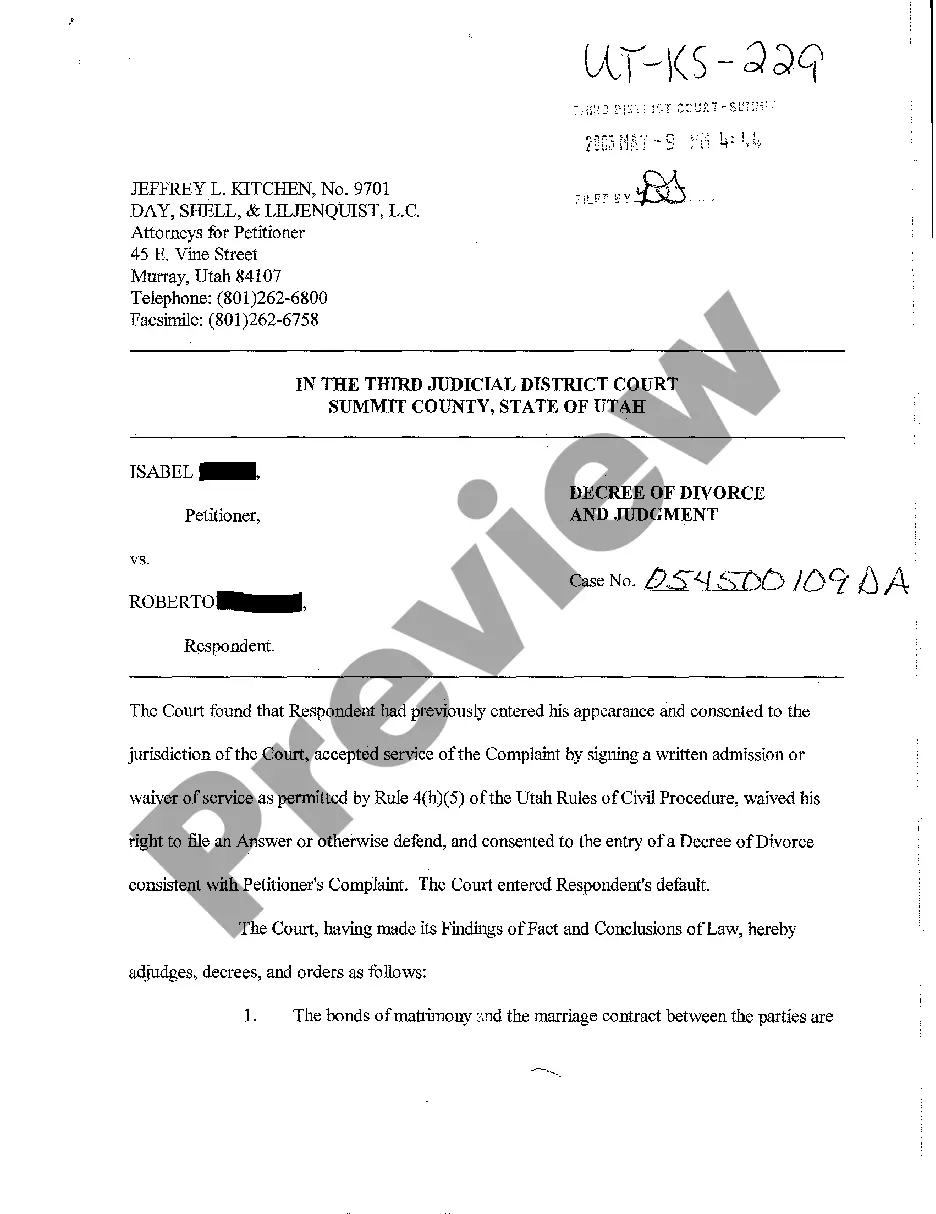
Utah Decree of Divorce
What this document covers
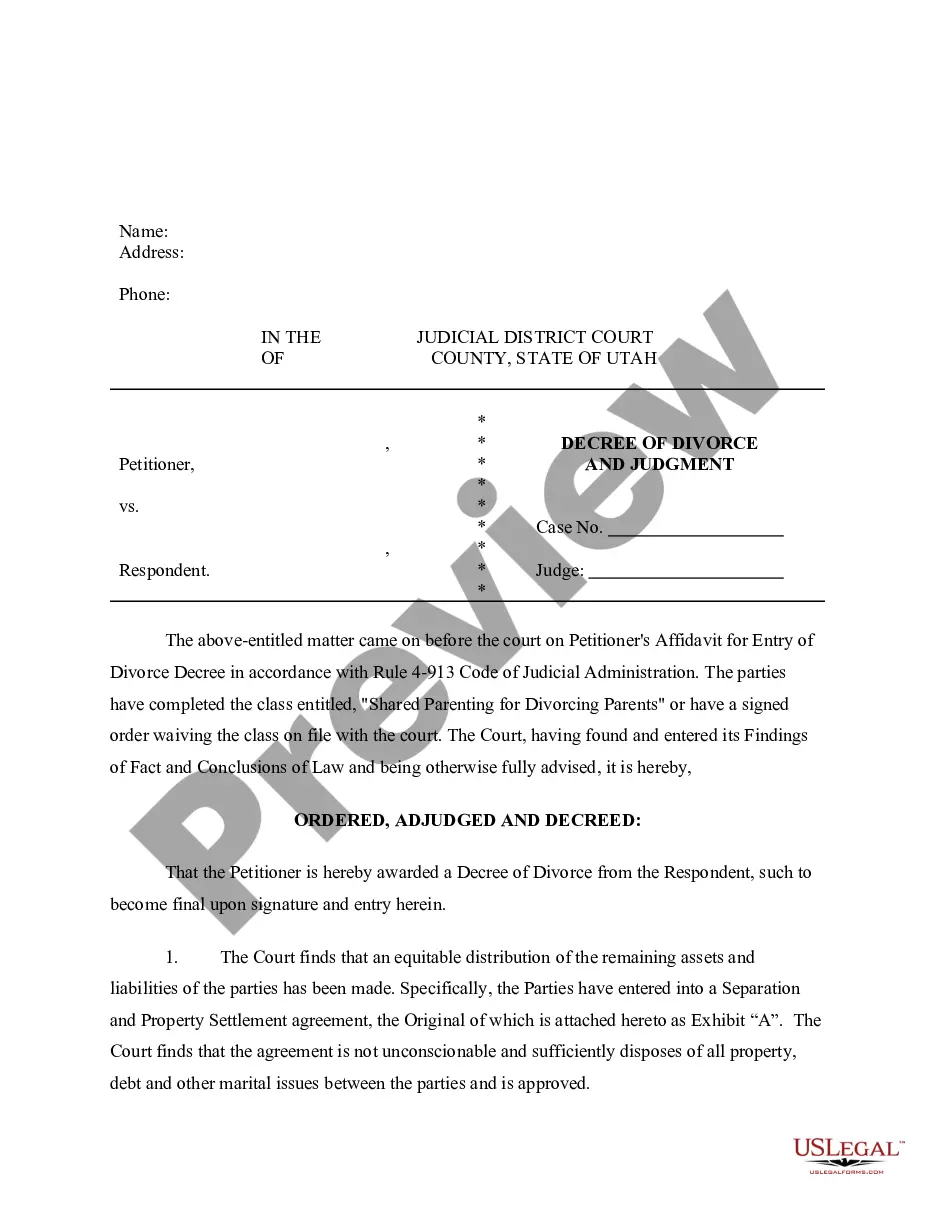
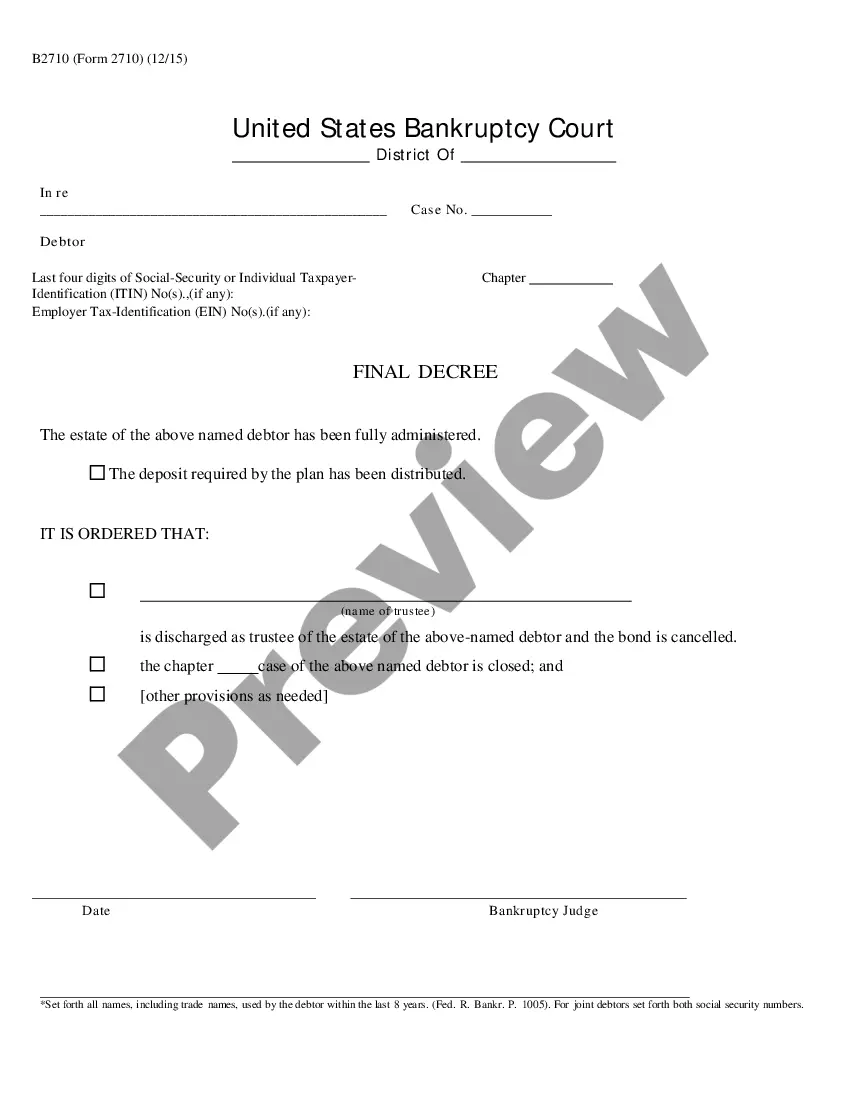
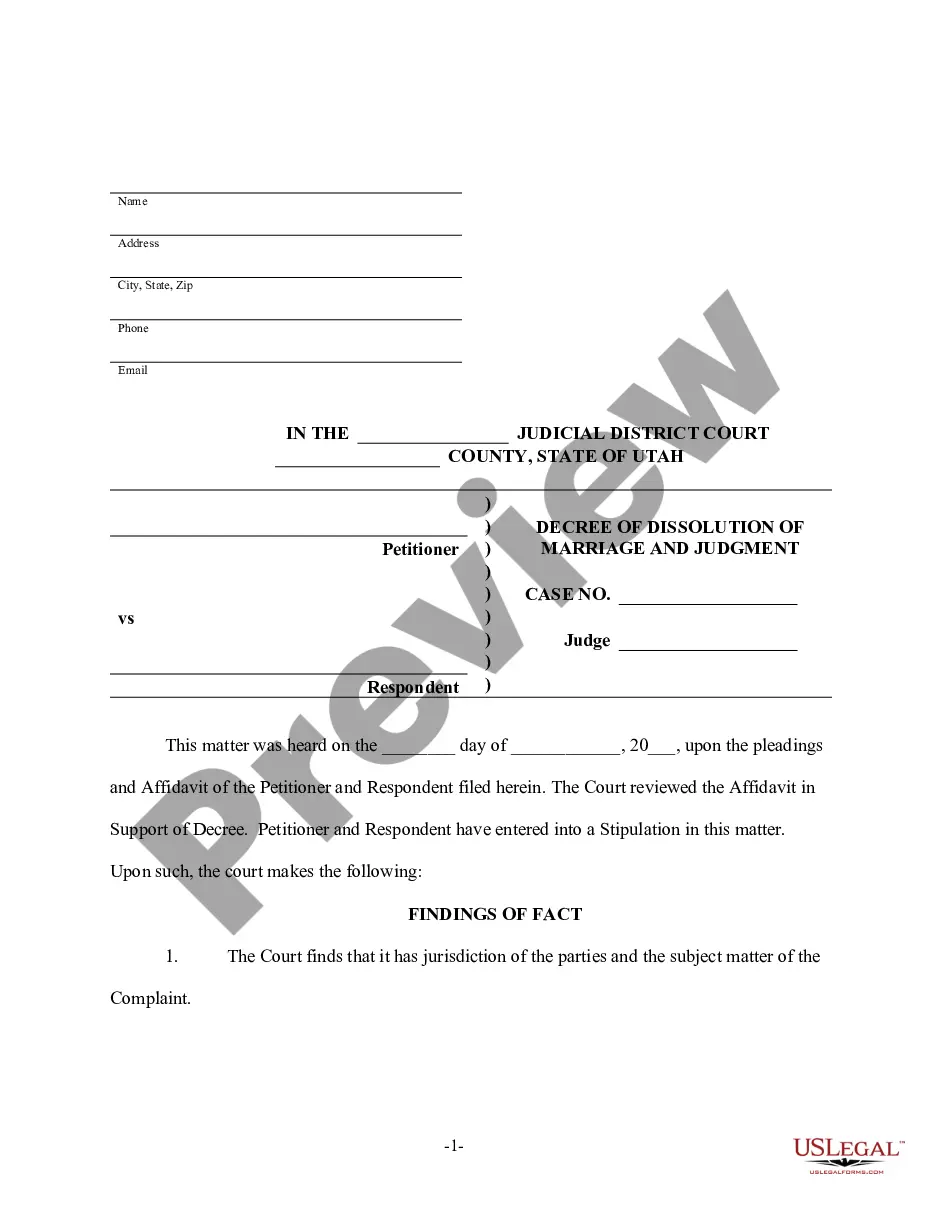
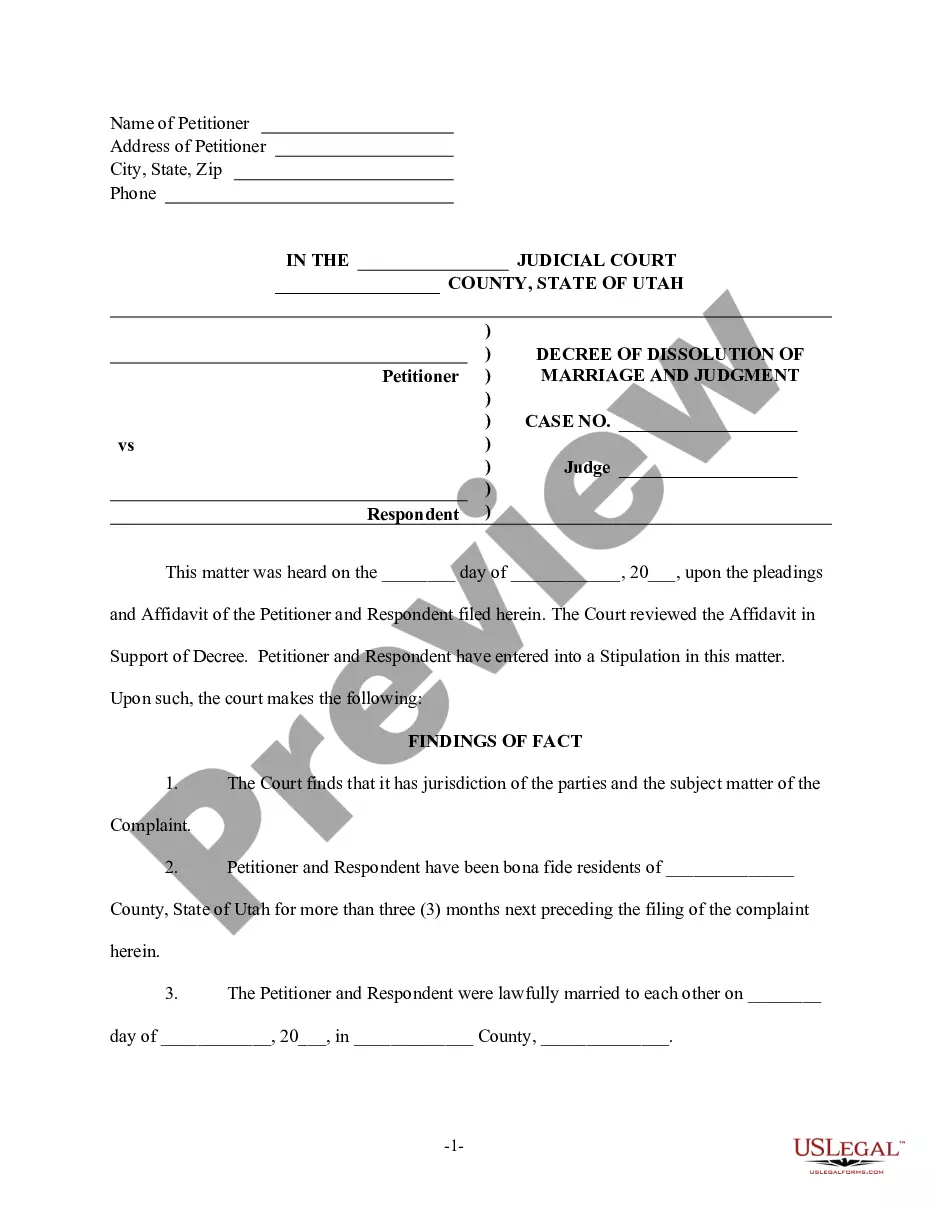
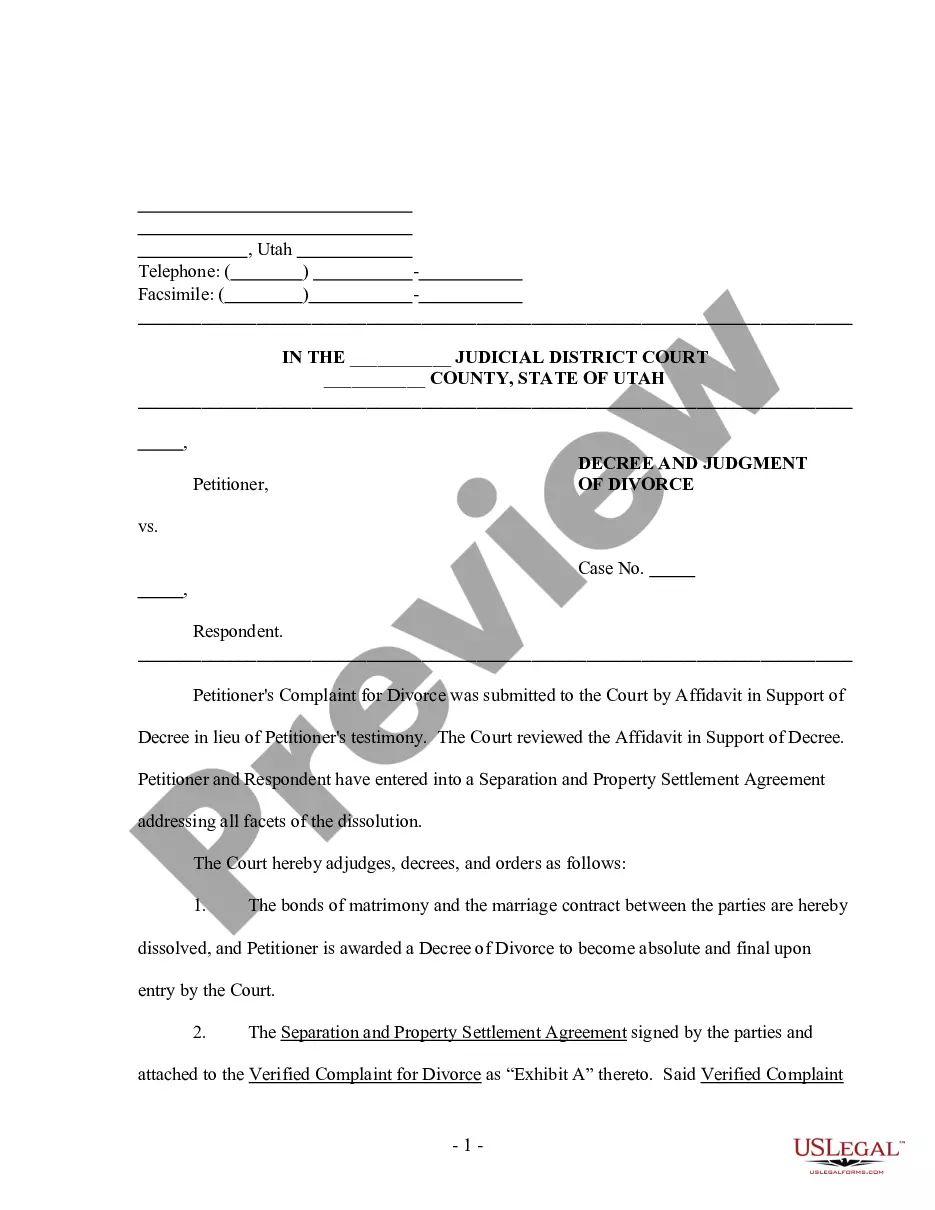
The Decree of Divorce is a legal document that finalizes the dissolution of marriage between parties. This form officially ends the marriage and includes any relief requested in the divorce petition. Designed specifically for couples with minor children, this Decree outlines the agreements made regarding property distribution and custody arrangements, setting it apart from other divorce forms.
Main sections of this form
- Title and introduction indicating the finalization of the divorce.
- Distribution of marital assets and liabilities.
- Approval of the Separation and Property Settlement agreement.
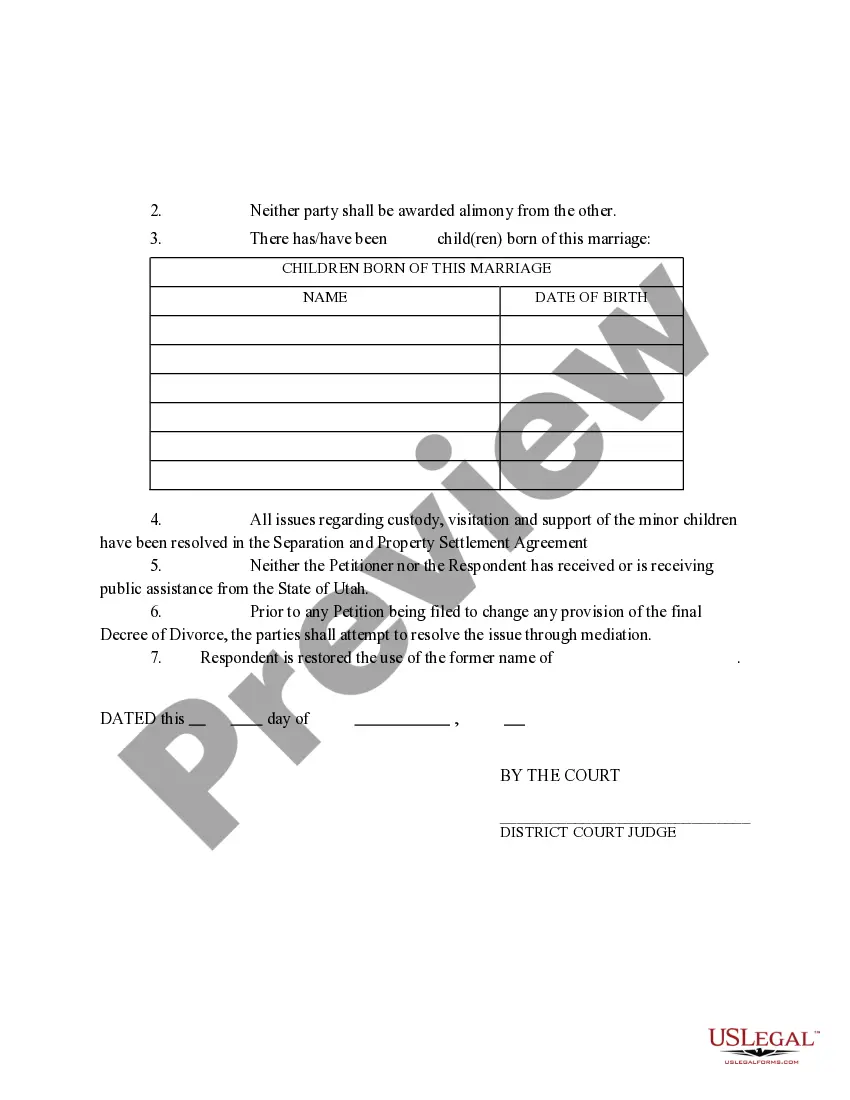
- Stipulation that neither party will receive alimony.
- Requirement for mediation before any modification of the decree.
Common use cases
This form should be used when a couple has completed all necessary arrangements regarding the dissolution of their marriage and wants to finalize their divorce, especially when minor children are involved. It is essential after negotiating property settlements and custody agreements and when both parties agree to the terms laid out in the Separation and Property Settlement agreement.
Intended users of this form
- Couples seeking a legal dissolution of their marriage.
- Parties with minor children born during the marriage.
- Individuals who have mutually agreed on property and custody arrangements.
- Those who have completed mediation regarding any disputes.
Steps to complete this form
- Identify the petitioner and respondent by entering full legal names.
- Detail the terms of the Separation and Property Settlement agreement.
- Specify any arrangements regarding child custody and support.
- Ensure that both parties sign the document in the presence of witnesses if required.
- File the completed form with the court to finalize the divorce.
Does this document require notarization?
Notarization is not commonly needed for this form. However, certain documents or local rules may make it necessary. Our notarization service, powered by Notarize, allows you to finalize it securely online anytime, day or night.
Get your form ready online
Our built-in tools help you complete, sign, share, and store your documents in one place.
Make edits, fill in missing information, and update formatting in US Legal Forms—just like you would in MS Word.
Download a copy, print it, send it by email, or mail it via USPS—whatever works best for your next step.
Sign and collect signatures with our SignNow integration. Send to multiple recipients, set reminders, and more. Go Premium to unlock E-Sign.
If this form requires notarization, complete it online through a secure video call—no need to meet a notary in person or wait for an appointment.
We protect your documents and personal data by following strict security and privacy standards.

Make edits, fill in missing information, and update formatting in US Legal Forms—just like you would in MS Word.

Download a copy, print it, send it by email, or mail it via USPS—whatever works best for your next step.

Sign and collect signatures with our SignNow integration. Send to multiple recipients, set reminders, and more. Go Premium to unlock E-Sign.

If this form requires notarization, complete it online through a secure video call—no need to meet a notary in person or wait for an appointment.

We protect your documents and personal data by following strict security and privacy standards.
Avoid these common issues
- Failing to include all necessary documentation with the decree.
- Not clearly defining custody or support terms.
- Ignoring state-specific requirements or filing procedures.
- Overlooking the need for signatures from both parties.
Why use this form online
- Convenient download allows for immediate access to legal forms.
- Editability ensures that users can tailor the document to their specific needs.
- Reliable templates drafted by licensed attorneys enhance accuracy.
- Accessible from anywhere, allowing for easy completion at home.
Main things to remember
- The Decree of Divorce finalizes a marriage and includes essential agreements regarding assets and children.
- Accurate completion and filing of the form are necessary to finalize the divorce.
- Ensure all parties involved understand and agree to the terms before submission.
Looking for another form?


Form popularity
FAQ
To get a copy of your divorce decree, contact the court that handled the divorce case. Use the Court Directory to find contact information. The court provides copies of its records for a fee. There are situations where you may need the court to provide a certified or exemplified copy of a record.
The filing fee for a divorce in Utah is $333. That fee is paid directly to the Court when you file your divorce papers. Our fee for the Do-It-Yourself Divorce without minor children (for an action not involving custody of minor children) is $375.00. That amount includes ~30 pages of typing necessary for the divorce.
Divorce records may also be obtained online via a third-party service or directly from the Utah state office of vital records and statistics by completing a Marriage/Divorce Certificate Request Form which may be submitted either in person or by mail.
To get a copy of your divorce decree, contact the court that handled the divorce case. Use the Court Directory to find contact information. The court provides copies of its records for a fee. There are situations where you may need the court to provide a certified or exemplified copy of a record.
The filing fee for a divorce in Utah is $333. That fee is paid directly to the Court when you file your divorce papers. Our fee for the Do-It-Yourself Divorce without minor children (for an action not involving custody of minor children) is $375.00. That amount includes ~30 pages of typing necessary for the divorce.
In California, the default filing procedure for divorce records is to make them public. Public divorce records mean that anyone can obtain a copy of the decree. California provides two kinds of certified copies authorized and informational.
In the eyes of the court this is the document that formally ends your marriage. A divorce decree serves three main functions.That means it covers the division of property, disposal of debts, spousal support, and any obligations to children from the marriage.