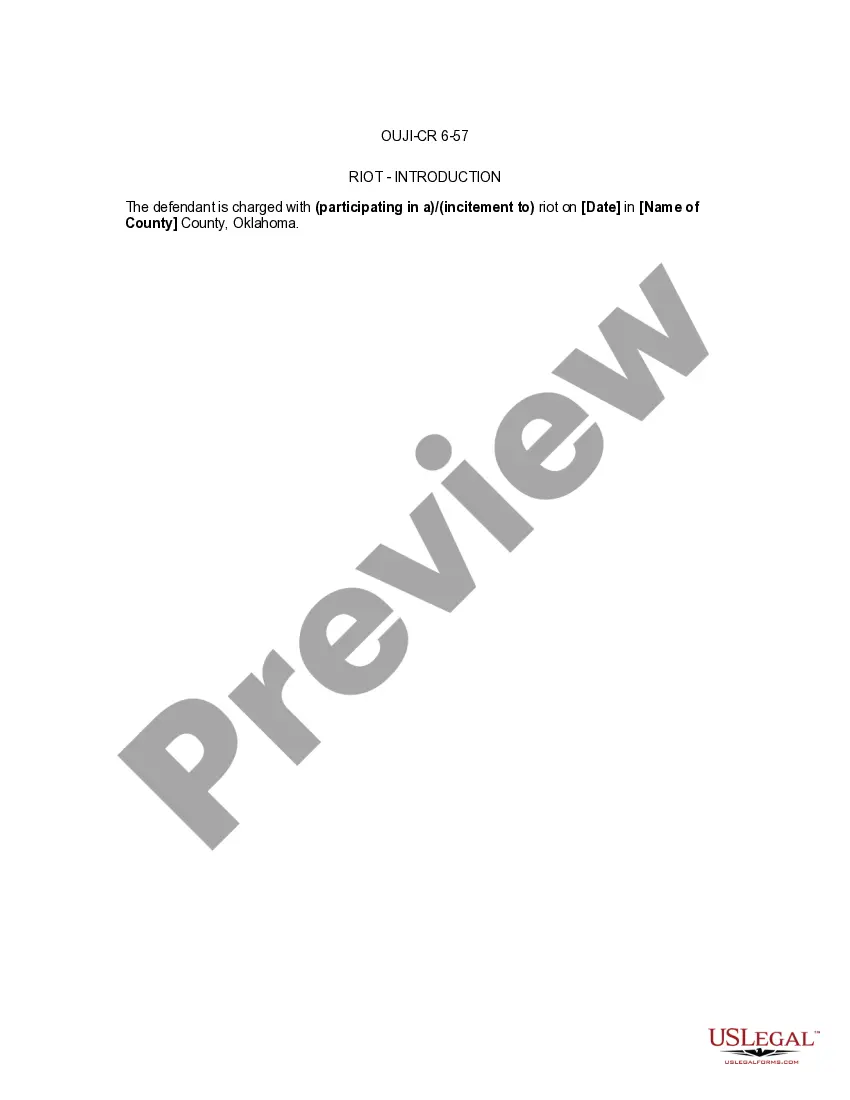
Receipt for Damages (General)
Overview of this form
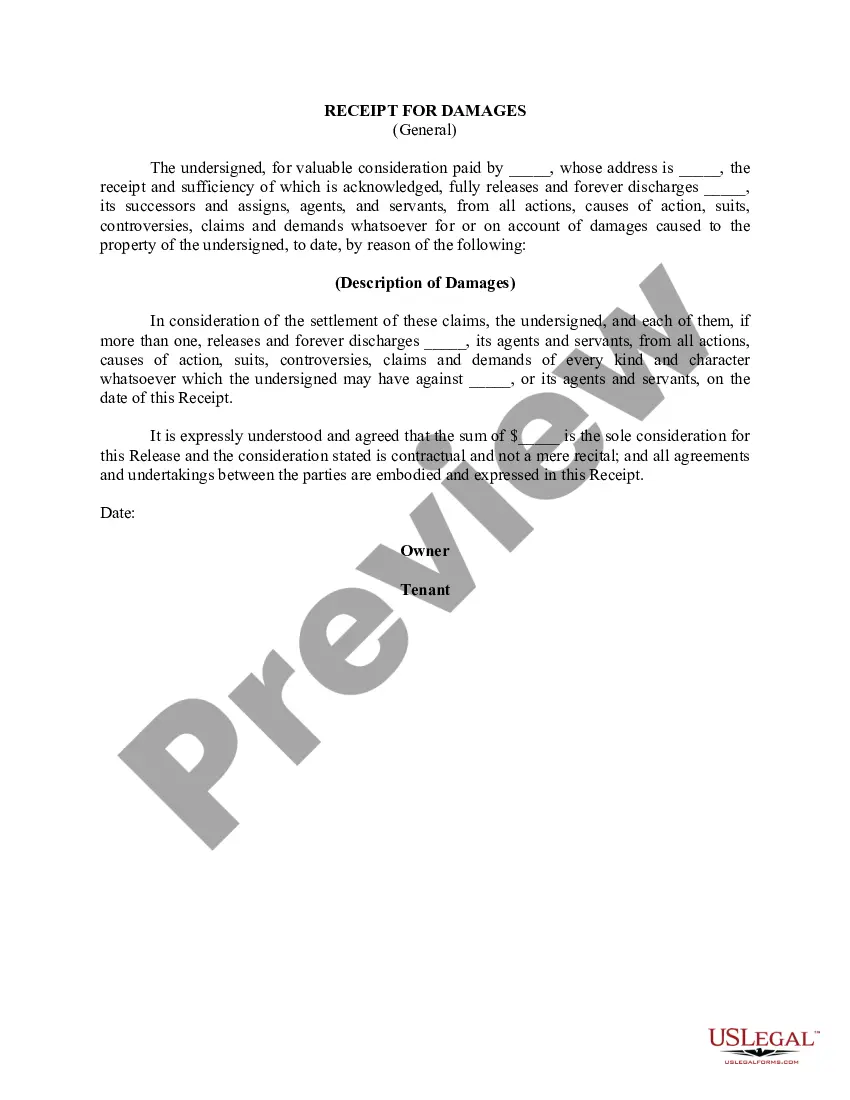
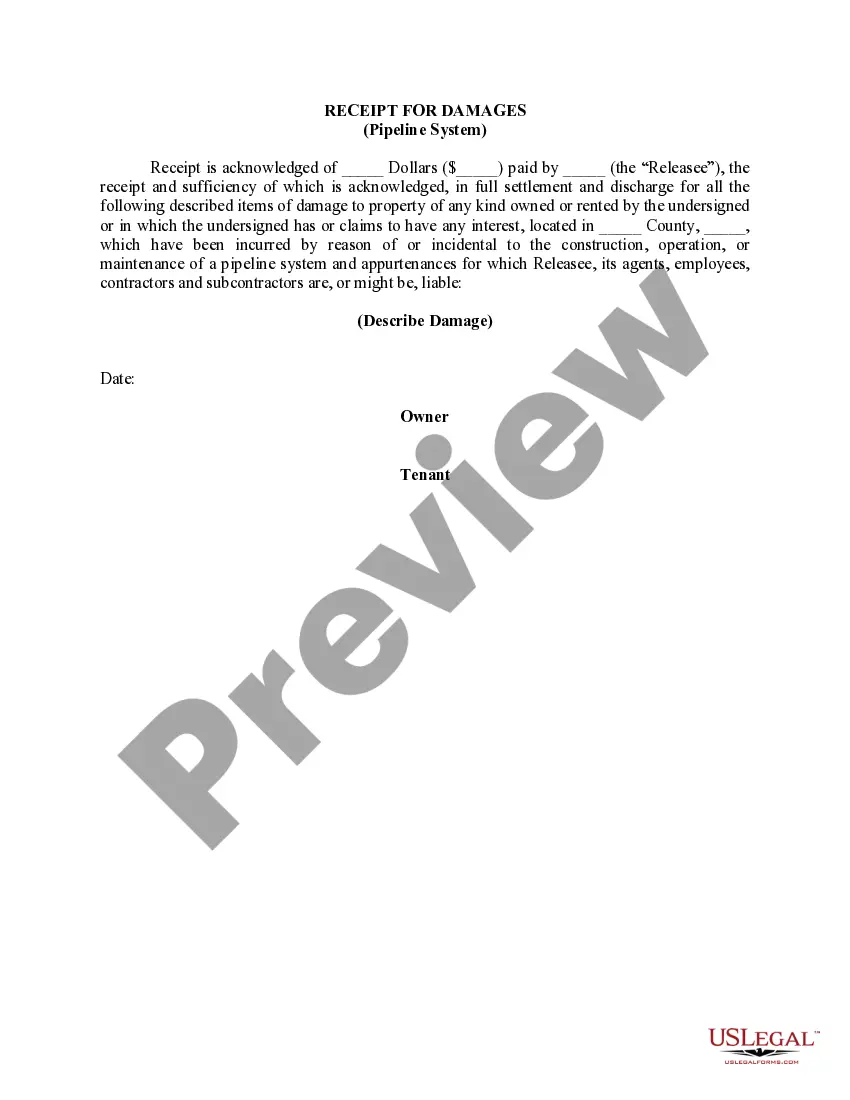
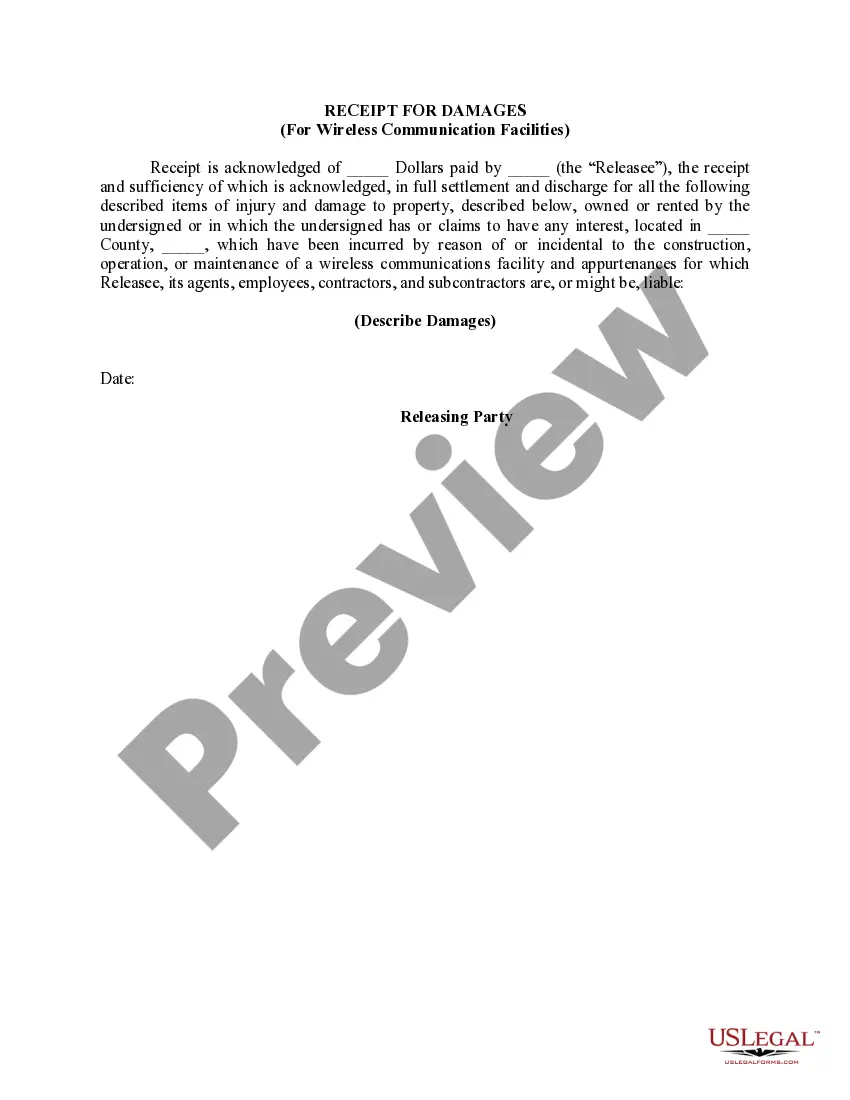
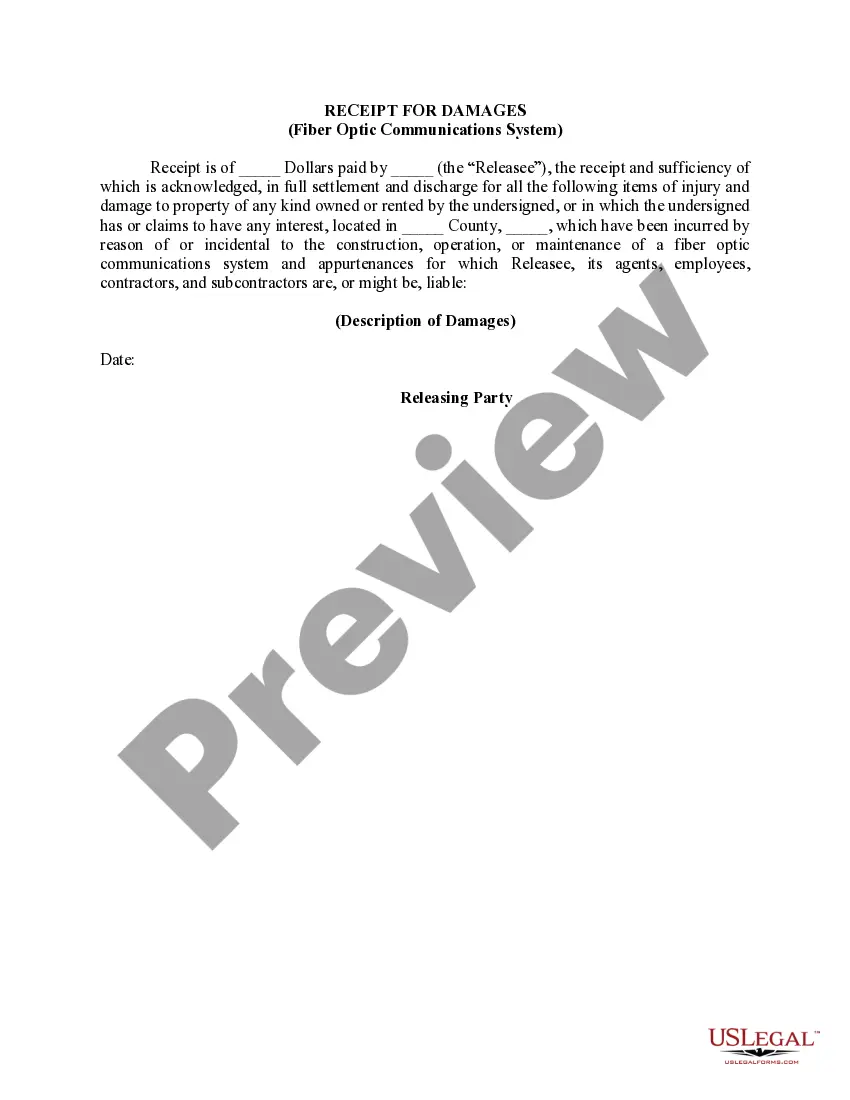
The Receipt for Damages (General) is a legal document used to acknowledge and confirm the receipt of payment for damages suffered by the undersigned. This form serves as a release for the party responsible for the damages, relieving them from any further claims related to the issues addressed in the form. Unlike other receipts, this document includes a general release clause that discharges the responsible party from future liabilities related to the described damages.
Key components of this form
- Amount of payment: The total amount received for damages.
- Releasing party: Identification of the undersigned who acknowledges the receipt.
- Receiving party: Identification of the party being released from liability.
- Description of damages: Specific details outlining the damages that led to the settlement.
- Signature and dated acknowledgment: Signatures of all parties and the date of the transaction.
When this form is needed
This form should be used when an individual or entity has sustained damages to their property and has reached a financial settlement with the responsible party. It is applicable in cases such as car accidents, property damage disputes, and various other situations where damages have been caused and a monetary agreement has been settled.
Who needs this form
- Property owners seeking acknowledgment for received settlements from responsible parties.
- Individuals who have suffered damages and want to ensure all future claims are settled.
- Businesses that require formal documentation of a settlement regarding property damage.
Steps to complete this form
- Identify and write the total amount of damages settled.
- Enter the name of the party receiving the payment for damages.
- Provide a detailed description of the damages incurred.
- Include the date of the agreement and signatures of all involved parties.
- Retain copies for personal records and provide a copy to the paying party.
Does this document require notarization?
This form does not typically require notarization to be legally valid. However, some jurisdictions or document types may still require it. US Legal Forms provides secure online notarization powered by Notarize, available 24/7 for added convenience.
Get your form ready online
Our built-in tools help you complete, sign, share, and store your documents in one place.
Make edits, fill in missing information, and update formatting in US Legal Forms—just like you would in MS Word.
Download a copy, print it, send it by email, or mail it via USPS—whatever works best for your next step.
Sign and collect signatures with our SignNow integration. Send to multiple recipients, set reminders, and more. Go Premium to unlock E-Sign.
If this form requires notarization, complete it online through a secure video call—no need to meet a notary in person or wait for an appointment.
We protect your documents and personal data by following strict security and privacy standards.

Make edits, fill in missing information, and update formatting in US Legal Forms—just like you would in MS Word.

Download a copy, print it, send it by email, or mail it via USPS—whatever works best for your next step.

Sign and collect signatures with our SignNow integration. Send to multiple recipients, set reminders, and more. Go Premium to unlock E-Sign.

If this form requires notarization, complete it online through a secure video call—no need to meet a notary in person or wait for an appointment.

We protect your documents and personal data by following strict security and privacy standards.
Common mistakes to avoid
- Failing to accurately describe the damages in detail.
- Omitting signatures from all required parties.
- Not including the date of the agreement.
Why complete this form online
- Convenient access to a legally drafted document anytime.
- Editable format allows users to fill in details easily.
- Reliable legal framework provided by licensed attorneys.
Legal use & context
- This form serves as a binding legal document once signed by all parties involved.
- It effectively protects the party paying for damages from future litigation claims related to the incident.
What to keep in mind
- The Receipt for Damages (General) is essential for documenting the settlement of property damage claims.
- Proper completion of the form ensures that all future claims are waived.
- It is necessary to retain copies for both parties for future reference.
Looking for another form?


Form popularity
FAQ
To be awarded actual compensatory damages, the plaintiff must prove that the losses suffered equate to a monetary value that a judge or jury can determine. An accident victim can also be compensated for general damages.
There are 3 types of damages in personal injury claims: economic damages, noneconomic damages, and punitive damages.
Some courts use the "multiplier method," which calculates general damages by multiplying the sum total of one's actual damages by a number that signifies the seriousness of the injury.
Loss of reputation. Loss of enjoyment of life. Disfigurement.
Examples of general damages include pain and suffering, mental anguish, and loss of consortium. General damages can also include future losses due to loss of earning capacity or future medical care.
General damages are sought in conjunction with compensatory damages.Examples of general damages include pain and suffering, mental anguish, and loss of consortium. General damages can also include future losses due to loss of earning capacity or future medical care.
You must prove there was a duty owed from one person to another. You must show that there was a breach of that duty or standard of care. You must show that the breach of that duty or standard of care was the actual and proximate (legal) cause of the injury. You must show the damages that resulted from the negligence.
General damages represent the types of damages that can't easily be assigned a monetary value, such as pain and suffering, loss of consortium and emotional trauma. There is no evidence, such as bills or receipts, of a specific dollar amount, but they are losses for which the plaintiff deserves compensation nonetheless.