General Covenant Not to Sue
Understanding this form
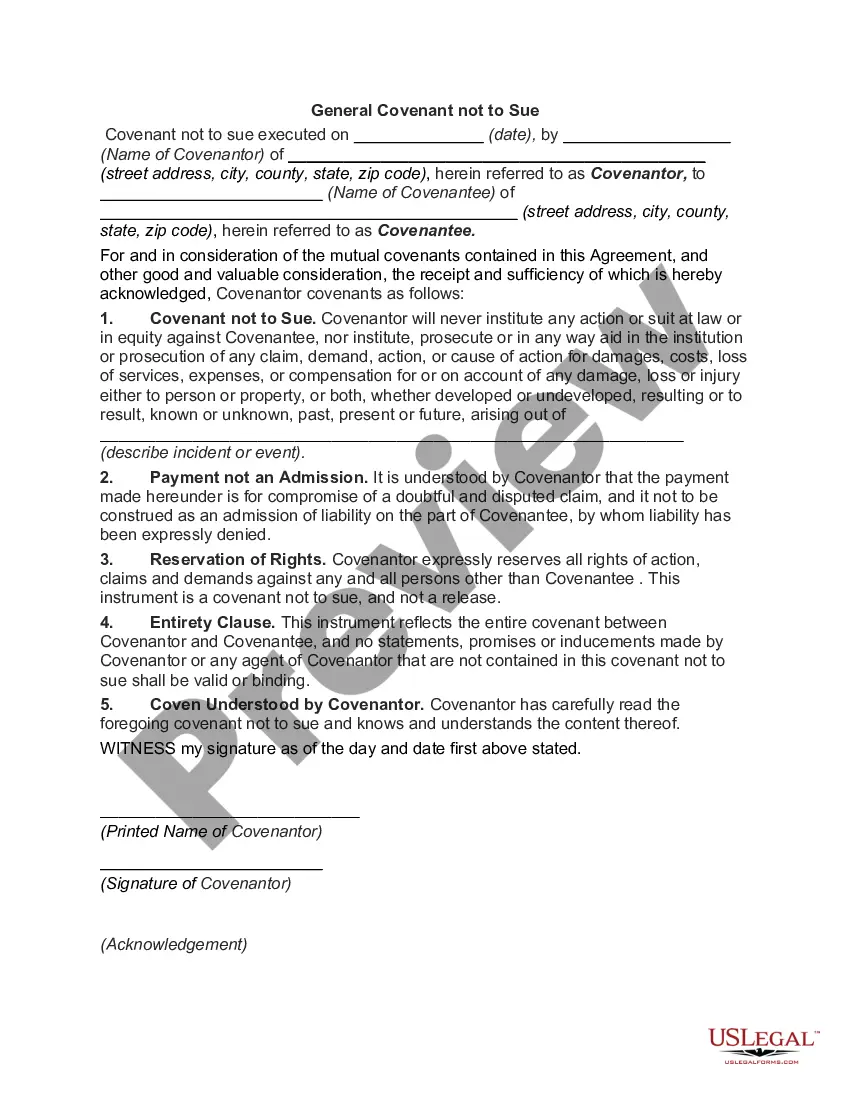
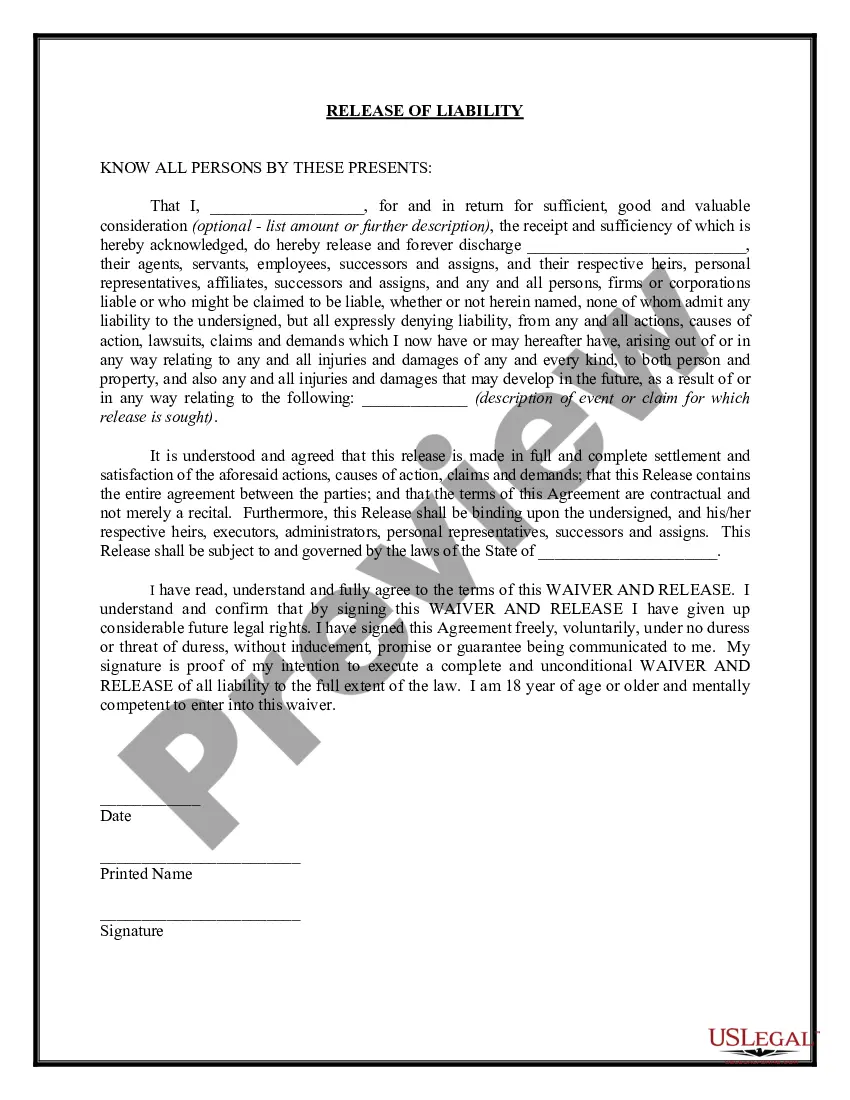
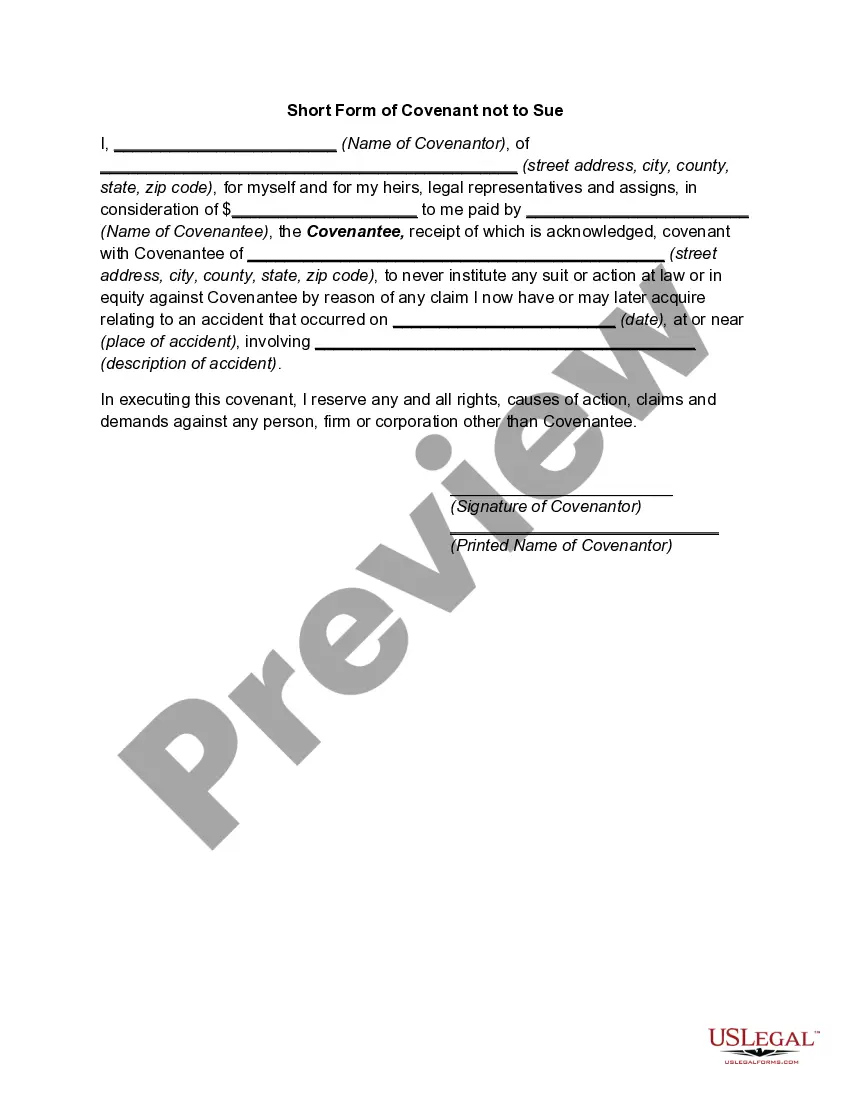
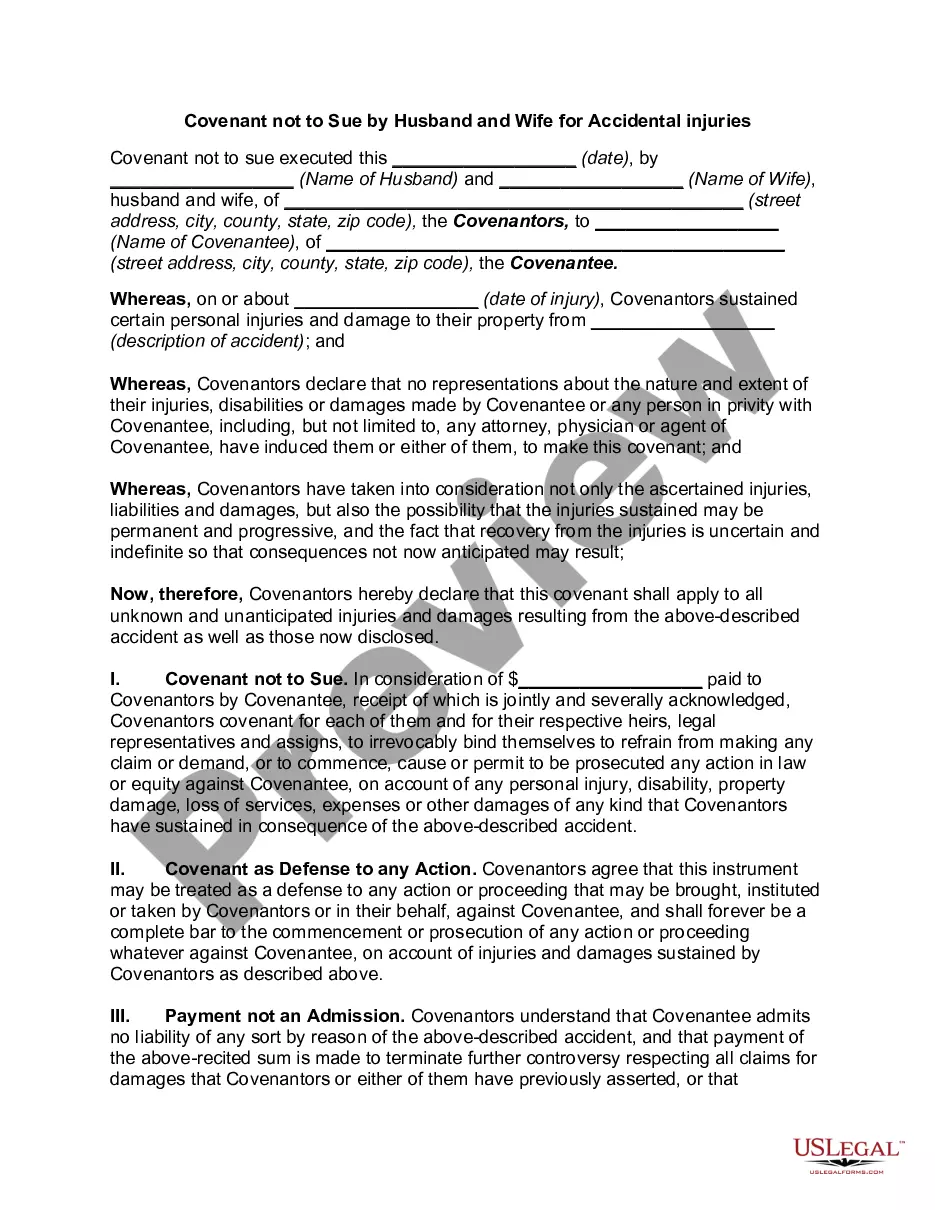
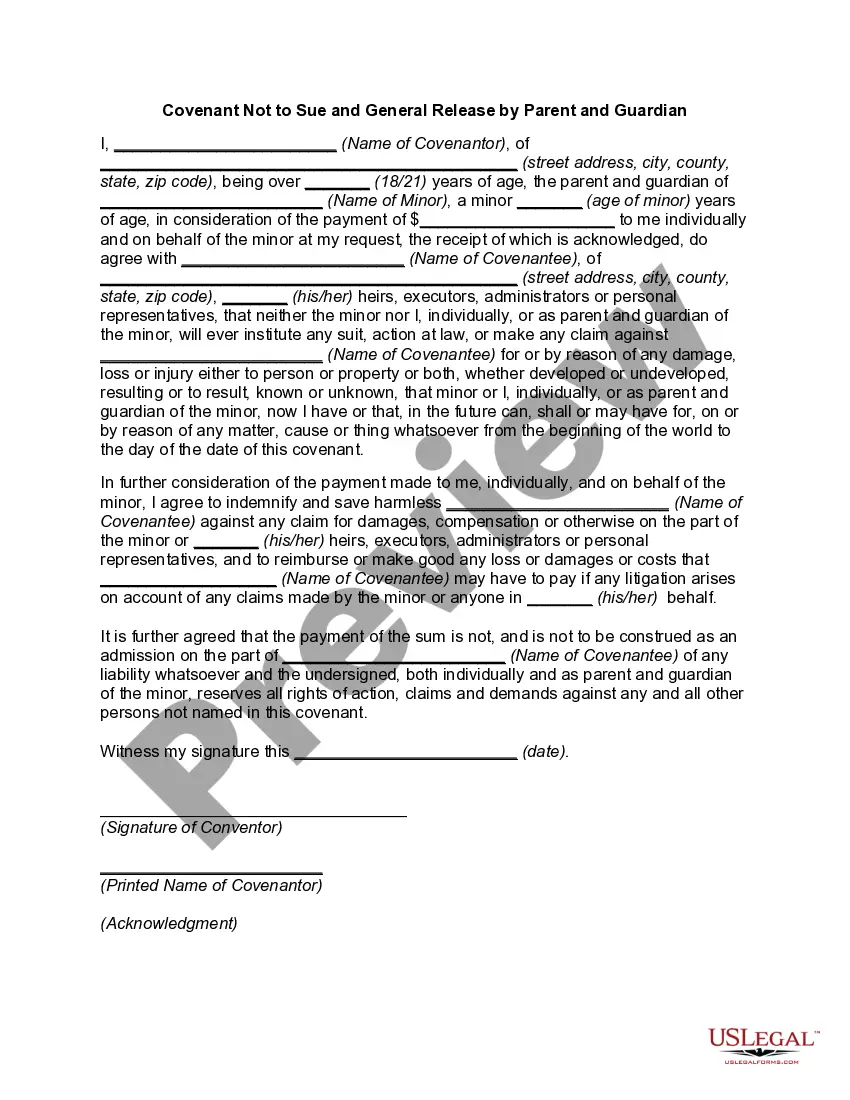
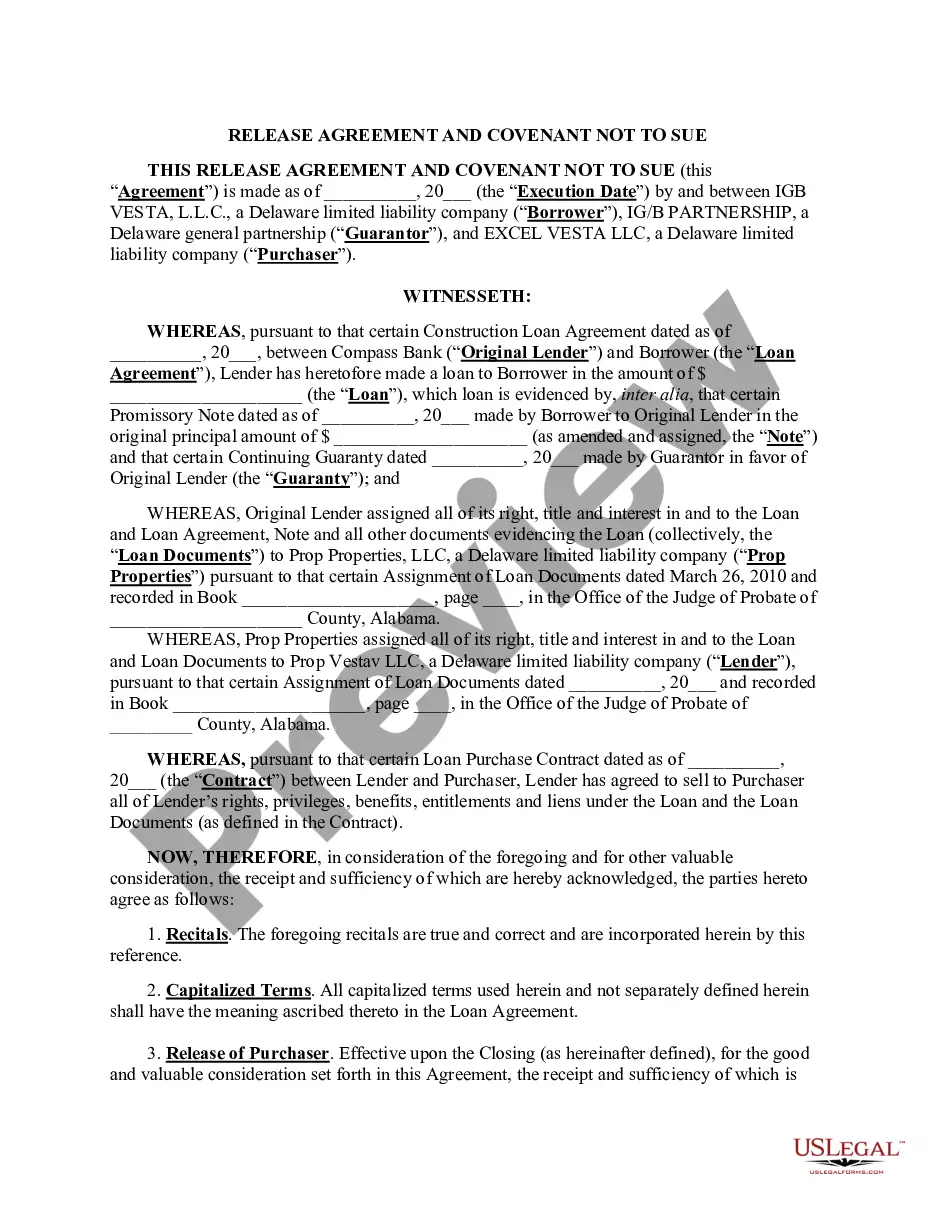
A General Covenant Not to Sue is a legal agreement whereby one party, known as the Covenantor, agrees not to pursue any legal claims against another party, referred to as the Covenantee. This document does not eliminate the underlying claim but instead preserves the right to pursue legal action against other parties, if applicable. This form helps establish clear terms for dispute resolution and is useful in various legal contexts where parties wish to avoid litigation.
Key parts of this document
- Date of execution: The date when the covenant is signed.
- Names and addresses: Identification of both the Covenantor and the Covenantee.
- Covenant not to sue: A declaration stating that the Covenantor will not initiate legal action against the Covenantee.
- Payment not an admission: A clause clarifying that any payments made do not imply liability on the part of the Covenantee.
- Reservation of rights: Ensures the Covenantor retains the right to sue other parties not included in the agreement.
- Entirety clause: Affirms that the document represents the complete understanding between the parties.

When to use this form
This form is useful when a party has a potential legal claim but decides to forgo litigation in favor of a mutual agreement. It can be applicable in situations such as settlement negotiations, personal injury claims, or disputes arising from contracts where parties want to document their agreement not to sue each other while keeping their rights intact for other claims.
Who this form is for
- Individuals or businesses with a legal claim they do not wish to pursue against another party.
- Parties involved in settlement discussions to ensure mutual understanding.
- Anyone seeking to clarify their legal intentions without permanently waiving rights to pursue claims against other parties.
How to prepare this document
- Identify the parties: Fill in the names and addresses of both the Covenantor and the Covenantee.
- Specify the date: Enter the date when the agreement is signed.
- Describe the incident: Provide a detailed description of the incident or event giving rise to the potential legal claim.
- Include payment terms: If applicable, clarify any payment or consideration being exchanged.
- Sign the document: Both parties should sign and date to finalize the agreement.
Notarization requirements for this form
In most cases, this form does not require notarization. However, some jurisdictions or signing circumstances might. US Legal Forms offers online notarization powered by Notarize, accessible 24/7 for a quick, remote process.
Get your form ready online
Our built-in tools help you complete, sign, share, and store your documents in one place.
Make edits, fill in missing information, and update formatting in US Legal Forms—just like you would in MS Word.
Download a copy, print it, send it by email, or mail it via USPS—whatever works best for your next step.
Sign and collect signatures with our SignNow integration. Send to multiple recipients, set reminders, and more. Go Premium to unlock E-Sign.
If this form requires notarization, complete it online through a secure video call—no need to meet a notary in person or wait for an appointment.
We protect your documents and personal data by following strict security and privacy standards.

Make edits, fill in missing information, and update formatting in US Legal Forms—just like you would in MS Word.

Download a copy, print it, send it by email, or mail it via USPS—whatever works best for your next step.

Sign and collect signatures with our SignNow integration. Send to multiple recipients, set reminders, and more. Go Premium to unlock E-Sign.

If this form requires notarization, complete it online through a secure video call—no need to meet a notary in person or wait for an appointment.

We protect your documents and personal data by following strict security and privacy standards.
Avoid these common issues
- Failing to accurately describe the incident leading to the claim.
- Not completing all required fields, especially names and addresses.
- Overlooking the necessity for both parties' signatures.
- Assuming the agreement releases claims against all parties when it specifically reserves rights against others.
Why complete this form online
- Convenient access: Download the form anytime from anywhere.
- Editability: Customize the template to suit your specific needs.
- Reliability: Forms drafted by licensed attorneys ensure legal validity.
Legal use & context
- This form is used to create a formal agreement between parties to avoid further legal action.
- It is especially useful in settling disputes without admitting liability.
- The covenant remains enforceable unless revoked or modified by mutual consent of the parties.
Quick recap
- The General Covenant Not to Sue is a key legal tool to prevent lawsuits while preserving certain rights.
- It is important to fill out the form accurately and thoroughly to ensure its effectiveness.
- Understanding the specific terms and implications of this form is crucial for both parties involved.
Looking for another form?
Form popularity
FAQ
While courts typically frown upon adhesiontype (i.e., take it or leave it) contracts where the weaker party is unrepresented and asked to give up certain rights they would otherwise have without fully understanding the consequences, No Sue Agreements have been found to be enforceable by various courts in a variety of
The covenant not to execute is a promise by the plaintiff not to seek further damages from the insured. Insurance claim lawsuits involve three main parties: the insured, the insurer, and the claimant.In this case, the insured and claimant may agree to limit the judgment so that the claimant can go after the insurer.
California law doesn't permit covenants not so sue if it is to exempt someone from fraud, willful injury or violation of the law. The court determined that that wasn't the case here. consultation over a two-year period, militates against a conclusion that the covenant not to sue is procedurally unconscionable.