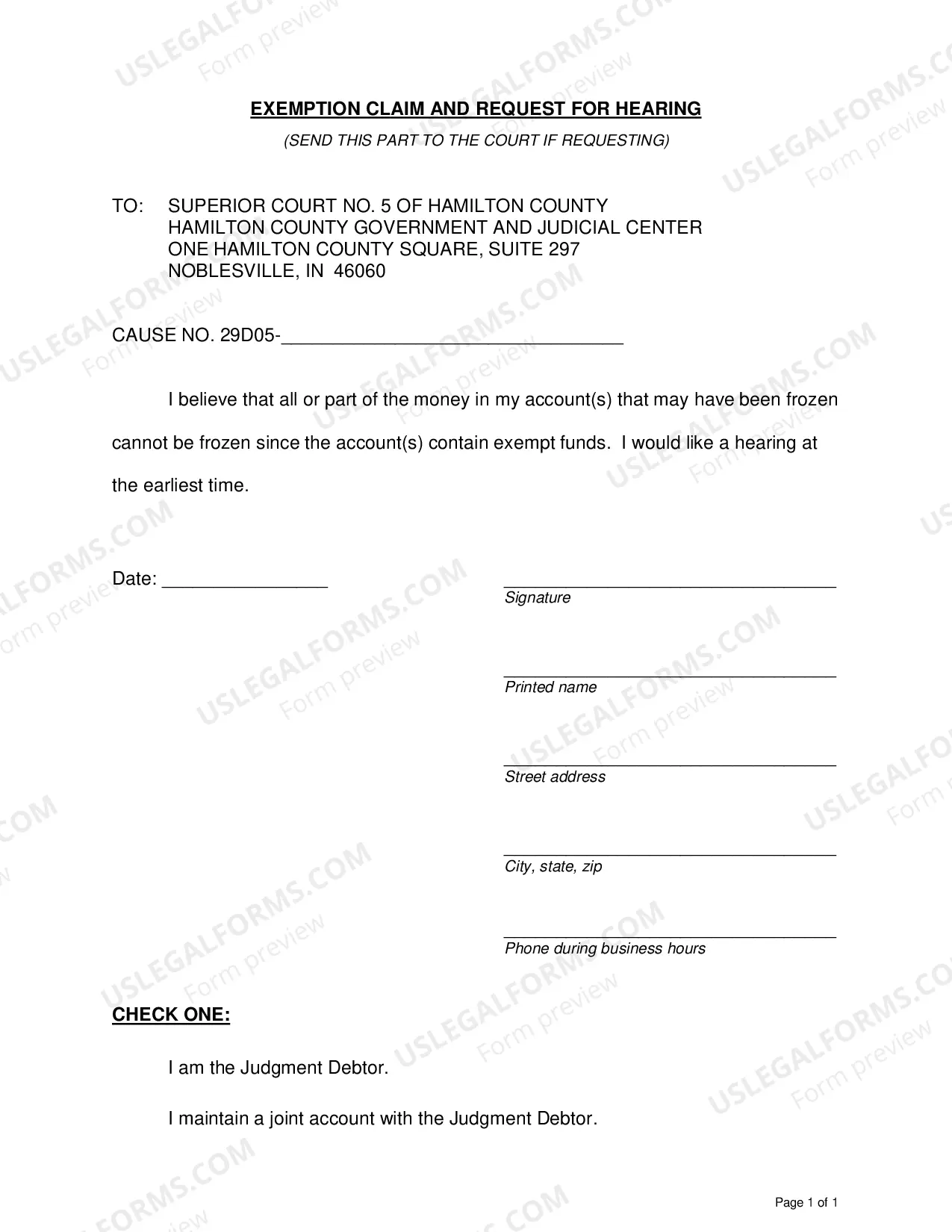
Plaintiff's First Request for Production of Documents in Case Involving Technology System
What this document covers
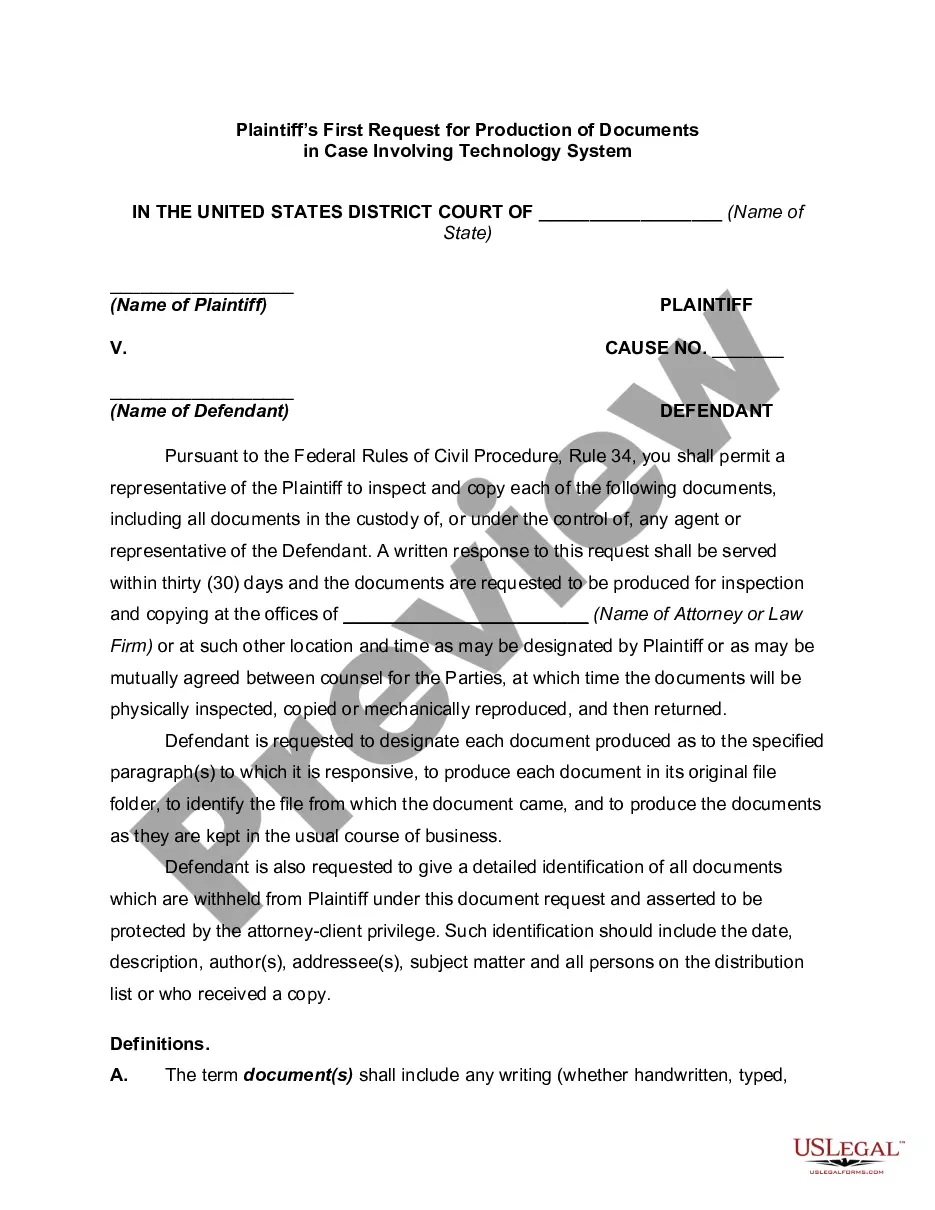
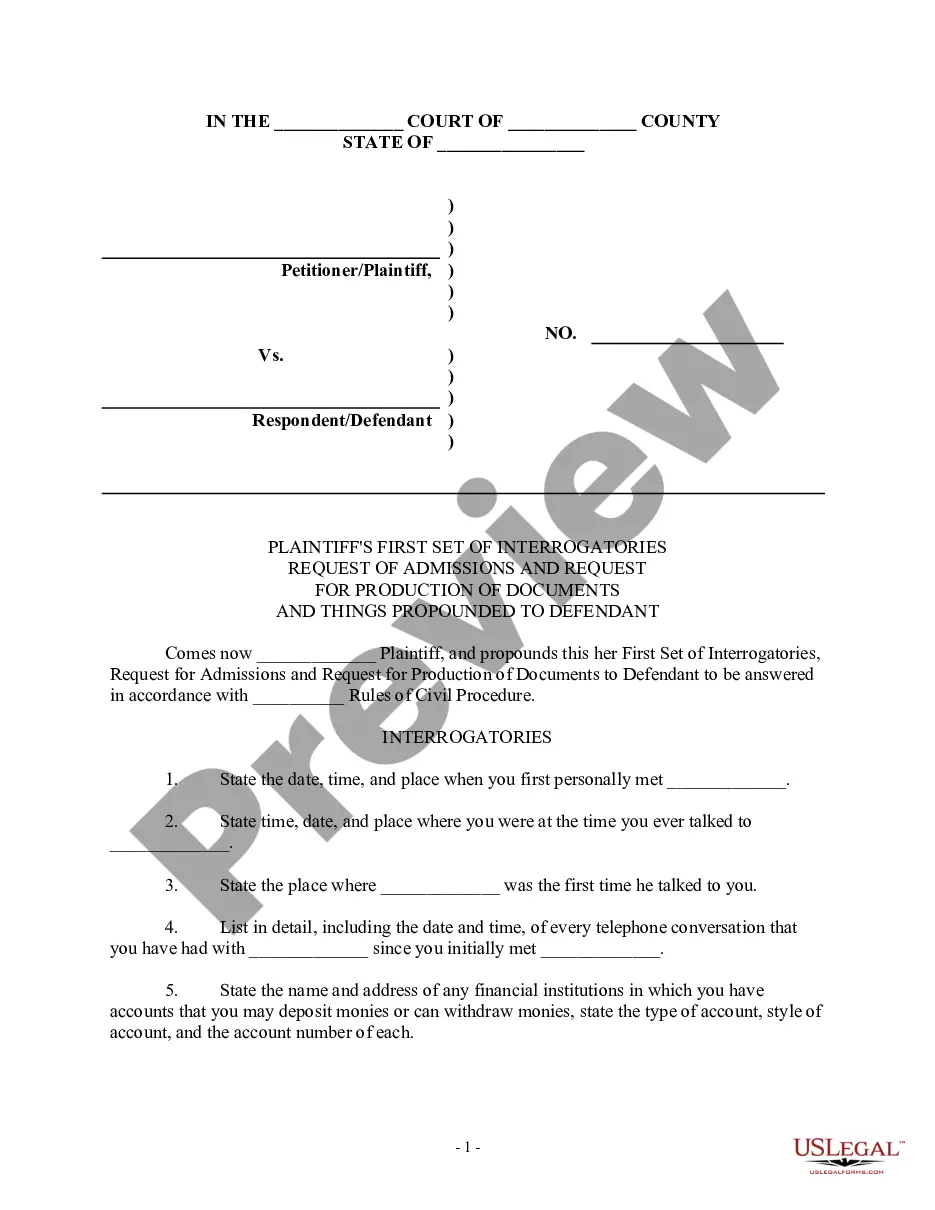
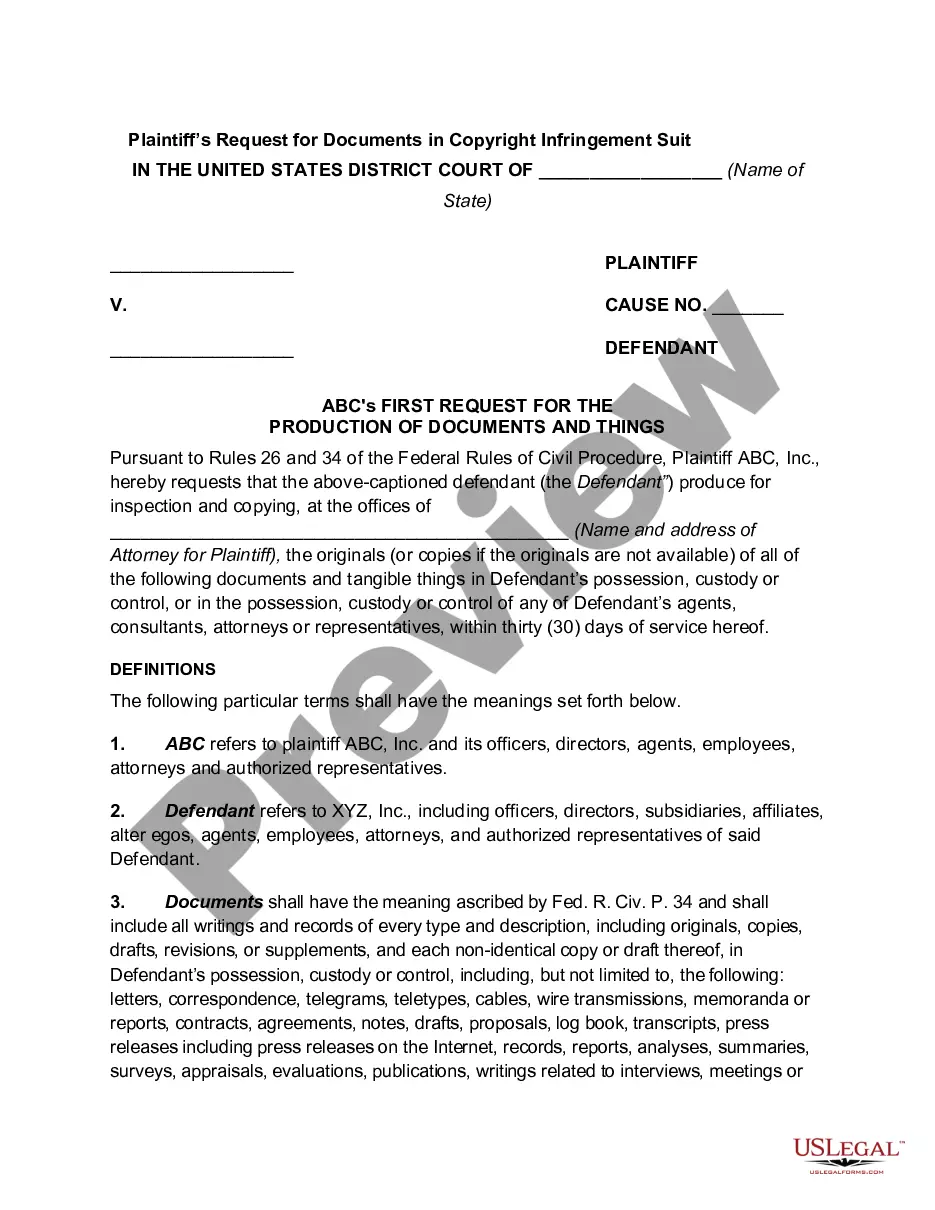
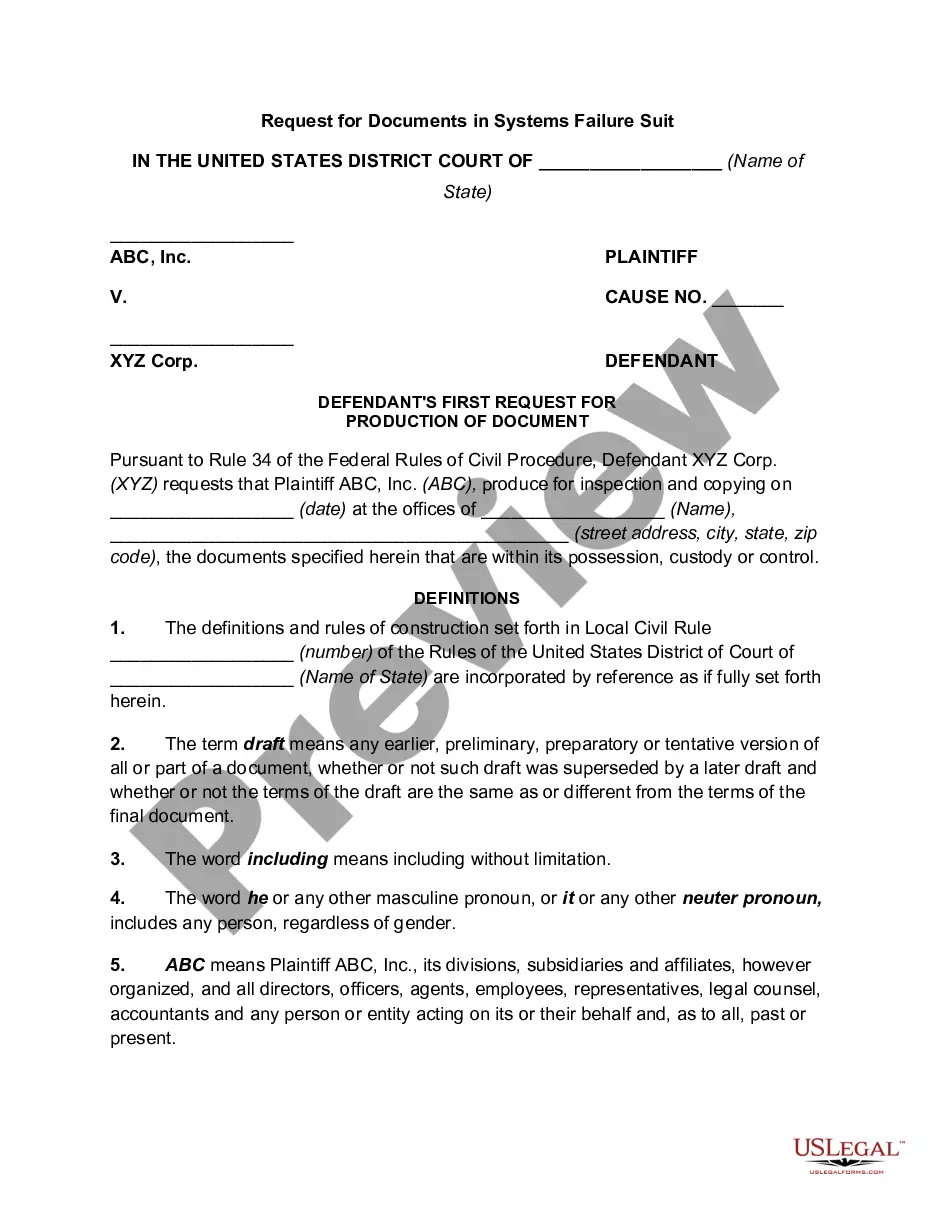
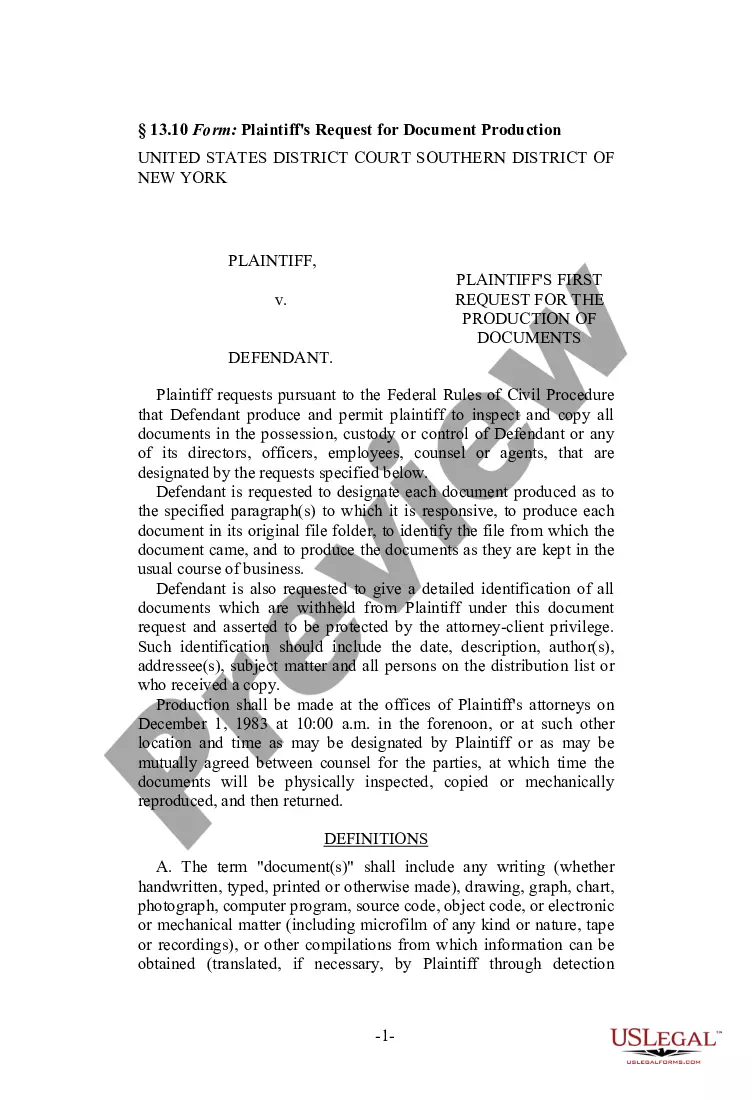
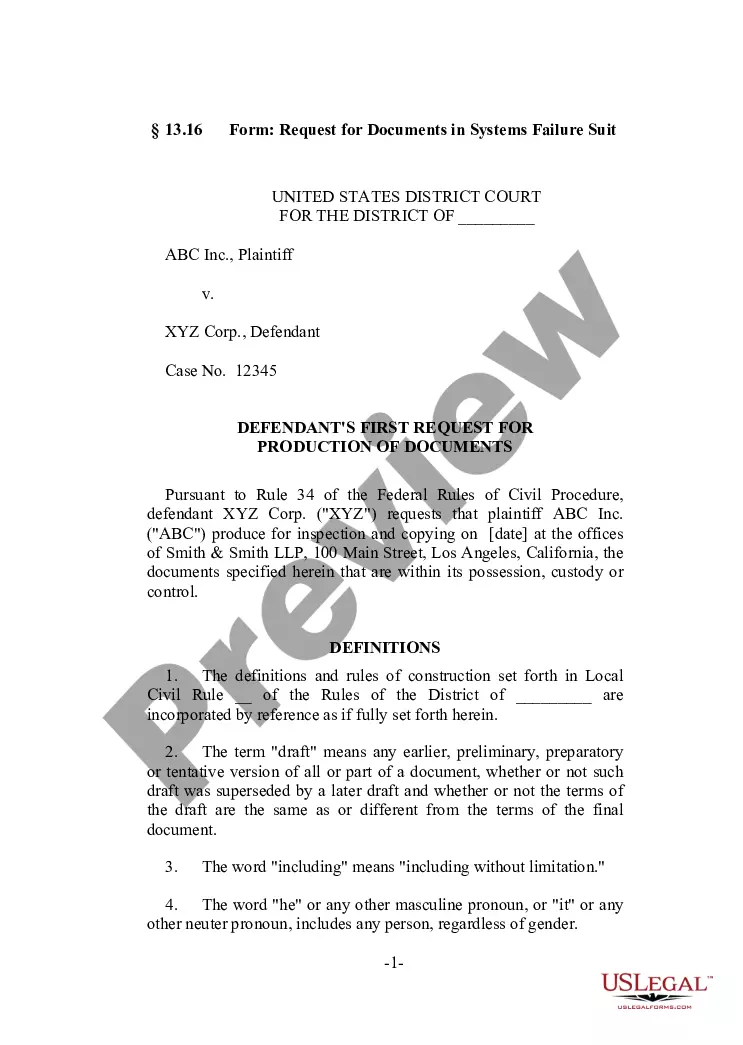
The Plaintiff's First Request for Production of Documents in a Case Involving a Technology System is a legal document used by a plaintiff in litigation to request relevant documents and electronically stored information from the defendant. This form is an essential part of the discovery process under Rule 34 of the Federal Rules of Civil Procedure, enabling plaintiffs to gather necessary evidence from opposing parties. Unlike other forms, this specific request is tailored to cases relating to technology systems, ensuring comprehensive information is collected for the case.
Key components of this form
- Identification of the parties involved in the case
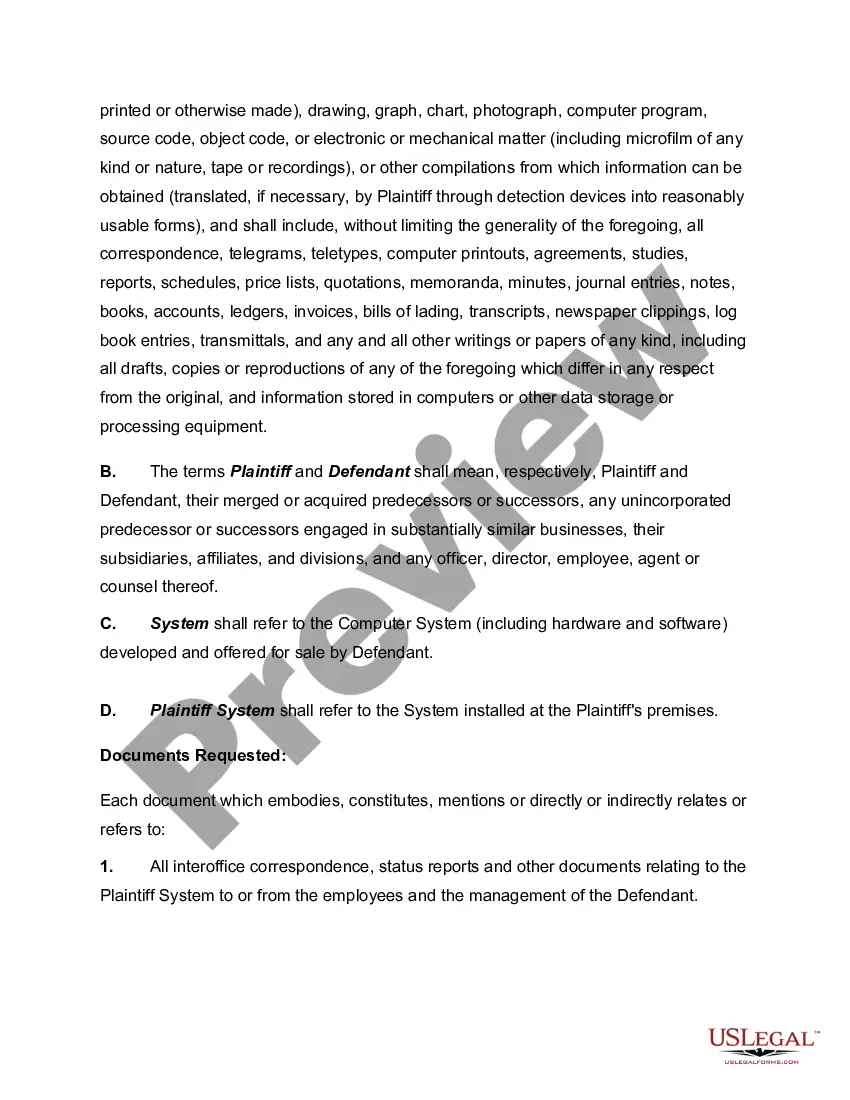
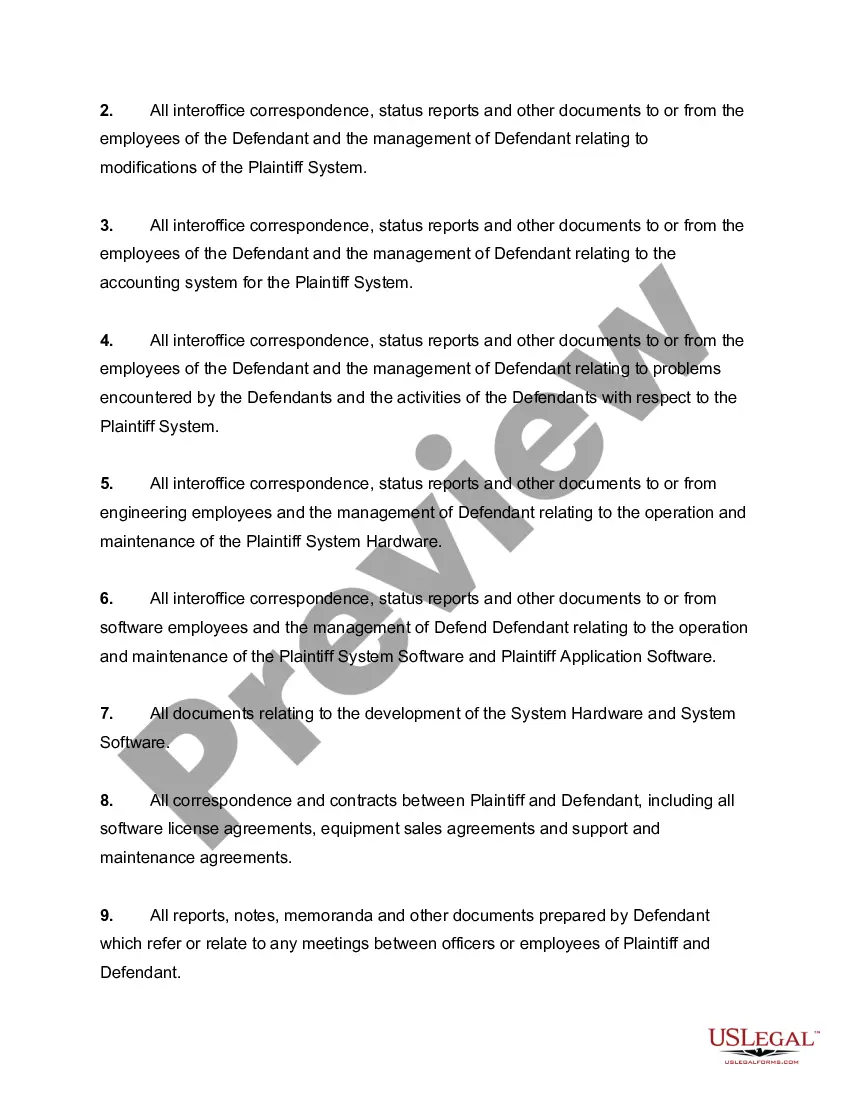
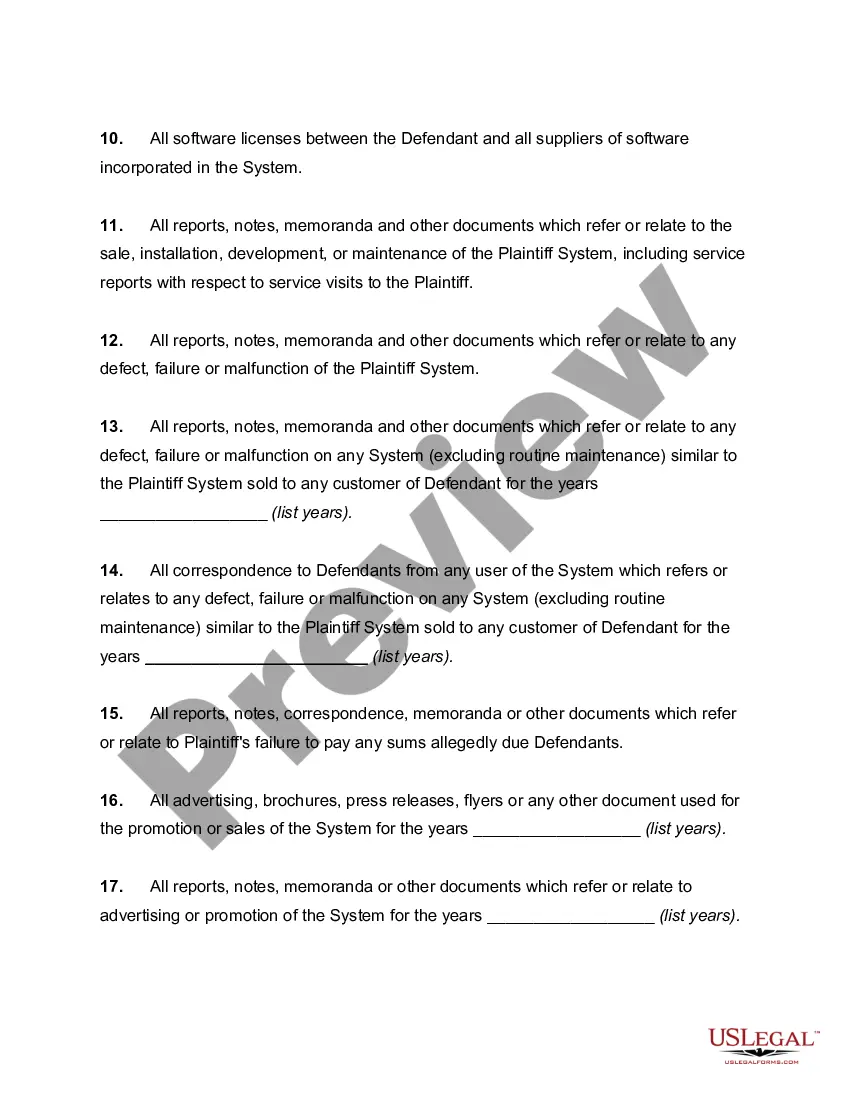
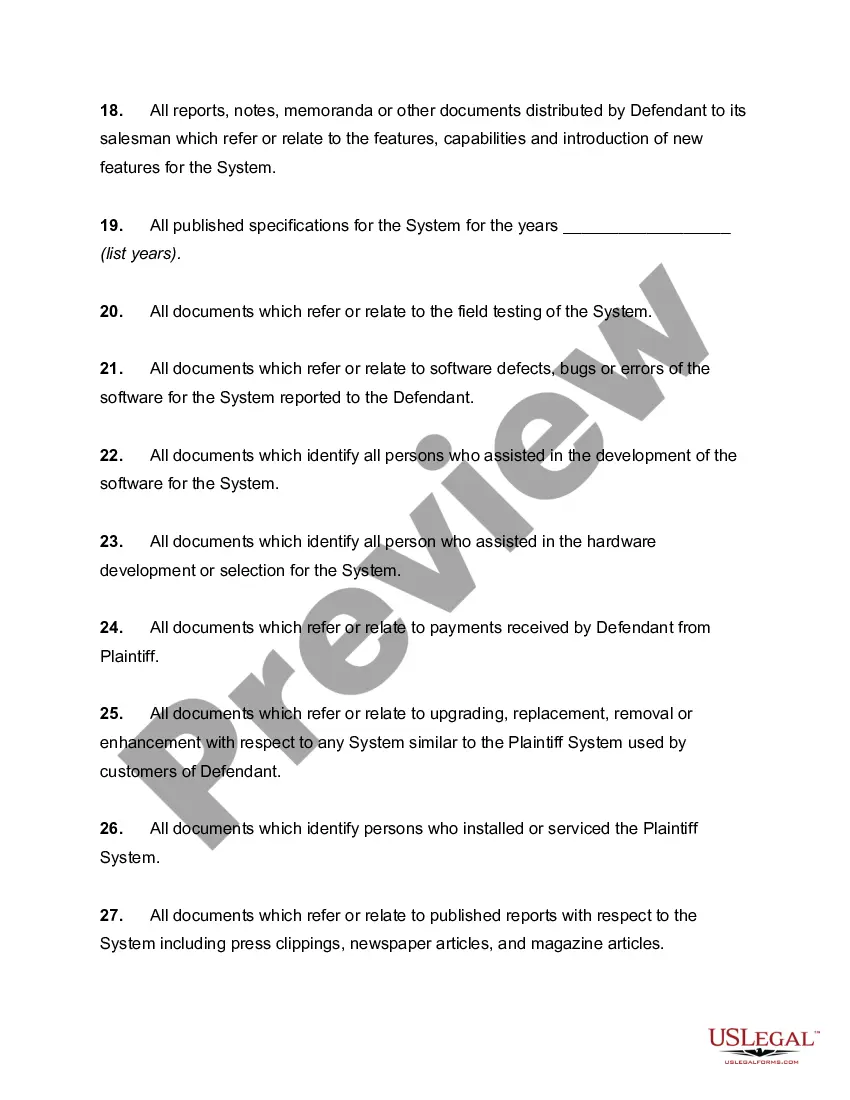
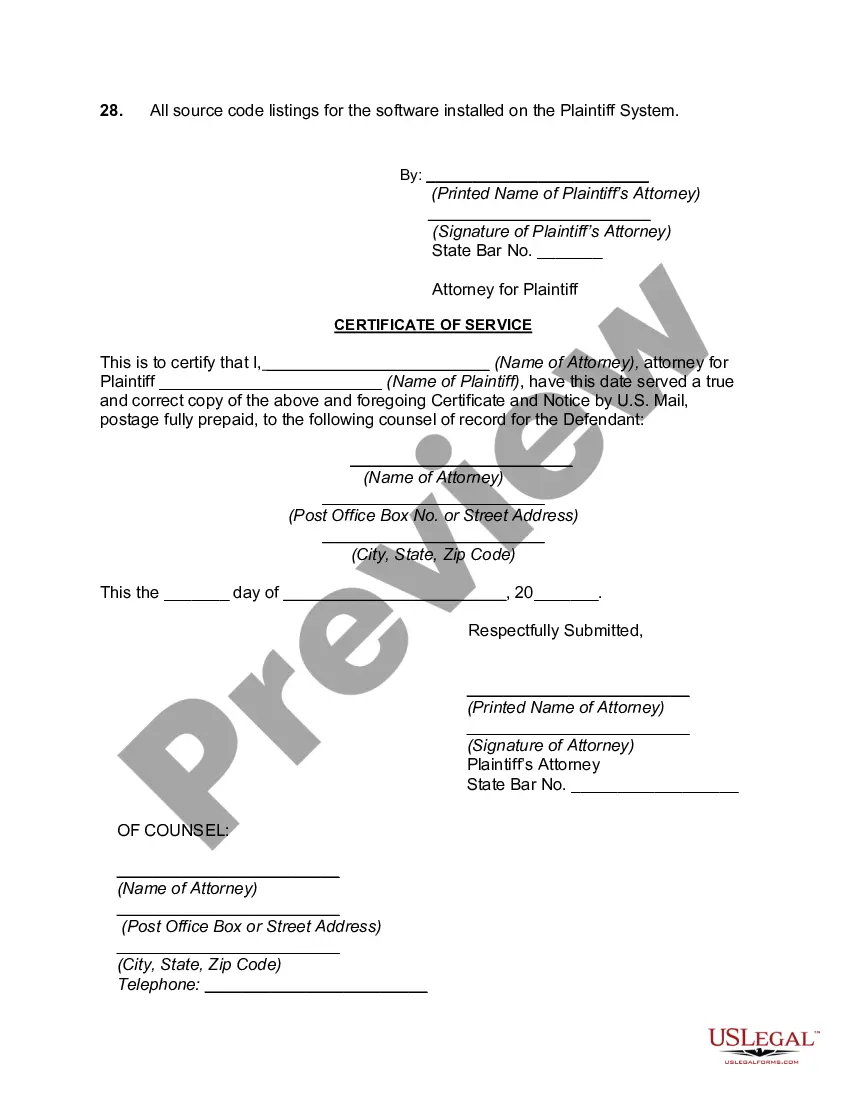
- Specific requests for documents related to the technology system
- Requirements for the defendant to respond within thirty days
- Procedure for inspecting and copying the requested documents
- Identification of documents withheld under attorney-client privilege
- Certification of service to ensure proper notification of the request
When this form is needed
This form should be used when a plaintiff needs to obtain documents from a defendant that are relevant to a legal dispute involving a technology system. Typical scenarios include cases concerning software failures, hardware defects, maintenance records, licensing agreements, and communication logs that pertain to the technology system at issue. Utilizing this form assists in compiling evidence necessary for litigation, providing a clearer understanding of the defendant's actions and responsibilities regarding the technology in question.
Who should use this form
- Plaintiffs involved in litigation concerning technology systems
- Attorneys representing plaintiffs in federal civil cases
- Parties seeking to gather evidence through formal document requests
- Individuals with limited legal experience needing to navigate the discovery process
How to complete this form
- Enter the names of the plaintiff and defendant, and include the cause number.
- List the documents requested systematically, ensuring relevance to the technology system.
- Specify the time and location for producing the documents for inspection.
- Include details regarding any documents withheld, citing the basis for withholding.
- Ensure the form is signed by the plaintiffâs attorney with their bar number.
- Certify the service of this request to the defendantâs counsel.
Does this document require notarization?
This form does not typically require notarization unless specified by local law. However, always ensure that all parties understand the importance of proper documentation and witness verification as needed in legal proceedings.
Get your form ready online
Our built-in tools help you complete, sign, share, and store your documents in one place.
Make edits, fill in missing information, and update formatting in US Legal Forms—just like you would in MS Word.
Download a copy, print it, send it by email, or mail it via USPS—whatever works best for your next step.
Sign and collect signatures with our SignNow integration. Send to multiple recipients, set reminders, and more. Go Premium to unlock E-Sign.
If this form requires notarization, complete it online through a secure video call—no need to meet a notary in person or wait for an appointment.
We protect your documents and personal data by following strict security and privacy standards.

Make edits, fill in missing information, and update formatting in US Legal Forms—just like you would in MS Word.

Download a copy, print it, send it by email, or mail it via USPS—whatever works best for your next step.

Sign and collect signatures with our SignNow integration. Send to multiple recipients, set reminders, and more. Go Premium to unlock E-Sign.

If this form requires notarization, complete it online through a secure video call—no need to meet a notary in person or wait for an appointment.

We protect your documents and personal data by following strict security and privacy standards.
Common mistakes
- Failing to specify all relevant documents in the request.
- Not providing a clear timeframe for the defendant's response.
- Omitting attorney signature or relevant contact information.
- Not citing the proper legal authority for the request.
- Neglecting to proofread the document for accuracy before submission.
Advantages of online completion
- Convenient access to ready-to-use legal documents tailored for technology cases.
- Editable format allows for easy customization to fit specific case needs.
- Reliable templates drafted by licensed attorneys ensure legal correctness.
- Instant download provides immediate availability without waiting for physical copies.
Legal use & context
- This form is used in the discovery phase of litigation to gather evidence.
- Requests made under this form are enforceable in court if proper procedures are followed.
- Failing to comply with a production request may lead to sanctions or other legal repercussions.
- Understanding the relevancy and importance of each requested document is key to effective use.
Main things to remember
- The form is essential for plaintiffs seeking to obtain relevant documents in technology cases.
- Completing the form accurately is crucial for ensuring compliance with legal requirements.
- Utilizing this form can enhance a plaintiff's ability to present a strong case.
- Awareness of common mistakes can help streamline the document request process.
Looking for another form?
Form popularity
FAQ
When responding to Requests for Admissions, remember to answer as follows: Admit: If any portion of the Request for Admission is true then you must admit to that portion of the request. You are also allowed to have a hybrid response admit the part of the request that is true while denying another part.
Federal Rule 33 limits interrogatories to twenty-five per party rather than per side.
Thank you for your inquiry regarding our product or service. Thank you for your interest in our product or service. We would like to thank you for your letter inquiring about our product. We truly appreciate your letter asking for information about our service.
A request for production is a discovery device used to gain access to documents, electronic data, and physical items held by an opposing party in a legal matter. The aim is to gain insight into any relevant evidence that the opposing party holds.
Primary tabs. In a civil action, a request for admission is a discovery device that allows one party to request that another party admit or deny the truth of a statement under oath. If admitted, the statement is considered to be true for all purposes of the current trial.
The making available by a party of documents in his possession, custody or power for inspection by the other party or for use as evidence at trial.
In a civil action, a request for admission is a discovery device that allows one party to request that another party admit or deny the truth of a statement under oath. If admitted, the statement is considered to be true for all purposes of the current trial.
If a request asks for a document, make a copy of the document; in your response, describe the document and say that a copy is attached; and attach a copy of the document to the responses you send back to the other side.