Request For Documents in Systems Failure Suit
Overview of this form
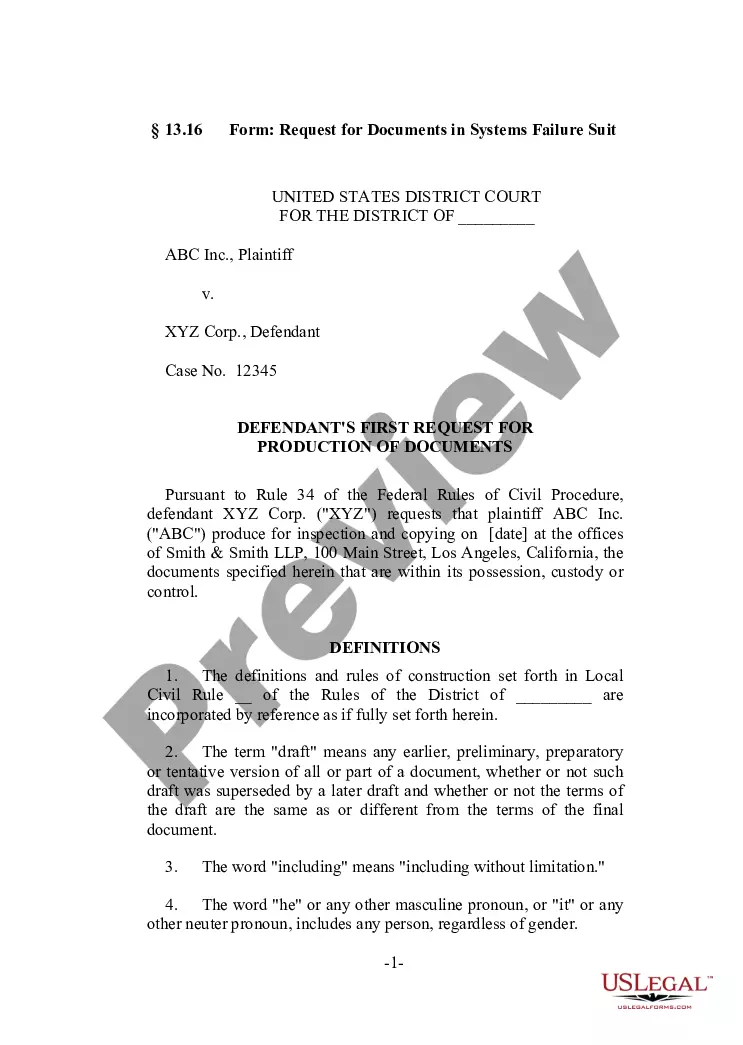
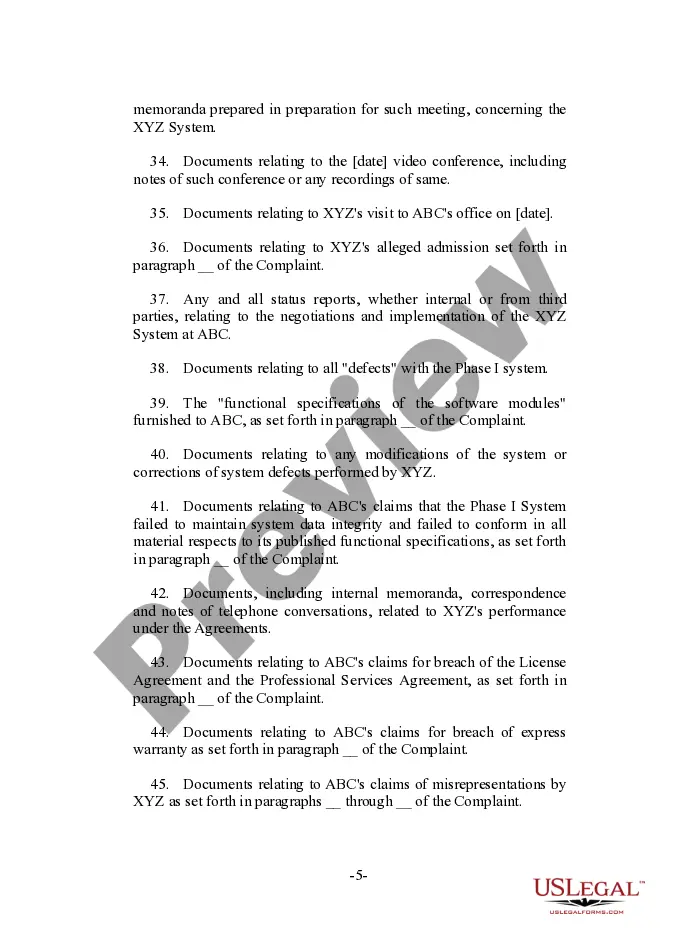
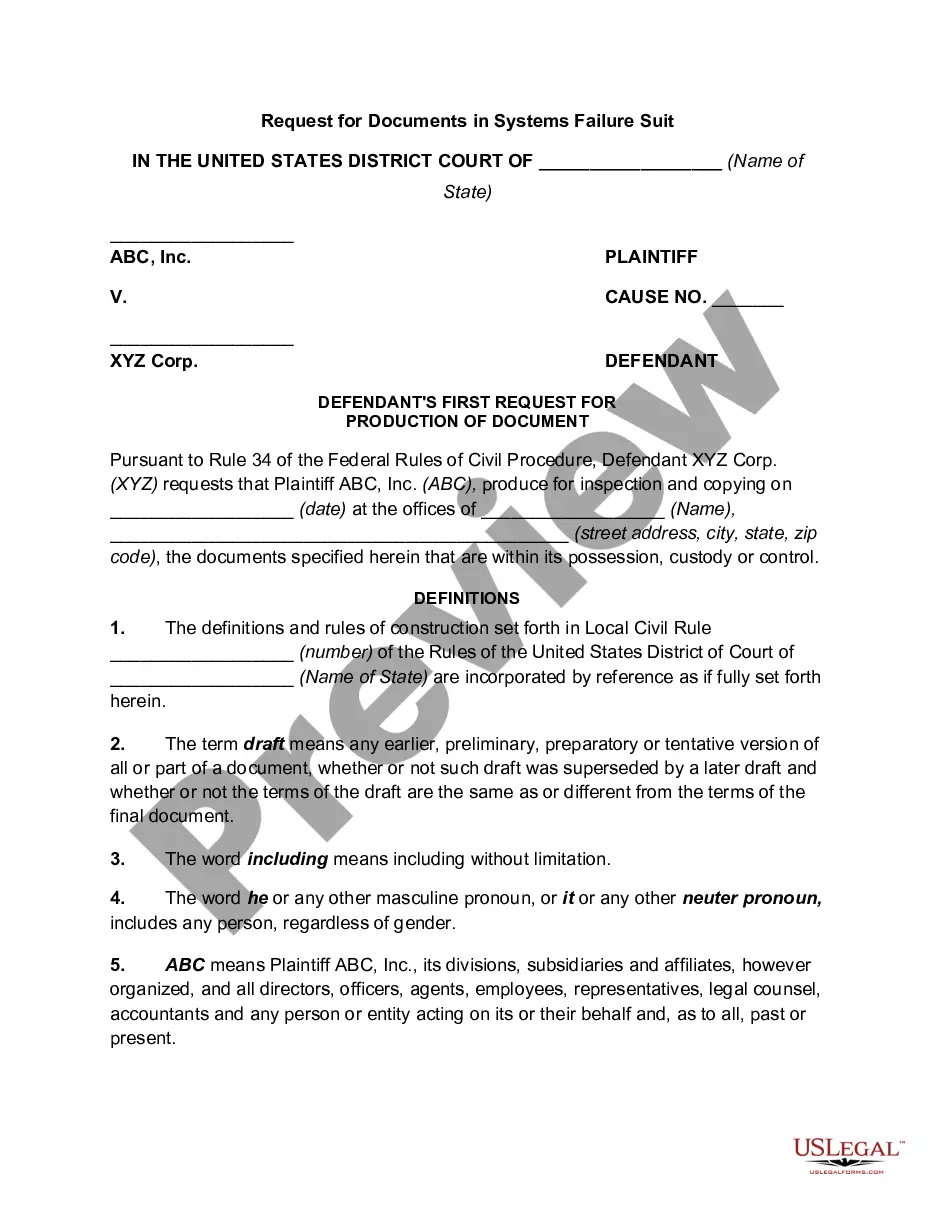
The Request for Documents in Systems Failure Suit is a legal form used primarily in the computer, internet, and software industries. This form allows a defendant to formally request the production of documents from a plaintiff in a systems failure lawsuit. It is essential for gathering essential evidence related to software or automation system disputes, ensuring all parties have access to relevant information to support their claims. This document is different from other discovery forms as it specifically focuses on the types of documents pertinent to systems failure litigation.
What’s included in this form
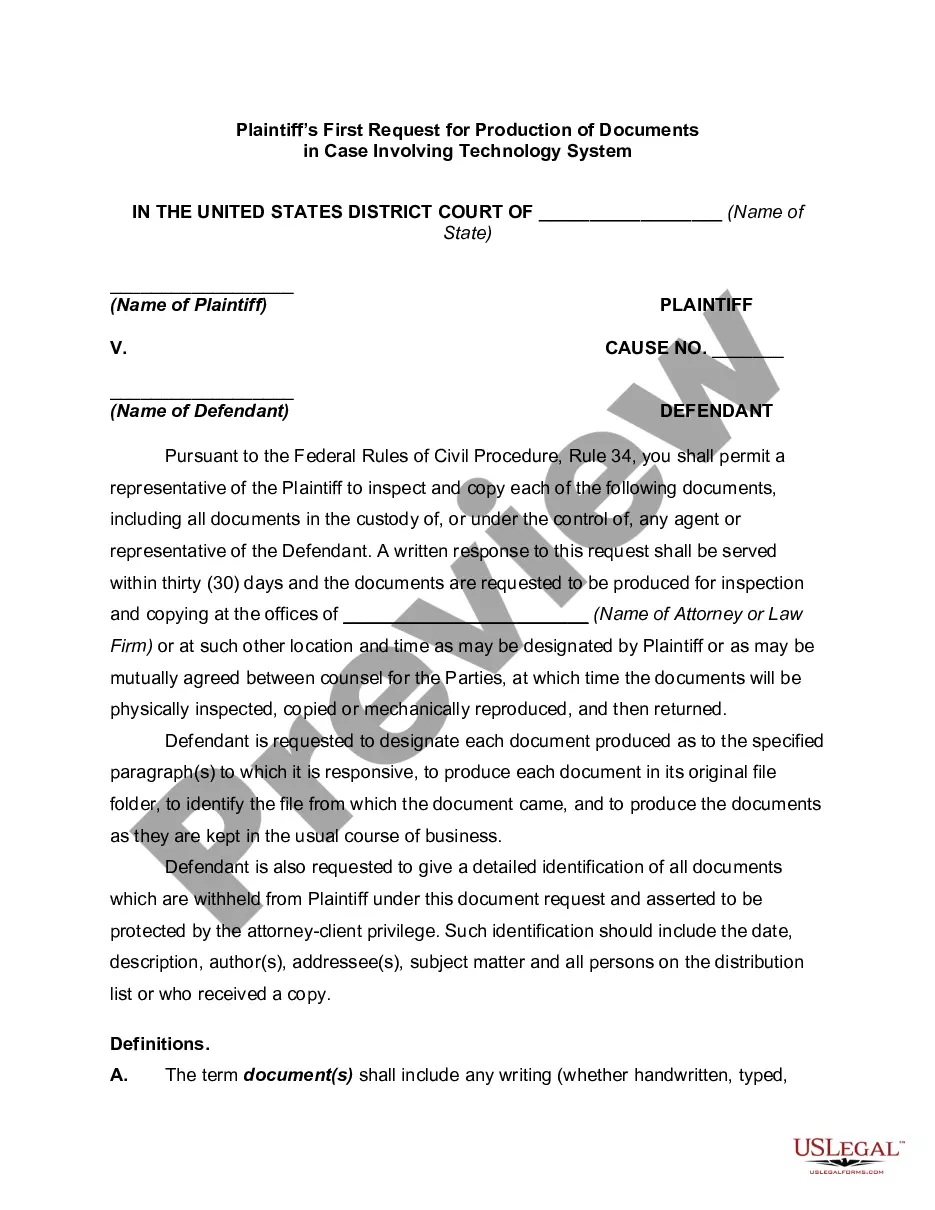
- Identification of the plaintiff and defendant, including the case number.
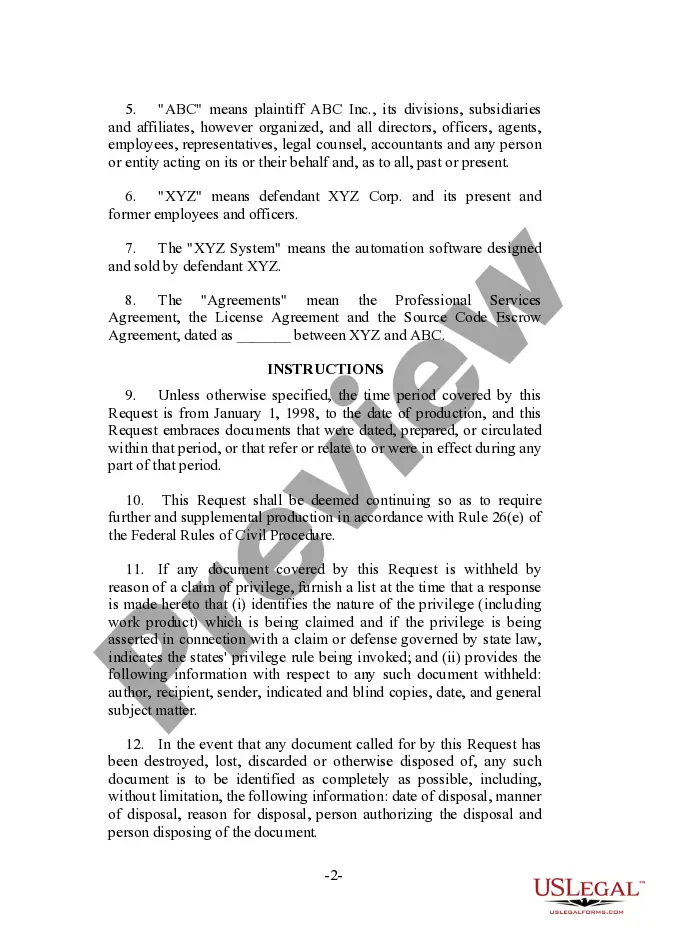
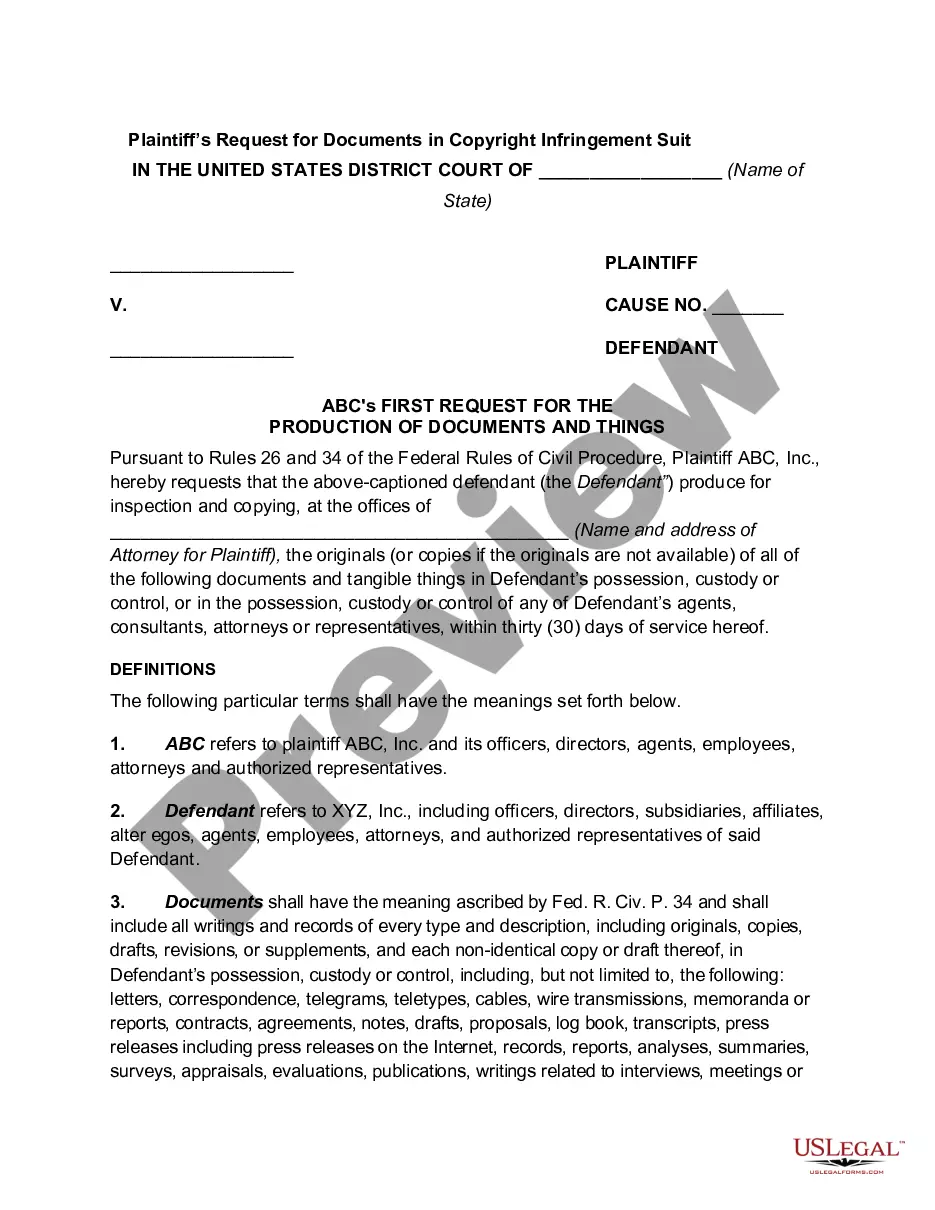
- Definitions section clarifying key terms and references relevant to the case.
- Detailed instructions on document production requirements and timeframes.
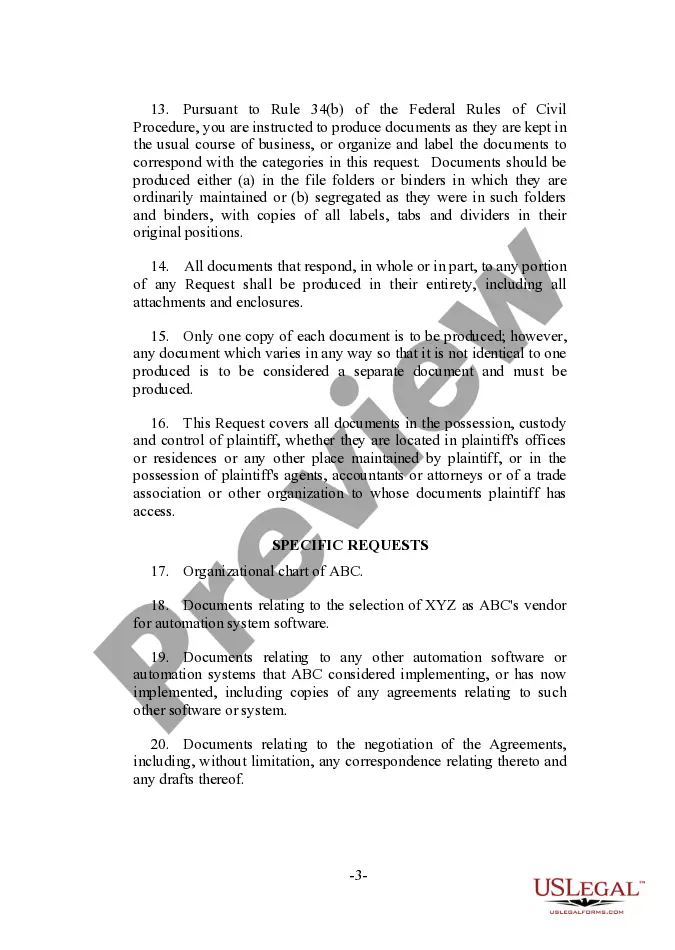
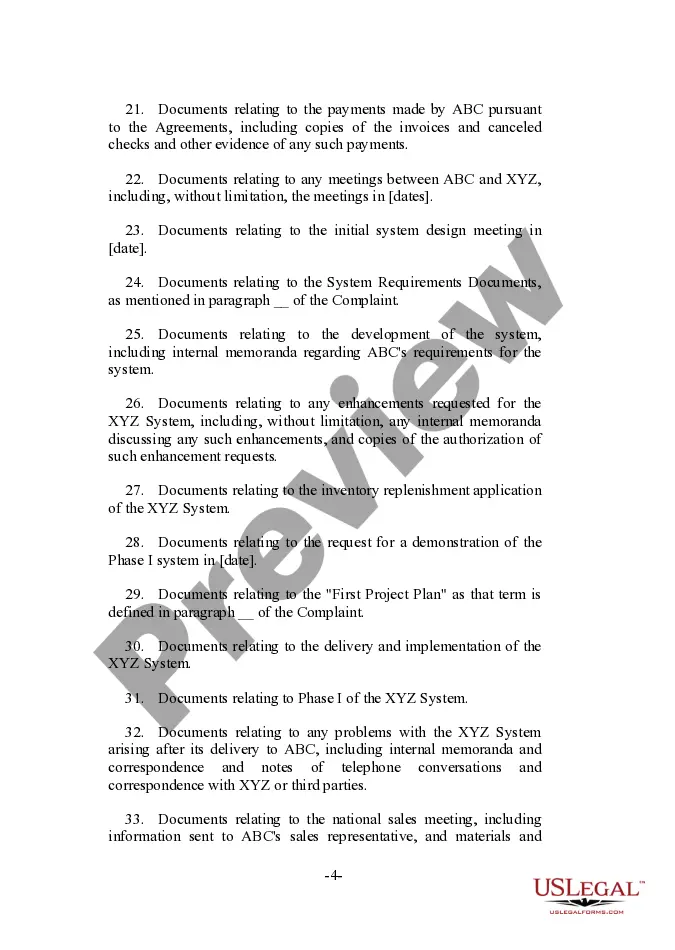
- Specific requests for various types of documents related to the systems failure.
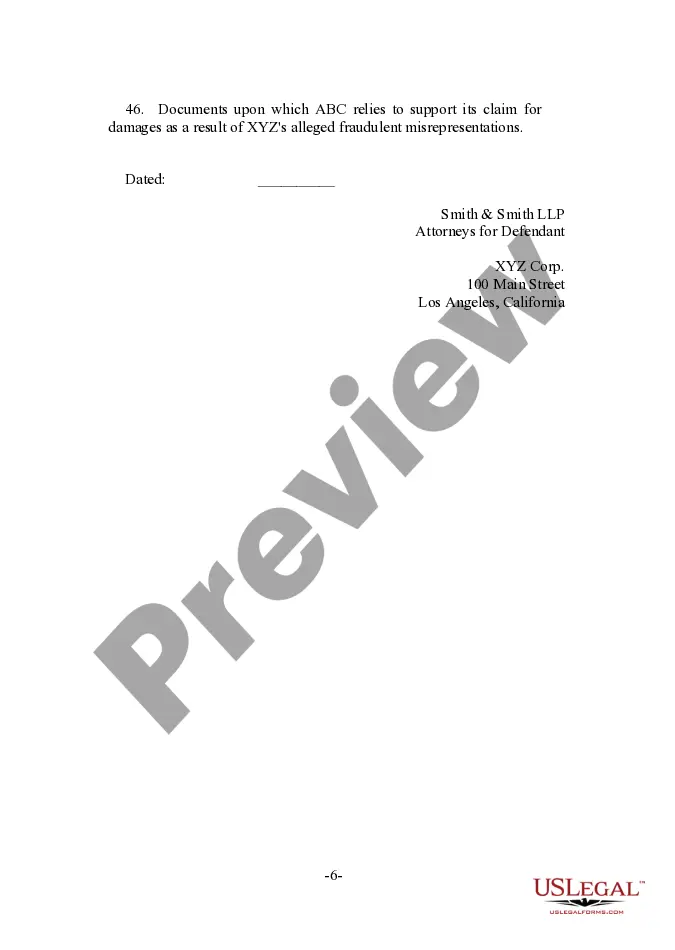
- Signatory details of the attorney representing the defendant.
When this form is needed
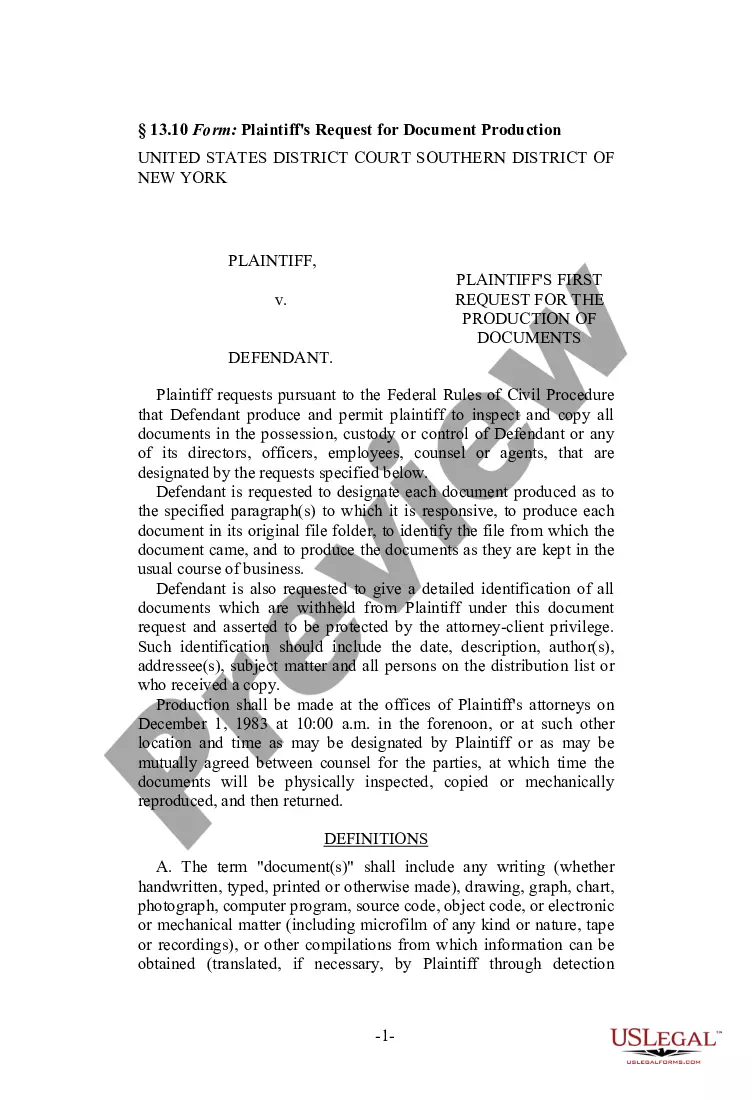
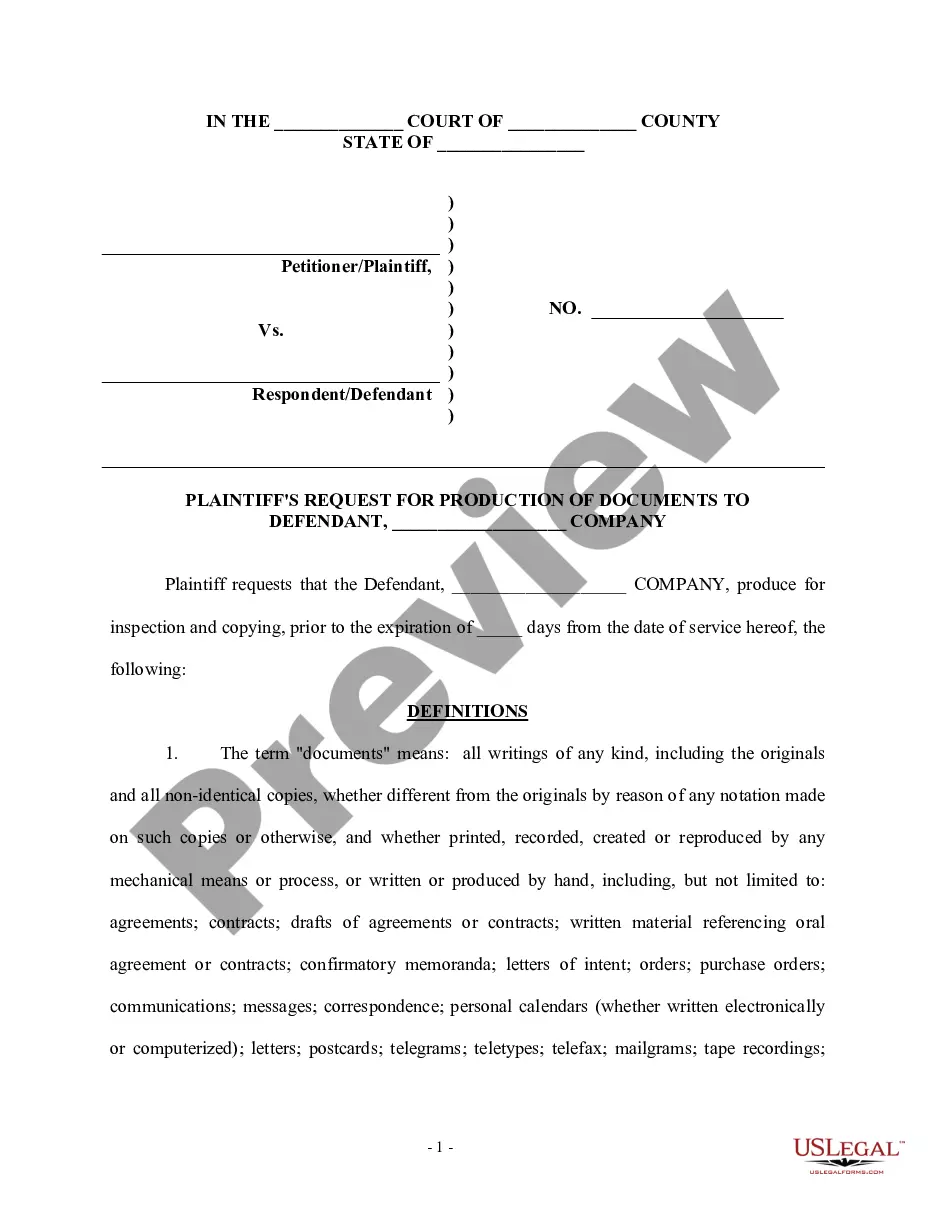
This form should be used when a party involved in a systems failure lawsuit needs to request relevant documents from the opposing party. Situations may include disputes over performance issues, software malfunctions, or contractual obligations related to automation systems. It is commonly utilized during the discovery phase of litigation when gathering evidence is essential for building a case.
Who needs this form
This form is intended for:
- Defendants in systems failure lawsuits seeking evidence from plaintiffs.
- Legal professionals representing clients in technology-related disputes.
- Businesses involved in contracts with software vendors or automation service providers.
Completing this form step by step
- Enter the names of the plaintiff and defendant, along with the case number.
- Define key terms in the definitions section to clarify any legal jargon.
- Specify the dates and details for document production, including the location for inspection.
- List specific document requests related to the systems failure, ensuring clarity in what is being sought.
- Have the attorney sign the form, providing their contact information and law firm details.
Does this document require notarization?
This form does not typically require notarization unless specified by local law. Ensure to check any jurisdiction-specific requirements that may apply to your case.
Get your form ready online
Our built-in tools help you complete, sign, share, and store your documents in one place.
Make edits, fill in missing information, and update formatting in US Legal Forms—just like you would in MS Word.
Download a copy, print it, send it by email, or mail it via USPS—whatever works best for your next step.
Sign and collect signatures with our SignNow integration. Send to multiple recipients, set reminders, and more. Go Premium to unlock E-Sign.
If this form requires notarization, complete it online through a secure video call—no need to meet a notary in person or wait for an appointment.
We protect your documents and personal data by following strict security and privacy standards.

Make edits, fill in missing information, and update formatting in US Legal Forms—just like you would in MS Word.

Download a copy, print it, send it by email, or mail it via USPS—whatever works best for your next step.

Sign and collect signatures with our SignNow integration. Send to multiple recipients, set reminders, and more. Go Premium to unlock E-Sign.

If this form requires notarization, complete it online through a secure video call—no need to meet a notary in person or wait for an appointment.

We protect your documents and personal data by following strict security and privacy standards.
Common mistakes to avoid
- Failing to specify clear and relevant documents needed can lead to incomplete responses.
- Not adhering to the designated timeframes for document production can hinder the case.
- Omitting proper legal definitions can create ambiguity in the requests.
Benefits of completing this form online
- Convenient access to customized templates allows for easy modifications.
- Organized structure aids in ensuring all necessary components are completed accurately.
- Legal forms can be downloaded and printed for immediate use, saving time.
Legal use & context
- This form is legally recognized when properly completed as part of the discovery process.
- Compliance with local procedures enhances the likelihood of enforceability.
- Proper use can aid in demonstrating the relevance of claims in court.
What to keep in mind
- The Request for Documents in Systems Failure Suit is essential for obtaining critical information in litigation.
- Clear and specific requests improve the chances of a successful document production.
- Legal representation is advisable to navigate the complexities of document requests within lawsuits.
Looking for another form?

Form popularity
FAQ
In law, interrogatories (also known as requests for further information) are a formal set of written questions propounded by one litigant and required to be answered by an adversary in order to clarify matters of fact and help to determine in advance what facts will be presented at any trial in the case.
Requests for the Production of Documents are a discovery device used by a party to enable the individual to learn the facts that are the basis for, or support, a pleading with which he or she has been served by the opposing party.These documents might also be evidence in a hearing or a trial.
In a civil action, a request for admission is a discovery device that allows one party to request that another party admit or deny the truth of a statement under oath. If admitted, the statement is considered to be true for all purposes of the current trial.
In certain cases, you might be able to write a letter to the other side and request the documents that you need. However, in more formal cases, you will likely have to draft more formal discovery demands. There are usually forms available for this in local law libraries, from the court clerk's office, or online.
A request for production is a legal request for documents, electronically stored information, or other tangible items made in the course of litigation.The responding party is required to furnish copies of any documents that are responsive to the request, except for those that are legally privileged.
Interrogatories, which are written questions about things that are relevant or important to the case. (NRCP 33; JCRCP 33) Requests for production of documents or things, which are written requests that demand the other side provide particular documents or items.
A request for production is a discovery device used to gain access to documents, electronic data, and physical items held by an opposing party in a legal matter. The aim is to gain insight into any relevant evidence that the opposing party holds.
Discovery is the process through which defendants find out about the prosecution's case. For example, through standard discovery procedure, they can: get copies of the arresting officers' reports and statements made by prosecution witnesses, and. examine evidence that the prosecution proposes to introduce at trial.