Arizona Conditional, Standard Terms
Overview of this form
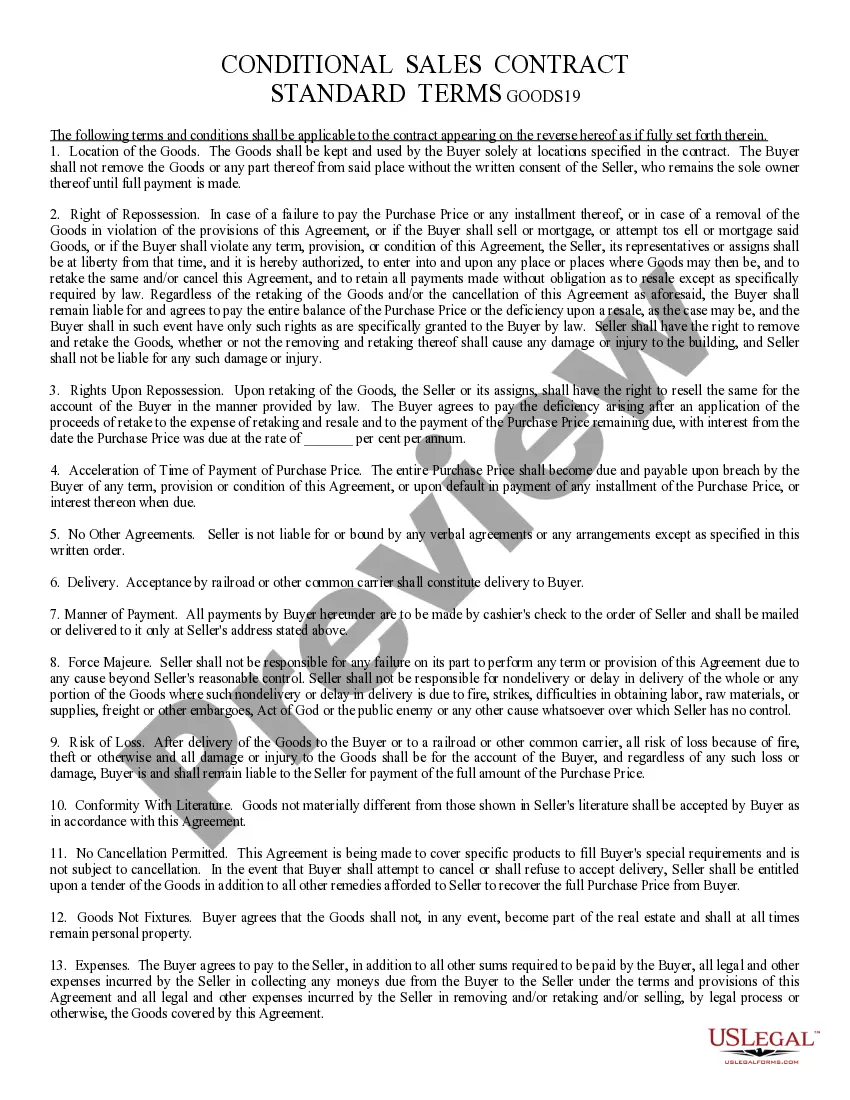
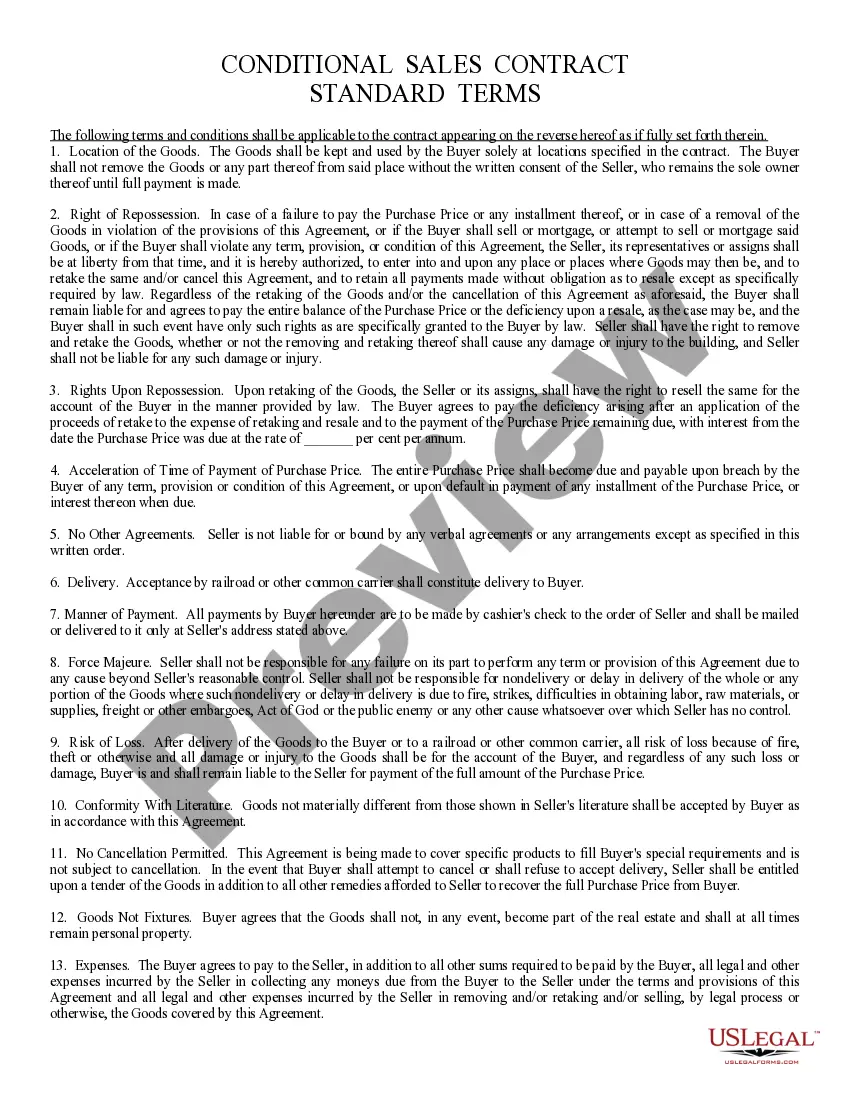
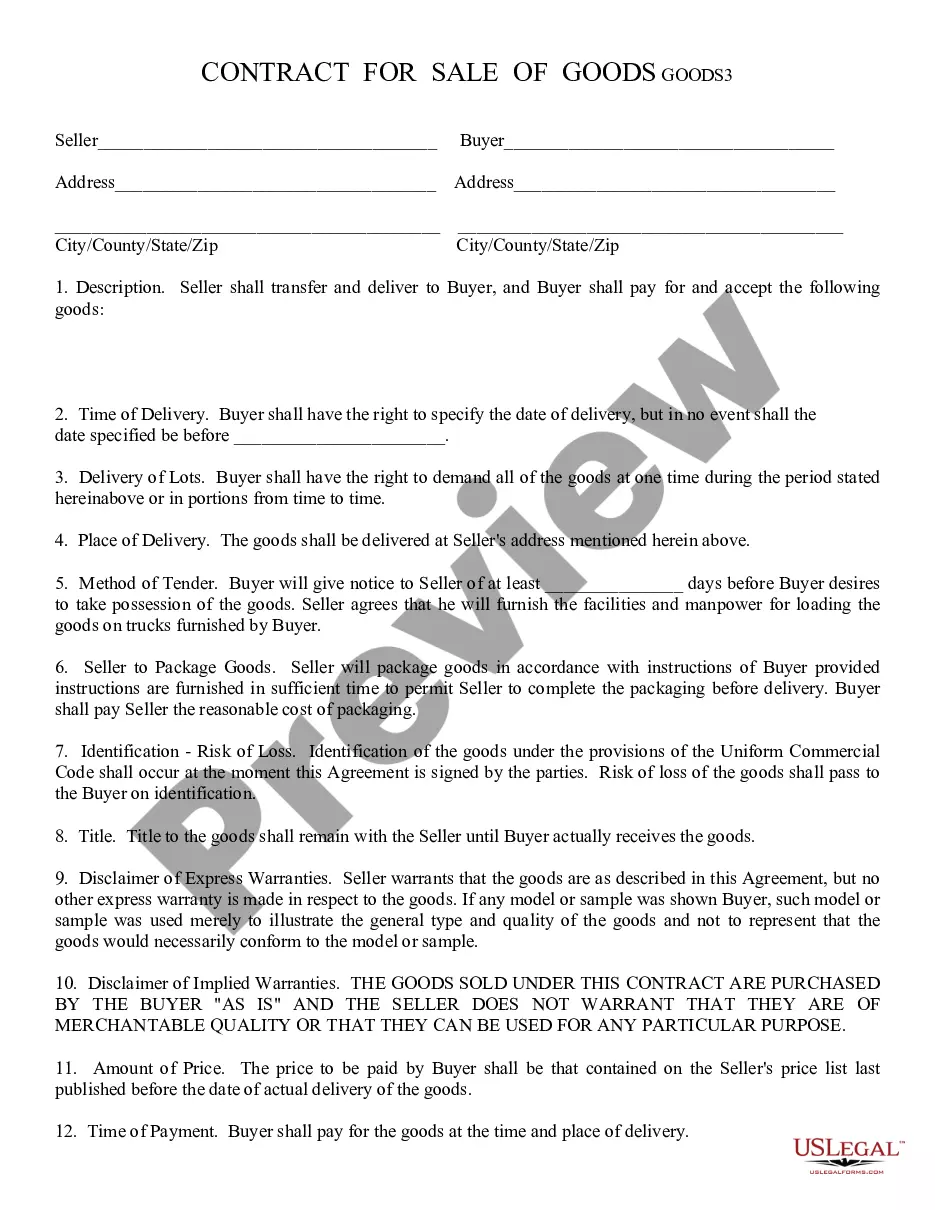
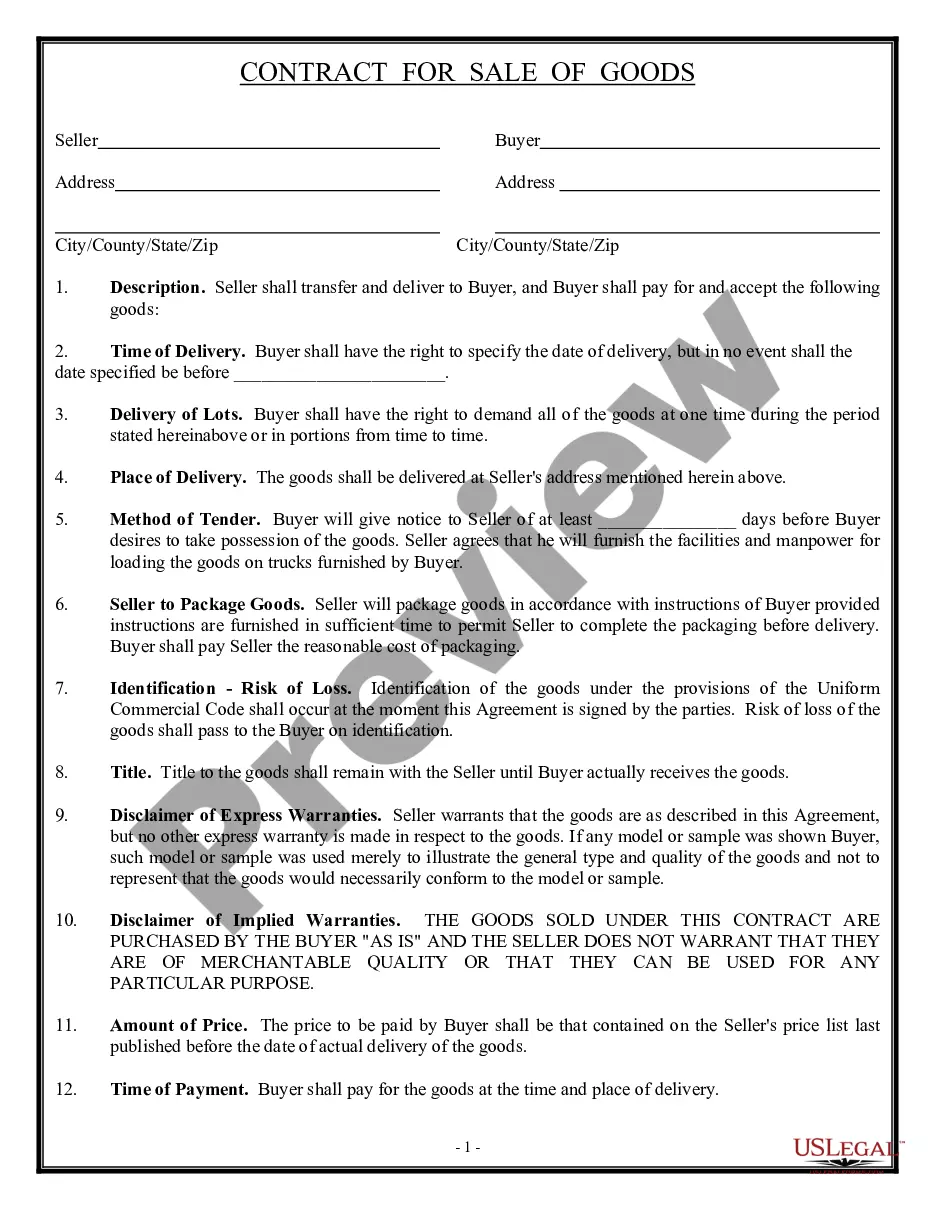
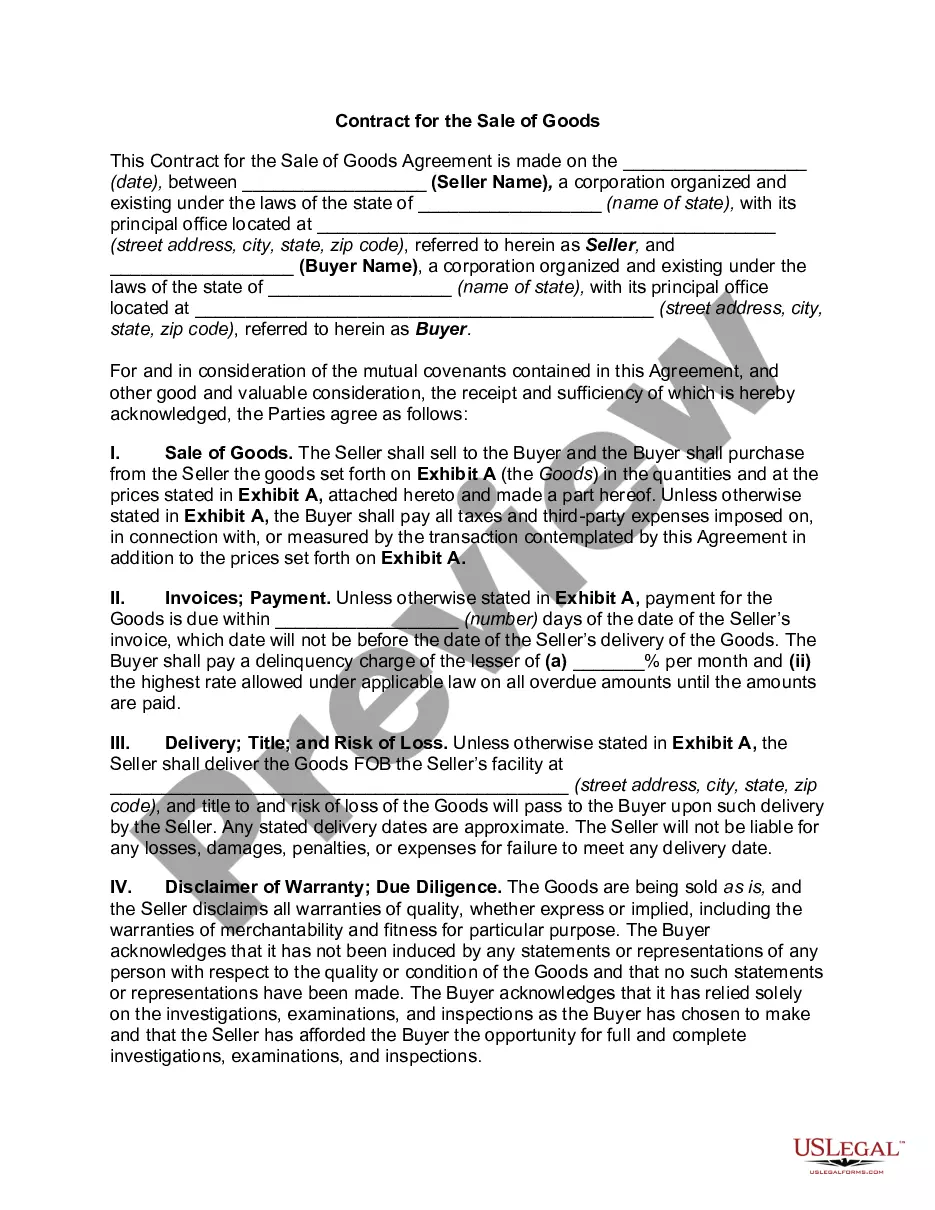
The Conditional - Standard Terms form is a legally binding contract designed for conditional sales transactions. This form outlines the responsibilities and rights of both the buyer and the seller, specifying that obligations can be waived if certain conditions are unmet. It differs from other sales contracts by ensuring that the goods remain under the seller's ownership until the full payment is received, providing an option for repossession when necessary.
Key components of this form
- Location of goods: Specifies where the goods must be kept and used.
- Right of repossession: Outlines the seller's authority to reclaim the goods if payment is not made.
- Acceleration clause: States that the total purchase price is due if the buyer breaches the contract.
- Risk of loss: Clarifies that the buyer assumes risk for loss or damage to the goods after delivery.
- No cancellation permitted: Indicates that the agreement is binding and not subject to cancellation.
- Expenses: Details that the buyer is responsible for legal expenses incurred by the seller in case of default.
Common use cases
This form is used in scenarios where a buyer wishes to purchase goods on a conditional basis. It is particularly useful for high-value transactions where the seller wants to retain ownership until full payment is confirmed. Use this form if you want to ensure that you have rights to repossess goods if payments are missed or if the buyer violates any terms of the agreement.
Who needs this form
- Buyers looking to acquire goods while making payments over time.
- Sellers who want to protect their ownership rights until payment is received.
- Businesses that deal with high-value products or equipment.
- Individuals not familiar with legal contracts but seeking a clear agreement for a sales transaction.
Steps to complete this form
- Identify the parties: Clearly state the names and addresses of the buyer and seller.
- Describe the goods: Provide detailed descriptions of the goods being sold.
- Specify payment terms: Outline the total sale price and terms of payment.
- Enter conditions: Clearly outline any conditions that must be met for the sale to proceed.
- Include signatures: Ensure that both buyer and seller sign the document for enforceability.
Notarization requirements for this form
In most cases, this form does not require notarization. However, some jurisdictions or signing circumstances might. US Legal Forms offers online notarization powered by Notarize, accessible 24/7 for a quick, remote process.
Get your form ready online
Our built-in tools help you complete, sign, share, and store your documents in one place.
Make edits, fill in missing information, and update formatting in US Legal Forms—just like you would in MS Word.
Download a copy, print it, send it by email, or mail it via USPS—whatever works best for your next step.
Sign and collect signatures with our SignNow integration. Send to multiple recipients, set reminders, and more. Go Premium to unlock E-Sign.
If this form requires notarization, complete it online through a secure video call—no need to meet a notary in person or wait for an appointment.
We protect your documents and personal data by following strict security and privacy standards.

Make edits, fill in missing information, and update formatting in US Legal Forms—just like you would in MS Word.

Download a copy, print it, send it by email, or mail it via USPS—whatever works best for your next step.

Sign and collect signatures with our SignNow integration. Send to multiple recipients, set reminders, and more. Go Premium to unlock E-Sign.

If this form requires notarization, complete it online through a secure video call—no need to meet a notary in person or wait for an appointment.

We protect your documents and personal data by following strict security and privacy standards.
Common mistakes
- Failing to specify the conditions required for the sale.
- Not signing the document by both parties.
- Inadequately describing the goods, which can lead to disputes.
- Overlooking the details of payment terms and deadlines.
Why complete this form online
- Convenience: Download and fill out the form anytime from anywhere.
- Editability: Customize the form based on your specific transaction needs.
- Reliability: Legal forms provided by licensed attorneys ensure they meet legal standards.
- Time-saving: Eliminate the need for expensive legal consultations for simple agreements.
Legal use & context
- This form serves as a protective measure for sellers against buyers defaulting on payments.
- The enforceability of the terms depends on both parties understanding their rights and obligations.
- It is advisable to consult local laws, as some jurisdictions may have additional requirements for conditional sales contracts.
Quick recap
- The Conditional - Standard Terms form protects the seller while allowing buyers to acquire goods on a conditional basis.
- It is essential for both parties to understand their rights and obligations under the agreement.
- Properly completing the form can help avoid legal disputes in the future.
Looking for another form?


Form popularity
FAQ
A conditional lien is a type of lien that will only take effect or be enforceable once specific conditions are met. This means that the lien cannot be enforced until the agreed-upon terms are fulfilled. Recognizing the nuances of conditional liens is vital, particularly when navigating the landscape of Arizona Conditional, Standard Terms.
A conditional waiver and release upon progress payment is a document that releases the right to file a lien as payment is made, but only under specific conditions. This ensures that contractors or suppliers are compensated while protecting the property owner’s interests. Understanding this process within Arizona Conditional, Standard Terms can safeguard your investment effectively.
Yes, Arizona has statutory lien waivers, which allow parties to waive their rights to claim a lien under certain conditions. This is helpful in construction projects, facilitating smoother transactions and payments. Being aware of Arizona's statutory lien waivers is essential, especially in relation to Arizona Conditional, Standard Terms, to ensure compliance and protection for all parties.
A conditional release of lien in Florida is a legal document that indicates a lien will be released once certain conditions are fulfilled. This allows a party to proceed with a project while assuring that they won’t be held liable once obligations are met. Utilizing services like uslegalforms can assist you in understanding and implementing Arizona Conditional, Standard Terms more effectively.
The primary difference between a conditional and unconditional lien lies in their terms of release. A conditional lien requires specific conditions to be met before it is released, while an unconditional lien is released without any further obligations. Understanding these differences can streamline your processes, particularly in relation to Arizona Conditional, Standard Terms.
An unconditional release of lien in Florida is a document that states a lien has been fully satisfied, removing any claims against a property. This type of release does not depend on any future conditions or actions. Knowing the difference between conditional and unconditional releases can provide clarity, especially when you deal with matters regarding Arizona Conditional, Standard Terms.
Conditional release in Florida refers to an agreement that allows a party to be released from obligations, pending the satisfaction of certain conditions. It is crucial for parties involved in real estate or construction projects, as it mitigates risks associated with payments. Understanding the specifics of conditional releases, especially in contrast to Arizona Conditional, Standard Terms, can protect both parties in a transaction.
A conditional waiver and release on final payment is a document that relinquishes a party's right to lien claims upon receiving final payment, contingent on that payment being made. This waiver protects both the payer and the payee by clarifying financial obligations. By utilizing US Legal Forms, you can easily draft these waivers following the Arizona Conditional, Standard Terms, ensuring a smooth transaction process.
A conditional payment is a payment that is contingent upon fulfilling specific conditions outlined in a contract or agreement. This method helps to protect both parties involved by ensuring that funds are disbursed only when obligations are met. Understanding Arizona Conditional, Standard Terms will empower you to handle payments more confidently.
Filling out a conditional waiver of lien involves providing information about the project, the parties involved, and the amount due. It's essential that you follow Arizona Conditional, Standard Terms to ensure accuracy and compliance with state laws. Using platforms like US Legal Forms can simplify this process, guiding you through each step and ensuring your documents are correct.