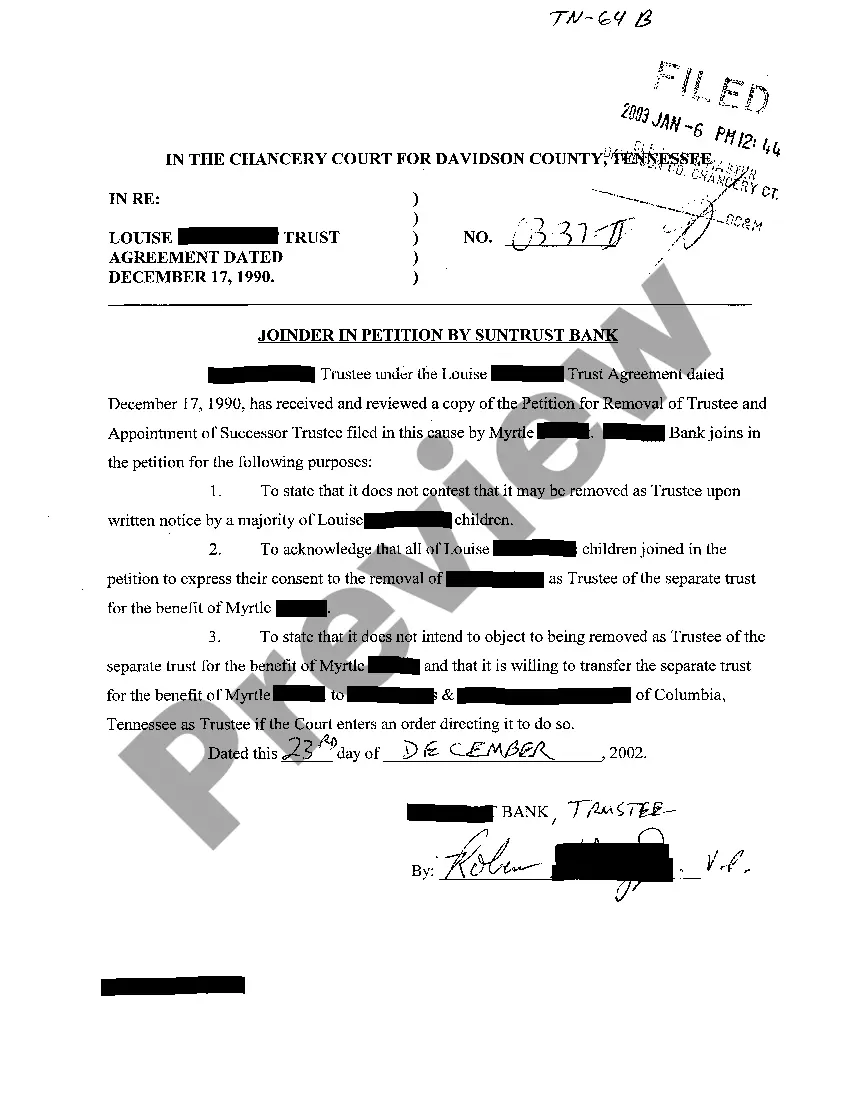
Utah Notice of Entry of Decree
About this form
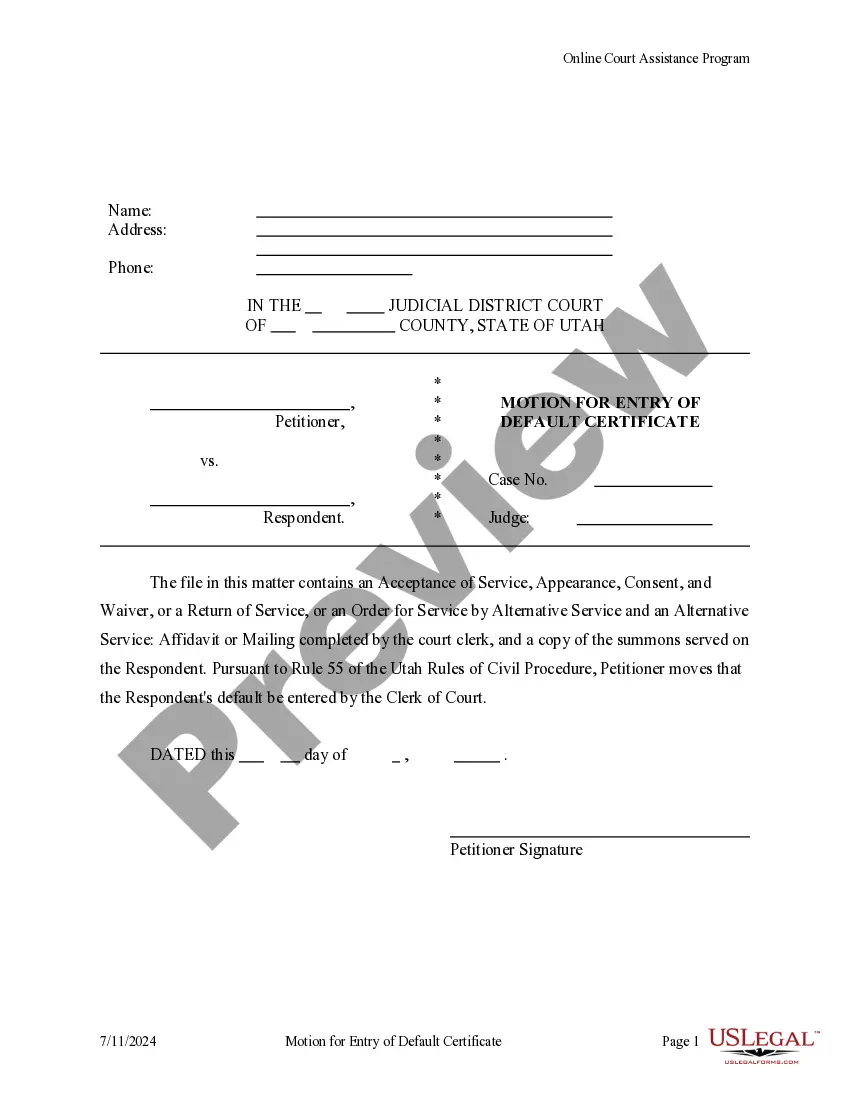
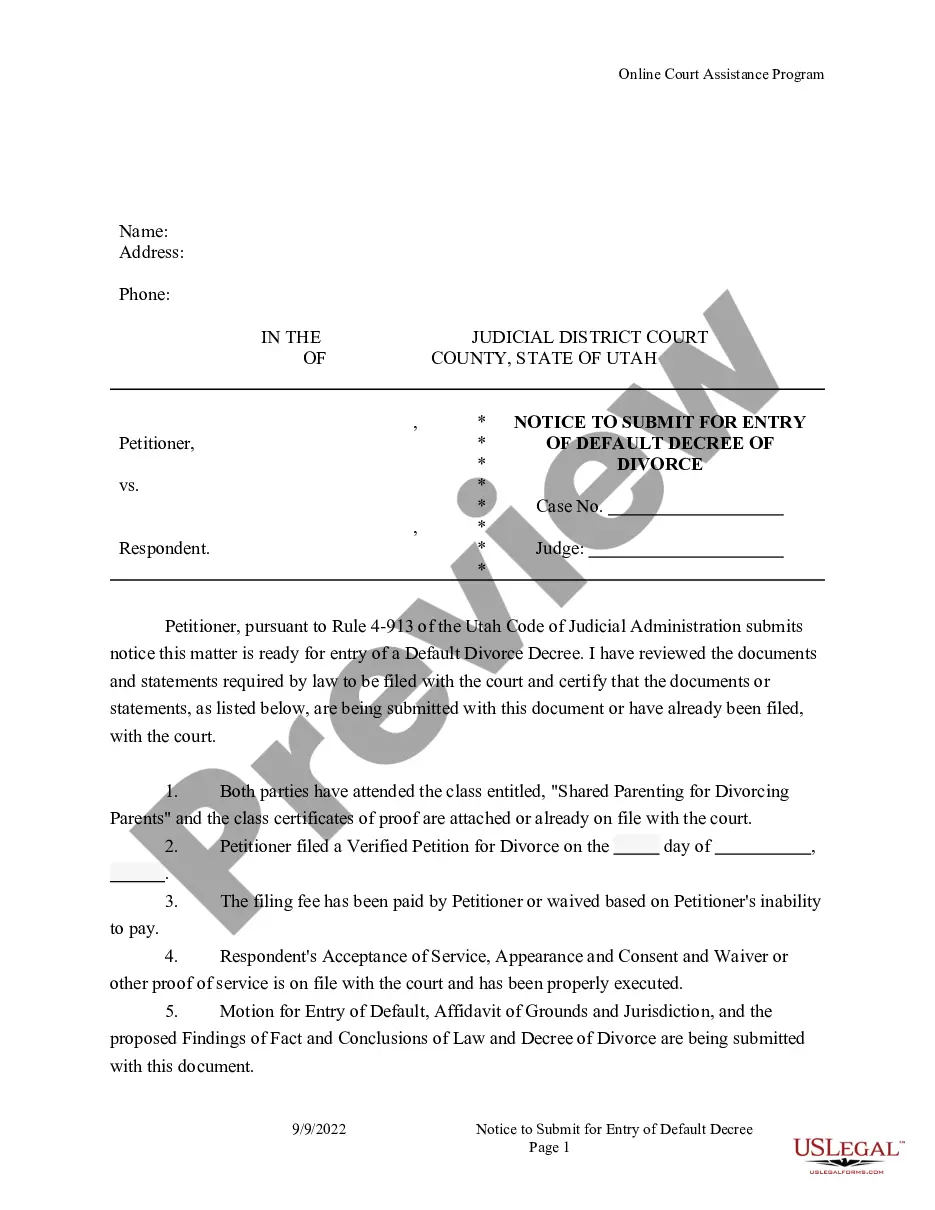
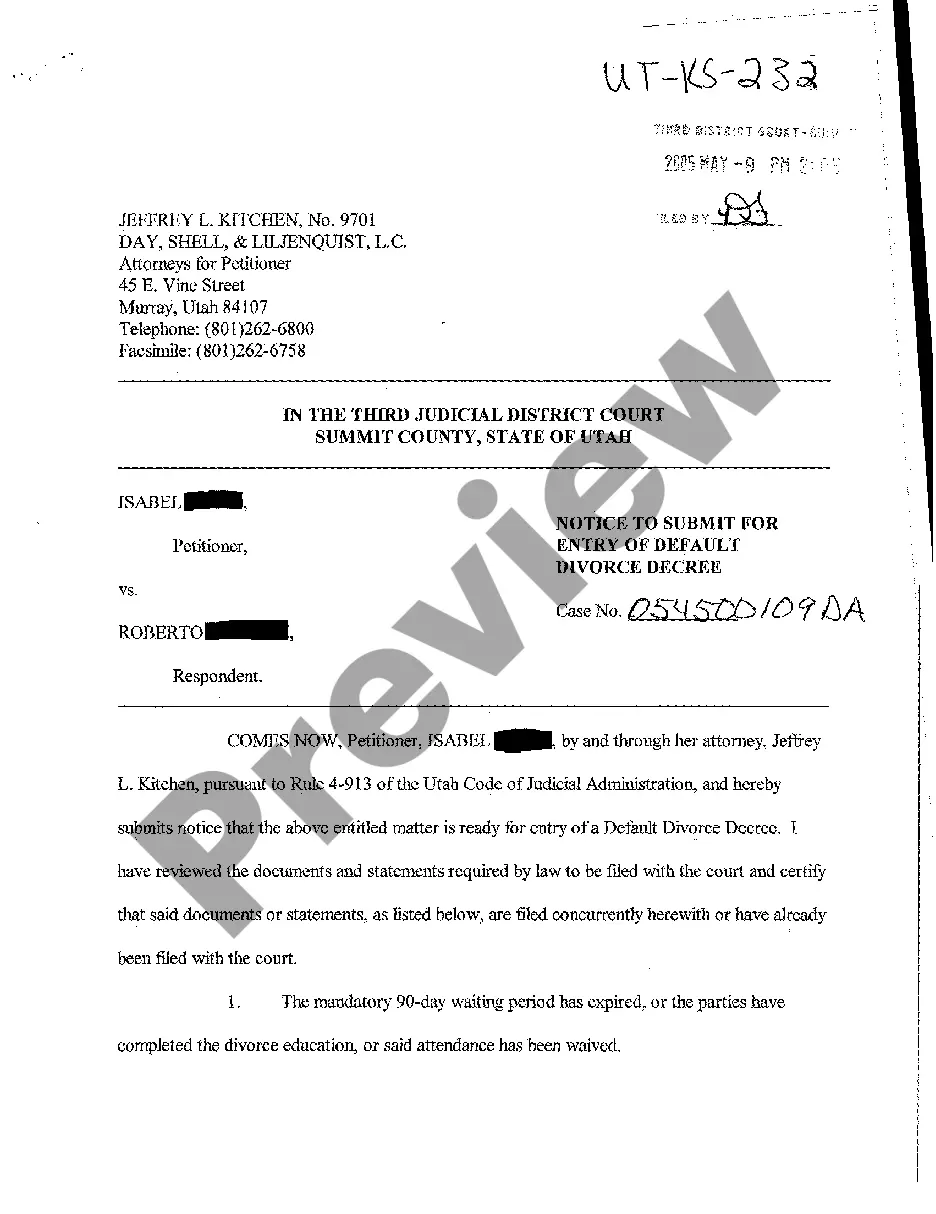
The Notice of Entry of Decree is a legal document used in divorce cases in Utah. It notifies the parties involved that a decree has been entered in their divorce proceedings. This form is essential for ensuring that both parties are aware of the decree's existence and its implications. This document differs from other divorce-related forms in that it specifically serves as a formal notification rather than a request or an agreement.
Key components of this form
- Date of notice: The date when the notice is issued.
- Petitioner information: The name of the person who filed for divorce.
- Respondent information: The name and address of the other party involved in the divorce.
- Mailing certificate: A section for certifying that the notice has been mailed to the respondent.

When this form is needed
This form should be used following the finalization of a divorce decree in Utah. It is important for situations where one party needs to inform the other that the court's decision has been officially filed. This notice ensures that both parties have records of the court's decree and are aware of their legal obligations moving forward.
Who needs this form
- Individuals who have recently finalized a divorce in Utah.
- The petitioner in a divorce case who must notify the respondent about the decree.
- Legal representatives assisting clients with divorce-related paperwork.
Instructions for completing this form
- Enter the date of the notice at the top of the form.
- Fill in the name of the petitioner and any required identification details.
- Provide the respondent's name and address in the designated section.
- Complete the mailing certificate by indicating the date the notice was mailed and your signature.
- Ensure all information is accurate and submit the form as required by local law.
Does this form need to be notarized?
This form does not typically require notarization unless specified by local law. However, it is advisable to check any specific local regulations that may apply to your situation.
Get your form ready online
Our built-in tools help you complete, sign, share, and store your documents in one place.
Make edits, fill in missing information, and update formatting in US Legal Forms—just like you would in MS Word.
Download a copy, print it, send it by email, or mail it via USPS—whatever works best for your next step.
Sign and collect signatures with our SignNow integration. Send to multiple recipients, set reminders, and more. Go Premium to unlock E-Sign.
If this form requires notarization, complete it online through a secure video call—no need to meet a notary in person or wait for an appointment.
We protect your documents and personal data by following strict security and privacy standards.

Make edits, fill in missing information, and update formatting in US Legal Forms—just like you would in MS Word.

Download a copy, print it, send it by email, or mail it via USPS—whatever works best for your next step.

Sign and collect signatures with our SignNow integration. Send to multiple recipients, set reminders, and more. Go Premium to unlock E-Sign.

If this form requires notarization, complete it online through a secure video call—no need to meet a notary in person or wait for an appointment.

We protect your documents and personal data by following strict security and privacy standards.
Mistakes to watch out for
- Failing to include the correct date can invalidate the notice.
- Not mailing the notice properly or forgetting to include the certificate of mailing.
- Entering incorrect or incomplete respondent information.
Benefits of using this form online
- Convenience: Download the form anytime, from anywhere.
- Editability: Easily fill out the form digitally to ensure accuracy.
- Compliance: Forms are created by licensed attorneys, ensuring they meet legal standards.
Looking for another form?
Form popularity
FAQ
1) An agreement between the parties to a lawsuit. For example, if the parties enter into a stipulation of facts, neither party will have to prove those facts: The stipulation will be presented to the jury, who will be told to accept them as undisputed evidence in the case.
When your divorce goes to trial, you will present your case to the judge at a formal trial in court. The judge will hear each spouse's case and will make any necessary decisions regarding property division, spousal support, child custody, and more.
A civil judgment is a ruling against a defendant in a court of law. It refers to a non-criminal legal matter and often requires the defendant to pay damages. Damages are generally money amounts.
Before a person or a company to whom you owe money can win a judgment against you, they must first file a lawsuit in court. If you ignore the lawsuit, the court will enter an automatic judgment against you, known as a default judgment.
In short, the judgment is the final divorce document which outlines the resolution of all legal issues in the case (disputed and agreed-upon). It is vital to consult with an experienced family law attorney before signing any judgment paperwork or filing your judgment with the court.
Stipulated means that the spouses agree to the terms of their divorce.A Stipulated Judgment and Decree is, in effect, a binding contract between you and your now ex-spouse. Therefore, it is critically important to make sure that you understand and agree with all of its terms.
In the eyes of the court this is the document that formally ends your marriage. A divorce decree serves three main functions.That means it covers the division of property, disposal of debts, spousal support, and any obligations to children from the marriage.
The Notice of Entry of Judgment (SC - 130) is a court form that says what the judge's decision on your case is. This form also tells you about your rights and lists the date the form was mailed or given to you. This date is very important. You have only 30 days from this date to file a motion to vacate or appeal.
Formally recording the result of a lawsuit that is based upon the determination by the court of the facts and applicable law, and that makes the result effective for purposes of bringing an action to enforce it or to commence an appeal.
The divorce is not final until the Judgment is signed by the judge and it has been at least six months and one day since the petition was filed and served even in a default divorce. In a contested divorce, it often takes much longer and all contested issues are usually decided before the Judgment is issued.