Negligence-Definition
About this form
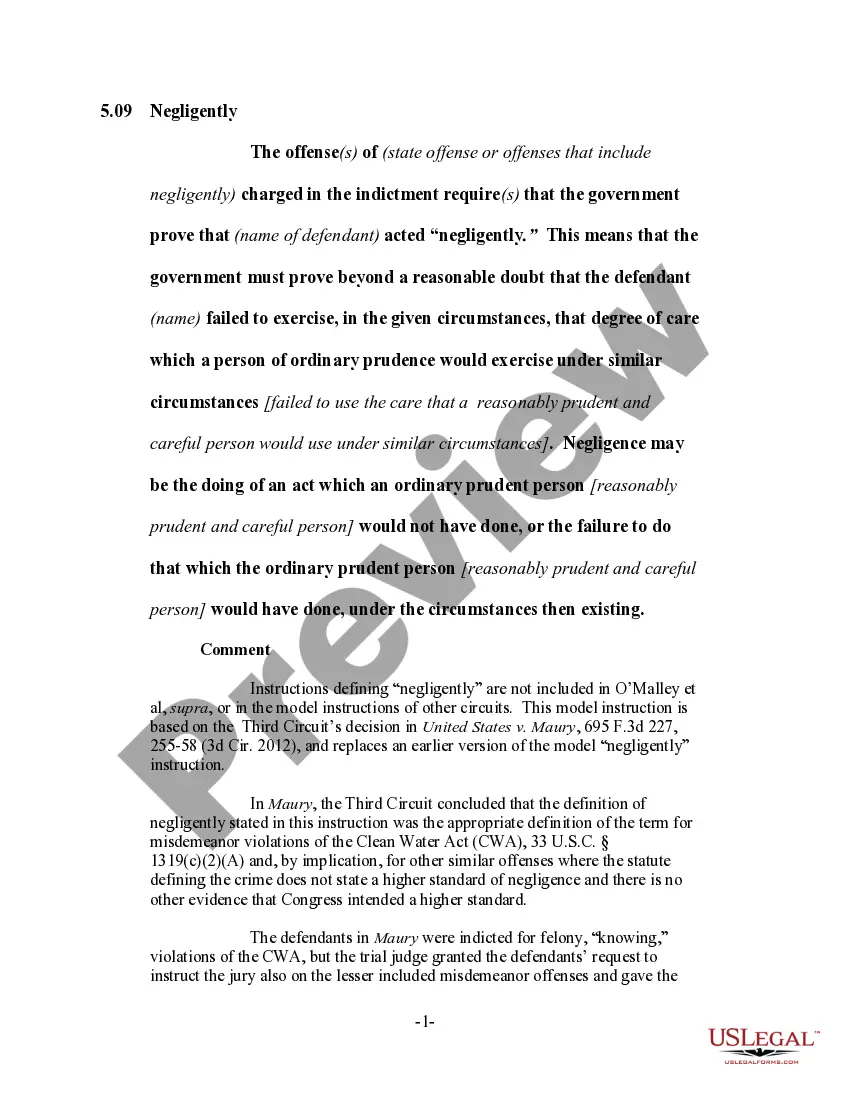
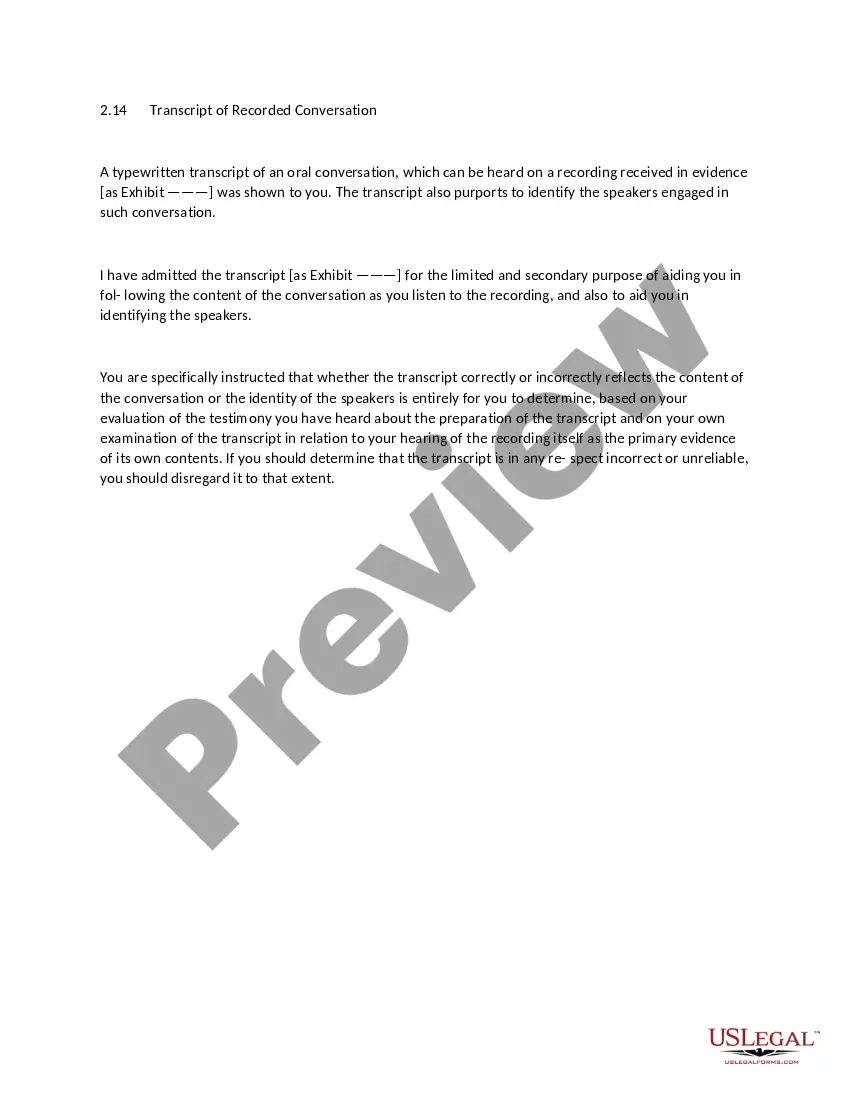
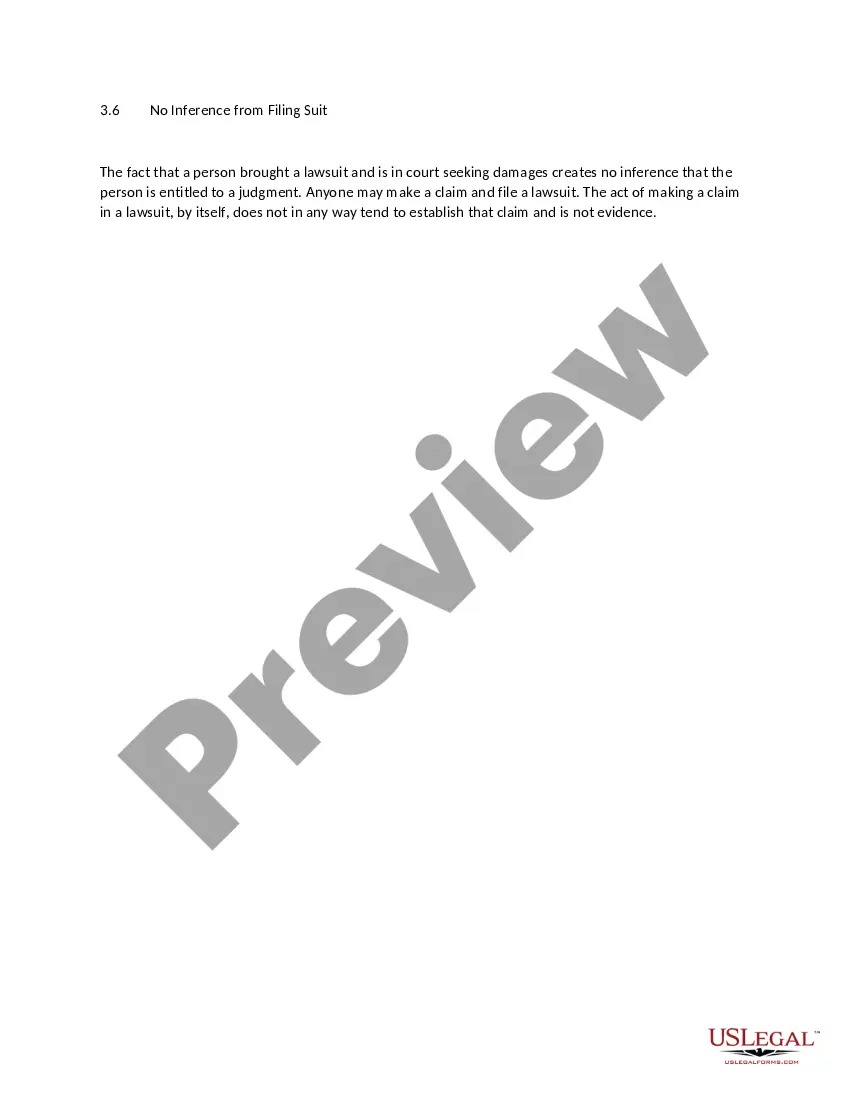
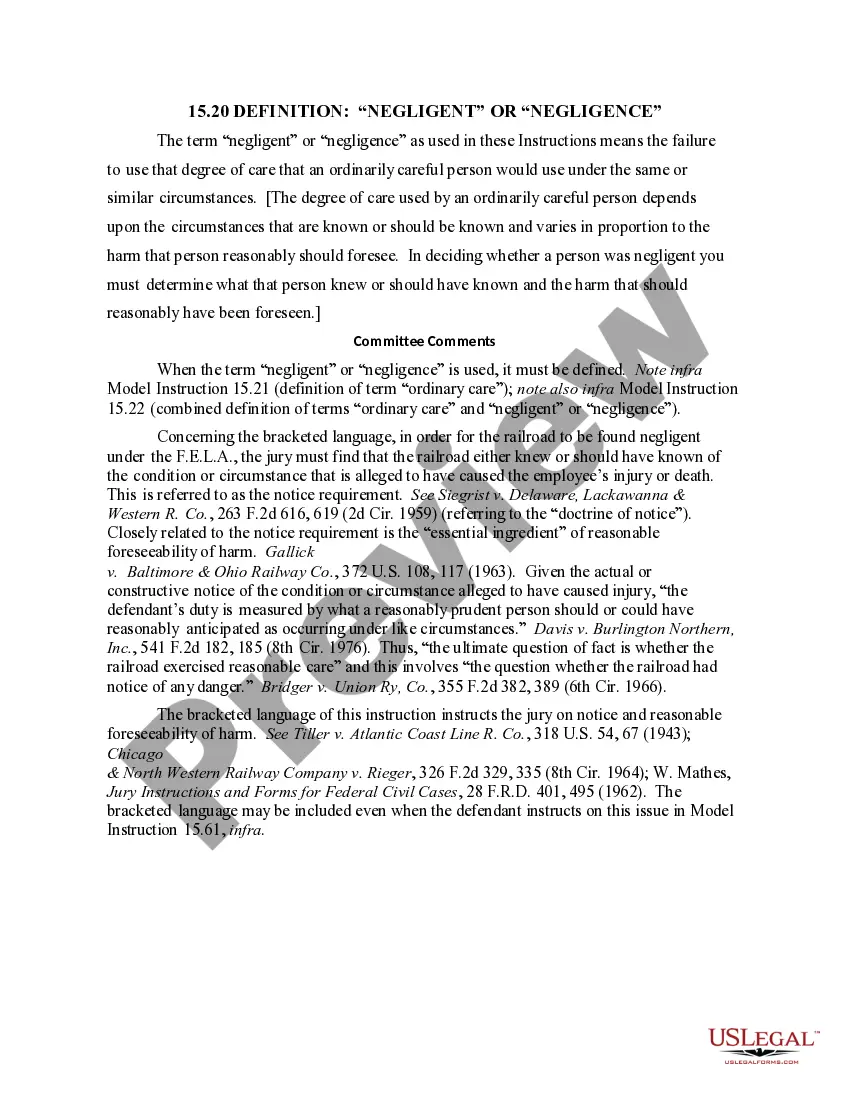
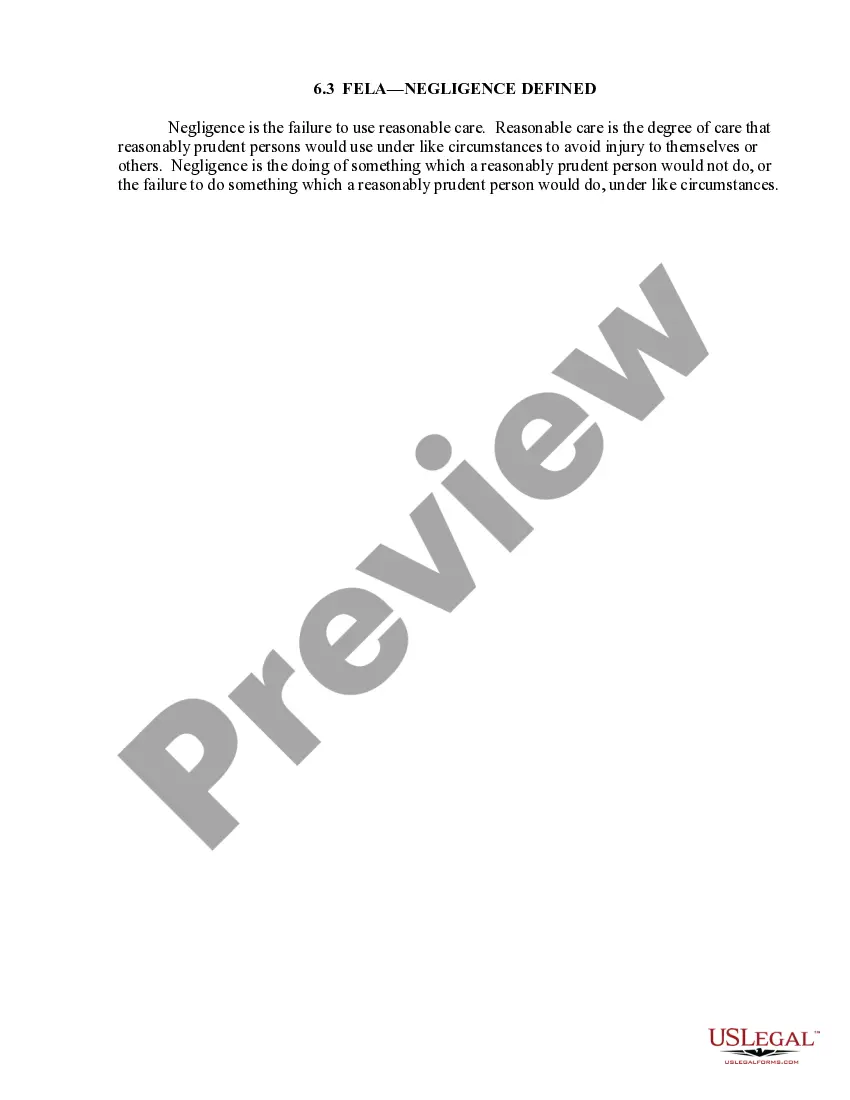
The Negligence-Definition form provides a formal definition of negligence as it applies in a legal context. This is essential in understanding responsibilities and liabilities during court proceedings, particularly in civil cases where negligence is claimed. Unlike other legal documents that may simply state rules or statutes, this form delivers a clear interpretation that guides jurors in their decision-making process.
What’s included in this form
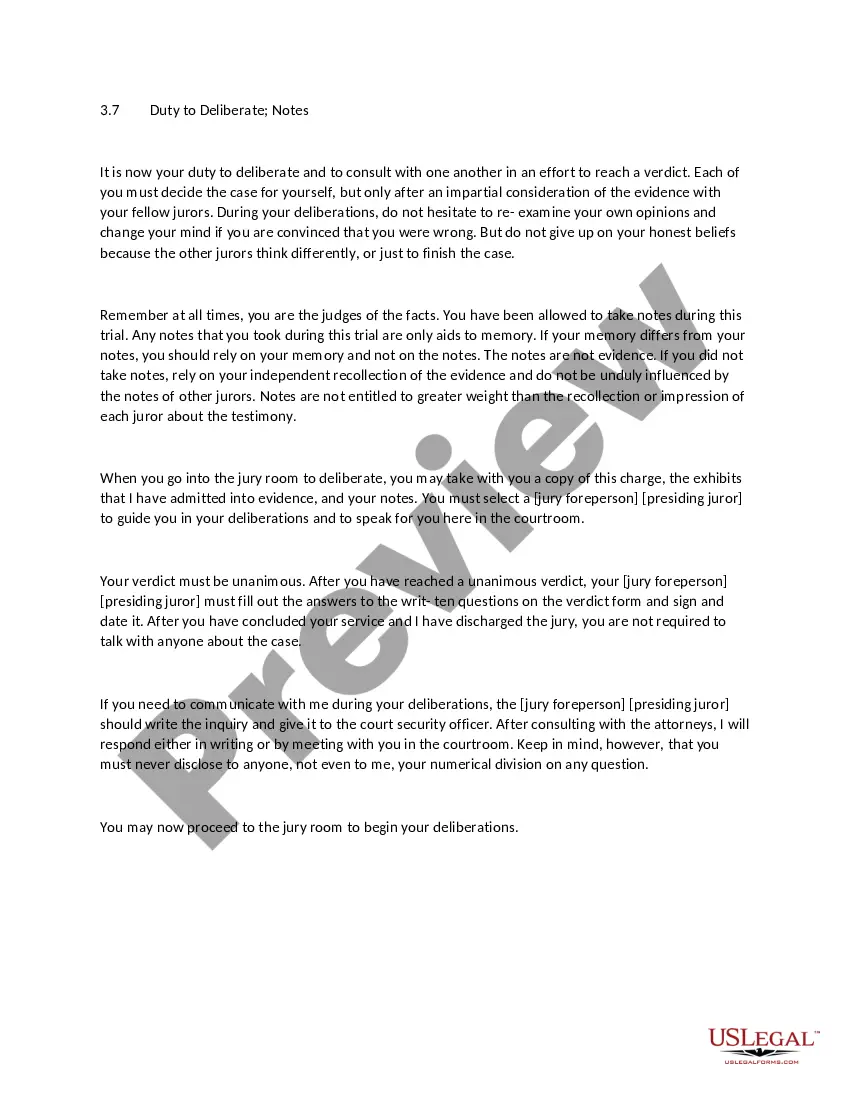
- Definition of the duty to deliberate among jurors.
- Guidelines on how to interpret notes taken during the trial.
- Instructions for maintaining impartiality and basing decisions on personal recollection.
- Process for reaching a unanimous verdict.
- Protocol for communicating with the court during deliberations.
Common use cases
This form is used in cases where negligence is a central issue. It is particularly relevant in civil litigation where one party claims that the other failed to act with reasonable care, resulting in harm or damages. The form aids in instructing jurors on how to interpret evidence and reach a fair verdict based on the standard of negligence.
Who should use this form
- Jurors participating in a negligence case.
- Judges who need to instruct jurors on negligence definitions.
- Attorneys preparing for cases involving negligence claims.
Completing this form step by step
- Identify the jurors involved in the case.
- Read the provided instructions carefully.
- Discuss the evidence with fellow jurors without bias.
- Consult your notes, but prioritize your own memory.
- Record the unanimous verdict and ensure all jurors sign and date the verdict form.
Does this form need to be notarized?
This form does not typically require notarization to be legally valid. However, some jurisdictions or document types may still require it. US Legal Forms provides secure online notarization powered by Notarize, available 24/7 for added convenience.
Get your form ready online
Our built-in tools help you complete, sign, share, and store your documents in one place.
Make edits, fill in missing information, and update formatting in US Legal Forms—just like you would in MS Word.
Download a copy, print it, send it by email, or mail it via USPS—whatever works best for your next step.
Sign and collect signatures with our SignNow integration. Send to multiple recipients, set reminders, and more. Go Premium to unlock E-Sign.
If this form requires notarization, complete it online through a secure video call—no need to meet a notary in person or wait for an appointment.
We protect your documents and personal data by following strict security and privacy standards.

Make edits, fill in missing information, and update formatting in US Legal Forms—just like you would in MS Word.

Download a copy, print it, send it by email, or mail it via USPS—whatever works best for your next step.

Sign and collect signatures with our SignNow integration. Send to multiple recipients, set reminders, and more. Go Premium to unlock E-Sign.

If this form requires notarization, complete it online through a secure video call—no need to meet a notary in person or wait for an appointment.

We protect your documents and personal data by following strict security and privacy standards.
Typical mistakes to avoid
- Relying too heavily on notes rather than personal memory.
- Being influenced by other jurors instead of making independent decisions.
- Failing to achieve a unanimous verdict before submitting the decision.
Advantages of online completion
- Convenient access to the form for timely completion.
- Editable format allows for easy adaptation to specific cases.
- Reliability in content as it is drafted by licensed attorneys.
What to keep in mind
- The Negligence-Definition form clarifies legal standards for jurors.
- Understanding how to deliberate is crucial for reaching a fair verdict.
- Personal memory should take precedence over notes during deliberations.
Looking for another form?

Form popularity
FAQ
For liability in negligence to be founded, four key ingredients must be present: duty of care. breach of that duty. damage (which is caused by the breach) foreseeability of such damage.
A negligence claim requires that the person bringing the claim (the plaintiff) establish four distinct elements: duty of care, breach, causation, and damages.
Some common negligence case examples under this category include, but are not limited to, the following scenarios: A driver runs a stop sign and slams into another car. A driver operates illegally in the bicycle lane and hits a bicyclist. A driver runs a red light and hits a pedestrian in a crosswalk.
Negligence is a failure to behave with the level of care that someone of ordinary prudence would have exercised under the same circumstances. The behavior usually consists of actions, but can also consist of omissions when there is some duty to act (e.g., a duty to help victims of one's previous conduct).
The Legal Definition of Negligence Our legal system defines negligence as ?the failure to exercise the care toward others which a reasonable or prudent person would do in the same or similar circumstances.? This legal definition may seem not too different from the everyday definition at first.