Sample Letter for Reprimand for Unacceptable Conduct - Business to Employee
What this document covers
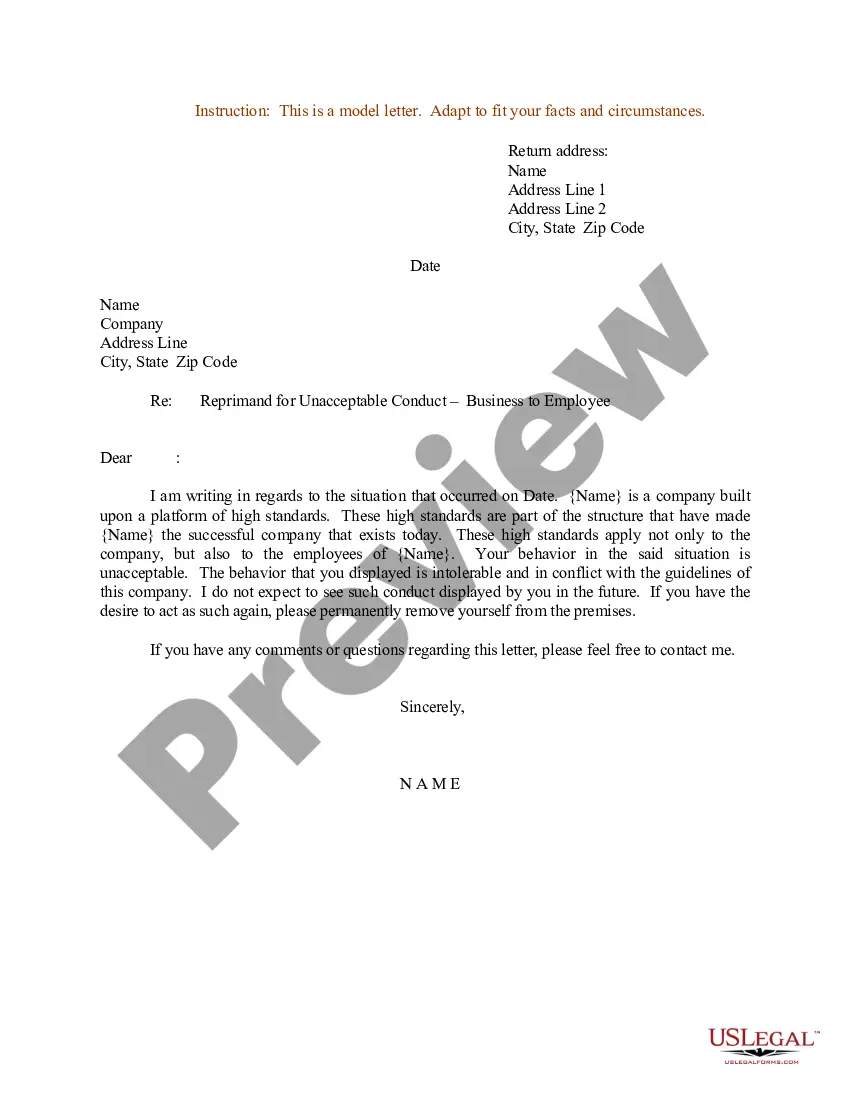
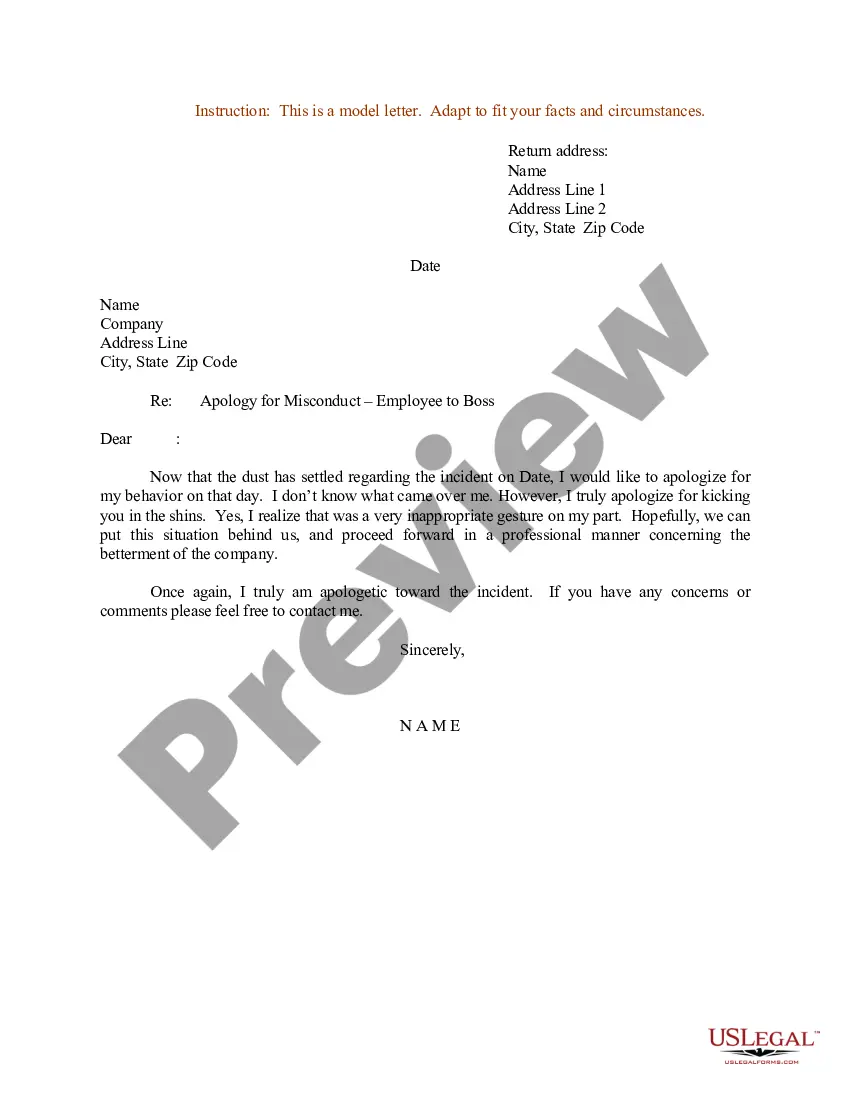
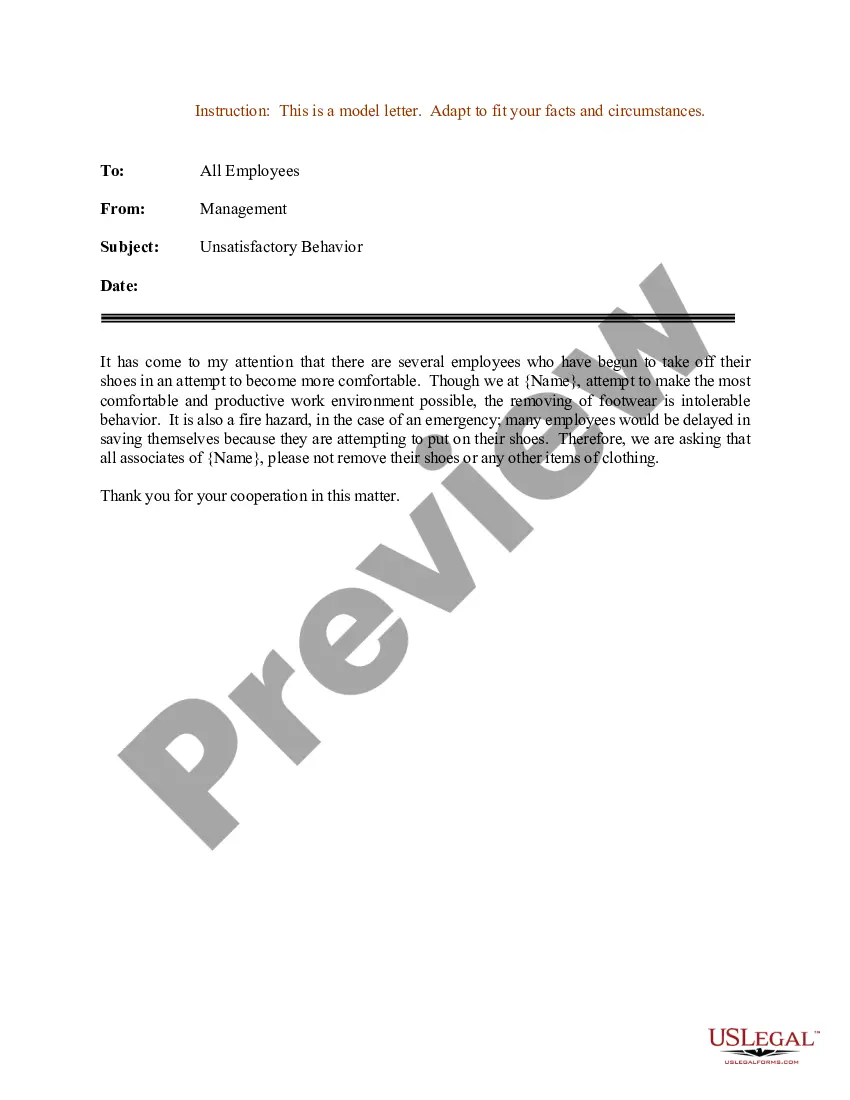
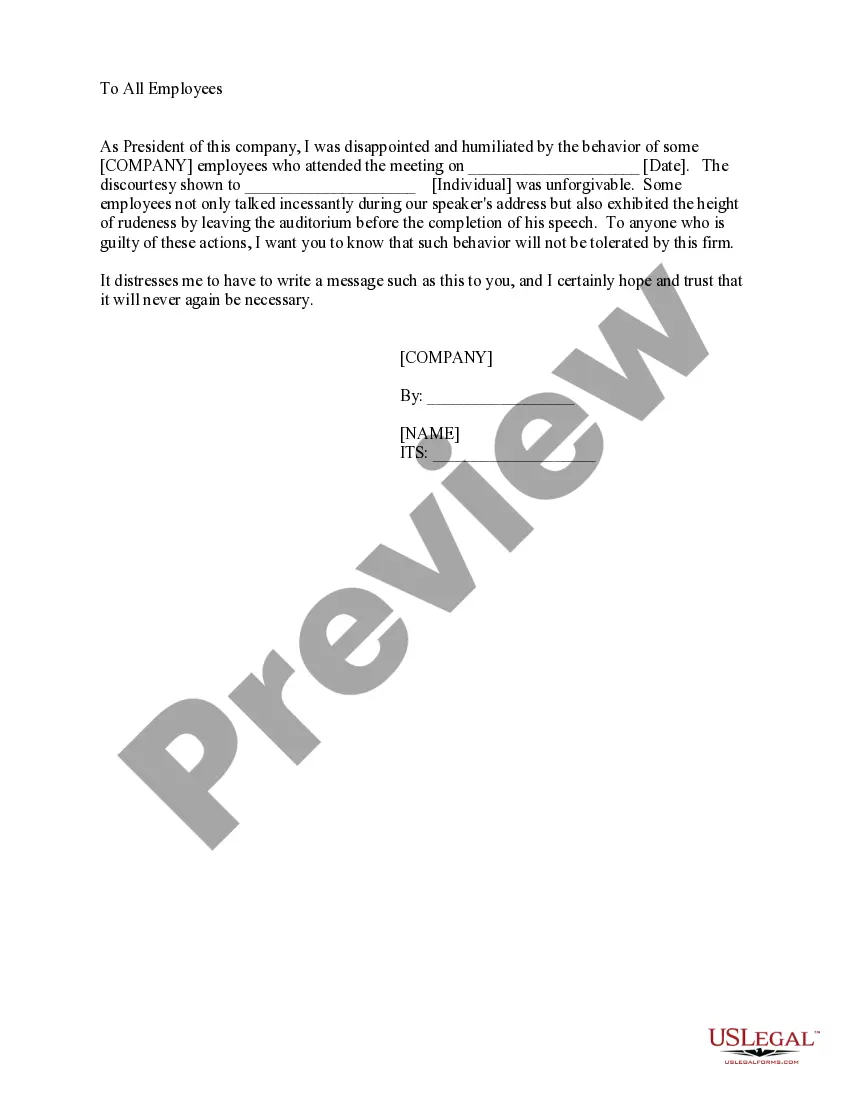
This Sample Letter for Reprimand for Unacceptable Conduct is a formal communication used by businesses to address an employee's inappropriate behavior. This letter serves to document the unacceptable conduct and clearly communicates the concerns to the employee. Unlike other informal reprimands, this letter provides a structured approach, ensuring that the employee understands both the issue and the potential consequences of further misconduct.
Form components explained
- Return address of the employer, including name and postal information.
- Date of issuance to establish a record of when the reprimand was issued.
- Recipient's address, including name and postal information, for correct delivery.
- Subject line indicating the purpose of the letter: reprimand for unacceptable conduct.
- Signature line for the employer to authenticate the communication.
Common use cases
This form should be used when an employer needs to formally address unacceptable behavior by an employee. Common scenarios include repeated tardiness, violation of company policies, unprofessional conduct in the workplace, or failure to meet performance expectations. Using this letter helps to establish a clear record of the issue before any further action may be necessary.
Who should use this form
- Business owners or managers addressing employee misconduct.
- Human resources personnel tasked with maintaining workplace standards.
- Supervisors who need to formally document unacceptable conduct.
Steps to complete this form
- Identify the employerâs return address and include the date of issuance.
- Gather the employee's details, including their name and address.
- Draft a clear subject line that denotes the purpose of the letter.
- Compose a paragraph detailing the unacceptable conduct and the reasons for the reprimand.
- Sign the letter to confirm authenticity and send it to the employee.
Does this form need to be notarized?
This form does not typically require notarization unless specified by local law. It is always recommended to check your specific state laws to ensure compliance with local requirements.
Get your form ready online
Our built-in tools help you complete, sign, share, and store your documents in one place.
Make edits, fill in missing information, and update formatting in US Legal Forms—just like you would in MS Word.
Download a copy, print it, send it by email, or mail it via USPS—whatever works best for your next step.
Sign and collect signatures with our SignNow integration. Send to multiple recipients, set reminders, and more. Go Premium to unlock E-Sign.
If this form requires notarization, complete it online through a secure video call—no need to meet a notary in person or wait for an appointment.
We protect your documents and personal data by following strict security and privacy standards.

Make edits, fill in missing information, and update formatting in US Legal Forms—just like you would in MS Word.

Download a copy, print it, send it by email, or mail it via USPS—whatever works best for your next step.

Sign and collect signatures with our SignNow integration. Send to multiple recipients, set reminders, and more. Go Premium to unlock E-Sign.

If this form requires notarization, complete it online through a secure video call—no need to meet a notary in person or wait for an appointment.

We protect your documents and personal data by following strict security and privacy standards.
Common mistakes
- Failing to provide specific examples of unacceptable conduct.
- Not including the date, which can lead to confusion about the timeline of events.
- Using vague language that does not clearly communicate the behavior issues.
Benefits of completing this form online
- Convenience of downloading and editing the form at any time.
- Access to templates drafted by licensed attorneys, ensuring legal compliance.
- Structured format helps ensure all necessary components are included in the reprimand letter.
Legal use & context
- This letter can serve as a crucial document in employee disciplinary proceedings.
- It may be referenced in future evaluations or legal matters if misconduct persists.
Quick recap
- A reprimand letter is crucial for communicating unacceptable conduct to an employee.
- Using a formal template ensures clarity and professionalism in the process.
- Documentation may be necessary for future HR actions regarding the employee's behavior.
Looking for another form?

Form popularity
FAQ
Employees all make mistakes, but it's never fun to reprimand someone. Handle the matter privately. Act promptly, but calmly. Don't just talk, listen. Focus on actions or behaviors, not attitude. Be specific. Explain the standard and why it's important. Get a commitment from the employee to change.
Confirm the decision in writing. Explain the nature of the misconduct. Set out the improvement required. Point out the possible consequences of a failure to improve. Specify the length of the warning. Confirm the right of appeal. Keep a record of the warning.
Dear (Name/employee), I am writing to you because I would like to discuss your very unprofessional behavior. As a very successful business company, we cannot afford to have any bad reputation. (Describe in your own words).
Be upfront about why you are writing the letter and emphasize the problem. Outline why the person is being reprimanded and give specific examples. Refer to previous incidences if this issue has been addressed previously. The letter should be expansive enough to cover any future challenges or confrontations.
Start by mentioning the recipient's positive qualities or behavior. Make a clear statement of the performance issue or behavior that the recipient must improve. Explain how this has impacted the company negatively. Enumerate specific suggestions on how the recipient can improve the situation.
In military contexts, a formal letter of reprimand can be career-ending, even without prescribed punishments, because it makes it difficult to secure advancements in rank or to enjoy the respect of one's peers. In legal contexts, a letter of reprimand is sometimes called a letter of admonition.
A letter of reprimand or a disciplinary letter is a part of a policy focused on progressive discipline. It's used by the management to control the behavior of the employees. The letter is one of the final corrective steps that supervisors use against employees before they consider to either suspend or terminate him.