Michigan Stipulated Order Adjourning Case Evaluation
Understanding this form
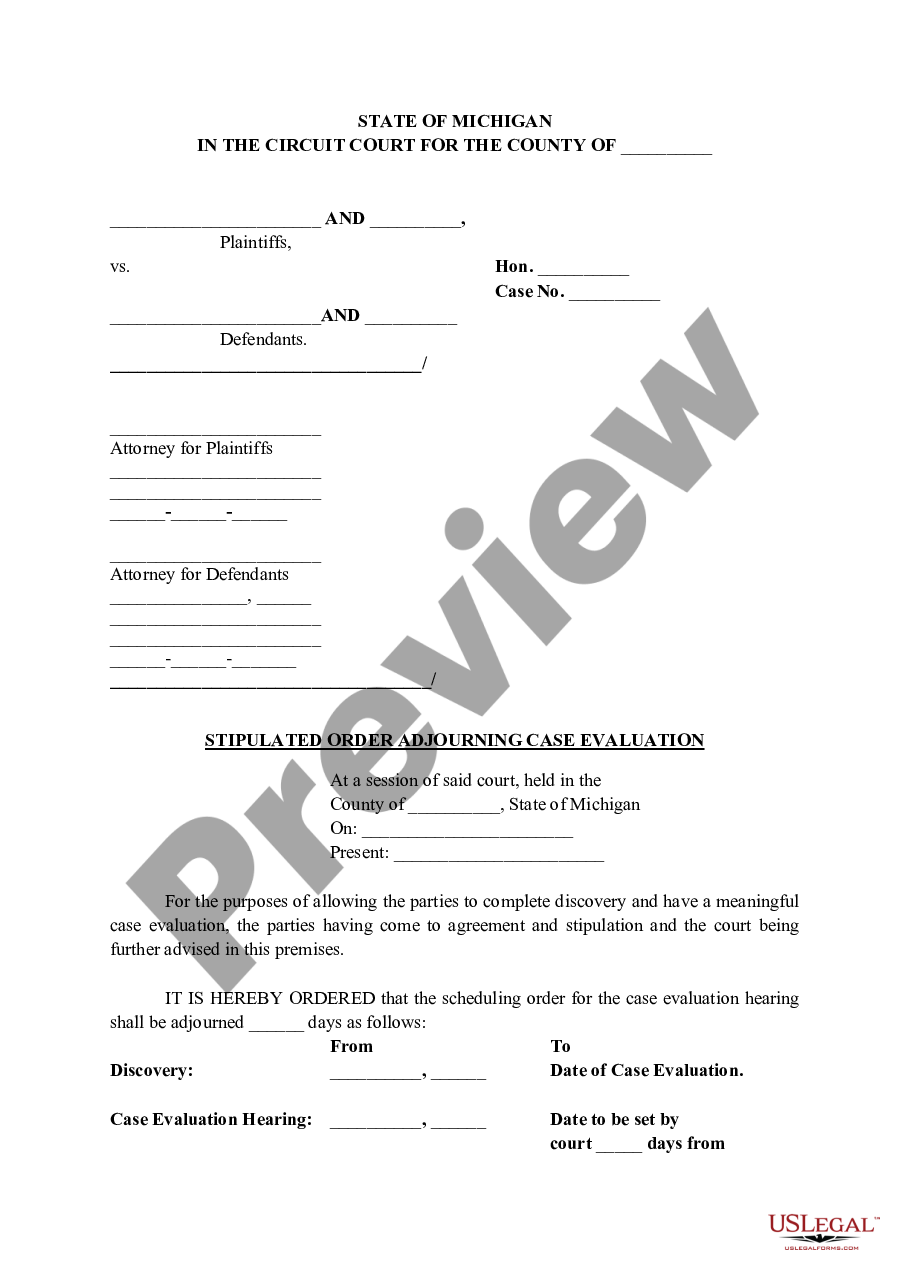
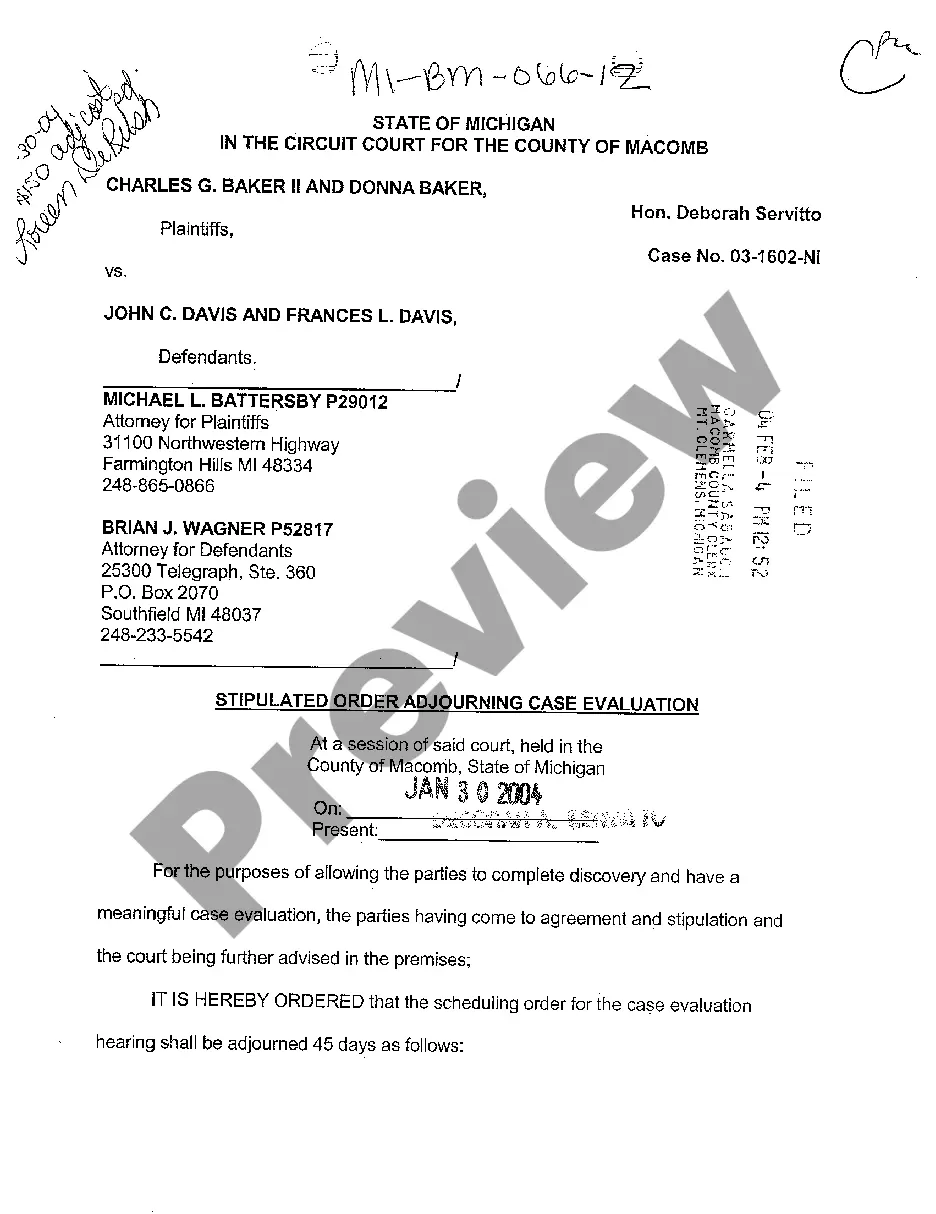
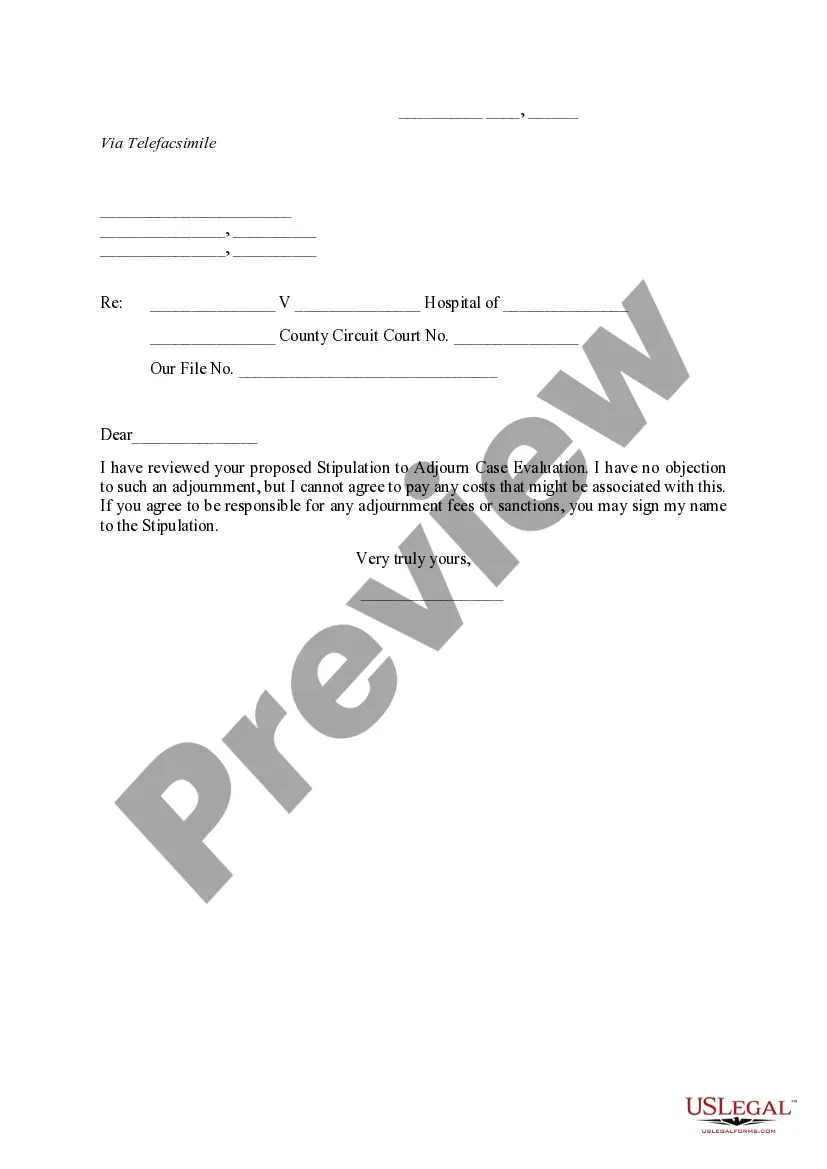
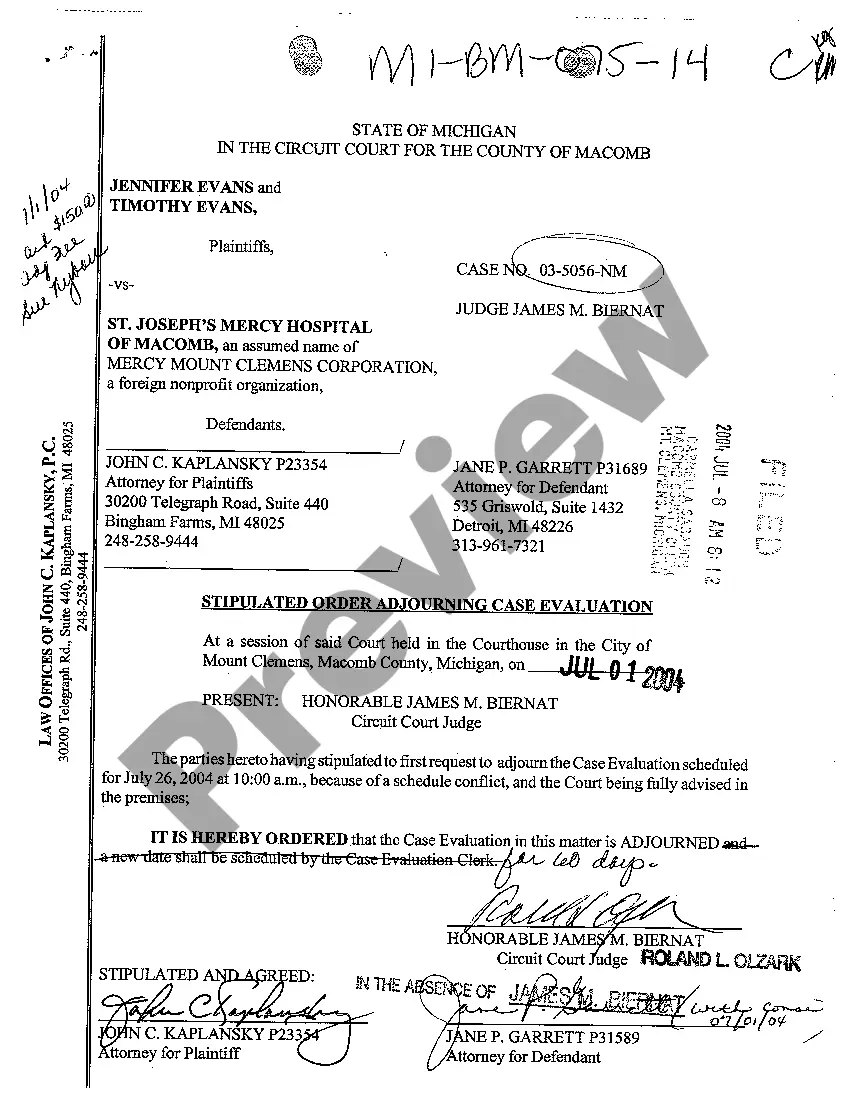
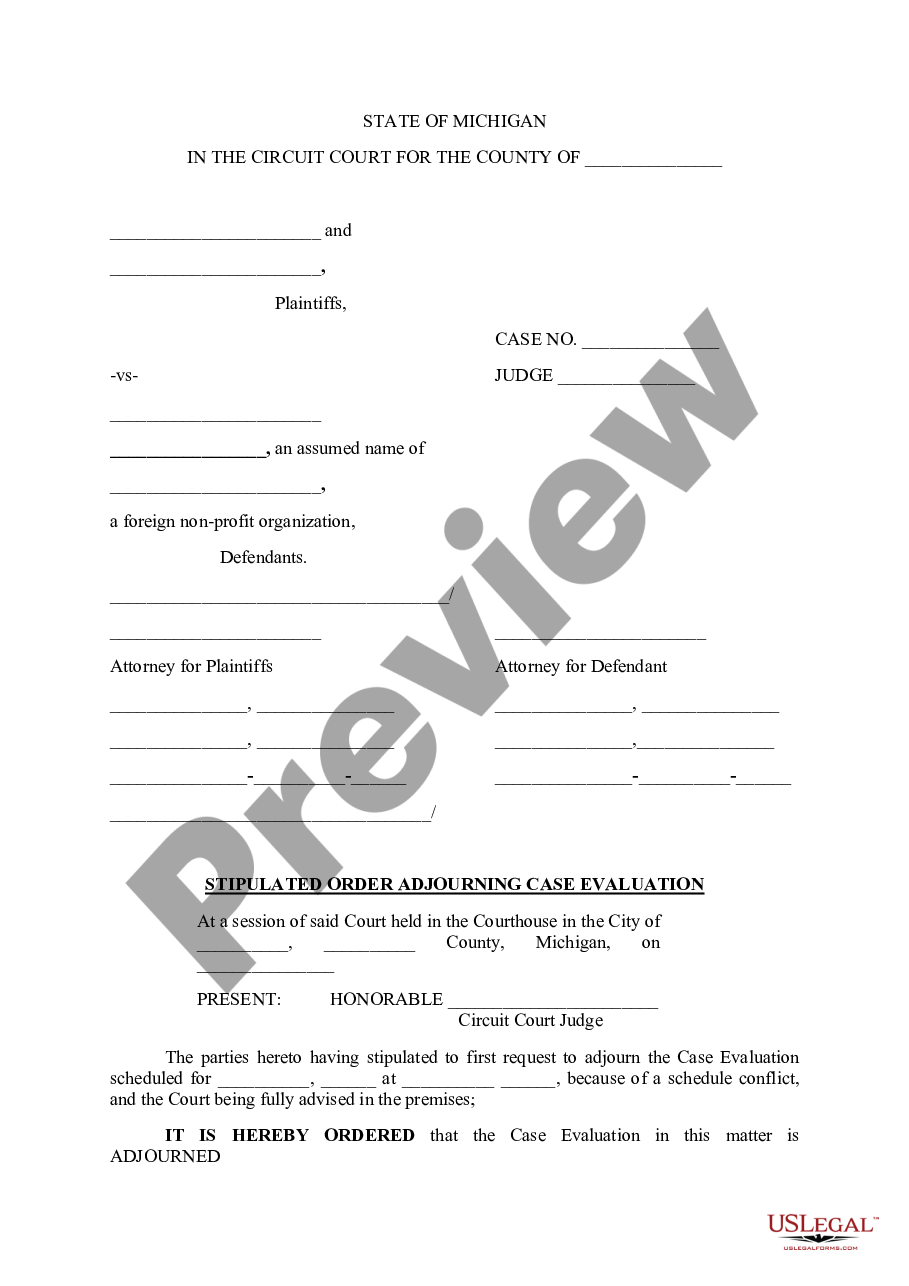
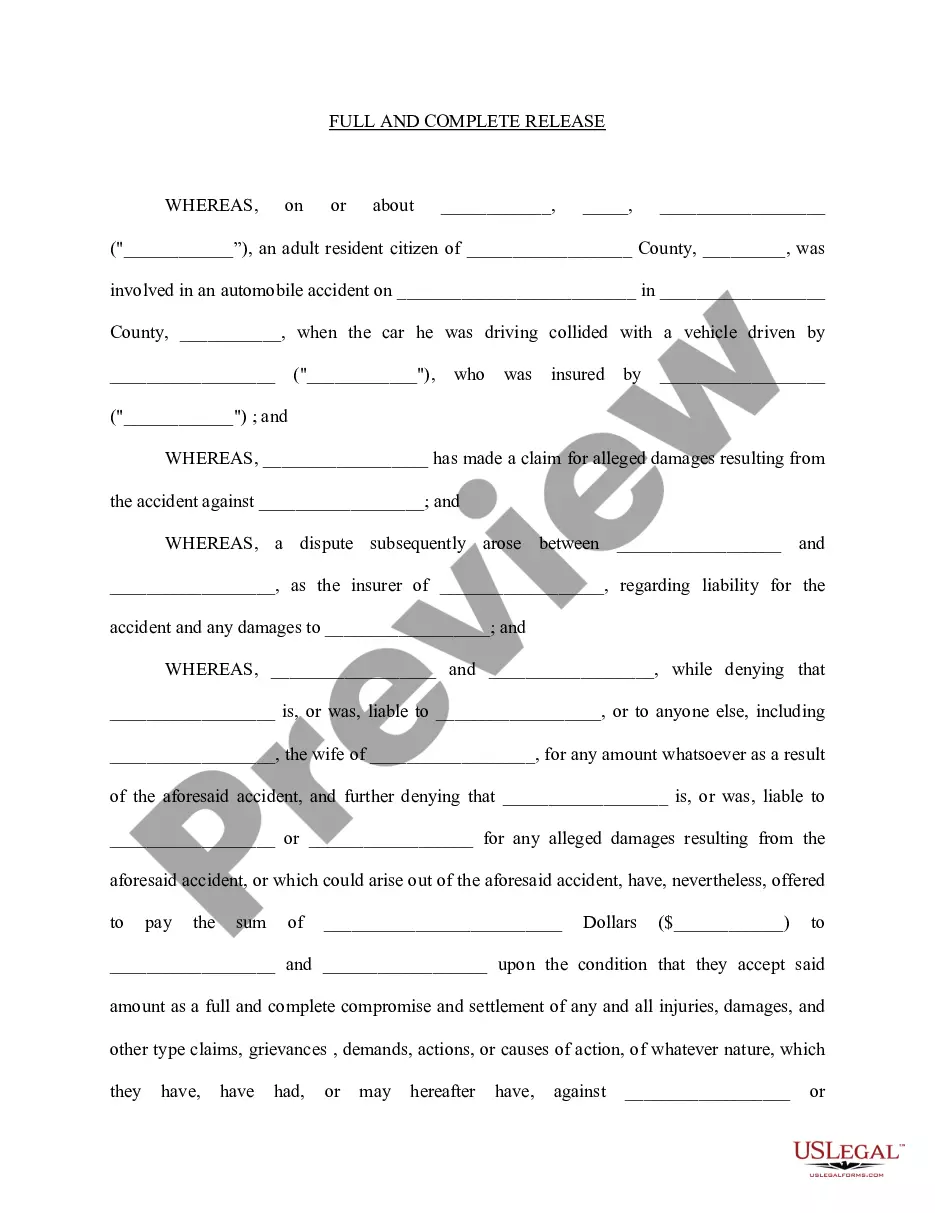
The Stipulated Order Adjourning Case Evaluation is a legal document where parties involved in a lawsuit agree to postpone an upcoming case evaluation session. This form is essential for allowing both sides to gather necessary evidence and conduct discovery before evaluating their case. It serves to facilitate amicable resolutions and is different from other legal forms as it specifically addresses the adjournment of evaluations rather than other stages of litigation.
Main sections of this form
- Identification of the court and case number
- Details of the parties involved (plaintiffs and defendants)
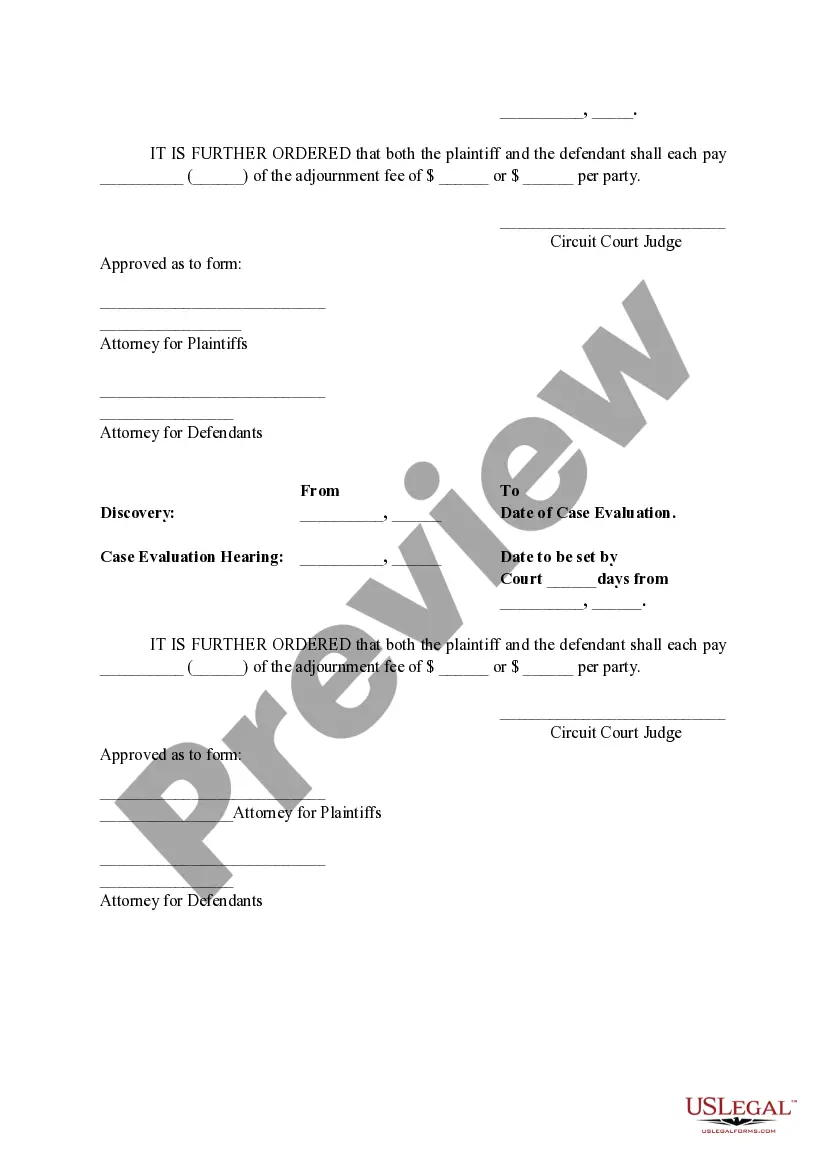
- Proposed adjournment period for the case evaluation hearing
- Discovery time frame adjustments
- Agreement on the adjournment fee distribution between parties
- Signatures of the attorneys representing each party
When to use this form
This form should be used when both parties in a legal dispute find it necessary to postpone a scheduled case evaluation. This typically occurs when additional time is needed to gather evidence or complete discovery. By filing this form, parties can ensure they are adequately prepared for the evaluation, potentially leading to a more successful resolution of the case outside of court.
Who should use this form
- Both plaintiffs and defendants involved in a civil lawsuit
- Parties seeking to postpone a scheduled case evaluation hearing
- Attorneys representing parties in a litigation process
Steps to complete this form
- Enter the name of the court and the case number at the top of the form.
- Fill in the names of the plaintiffs and defendants accurately.
- Specify the dates for the adjournment period and the new schedule for the evaluation hearing.
- Indicate the adjournment fee and how it will be divided between parties.
- Have both attorneys sign the document, confirming their agreement.
Notarization guidance
This form does not typically require notarization unless specified by local law. However, always verify the requirements as they may differ based on jurisdiction.
Get your form ready online
Our built-in tools help you complete, sign, share, and store your documents in one place.
Make edits, fill in missing information, and update formatting in US Legal Forms—just like you would in MS Word.
Download a copy, print it, send it by email, or mail it via USPS—whatever works best for your next step.
Sign and collect signatures with our SignNow integration. Send to multiple recipients, set reminders, and more. Go Premium to unlock E-Sign.
If this form requires notarization, complete it online through a secure video call—no need to meet a notary in person or wait for an appointment.
We protect your documents and personal data by following strict security and privacy standards.

Make edits, fill in missing information, and update formatting in US Legal Forms—just like you would in MS Word.

Download a copy, print it, send it by email, or mail it via USPS—whatever works best for your next step.

Sign and collect signatures with our SignNow integration. Send to multiple recipients, set reminders, and more. Go Premium to unlock E-Sign.

If this form requires notarization, complete it online through a secure video call—no need to meet a notary in person or wait for an appointment.

We protect your documents and personal data by following strict security and privacy standards.
Typical mistakes to avoid
- Failing to correctly fill in case numbers or party names.
- Not clearly stating the proposed new dates for the case evaluation.
- Omitting signatures of both attorneys.
- Forgetting to agree on the adjournment fee or payment terms.
Benefits of completing this form online
- Immediate access to the required legal template, saving time.
- Easy customization to fit specific case details.
- Reliable format drafted by licensed attorneys to ensure legal compliance.
Looking for another form?



Form popularity
FAQ
The 77 day rule in Michigan refers to the timeframe within which a case evaluation must occur after filing a lawsuit. Under this guideline, parties are encouraged to conclude their case evaluation within 77 days to promote efficiency in the legal process. The Michigan Stipulated Order Adjourning Case Evaluation can be instrumental if more time is needed to comply with this rule. By understanding this guideline, you can better manage your expectations and timelines during your legal proceedings.
The best reason for adjournment typically involves the need for additional time to gather crucial information or prepare for significant developments in your case. The Michigan Stipulated Order Adjourning Case Evaluation allows parties to consent to a delay when it is in their best interest, ensuring all aspects are covered thoroughly. This can lead to a more favorable outcome as everyone has adequate time to present their arguments and evidence. Adjourning the case evaluation can ultimately contribute to a stronger case strategy.
To evaluate a case means to systematically analyze its components, including facts, evidence, and legal principles. This process helps determine the likelihood of success if the case goes to trial. Understanding the evaluation can be crucial, especially with frameworks like the Michigan Stipulated Order Adjourning Case Evaluation, which can alter timelines and strategies. Consider using services from USLegalForms to better navigate these evaluations and their implications for your case.
In Michigan, a case evaluation is a process where a neutral third party assesses the strengths and weaknesses of each side's legal position. This evaluation helps parties understand the potential outcomes of their case before proceeding to trial. The Michigan Stipulated Order Adjourning Case Evaluation is a tool that allows parties to postpone this assessment under certain circumstances. By delaying the evaluation, parties can have more time to gather evidence or negotiate settlements.
In Michigan, the case evaluation process involves a neutral third-party evaluation of your case by a panel of experts. This panel reviews the facts and offers an opinion on the case's value, helping both parties reach a settlement. The Michigan Stipulated Order Adjourning Case Evaluation allows parties to postpone this evaluation, giving them additional time to negotiate or gather necessary information. Utilizing this order can lead to better outcomes by ensuring you are fully prepared to present your case.