Michigan Letter - Stipulation To Adjourn Case Evaluation
Overview of this form
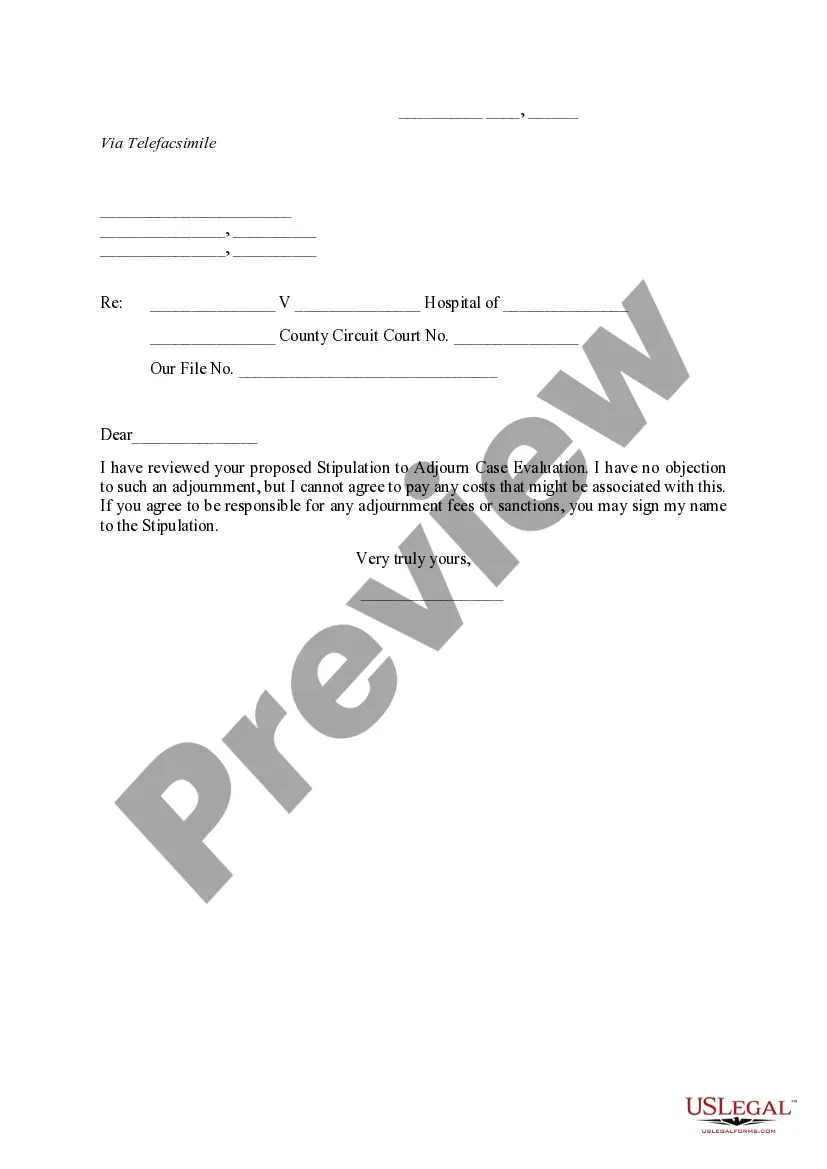
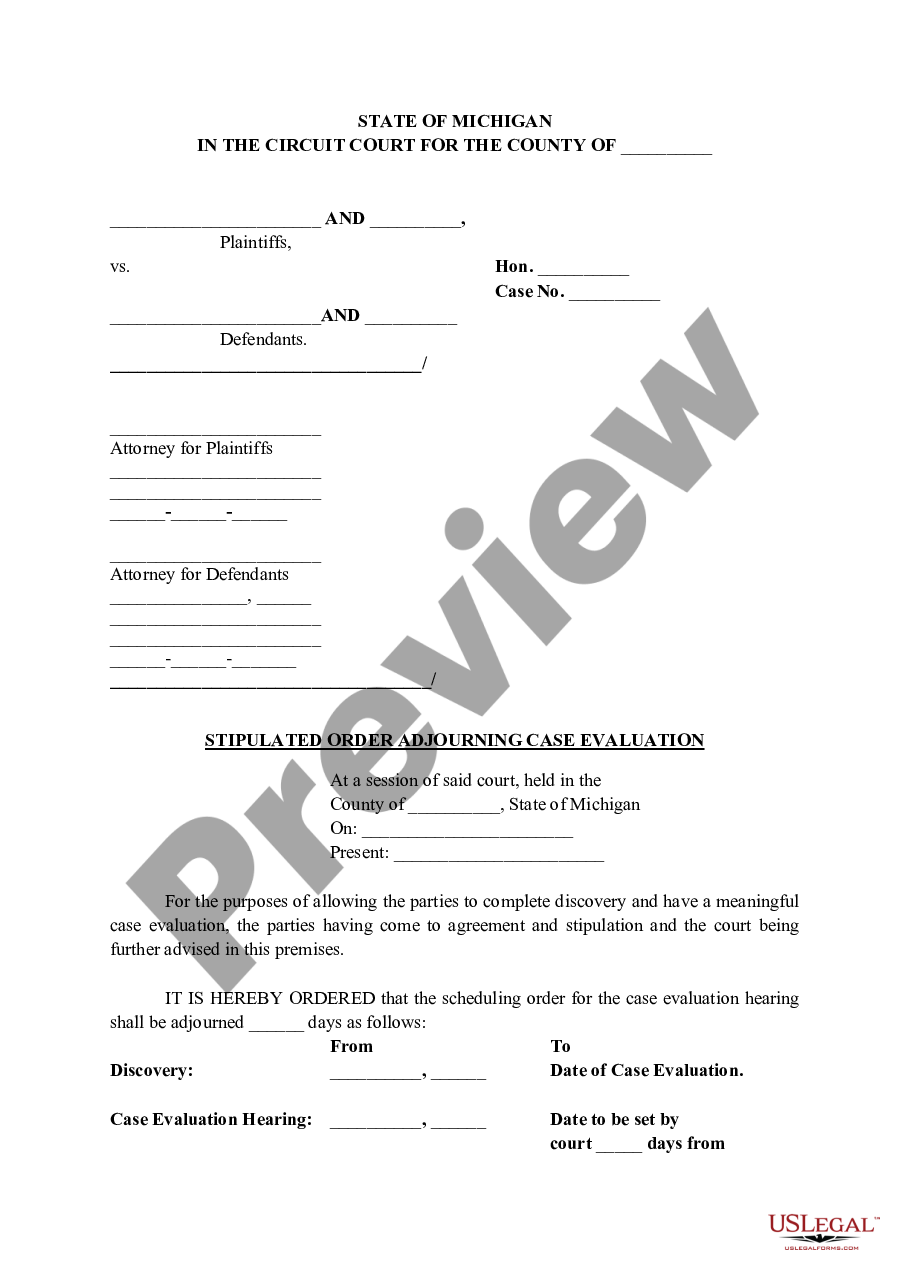
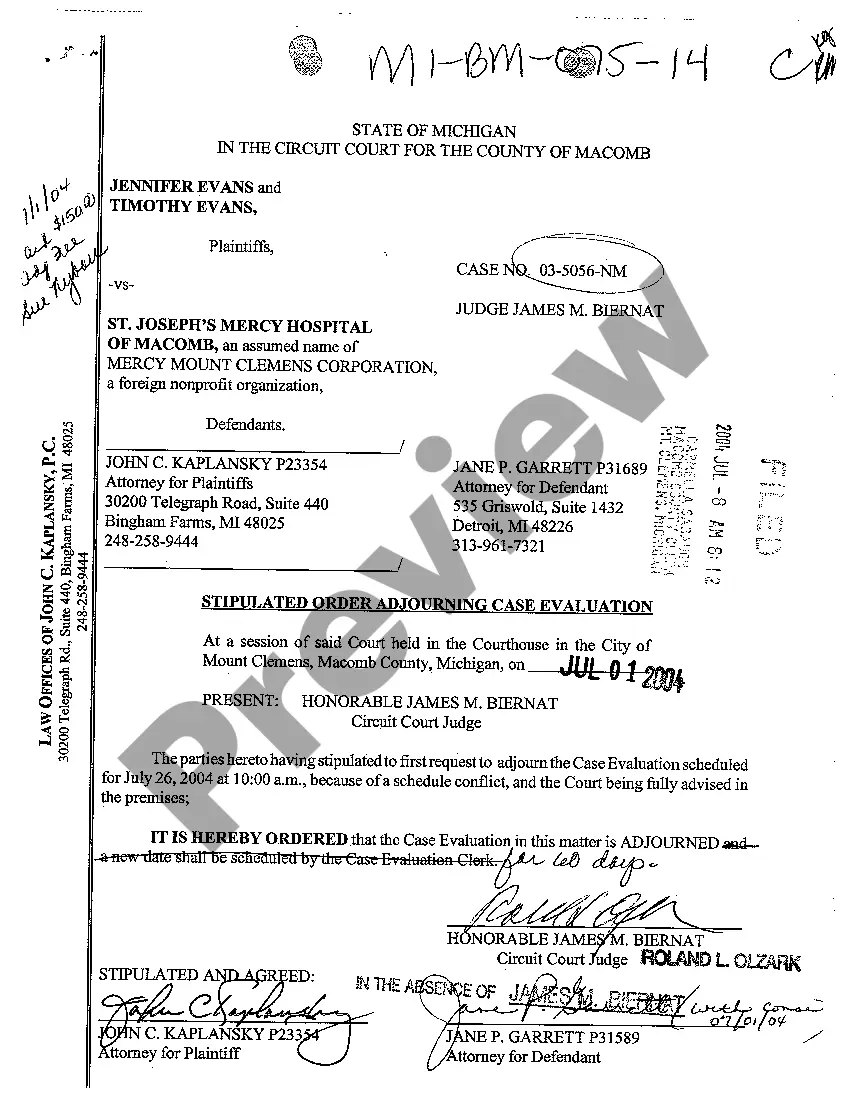
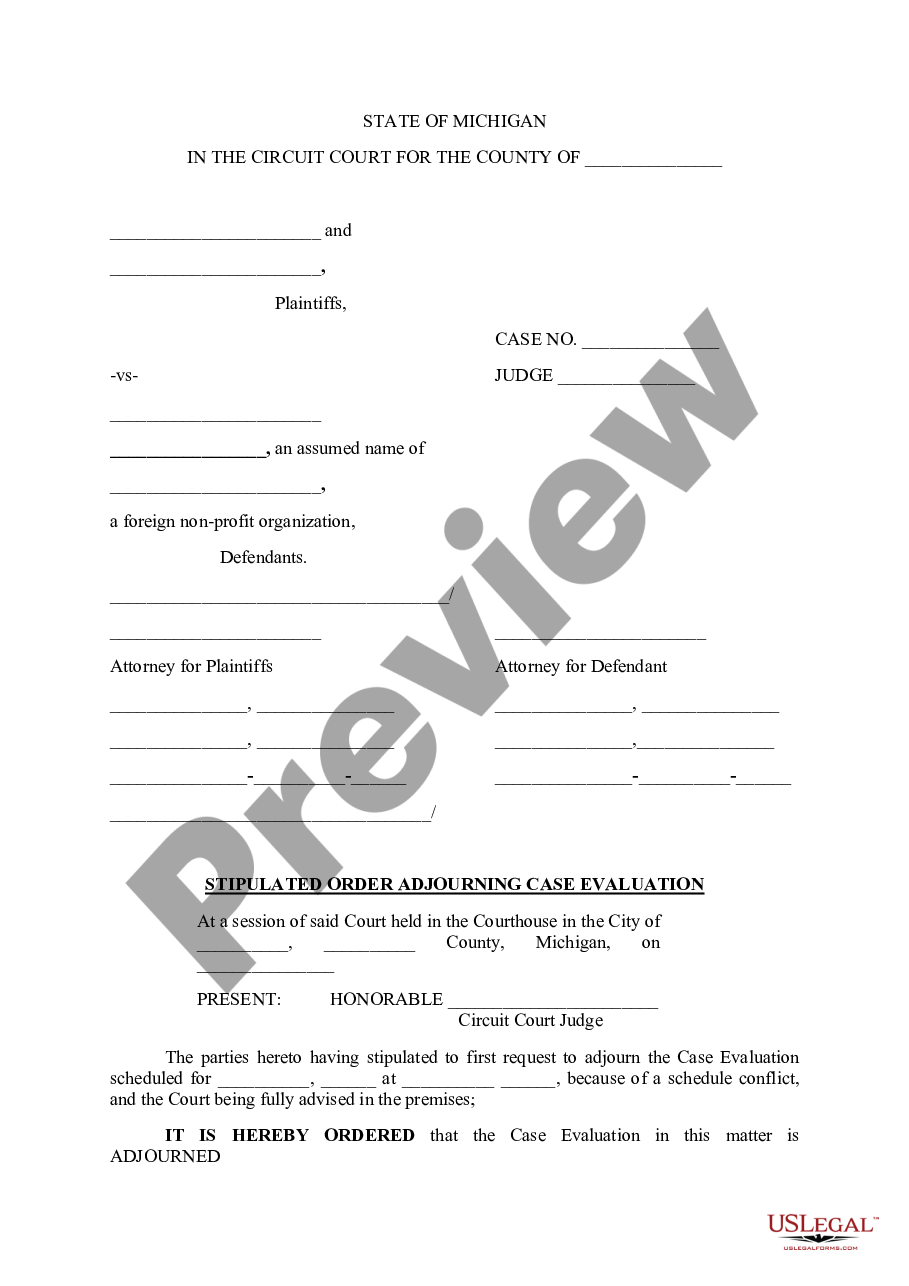
The Letter - Stipulation to Adjourn Case Evaluation is a legal document that serves as a formal agreement between parties involved in a lawsuit. It requests the court's approval to postpone the case evaluation, ensuring that both parties are in agreement regarding the adjournment. This form is crucial in managing scheduling conflicts and helps avoid unnecessary court appearances, differing from other legal forms that may focus on settlement or motions to dismiss.
Key parts of this document
- Header information including the date and recipients.
- Case caption detailing the parties involved and the court's jurisdiction.
- A statement of agreement regarding the adjournment of the case evaluation.
- Clarification about which party is responsible for any associated costs of the adjournment.
- Signature line for the party consenting to the terms outlined in the stipulation.
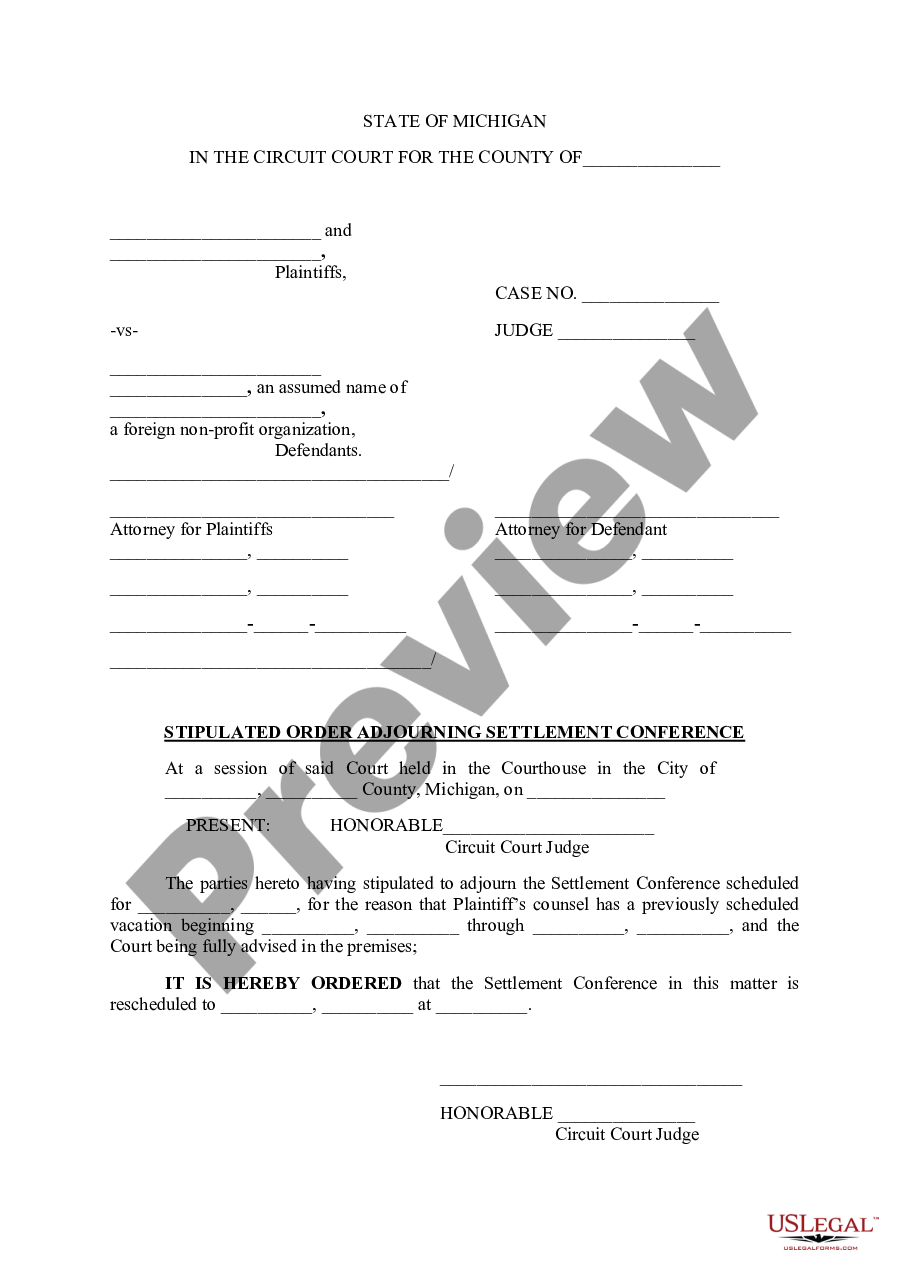
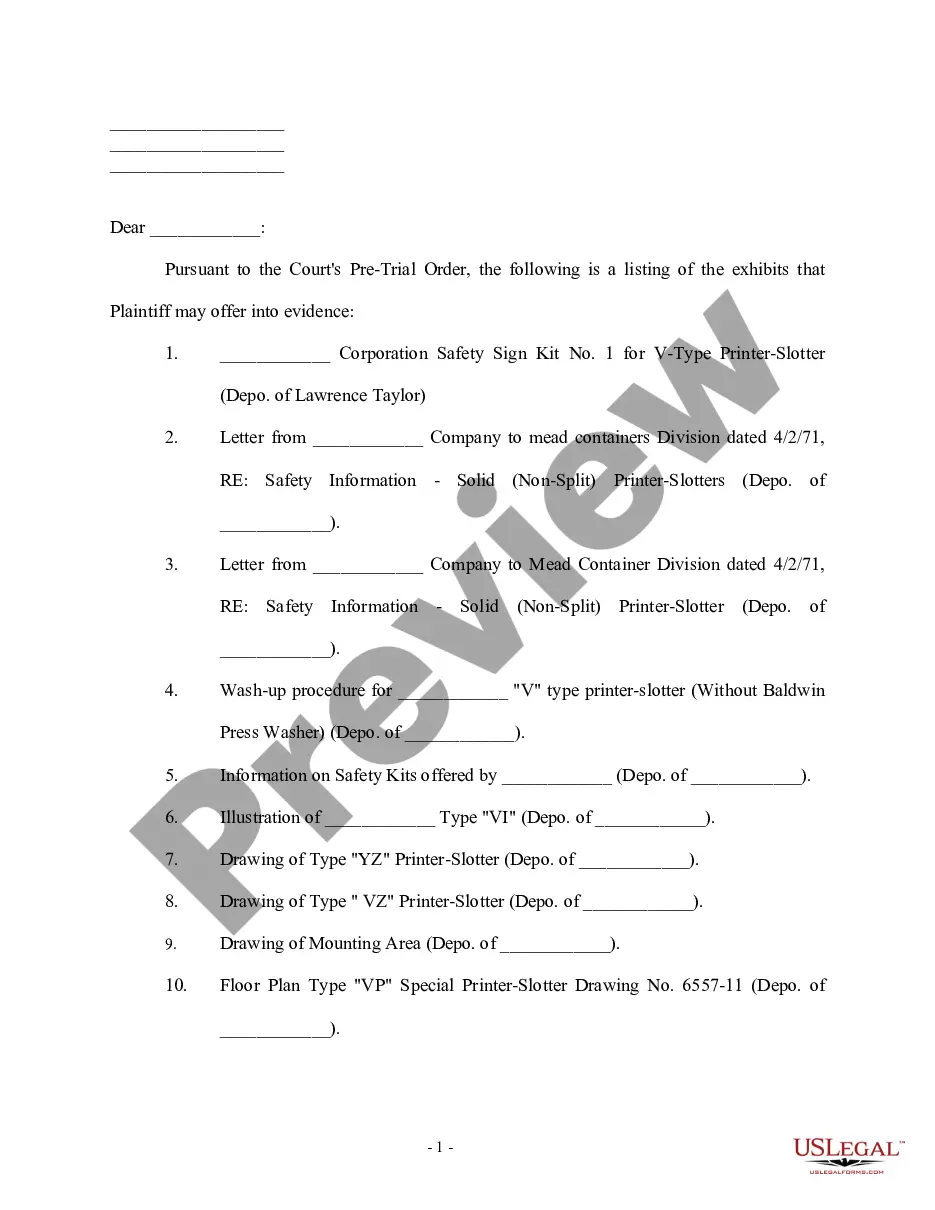
Common use cases
This form should be used when both parties in a legal case agree that they need more time before the case evaluation can proceed. Common scenarios include new evidence coming to light, scheduling conflicts, or the need for further negotiations. Using this stipulation helps in formally requesting the court to reschedule and provides clarity on cost responsibilities.
Who can use this document
- Parties involved in a civil lawsuit who require a postponement of the case evaluation.
- Attorneys representing clients who agree to terms regarding the adjournment.
- Individuals or organizations seeking to formalize a mutual agreement with another party about case scheduling.
Instructions for completing this form
- Identify the parties involved in the case and fill in their names in the case caption.
- Include the relevant court information, such as the circuit court name and case number.
- Clearly state the intent to adjourn the case evaluation and mention any responsibility for costs.
- Sign the document or provide a space for the other partyâs signature.
- Send the completed stipulation to all parties involved and submit it to the court for approval.
Does this document require notarization?
This form does not typically require notarization unless specified by local law. It is advisable to check with the relevant court rules within your jurisdiction to ensure compliance.
Get your form ready online
Our built-in tools help you complete, sign, share, and store your documents in one place.
Make edits, fill in missing information, and update formatting in US Legal Forms—just like you would in MS Word.
Download a copy, print it, send it by email, or mail it via USPS—whatever works best for your next step.
Sign and collect signatures with our SignNow integration. Send to multiple recipients, set reminders, and more. Go Premium to unlock E-Sign.
If this form requires notarization, complete it online through a secure video call—no need to meet a notary in person or wait for an appointment.
We protect your documents and personal data by following strict security and privacy standards.

Make edits, fill in missing information, and update formatting in US Legal Forms—just like you would in MS Word.

Download a copy, print it, send it by email, or mail it via USPS—whatever works best for your next step.

Sign and collect signatures with our SignNow integration. Send to multiple recipients, set reminders, and more. Go Premium to unlock E-Sign.

If this form requires notarization, complete it online through a secure video call—no need to meet a notary in person or wait for an appointment.

We protect your documents and personal data by following strict security and privacy standards.
Common mistakes
- Failing to include all parties' names in the case caption.
- Not stating the specific reasons for requesting an adjournment.
- Overlooking signature requirements from both parties involved.
- Assuming costs will automatically be waived without mutual agreement.
Why complete this form online
- Convenience of downloading and completing the form at your own pace.
- Editability allows for customization to fit your specific situation.
- Access to forms drafted by licensed attorneys ensures legal compliance.
Looking for another form?
Form popularity
FAQ
A stipulation to adjourn means that all parties in a case agree to postpone a scheduled court date or evaluation. This agreement can be documented using a Michigan Letter - Stipulation To Adjourn Case Evaluation. It fosters cooperation between parties and helps ensure that everyone is prepared for the next steps. Such stipulations are often welcomed by courts, as they facilitate smoother proceedings and reduce unnecessary delays.
The best reasons for seeking an adjournment typically involve the need for more time to prepare, scheduling conflicts, or the unavailability of key witnesses. An adjournment allows parties to gather vital evidence or consult with legal counsel thoroughly. By utilizing a Michigan Letter - Stipulation To Adjourn Case Evaluation, you can formally request this delay in a respectful manner. Always ensure that your reasons are valid and clearly communicated to all involved parties.
The 7 day rule in Michigan court refers to the requirement to provide written notice to all parties involved in a case at least seven days before a scheduled hearing or action. This rule ensures that everyone has adequate time to prepare and respond. When handling legal matters, including using a Michigan Letter - Stipulation To Adjourn Case Evaluation, it's crucial to adhere to this timeline for fairness and transparency. Properly following the 7 day rule helps maintain the integrity of the court process.
To write an impactful letter to a judge, maintain a respectful tone throughout your correspondence. Begin with a clear introduction of who you are and the purpose of your letter. Be concise, factual, and specific about your request, giving any necessary context. Including references such as the Michigan Letter - Stipulation To Adjourn Case Evaluation can strengthen your argument and convey a professional attitude.
The best excuse to adjourn a court case typically involves legitimate circumstances such as illness, scheduling conflicts, or the need for additional time to gather evidence. It's important to be honest, as the court is more likely to grant a request based on genuine reasons. Using a Michigan Letter - Stipulation To Adjourn Case Evaluation can help standardize this process and present your case effectively.
A letter of adjournment should include a clear subject line indicating its purpose. Open with a polite salutation, then state your request concisely, explaining the situation or reason behind your need for an adjournment. Be sure to close on a positive note, and consider mentioning the Michigan Letter - Stipulation To Adjourn Case Evaluation for added clarity.
Writing an adjournment letter involves a straightforward format. Begin with your name and contact information, followed by the court's details, the date, and a clear subject line. In the body, explain why you are requesting the postponement, specifying the desired new date. You can mention the Michigan Letter - Stipulation To Adjourn Case Evaluation to reinforce the legitimacy of your request.
To write an adjournment petition, start by clearly stating the reason for the request. Make sure to include pertinent case details, such as the case number and parties involved. After that, formally request that the court grant you additional time. It’s helpful to mention the Michigan Letter - Stipulation To Adjourn Case Evaluation to indicate your professional approach.