Oregon Statutory Warranty Deed
About this form
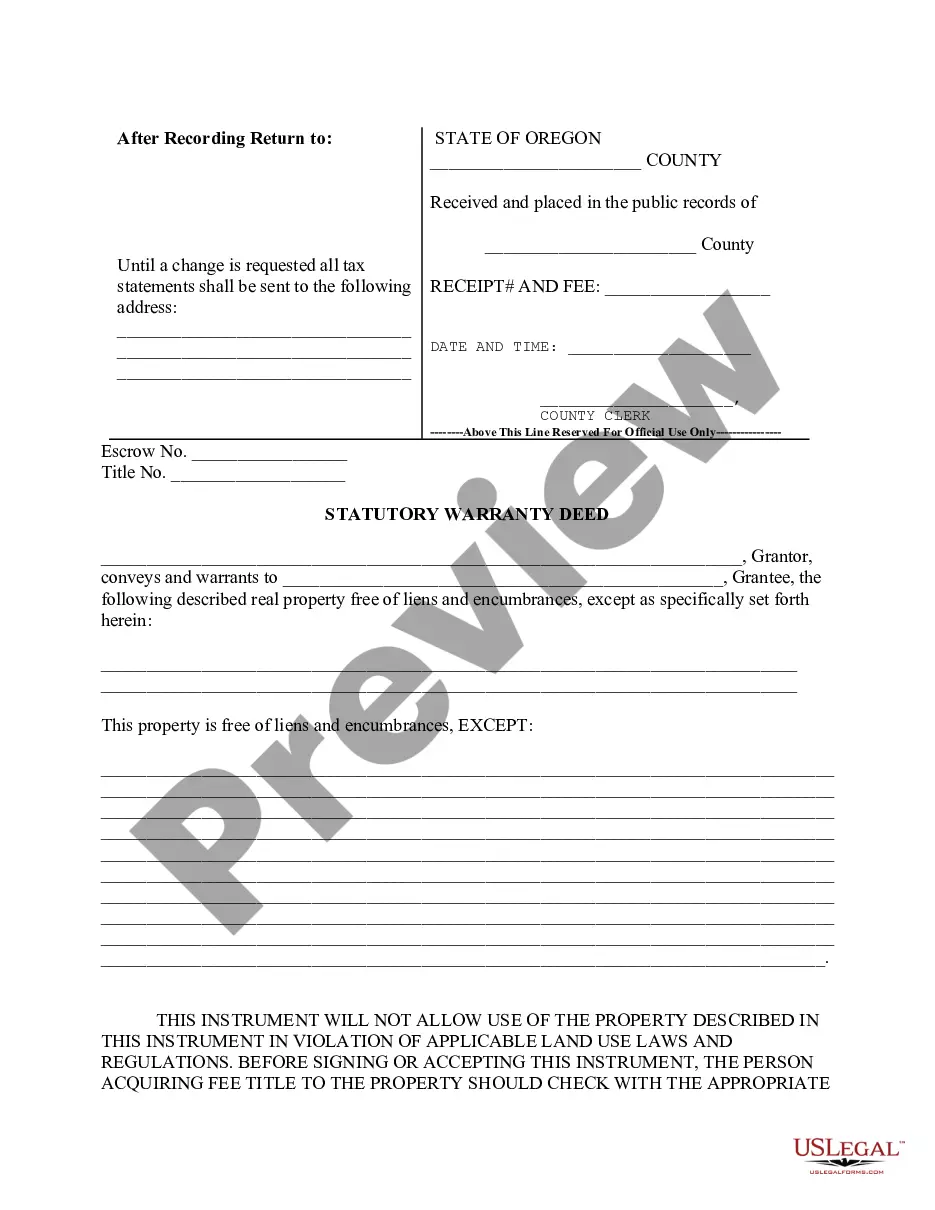
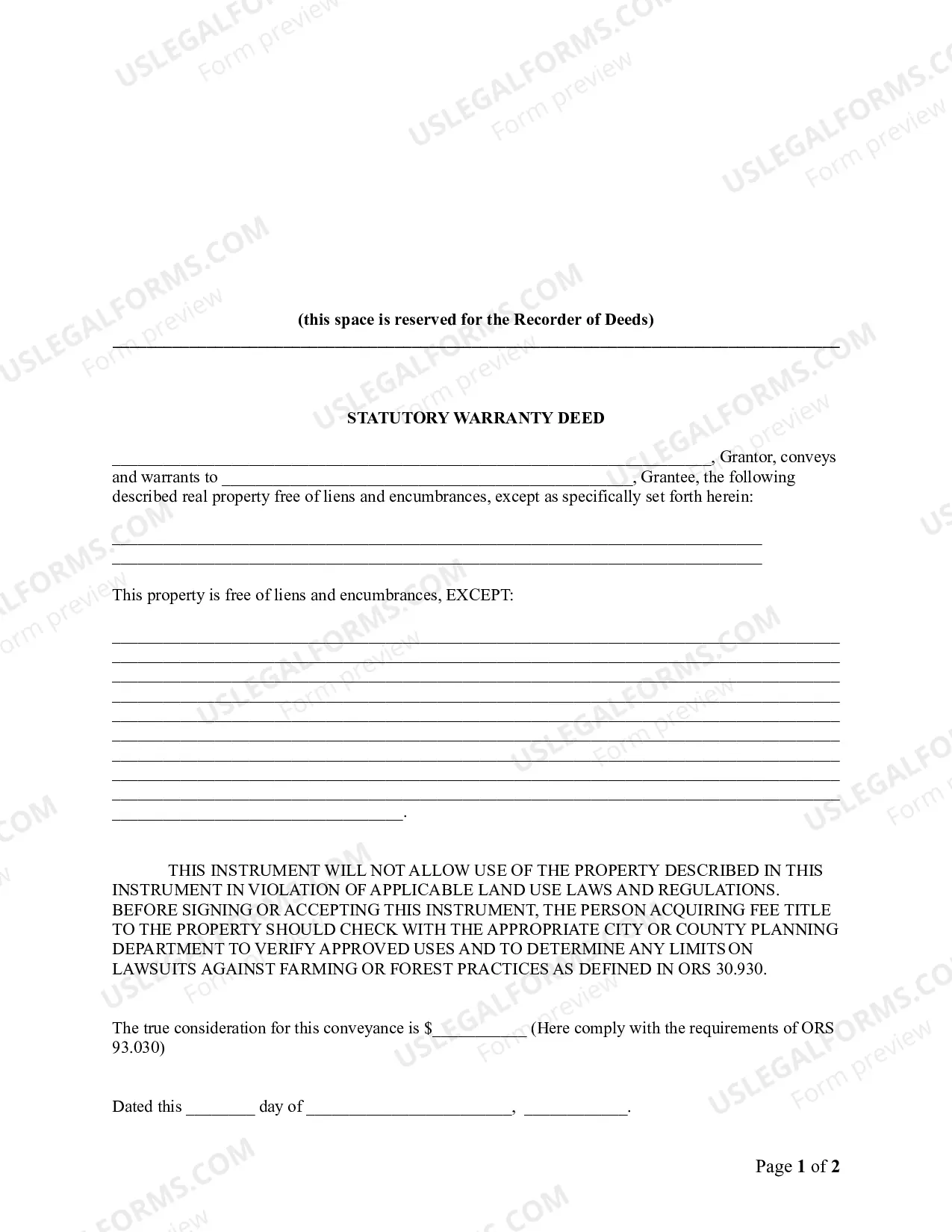
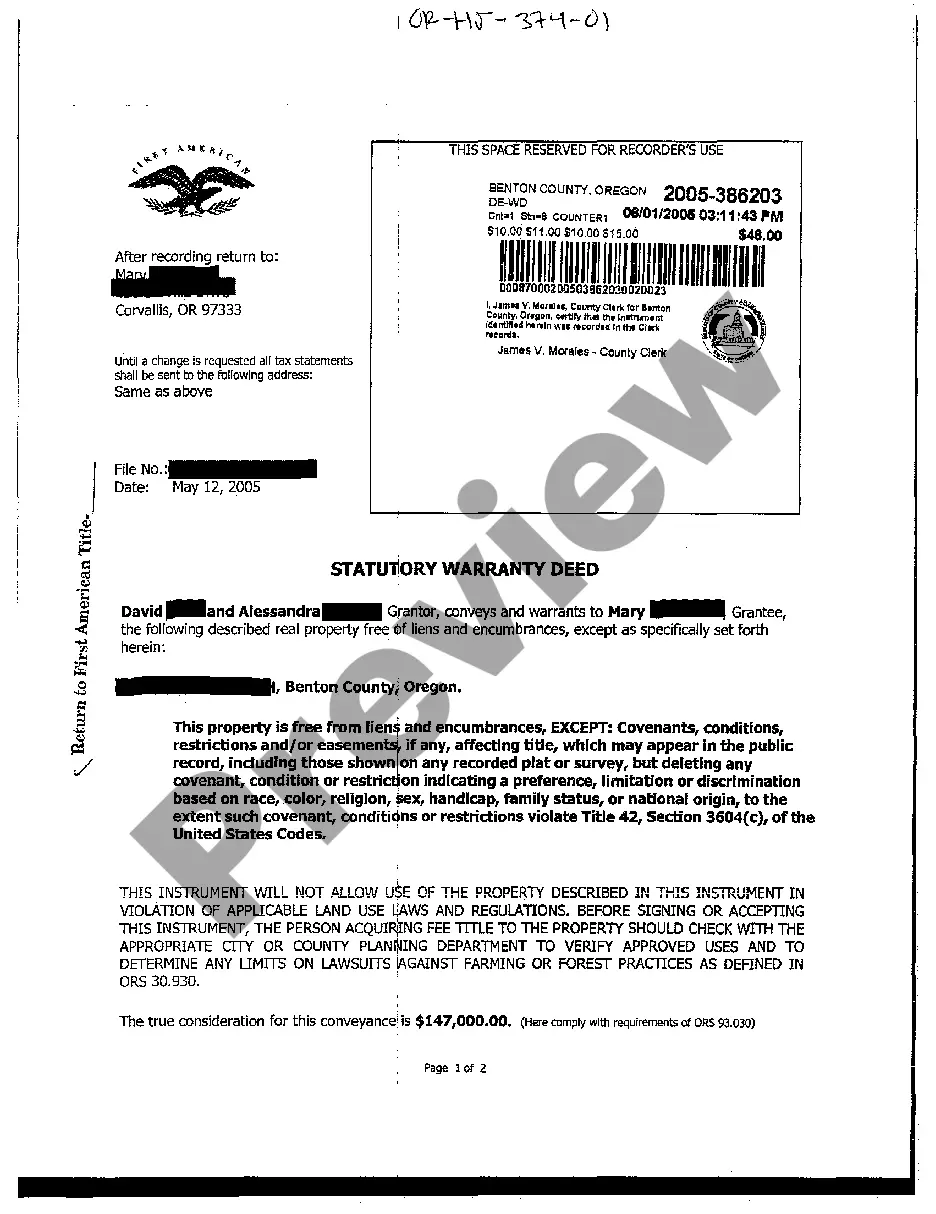
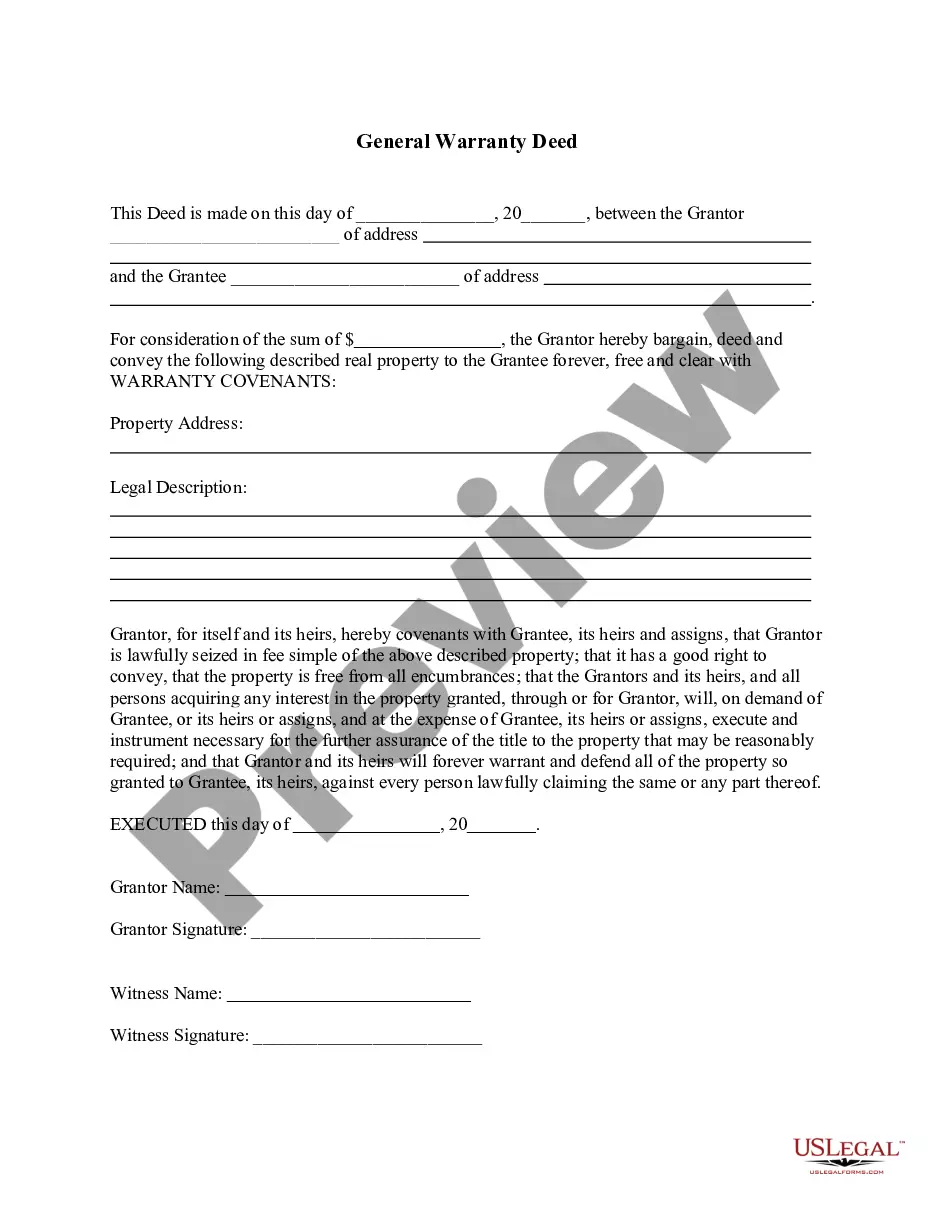
The Statutory Warranty Deed is a legal document used in property transactions. It guarantees that the property being transferred is free of liens and encumbrances, except as specifically stated in the deed. Unlike other types of deeds, a statutory warranty deed offers stronger protections for the grantee, ensuring they have clear title to the property. This form can be tailored to meet the specific needs of the involved parties.
Key parts of this document
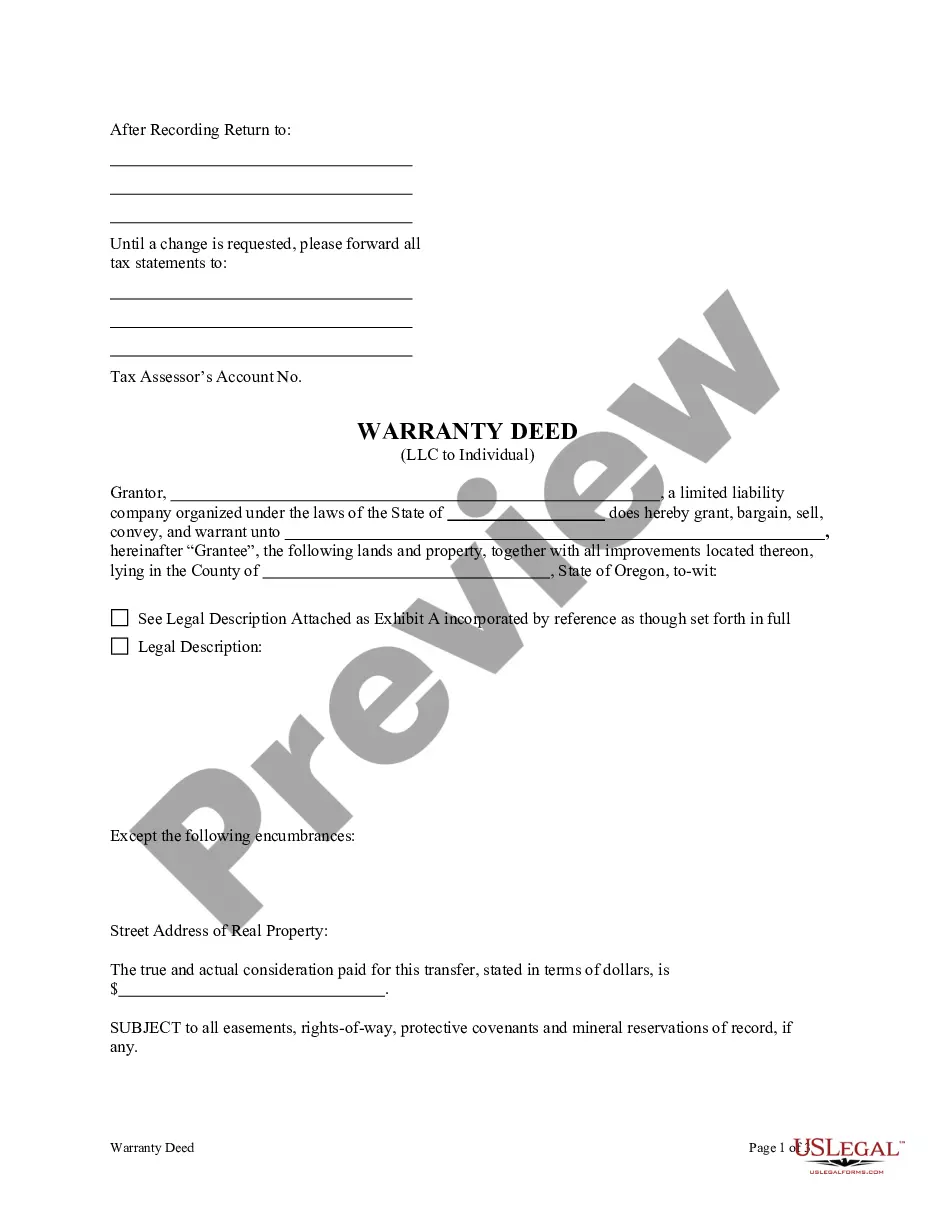
- Grantor and grantee information: Names and addresses of the parties involved in the transaction.
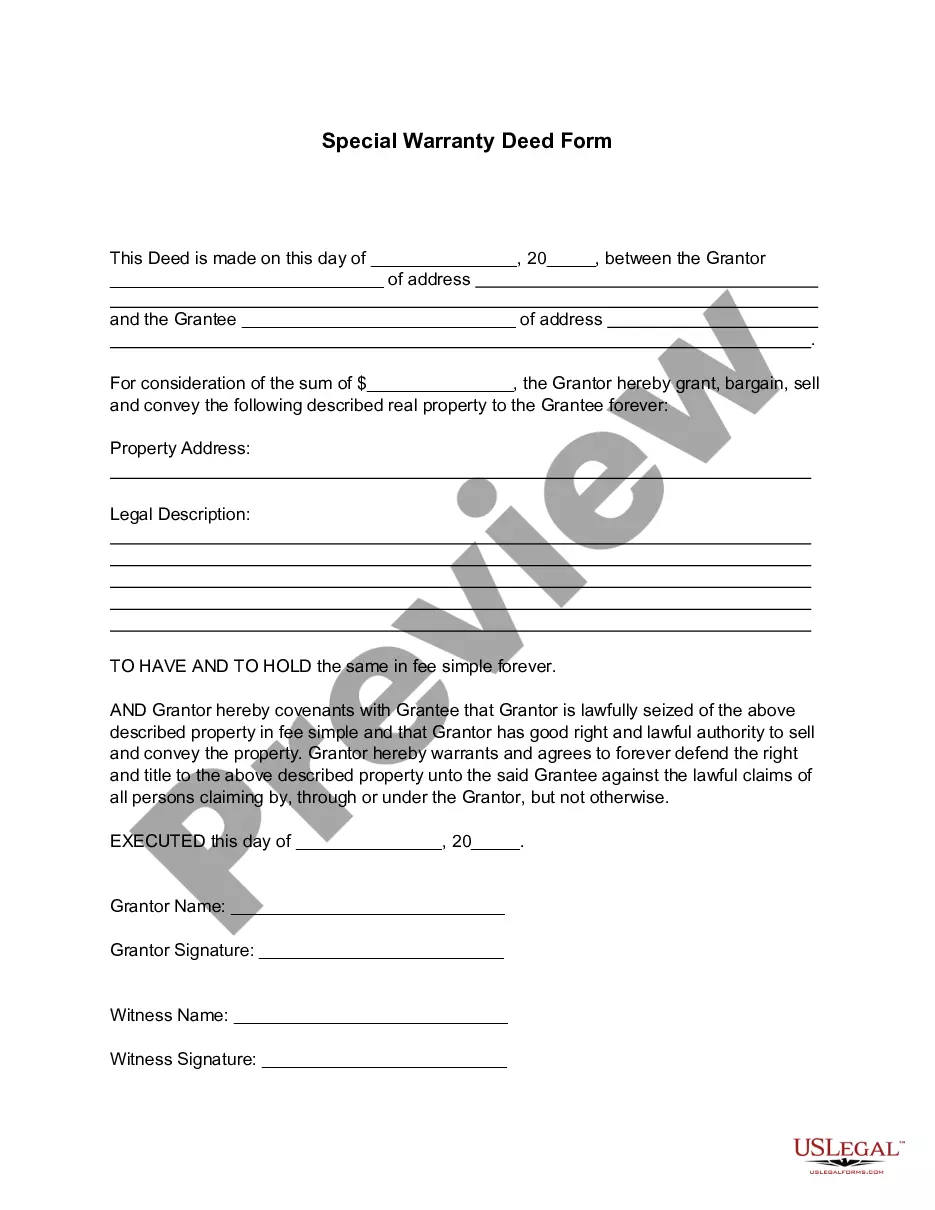
- Description of the property: Detailed legal description of the real estate being conveyed.
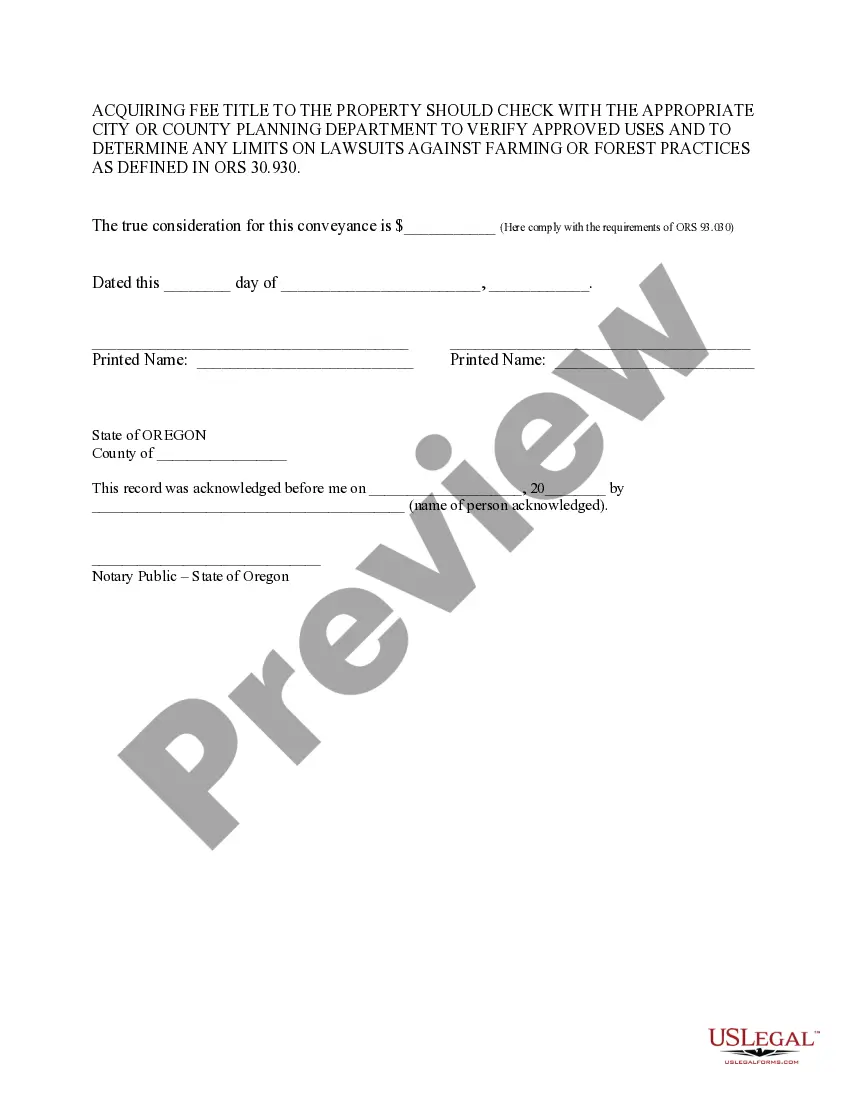
- Consideration: The true value exchanged for the property must be stated.
- Liens and encumbrances: Section to specify any exceptions to the transfer of clear title.
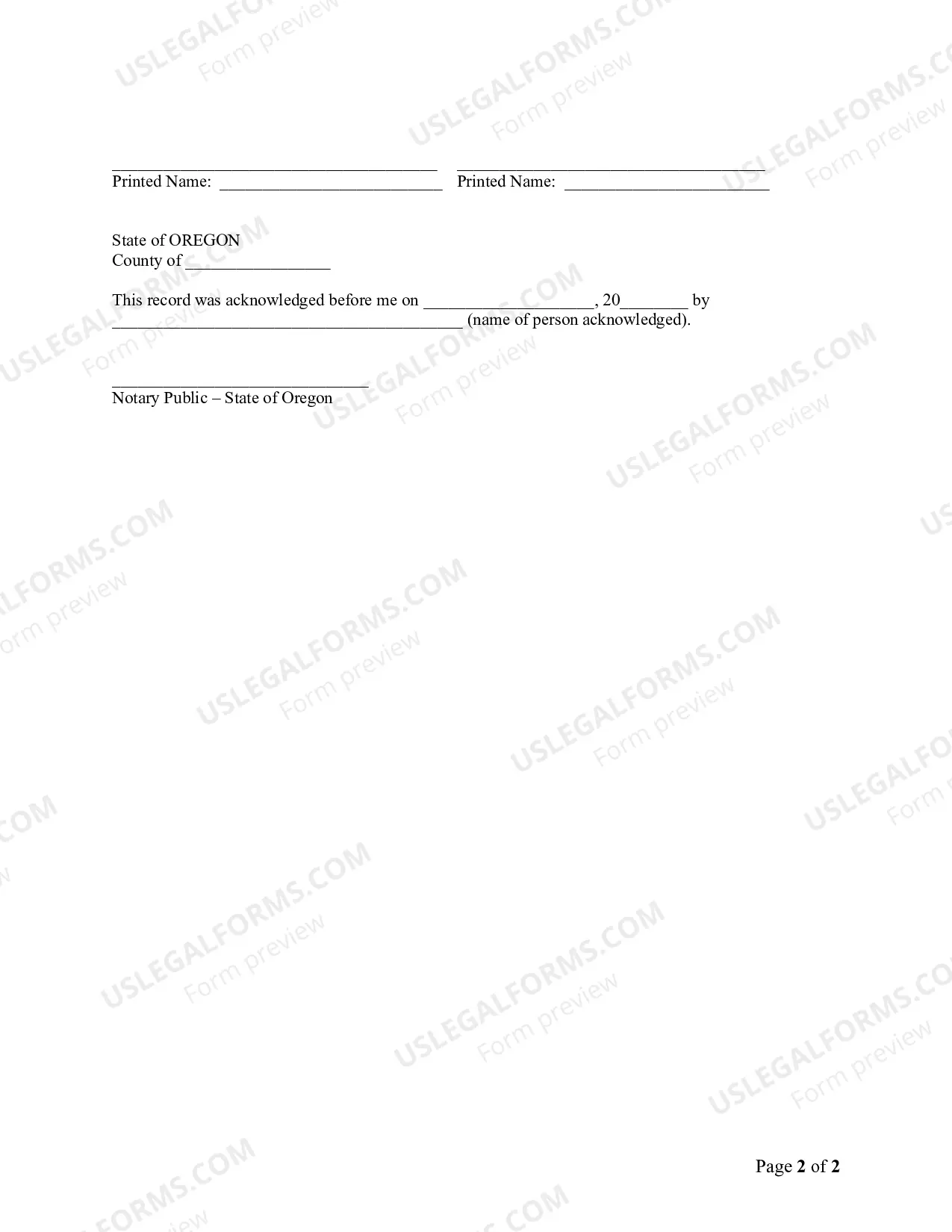
- Acknowledgment by a notary public: Validation of the signatures and parties involved in the deed.

When to use this form
This form should be used when an individual or entity wishes to transfer ownership of real property while providing a warranty of title to the buyer. It is essential in situations where the buyer wants assurances that the property is not subject to undisclosed liens or claims. Common scenarios include sales of homes, land, or other types of real estate where a formal assurance of clear title is needed.
Who should use this form
- Homeowners selling their property.
- Real estate agents managing property sales.
- Individuals or businesses acquiring real estate.
- Attorneys assisting clients with property transactions.
How to prepare this document
- Identify the parties: Fill in the names and addresses of the grantor (seller) and grantee (buyer).
- Specify the property: Provide a detailed legal description of the property being transferred.
- Enter consideration: State the true consideration for the transfer in the designated area.
- Note any exceptions: Clearly list any liens or encumbrances that affect the title.
- Sign in front of a notary: Both parties must sign the document in the presence of a notary public to validate the deed.
Notarization requirements for this form
This form must be notarized to be legally valid. US Legal Forms provides secure online notarization powered by Notarize, allowing you to complete the process through a verified video call.
Get your form ready online
Our built-in tools help you complete, sign, share, and store your documents in one place.
Make edits, fill in missing information, and update formatting in US Legal Forms—just like you would in MS Word.
Download a copy, print it, send it by email, or mail it via USPS—whatever works best for your next step.
Sign and collect signatures with our SignNow integration. Send to multiple recipients, set reminders, and more. Go Premium to unlock E-Sign.
If this form requires notarization, complete it online through a secure video call—no need to meet a notary in person or wait for an appointment.
We protect your documents and personal data by following strict security and privacy standards.

Make edits, fill in missing information, and update formatting in US Legal Forms—just like you would in MS Word.

Download a copy, print it, send it by email, or mail it via USPS—whatever works best for your next step.

Sign and collect signatures with our SignNow integration. Send to multiple recipients, set reminders, and more. Go Premium to unlock E-Sign.

If this form requires notarization, complete it online through a secure video call—no need to meet a notary in person or wait for an appointment.

We protect your documents and personal data by following strict security and privacy standards.
Mistakes to watch out for
- Failing to include a complete legal description of the property.
- Not specifying any exceptions to clear title.
- Overlooking the requirement for notarization.
- Not including the true consideration in the transfer.
Advantages of online completion
- Convenience: Download the form instantly from your home or office.
- Editability: Easily customize the document to meet your unique circumstances.
- Cost-effective: Save on legal fees by using a reliable, lawyer-drafted template.
- Accessibility: 24/7 availability to access and complete the form as needed.
Quick recap
- A Statutory Warranty Deed provides legal protection to the buyer in real estate transactions.
- It is essential to complete the deed accurately to avoid future legal issues.
- Notarization is required for the deed to be effective and enforceable.
- This form can be accessed conveniently online, allowing for easy customization and usage.
Looking for another form?

Form popularity
FAQ
Under Oregon statute, the majority of civil actions must be filed within two years, including personal injury, defamation, fraud, and medical malpractice. There is a six-year statute of limitations for injury to personal property, trespassing, contracts, and debt collection.
Under Oregon law, anyone under the age of 18 is considered a minor (ORS 419B. 550 definition of minor and ORS 109.510 age of majority).
It is illegal to place a container filled with human fecal matter on the side of any highway. Babies may not be carried on the running boards of a car. Drivers may not pump their own gas. One may not bathe without wearing "suitable clothing," i.e., clothing that covers one's body from neck to knee.
There is a six-year statute of limitations for sexual felonies or crimes in which the victim is under 18 at the time of the offense. There is a three-year limit for all other felonies and a two-year limit for most misdemeanors in the state.
In Oregon, it is illegal for an adult (someone 18 or older) to have sex with a minor (someone younger than 18), even if the sex is consensual. Those who break the law have committed statutory rape.