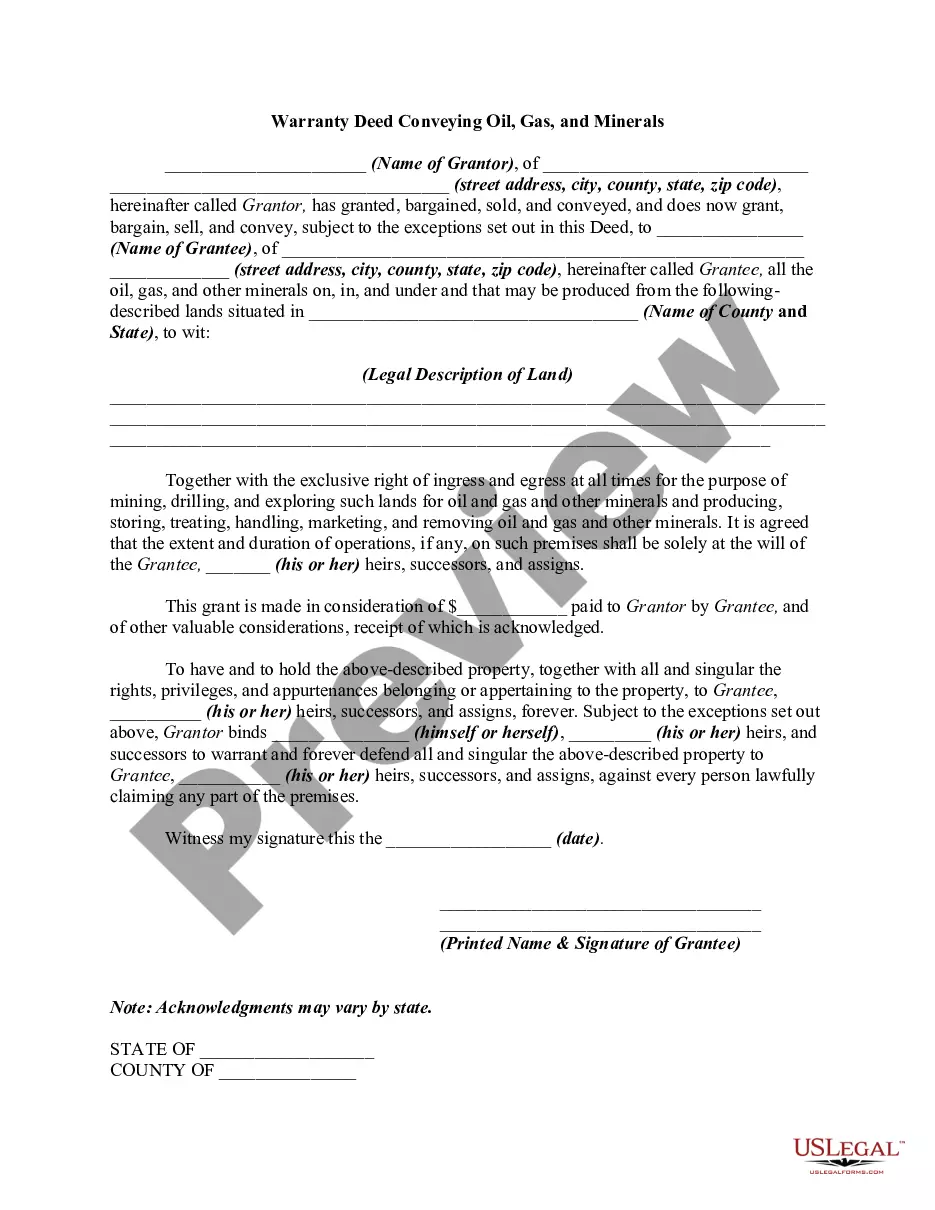
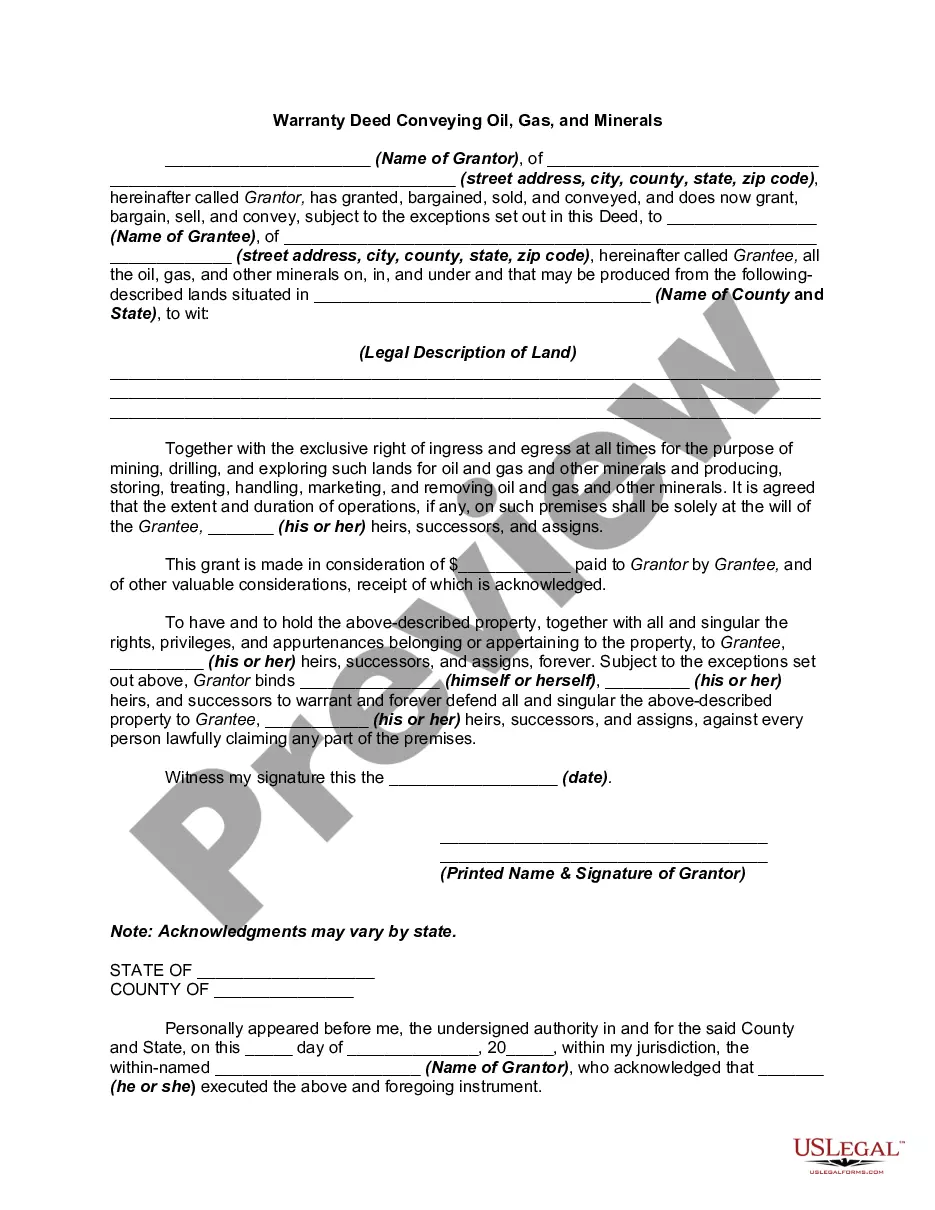
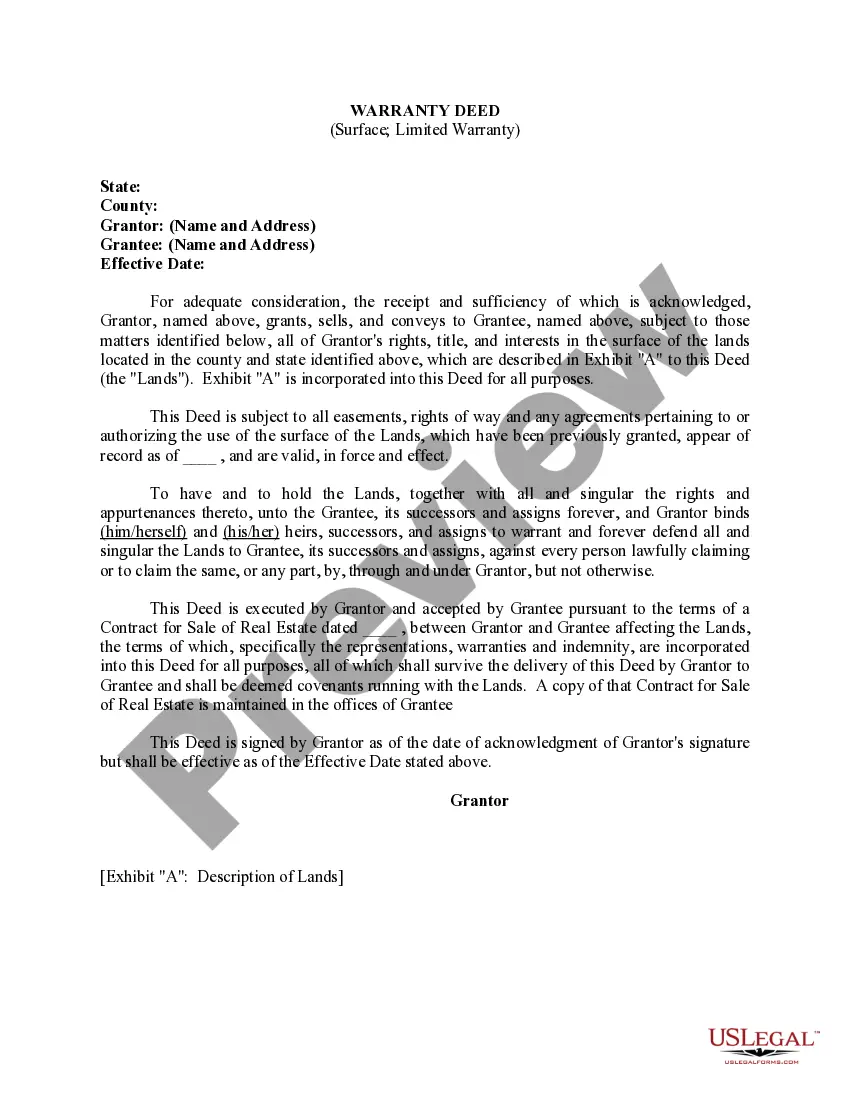
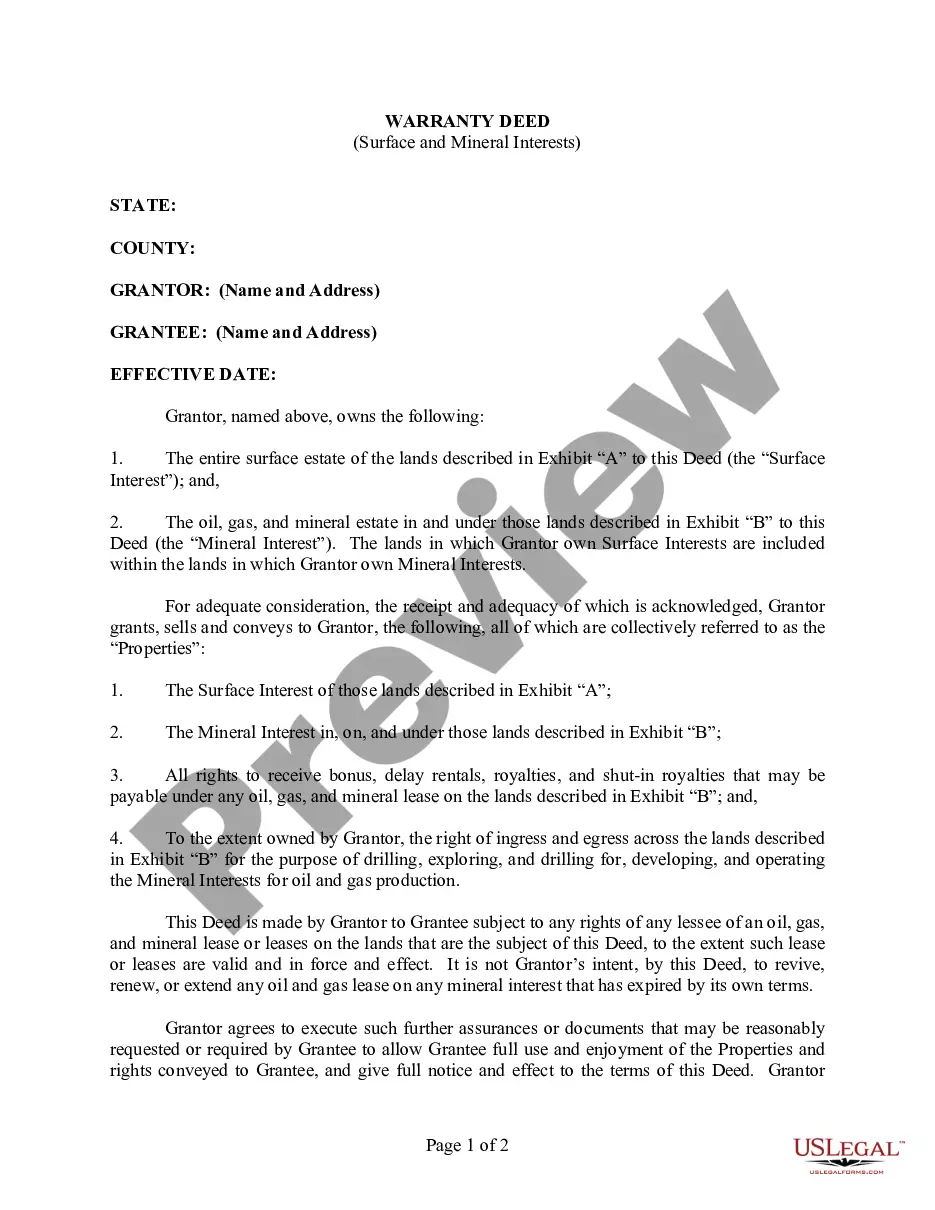
A Warranty Deed Conveying Oil, Gas, and Minerals is a legal document that is used to transfer a seller’s interest in oil, gas, and/or minerals to a buyer. It is an assurance deed which means that the seller guarantees that the title is good and that the buyer will have clear title to the oil, gas, and minerals. This type of deed conveys ownership of the oil, gas, and minerals to the buyer with no encumbrances. There are two types of Warranty Deeds Conveying Oil, Gas, and Minerals: an ordinary warranty deed and a special warranty deed. An ordinary warranty deed conveys the seller’s interest in the oil, gas, and minerals but does not guarantee that there are no third-party claims or encumbrances to the property. A special warranty deed conveys the seller’s interest in the oil, gas, and minerals and also guarantees that the seller has not sold the same interest to any other party and that the title is clear of any encumbrances.
Warranty Deed Conveying Oil, Gas, and Minerals
Description
How to fill out Warranty Deed Conveying Oil, Gas, And Minerals?
Coping with official documentation requires attention, precision, and using well-drafted blanks. US Legal Forms has been helping people nationwide do just that for 25 years, so when you pick your Warranty Deed Conveying Oil, Gas, and Minerals template from our service, you can be sure it complies with federal and state regulations.
Working with our service is easy and fast. To obtain the required document, all you’ll need is an account with a valid subscription. Here’s a quick guideline for you to obtain your Warranty Deed Conveying Oil, Gas, and Minerals within minutes:
- Remember to attentively check the form content and its correspondence with general and legal requirements by previewing it or reading its description.
- Search for another formal blank if the previously opened one doesn’t match your situation or state regulations (the tab for that is on the top page corner).
- Log in to your account and download the Warranty Deed Conveying Oil, Gas, and Minerals in the format you prefer. If it’s your first time with our website, click Buy now to continue.
- Create an account, select your subscription plan, and pay with your credit card or PayPal account.
- Decide in what format you want to obtain your form and click Download. Print the blank or upload it to a professional PDF editor to prepare it electronically.
All documents are drafted for multi-usage, like the Warranty Deed Conveying Oil, Gas, and Minerals you see on this page. If you need them in the future, you can fill them out without re-payment - simply open the My Forms tab in your profile and complete your document any time you need it. Try US Legal Forms and accomplish your business and personal paperwork rapidly and in total legal compliance!
Form popularity
FAQ
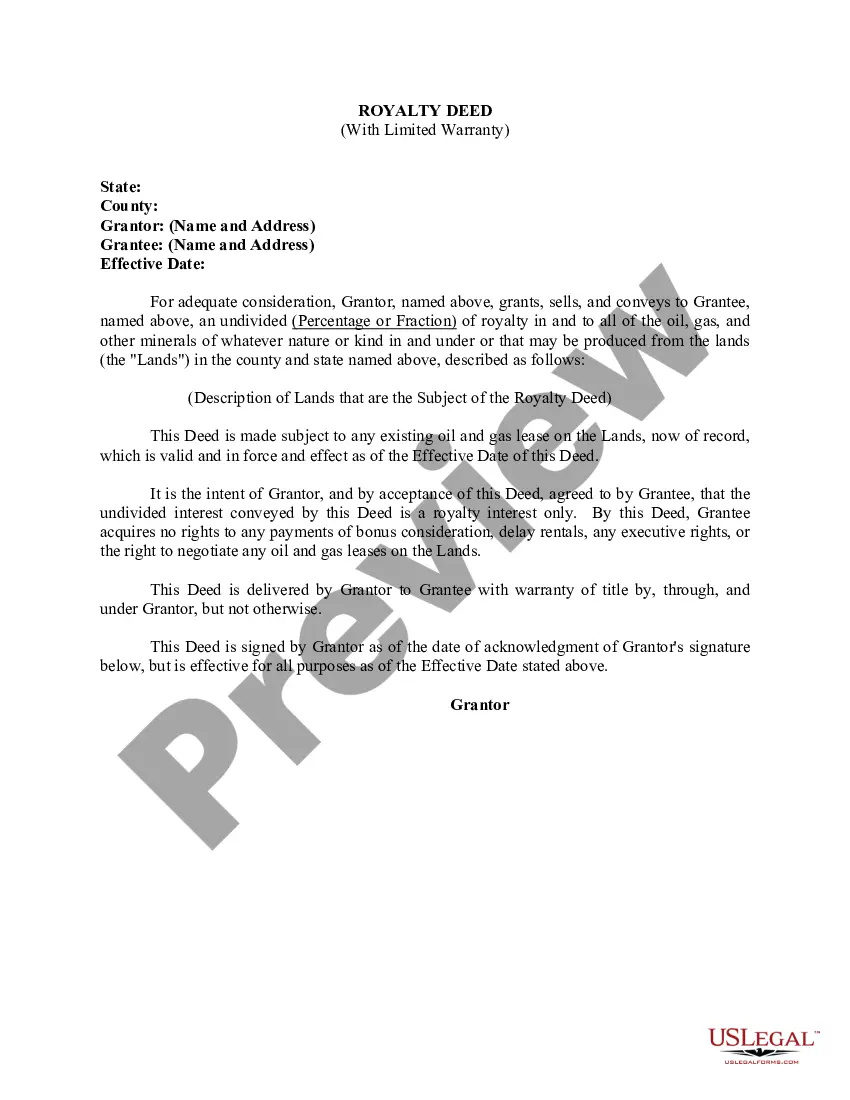
With a mineral deed, the holder usually has responsibility for development and production of the extraction on the property. That risk comes with the potential reward of the majority of the profit that comes from it. With a royalty deed, the holder does not usually bear the risk of the development and production.
Mineral rights only grant ownership to the resources beneath a property. However, not having mineral rights does not imply that the land has no value. In fact, as already mentioned earlier, your surface right grants you ownership over the plants, trees, and water on your property.
A special warranty deed guarantees that the buyer won't face any legal action or title issues as a result of the actions of the property's previous owner. A downfall is that this type of deed does not offer any guarantees that prior owners owned the property free and clear.
Mineral rights are automatically included as a part of the land in a property conveyance, unless and until the ownership gets separated at some point by an owner/seller. An owner can separate the mineral rights from land by: Conveying (selling or otherwise transferring) the land but retaining the mineral rights.
What does it mean to sell a property and retain mineral rights? A seller who wishes to sell a parcel of land can decide to limit the access of the new owner to everything above the surface, which is covered by the surface rights. As a result, the seller will still have rights over any minerals beneath the land.
Mineral rights generally include the right to sell all or part of the interest, the right to enter the land to produce and carry on production activities, the right to lease the mineral rights to others, and the right to create fractional shares of the mineral interest.
Mineral rights convey or are conveyed ? meaning transferred to a new owner ? through a deed. At the time of the initial mineral rights conveyance, the property deed will include the separation of the surface and mineral rights. Subsequent land deeds will not reference the mineral rights transfer.
As one of the most secure types of deeds, general warranty deeds are used in most real estate title transfers. General warranty deeds provide guarantees that the grantor has the right to sell the property and that the grantee will be receiving a title that is free of debt, claims, or other legal encumbrances.