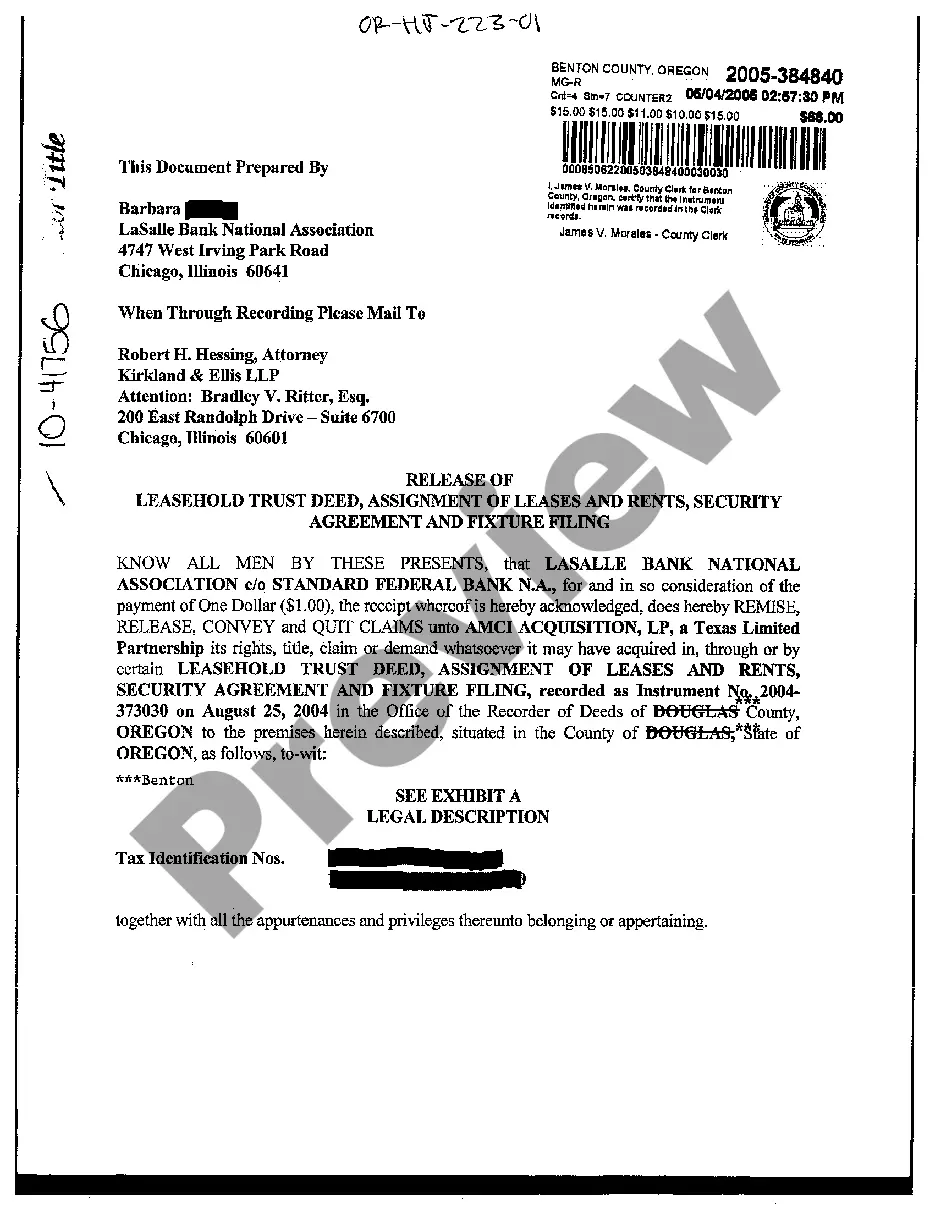
Deed
About this form
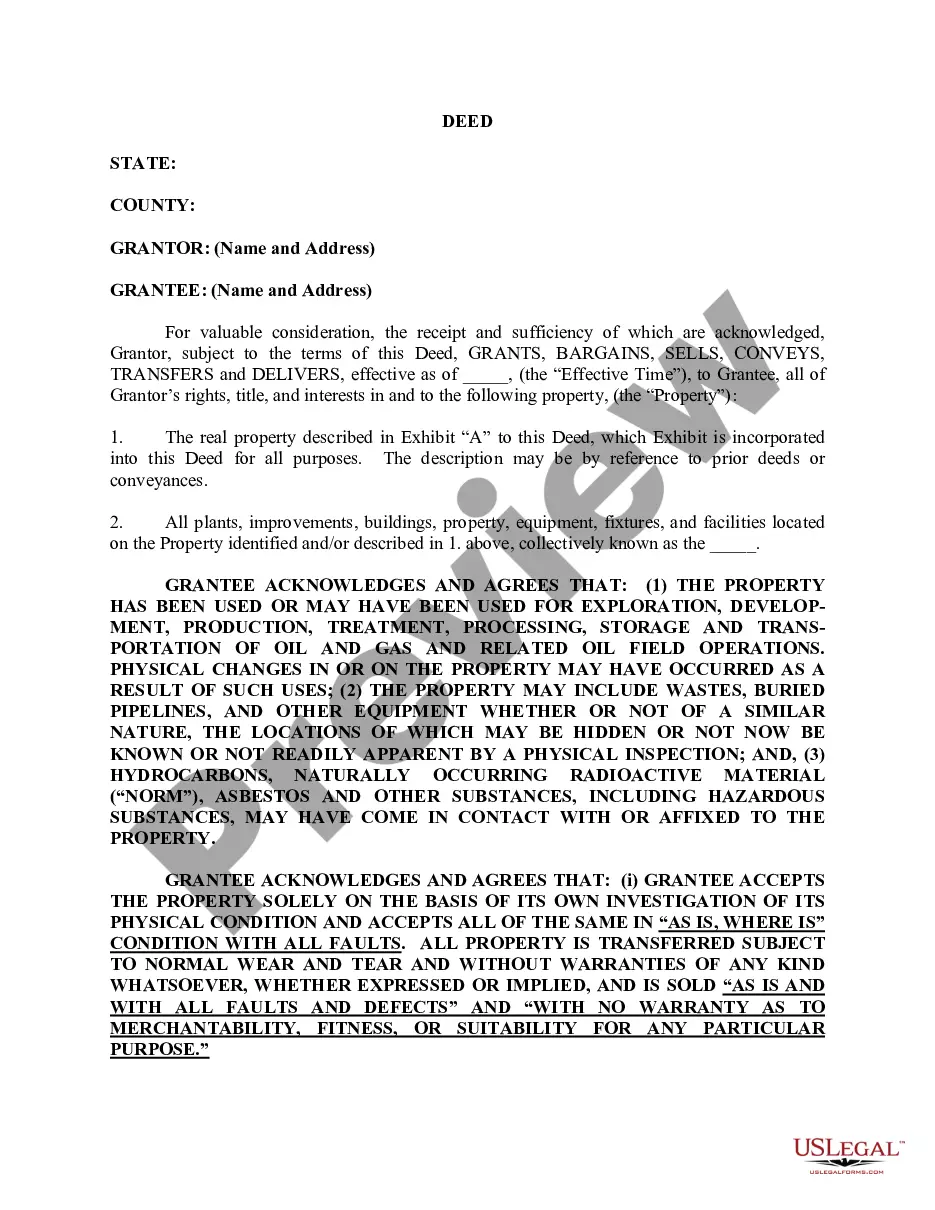
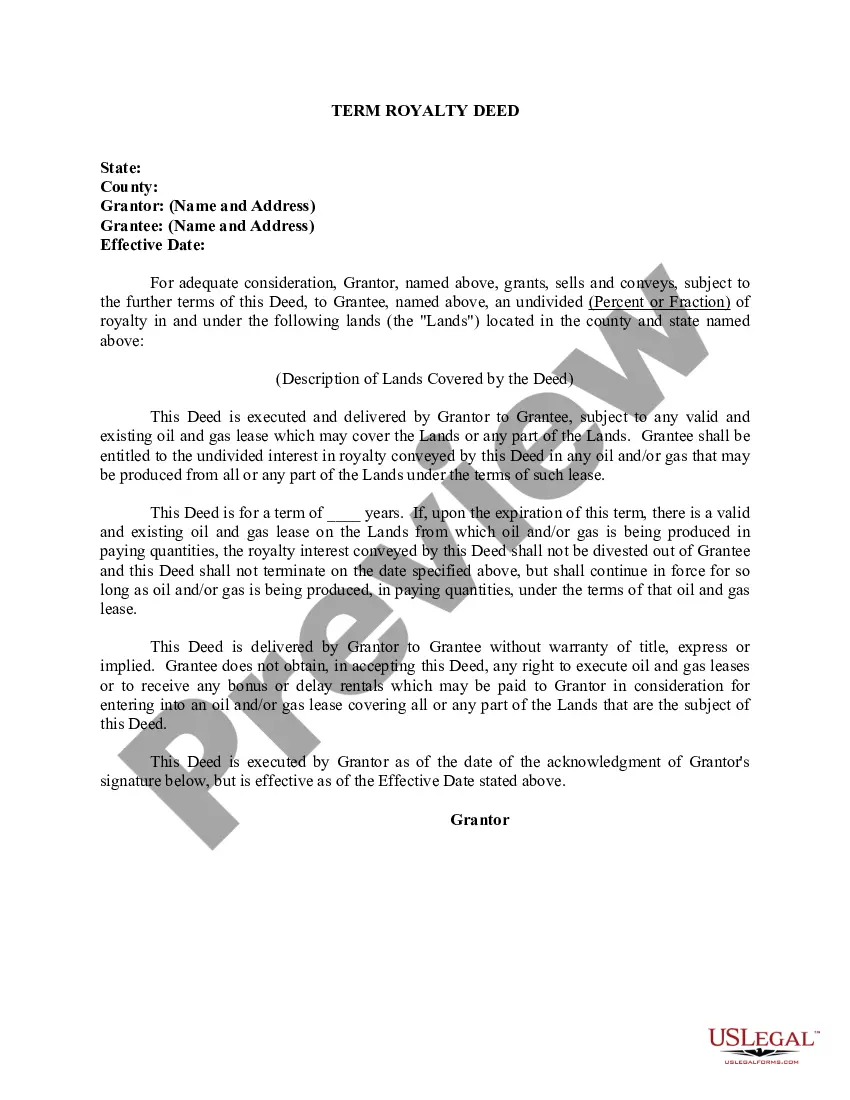
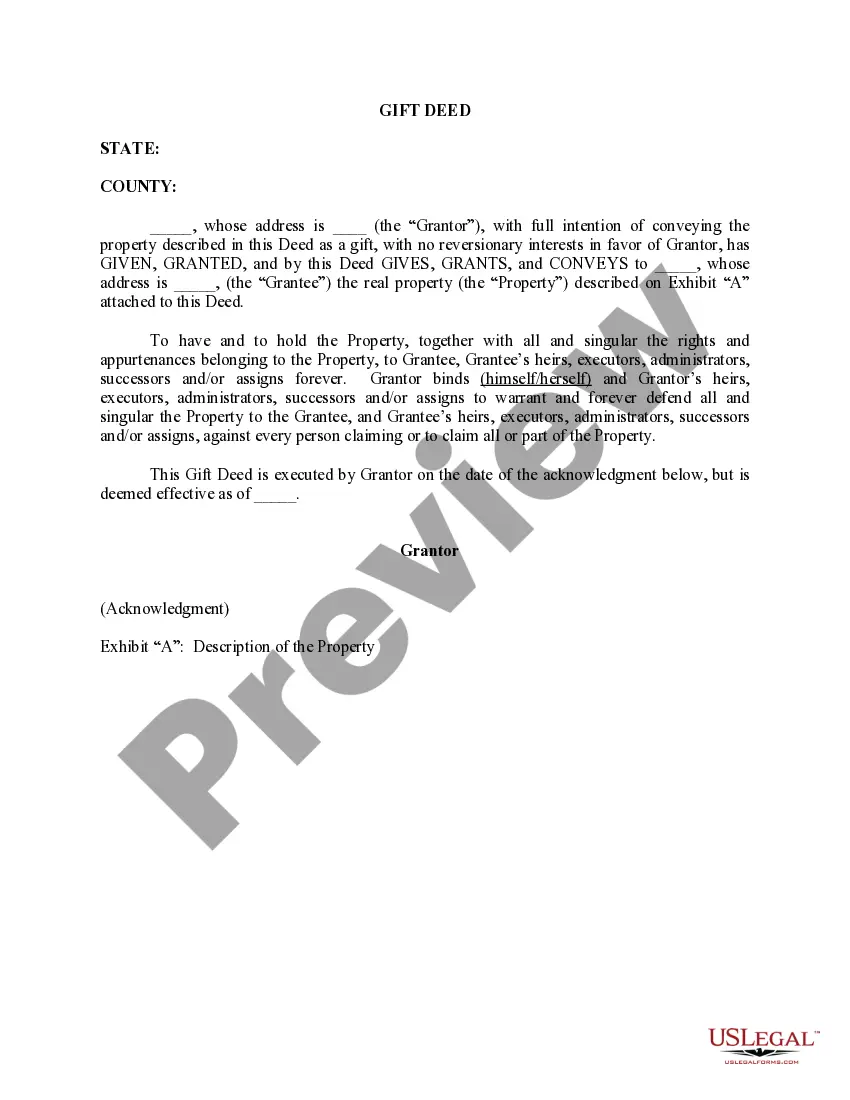
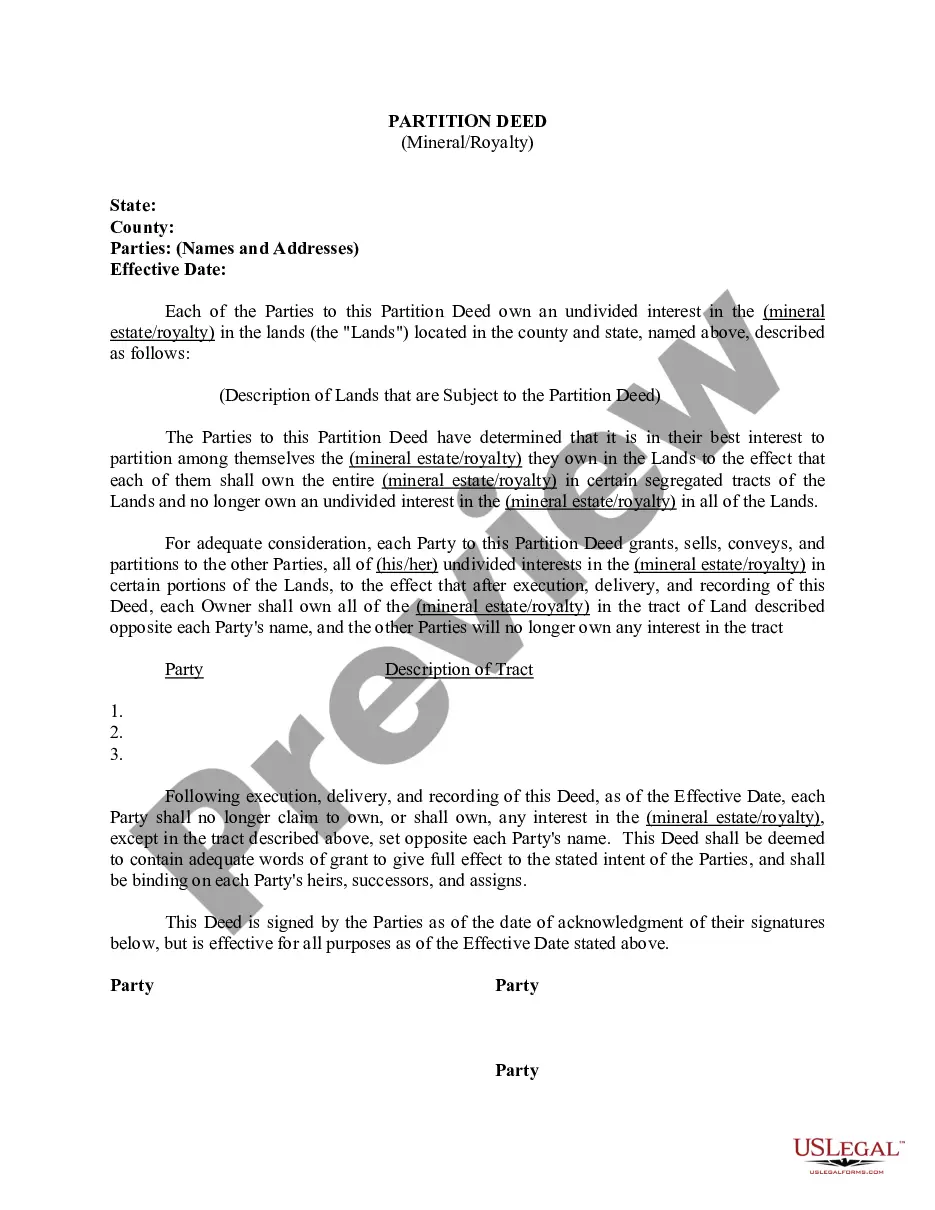
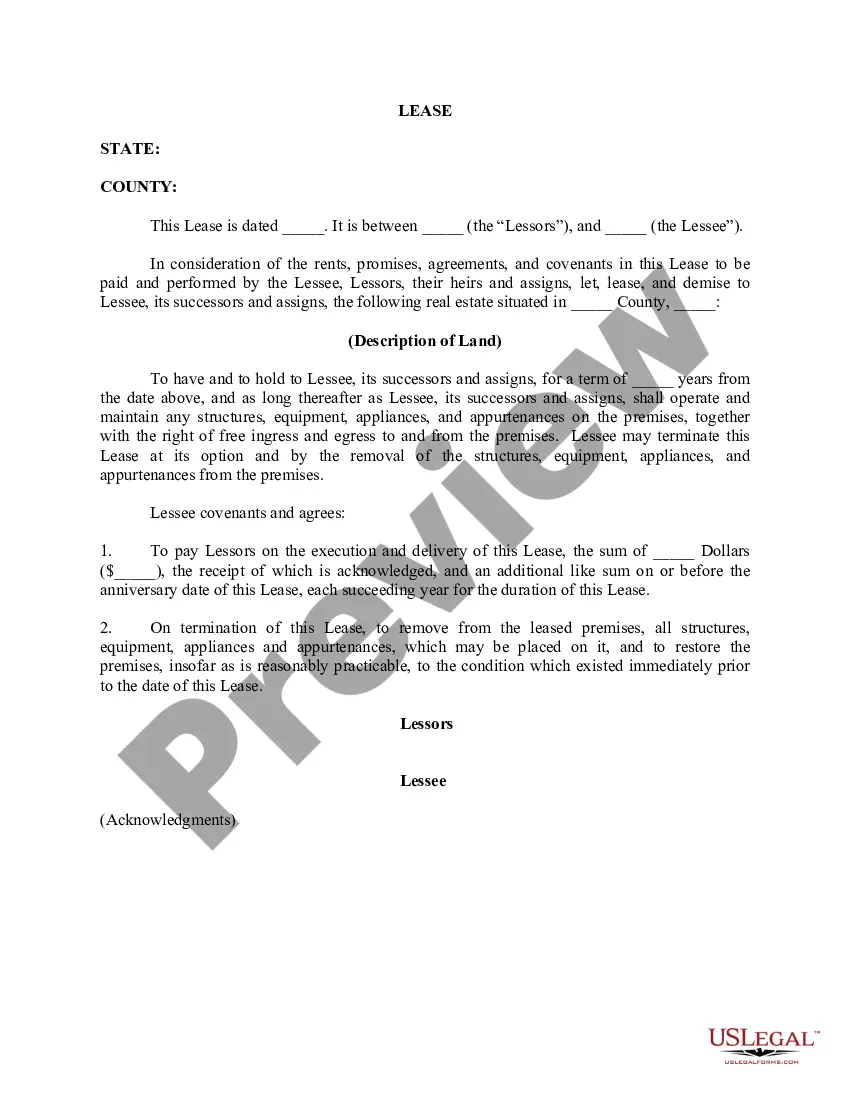
A deed is a legal document that is used to transfer ownership of real estate from one party to another. The specific type of deed provided here is a deed with warranty, which guarantees that the grantor holds clear title to the property and has the right to transfer it. This form is necessary to formalize the transfer of property rights and establish ownership under the law.
Form components explained
- Grantor and grantee details: Names and addresses of the parties involved.
- Effective date of the transfer: Specifies when the ownership changes hands.
- Property description: Details of the real estate being transferred, included in Exhibit A.
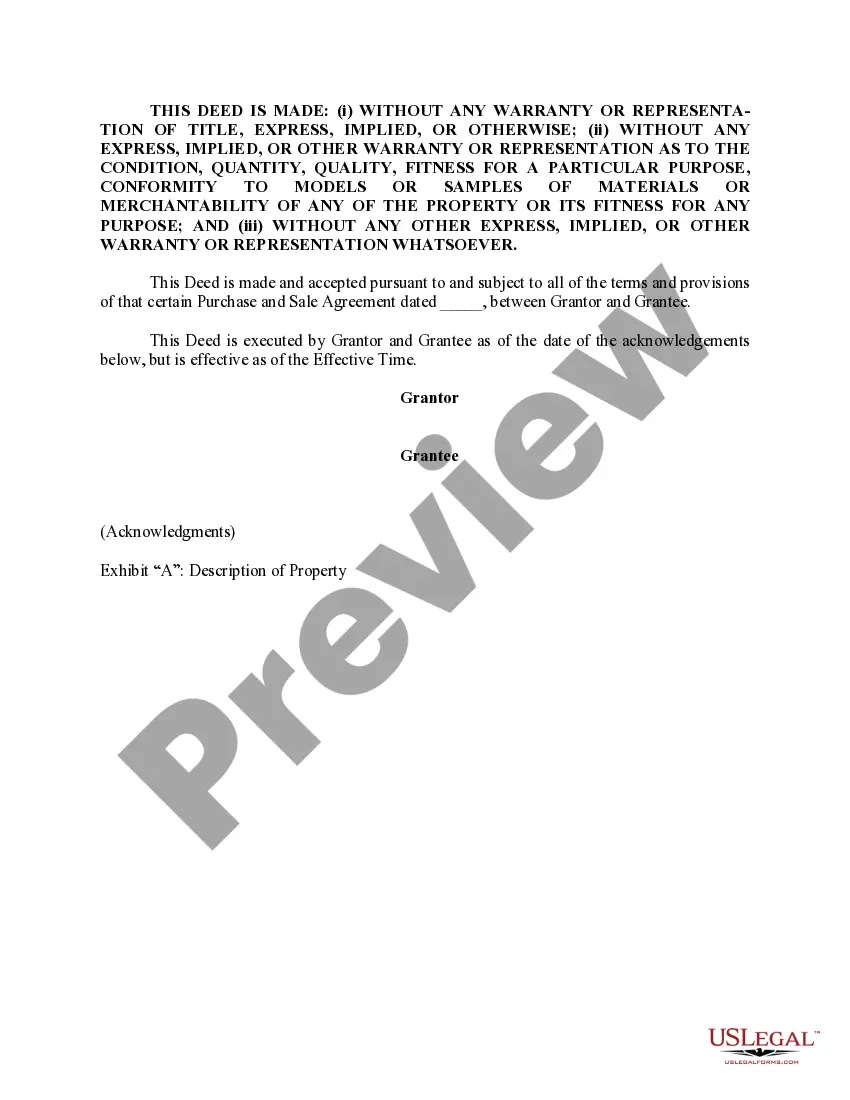
- Acknowledgments by the grantee: Clarifies the condition of the property and the lack of warranties.
- Signatures of both parties: Makes the deed legally binding.
When to use this document
This deed should be used when an individual or entity wants to transfer ownership of real estate to another party. It is commonly utilized in property sales, transactions involving gifts of property, and other situations where clear title transfer is needed. This form is particularly useful when the parties involved agree on the terms of the sale and need to formalize the transfer legally.
Who can use this document
- Property owners (grantors) wishing to sell or transfer their property.
- Buyers (grantees) acquiring real estate and seeking a legal record of ownership.
- Real estate agents or attorneys involved in property transactions.
- Individuals conducting estate planning or property gifting.
Instructions for completing this form
- Identify the parties: Enter the names and addresses of the grantor and grantee.
- Specify the effective date: Indicate when the transfer of property will take effect.
- Describe the property: Include detailed descriptions in Exhibit A, referencing any prior deeds if necessary.
- Complete acknowledgments: Ensure the grantee understands and accepts the property condition.
- Obtain signatures: Both grantor and grantee must sign the document to make it effective.
Does this form need to be notarized?
This form must be notarized to be legally valid. US Legal Forms provides secure online notarization powered by Notarize, allowing you to complete the process through a verified video call.
Get your form ready online
Our built-in tools help you complete, sign, share, and store your documents in one place.
Make edits, fill in missing information, and update formatting in US Legal Forms—just like you would in MS Word.
Download a copy, print it, send it by email, or mail it via USPS—whatever works best for your next step.
Sign and collect signatures with our SignNow integration. Send to multiple recipients, set reminders, and more. Go Premium to unlock E-Sign.
If this form requires notarization, complete it online through a secure video call—no need to meet a notary in person or wait for an appointment.
We protect your documents and personal data by following strict security and privacy standards.

Make edits, fill in missing information, and update formatting in US Legal Forms—just like you would in MS Word.

Download a copy, print it, send it by email, or mail it via USPS—whatever works best for your next step.

Sign and collect signatures with our SignNow integration. Send to multiple recipients, set reminders, and more. Go Premium to unlock E-Sign.

If this form requires notarization, complete it online through a secure video call—no need to meet a notary in person or wait for an appointment.

We protect your documents and personal data by following strict security and privacy standards.
Typical mistakes to avoid
- Not ensuring accurate property descriptions, which can lead to disputes in ownership.
- Failing to include the effective date, leaving the transfer ambiguous.
- Omitting signatures, which renders the deed invalid.
- Not providing proper acknowledgment by the grantee regarding the property's condition.
Why complete this form online
- Convenient access to legal documents from anywhere and at any time.
- Editable templates that allow you to customize the deed as needed.
- Secure storage of your completed forms for easy retrieval.
- Assurance that the forms are drafted in compliance with current legal standards.
Looking for another form?

Form popularity
FAQ
The mortgage company usually prepares this deed as part of the loan package and delivers it to the title company for you to sign at closing. The title company is commonly the trustee to the deed and holds legal title to the property until the loan gets fully repaid.
Title the deed and list the amount given for the transfer. If it is a quitclaim deed, title the deed Quitclaim Deed; for warranty deeds, title the deed Warranty Deed. Write In consideration of dollar amount to list the amount given for the transfer. List the names of the parties involved.
The answer is yes. Parties to a transaction are always free to prepare their own deeds. If you do so, be sure your deed measures up to your state's legal regulations, to help avert any legal challenge to the deed later.
To make the form legally binding, you must sign it in front of a notary public. You must then file your signed and notarized deed with the county office that's in charge of recording property documents. Once the grantee signs the warranty deed, he/she legally has ownership and claim to the property.
Some owners are put off using solicitors duke to the deed of trust cost. Individuals can write out their own, and use someone else as a witness. However, this may have errors or not be a legally binding document. The investment of getting a deed of trust when buying a property is often worth it in the long term.
The answer is yes. Parties to a transaction are always free to prepare their own deeds. If you do so, be sure your deed measures up to your state's legal regulations, to help avert any legal challenge to the deed later. Some deeds require more expertise than others.
The name and address of the seller (called the grantor) The name and address of the buyer (called the grantee) A legal description of the property (found on the previous deed) A statement that the grantor is transferring the property to the grantee.
Traditionally, in order to be a deed at common law, an instrument needs to comply with a number of formalities: it must be written on parchment, vellum or paper; a personal seal was placed on the document; and. it must be delivered to the counterparty.
Fill out the form. Complete the form using a typewriter or by printing neatly using black ink. Sign in front of a notary. Get a Preliminary Change of Ownership Report (PCOR). File the forms. Give the deed to the grantee.