Performance Report
Overview of this form
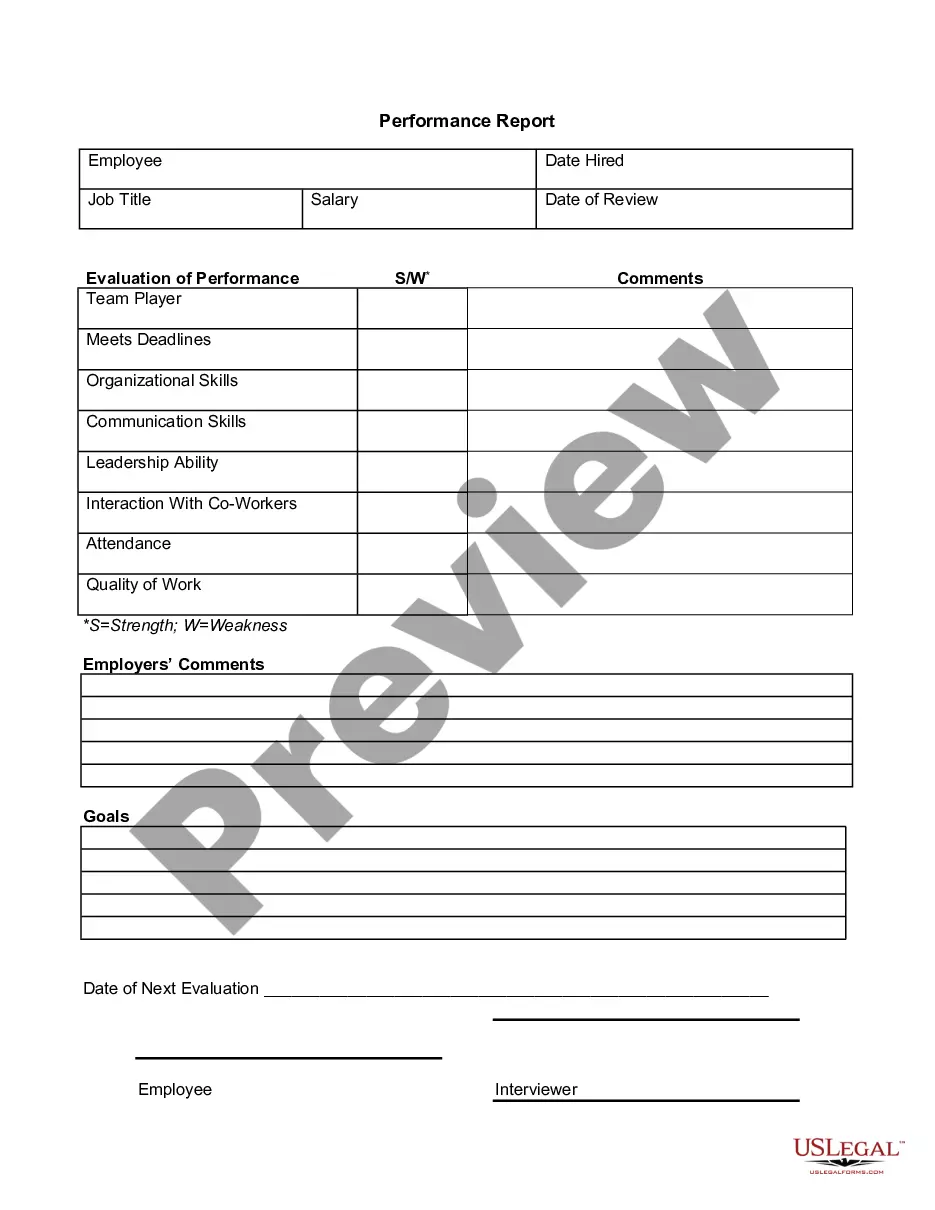
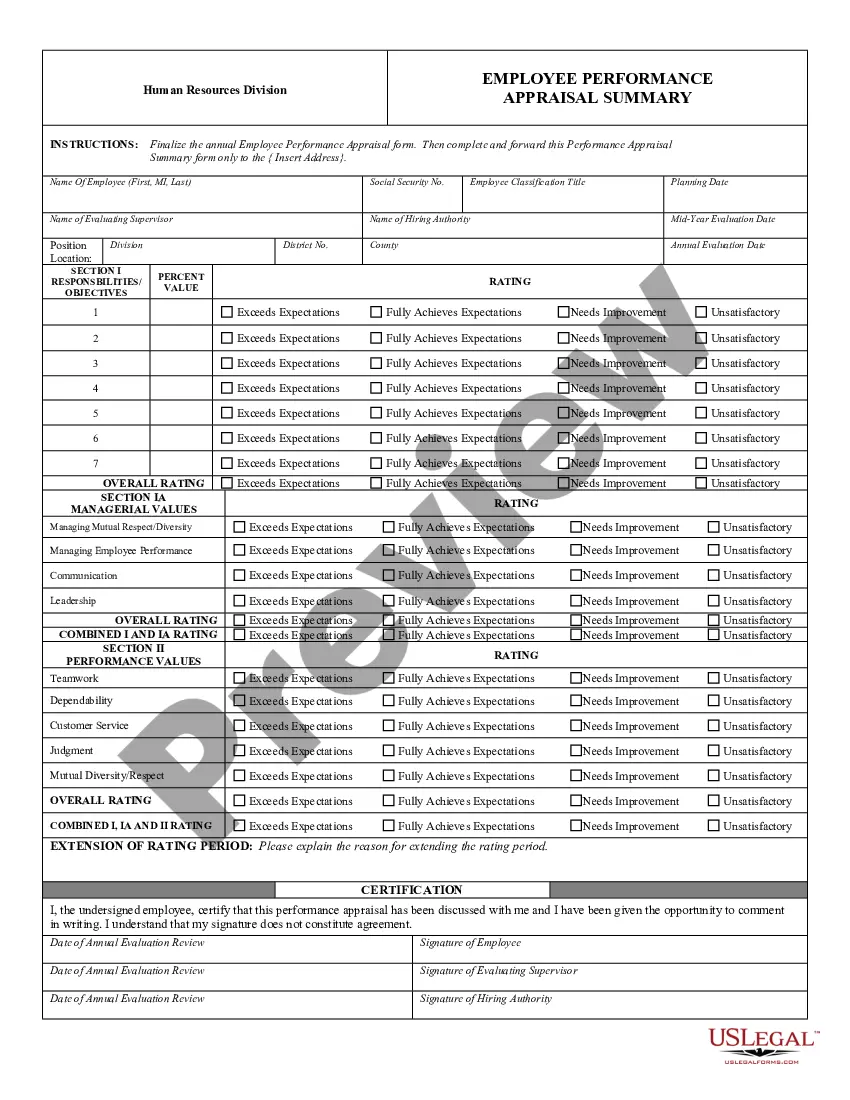
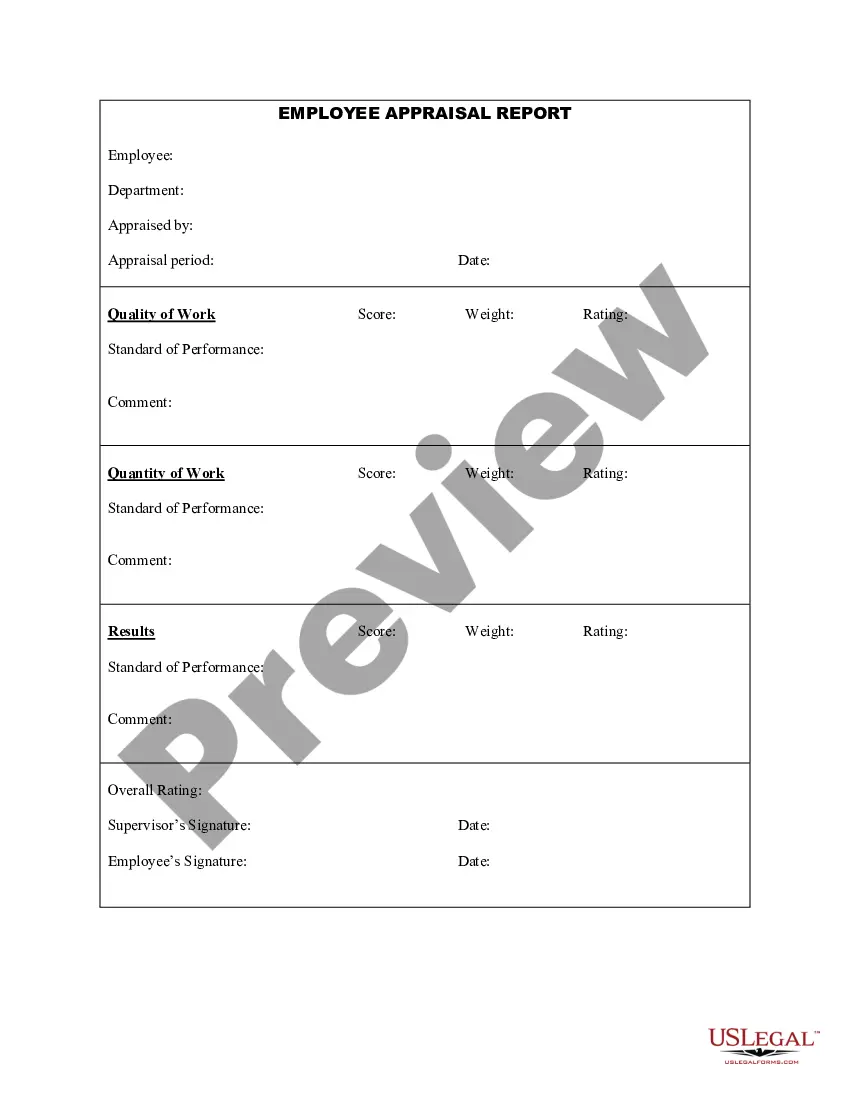
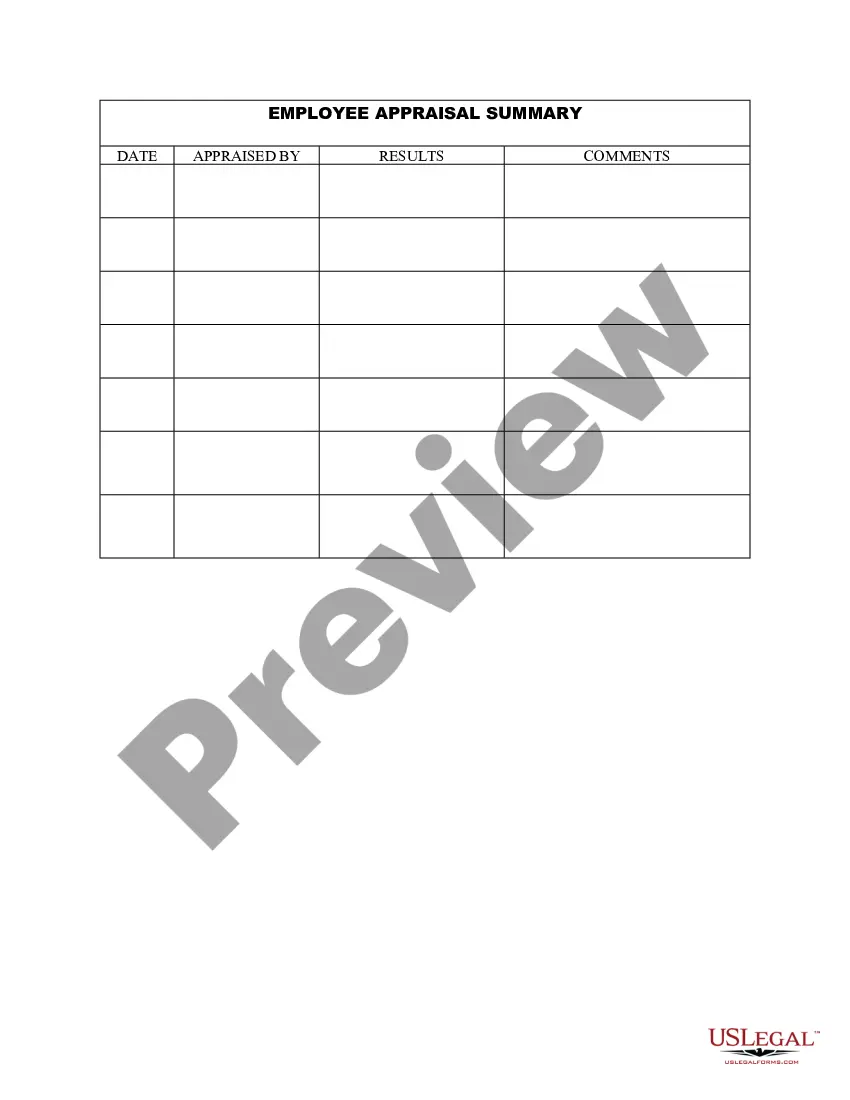
The Performance Report is a crucial document used to assess and document an employee's performance during a designated review period. This form provides a systematic way to evaluate various performance metrics, helping both employers and employees understand strengths and areas for improvement. Unlike other performance assessment forms, the Performance Report is specifically structured to facilitate constructive feedback and goal setting within organizations.
Key components of this form
- Employee Information: Includes fields for the employee's name, date hired, job title, and salary.
- Date of Review: Specifies the date the evaluation is conducted.
- Evaluation of Performance: Offers categories such as teamwork, communication, and organizational skills for metrics assessment.
- Comments Section: Provides space for both the reviewer and employee comments regarding performance.
- Goals: Allows for setting future objectives based on the evaluation.
- Date of Next Evaluation: Indicates when the next performance review will take place.

When to use this form
This form is typically used during scheduled performance evaluations within a workplace. It is useful for identifying employee strengths, addressing areas needing improvement, and setting future goals. It is appropriate for annual reviews, mid-year assessments, or anytime an employee's performance requires formal documentation and feedback.
Who this form is for
This form is intended for use by:
- Managers and supervisors conducting performance reviews for their team members.
- Human resources professionals overseeing employee assessments and development plans.
- Employees who wish to understand their performance feedback and areas of growth.
How to prepare this document
- Fill in the employee's information including name, job title, and date hired.
- Enter the salary of the employee and the date of the performance review.
- Evaluate the performance using the provided categories, providing comments for each section.
- Document strengths and weaknesses in the designated comments area.
- Set specific goals for the employee and indicate the date for the next evaluation.
- Ensure that both the employee and the interviewer sign the report for acknowledgment.
Does this document require notarization?
This form does not typically require notarization to be legally valid. However, some jurisdictions or document types may still require it. US Legal Forms provides secure online notarization powered by Notarize, available 24/7 for added convenience.
Get your form ready online
Our built-in tools help you complete, sign, share, and store your documents in one place.
Make edits, fill in missing information, and update formatting in US Legal Forms—just like you would in MS Word.
Download a copy, print it, send it by email, or mail it via USPS—whatever works best for your next step.
Sign and collect signatures with our SignNow integration. Send to multiple recipients, set reminders, and more. Go Premium to unlock E-Sign.
If this form requires notarization, complete it online through a secure video call—no need to meet a notary in person or wait for an appointment.
We protect your documents and personal data by following strict security and privacy standards.

Make edits, fill in missing information, and update formatting in US Legal Forms—just like you would in MS Word.

Download a copy, print it, send it by email, or mail it via USPS—whatever works best for your next step.

Sign and collect signatures with our SignNow integration. Send to multiple recipients, set reminders, and more. Go Premium to unlock E-Sign.

If this form requires notarization, complete it online through a secure video call—no need to meet a notary in person or wait for an appointment.

We protect your documents and personal data by following strict security and privacy standards.
Mistakes to watch out for
- Neglecting to provide specific examples in performance evaluations.
- Failing to set clear, measurable goals for the next evaluation period.
- Omitting signatures, which can lead to disputes over the review process.
Benefits of completing this form online
- Convenience: Easily accessible for both managers and employees at any time.
- Editability: Forms can be tailored to meet specific organizational needs.
- Reliability: Templates are drafted by licensed attorneys for compliance and best practices.
Key takeaways
- The Performance Report aids in structured employee evaluations.
- It includes essential fields like performance metrics and employee goals.
- This form is valuable for fostering employee development and accountability.
Looking for another form?
Form popularity
FAQ
Analysis of past performance. Summary of changes approved in the reporting period. Current status of risks and issues. Results of variance analysis. Work completed during the reporting period. Work to be completed during the next reporting period.
Highlight the highlights. Don't forget about achievements made early on in the performance review period. Don't be stuffy. Solicit feedback from coworkers. Be objective. Don't use the self-review as a bargaining chip. Use appropriate language.
1) Attendance. Punctuality is one of the strongest virtues an employee can possess. 2) Innovation and Creativity. 3) Leadership. 4) Communication Skills. 5) Collaboration and Teamwork. 6) Time Management. 7) Customer Experience. 8) Problem Solving.
Gather information. List employee responsibilities. Use objective language. Use action verbs. Compare performance ratings. Ask open-ended questions. Use a point system.
1 Know how the self-evaluation is going to be used. 2 Write out a list of your accomplishments. 3 Gather analytics if you can. 4 Write out a list of your struggles. 5 Narrow your accomplishments list down. 6 Don't forget to align your review with your manager's or team's goals.
Be proud. One major goal of the self-evaluation is to highlight your accomplishments and recollect milestones in your professional development. Be honest and critical. Continuously strive for growth. Track your accomplishments. Be professional.
The definition of performance is how effective something or someone is at doing a good job. An example of performance is what is checked when an employee has an annual review at work.An example of performance is a symphony playing at a town hall.
A performance is an act of staging or presenting a play, concert, or other form of entertainment. It is also defined as the action or process of carrying out or accomplishing an action, task, or function.
In the context of performance management, the term "performance" means continually achieving the preferred results in a manner that is as effective and efficient as possible. Performance management reminds us that being busy is not the same as producing results.