Term Royalty Deed
What is this form?
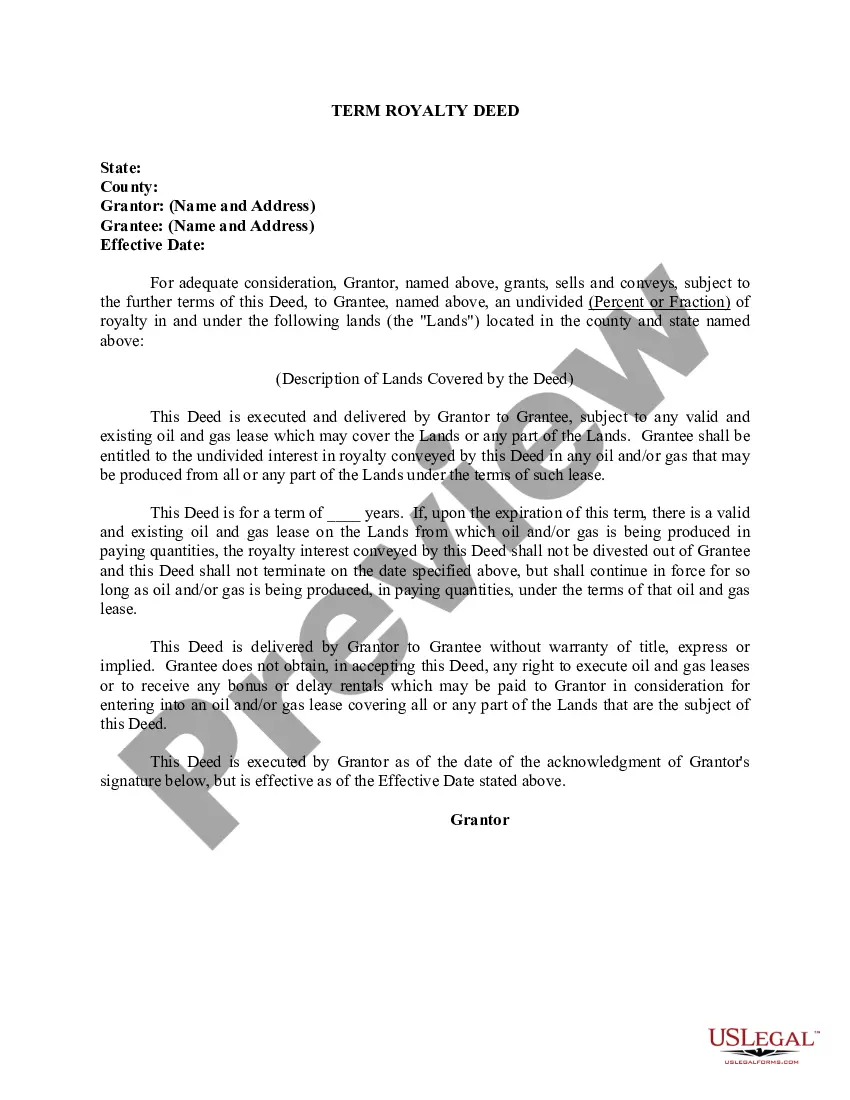
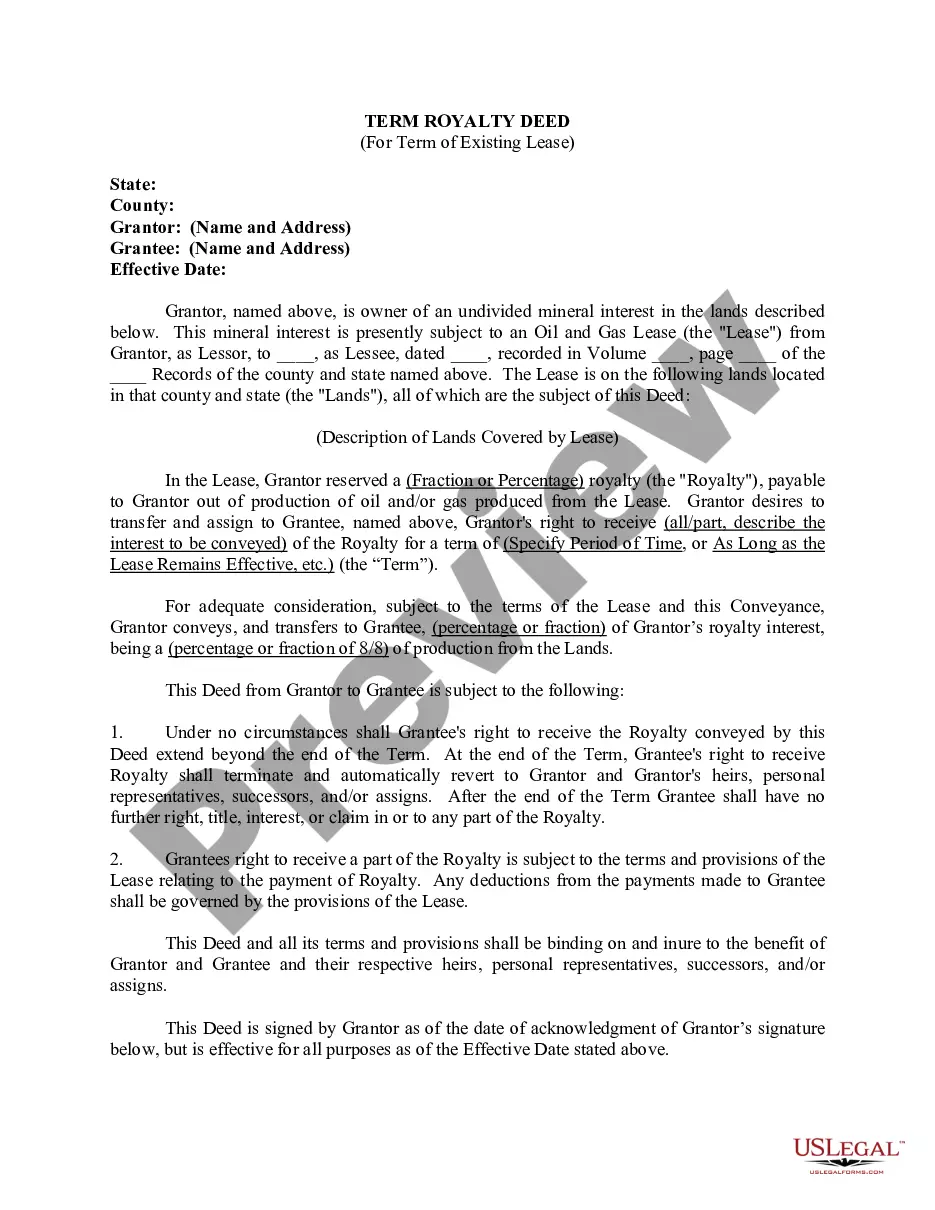
The Term Royalty Deed is a legal document that conveys a royalty interest for a specific period of years. Unlike a permanent royalty deed, this form establishes the duration of the interest, which continues as long as there is production of oil or gas at the end of the term. This form is essential for individuals looking to grant or receive a temporary royalty interest in oil and gas leases, serving distinct purposes compared to other royalty conveyance forms.
Key components of this form
- Grantor and Grantee details, including names and addresses.
- Effective Date of the deed.
- Description of the lands covered by the deed.
- Specified term of years for the royalty interest.
- Conditions for extension of interest based on production status.
- Disclaimer of warranty of title.

When this form is needed
You should use the Term Royalty Deed when you want to grant a royalty interest in oil or gas properties for a limited time. This form is particularly useful when negotiating leases involving oil and gas production, or when an owner wants to ensure continued rights to royalties as long as production continues past the specified term.
Who needs this form
This form is ideal for the following individuals:
- Landowners wishing to grant a royalty interest for a defined period.
- Investors looking to secure a temporary interest in oil and gas production.
- Attorneys representing clients in oil and gas transactions.
Steps to complete this form
- Identify the Grantor and Grantee by entering their names and addresses.
- Specify the effective date of the deed.
- Provide a detailed description of the lands covered by the deed.
- Indicate the percentage or fraction of the royalty interest being conveyed.
- State the term of years for which the royalty interest will last.
- Ensure all parties sign the document and include any necessary acknowledgments.
Does this document require notarization?
This form needs to be notarized to ensure legal validity. US Legal Forms provides secure online notarization powered by Notarize, allowing you to complete the process through a verified video call, available anytime.
Get your form ready online
Our built-in tools help you complete, sign, share, and store your documents in one place.
Make edits, fill in missing information, and update formatting in US Legal Forms—just like you would in MS Word.
Download a copy, print it, send it by email, or mail it via USPS—whatever works best for your next step.
Sign and collect signatures with our SignNow integration. Send to multiple recipients, set reminders, and more. Go Premium to unlock E-Sign.
If this form requires notarization, complete it online through a secure video call—no need to meet a notary in person or wait for an appointment.
We protect your documents and personal data by following strict security and privacy standards.

Make edits, fill in missing information, and update formatting in US Legal Forms—just like you would in MS Word.

Download a copy, print it, send it by email, or mail it via USPS—whatever works best for your next step.

Sign and collect signatures with our SignNow integration. Send to multiple recipients, set reminders, and more. Go Premium to unlock E-Sign.

If this form requires notarization, complete it online through a secure video call—no need to meet a notary in person or wait for an appointment.

We protect your documents and personal data by following strict security and privacy standards.
Mistakes to watch out for
- Failing to properly identify the lands covered by the deed.
- Not specifying the correct term of years for the royalty interest.
- Omitting signature or acknowledgment by the Grantor.
Advantages of online completion
- Convenient access to legal forms without needing to visit an office.
- Editability allows users to customize the form to meet specific needs.
- Reliability, as forms are drafted by licensed attorneys ensuring compliance with legal standards.
Summary of main points
- The Term Royalty Deed grants a temporary royalty interest for a set number of years.
- It remains in effect if oil or gas is produced at the end of the term.
- Key components include Grantor and Grantee details, land descriptions, and specified terms.
Looking for another form?
Form popularity
FAQ
Royalties are a form of real property ownership as defined by the IRS. As property owners, royalty investments could provide a complement to existing real estate portfolios offering similar benefits to REIT's including passive-cash flow and upside participation from any recovery in energy prices.
A royalty deed is more restrictive than a mineral deed. Another name for a royalty deed is non-participating production interest. In this case, the deed holder has fewer rights and less control over the property below the surface.
A royalty interest is a non-possessory real property interest in oil and gas production free of production and operating expenses, which may be created by grant or by reservation or exception.
A mineral deed form is a legal document, regarding the ownership of the minerals below the surface of the earth.A royalty owner will only benefit economically if the mineral owner decides to produce and sell the minerals.
An owner can separate the mineral rights from his or her land by: Conveying (selling or otherwise transferring) the land but retaining the mineral rights. (This is accomplished by including a statement in the deed conveying the land that reserves all rights to the minerals to the seller.)
Mineral rights have sold for as high as $40,000 per acre, and usually, the average price can be between $250 and $9,000. If mineral rights buyers and sellers conduct proper due diligence, both parties can negotiate the best mining rights deal and avoid future legal quagmires.
Mineral interests and royalty interests both involve ownership of the minerals under the ground. The main difference between the two is that the owner of a mineral interest has the right to execute leases and collect bonus payments and the owner of royalty interests does not execute leases or collect bonus payments.
The lessee is required to pay a certain amount in respect of the mineral extracted in proportion to the quantity extracted. Such payment is called royalty. Royalty is calculated on the quantity of minerals extracted or removed. The owner of the land is called lessor.
Investing in mineral rights is a complex investment strategy but can be a profitable real estate venture.Then investing in mineral rights may be a great fit for your next real estate venture. Investing in mineral rights has the potential to provide big returns.