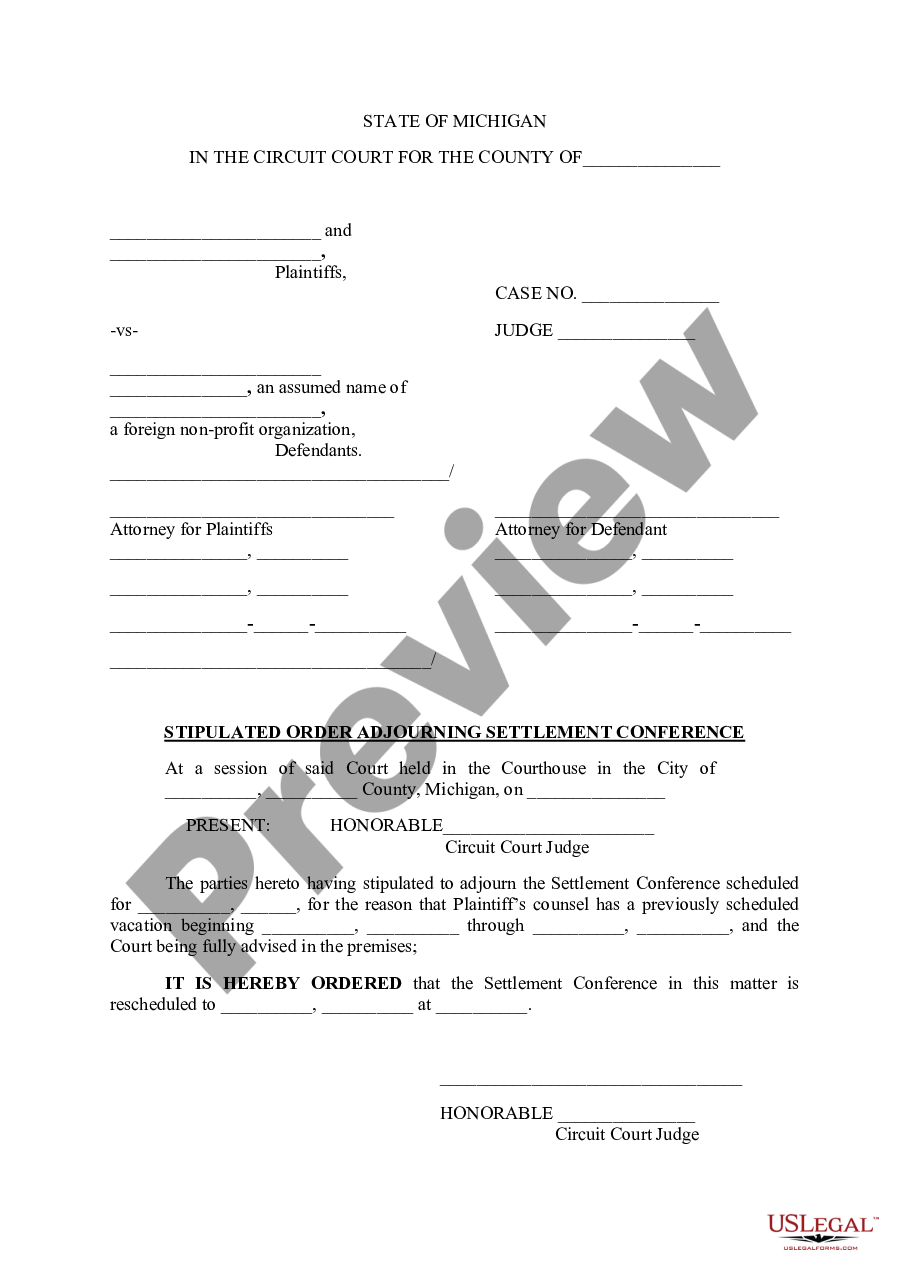
Michigan Stipulated Order Adjourning Settlement Conference
Overview of this form
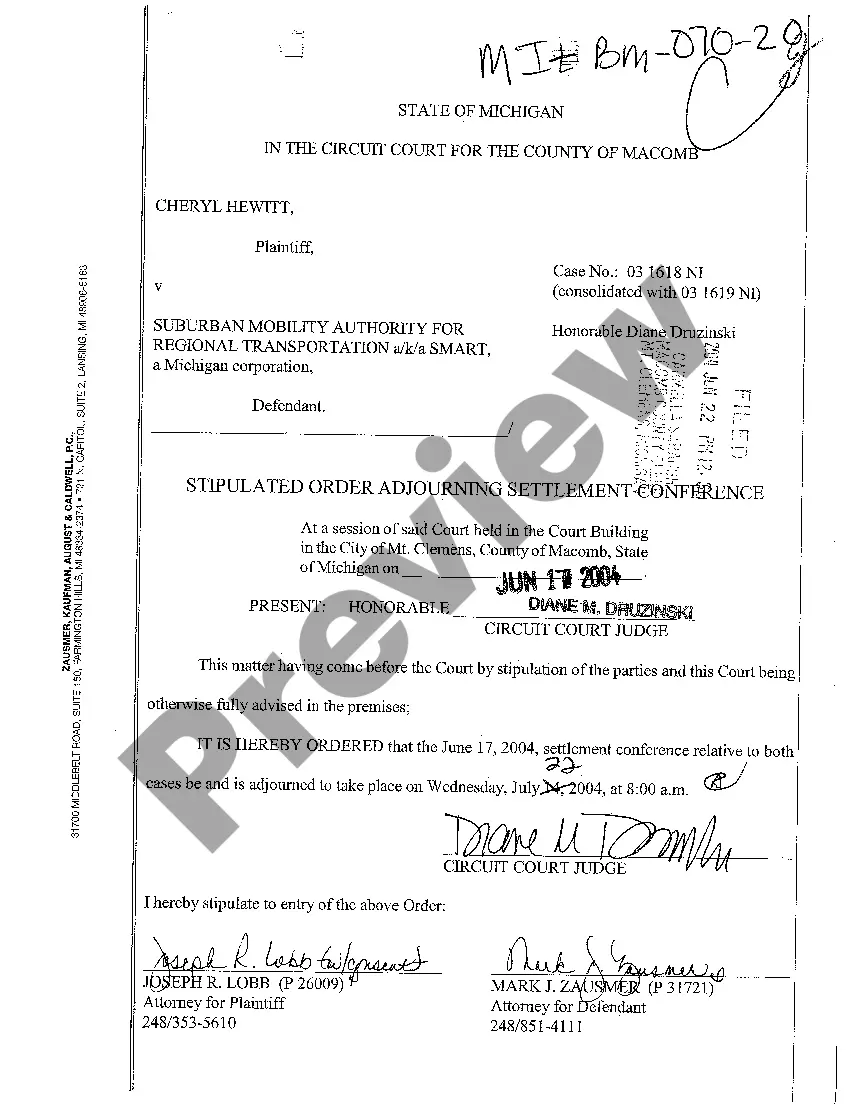
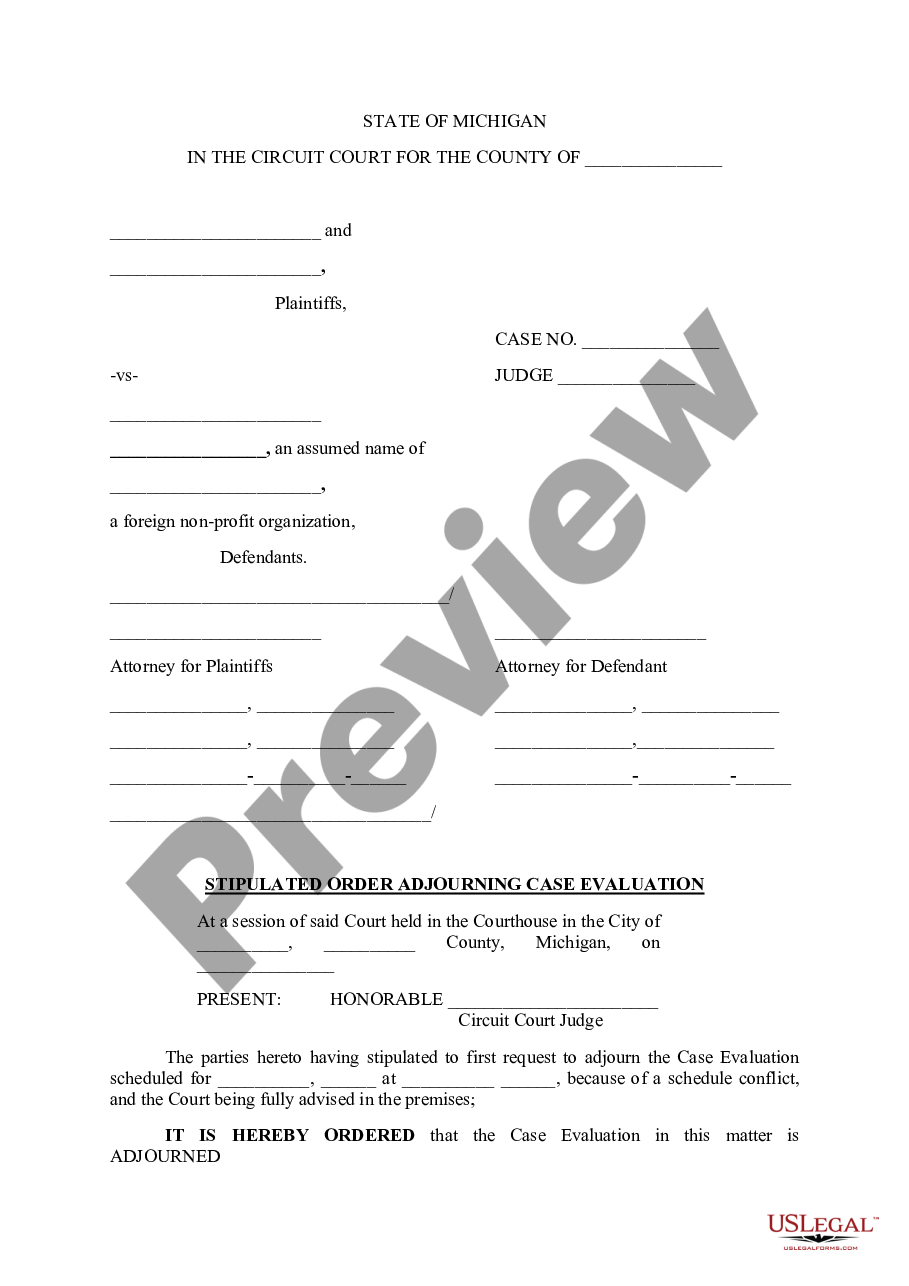
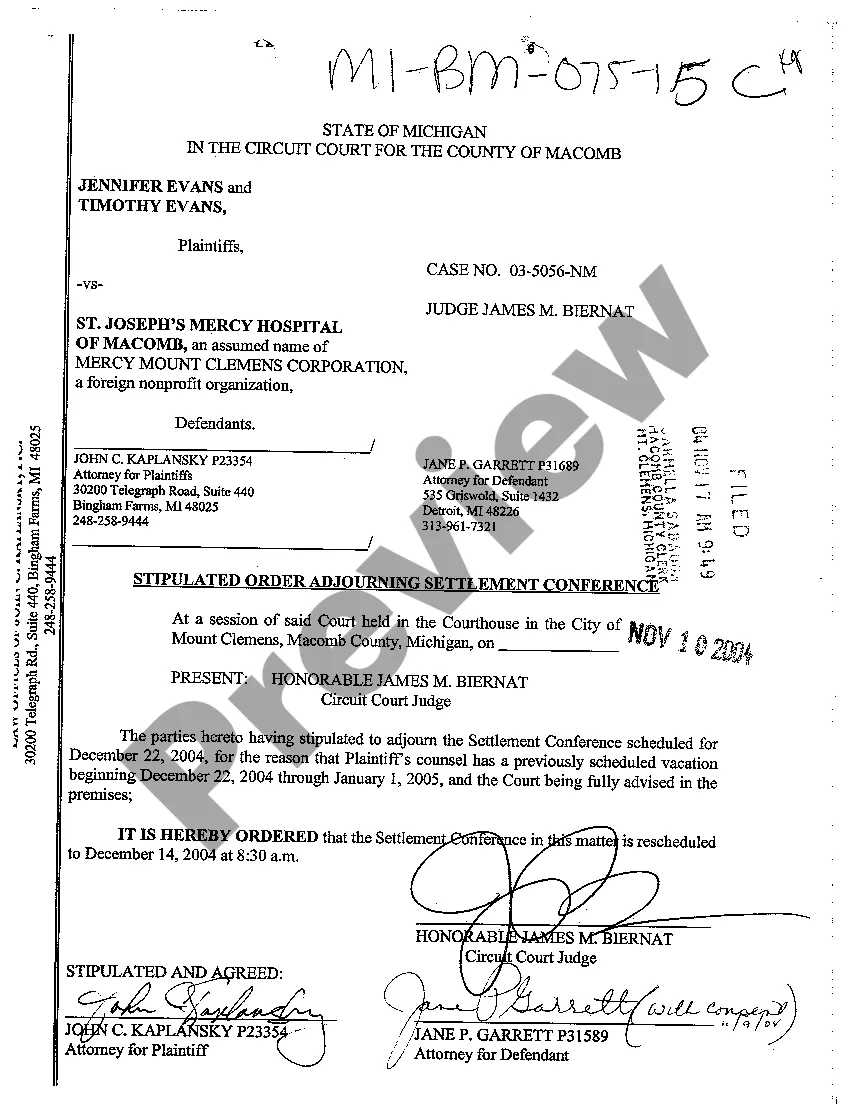
The Stipulated Order Adjourning Settlement Conference is a legal document used to reschedule a settlement conference in a lawsuit. A settlement conference is a meeting where the parties involved attempt to negotiate a resolution to the case. This document formalizes the agreement to delay the conference to a later date due to specific reasons, such as a scheduling conflict for one of the attorneys. It differs from other legal forms related to settlement as it specifically addresses the adjournment of a conference rather than the settlement itself.
Key components of this form
- Case Information: Includes details like the court name, case number, and involved parties.
- Reason for Adjournment: A section specifying the reason for rescheduling the conference.
- New Date and Time: Clearly states the rescheduled date and time for the settlement conference.
- Judicial Approval: Includes space for the judge's signature, affirming the adjournment.
- Signatures of Parties: Signatures of the attorneys for both plaintiffs and defendants indicating their agreement to the adjournment.

When this form is needed
This form is needed when parties involved in a lawsuit agree to postpone a scheduled settlement conference. Situations may include conflicts in attorney schedules, unexpected emergencies, or other circumstances that make it necessary to delay the meeting aimed at resolving the case. Utilizing this form promptly helps ensure that the court is informed and can reschedule the conference in an official manner.
Who needs this form
- Parties involved in a lawsuit who need to reschedule a settlement conference.
- Attorneys representing plaintiffs or defendants in a legal case.
- Court staff who require a formal document to adjust court schedules.
How to complete this form
- Identify the case by entering the court name and case number at the top of the form.
- Fill in the names of the plaintiffs and defendants as listed in the original filing.
- State the original date and time of the settlement conference and provide the reason for the adjournment.
- Specify the new date and time for the rescheduled settlement conference.
- Ensure all parties' attorneys sign and date the form to confirm their agreement to the postponement.
- Submit the signed document to the court for judicial approval.
Notarization guidance
This form does not typically require notarization unless specified by local law. It is essential to check the local court rules that apply to your case to ensure compliance.
Get your form ready online
Our built-in tools help you complete, sign, share, and store your documents in one place.
Make edits, fill in missing information, and update formatting in US Legal Forms—just like you would in MS Word.
Download a copy, print it, send it by email, or mail it via USPS—whatever works best for your next step.
Sign and collect signatures with our SignNow integration. Send to multiple recipients, set reminders, and more. Go Premium to unlock E-Sign.
If this form requires notarization, complete it online through a secure video call—no need to meet a notary in person or wait for an appointment.
We protect your documents and personal data by following strict security and privacy standards.

Make edits, fill in missing information, and update formatting in US Legal Forms—just like you would in MS Word.

Download a copy, print it, send it by email, or mail it via USPS—whatever works best for your next step.

Sign and collect signatures with our SignNow integration. Send to multiple recipients, set reminders, and more. Go Premium to unlock E-Sign.

If this form requires notarization, complete it online through a secure video call—no need to meet a notary in person or wait for an appointment.

We protect your documents and personal data by following strict security and privacy standards.
Typical mistakes to avoid
- Failing to provide a clear reason for the adjournment.
- Not including the correct case number or court information.
- Omitting signatures from one or more attorneys involved in the case.
- Leaving blank fields, especially the new date and time for the conference.
Benefits of using this form online
- Convenient access to a legally drafted template available for instant download.
- Edit and customize the document according to specific case details.
- Reliable format that meets court requirements for rescheduling hearings.
Looking for another form?



Form popularity
FAQ
The Michigan Stipulated Order Adjourning Settlement Conference allows parties to request a delay in the settlement conference under specific circumstances. To successfully adjourn a meeting, both parties must agree and file a written stipulation with the court. Additionally, it is important to provide reasonable notice to all involved parties and demonstrate good cause for the postponement. Following these rules can help ensure a smoother legal process and allow time for meaningful negotiations.
Rule 2.313 in Michigan pertains to the discovery process and allows parties to request the production of documents or information pertinent to their case. In the context of a Michigan Stipulated Order Adjourning Settlement Conference, this rule underscores the importance of gathering relevant evidence ahead of time. Compliance with this rule is crucial for a transparent and efficient settlement process. Utilizing platforms like uslegalforms can aid in effective document handling in accordance with this rule.
At an adjournment hearing, the court examines the requests from parties wishing to postpone proceedings like a Michigan Stipulated Order Adjourning Settlement Conference. The judge listens to the reasons for the adjournment and decides whether to grant it based on the circumstances presented. This hearing provides an opportunity for parties to clarify their positions and negotiate any potential new dates. Being well-prepared increases the chances of a successful adjournment.
The 7 day rule in Michigan courts mandates that a party must provide notice of a scheduled hearing at least seven days prior to the date of the hearing. This ensures that all involved parties have adequate time to prepare and attend the hearing. Failing to adhere to this rule can result in complications or the rescheduling of the hearing, including those related to a Michigan Stipulated Order Adjourning Settlement Conference. Understanding and following this rule can facilitate smoother court processes.
The best reason for an adjournment in a Michigan Stipulated Order Adjourning Settlement Conference typically involves the need for more time to prepare for negotiations. This could include gathering additional evidence or consulting with legal counsel. A valid reason can help ensure that all parties are better prepared, ultimately leading to a more productive conference. It's essential to communicate the reason clearly to the court to avoid misunderstandings.
The 56-day rule in Michigan refers to a specific timeframe within which certain legal actions must occur, particularly relating to the scheduling of trials and settlements. This rule often intersects with processes like the Michigan Stipulated Order Adjourning Settlement Conference. Understanding this rule helps ensure that all parties remain on track and adhere to critical deadlines, facilitating smoother legal proceedings. By staying informed about this timeframe, litigants can better manage their cases and improve their chances of a favorable outcome.
Court rule 9.120 in Michigan lays out the procedures regarding stipulated orders, such as the Michigan Stipulated Order Adjourning Settlement Conference. This rule ensures that parties involved in litigation can request postponements to settlement conferences, allowing time for negotiations or additional preparations. It aims to facilitate settlement talks while maintaining court efficiency. Understanding this rule can help you navigate your legal journey more effectively.