Request for Proof of Debt
Understanding this form
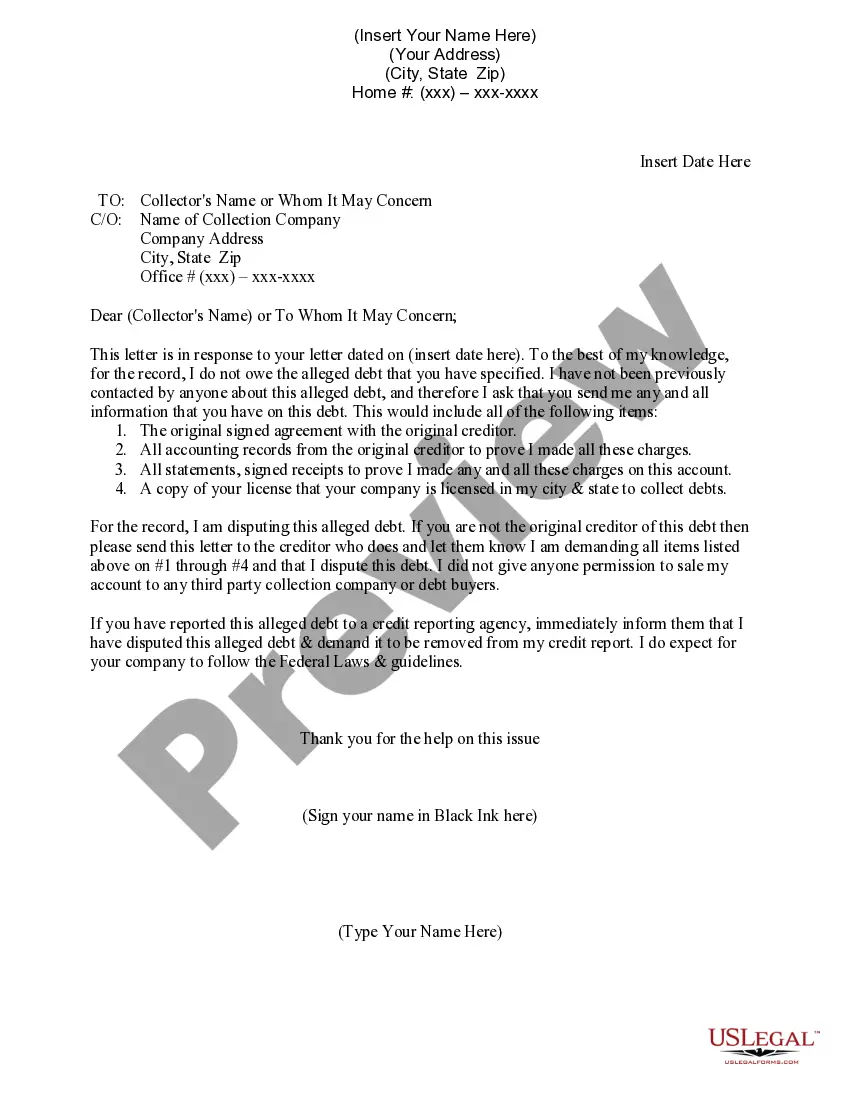
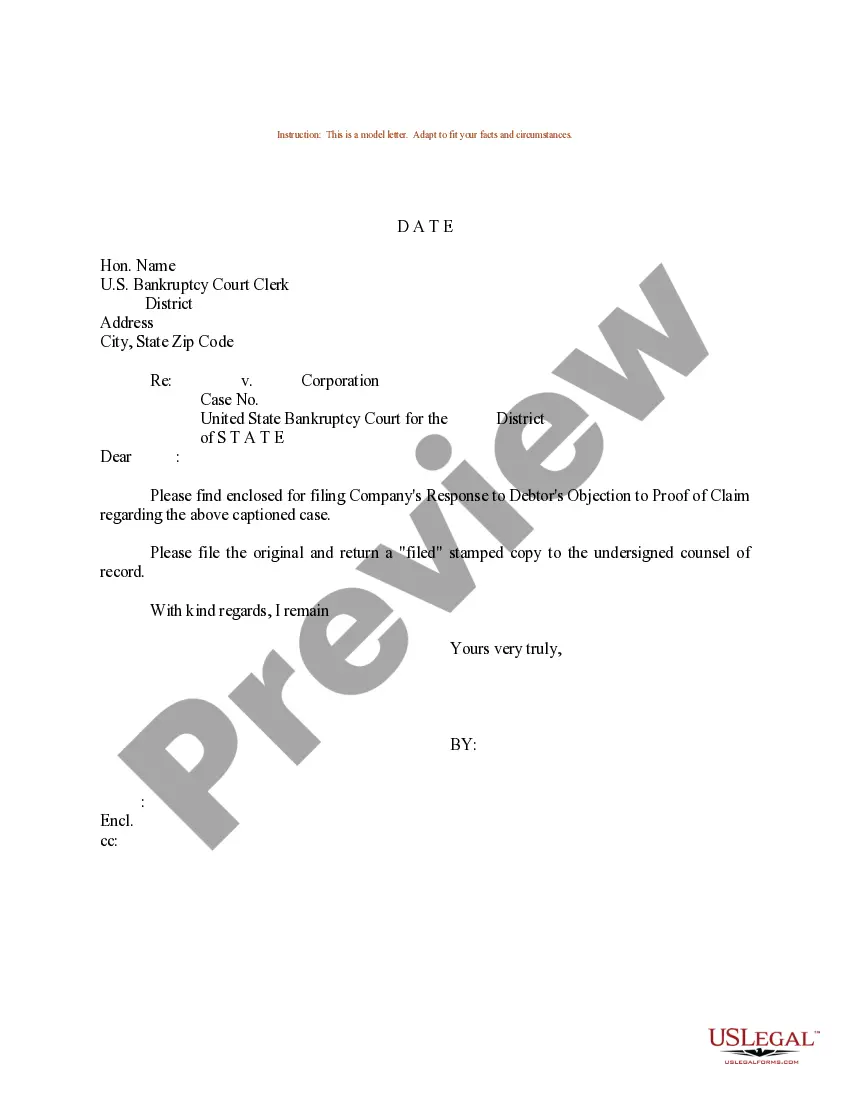
The Request for Proof of Debt is a formal document used by individuals to challenge the validity of a debt claimed by a collector. This form serves a crucial purpose by demanding evidence of the alleged debt, ensuring one's rights are protected under federal law. Unlike general debt communication, this specific request requires the collector to provide detailed documentation proving the legitimacy of the debt in question.
Key components of this form
- Date of the request to establish a timeline.
- Collector's name and the name of the collection company for accurate identification.
- Details about the alleged debt to clarify which account is in dispute.
- Request for specific documentation, including the original signed agreement and accounting records.
- Notification to credit reporting agencies to dispute the debt if necessary.
When this form is needed
This form is essential when you receive a notice from a debt collector regarding a debt you believe is inaccurate or nonexistent. It is an appropriate response if you have not previously been contacted about this debt or require validation of the charges. By submitting this form, you can formally dispute the debt and request proof to protect your financial interests.
Who this form is for
This form is suitable for:
- Individuals who have been contacted by a debt collector regarding a disputed debt.
- Anyone seeking verification of debt details before making payments.
- Consumers who want to ensure that their rights under the Fair Debt Collection Practices Act are upheld.
How to prepare this document
- Insert the date when you are submitting the request.
- Fill in the collector's name and the name of the collection company.
- Provide the company's address, including city, state, and zip code.
- State your position regarding the alleged debt clearly and emphasize your request for validation.
- Include your contact information and sign the letter to finalize your request.
Notarization requirements for this form
This form usually doesn’t need to be notarized. However, local laws or specific transactions may require it. Our online notarization service, powered by Notarize, lets you complete it remotely through a secure video session, available 24/7.
Get your form ready online
Our built-in tools help you complete, sign, share, and store your documents in one place.
Make edits, fill in missing information, and update formatting in US Legal Forms—just like you would in MS Word.
Download a copy, print it, send it by email, or mail it via USPS—whatever works best for your next step.
Sign and collect signatures with our SignNow integration. Send to multiple recipients, set reminders, and more. Go Premium to unlock E-Sign.
If this form requires notarization, complete it online through a secure video call—no need to meet a notary in person or wait for an appointment.
We protect your documents and personal data by following strict security and privacy standards.

Make edits, fill in missing information, and update formatting in US Legal Forms—just like you would in MS Word.

Download a copy, print it, send it by email, or mail it via USPS—whatever works best for your next step.

Sign and collect signatures with our SignNow integration. Send to multiple recipients, set reminders, and more. Go Premium to unlock E-Sign.

If this form requires notarization, complete it online through a secure video call—no need to meet a notary in person or wait for an appointment.

We protect your documents and personal data by following strict security and privacy standards.
Mistakes to watch out for
- Failing to include the date, which is critical for record-keeping.
- Not specifying the details of the alleged debt adequately.
- Omitting a request for specific documentation.
- Neglecting to sign the letter in black ink as required.
Why complete this form online
- Quick access to a professionally drafted legal form, saving time.
- Convenient customization options make it easy to adapt to your situation.
- Reliable and accurate legal language ensures compliance with federal laws.
- Easy downloadable format allows for immediate use.
Quick recap
- The Request for Proof of Debt is a vital tool for disputing alleged debts.
- Keep communication with debt collectors documented and formal.
- Utilize this form to proactively protect your rights under debt collection laws.
Looking for another form?
Form popularity
FAQ
A proof of debt is the document on which a creditor submits details of its claim.A proof of debt may be submitted for two purposes: (i) to enable the creditor to vote on matters relating to the insolvency process; and (ii) to entitle the creditor to receive a dividend distribution from the insolvent estate.
The name of the creditor. The amount owed. That you can dispute the debt. That if you don't dispute the debt within 30 days the debt collector will assume the debt is valid. That if you dispute the debt in writing within 30 days the debt collector will provide verification of the debt.
Under the Fair Debt collection Practices Act (FDCPA), I have the right to request validation of the debt you say I owe you. I am requesting proof that I am indeed the party you are asking to pay this debt, and there is some contractual obligation that is binding on me to pay this debt.
This usually means producing proof that the debt was assigned to it. Often such proof will be a bill of sale, an assignment, or a receipt between the last creditor holding the debt and the entity suing you.
According to The Fair Debt Collection Practices Act (FDCPA), a debt collector must send you written validation of debt within five days of contacting you. If they don't, you can send them a letter to request a validation of debt (see this sample letter).
If your accounts have exceeded the statute of limitations and you're trying to clean up your credit report, a debt validation letter may provide you some value in attempting to achieve your goal if the collection agency has possessed the account for less than 30-35 days.