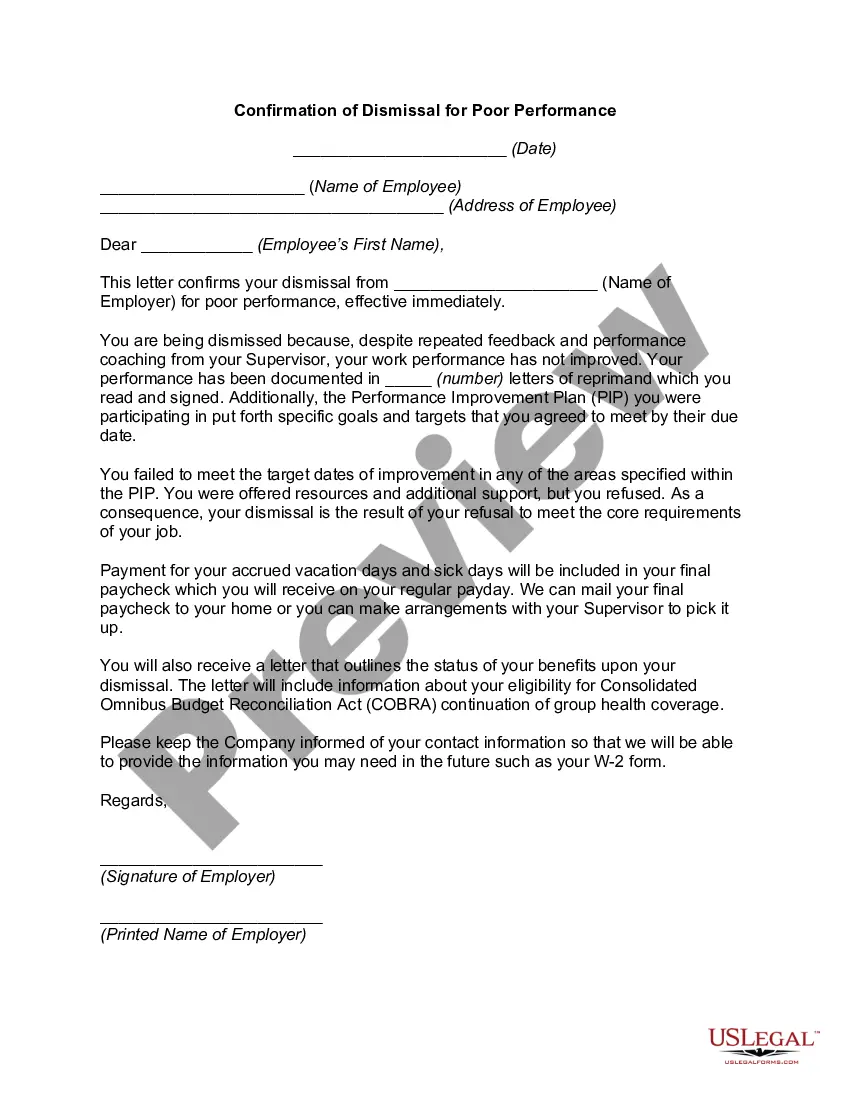
Confirmation of Dismissal for Poor Performance
About this form
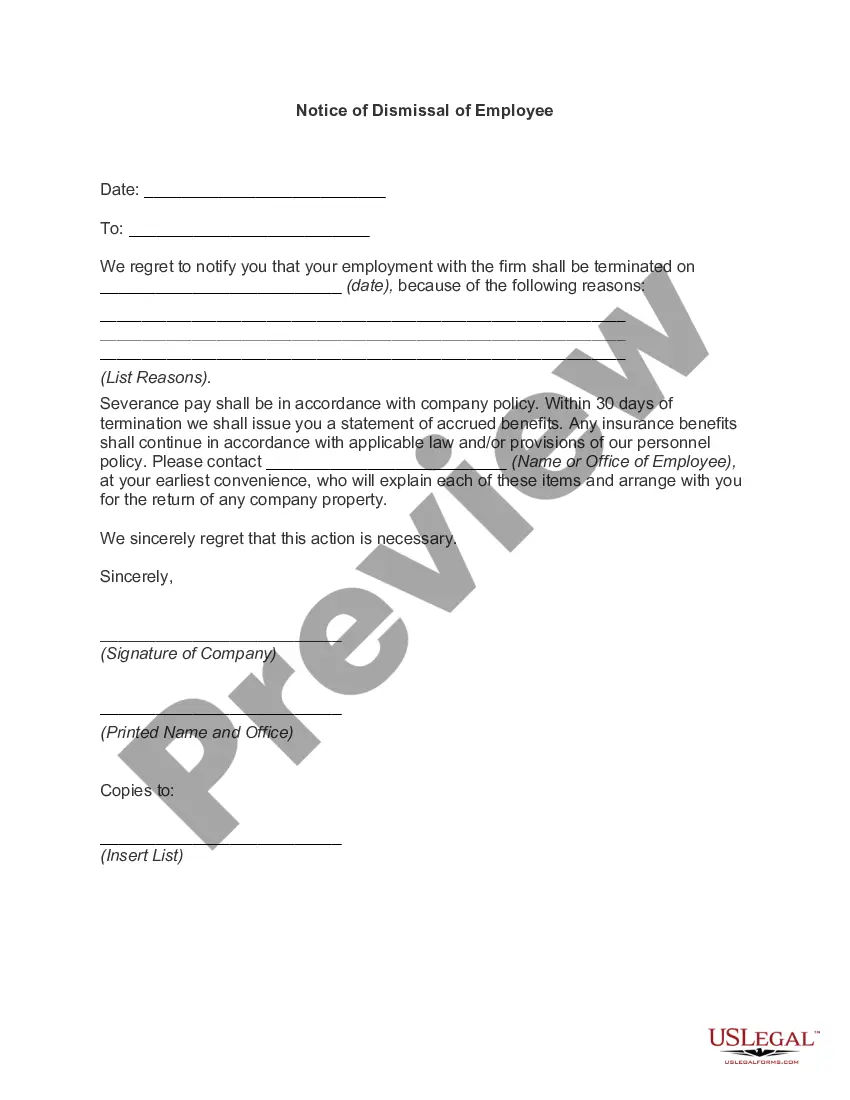
The Confirmation of Dismissal for Poor Performance is a legal document that formally notifies an employee of their termination due to inadequate job performance. This letter serves as confirmation of the dismissal, detailing the reasons and ensuring proper documentation for the employee's personnel file. Unlike other termination letters, this specific form emphasizes performance issues and the employer's attempts to provide support for improvement.
Form components explained
- Date of the letter
- Name and address of the employee
- Name of the employer
- Statement of dismissal with effective date
- Detailed reasons for dismissal
- Information regarding final paycheck and benefits
Situations where this form applies
This form should be used when an employer decides to terminate an employee specifically due to poor performance. It's important in situations where the employee has not met agreed-upon performance standards despite previous feedback and offers of assistance. It serves to clarify the reasons for dismissal and ensures proper documentation has been completed, which is critical in potential future dispute situations.
Who can use this document
- Employers who need to formally terminate an employee for performance-related issues
- HR professionals responsible for maintaining proper documentation in employee files
- Managers who have provided performance feedback and coaching without improvement
- Organizations looking to ensure legally compliant termination processes
Completing this form step by step
- Fill in the date of the letter at the top.
- Include the employee's full name and address.
- Enter the name of the employer or the company.
- Clearly state the reasons for the dismissal in a respectful and factual manner.
- Provide information about the final paycheck, accrued leave, and notifications about benefits.
- Have the employer sign and print their name at the bottom of the letter.
Notarization requirements for this form
This form does not typically require notarization unless specified by local law. It is important to ensure that the document is signed correctly by the employer to maintain its legal validity.
Get your form ready online
Our built-in tools help you complete, sign, share, and store your documents in one place.
Make edits, fill in missing information, and update formatting in US Legal Forms—just like you would in MS Word.
Download a copy, print it, send it by email, or mail it via USPS—whatever works best for your next step.
Sign and collect signatures with our SignNow integration. Send to multiple recipients, set reminders, and more. Go Premium to unlock E-Sign.
If this form requires notarization, complete it online through a secure video call—no need to meet a notary in person or wait for an appointment.
We protect your documents and personal data by following strict security and privacy standards.

Make edits, fill in missing information, and update formatting in US Legal Forms—just like you would in MS Word.

Download a copy, print it, send it by email, or mail it via USPS—whatever works best for your next step.

Sign and collect signatures with our SignNow integration. Send to multiple recipients, set reminders, and more. Go Premium to unlock E-Sign.

If this form requires notarization, complete it online through a secure video call—no need to meet a notary in person or wait for an appointment.

We protect your documents and personal data by following strict security and privacy standards.
Typical mistakes to avoid
- Failing to provide clear and documented reasons for the dismissal.
- Not including the effective date of dismissal.
- Neglecting to offer information regarding the final paycheck and benefits.
- Using ambiguous language that may lead to misunderstandings.
Benefits of completing this form online
- Quick access to professionally drafted legal language.
- Customizable templates that save time and ensure compliance.
- Ability to download and store forms securely for easy retrieval.
- No need to meet with a lawyer in person, providing convenience and efficiency.
Looking for another form?

Form popularity
FAQ
We now know that an employer is allowed to fire an employee based solely on poor job performance. However, knowing both why you can fire an individual and how to fire them properly can minimize your exposure to an EEOC complaint or other retaliation.
It will be rare for it to be reasonable to dismiss an employee for poor performance without first going through the disciplinary warning process. Dismissal without giving warnings first would have to be for gross misconduct, and poor performance is unlikely to be defined as gross misconduct.
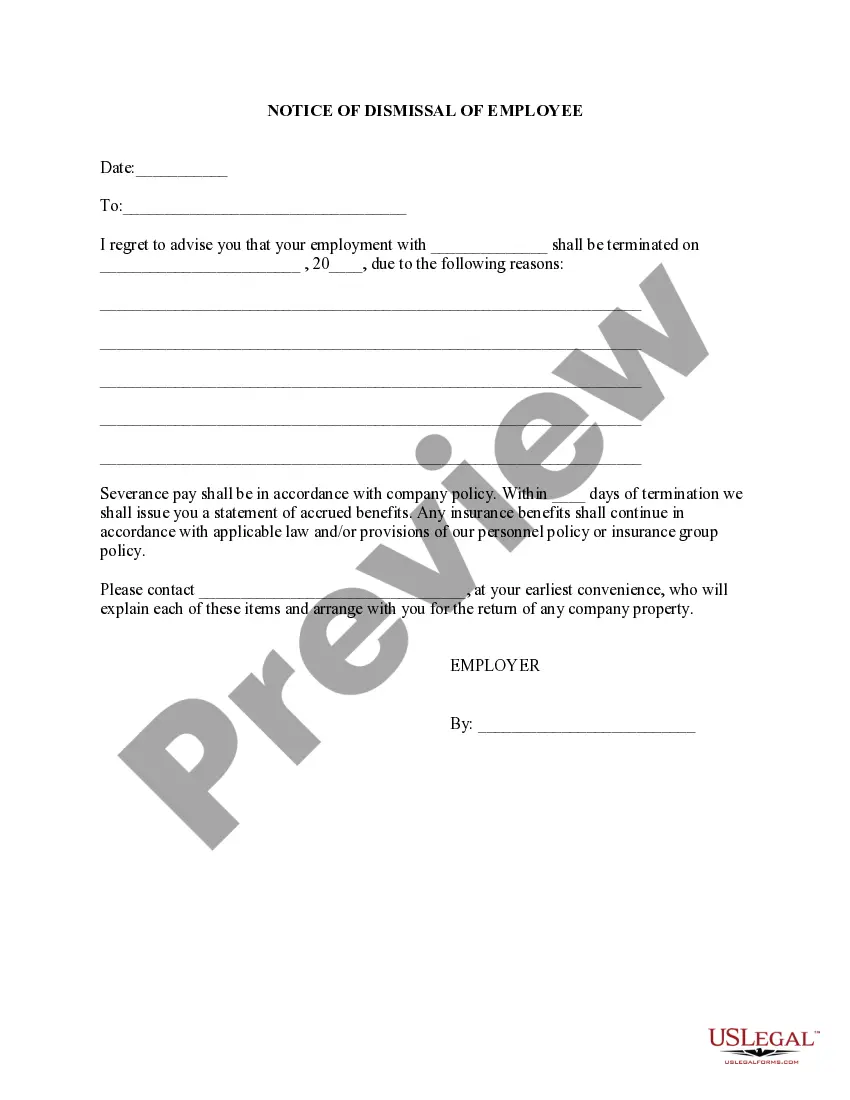
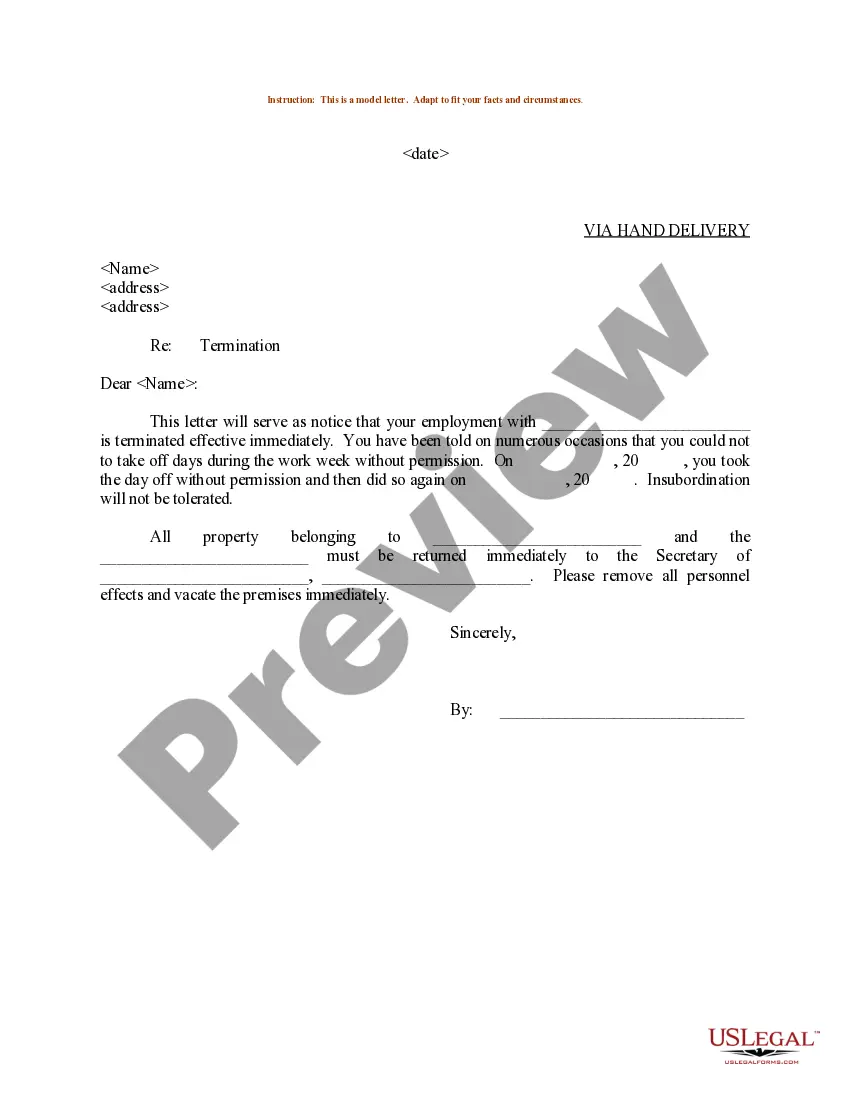
Employee termination letter for poor performance Dear ABC, We regret to inform you that your employment as (add job title) with (add firm name) has been officially terminated with effect (add date).
Be prepared with documentation. Write a termination letter. Schedule a meeting. Keep the meeting short. Don't be tempted to apologize, give a second chance, or discuss personal traits.
Termination resulting from poor performance is sometimes considered "without" cause, although the cause is the lack of production or poor performance. To fire someone for this reason, it is generally best to document the performance compared to goals.
Have a fair reason for the dismissal. act reasonably in treating that as a reason for dismissal in each case. follow a fair (formal) procedure in carrying out that dismissal.
We now know that an employer is allowed to fire an employee based solely on poor job performance. However, knowing both why you can fire an individual and how to fire them properly can minimize your exposure to an EEOC complaint or other retaliation.
It's a natural human thing to want to say 'I'm sorry,' says Grote. But when it comes to firing a poor performer, he recommends couching your regret in terms where personal responsibility lies squarely on the individual. He suggests saying something like, 'I'm sorry that the situation has gotten to this point. '