Termination Letter for Poor Performance
About this form
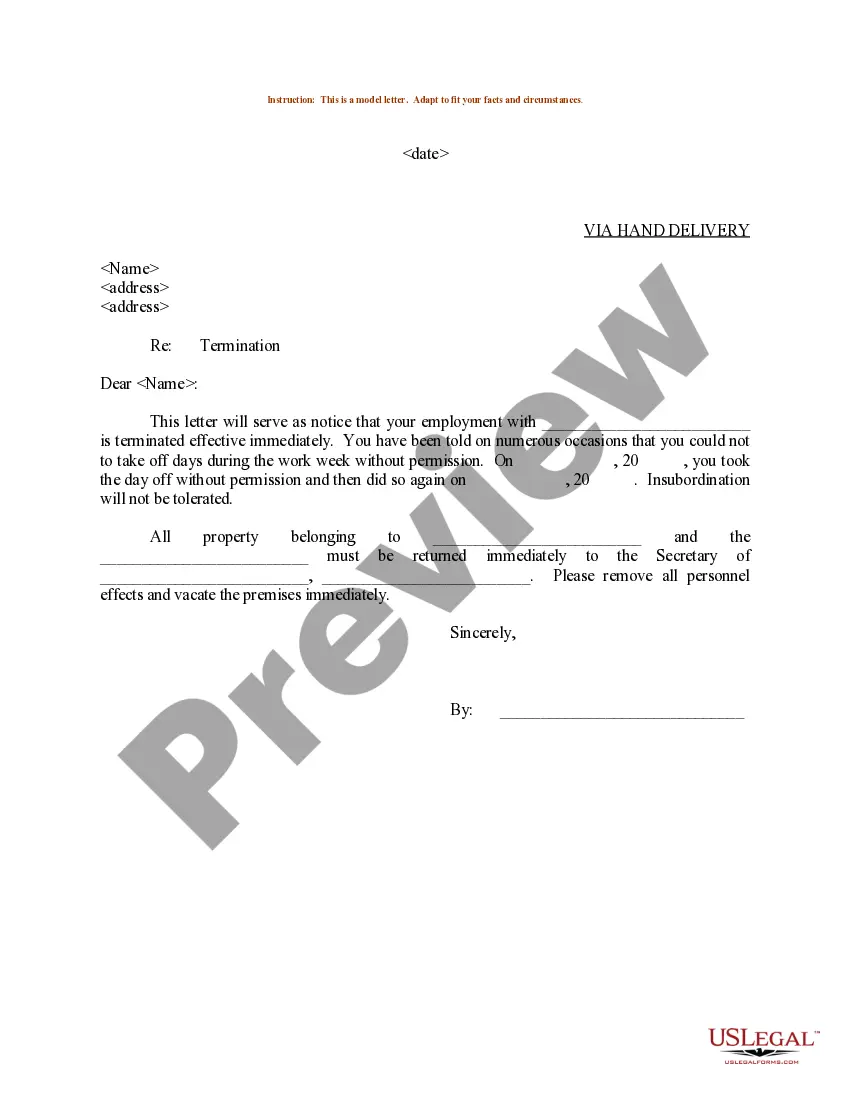
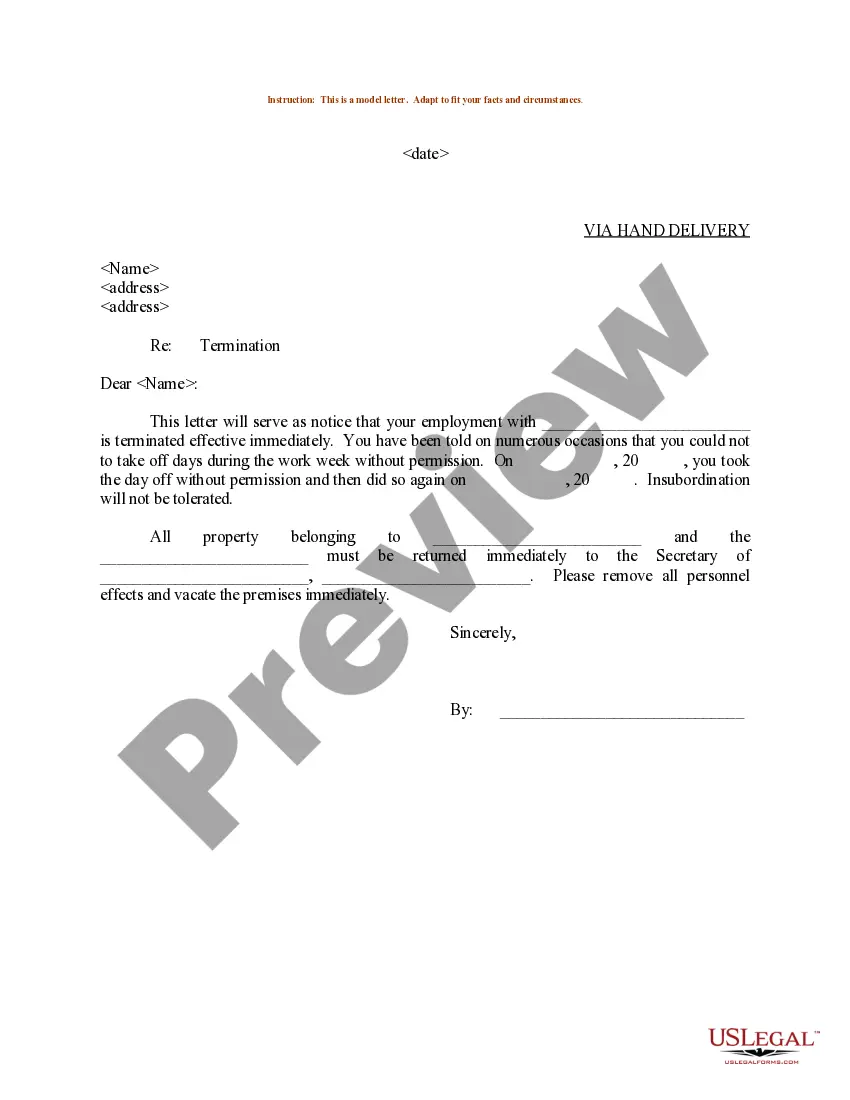
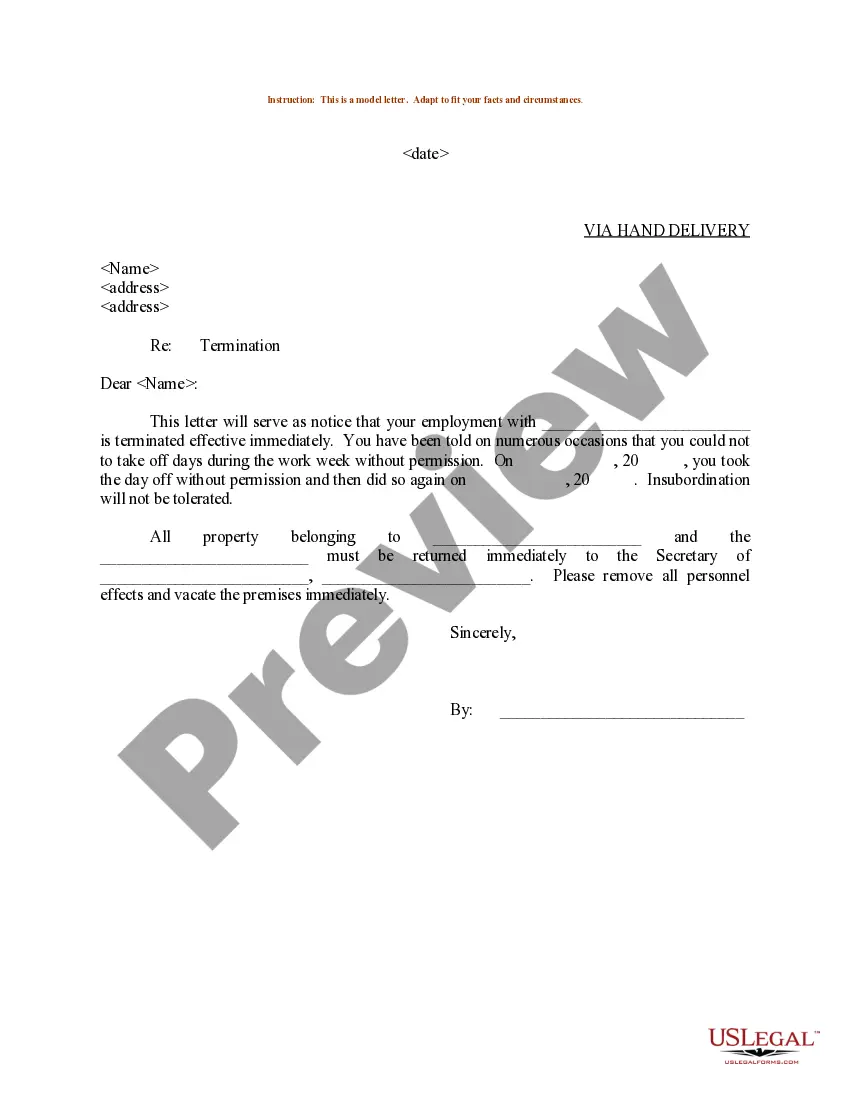
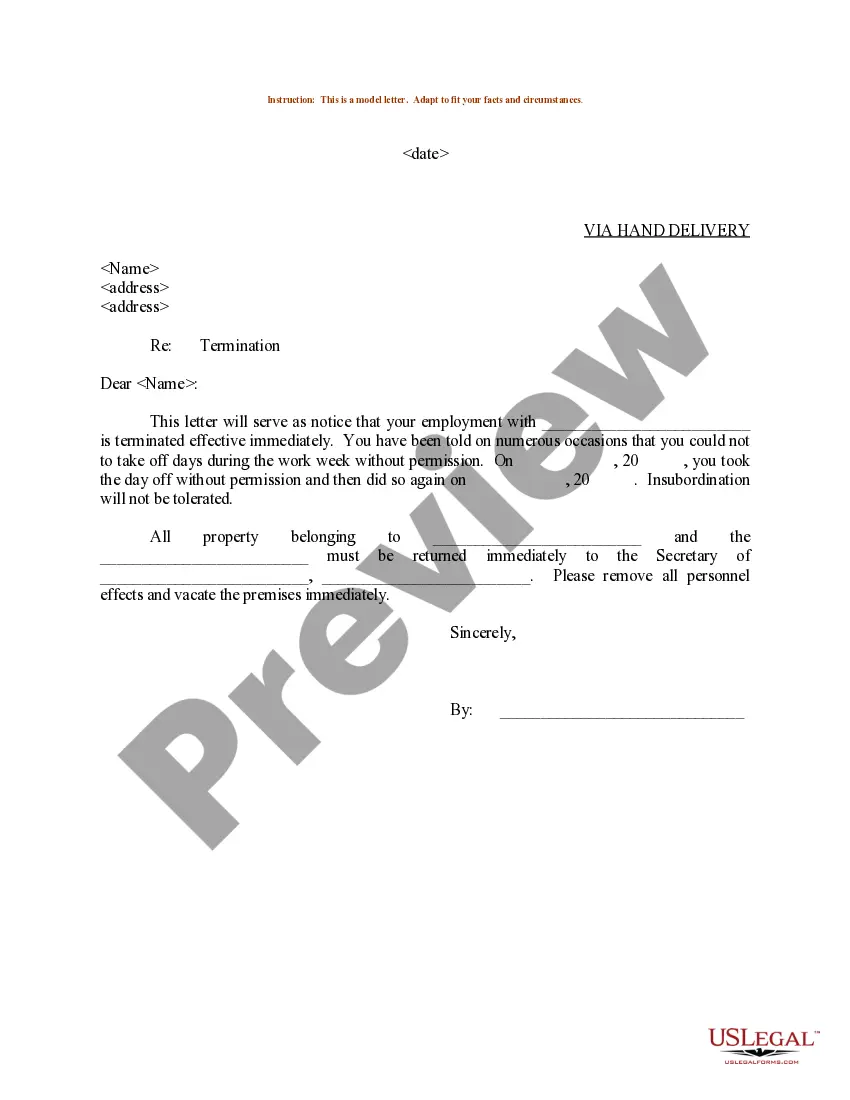
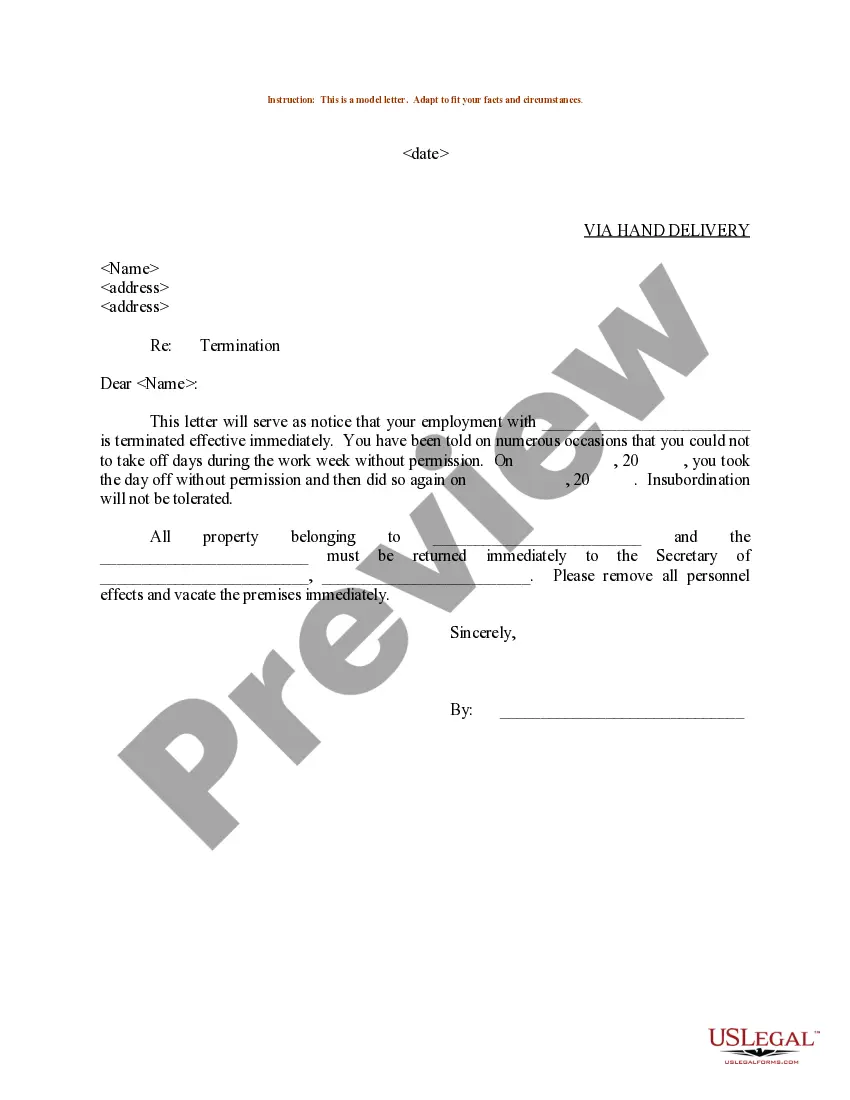
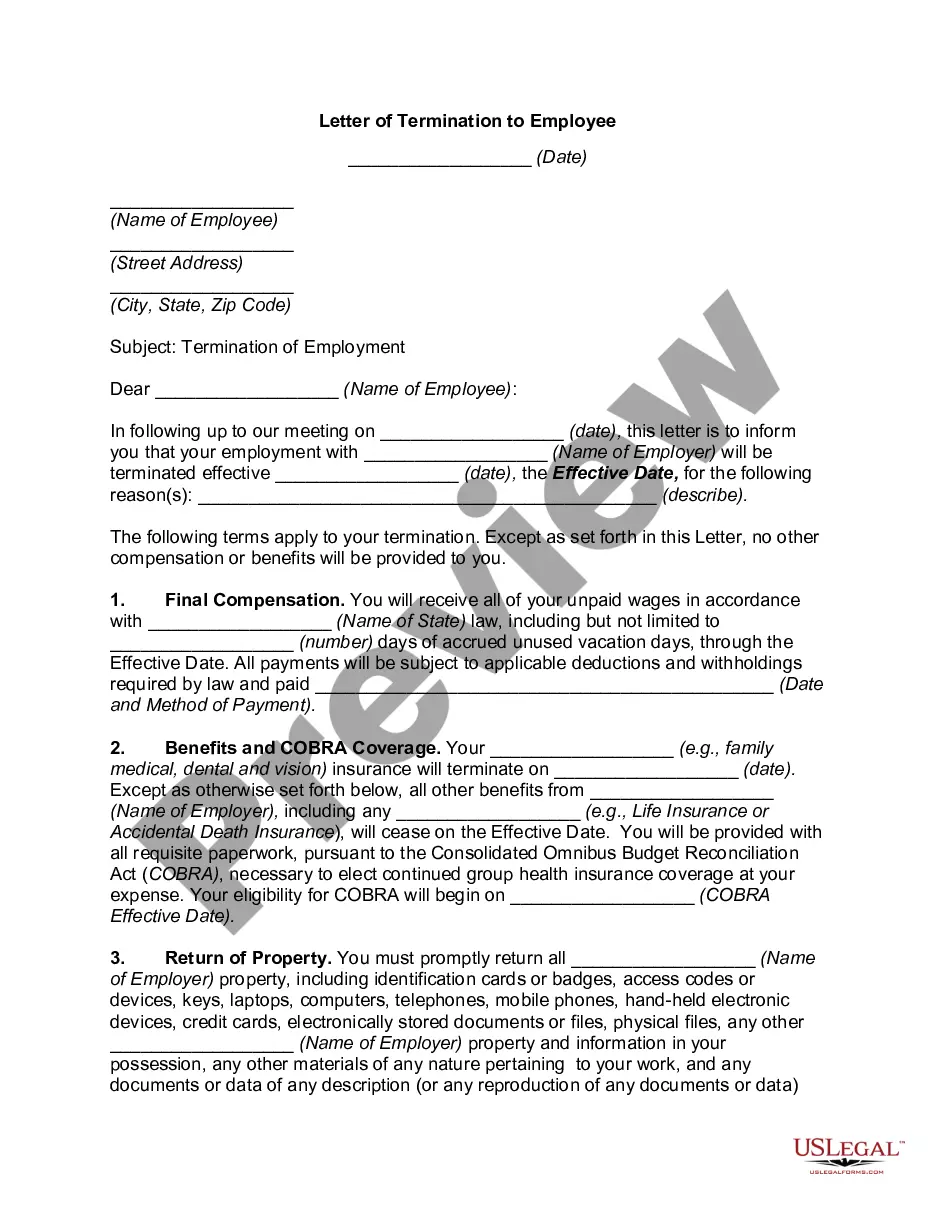
The termination letter for poor performance is a formal document used by employers to notify an employee of their termination due to inadequate job performance. This letter serves as a written record of the decision and outlines the specific reasons for the termination, distinguishing it from other types of termination letters that may address misconduct or layoffs. It is crucial for maintaining clear communication and documentation in the employer-employee relationship.
Form components explained
- Date of the letter for official records.
- Employer's name and address to ensure proper delivery.
- Employee's name and address for accurate identification.
- Subject line indicating the purpose of the letter.
- Specific reasons for termination due to poor performance.
- Closing statement and signature line for formality.
When to use this document
This form is necessary when an employer has decided to terminate an employee based on consistent poor performance that has not improved despite feedback and opportunities for correction. It can be used in various scenarios, such as when performance reviews indicate a lack of improvement, or when a particular job function is not being met as expected.
Who should use this form
- Business owners who need to terminate an underperforming employee.
- Human resources professionals responsible for managing employment actions.
- Managers looking to formally document terminations within their teams.
How to complete this form
- Enter the date at the top of the letter.
- Fill in the employee's name and address accurately.
- Clearly state the subject line as "Termination" for clarity.
- Provide specific reasons for termination related to the employeeâs poor performance.
- Sign the letter at the bottom to validate the termination.
Does this document require notarization?
This form does not typically require notarization unless specified by local law. It is advisable to check any specific state requirements to ensure validity.
Get your form ready online
Our built-in tools help you complete, sign, share, and store your documents in one place.
Make edits, fill in missing information, and update formatting in US Legal Forms—just like you would in MS Word.
Download a copy, print it, send it by email, or mail it via USPS—whatever works best for your next step.
Sign and collect signatures with our SignNow integration. Send to multiple recipients, set reminders, and more. Go Premium to unlock E-Sign.
If this form requires notarization, complete it online through a secure video call—no need to meet a notary in person or wait for an appointment.
We protect your documents and personal data by following strict security and privacy standards.

Make edits, fill in missing information, and update formatting in US Legal Forms—just like you would in MS Word.

Download a copy, print it, send it by email, or mail it via USPS—whatever works best for your next step.

Sign and collect signatures with our SignNow integration. Send to multiple recipients, set reminders, and more. Go Premium to unlock E-Sign.

If this form requires notarization, complete it online through a secure video call—no need to meet a notary in person or wait for an appointment.

We protect your documents and personal data by following strict security and privacy standards.
Typical mistakes to avoid
- Not providing clear reasons for termination.
- Failing to document previous discussions about performance issues.
- Using vague language that may lead to misunderstandings.
- Neglecting to include the date, which is critical for record-keeping.
Why use this form online
- Convenient access to a professionally drafted termination letter.
- Easy to customize the template to fit your specific situation.
- Reliable format that ensures compliance with formal requirements.
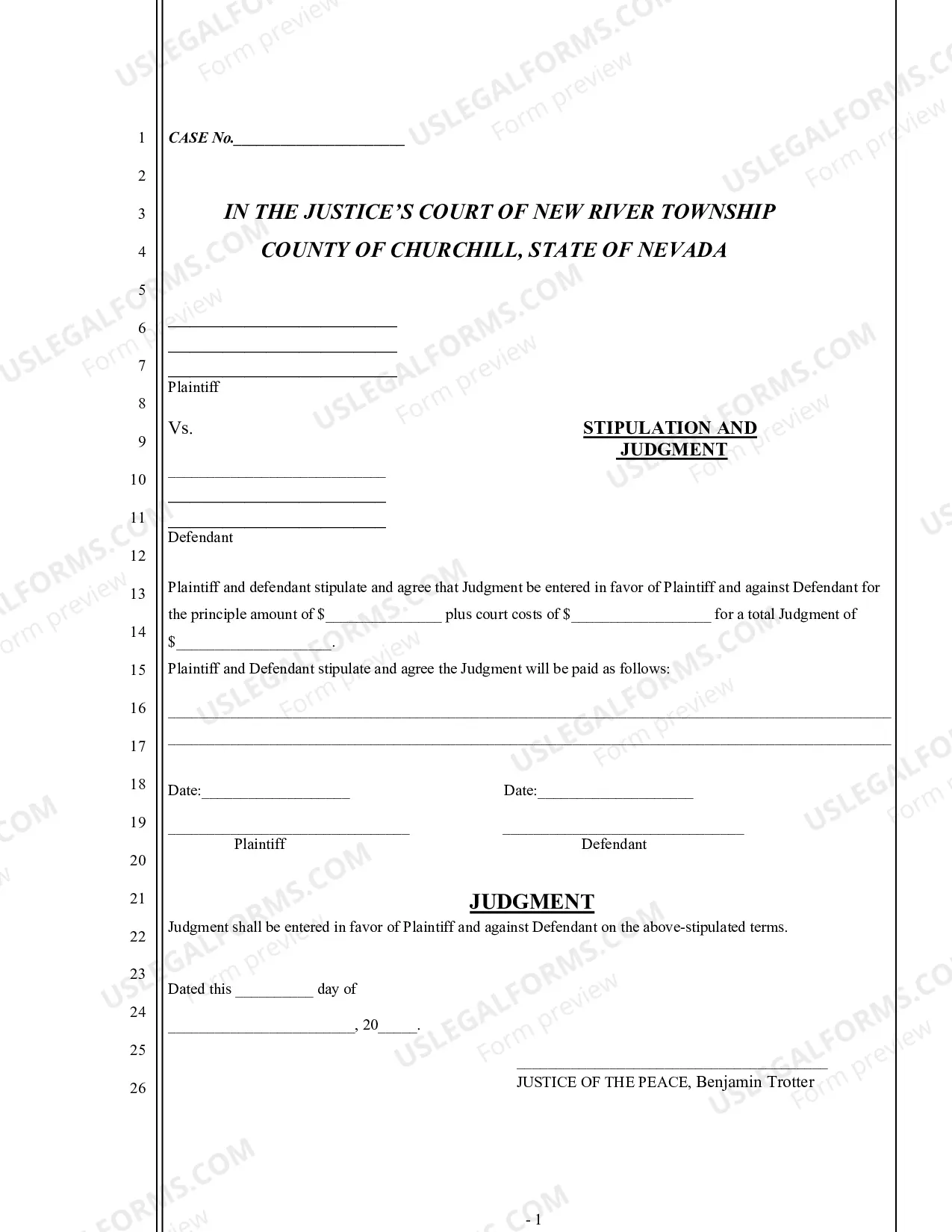
Looking for another form?



Form popularity
FAQ
Explain in writing in advance the purpose of the meeting and the possible outcome, reiterate the performance issues and remind your employee that they have a right to bring someone to the meeting with them. Ideally, the decision to dismiss an employee will be given face to face with reasons identified and explained.
Have a fair reason for the dismissal. act reasonably in treating that as a reason for dismissal in each case. follow a fair (formal) procedure in carrying out that dismissal.
It must be noted that any dismissal of an Employee, whether it be for misconduct or poor work performance must be carried out via a fair and proper procedure (the enquiry) and for a fair substantive reason, being that the Employee is incapable of meeting the required standards of performance in the workplace.
Termination resulting from poor performance is sometimes considered "without" cause, although the cause is the lack of production or poor performance. To fire someone for this reason, it is generally best to document the performance compared to goals.
We now know that an employer is allowed to fire an employee based solely on poor job performance. However, knowing both why you can fire an individual and how to fire them properly can minimize your exposure to an EEOC complaint or other retaliation.
The letter should include the date of the termination and information about how the employee will receive his or her final paycheck. Include any other information that is relevant to your company and the specific employee.
Fair reasons for dismissal (2) This Act recognises three grounds on which a termination of employment might be legitimate. These are: the conduct of the employee, the capacity of the employee, and the operational requirements of the employer's business.