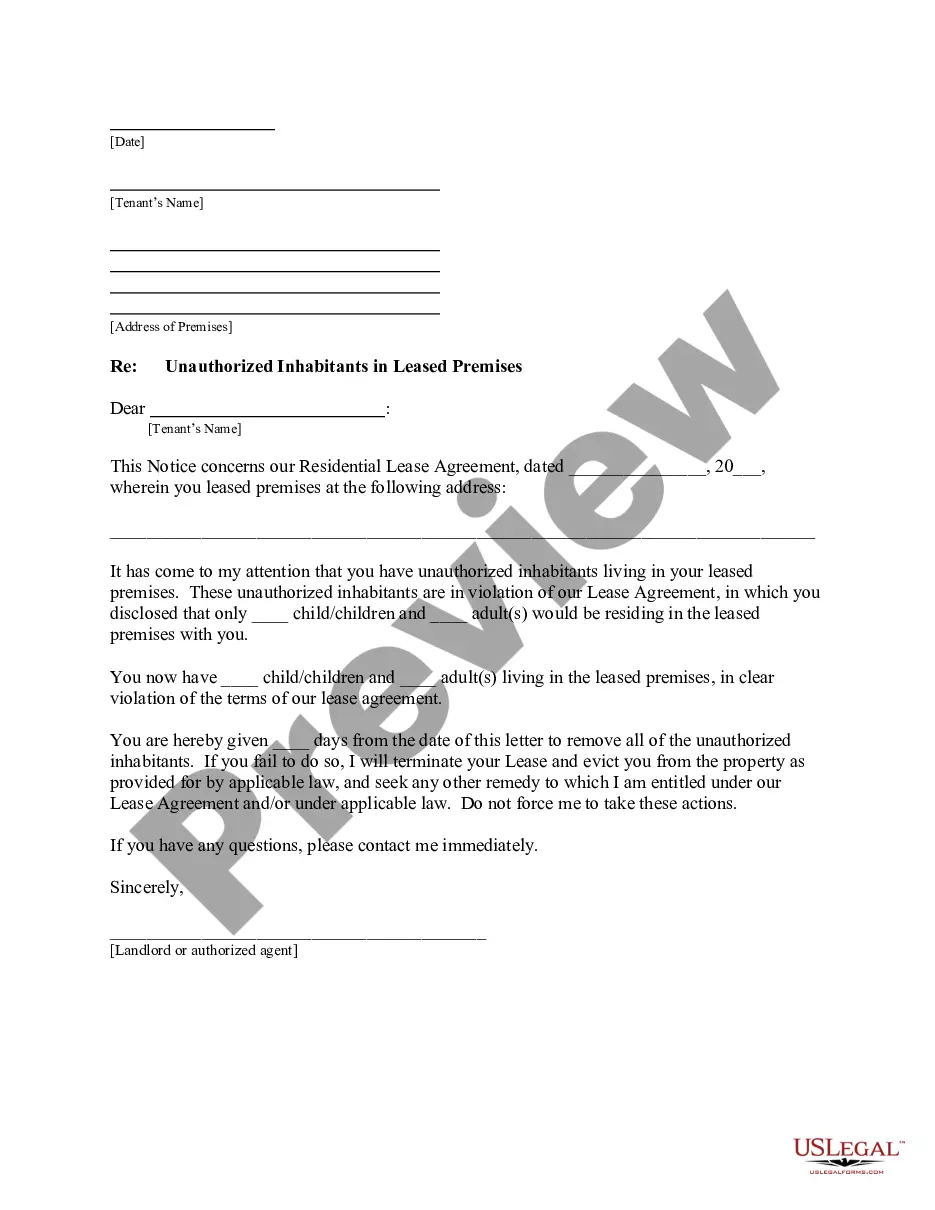
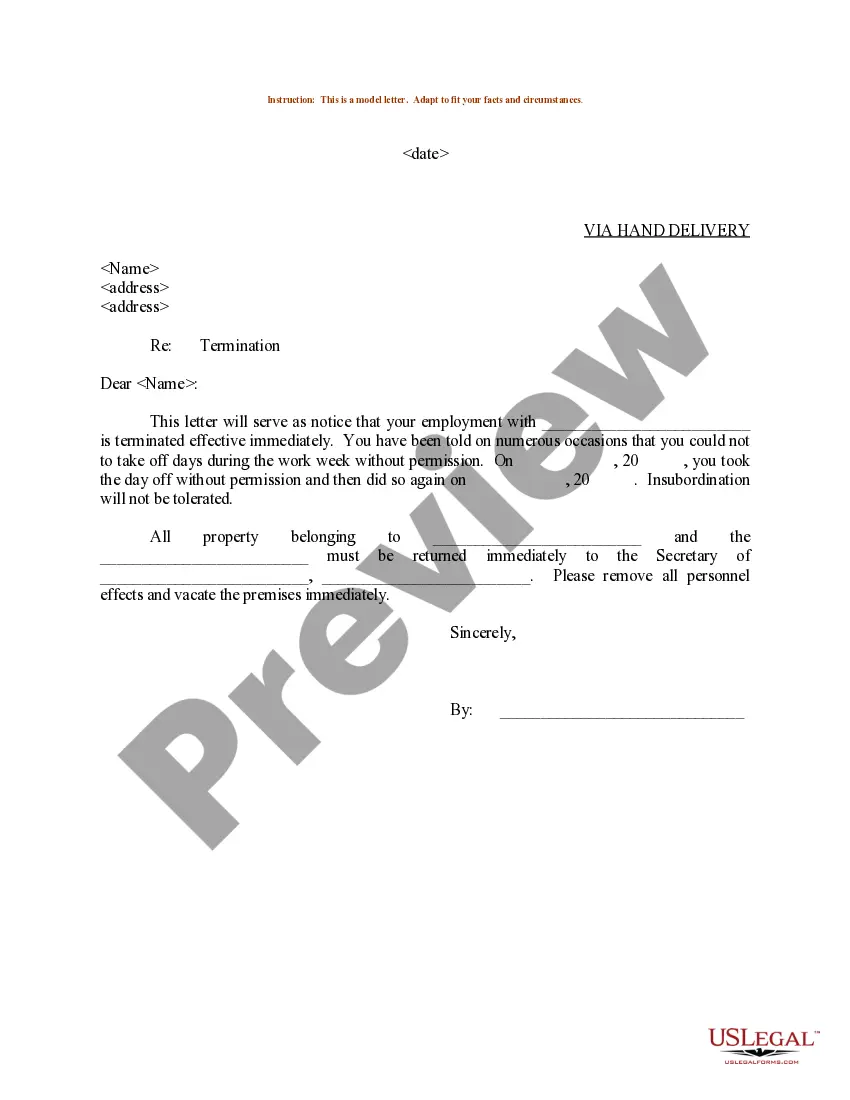
Termination Letter for Misconduct
What this document covers
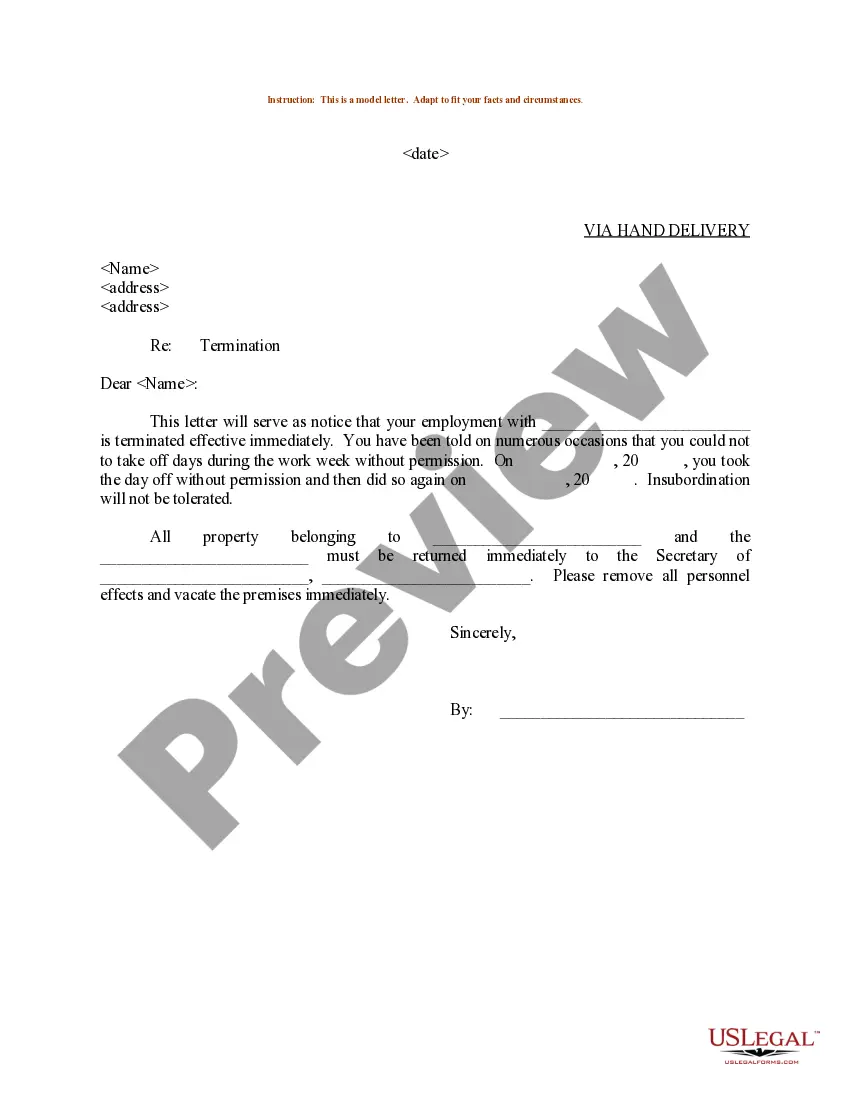
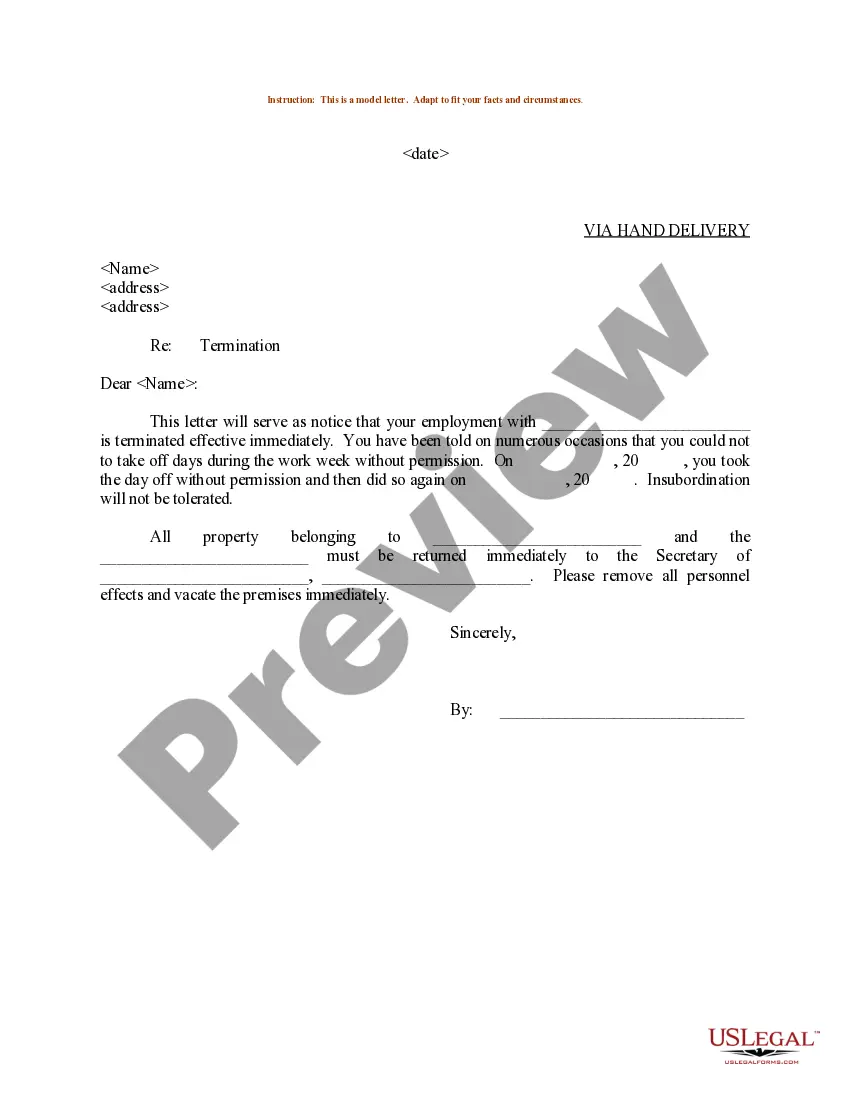
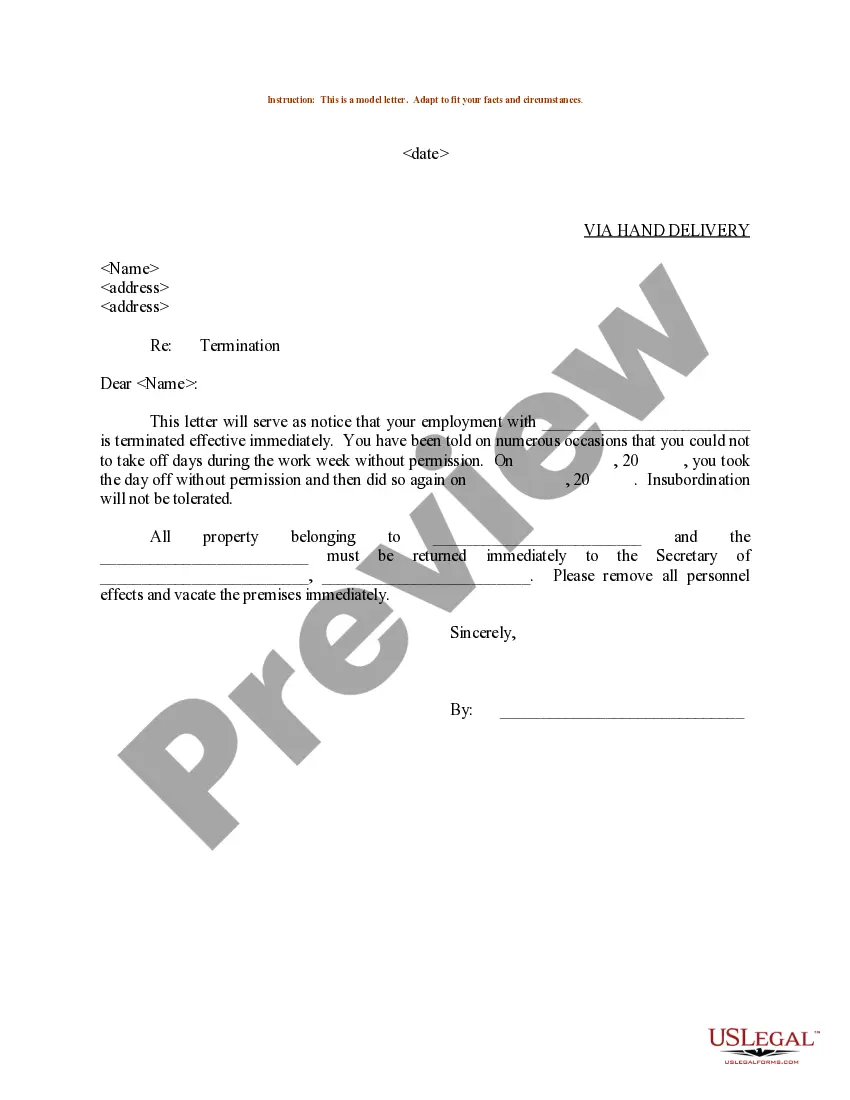
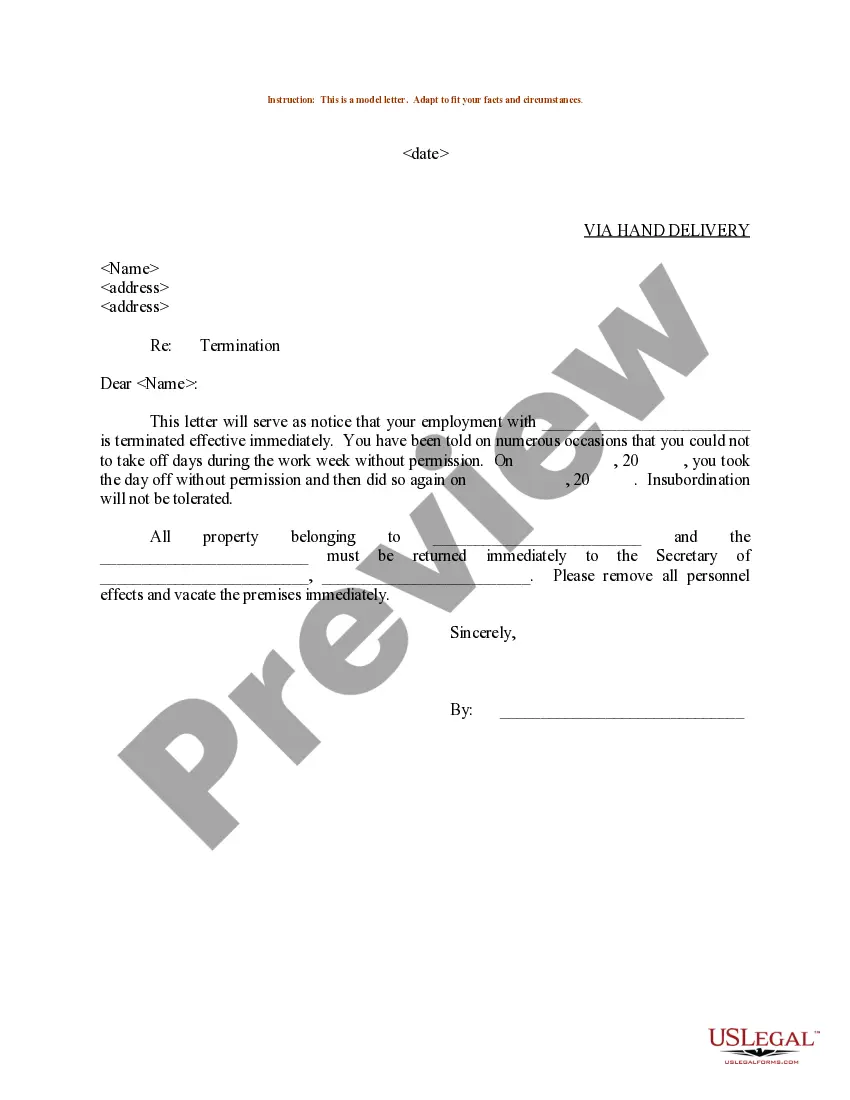
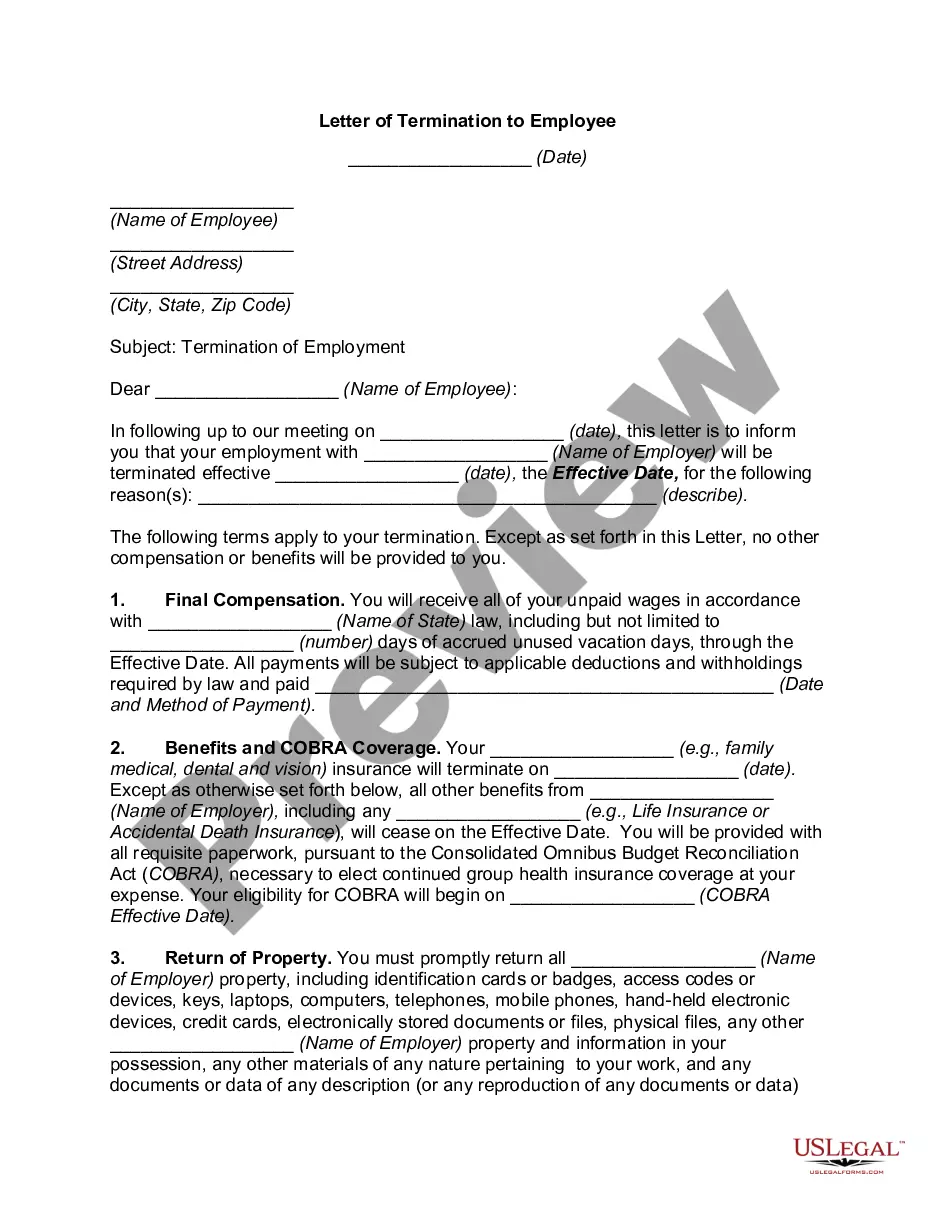
The termination letter for misconduct is a formal document used to notify an employee that their employment has been terminated due to unacceptable behavior or violations of company policy. This form provides a clear way to communicate the termination to the employee while ensuring that all necessary details are documented. Unlike general termination letters, this specific form addresses misconduct, making it essential for employers who need to uphold standards of conduct in the workplace.
What’s included in this form
- Company letterhead and contact information
- Employee's name and address
- Subject line indicating the nature of the letter
- A formal greeting
- Details about the misconduct leading to termination
- Statement of termination
- A closing statement and signature line
Common use cases
This form is used by employers when they need to terminate an employee for misconduct. Situations may include repeated violations of company policy, unethical behavior, theft, or harassment. It is crucial to document these instances and provide a formal notice, ensuring that both employer and employee are clear about the reasons for termination.
Who this form is for
- Employers looking to terminate an employee for misconduct
- Human resources professionals handling employee disciplinary actions
- Managers needing to formalize the termination process
How to prepare this document
- Identify the company's letterhead information.
- Fill in the employee's name and address accurately.
- Specify the subject line to indicate the nature of termination.
- Detail the misconduct and reasons for termination clearly.
- Sign the letter and date it, ensuring it is delivered personally or via certified mail.
Does this document require notarization?
This form does not typically require notarization unless specified by local law. It is important to check specific state requirements or company policies regarding the formalities of termination communications.
Get your form ready online
Our built-in tools help you complete, sign, share, and store your documents in one place.
Make edits, fill in missing information, and update formatting in US Legal Forms—just like you would in MS Word.
Download a copy, print it, send it by email, or mail it via USPS—whatever works best for your next step.
Sign and collect signatures with our SignNow integration. Send to multiple recipients, set reminders, and more. Go Premium to unlock E-Sign.
If this form requires notarization, complete it online through a secure video call—no need to meet a notary in person or wait for an appointment.
We protect your documents and personal data by following strict security and privacy standards.

Make edits, fill in missing information, and update formatting in US Legal Forms—just like you would in MS Word.

Download a copy, print it, send it by email, or mail it via USPS—whatever works best for your next step.

Sign and collect signatures with our SignNow integration. Send to multiple recipients, set reminders, and more. Go Premium to unlock E-Sign.

If this form requires notarization, complete it online through a secure video call—no need to meet a notary in person or wait for an appointment.

We protect your documents and personal data by following strict security and privacy standards.
Common mistakes
- Failing to document specific instances of misconduct.
- Using vague language that does not clearly explain the reason for termination.
- Not providing the employee with a copy of the letter.
Benefits of using this form online
- Easy access to a professionally drafted template.
- Customizable to fit specific facts and circumstances.
- Time-saving compared to drafting a letter from scratch.
Looking for another form?
Form popularity
FAQ
Notify the employee of their termination date. State the reason(s) for termination. Explain their compensation and benefits going forward. Notify them of any company property they must return. Remind them of signed agreements. Include HR contact information.
Keep it simple, straightforward and to the point. State clearly that you are canceling your contract and include a simple reason why. If you owe any money on the account, request a final bill or enclose the payment.
Step 1: Prepare for the First Instance of Misconduct. Step 2: Investigate Accusations of Employee Misconduct. Step 3: Ensure That Planned Discipline Will Not Be Discriminatory. Step 4: Discipline an Employee for Severe or Repeated Misconduct. Step 5: Terminate an At-Will Employee for Misconduct. Appendix.
1) Names And All Employee Information. 2) Dates. 3) Reason For Termination. 4) Receipt Of Company Property. 5) Severance, Benefits, And Other Compensation Information. 6) Legal Agreements. 7) Details About Their Final Paycheck. 1) Severance To Waive Legal Claims.
Keep it professional. Keep it short and sweet. Provide reasons for leaving (optional). Remain polite. Say thank you to your employer for the role. Offer to help in the transition period. Avoid personal criticism. Finish your resignation letter positively.
Having taken all of the facts and circumstances into consideration, I have decided to summarily dismiss you from your employment with immediate effect. You are entitled to be paid up to today's date and to receive pay in respect of any untaken statutory and contractual holiday entitlement.
The words you use to terminate an employee should be simple and to-the-point. Don't waffle. Go somewhere private and then lead with the punch line, says Glickman. She suggests you begin by saying, I have some bad news for you.
The employment at-will doctrine, which is followed by nearly all states, permits employers and employees to terminate the employment relationship at any time and for any reason as long as the reason does not violate federal, state or local law.
1Avoid any implication or suggestion that the employee is incapable of performing their duties.2Cite in the warning the policy and/or procedure being violated.3Do not use generalities.4Employ all of your policies or job descriptions.5Point out their successes.Proving Misconduct in Performance-Based Unemployment Claims\nwww.unemployment-services.com > proving-misconduct-performance-bas...