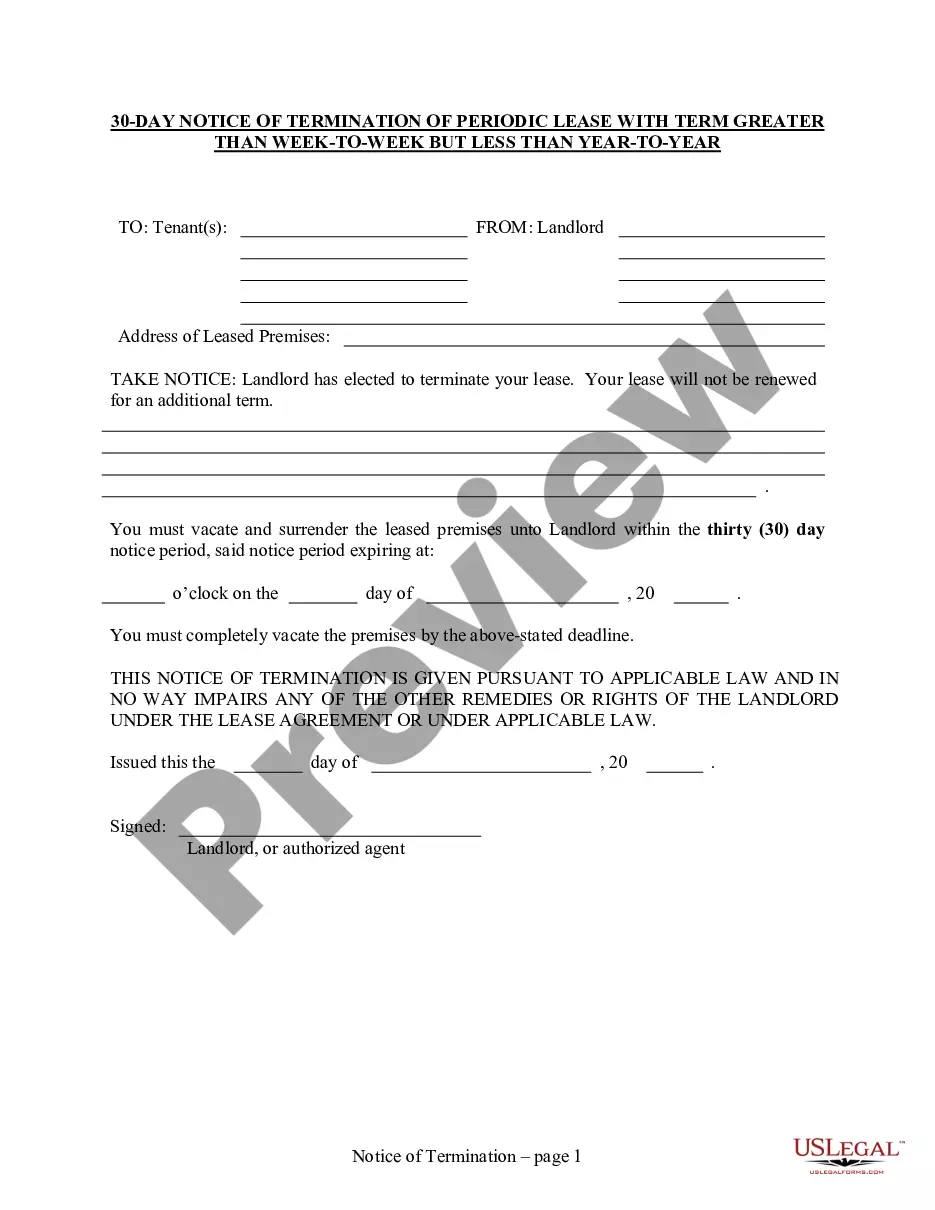
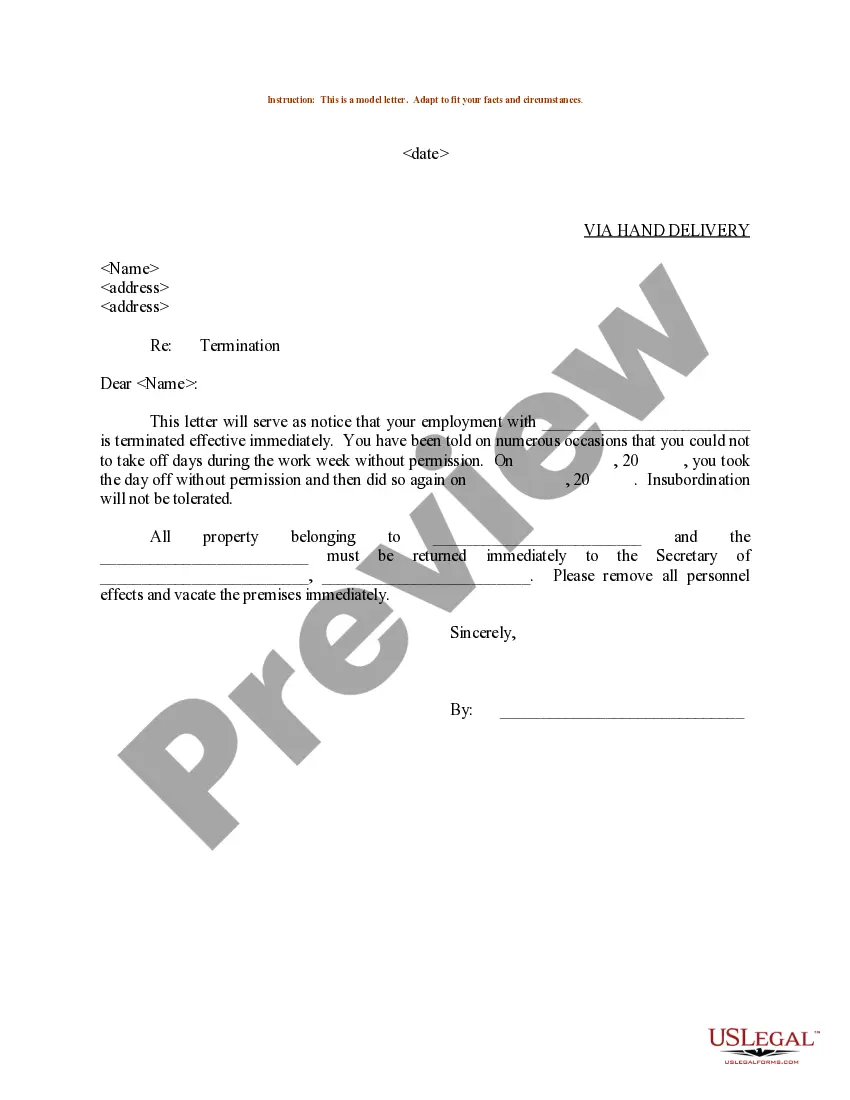
Termination Letter for Insubordination
Understanding this form
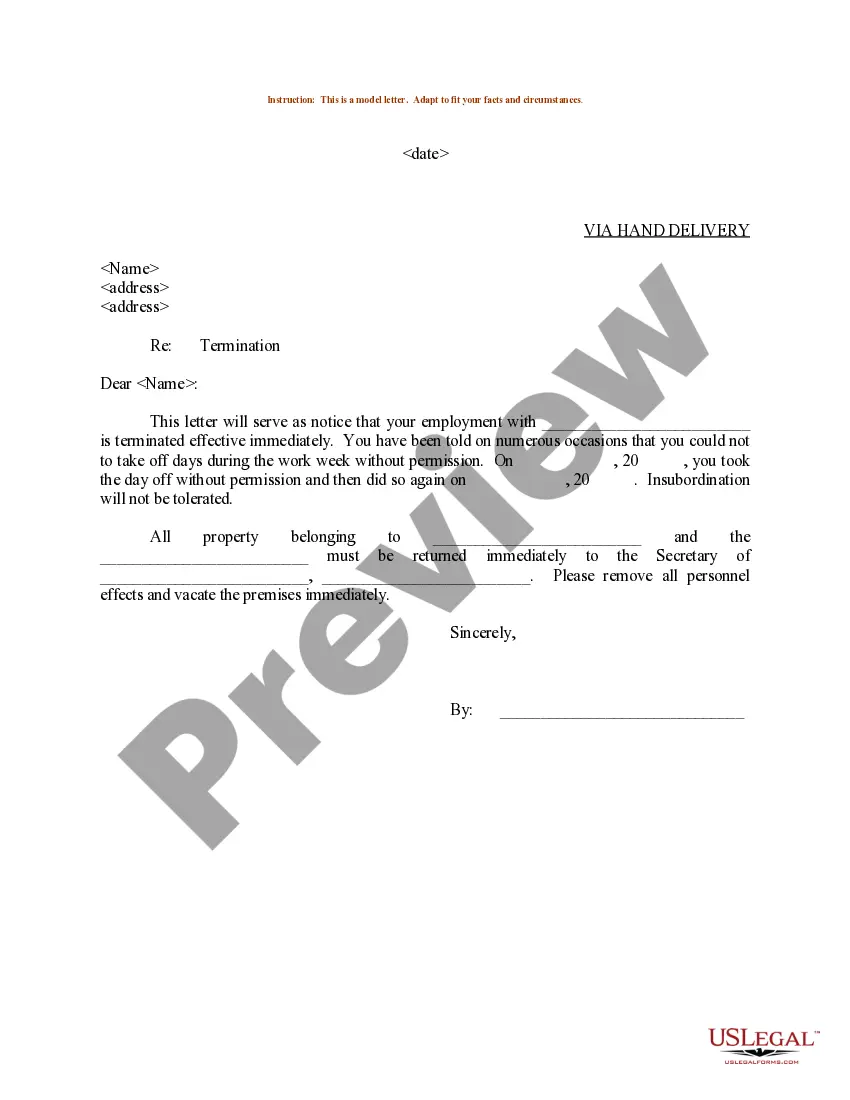
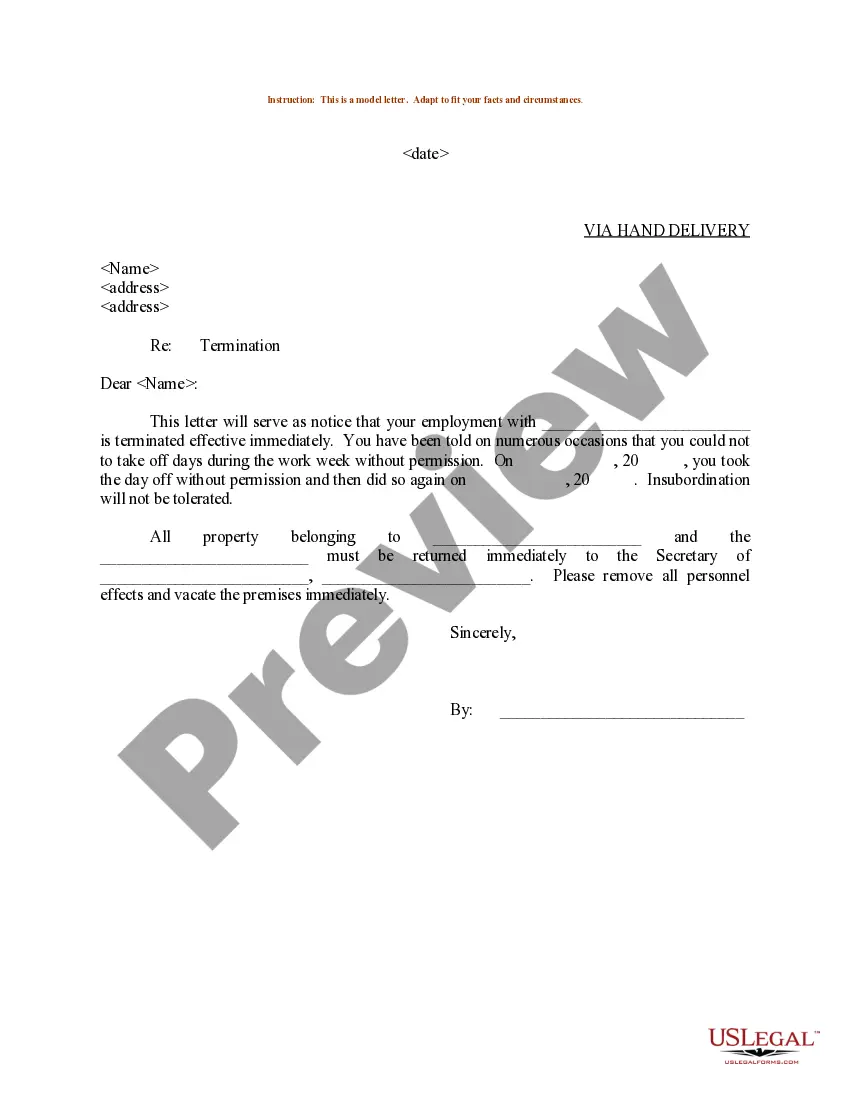
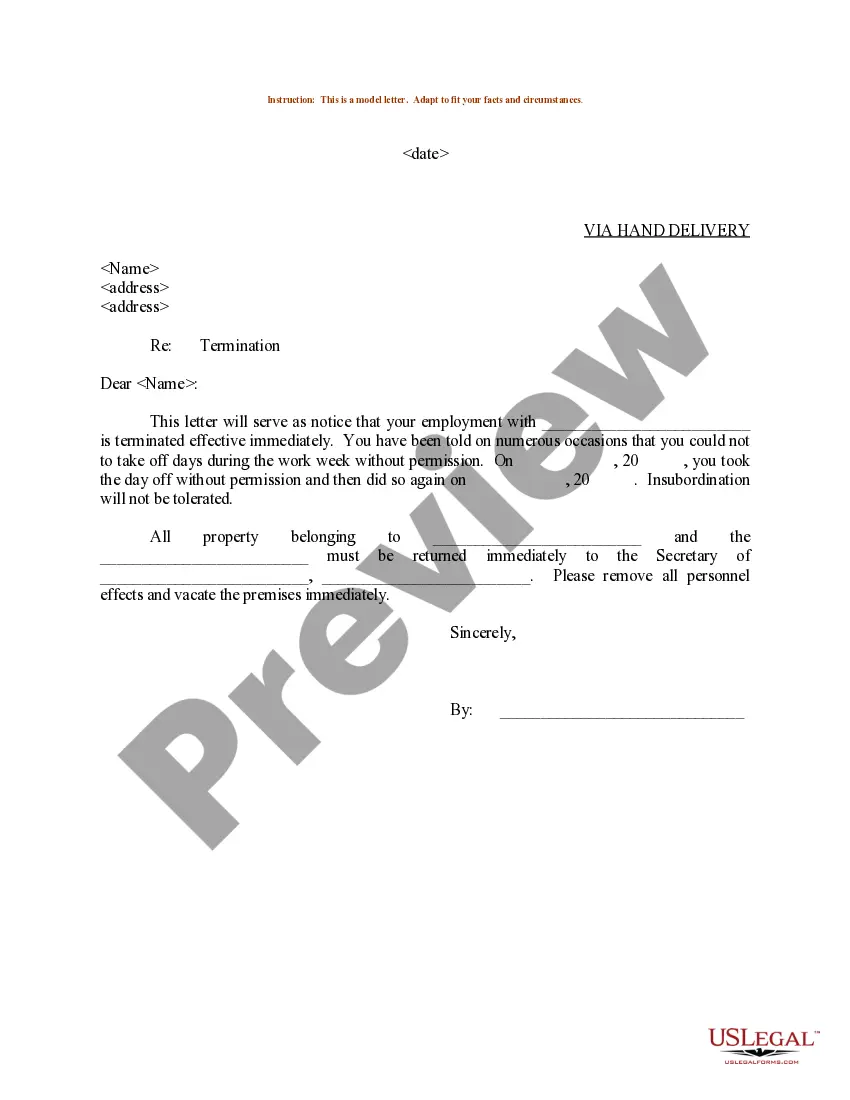
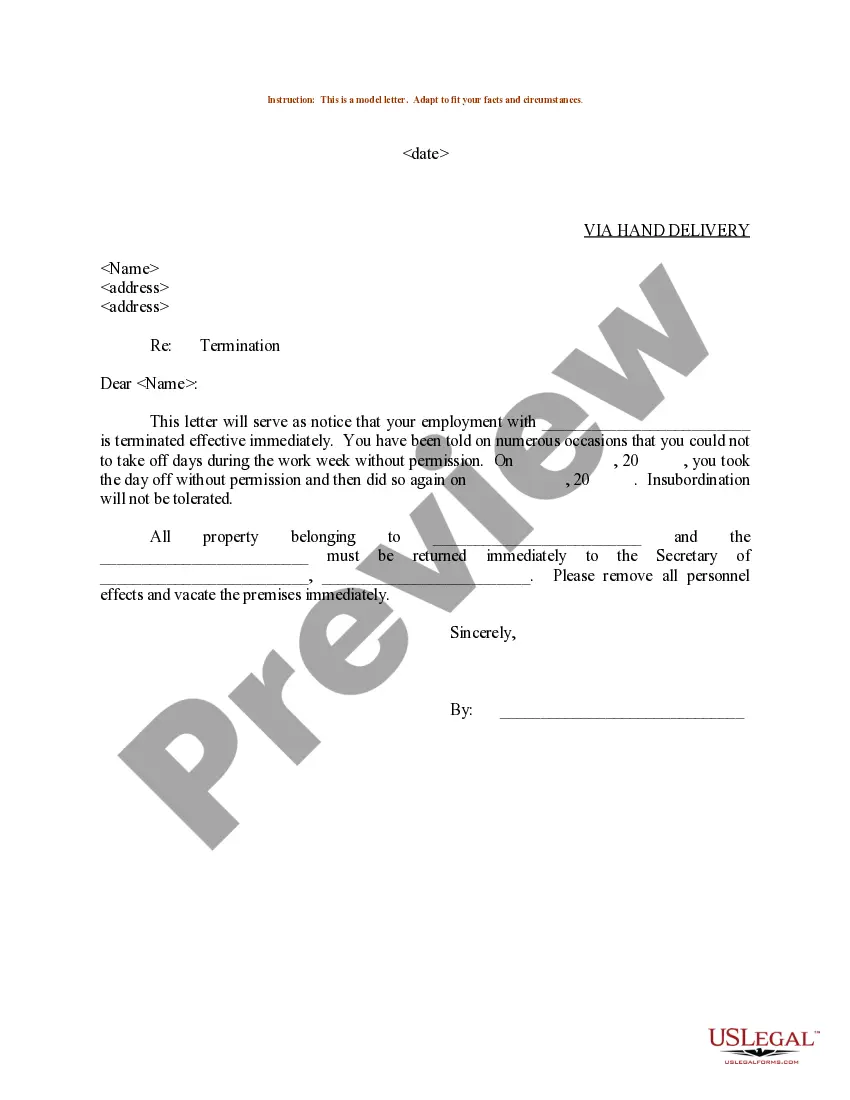
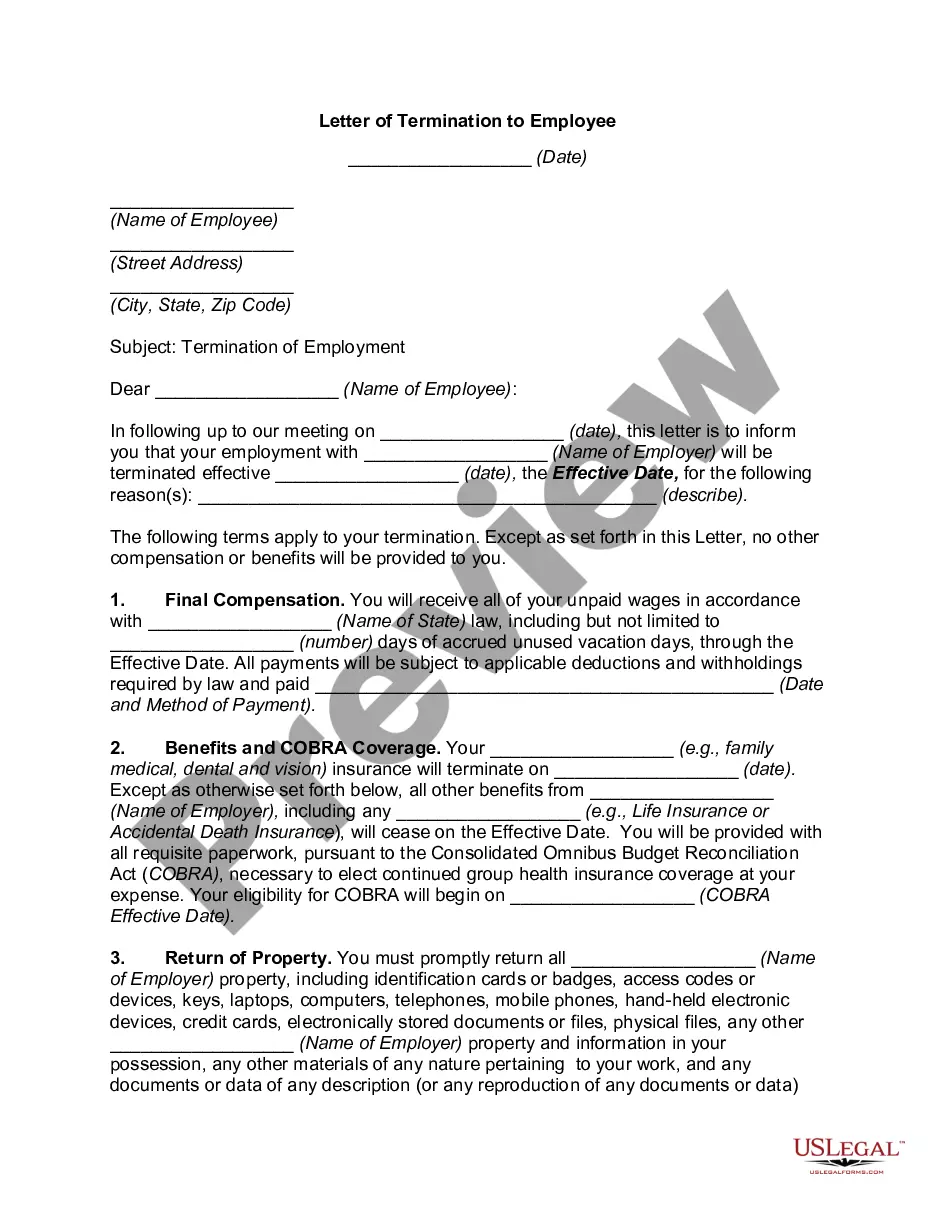
The Termination Letter for Insubordination is a formal document used to notify an employee of their termination due to inappropriate behavior or insubordination. This letter serves as a crucial communication tool for employers, ensuring a clear and professional approach to employee dismissal. Unlike other termination letters, this specific template addresses insubordination issues directly, providing a clear basis for the decision.
Key components of this form
- Date of the letter
- Recipient's name and address
- Subject line indicating termination
- Opening salutation
- Body of the letter detailing reasons for termination
- Closing statement and signature line
Common use cases
This termination letter should be used when an employer has determined that an employee's insubordination warrants immediate termination. Situations may include repeated refusal to follow reasonable directives, disrespectful behavior toward management, or violation of company policies. Using this form helps maintain professionalism during a potentially difficult conversation.
Who needs this form
- Employers looking to terminate an employee effectively
- HR professionals responsible for managing employee relations
- Business owners enforcing company policies and procedures
- Legal representatives overseeing employment matters
Completing this form step by step
- Insert the date of the letter at the top.
- Provide the employee's name and address in the designated area.
- Clearly state the subject as "Termination due to Insubordination."
- Write a brief introduction, addressing the employee by name.
- Detail the reasons for termination in a professional manner.
- End the letter with a formal closing and sign your name.
Is notarization required?
This form does not typically require notarization unless specified by local law. However, ensuring the accuracy and professionalism of the letter is paramount for legal compliance and clarity.
Get your form ready online
Our built-in tools help you complete, sign, share, and store your documents in one place.
Make edits, fill in missing information, and update formatting in US Legal Forms—just like you would in MS Word.
Download a copy, print it, send it by email, or mail it via USPS—whatever works best for your next step.
Sign and collect signatures with our SignNow integration. Send to multiple recipients, set reminders, and more. Go Premium to unlock E-Sign.
If this form requires notarization, complete it online through a secure video call—no need to meet a notary in person or wait for an appointment.
We protect your documents and personal data by following strict security and privacy standards.

Make edits, fill in missing information, and update formatting in US Legal Forms—just like you would in MS Word.

Download a copy, print it, send it by email, or mail it via USPS—whatever works best for your next step.

Sign and collect signatures with our SignNow integration. Send to multiple recipients, set reminders, and more. Go Premium to unlock E-Sign.

If this form requires notarization, complete it online through a secure video call—no need to meet a notary in person or wait for an appointment.

We protect your documents and personal data by following strict security and privacy standards.
Typical mistakes to avoid
- Failing to document specific instances of insubordination.
- Using vague language that does not clearly convey the reasons for termination.
- Not including the date, which can affect the legality of the notice.
- Neglecting to provide a copy for the employee's records.
Benefits of using this form online
- Convenience of immediate access and download.
- Editable format allows for easy customization to fit specific situations.
- Reliability of using a template drafted by licensed attorneys.
- Time-saving compared to creating documentation from scratch.
Looking for another form?

Form popularity
FAQ
Format and Content The termination letter for insubordination format should include the date the letter is written, the date of the alleged violation(s), proof of the violation(s), the effective date of the termination, and information regarding the employee's last paycheck.
Employee name. Company name. Name of the manager overseeing the termination. Date of letter. Date of termination. Reason for termination. List of verbal and written warnings. List of items to be handed in before leaving (company laptop, keys, etc.)
Let employees know their conduct is unacceptable. When insubordination occurs, clearly state that this type of behavior is unacceptable and against company policy. Insubordinate behavior can feel disrespectful and even intimidating. Don't be tempted to respond with similar behavior. Stay calm.
Your fair disciplinary procedure Even though gross insubordination can lead to an instant dismissal, you must still go through a fair procedure. If you don't, the employee could make an unfair dismissal claim against you.
Answer the questions on employment applications truthfully, but succinctly. If you were terminated from a previous job, simply write, "Terminated. Eligible for Rehire." However, if you learn from your previous employer that you aren't eligible for rehire, put "Terminated. Ask for details."
A supervisor made a direct request or order. The employee received and understood the request. The employee refused to comply with the request through action or noncompliance.
Employee name. Company name. Name of the manager overseeing the termination. Date of letter. Date of termination. Reason for termination. List of verbal and written warnings. List of items to be handed in before leaving (company laptop, keys, etc.)
Insubordination in the workplace refers to an employee's intentional refusal to obey an employer's lawful and reasonable orders. Such a refusal would undermine a supervisor's level of respect and ability to manage and, therefore, is often a reason for disciplinary action, up to and including termination.
Insubordination refers to an employee who is outright disobedient or disrespectful to a manager or owner of a business. Examples of insubordination include: Refusal to obey commands of a supervisor. Disrespect shown to higher-ups in the form of vulgar or mocking language.