Termination Letter for Employee
What this document covers
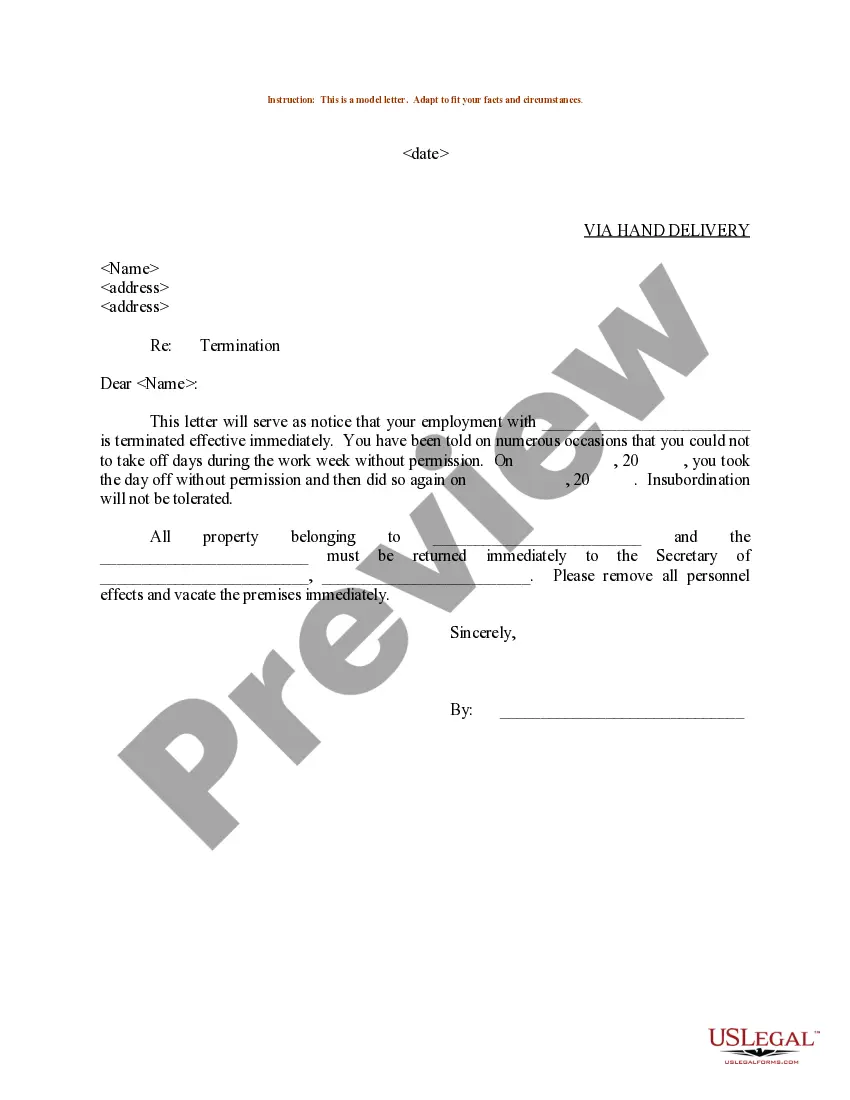
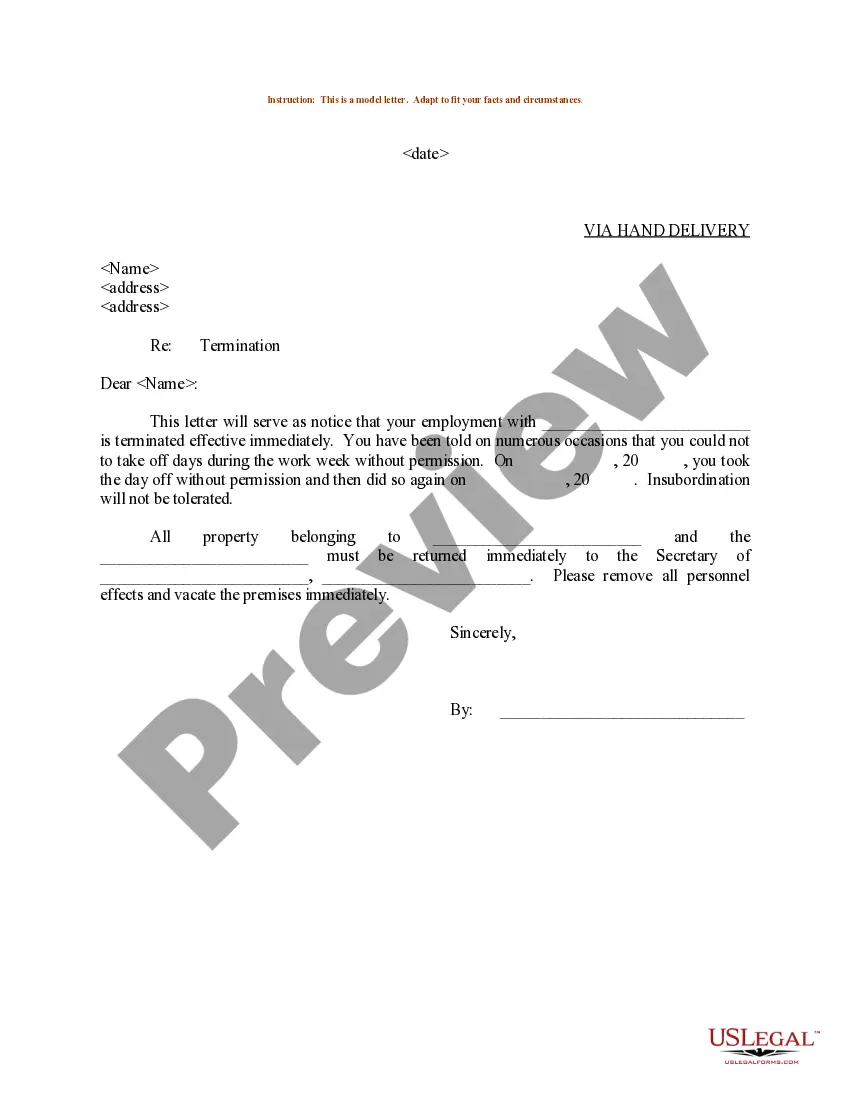
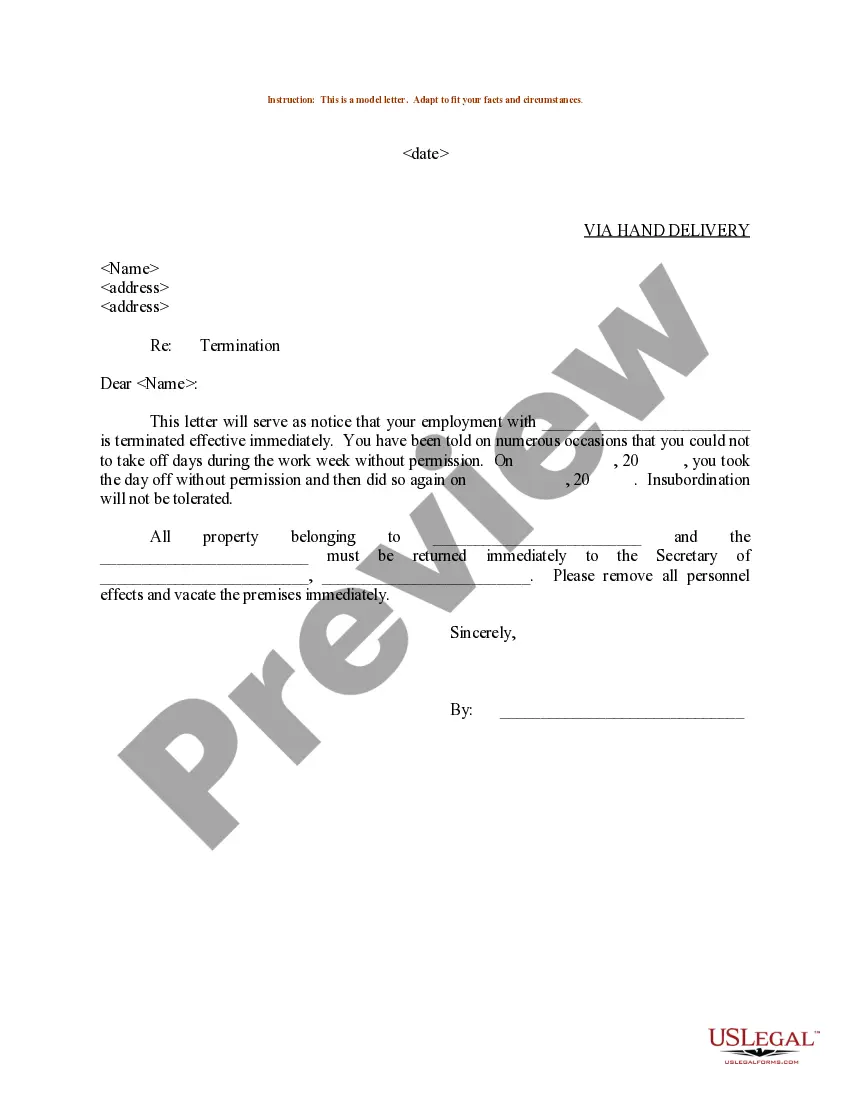
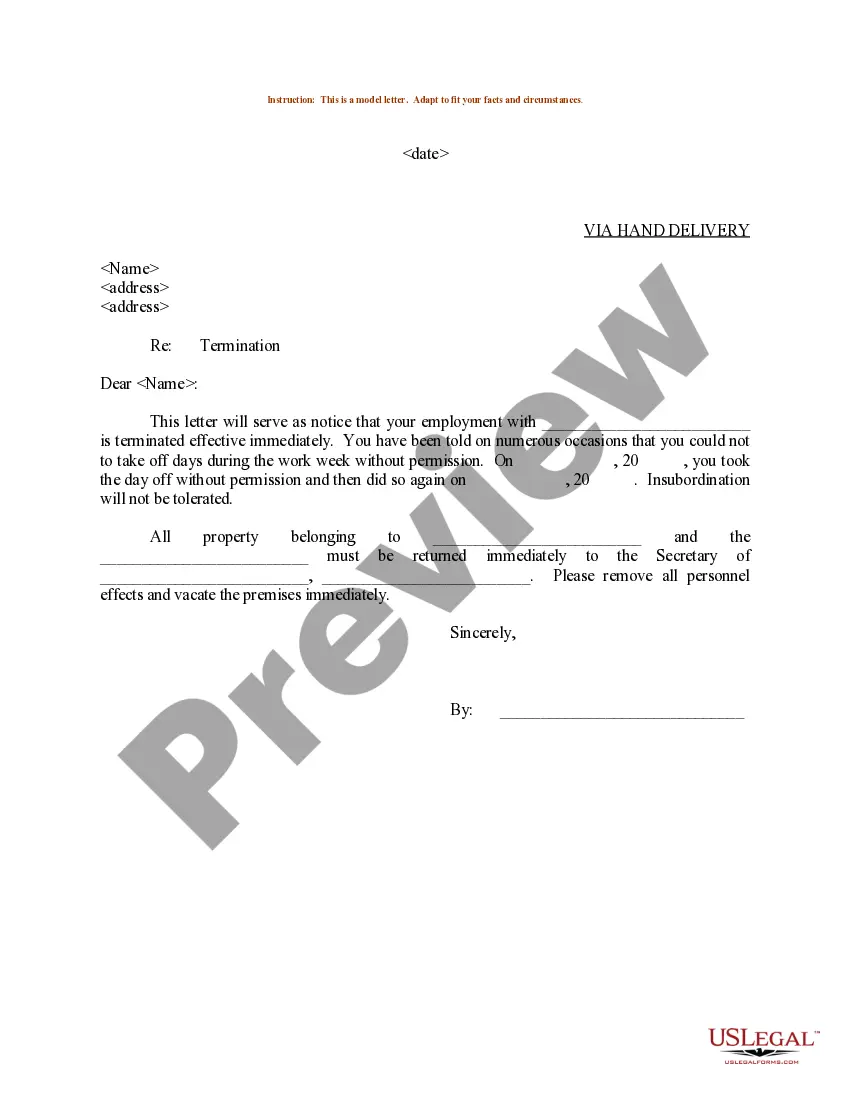
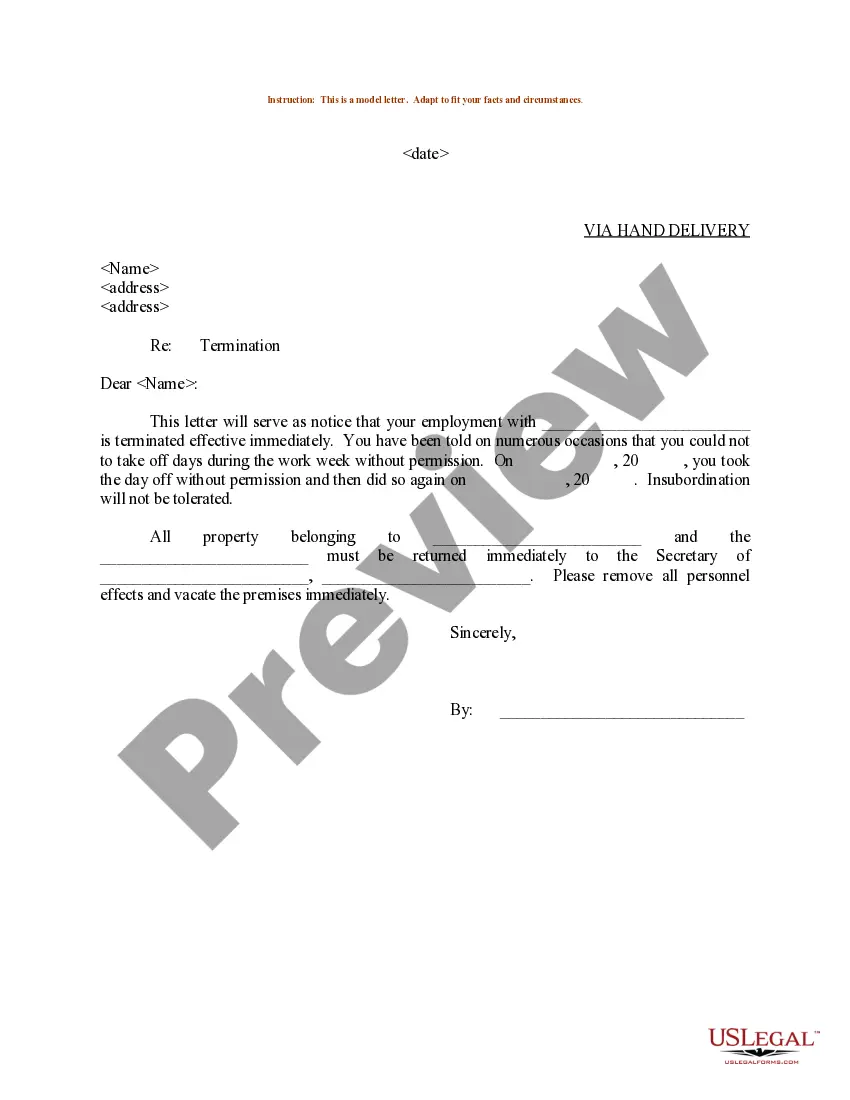
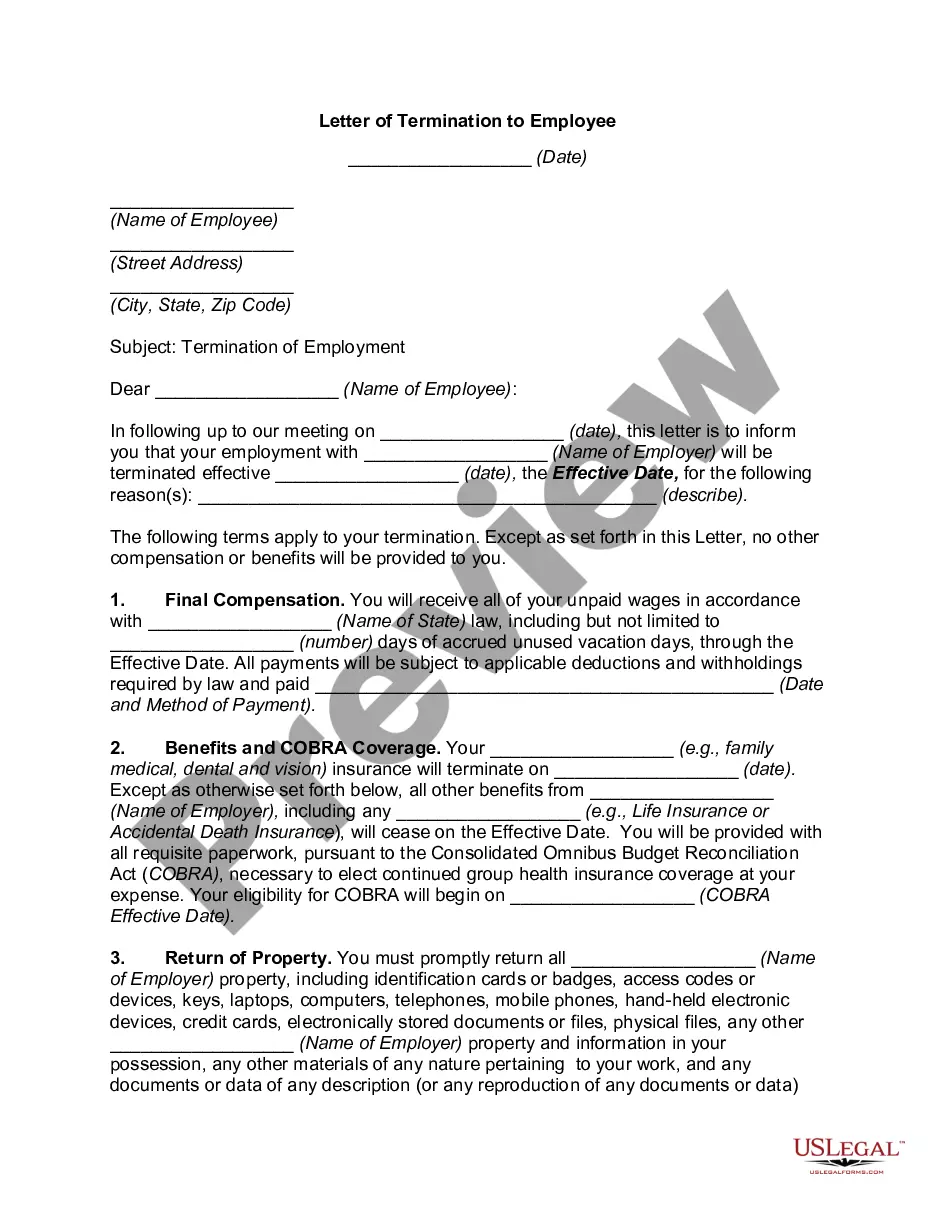
The Termination Letter for Employee is a formal letter used by an employer to notify an employee of their termination from employment. This document clearly states the reasons for termination and outlines any relevant details regarding final pay or other entitlements. Unlike informal communications, this letter serves to provide a legal record of the employment termination process, which is essential for both parties involved.
Form components explained
- Date: The date the termination letter is issued.
- Recipient's information: Name and address of the employee being terminated.
- Subject line: Clearly states the purpose of the letter as "Termination".
- Body of the letter: Key details regarding the reasons for termination.
- Signature: Space for the employer's signature to authenticate the letter.
When this form is needed
This termination letter should be used when an employer needs to formally dismiss an employee. Situations may include poor performance, violation of company policies, or downsizing. It is crucial to document the termination process to avoid potential legal disputes and to clarify the company's position to the employee.
Intended users of this form
The following individuals or entities should use the Termination Letter for Employee:
- Employers or business owners who are terminating an employee.
- HR professionals handling employee dismissals.
- Managers who need to communicate employment terminations.
How to prepare this document
- Identify the date of the letter and input it at the top.
- Enter the employee's name and address in the designated fields.
- Clearly state the subject as "Termination" for easy reference.
- Draft a brief explanation of the reasons for termination in the body of the letter.
- Sign the letter to validate it, ensuring the signature is placed in the appropriate area.
Does this form need to be notarized?
This form does not typically require notarization unless specified by local law. Make sure to check the specific requirements in your jurisdiction to ensure validity.
Get your form ready online
Our built-in tools help you complete, sign, share, and store your documents in one place.
Make edits, fill in missing information, and update formatting in US Legal Forms—just like you would in MS Word.
Download a copy, print it, send it by email, or mail it via USPS—whatever works best for your next step.
Sign and collect signatures with our SignNow integration. Send to multiple recipients, set reminders, and more. Go Premium to unlock E-Sign.
If this form requires notarization, complete it online through a secure video call—no need to meet a notary in person or wait for an appointment.
We protect your documents and personal data by following strict security and privacy standards.

Make edits, fill in missing information, and update formatting in US Legal Forms—just like you would in MS Word.

Download a copy, print it, send it by email, or mail it via USPS—whatever works best for your next step.

Sign and collect signatures with our SignNow integration. Send to multiple recipients, set reminders, and more. Go Premium to unlock E-Sign.

If this form requires notarization, complete it online through a secure video call—no need to meet a notary in person or wait for an appointment.

We protect your documents and personal data by following strict security and privacy standards.
Typical mistakes to avoid
- Failing to provide a clear reason for termination.
- Not including the date of issuance.
- Incorrectly addressing the letter to the wrong employee.
- Neglecting to sign the letter, making it less official.
Benefits of using this form online
- Convenient access to templates that can be downloaded immediately.
- Editable format allows you to tailor the letter to specific circumstances.
- Drafted by licensed attorneys to ensure legal compliance.
Looking for another form?

Form popularity
FAQ
You can dismiss an employee if: they're incapable of doing their job to the required standard. they're capable, but unwilling to do their job properly. they've committed some form of misconduct.
Notify the employee of their termination date. State the reason(s) for termination. Explain their compensation and benefits going forward. Notify them of any company property they must return. Remind them of signed agreements. Include HR contact information.
Fair reasons for dismissal (2) This Act recognises three grounds on which a termination of employment might be legitimate. These are: the conduct of the employee, the capacity of the employee, and the operational requirements of the employer's business.
Be prepared with documentation. Write a termination letter. Schedule a meeting. Keep the meeting short. Don't be tempted to apologize, give a second chance, or discuss personal traits.
Notify the employee of their termination date. State the reason(s) for termination. Explain their compensation and benefits going forward. Notify them of any company property they must return. Remind them of signed agreements. Include HR contact information.
It must be noted that any dismissal of an Employee, whether it be for misconduct or poor work performance must be carried out via a fair and proper procedure (the enquiry) and for a fair substantive reason, being that the Employee is incapable of meeting the required standards of performance in the workplace.
The letter should include the date of the termination and information about how the employee will receive his or her final paycheck. Include any other information that is relevant to your company and the specific employee.
If you have an employment contract that limits your employer's right to fire, your employer must comply with the contract's requirements. If, for example, your contract says you can be fired only for gross misconduct or financial malfeasance, then your employer can't fire you for poor performance.
Have a fair reason for the dismissal. act reasonably in treating that as a reason for dismissal in each case. follow a fair (formal) procedure in carrying out that dismissal.