Release of Judgment Lien - By Creditor
Understanding this form
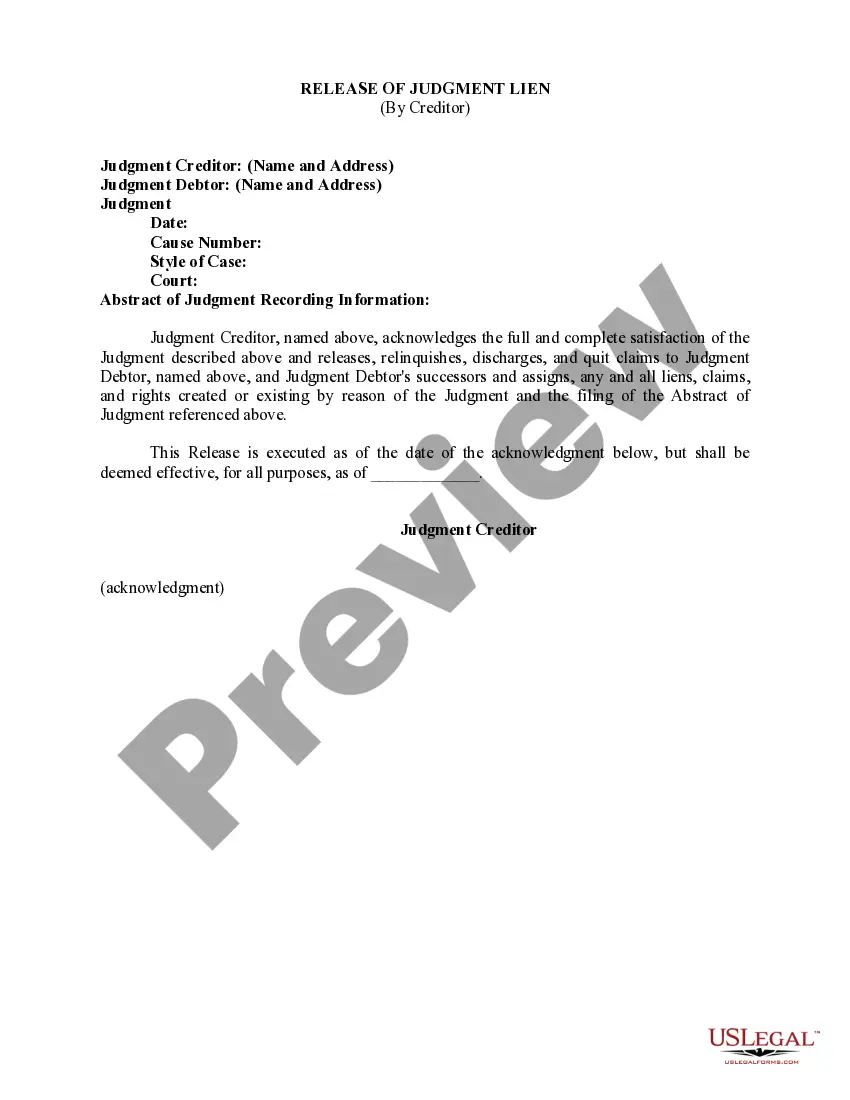
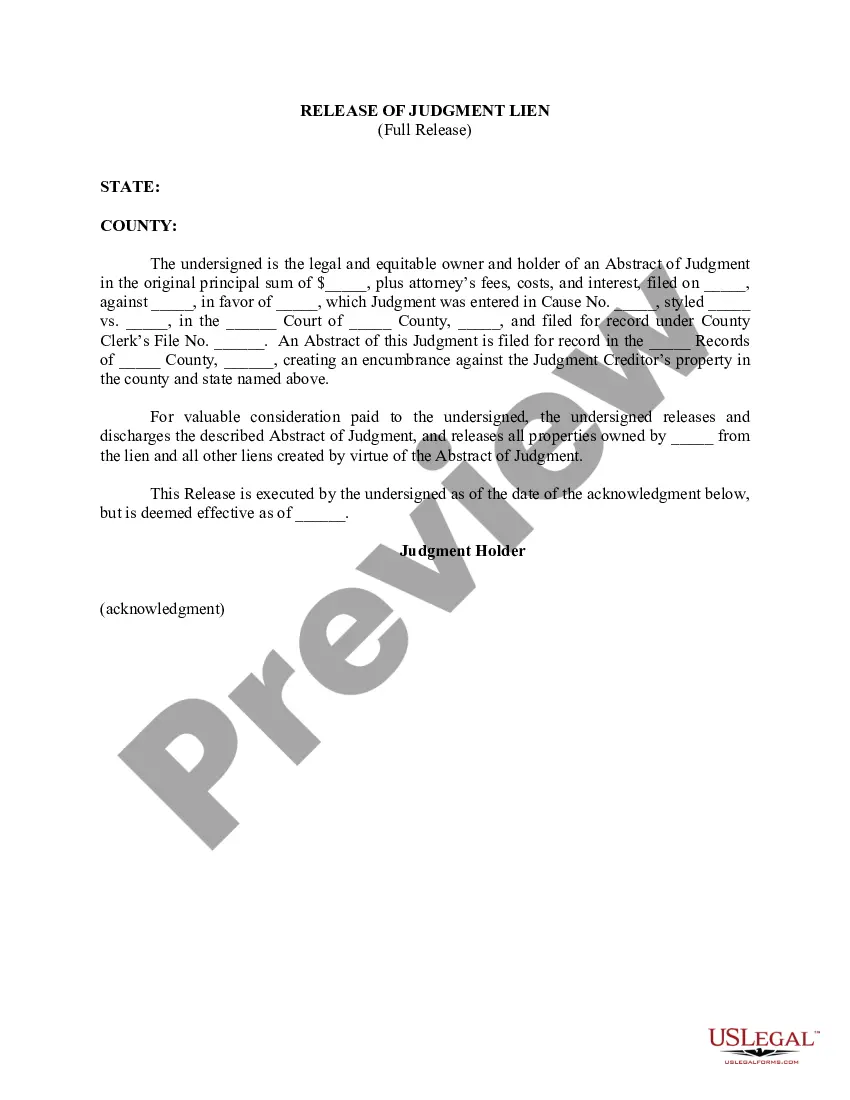
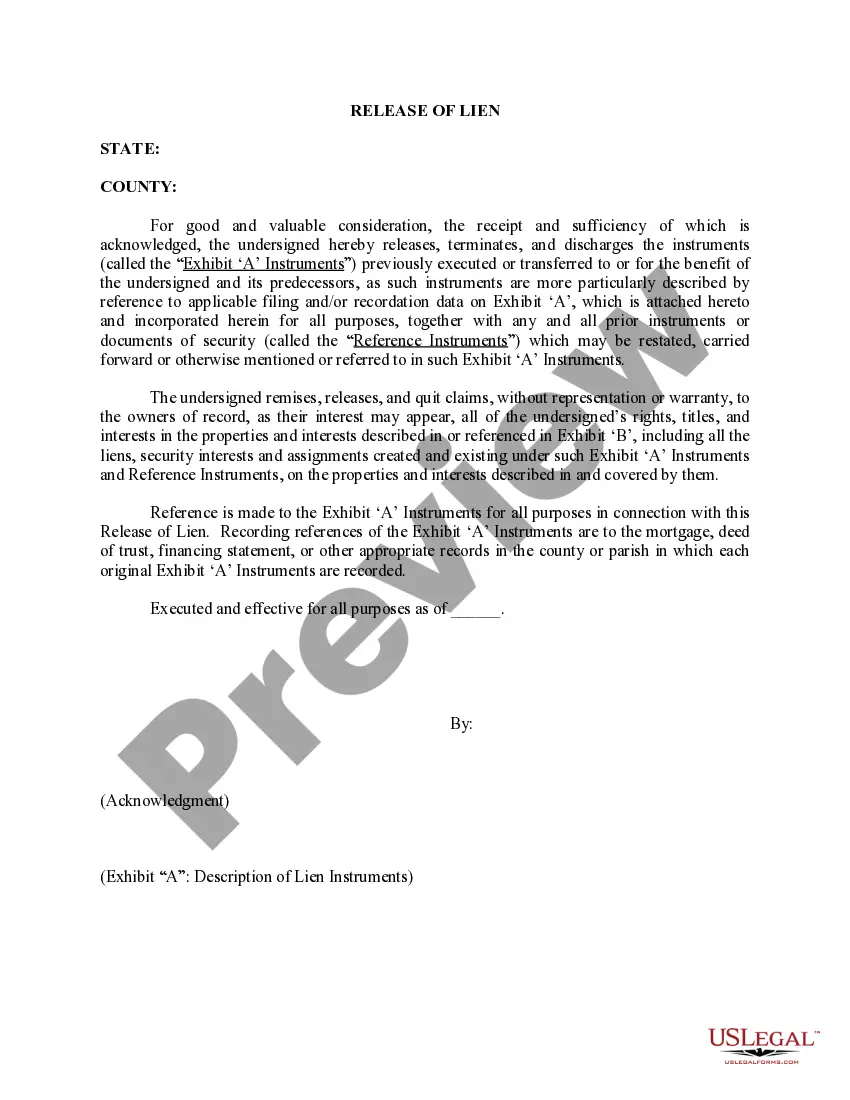
The Release of Judgment Lien by Creditor is a legal document that allows a judgment creditor to formally release any liens they hold against the property of a judgment debtor. This form is essential for clearing a debtor's title to their property after a judgment has been satisfied, distinguishing it from other legal forms that may involve the establishment or adjustment of liens. By executing this form, the creditor acknowledges that they have received full payment and relinquishes their rights to the lien.
Form components explained
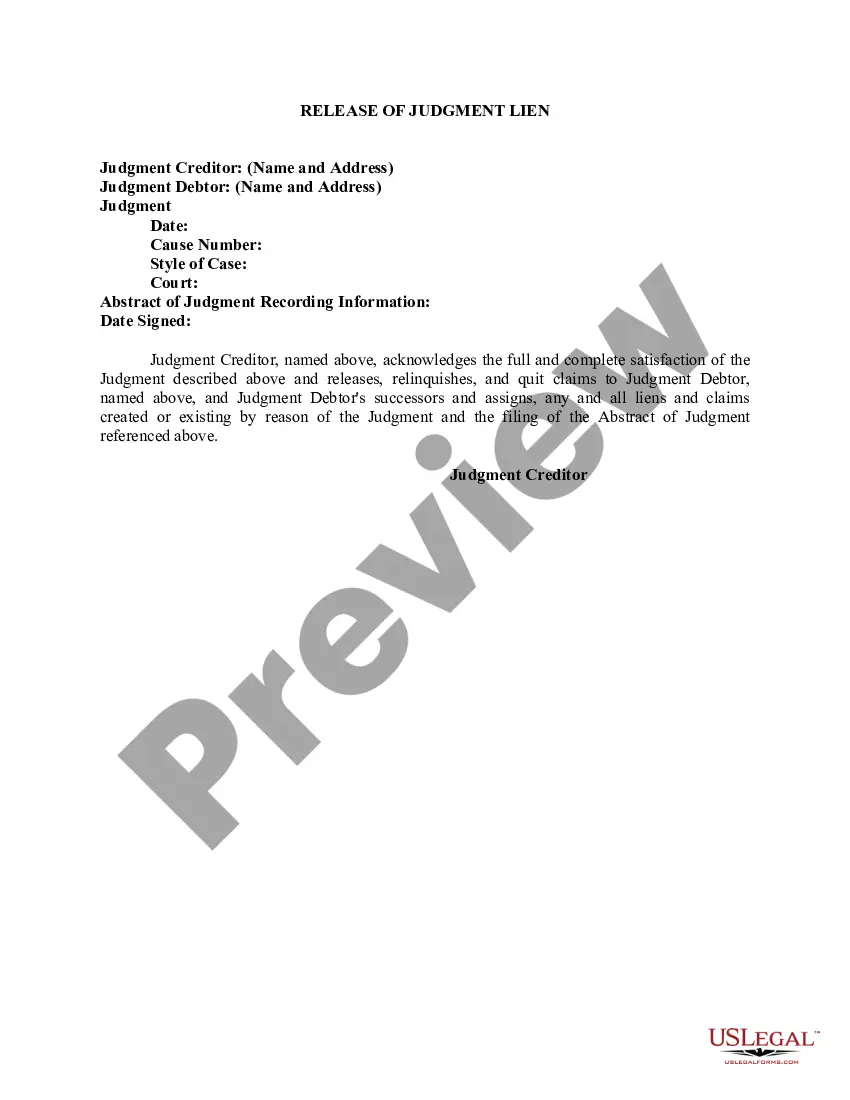
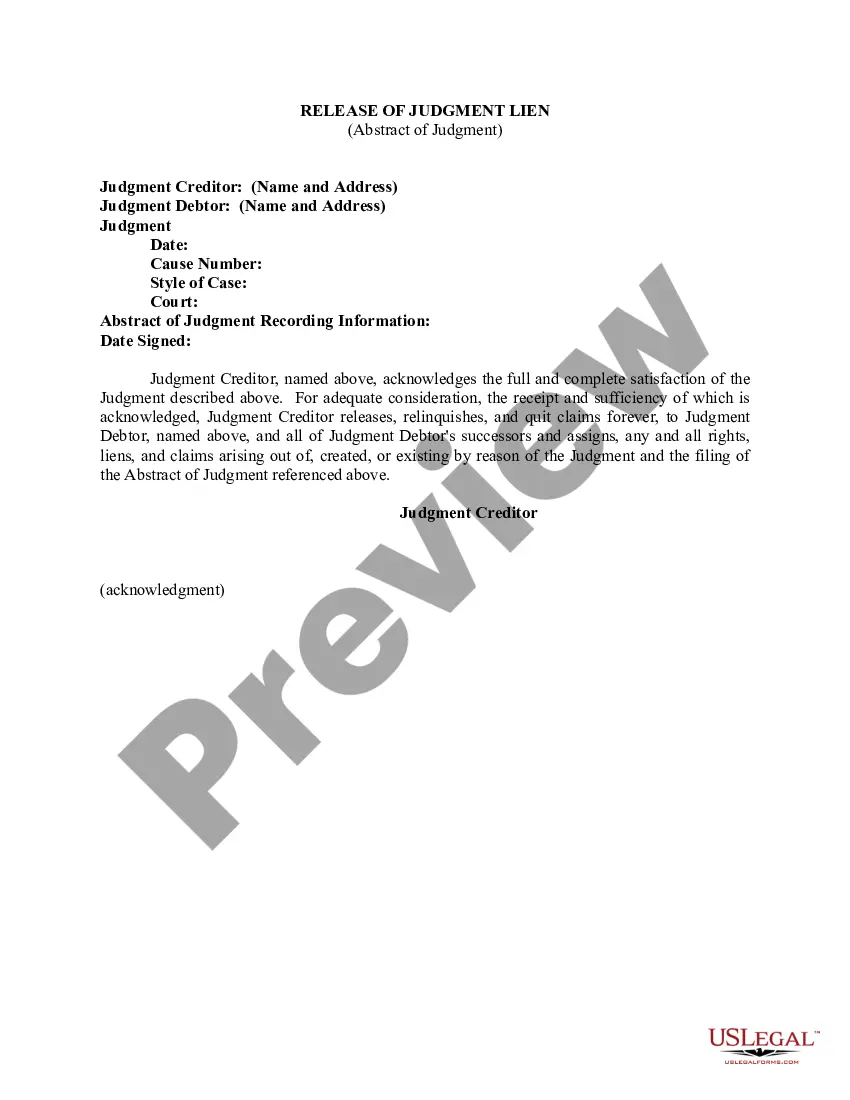
- Judgment Creditor Information: Name and address of the creditor releasing the lien.
- Judgment Debtor Information: Name and address of the debtor whose lien is being released.
- Judgment Details: Date of the judgment and court information, including style of the case and cause number.
- Statement of Satisfaction: Acknowledgment by the creditor that the judgment has been fully satisfied.
- Liens Release Clause: The creditor formally releases all claims and liens associated with the judgment.
- Effective Date of Release: The date when the release is effective for legal purposes.
Situations where this form applies
This form should be used when a creditor has received the full payment of a judgment debt and wishes to release the lien associated with that judgment. Common scenarios include settling disputes where the debtor has paid their dues, in instances of refinancing property, or when selling the property involved in the judgment. Completing this form is crucial for ensuring that the debtor's property title is clear and that the creditor no longer holds any claims against it.
Who needs this form
This form is intended for:
- Judgment creditors who have received full payment on a judgment debt.
- Debtors seeking to clear their property title after fulfilling their financial obligations.
- Legal professionals involved in debt settlement or contract enforcement.
Steps to complete this form
Follow these steps to complete the Release of Judgment Lien:
- Identify the Judgment Creditor: Fill in the full name and address of the creditor releasing the lien.
- Provide Judgment Debtor Information: Enter the name and address of the debtor whose lien is being released.
- Include Judgment Details: Input the date of the original judgment, cause number, and style of case.
- State the Satisfaction of Judgment: Acknowledge that the judgment has been fully satisfied and that all claims are released.
- Indicate the Effective Date: Specify the date from which the release will be considered valid.
- Signature: The judgment creditor must sign the document before a notary if required.
Notarization requirements for this form
This document requires notarization to meet legal standards. US Legal Forms provides secure online notarization powered by Notarize, allowing you to complete the process through a verified video call, available 24/7.
Get your form ready online
Our built-in tools help you complete, sign, share, and store your documents in one place.
Make edits, fill in missing information, and update formatting in US Legal Forms—just like you would in MS Word.
Download a copy, print it, send it by email, or mail it via USPS—whatever works best for your next step.
Sign and collect signatures with our SignNow integration. Send to multiple recipients, set reminders, and more. Go Premium to unlock E-Sign.
If this form requires notarization, complete it online through a secure video call—no need to meet a notary in person or wait for an appointment.
We protect your documents and personal data by following strict security and privacy standards.

Make edits, fill in missing information, and update formatting in US Legal Forms—just like you would in MS Word.

Download a copy, print it, send it by email, or mail it via USPS—whatever works best for your next step.

Sign and collect signatures with our SignNow integration. Send to multiple recipients, set reminders, and more. Go Premium to unlock E-Sign.

If this form requires notarization, complete it online through a secure video call—no need to meet a notary in person or wait for an appointment.

We protect your documents and personal data by following strict security and privacy standards.
Avoid these common issues
- Failing to include the correct judgment details, such as cause number or court information.
- Not specifying the effective date of the release.
- Omitting necessary signatures or acknowledgments.
- Using outdated forms that do not comply with current state laws.
Advantages of online completion
- Convenience: Access and complete the form quickly from anywhere, at any time.
- Editability: Easily make changes to the form as needed before finalizing.
- Reliability: Forms are drafted by licensed attorneys to meet legal standards.
Looking for another form?
Form popularity
FAQ
To fight a creditor's attempts to gain a judgement against you, you'll need to respond to the Summons and Complaint by providing an Answer to the court within the appropriate amount of time. Your Answer should include a request for the creditor to prove the validity of the debt.
Just as there are two ways for a creditor to get a judgment against you, there are two ways to have the judgment vacated. They are: Appeal the judgment and have the appeals court render the original judgment void; or. Ask the original court to vacate a default judgment so that you can fight the lawsuit.
How Long Does a Judgment Stay on My Credit Report? In most cases, judgments can stay on your credit reports for up to seven years. This means that the judgment will continue to have a negative effect on your credit score for a period of seven years.
California allows the judgment to last ten years and it can be renewed for an additional ten years if the creditor files the required forms in a timely fashion.
Contact the creditor that filed the lien. Make payment arrangements if you cannot pay in full. Pay the lien amount in full or as agreed. Request a satisfaction of lien. File the satisfaction of lien if mailed to you. Consult a bankruptcy attorney.
In most cases, after your lien has been filed your customer resolves their account and you need to remove a lien. Once you have received payment in full, or a settlement amount, and the funds have cleared then you are obligated to remove the lien, You can contact Lien-Pro directly to remove liens.
A judgment is sometimes removed if you pay it. Some state laws require judgments to be removed from your credit report when they are paid. Some states also allow debt collectors and creditors to re-file the judgment if it is unpaid, also known as an unsatisfied judgment.
Contact the creditor that filed the lien. Make payment arrangements if you cannot pay in full. Pay the lien amount in full or as agreed. Request a satisfaction of lien. File the satisfaction of lien if mailed to you. Consult a bankruptcy attorney.
You Can Appeal for a Vacated Judgment A vacated judgment is essentially declared void, which means the credit bureaus are legally required to remove it from your credit reports.Paying off a judgment should automatically change its status to Satisfied, both in the public record and on your credit reports.