Release of Judgment Lien
What this document covers
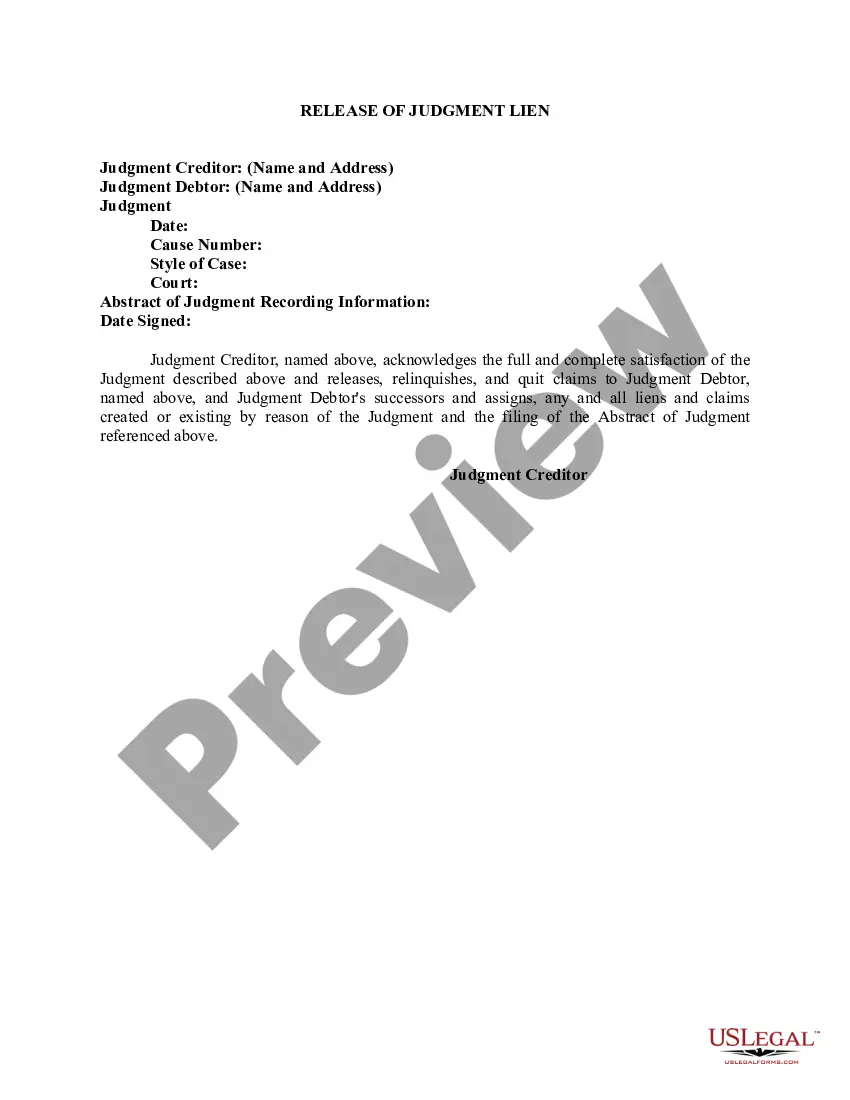
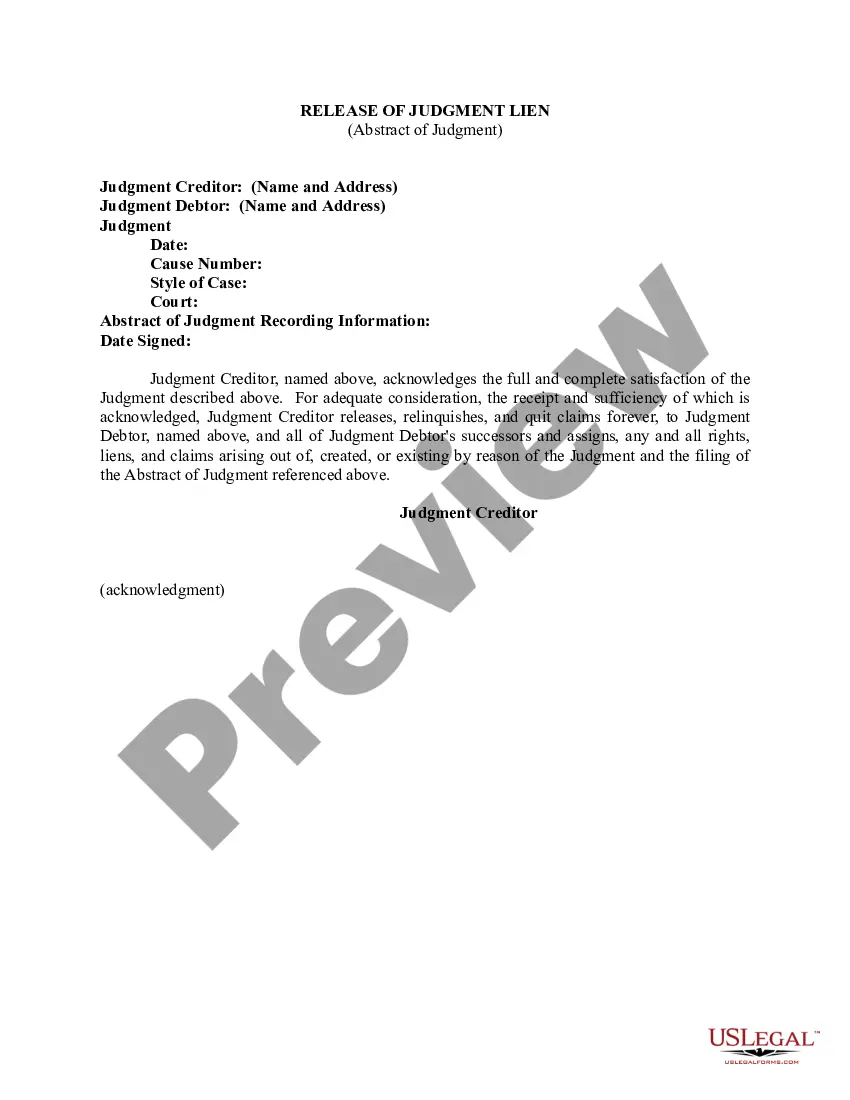
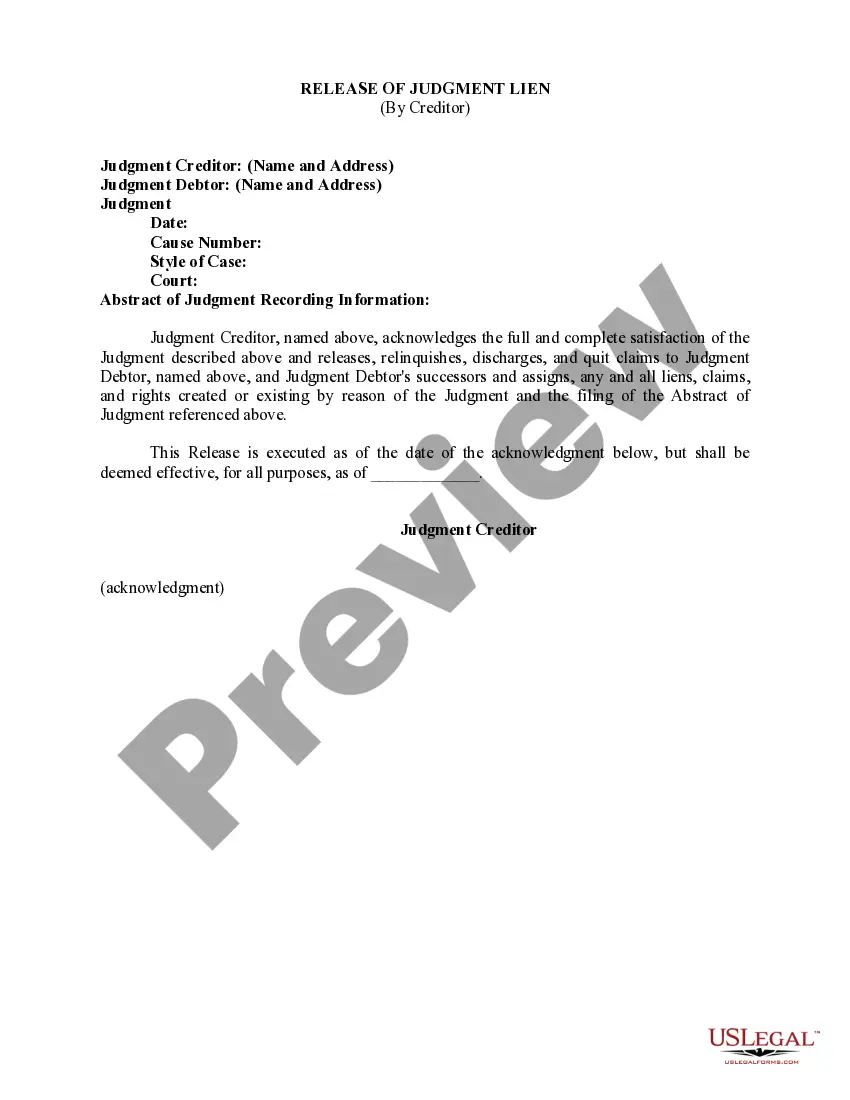
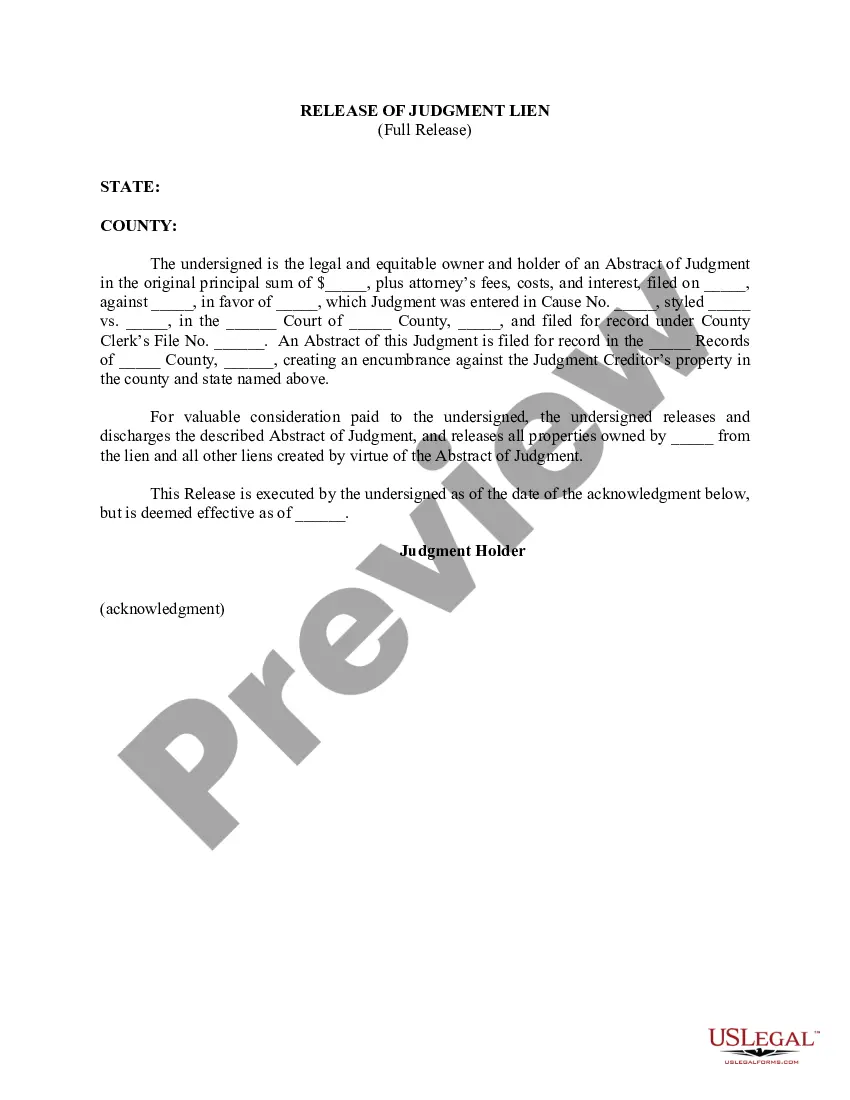
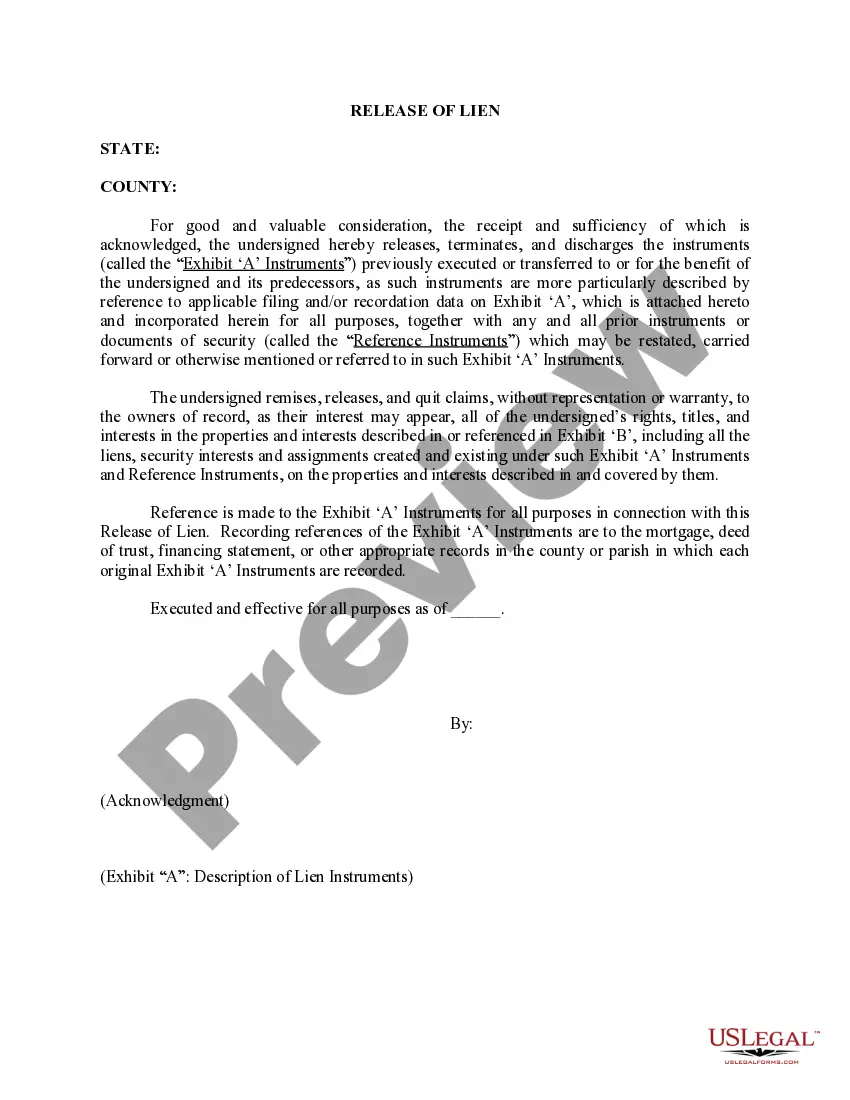
The Release of Judgment Lien is a legal form used to terminate a judgment lien on real property. This form is vital when a judgment creditor acknowledges that a judgment has been satisfied, thus releasing any claims against the property of the judgment debtor. It helps protect the debtor's property rights by formally eliminating the lien, which distinguishes it from other related forms that may not specifically address the release of a lien.
Key components of this form
- Judgment Creditor: Name and address of the party owed the judgment.
- Judgment Debtor: Name and address of the party who owes the judgment.
- Judgment Date: The date the judgment was issued.
- Cause Number: The unique identifier for the legal case.
- Style of Case: The title of the case as listed in court records.
- Court Abstract of Judgment: Recording information pertinent to the lien.
- Release Clause: A statement from the creditor acknowledging satisfaction of the judgment and releasing the lien.
When to use this document
This form should be used when a judgment debtor has satisfied the terms of a judgment, and the judgment creditor agrees to release the lien on the debtor's property. This typically occurs after payment of the judgment amount or fulfillment of the judgment's requirements, thereby allowing the debtor to regain clear title to their property, free of encumbrances from the lien.
Who can use this document
- Judgment Creditors: Individuals or entities who have obtained a judgment against a debtor and wish to formally release the lien after satisfaction.
- Judgment Debtors: Individuals who have fulfilled their obligations under a judgment and need the lien removed from their property records.
- Real Estate Professionals: Those assisting clients in clearing liens from property titles.
How to prepare this document
- Identify the parties involved: Enter the names and addresses of both the judgment creditor and judgment debtor.
- Provide judgment details: Fill in the judgment date, cause number, and style of case.
- Document release information: Include details from the court's abstract of judgment for verification.
- Include the release clause: Ensure the creditor acknowledges the satisfaction of the judgment in the specified section.
- Sign the document: The judgment creditor must sign and date the form where indicated.
Notarization guidance
This form does not typically require notarization unless specified by local law. Always verify state requirements to ensure compliance.
Get your form ready online
Our built-in tools help you complete, sign, share, and store your documents in one place.
Make edits, fill in missing information, and update formatting in US Legal Forms—just like you would in MS Word.
Download a copy, print it, send it by email, or mail it via USPS—whatever works best for your next step.
Sign and collect signatures with our SignNow integration. Send to multiple recipients, set reminders, and more. Go Premium to unlock E-Sign.
If this form requires notarization, complete it online through a secure video call—no need to meet a notary in person or wait for an appointment.
We protect your documents and personal data by following strict security and privacy standards.

Make edits, fill in missing information, and update formatting in US Legal Forms—just like you would in MS Word.

Download a copy, print it, send it by email, or mail it via USPS—whatever works best for your next step.

Sign and collect signatures with our SignNow integration. Send to multiple recipients, set reminders, and more. Go Premium to unlock E-Sign.

If this form requires notarization, complete it online through a secure video call—no need to meet a notary in person or wait for an appointment.

We protect your documents and personal data by following strict security and privacy standards.
Avoid these common issues
- Failing to provide accurate names or addresses for the judgment creditor and debtor.
- Omitting the judgment details, including date and cause number.
- Not including the signature of the judgment creditor.
- Incorrectly assuming the lien is automatically released without formal acknowledgment.
Why complete this form online
- Convenience: Easily access and complete the form from any location.
- Editability: Modify the document to fit specific needs before printing or submitting.
- Reliability: Use professionally drafted templates to ensure compliance with legal standards.
Looking for another form?


Form popularity
FAQ
In most cases, getting a judgment release will require you to pay off the debt, including any interest and court costs. Once the final payment is received by the lender, they will issue the judgement release. It is also possible to get a judgement released by making special arrangements with the lender.
If the judgment creditor does not immediately file an Acknowledgement of Satisfaction of Judgment (EJ-100) when the judgment is satisfied, the judgment debtor may make a formal written demand for the creditor to do so. The judgment creditor has 15 days after receiving the debtor's request to serve the acknowledgement.
Request the court to validate the judgment. Verify information provided from the court. Dispute any inaccuracies found. Consider professional help.
In order to vacate a judgment in California, You must file a motion with the court asking the judge to vacate or set aside the judgment. Among other things, you must tell the judge why you did not respond to the lawsuit (this can be done by written declaration).
The debtor must get a discharge or release of the abstract of judgment to remove the lien from the home. Contact the judgment creditor shown on the abstract. Arrange to pay the debt in full or negotiate payments. Ask the creditor for a discharge if paying in full.