Computer Software Lease with License Agreement
What is this form?
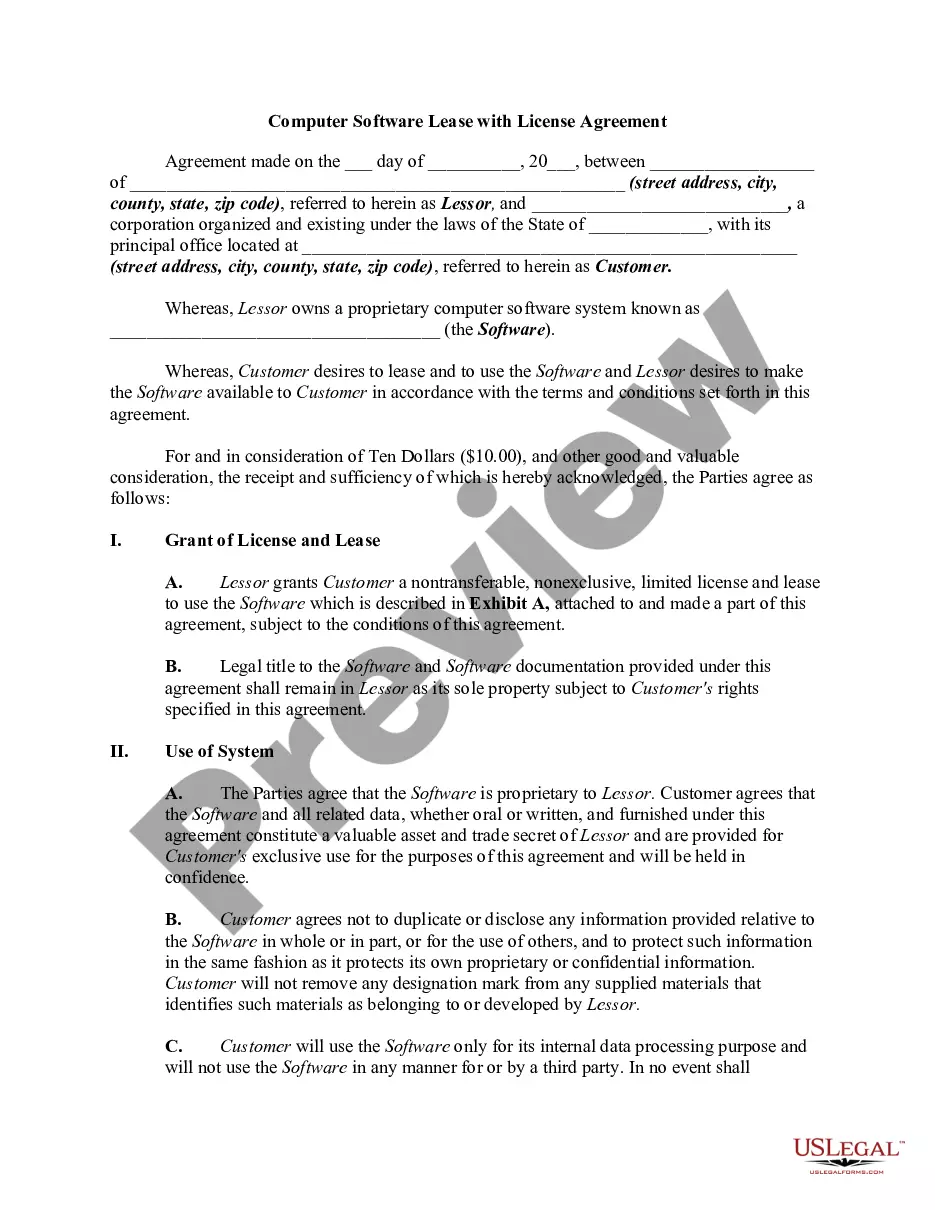
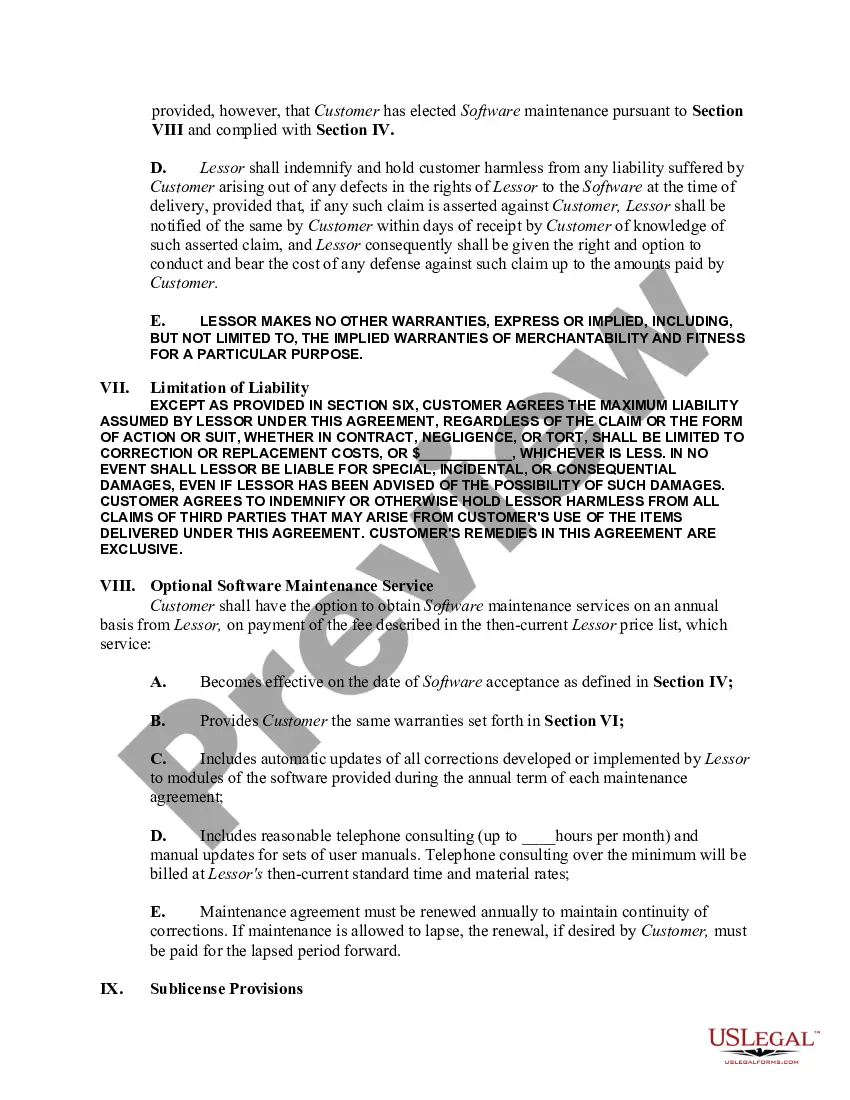
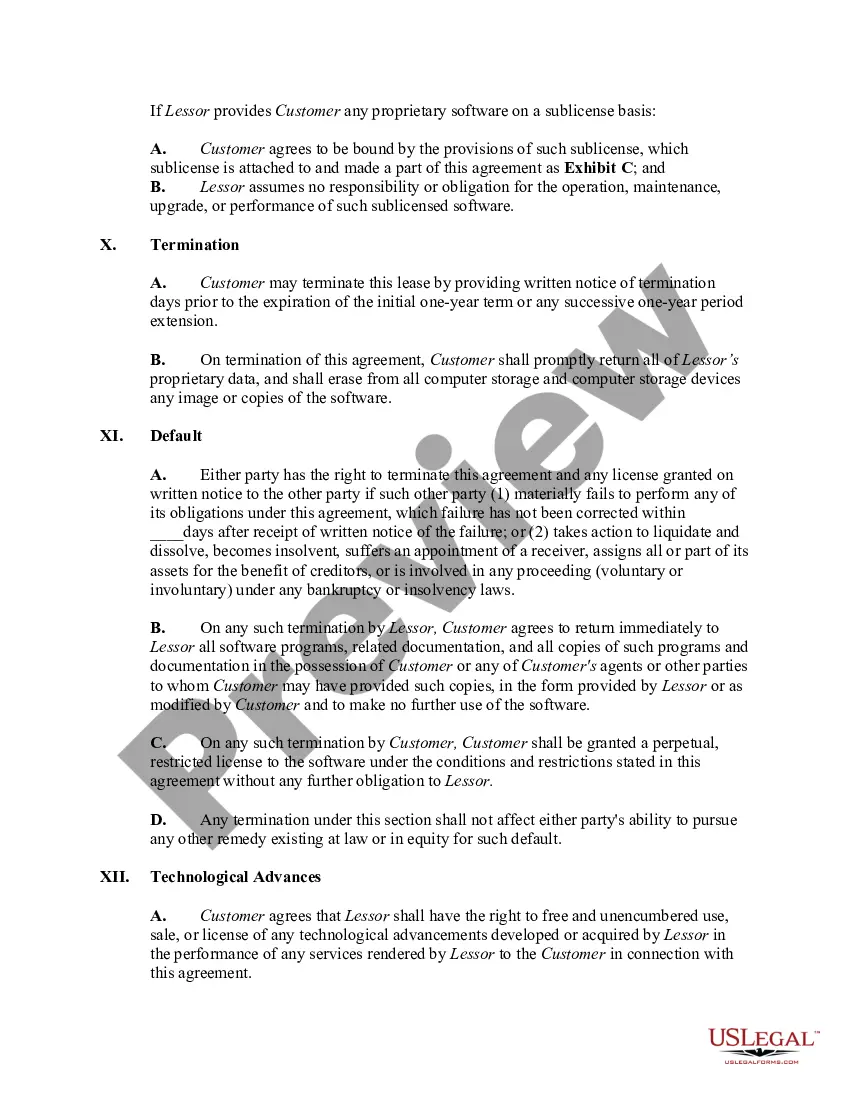
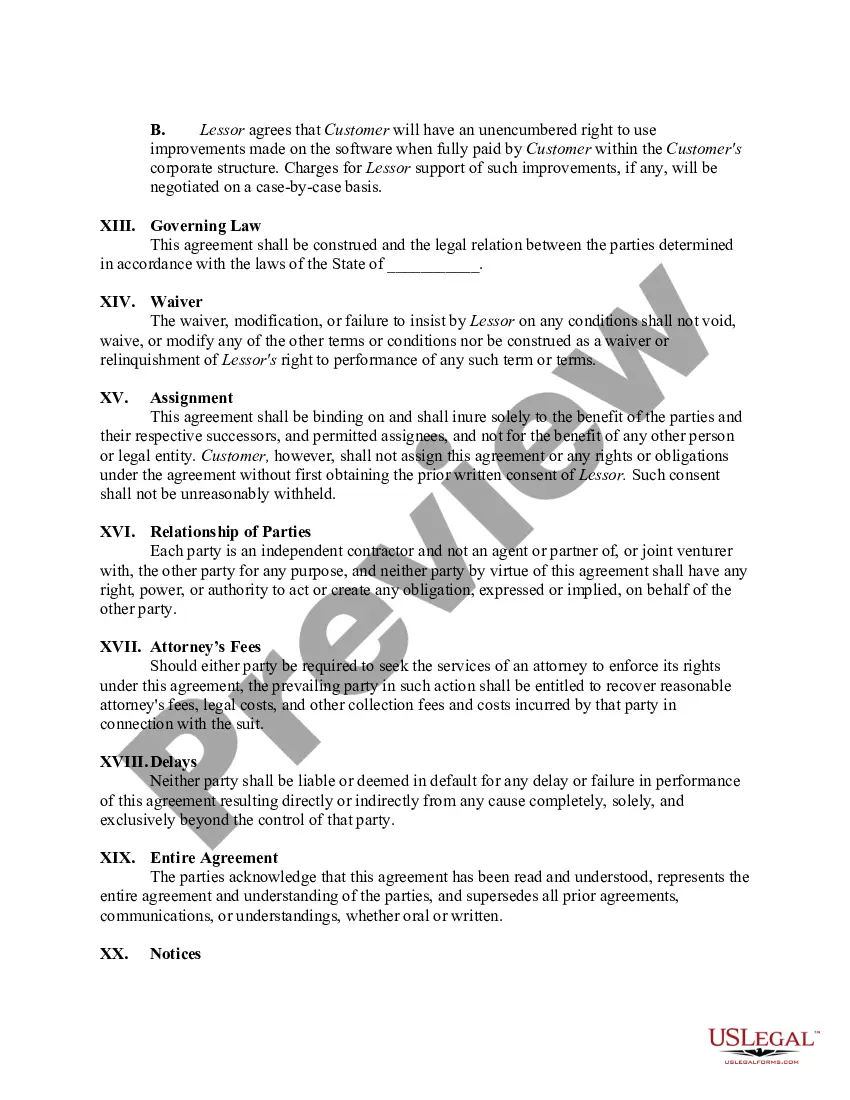
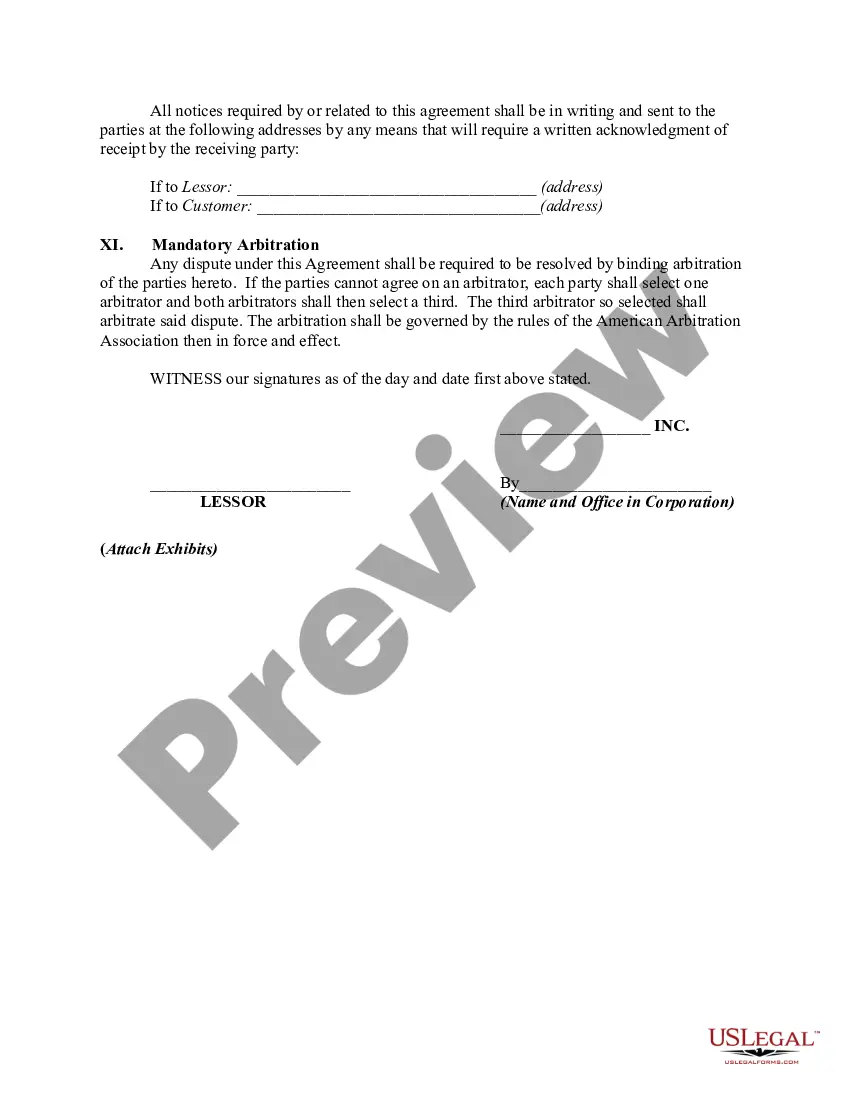
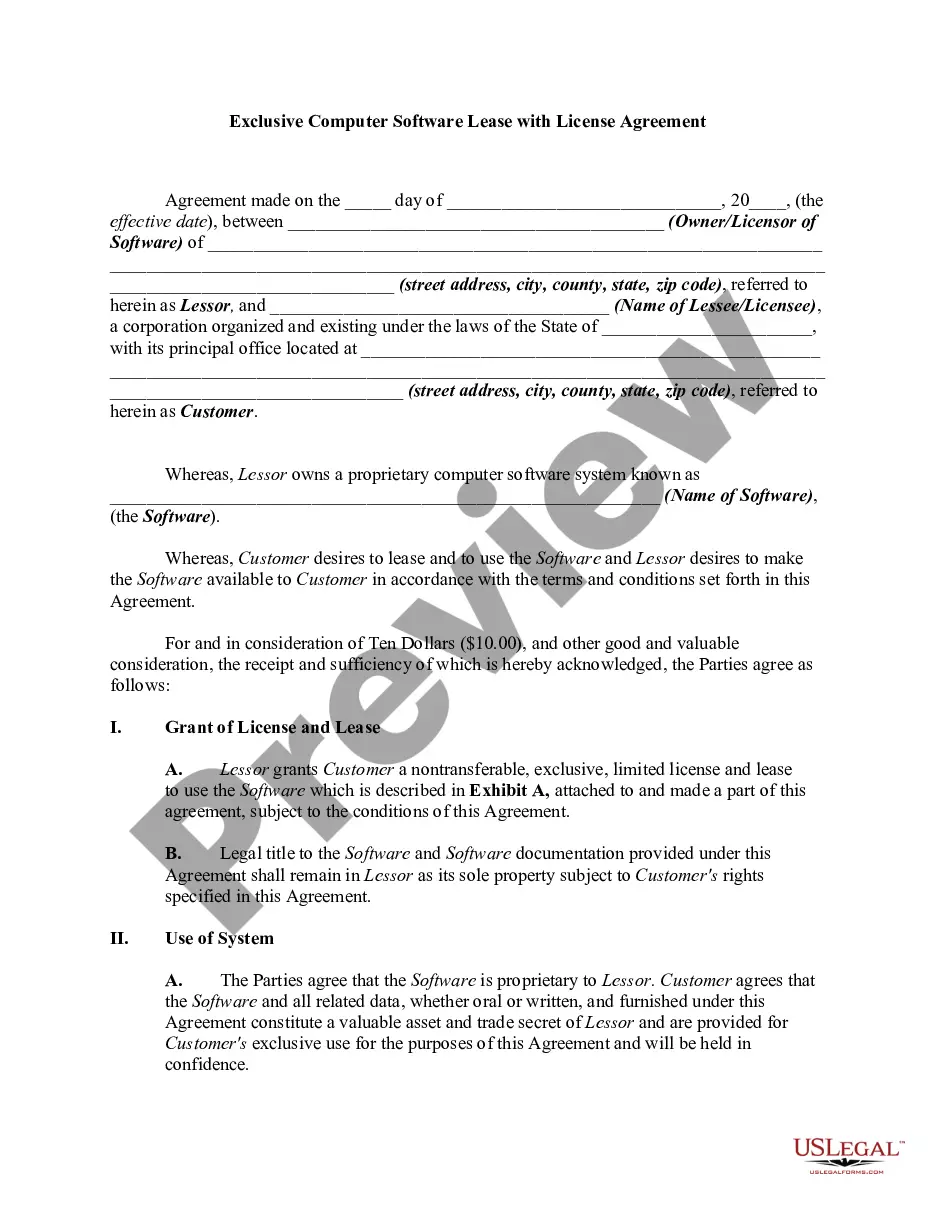
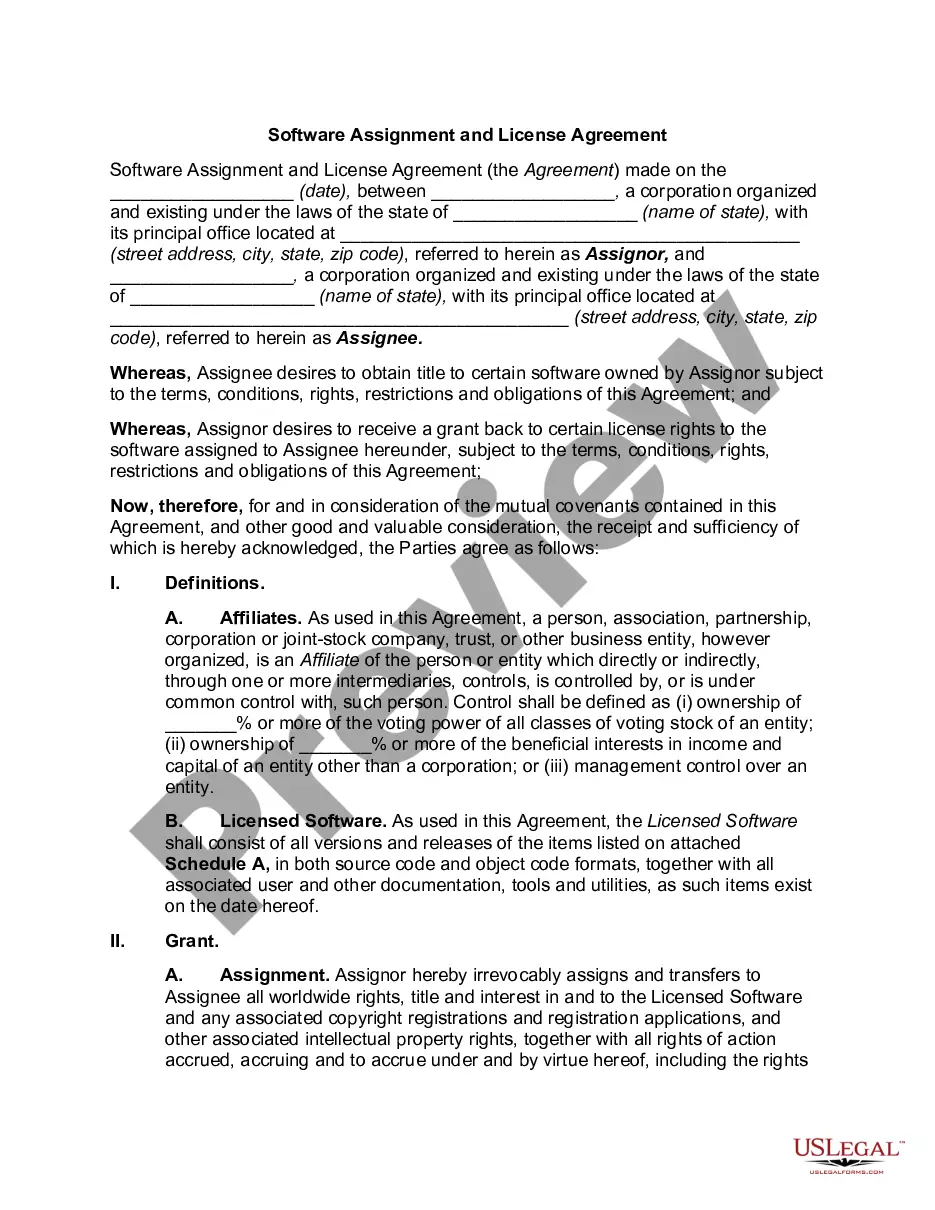
The Computer Software Lease with License Agreement is a legal document that allows a customer to lease software from a lessor while establishing clear terms regarding the use and ownership of that software. Unlike regular purchase agreements, this form specifies that the customer does not own the software outright but is granted limited rights to use it under outlined conditions. This agreement helps protect the intellectual property of the software provider and clarifies the responsibilities of both parties during the lease period.
Form components explained
- Grant of License and Lease: Defines the rights granted to the customer and asserts owner's property rights.
- Use of System: Outlines restrictions on software use, including confidentiality agreements.
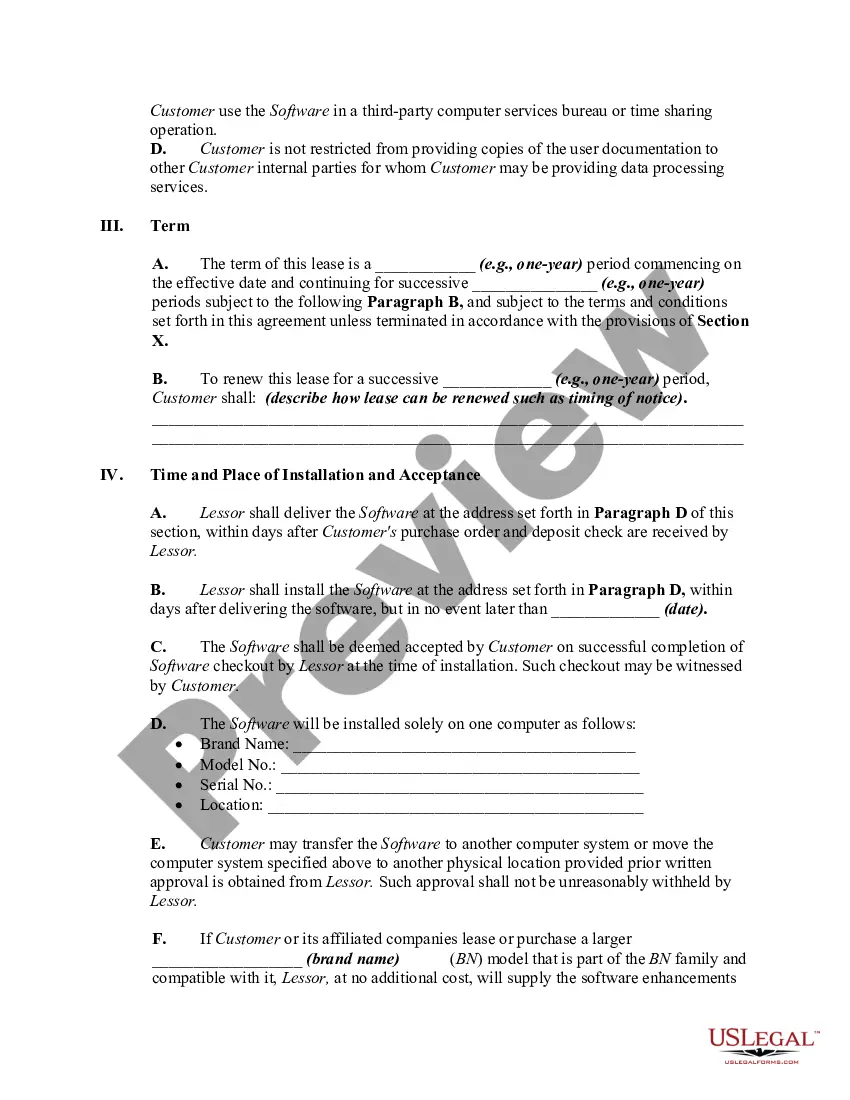
- Term: Specifies the duration of the lease and renewal options.
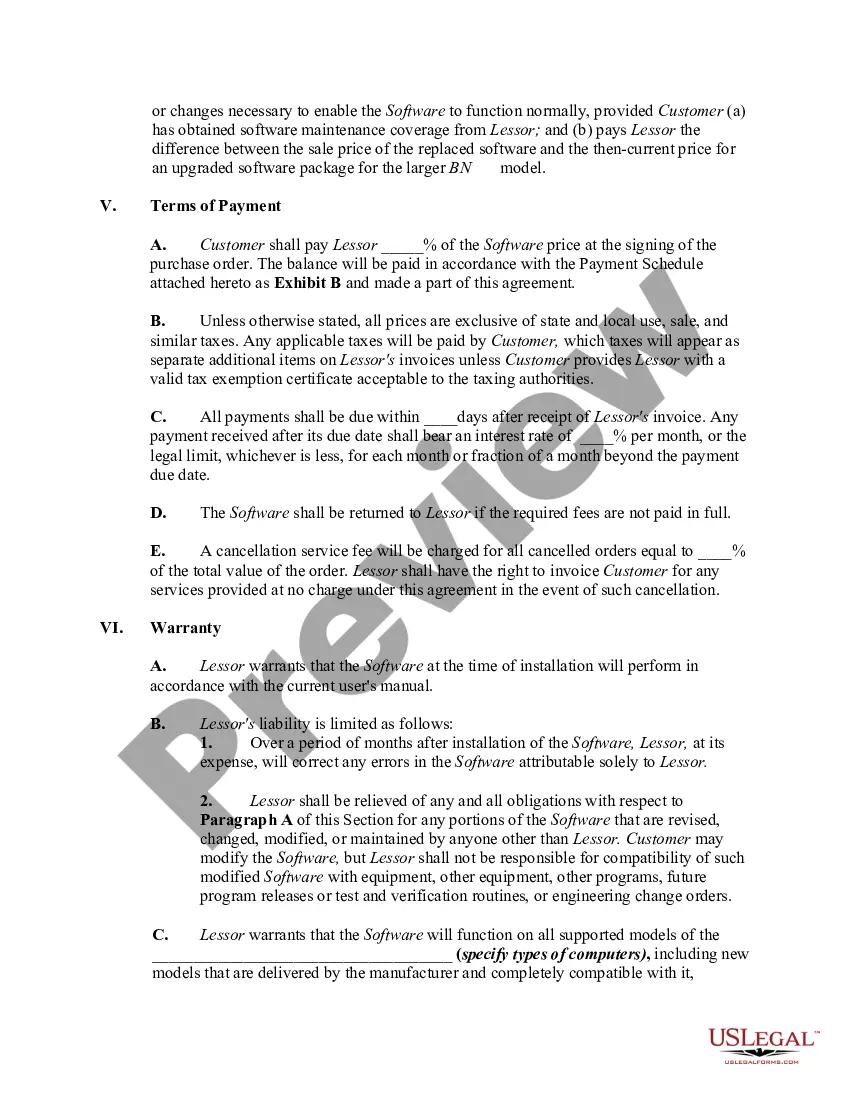
- Payment Terms: Details payment obligations, including fees and late payment penalties.
- Termination: Lists conditions under which either party can terminate the agreement.
- Warranties and Liability: Highlights the lessor's liability and warranty limitations related to software performance.
When to use this document
This form is ideal for businesses or individuals who need access to specific software for a defined period without the need for a complete purchase. It is commonly used when a business requires specialized programs for short-term projects or to test software before committing to a purchase. It ensures the user can utilize the software while adhering to the property rights of the software owner.
Who needs this form
- Businesses seeking to lease software for internal use.
- Corporations wanting to ensure compliance with software usage rights.
- Freelancers or consultants needing software for temporary projects.
How to complete this form
- Identify the parties involved by filling in their names and addresses.
- Define the software being leased and attach relevant documentation as Exhibit A.
- Specify the length of the lease term and possible renewal terms.
- Detail the payment schedule, including initial fees and any applicable taxes.
- Sign the agreement, ensuring that both parties retain copies for their records.
Notarization requirements for this form
This form does not typically require notarization unless specified by local law. Always check state requirements to confirm whether an additional notarization step is necessary.
Get your form ready online
Our built-in tools help you complete, sign, share, and store your documents in one place.
Make edits, fill in missing information, and update formatting in US Legal Forms—just like you would in MS Word.
Download a copy, print it, send it by email, or mail it via USPS—whatever works best for your next step.
Sign and collect signatures with our SignNow integration. Send to multiple recipients, set reminders, and more. Go Premium to unlock E-Sign.
If this form requires notarization, complete it online through a secure video call—no need to meet a notary in person or wait for an appointment.
We protect your documents and personal data by following strict security and privacy standards.

Make edits, fill in missing information, and update formatting in US Legal Forms—just like you would in MS Word.

Download a copy, print it, send it by email, or mail it via USPS—whatever works best for your next step.

Sign and collect signatures with our SignNow integration. Send to multiple recipients, set reminders, and more. Go Premium to unlock E-Sign.

If this form requires notarization, complete it online through a secure video call—no need to meet a notary in person or wait for an appointment.

We protect your documents and personal data by following strict security and privacy standards.
Common mistakes to avoid
- Failing to define the software clearly within the agreement.
- Not specifying renewal terms, leading to potential confusion about lease continuation.
- Overlooking confidentiality clauses that protect proprietary information.
Why use this form online
- Convenient and secure access to important legal documentation.
- Editability allows customization to fit specific needs.
- Reliable templates drafted by licensed attorneys for peace of mind.
Legal use & context
- The agreement is enforceable in a court of law as long as it complies with relevant state laws.
- It protects both parties' interests by clearly defining rights and responsibilities.
- Restrictions on software usage help maintain compliance with intellectual property laws.
Quick recap
- This agreement enables the leasing of software while preserving copyright protections.
- Thoroughly review terms regarding use, payment, and termination to avoid disputes.
- Adapt the form as necessary to comply with state-specific legal requirements.
Looking for another form?

Form popularity
FAQ
Setting up Your Licensing Agreement. Granting the License. Limiting Your Liability. Adding Boilerplate Clauses. Finalizing the Licensing Agreement.
User agreements like EULAs are legally binding contracts between the software author and the end-user. End User License Agreements are enforceable as long as it is clear that it is a contract and both parties can understand the terms.
FAQ SERIES: IS SOFTWARE CONSIDERED A LEASE? Many companies enter into arrangements with the right to use intangible assets like licensing agreements for software. But are these arrangements considered a lease? Fortunately, under ASC 842 there is a clear, short answer: no.
A software license is a contract between the entity that created and supplied an application, underlying source code, or related product and its end user.
Download a template for a licensing agreement. Choose your role as the licensor or licensee. Define the license(s) in the agreement. Decide whether the license is exclusive or not. Settle the matter of fees and payment schedule. Add a renewal date and rules.
A software license agreement typically has broad-form confidentiality provisions that also provide that certain items fall into the bucket of one or the other party (e.g., the software for a licensor, certain data for a licensee, etc.).
What is a Licensing Agreement? A licensing agreement is a contract between two parties (the licensor and licensee) in which the licensor grants the licensee the right to use the brand name, trademark, patented technology, or ability to produce and sell goods owned by the licensor.
An example of a licensing agreement is a contract between the copyright holders of software and another company, allowing the latter to use the computer software for their daily business operations.