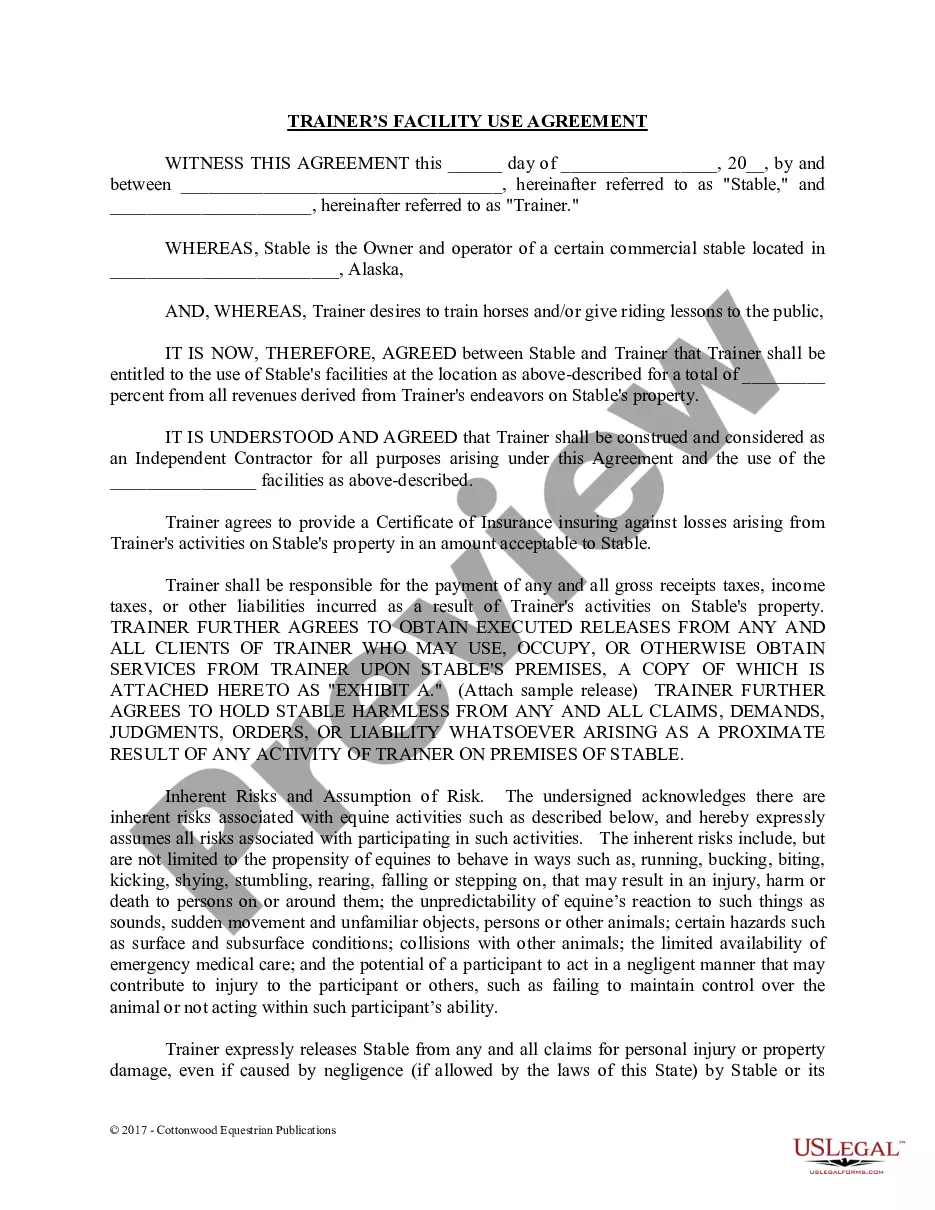
Exclusive Computer Software Lease with License Agreement
About this form
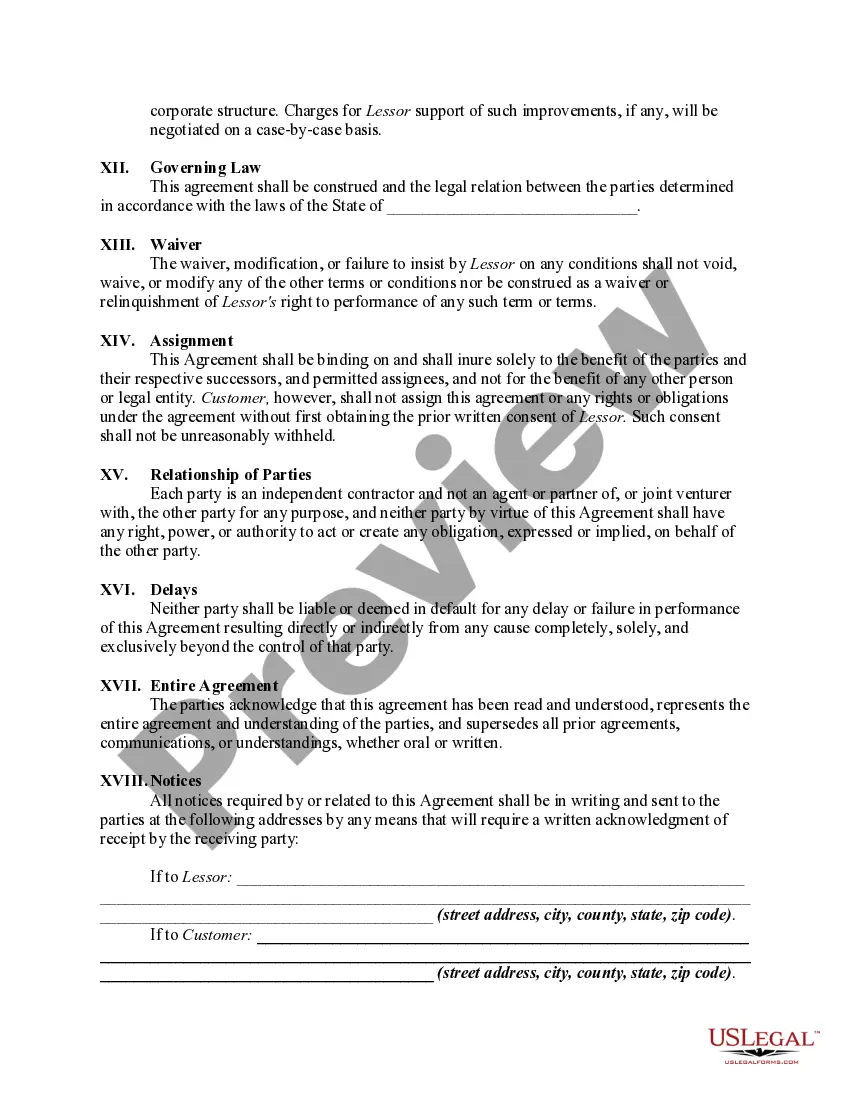
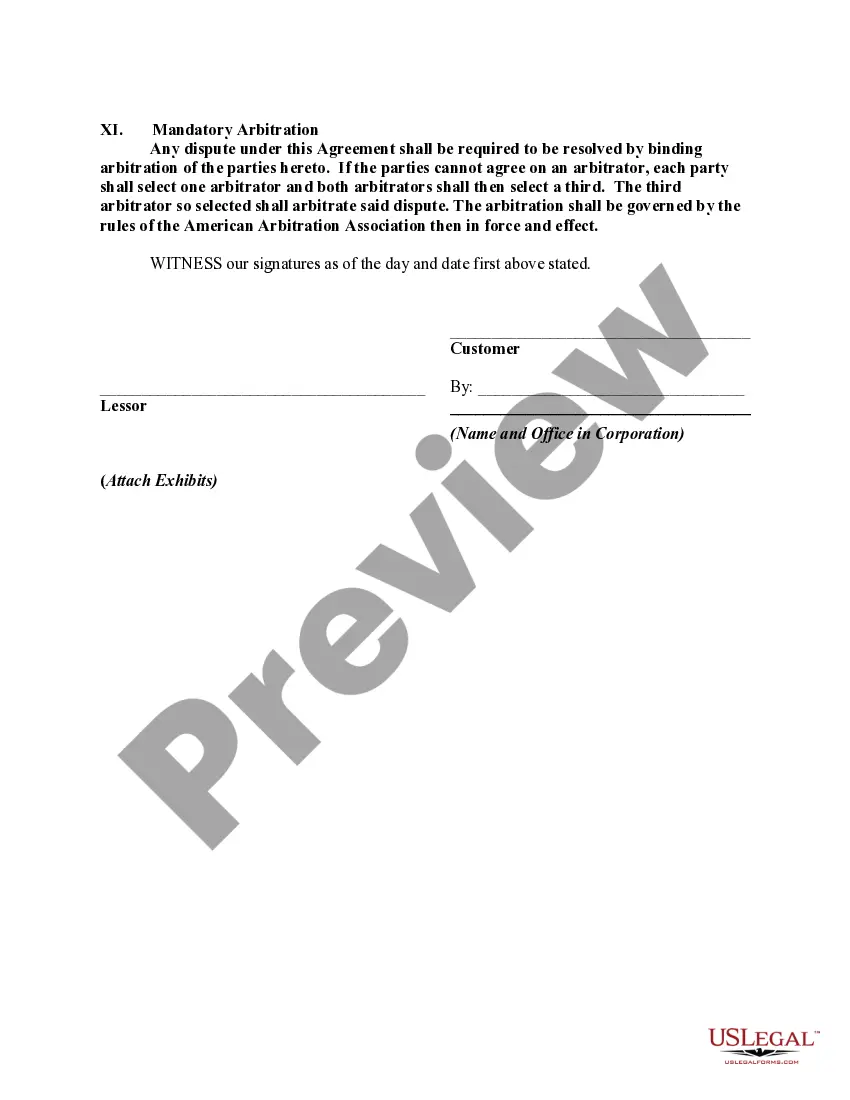
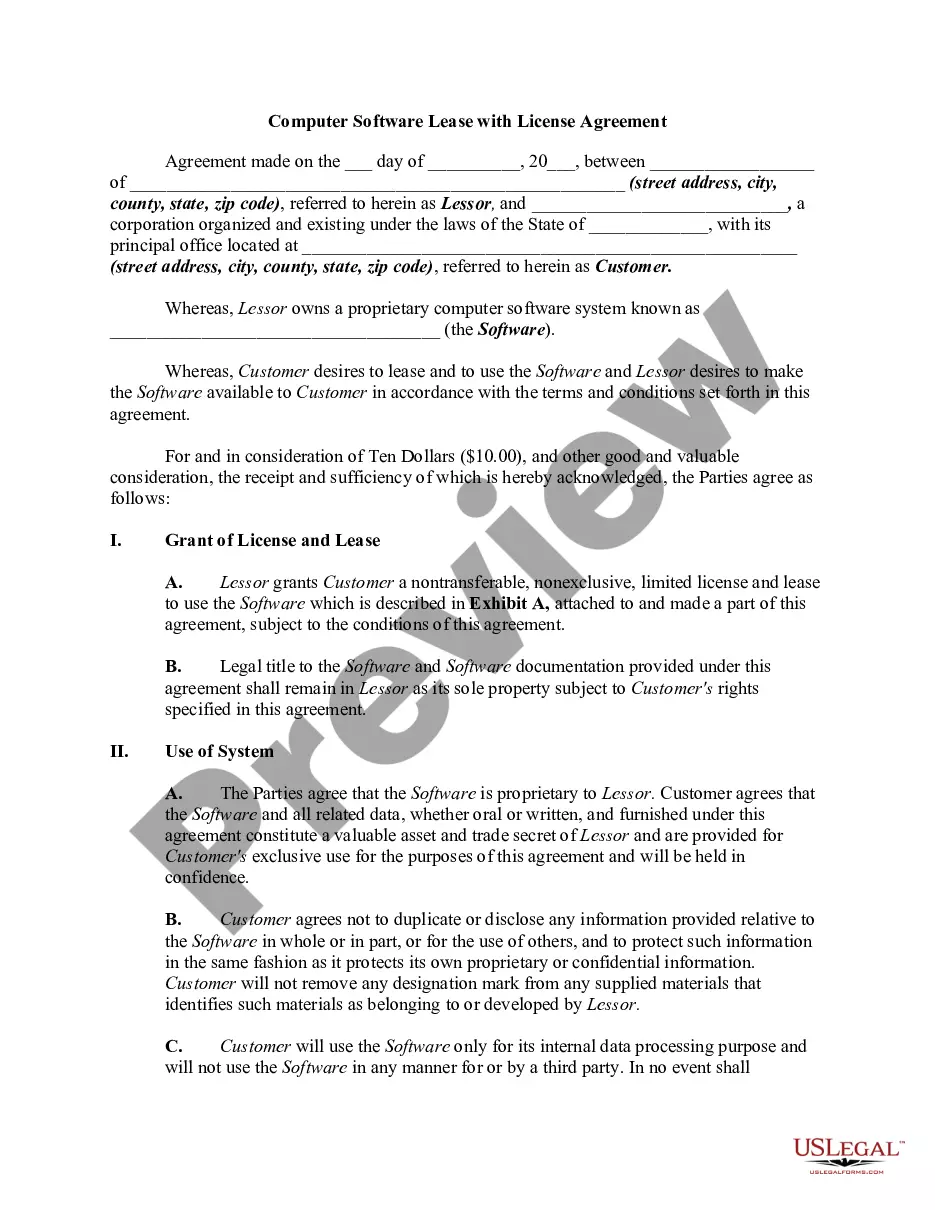
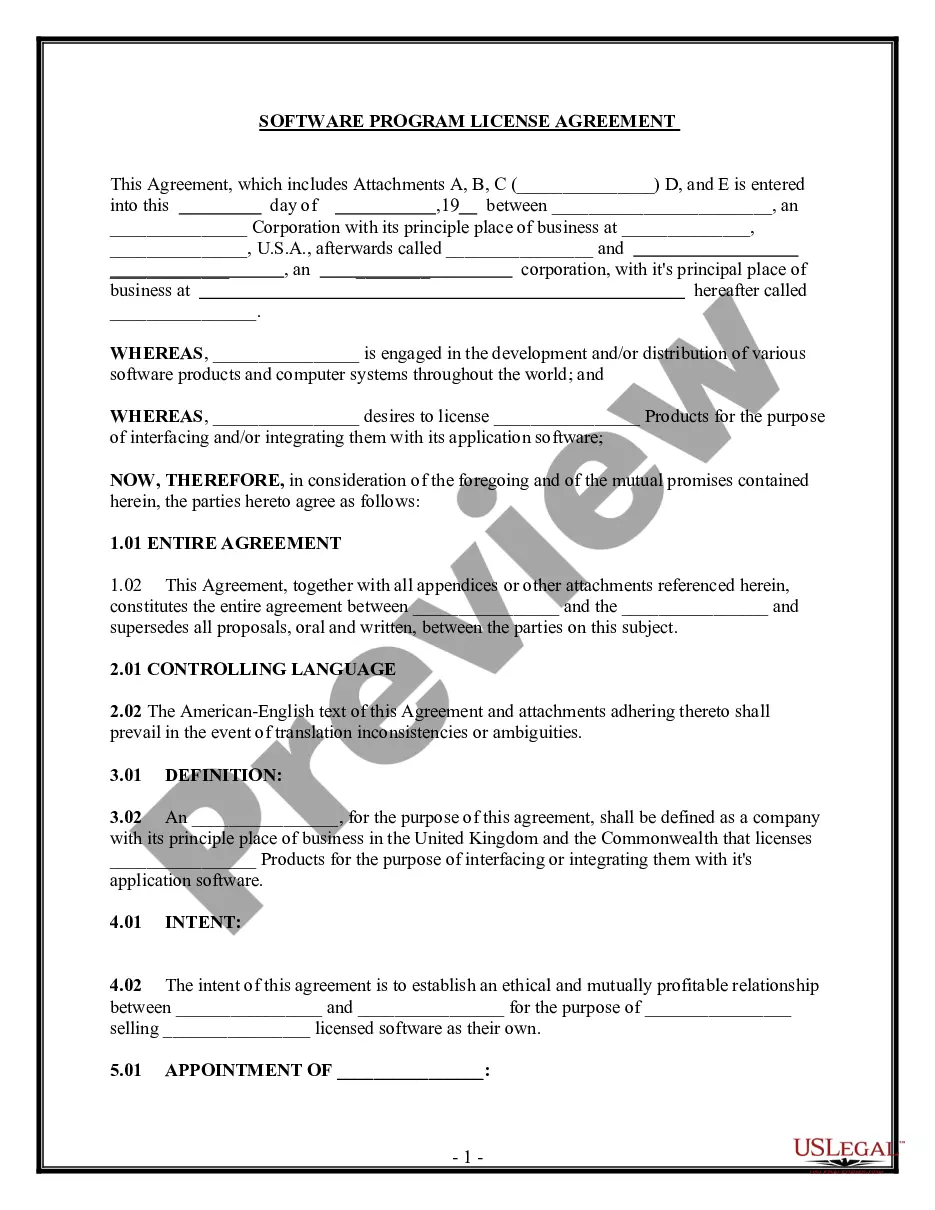
The Exclusive Computer Software Lease with License Agreement is a legal document that outlines the terms under which one party (the Lessor) leases proprietary software to another party (the Customer) while granting specific rights to use that software. This type of agreement is essential for protecting intellectual property rights and specifying the permitted use of the software, distinguishing it from other types of software agreements that may not include exclusive rights or detailed usage limitations.
What’s included in this form
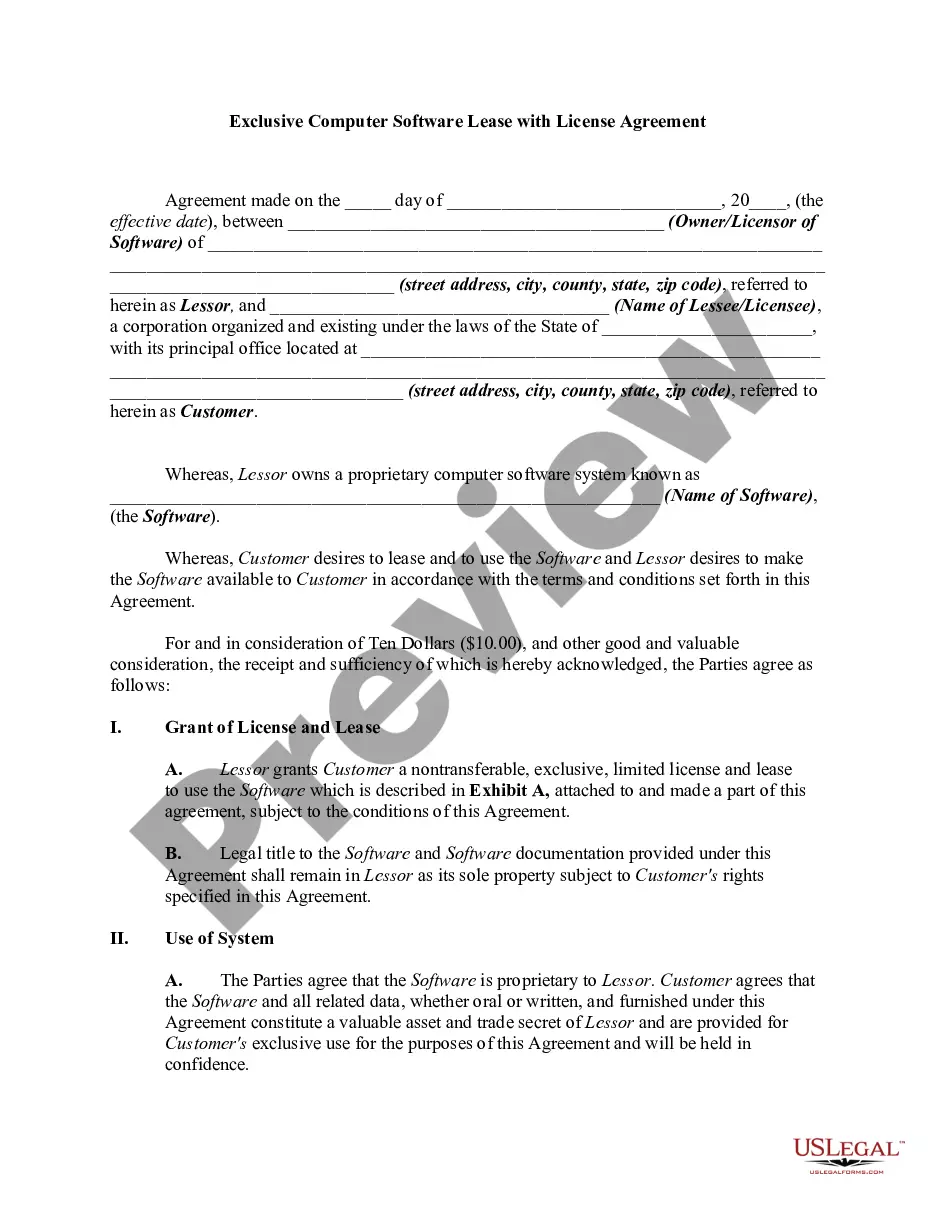
- Grant of License and Lease: Defines the rights and limitations of the software usage.
- Use of System: Specifies how the Customer may use the software and obligations regarding confidentiality.
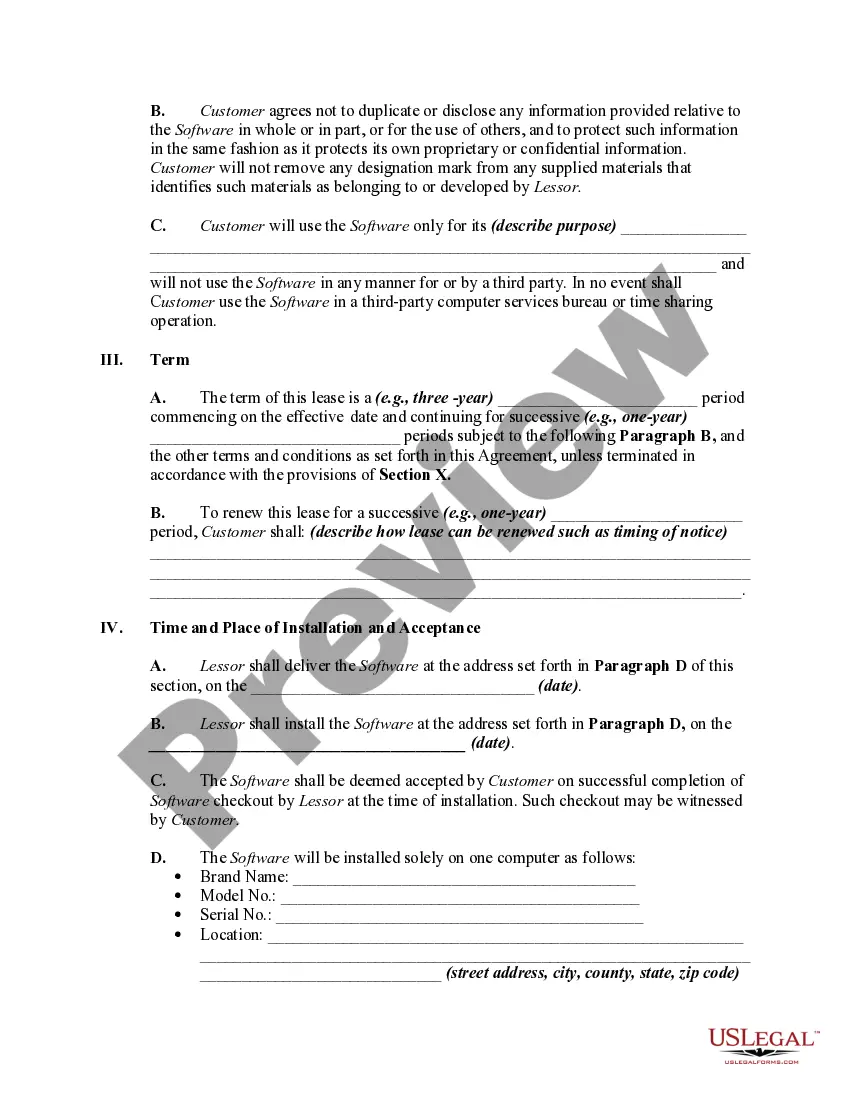
- Term: Outlines the duration of the lease and renewal procedures.
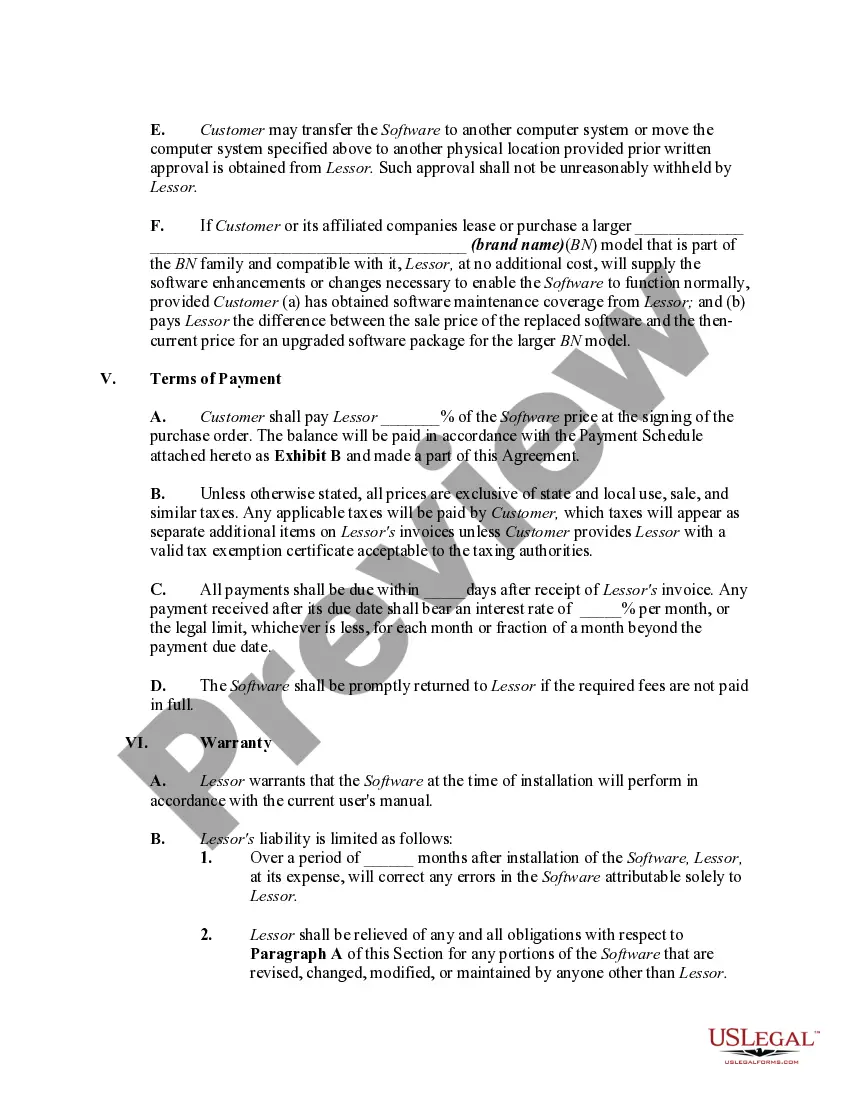
- Terms of Payment: Details payment obligations, fees, and conditions for service termination.
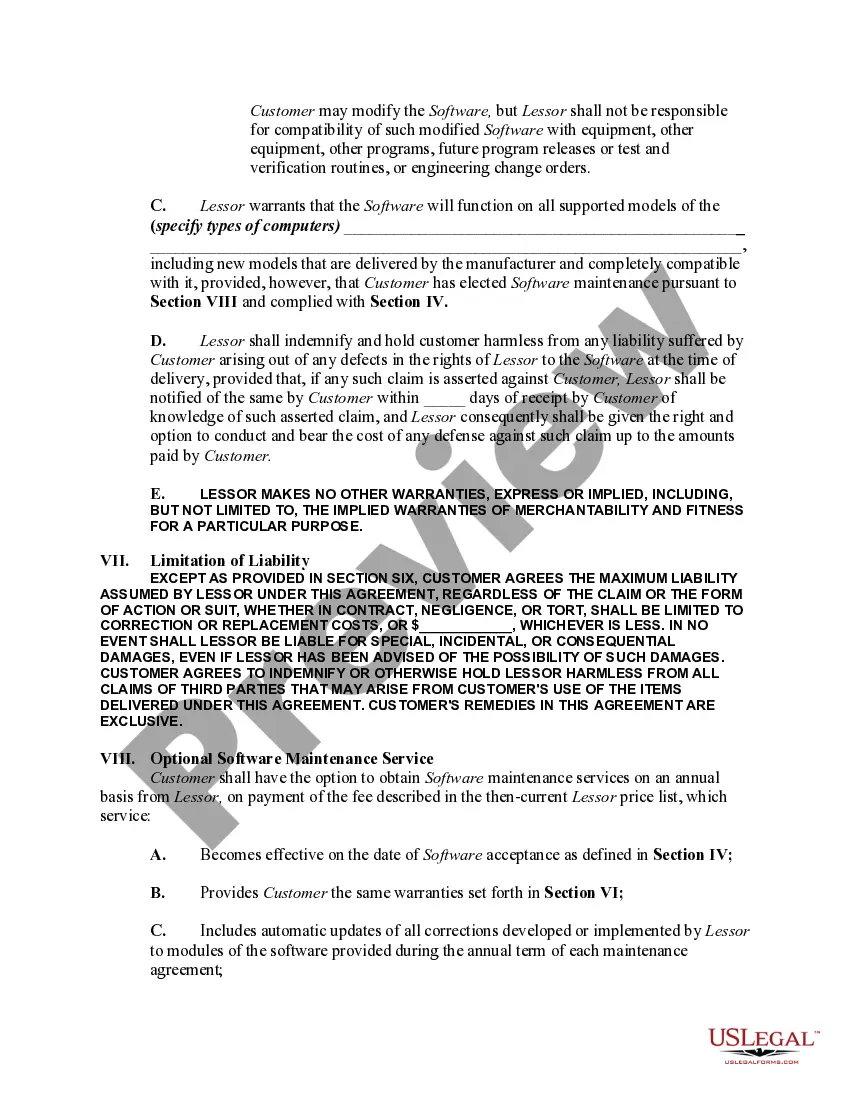
- Warranty: Provides assurances about the software functionality and limits liability.
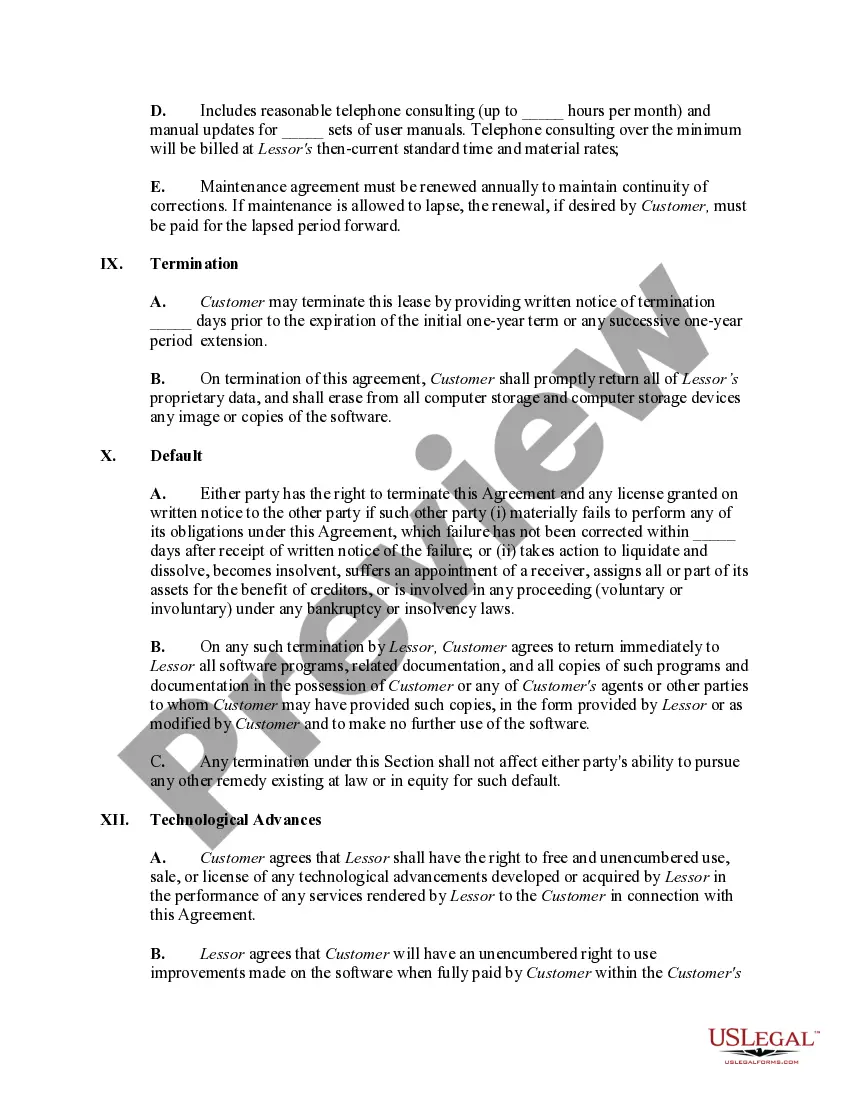
- Termination: Explains conditions under which the agreement can be ended and the return of software.
Situations where this form applies
This form should be used when a business or individual intends to lease proprietary software from another party. It is often necessary when the software is unique or customized, requiring a clear understanding of usage rights, payment terms, and legal responsibilities. Scenarios include software developed specifically for organizational needs, tools for managing business operations, or any technology requiring exclusive use under defined conditions.
Intended users of this form
This form is intended for:
- Software developers or licensors who want to lease their proprietary software.
- Businesses needing to use specialized software but seeking to avoid full ownership expenses.
- Corporations that require a detailed agreement outlining the use and maintenance of leased software.
Instructions for completing this form
- Identify the parties involved by entering the names and addresses of both the Lessor and Customer.
- Specify the name of the proprietary software being leased and its intended use.
- Define the lease term, including the initial duration and renewal conditions.
- Detail payment terms, including the initial payment, any schedule for further payments, and applicable taxes.
- Provide information regarding software installation, acceptance procedures, and physical location details.
Notarization guidance
In most cases, this form does not require notarization. However, some jurisdictions or signing circumstances might. US Legal Forms offers online notarization powered by Notarize, accessible 24/7 for a quick, remote process.
Get your form ready online
Our built-in tools help you complete, sign, share, and store your documents in one place.
Make edits, fill in missing information, and update formatting in US Legal Forms—just like you would in MS Word.
Download a copy, print it, send it by email, or mail it via USPS—whatever works best for your next step.
Sign and collect signatures with our SignNow integration. Send to multiple recipients, set reminders, and more. Go Premium to unlock E-Sign.
If this form requires notarization, complete it online through a secure video call—no need to meet a notary in person or wait for an appointment.
We protect your documents and personal data by following strict security and privacy standards.

Make edits, fill in missing information, and update formatting in US Legal Forms—just like you would in MS Word.

Download a copy, print it, send it by email, or mail it via USPS—whatever works best for your next step.

Sign and collect signatures with our SignNow integration. Send to multiple recipients, set reminders, and more. Go Premium to unlock E-Sign.

If this form requires notarization, complete it online through a secure video call—no need to meet a notary in person or wait for an appointment.

We protect your documents and personal data by following strict security and privacy standards.
Typical mistakes to avoid
- Failing to specify the exact software and its intended use can lead to misunderstandings.
- Not detailing the payment schedule or tax responsibilities may cause financial disputes.
- Overlooking renewal terms could result in unintentional termination of the lease.
Why complete this form online
- Convenient access and easy downloading allows for quick completion without delays.
- Editability permits customization to fit specific needs and circumstances.
- Reliability ensures the form is drafted reviewed by licensed attorneys, thus enhancing legal compliance.
Looking for another form?



Form popularity
FAQ
A licensing agreement is a legal contract between two parties, known as the licensor and the licensee. In a typical licensing agreement, the licensor grants the licensee the right to produce and sell goods, apply a brand name or trademark, or use patented technology owned by the licensor.
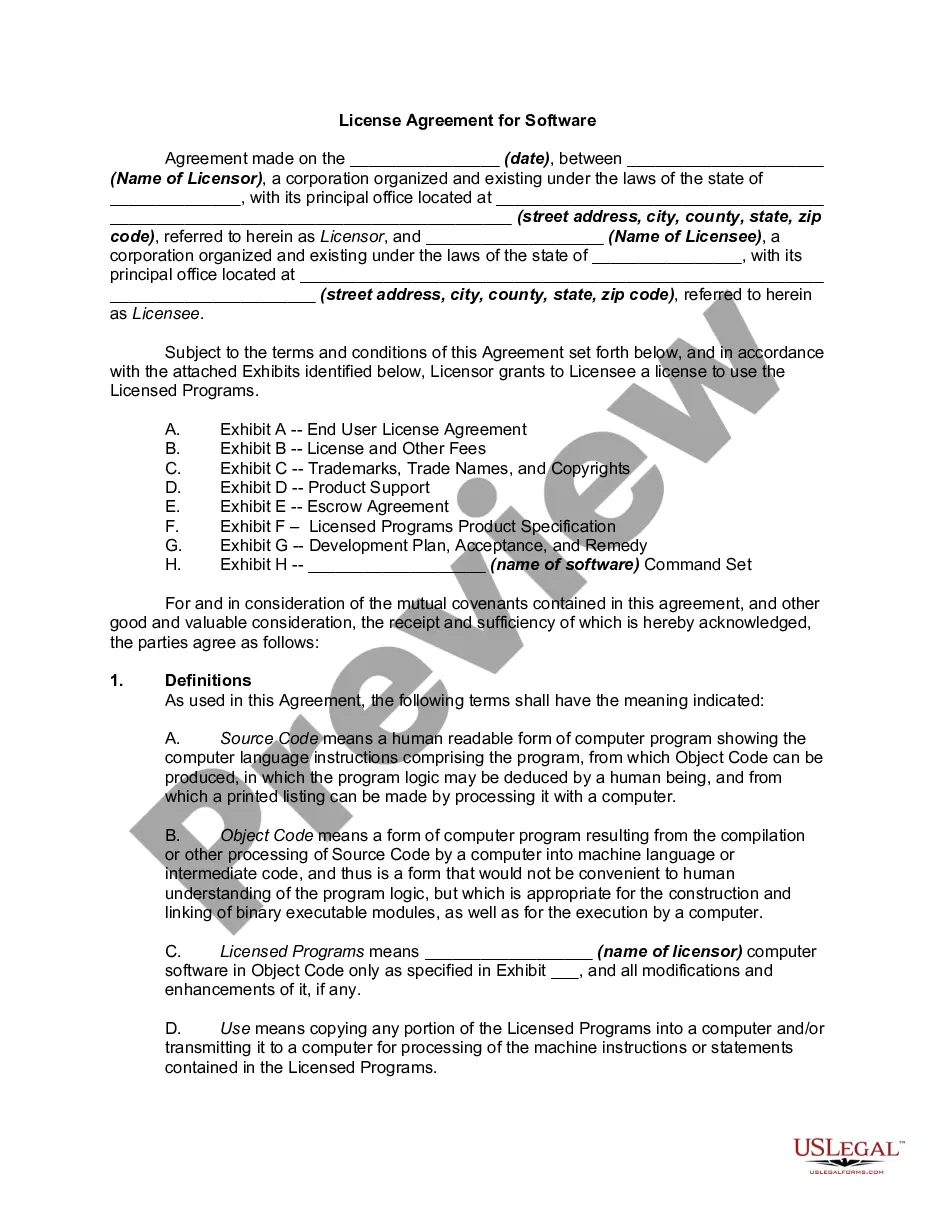
A software license is a contract between the entity that created and supplied an application, underlying source code, or related product and its end user.
In general, it is the most restrictive type of licensing agreement wherein the original code was written by the programmers are not available to the users. Thus they can use the software but they cannot modify it or redistribute it.
Setting up Your Licensing Agreement. Granting the License. Limiting Your Liability. Adding Boilerplate Clauses. Finalizing the Licensing Agreement.
User agreements like EULAs are legally binding contracts between the software author and the end-user. End User License Agreements are enforceable as long as it is clear that it is a contract and both parties can understand the terms.
Software licenses can generally be fit into the following categories: proprietary licenses, free software license, open source licenses. The features that distinguish them are significant in terms of the effect they have on the end-user's rights.
A software license agreement typically has broad-form confidentiality provisions that also provide that certain items fall into the bucket of one or the other party (e.g., the software for a licensor, certain data for a licensee, etc.).
Public domain. This is the most permissive type of software license. Permissive. LGPL. Copyleft. Proprietary.