Mississippi Complaint for Filiation and Child Support
Understanding this form
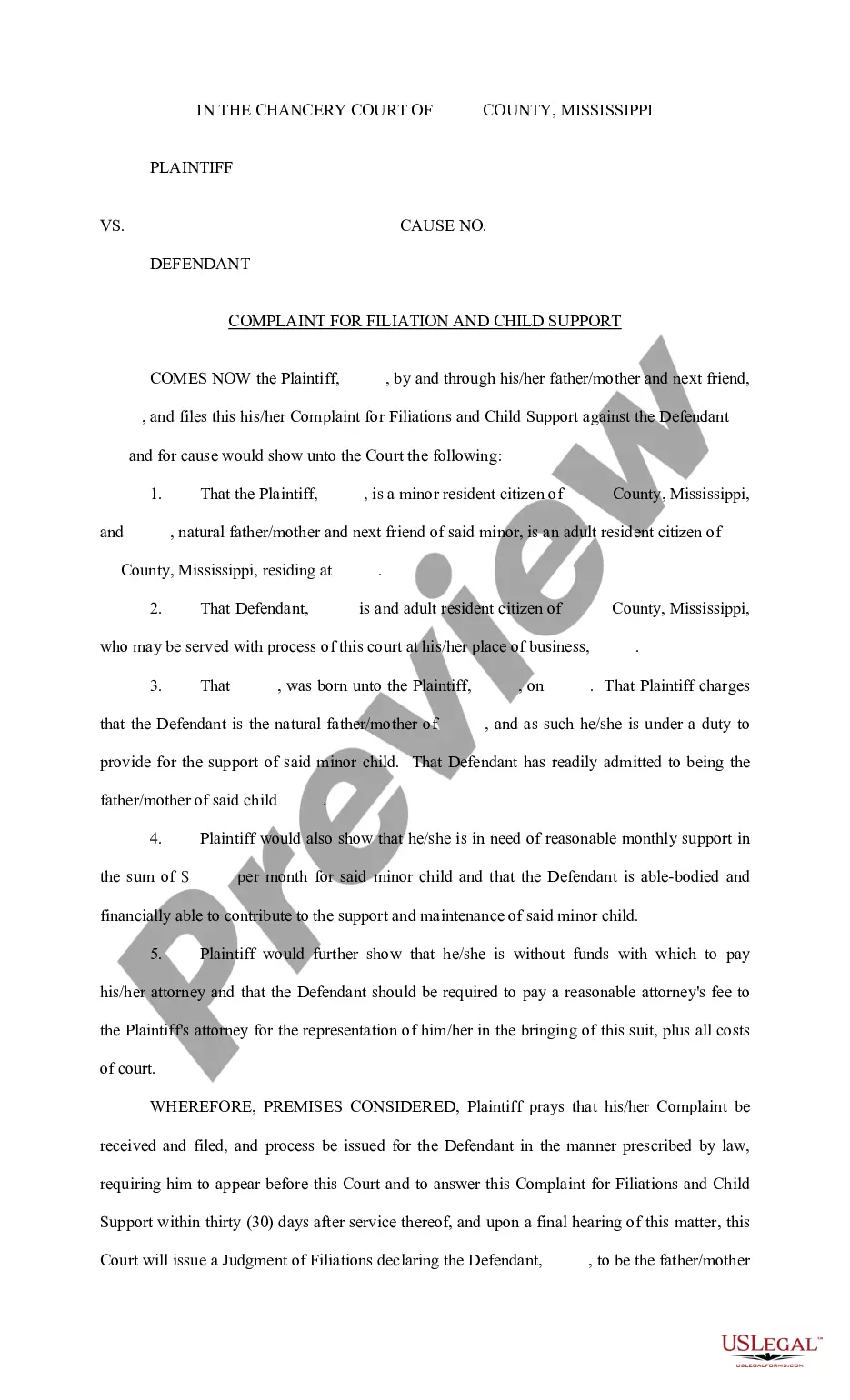
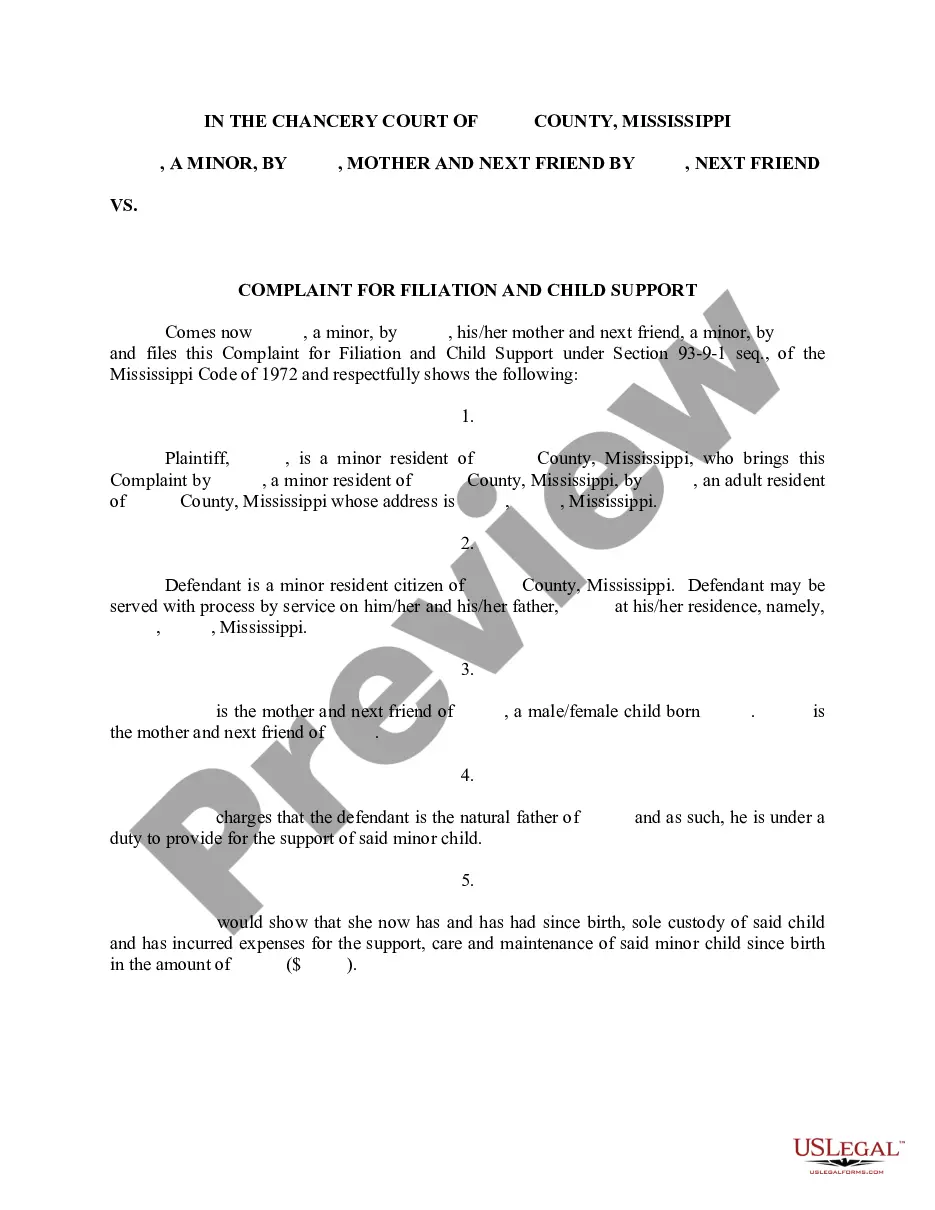
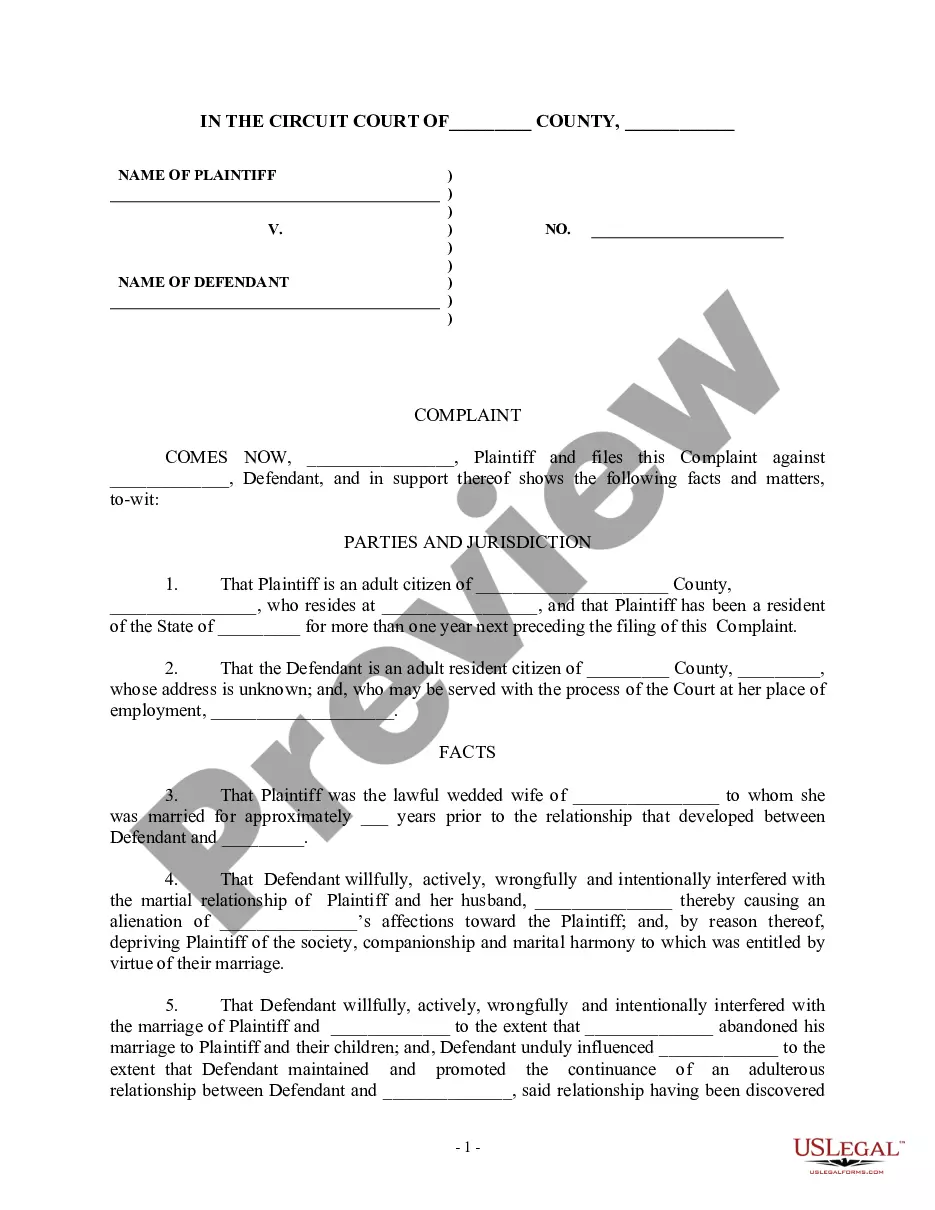
The Complaint for Filiation and Child Support is a legal document that initiates a court action regarding child support and paternity issues. This form sets forth the allegations of the plaintiff and requests specific relief from the court. Unlike other legal documents, this complaint directly addresses both filiation (establishing paternity) and the obligation to pay child support, distinguishing it from forms focused solely on one of these issues. This form is designed to be a model that you can adapt to fit your unique circumstances.
What’s included in this form
- Plaintiff's identification and relationship to the child.
- Defendant's details, who is alleged to be the child's parent.
- Accusations and claims regarding paternity and child support obligations.
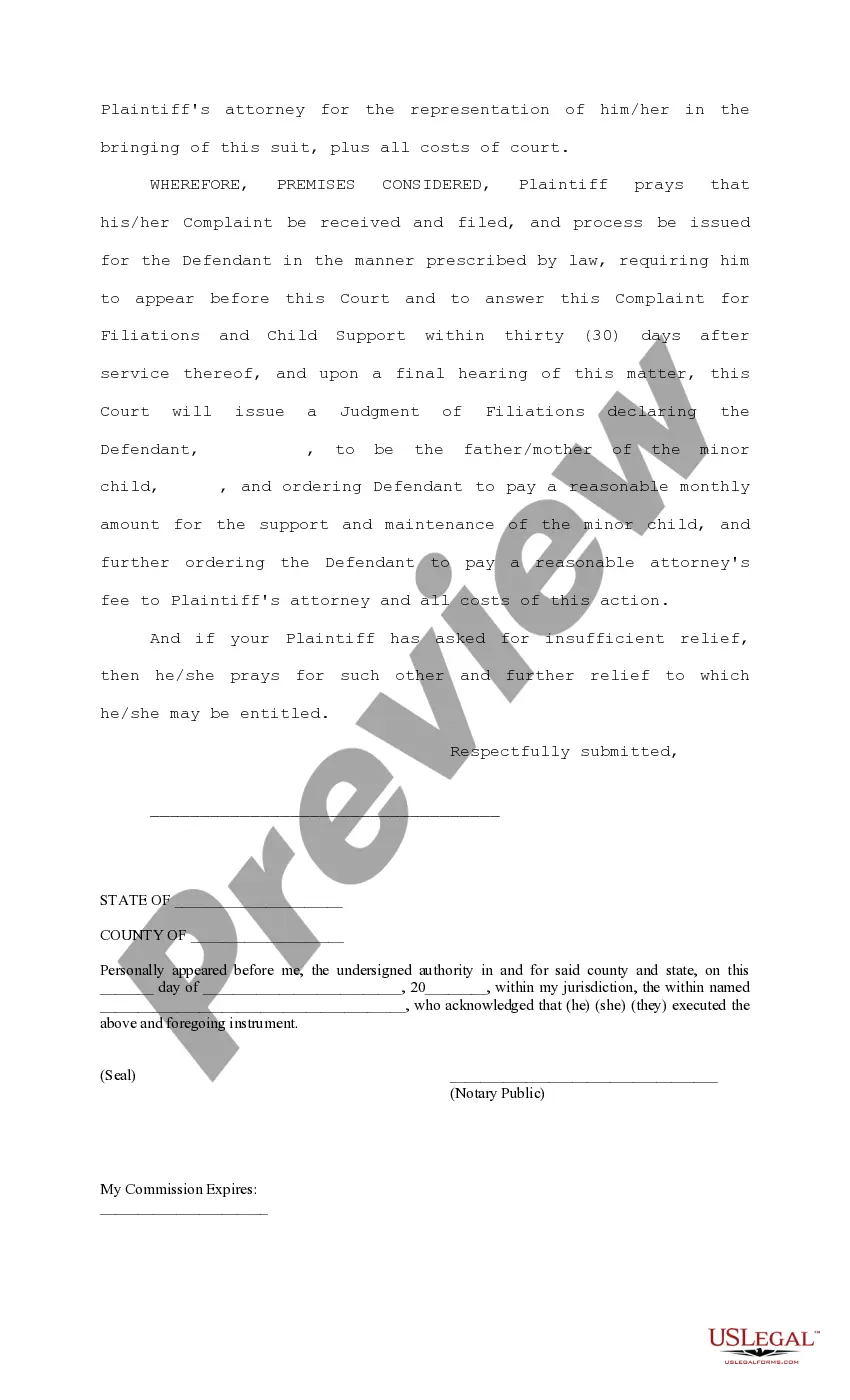
- A request for the court to order a reasonable attorney's fee for the plaintiff.
- Closing statement, signed by the plaintiff or their attorney.
When to use this form
This form should be used when a person believes they are the parent of a child and seeks legal recognition of that relationship, along with financial support from the other parent. Situations may include unmarried parents wishing to establish paternity legally, one parent seeking support from the other after separation or divorce, or when a child's support needs to be legally documented in court.
Who needs this form
- Individuals who suspect they might be the biological parent of a child.
- Parents seeking to establish paternity for personal or financial reasons.
- Individuals who wish to claim child support from the other parent.
- Anyone needing legal documentation of their parental rights or obligations in court.
Completing this form step by step
- Identify the parties involved, including the plaintiff and defendant.
- Provide accurate details about the child, including their name and birth date.
- State the claims made against the defendant regarding paternity and child support.
- Specify any requests for attorneyâs fees and legal costs.
- Sign and date the form to affirm your claims before submitting it to the court.
Does this form need to be notarized?
This form does not typically require notarization unless specified by local law. It's advisable to consult your jurisdiction's requirements to ensure compliance.
Get your form ready online
Our built-in tools help you complete, sign, share, and store your documents in one place.
Make edits, fill in missing information, and update formatting in US Legal Forms—just like you would in MS Word.
Download a copy, print it, send it by email, or mail it via USPS—whatever works best for your next step.
Sign and collect signatures with our SignNow integration. Send to multiple recipients, set reminders, and more. Go Premium to unlock E-Sign.
If this form requires notarization, complete it online through a secure video call—no need to meet a notary in person or wait for an appointment.
We protect your documents and personal data by following strict security and privacy standards.

Make edits, fill in missing information, and update formatting in US Legal Forms—just like you would in MS Word.

Download a copy, print it, send it by email, or mail it via USPS—whatever works best for your next step.

Sign and collect signatures with our SignNow integration. Send to multiple recipients, set reminders, and more. Go Premium to unlock E-Sign.

If this form requires notarization, complete it online through a secure video call—no need to meet a notary in person or wait for an appointment.

We protect your documents and personal data by following strict security and privacy standards.
Typical mistakes to avoid
- Failing to provide complete and accurate information about the parties involved.
- Not properly signing the form or omitting the date.
- Neglecting to include a request for child support or attorneyâs fees.
- Using outdated or incorrect terminology that may not align with state laws.
Benefits of using this form online
- Convenient access to a legally vetted template that can be downloaded and customized.
- Flexible formatting options to suit specific needs and circumstances.
- Reliable resources to ensure compliance with legal standards and state requirements.
Legal use & context
- Establishes a legal basis for paternity and child support obligations.
- Can be used in a court of law to enforce child support rights.
- Important for ensuring children's financial needs are met legally.
Quick recap
- The Complaint for Filiation and Child Support initiates legal action for child support and paternity.
- This form is crucial for custodial parents or those seeking paternity determination.
- Accurate completion and understanding of local requirements are essential for effective use.
Looking for another form?


Form popularity
FAQ
One of the most misunderstood obligations in Mississippi is the obligation to pay support for children until the age of 21 or until they become emancipated and self-supporting. Many states only require support until 18.
To get a contempt finding, you must usually file a court document called a "motion for an order to show cause." That puts the burden on the parent who isn't following the custody or visitation order to explain to the court the reasons why he or she should not be held in contempt.
Child support responsibilities usually end when the child turns 21 years of age, enters the military, gets married, becomes self-supporting or is adopted by a third party. A parent can seek a reduction in his/her child support payments if his/her salary decreases.
Child support responsibilities usually end when the child turns 21 years of age, enters the military, gets married, becomes self-supporting or is adopted by a third party. A parent can seek a reduction in his/her child support payments if his/her salary decreases.
The statute of limitations for child support arrears in Mississippi is 7 years past age of majority.
An acknowledgement of paternity form can be signed by the parents at the hospital or after the child is born through the Department of Human Services. The other way paternity can be established is through the involuntary process of going to court.
Generally and specifically under some state laws, the parent to whom support was awarded retains the right to collect support arrearages even if the child is now an adult.In most cases, an adult child does not have legal standing to directly sue his or her parent for unpaid child support.
In Mississippi for one child the non-custodial parent pays 14% of their adjusted gross income. For two children the non-custodial parent pays 20% of their adjusted gross income. For three children the non-custodial parent pays 22% of their adjusted gross income.