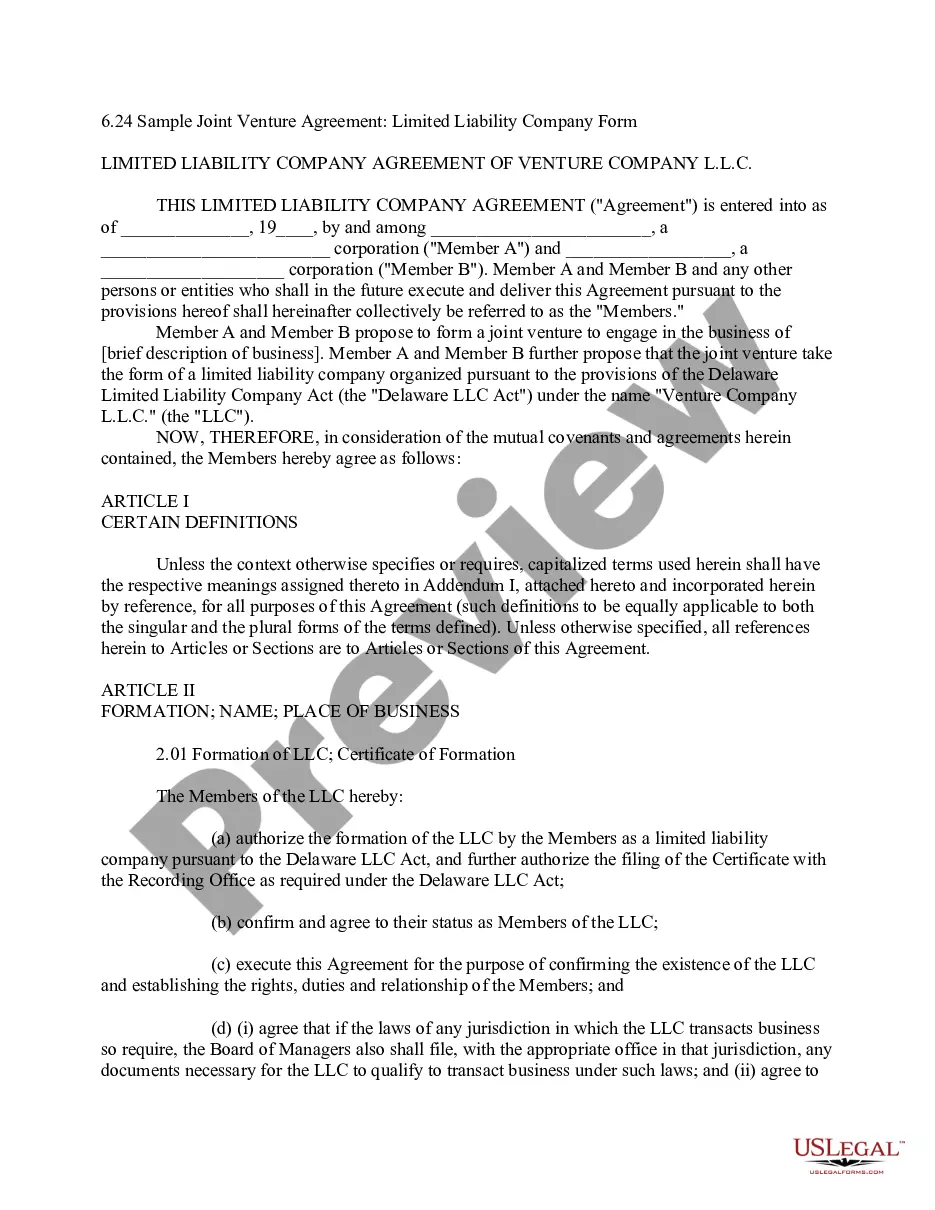
Deed of Trust - Multistate
About this form
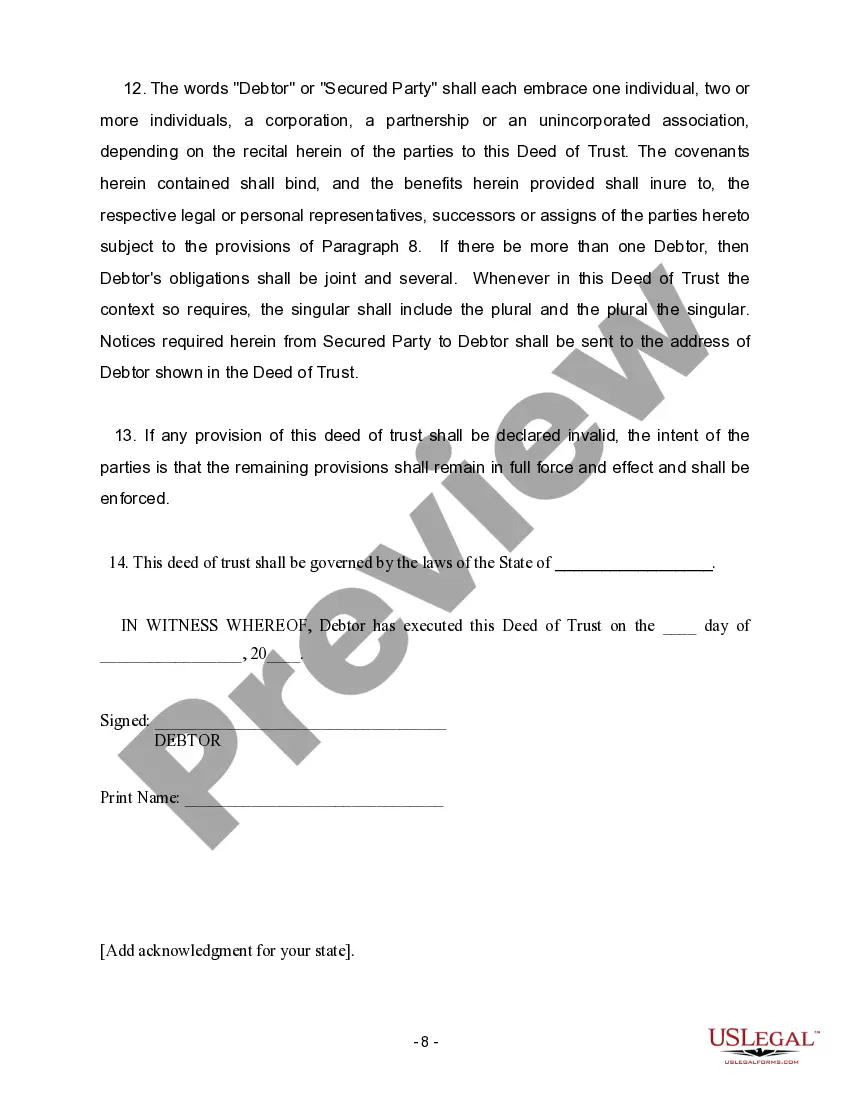
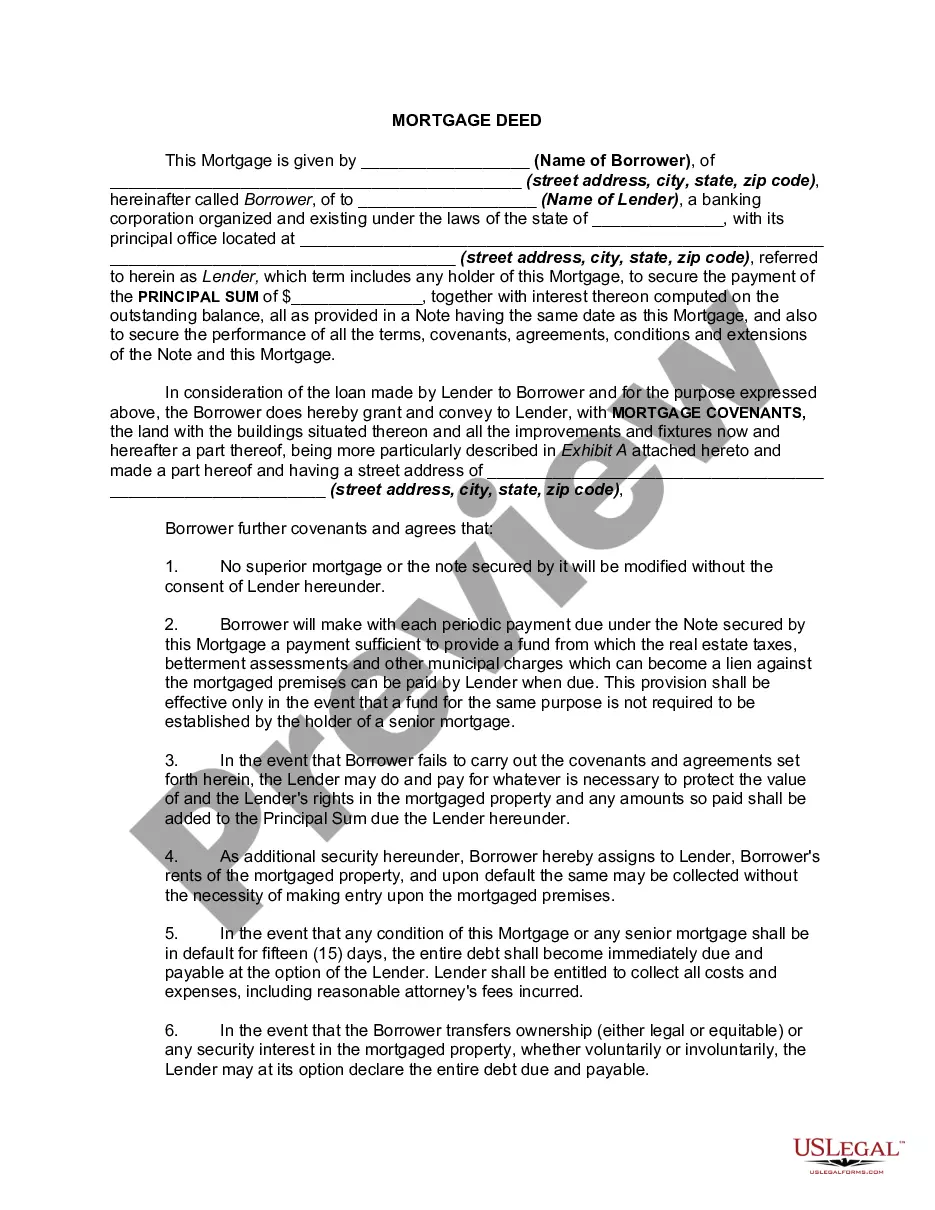
The Deed of Trust - Multistate is a legal document that secures a loan by transferring the title of real property to a trustee, who holds it for the benefit of the lender (secured party). This form differs from a mortgage as it involves a third party (the trustee) who facilitates the process of foreclosure in case of default. It is typically used to protect a lender's interest in a property until a debt is fully repaid.
Key parts of this document
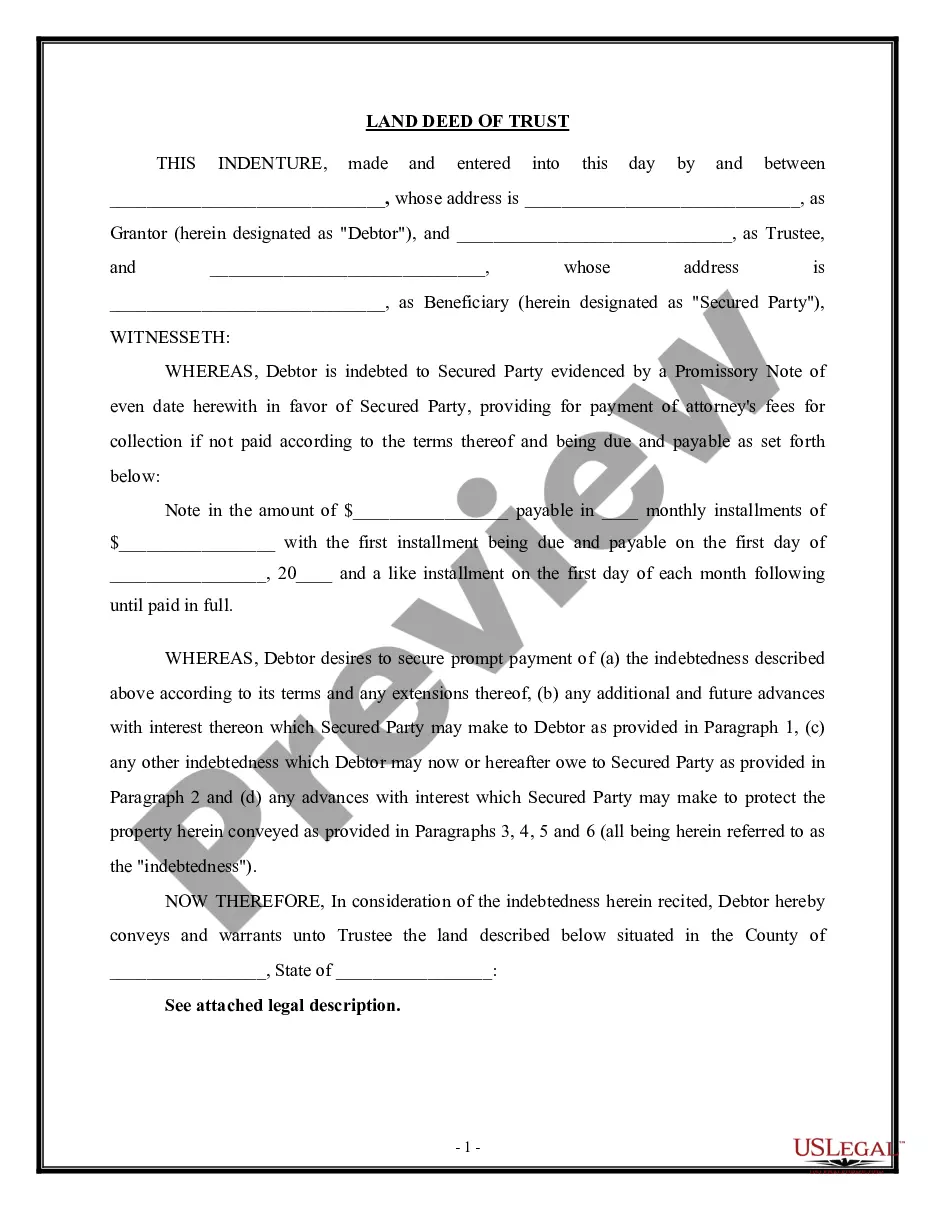
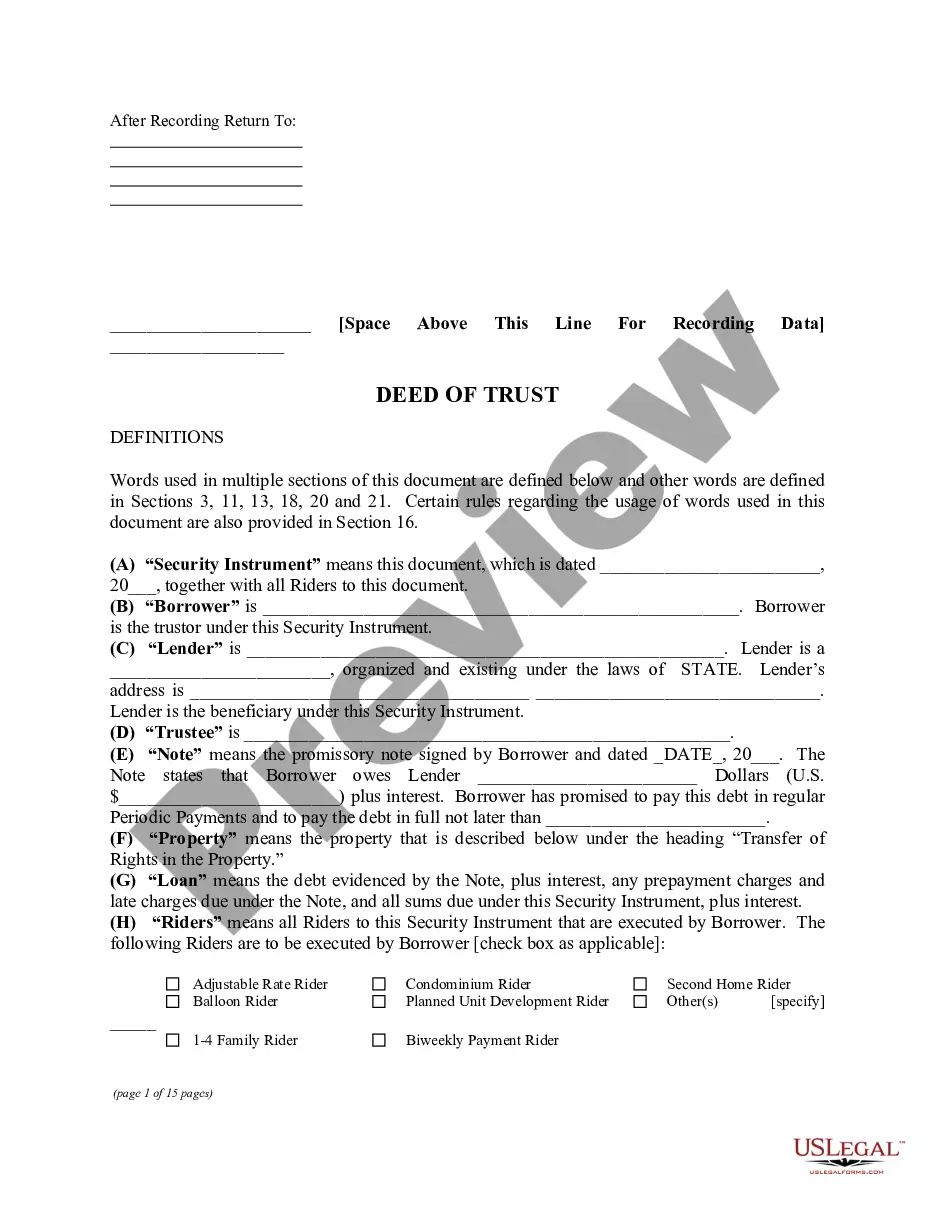
- Identification of parties involved: Grantor (Debtor), Trustee, and Beneficiary (Secured Party).
- Details of the indebtedness, including the loan amount, repayment schedule, and any attorneys' fees associated with collection.
- Description of the property being secured, including legal descriptions and any improvements.
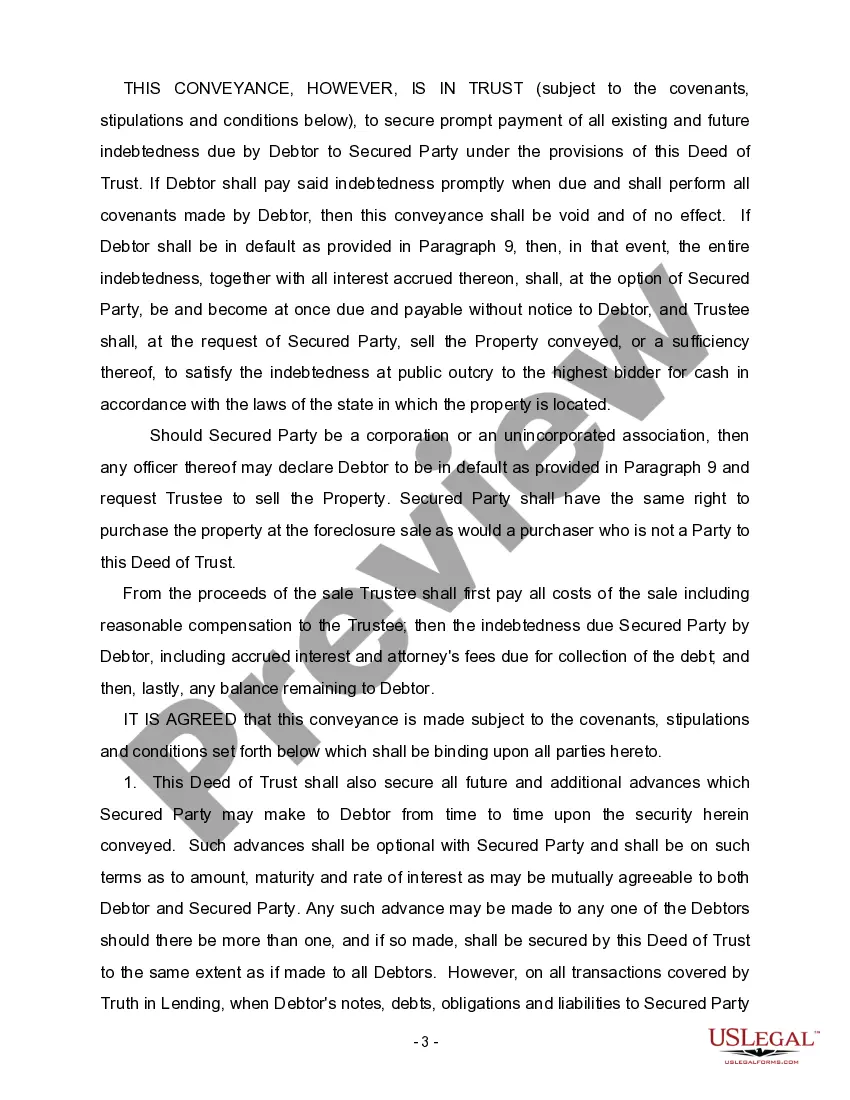
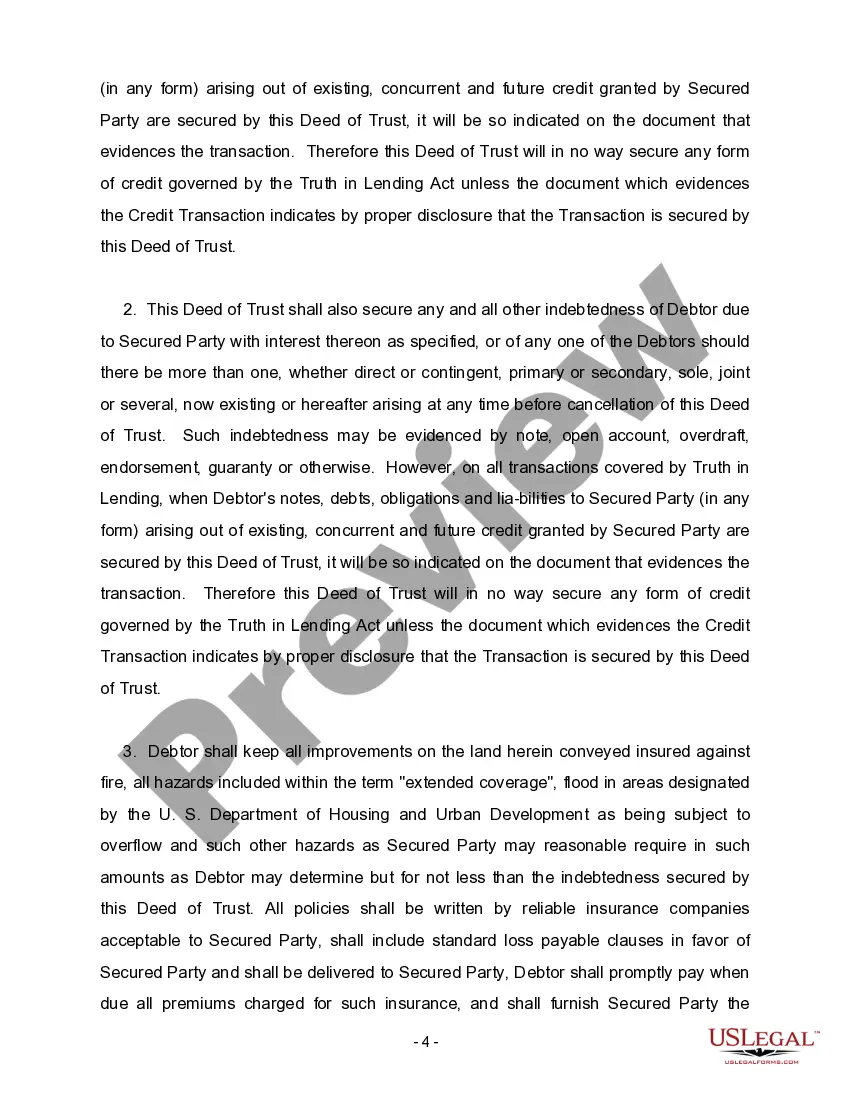
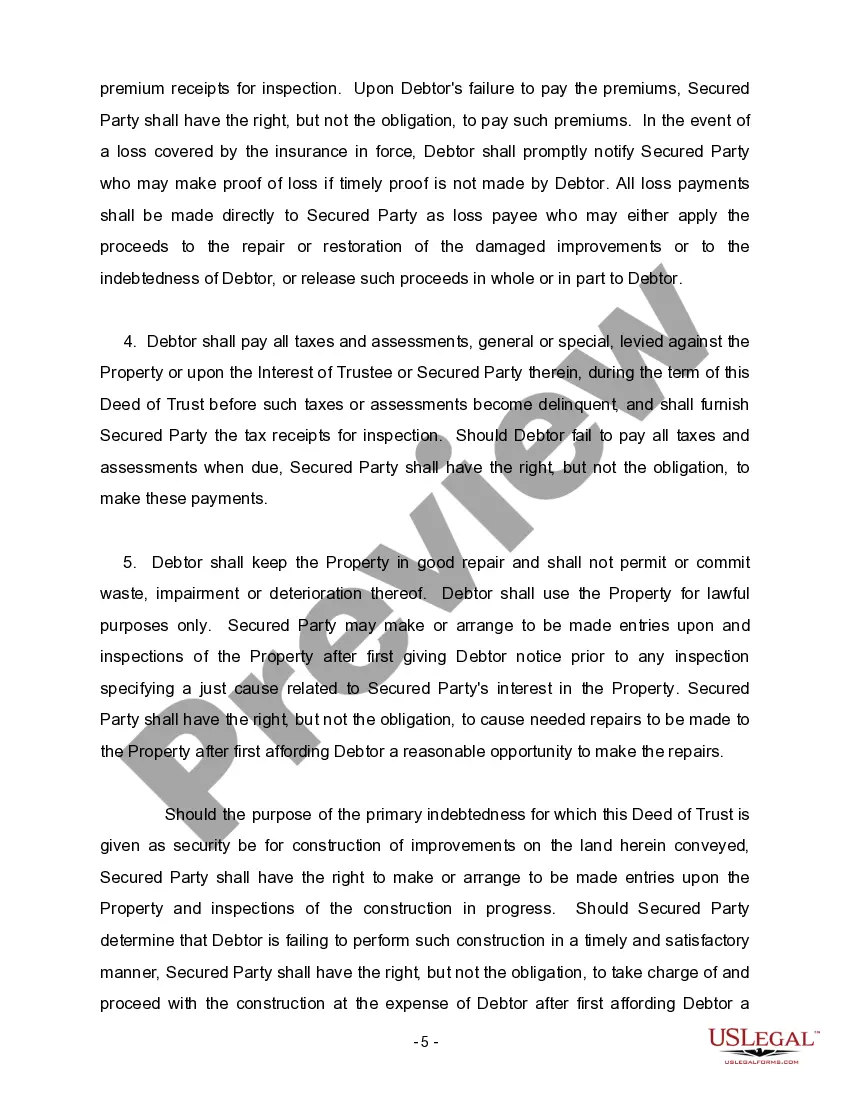
- Conditions and covenants to be adhered to by the Debtor, including insurance and property maintenance obligations.
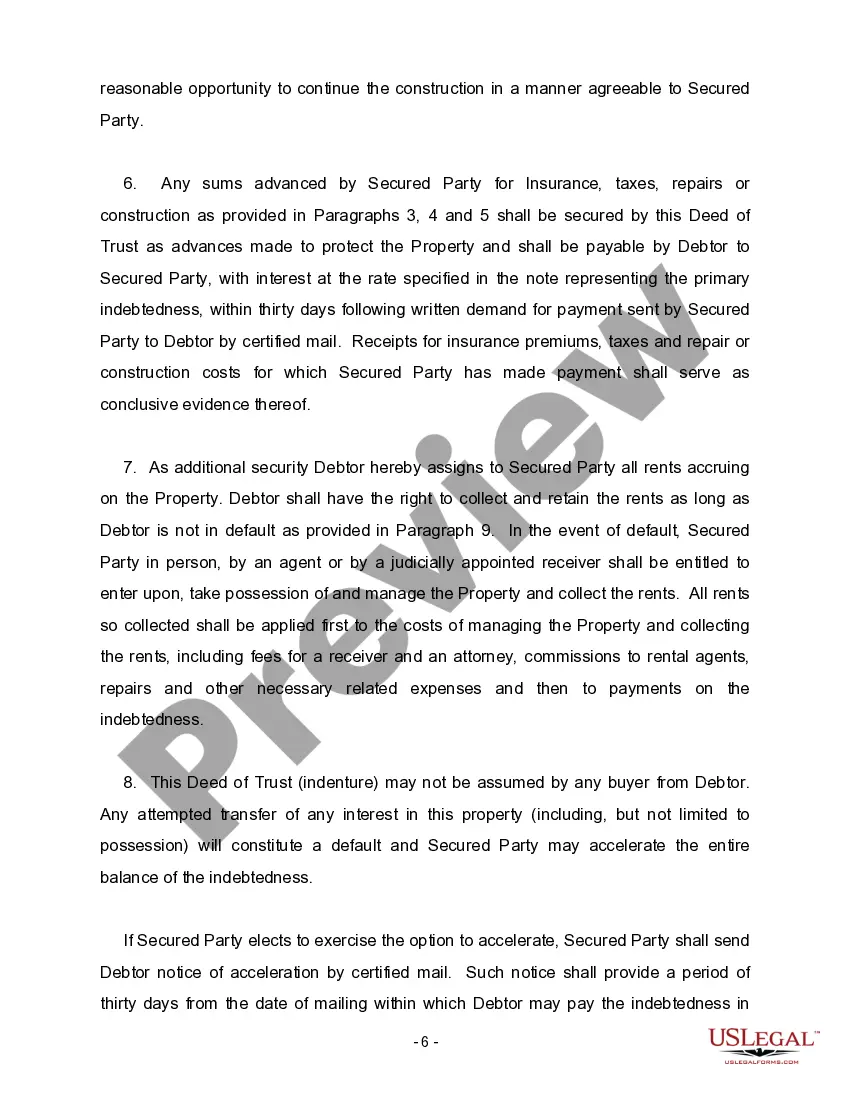
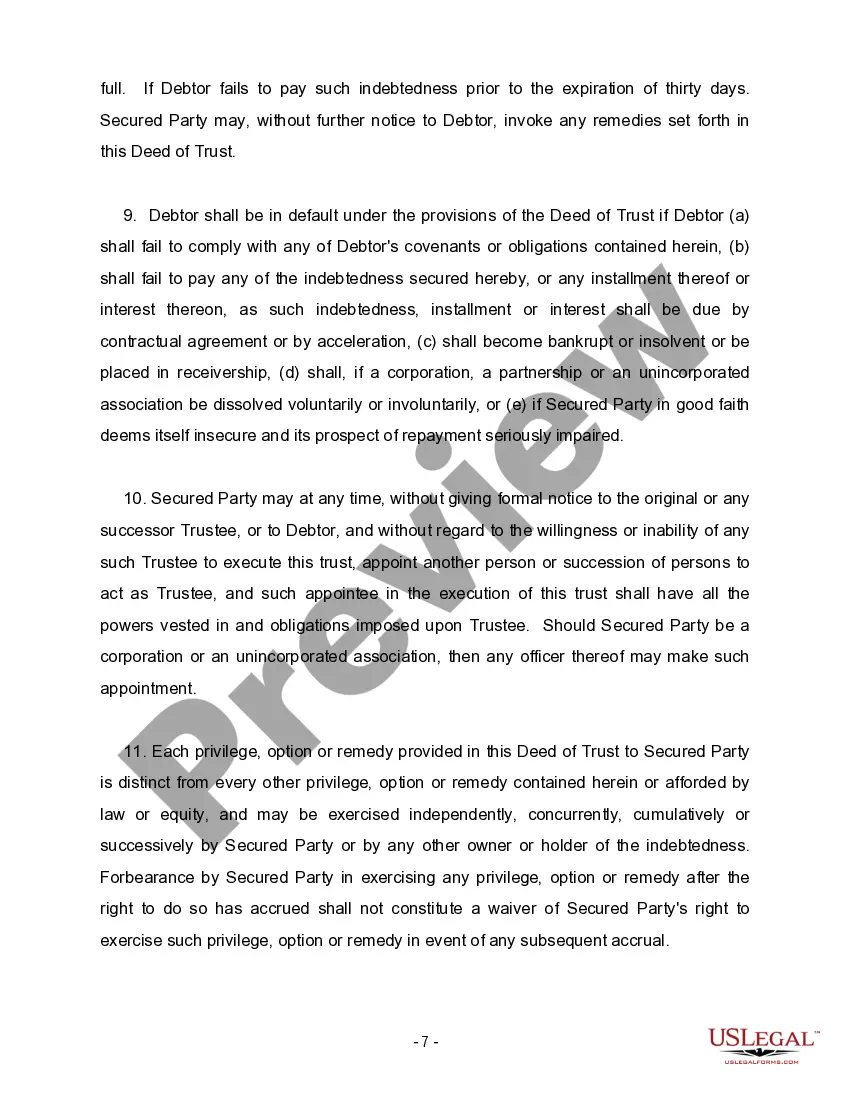
- Default conditions and the rights of the Secured Party in such cases.


When this form is needed
This form should be used when a borrower wants to secure a loan with real estate as collateral. It is particularly relevant in scenarios where a home or other property is purchased or refinanced, and the lender requires a formal agreement to protect their interests in the event of borrower default. Additionally, it may be used when there are multiple debts owed to the same lender or when future advances may be needed.
Who needs this form
- Borrowers seeking to secure a loan with real property.
- Lenders or financial institutions providing loans backed by real estate.
- Real estate investors who need to formalize a loan agreement involving property ownership.
How to complete this form
- Identify and enter the names and addresses of the Grantor (Debtor), Trustee, and Beneficiary (Secured Party).
- Specify the total amount of the loan and the repayment terms, including monthly installments and due dates.
- Describe the property being secured, including the legal description and any improvements attached to it.
- Include any specific covenants and conditions that apply to the Debtor, such as maintaining insurance on the property.
- Ensure all parties sign and date the form in the presence of a notary, if required.
Notarization requirements for this form
Notarization is required for this form to take effect. Our online notarization service, powered by Notarize, lets you verify and sign documents remotely through an encrypted video session, available 24/7.
Get your form ready online
Our built-in tools help you complete, sign, share, and store your documents in one place.
Make edits, fill in missing information, and update formatting in US Legal Forms—just like you would in MS Word.
Download a copy, print it, send it by email, or mail it via USPS—whatever works best for your next step.
Sign and collect signatures with our SignNow integration. Send to multiple recipients, set reminders, and more. Go Premium to unlock E-Sign.
If this form requires notarization, complete it online through a secure video call—no need to meet a notary in person or wait for an appointment.
We protect your documents and personal data by following strict security and privacy standards.

Make edits, fill in missing information, and update formatting in US Legal Forms—just like you would in MS Word.

Download a copy, print it, send it by email, or mail it via USPS—whatever works best for your next step.

Sign and collect signatures with our SignNow integration. Send to multiple recipients, set reminders, and more. Go Premium to unlock E-Sign.

If this form requires notarization, complete it online through a secure video call—no need to meet a notary in person or wait for an appointment.

We protect your documents and personal data by following strict security and privacy standards.
Common mistakes to avoid
- Failing to provide complete legal descriptions of the property, which can lead to disputes or issues with enforceability.
- Not including all necessary parties, such as a trustee, which may invalidate the trust arrangement.
- Overlooking the specific terms of indebtedness and future advances that can affect the rights of all parties involved.
Benefits of completing this form online
- Convenient access to a legally compliant template that can be downloaded and tailored to specific needs.
- Editability allows users to customize details quickly and efficiently without needing to start from scratch.
- Reliability ensured by attorney-drafted content, increasing confidence in the legality of the execution.
Looking for another form?
Form popularity
FAQ
Whether you have a deed of trust or a mortgage, they both serve to assure that a loan is repaid, either to a lender or an individual person. A mortgage only involves two parties the borrower and the lender. A deed of trust adds an additional party, a trustee, who holds the home's title until the loan is repaid.
The person who owns the property usually signs a promissory note and a deed of trust. The deed of trust does not have to be recorded to be valid.
Re-recording of the original document. With corrections made in the body of the original document. A cover sheet detailing the changes. Must be re-signed and re-acknowledged. Correction Deed. A new deed reflecting the corrections/changes. Must meet all recording requirements of a deed.
As you stated in your question, it is recorded among the land records, and your lender keeps the original. When you pay off the loan, the lender will return the deed of trust with the promissory note. This document is rather lengthy and quite legalistic.
Step 1 Obtain The California Deed Of Trust Form For Your Use. Step 2 Determine And Present Where This Deed Must Be Returned. Step 3 Report The Assessor's Parcel Number. Step 4 Record The Effective Date Of This Deed. Step 5 Produce The Debtor's Identity As The Trustor.
A deed of trust expires can and will expire based upon one of two specific timelines. The deed can either expire at a designated point follow the maturity date or, in the absence of this information, exactly 35 years after the date on which the deed had been recorded.
Property cannot be conveyed to a grantee who does not exist. Thus, a deed to a grantee who is dead at the time of delivery is void. For example, a deed recorded by the grantor is presumed to have been delivered.For example, a deed is voidable if it was obtained by fraud in the inducement.
Deed: This is the document that proves ownership of a property. It transfers ownership of the property to the grantee, also known as the buyer.Mortgage: This is the document that gives the lender a security interest in the property until the Note is paid in full.
Giving the wrong legal address for the property or the wrong amount of the debt can render the deed unenforceable. In some cases, the error is easy to fix, and the court will rule the deed is enforceable.