Mortgage Deed
About this form
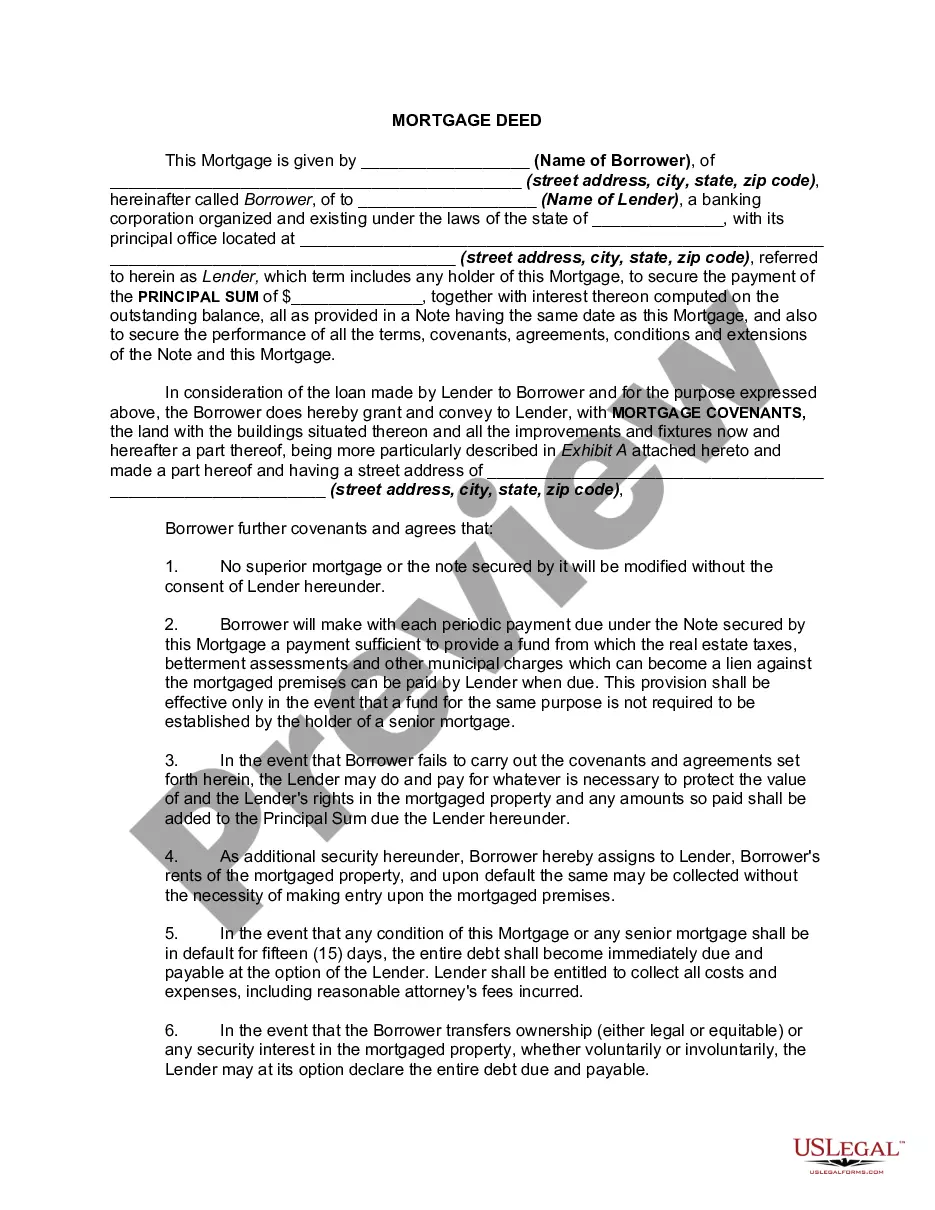
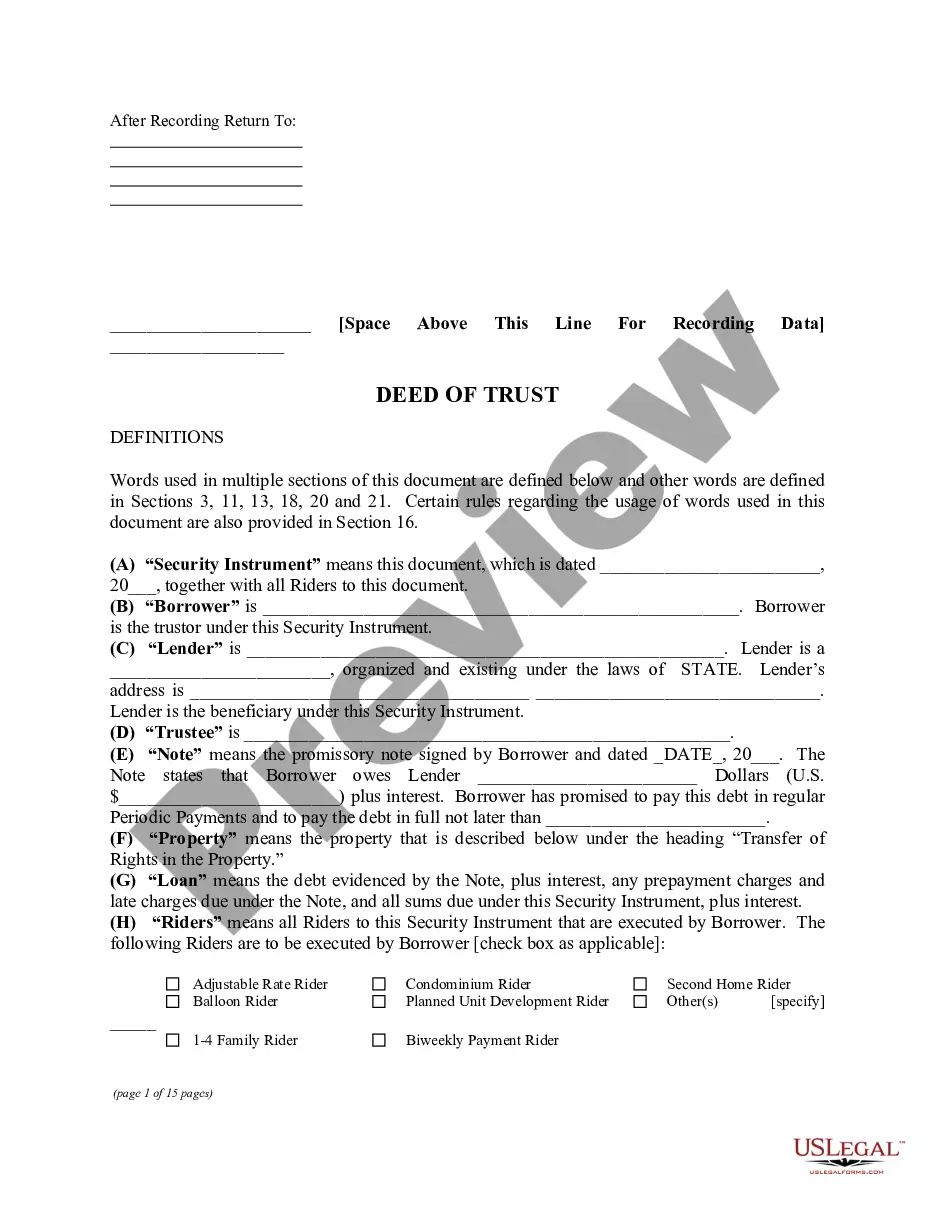
A mortgage deed is a legal document that grants a lender a secured interest in a property, typically when a borrower pledges their home as collateral for a loan. This document serves as evidence of the lender's rights to the property. It operates similarly to a mortgage or deed of trust and allows the lender to foreclose on the property if the borrower fails to make timely payments.
Key parts of this document
- Identification of the borrower and lender, including names and addresses.
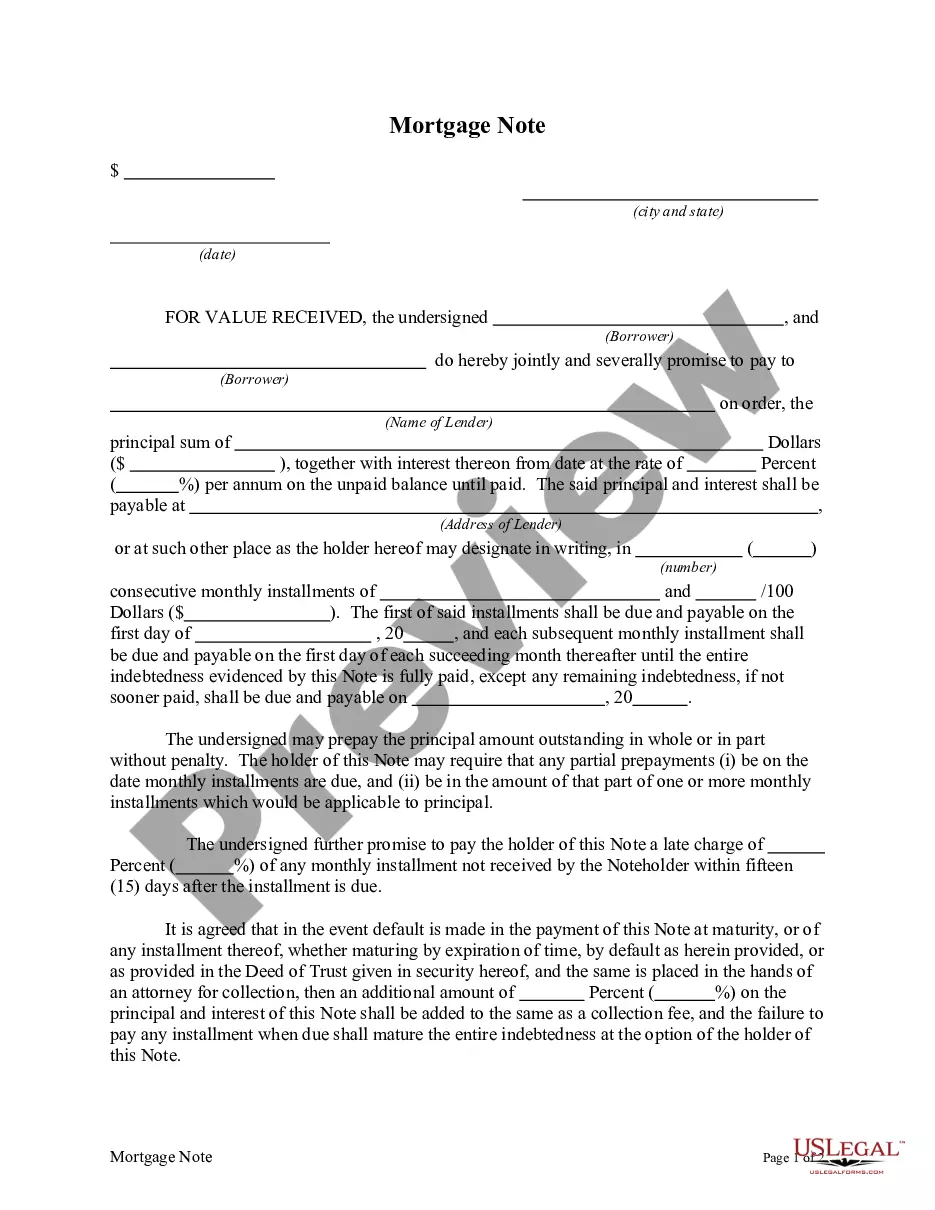
- Details of the loan amount and interest terms secured by the mortgage.
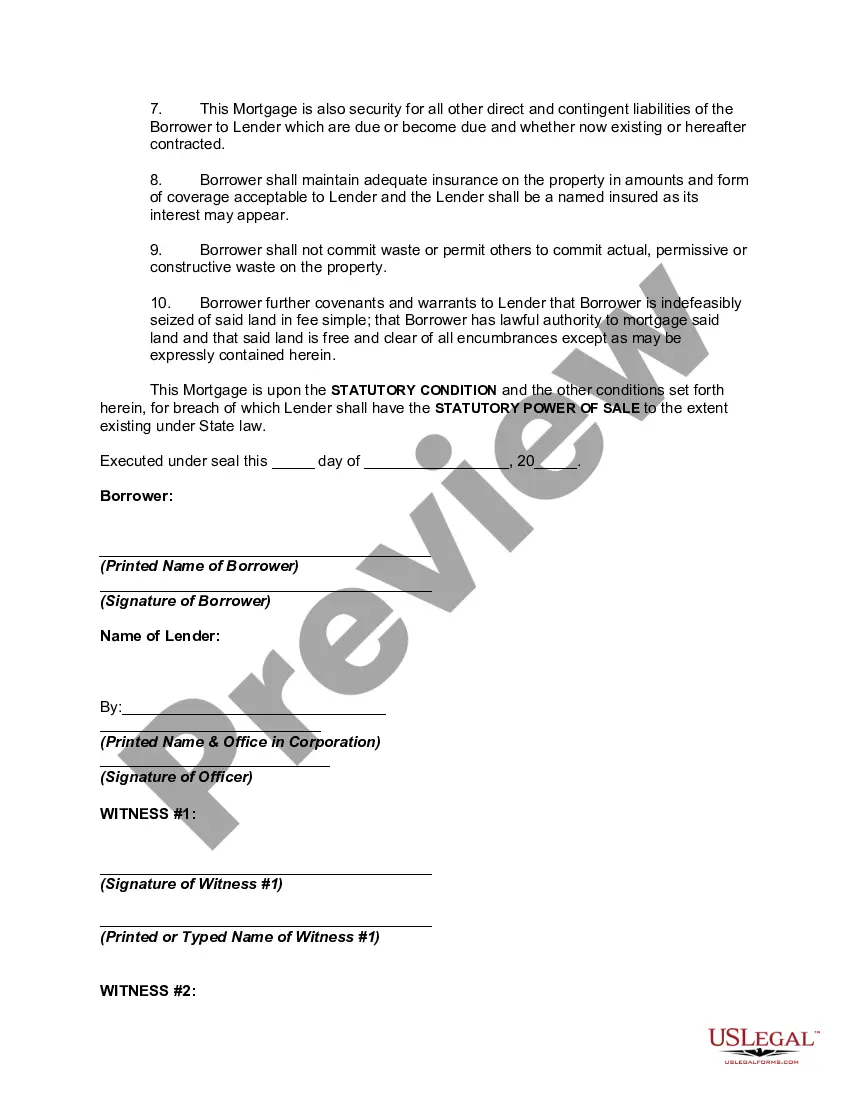
- Covenants outlining the borrower's obligations regarding tax payments and maintenance of the property.
- Provisions for default and foreclosure procedures.
- Clauses assigning rents and indicating additional liabilities that may be secured by the mortgage.
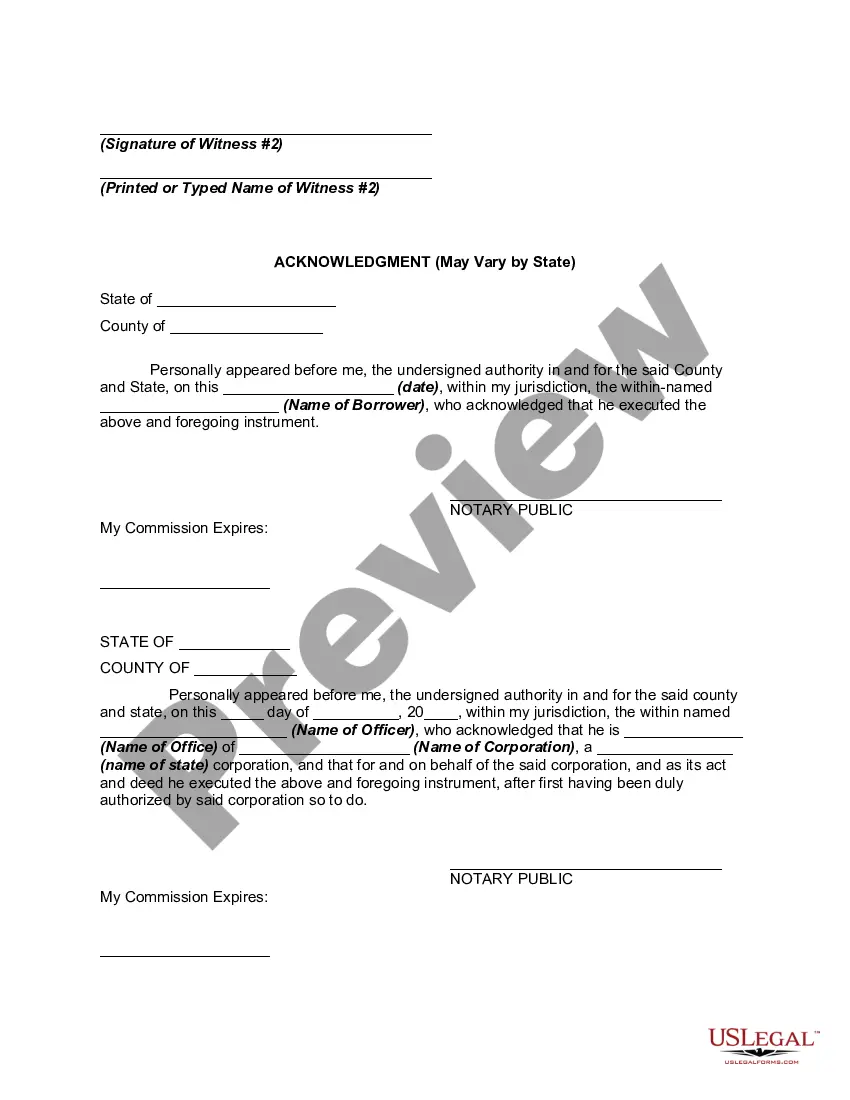
- Signatures of the borrower and lender, along with witness and notary spaces as required.


Common use cases
This mortgage deed should be used when a borrower is seeking to obtain a loan that is secured by real property. It is essential during the home buying process, refinancing existing loans, or in any situation where a property is being used as collateral for a loan. This document helps protect the lender's investment and ensures that proper legal rights are established to the property.
Who should use this form
- Individuals or entities wishing to borrow money using real property as collateral.
- Lenders, such as banks or financial institutions, providing secured loans to borrowers.
- Property owners looking to refinance or secure additional borrowing against their property.
Steps to complete this form
- Identify the parties involved, including the full names and addresses of the borrower and lender.
- Enter the principal sum of the loan and the interest rate terms as specified in the loan agreement.
- Describe the property being mortgaged, including its address and any relevant details.
- Include all necessary covenants and agreements to clarify borrower responsibilities.
- Sign the document before witnesses and a notary public, if required.
Notarization requirements for this form
To make this form legally binding, it must be notarized. Our online notarization service, powered by Notarize, lets you verify and sign documents remotely through an encrypted video session.
Get your form ready online
Our built-in tools help you complete, sign, share, and store your documents in one place.
Make edits, fill in missing information, and update formatting in US Legal Forms—just like you would in MS Word.
Download a copy, print it, send it by email, or mail it via USPS—whatever works best for your next step.
Sign and collect signatures with our SignNow integration. Send to multiple recipients, set reminders, and more. Go Premium to unlock E-Sign.
If this form requires notarization, complete it online through a secure video call—no need to meet a notary in person or wait for an appointment.
We protect your documents and personal data by following strict security and privacy standards.

Make edits, fill in missing information, and update formatting in US Legal Forms—just like you would in MS Word.

Download a copy, print it, send it by email, or mail it via USPS—whatever works best for your next step.

Sign and collect signatures with our SignNow integration. Send to multiple recipients, set reminders, and more. Go Premium to unlock E-Sign.

If this form requires notarization, complete it online through a secure video call—no need to meet a notary in person or wait for an appointment.

We protect your documents and personal data by following strict security and privacy standards.
Common mistakes to avoid
- Failing to accurately identify the borrower and lender.
- Not providing a complete property description.
- Omitting necessary signatures from borrowers, witnesses, or notaries.
- Neglecting to review and understand all covenants included.
Why use this form online
- Convenience of downloading and editing the form at your own pace.
- Access to professionally drafted templates created by licensed attorneys.
- Time-saving options for completing and filing forms without needing to visit legal offices.
Looking for another form?
Form popularity
FAQ
Who can be a witness to the signatory of a deed?A witness should not be the signatory's spouse or partner or a family member, and should not have a personal interest in the provisions of the document. Case law has confirmed that a party to the document cannot act as a witness to another party's signature.
If you own a computer and have a sheet of paper, you can create your own mortgage to finance the purchase of real estate. No one checks your credit, and you don't need a cash down payment.There is a huge market of investors who buy privately created mortgages and trust deeds (often referred to as paper).
The title deeds to a property with a mortgage are usually kept by the mortgage lender. They will only be given to you once the mortgage has been paid in full. But, you can request copies of the deeds at any time.
The title deeds to a property with a mortgage are usually kept by the mortgage lender. They will only be given to you once the mortgage has been paid in full. But, you can request copies of the deeds at any time.
What is the Mortgage Deed? This can sometimes be known as the legal charge form. Your mortgage deed is usually a 1 or 2 page document that, once signed, provides confirmation that you're happy to proceed based on the terms of your mortgage offer. Upon completion, the signed mortgage deed is a legally binding document.
Execute the mortgage documents. Affidavit to be sworn by two witnesses in the deed. Visit the notary public who will get the document notarized. Pay for the stamp duty. Pay for the registration in the Registrar of Deeds office. Obtain the title for the mortgage.
Definition. Simple mortgage is executed where without any property being delivered to the mortgagee; the mortgagor makes himself liable to repay the debt9.The fundamental characteristic of simple mortgage is that the mortgagee has no right to liquidate the property without the permission of the court.
While you have a mortgage, the lender has rights to the property title until the loan is paid. If you buy a home without a mortgage, the real estate attorney or title company records the deed and issues a copy to you.
Execute the mortgage documents. Affidavit to be sworn by two witnesses in the deed. Visit the notary public who will get the document notarized. Pay for the stamp duty. Pay for the registration in the Registrar of Deeds office. Obtain the title for the mortgage.