Mississippi Complaint for Grandparents Visitation
Understanding this form
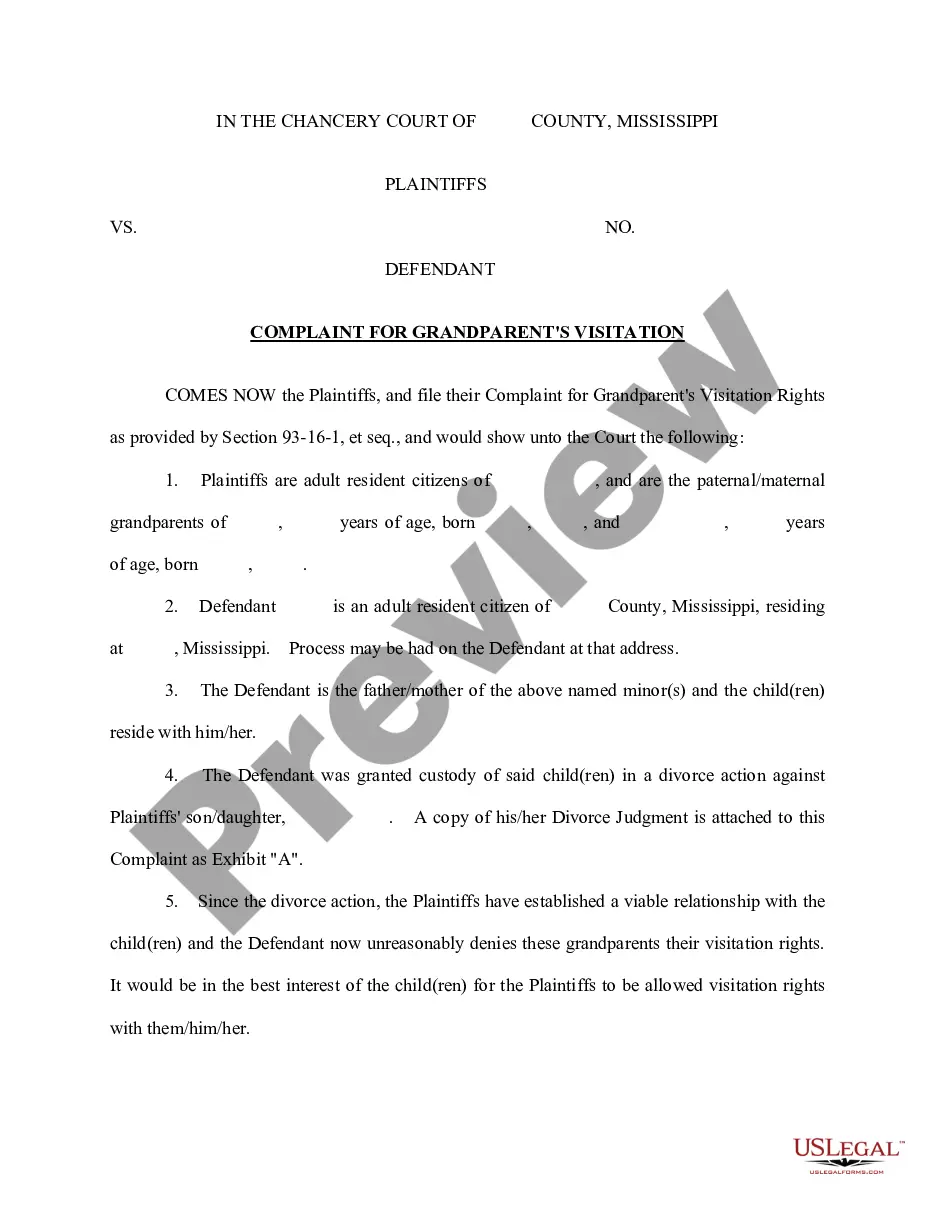
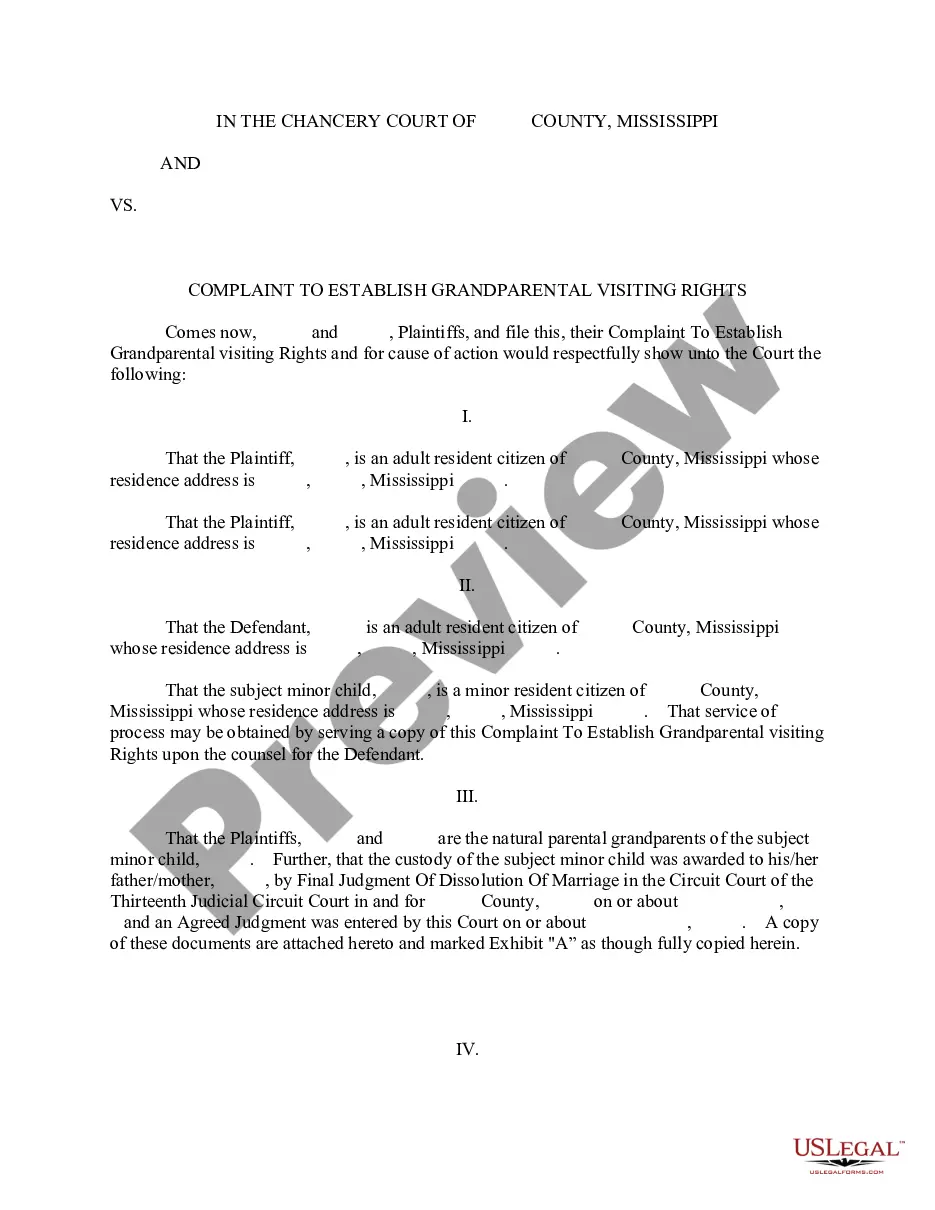
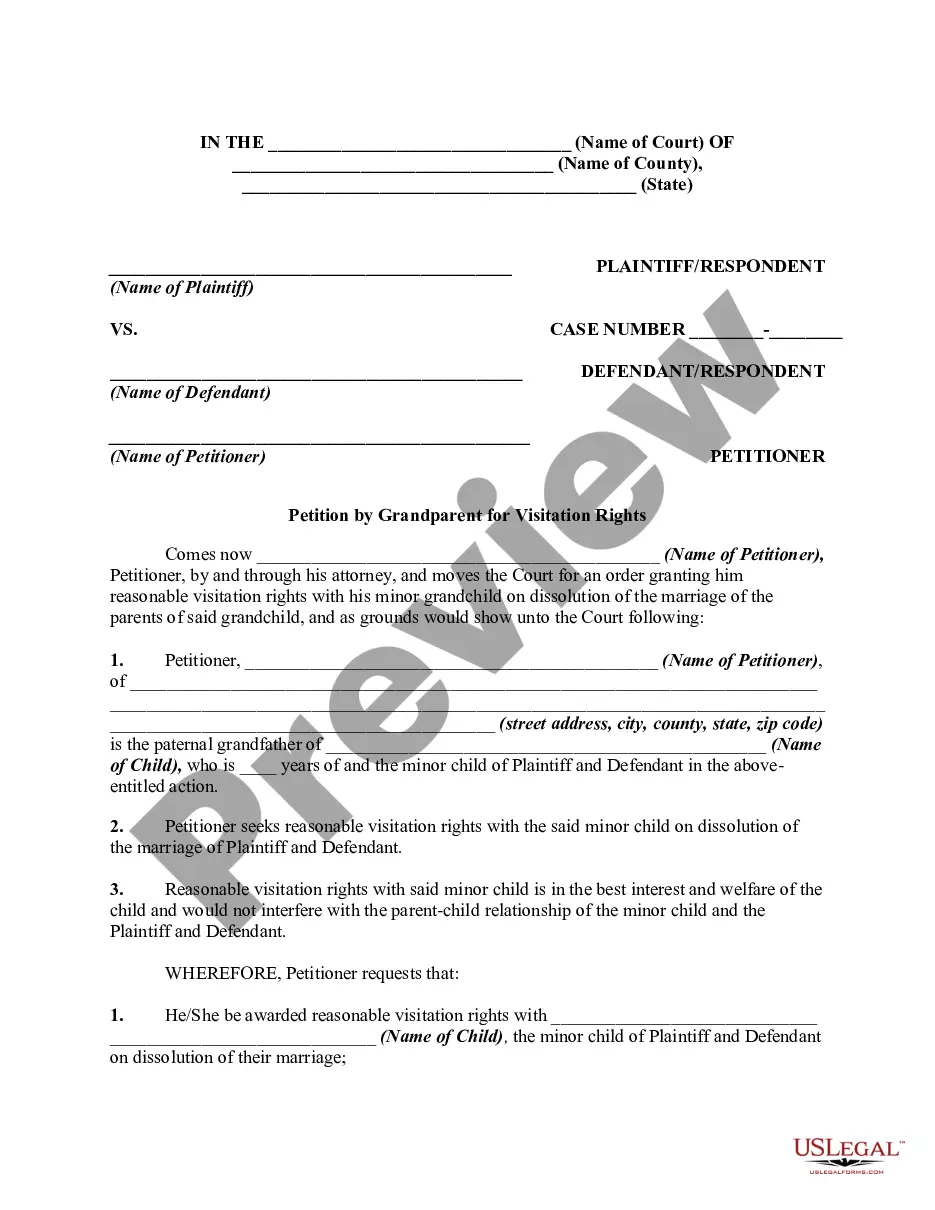
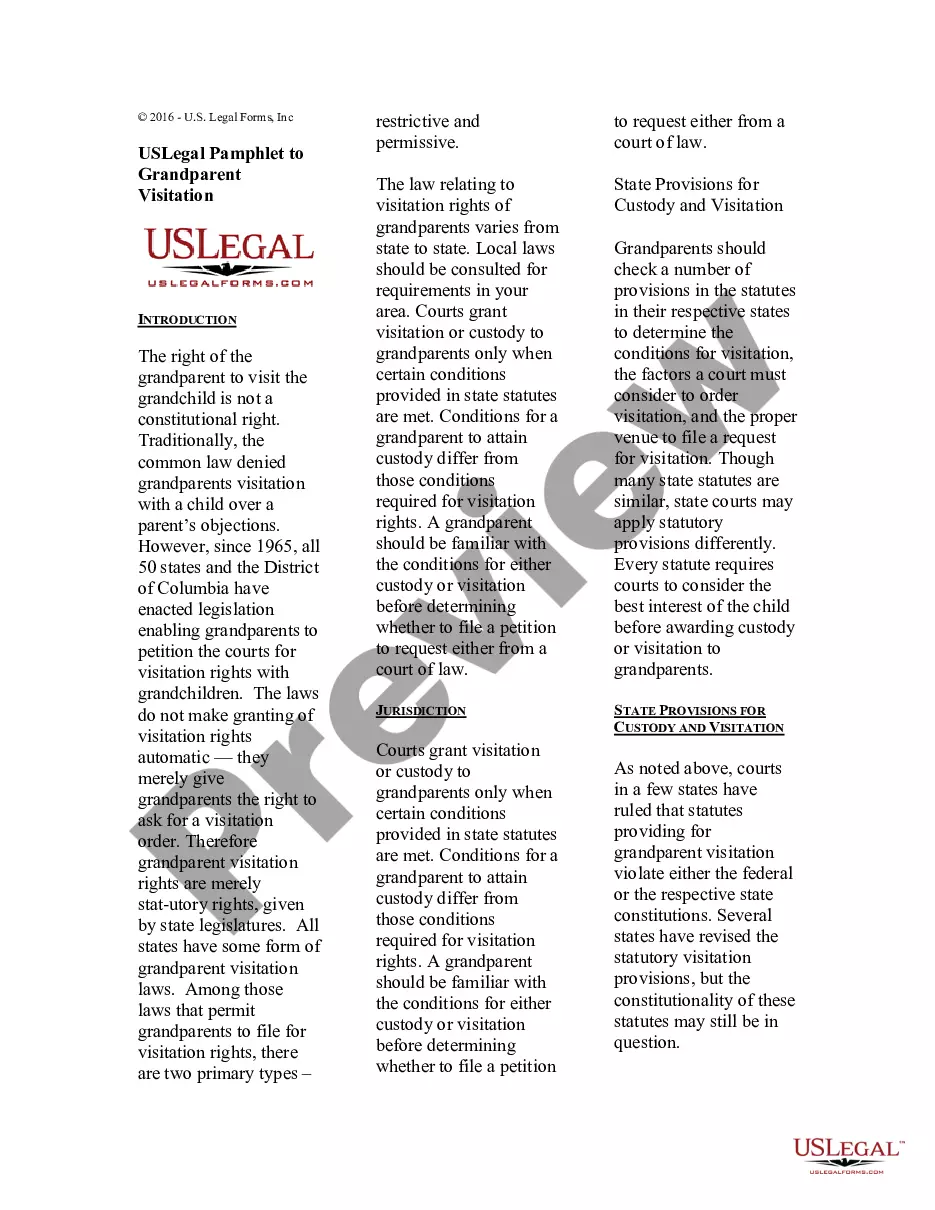
The Complaint for Grandparents Visitation is a legal document that initiates a court proceeding to seek visitation rights for grandparents. This form outlines the relationship between the grandparents and their grandchild, the reasons for requesting visitation, and the specific relief being sought from the court. This form differs from other visitation forms as it specifically addresses the rights of grandparents in seeking to maintain a meaningful relationship with their grandchildren following a divorce or other family issues.
Form components explained
- Identification of the plaintiffs (grandparents) and defendant (parents).
- Details about the existing relationship between the grandparents and the grandchildren.
- Claims of unreasonable denial of visitation rights by the defendant.
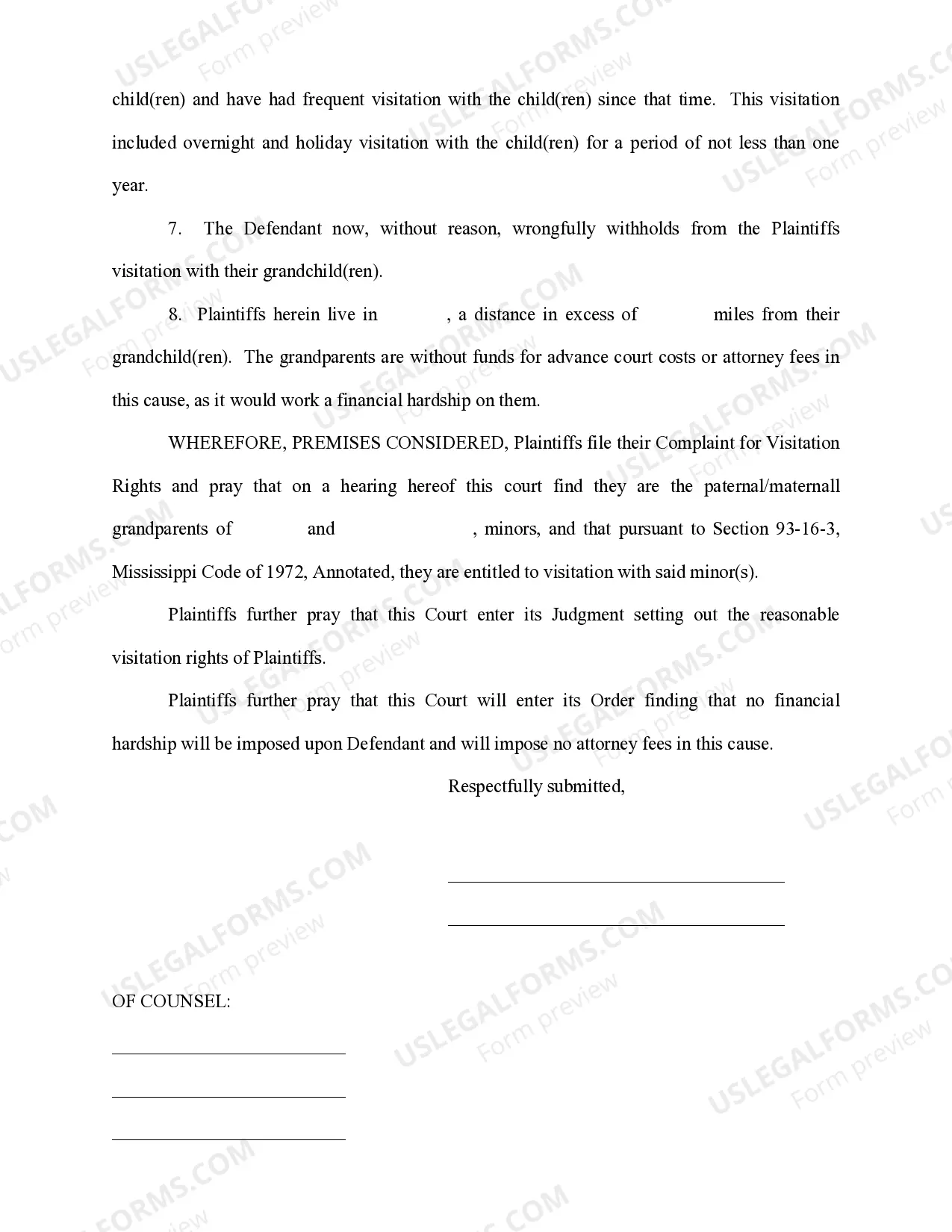
- Specific requests for the court regarding visitation rights.
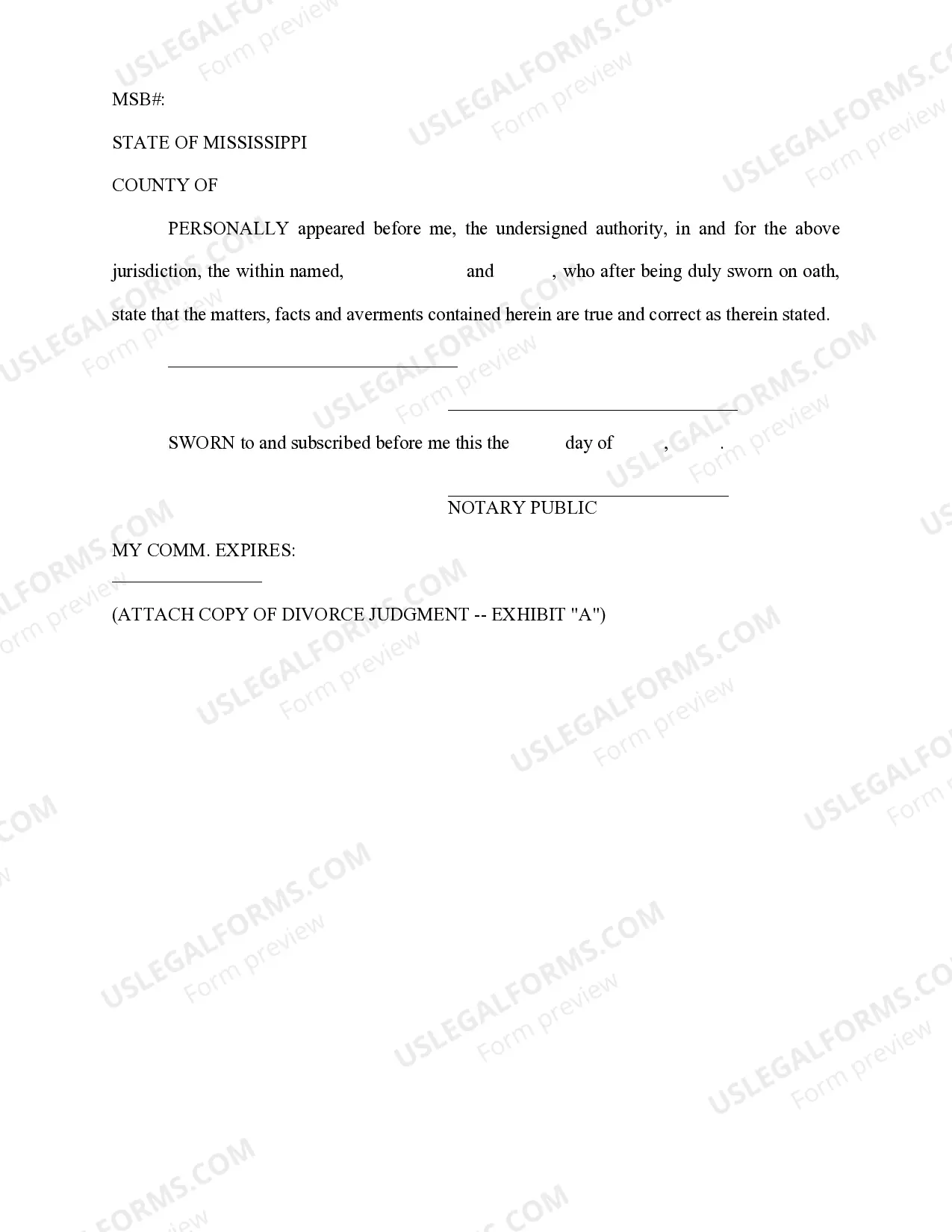
- Submission of supporting documents, such as a divorce judgment.
When to use this form
This form should be used when grandparents wish to seek legal visitation rights with their grandchildren, particularly in situations where the child's parents have divorced, separated, or otherwise denied reasonable visitation. It is appropriate when there is a clear interest in the child's welfare and a significant relationship between the grandparents and the grandchild.
Intended users of this form
- Grandparents seeking visitation rights with their grandchildren.
- Individuals facing challenges from parents who are denying access to the grandchildren.
- Anyone involved in a custody dispute where grandparent visitation is being considered.
Completing this form step by step
- Identify the parties involved: enter the names and contact information of the plaintiffs and defendant.
- Describe the relationship: explain how the grandparents are related to the child(ren) and detail their involvement in their lives.
- State the reasons for requesting visitation: clearly articulate why the denial of visitation is unreasonable and how visitation would benefit the child(ren).
- Request specific visitation rights: outline the desired schedule and any other conditions for visitation.
- Attach necessary documents: include a copy of any relevant legal documents, such as the divorce judgment.
Does this form need to be notarized?
Notarization is generally not required for this form. However, certain states or situations might demand it. You can complete notarization online through US Legal Forms, powered by Notarize, using a verified video call available anytime.
Get your form ready online
Our built-in tools help you complete, sign, share, and store your documents in one place.
Make edits, fill in missing information, and update formatting in US Legal Forms—just like you would in MS Word.
Download a copy, print it, send it by email, or mail it via USPS—whatever works best for your next step.
Sign and collect signatures with our SignNow integration. Send to multiple recipients, set reminders, and more. Go Premium to unlock E-Sign.
If this form requires notarization, complete it online through a secure video call—no need to meet a notary in person or wait for an appointment.
We protect your documents and personal data by following strict security and privacy standards.

Make edits, fill in missing information, and update formatting in US Legal Forms—just like you would in MS Word.

Download a copy, print it, send it by email, or mail it via USPS—whatever works best for your next step.

Sign and collect signatures with our SignNow integration. Send to multiple recipients, set reminders, and more. Go Premium to unlock E-Sign.

If this form requires notarization, complete it online through a secure video call—no need to meet a notary in person or wait for an appointment.

We protect your documents and personal data by following strict security and privacy standards.
Typical mistakes to avoid
- Failing to provide sufficient details about the relationship with the grandchild.
- Not specifying the exact visitation rights being requested.
- Omitting necessary supporting documents, like a divorce judgment.
- Using outdated forms that may not comply with current laws.
Why use this form online
- Convenience of downloading the form immediately.
- Editability allows personal customization to fit specific circumstances.
- Access to attorney-drafted templates ensures legal reliability.
- No need to visit a lawyer in person, saving time and resources.
Looking for another form?
Form popularity
FAQ
It is a Mississippi legal document that starts a court case to obtain visitation rights for grandparents. The form outlines the grandparent–grandchild relationship, the reasons for requesting visitation, and the specific relief the court is asked to grant. It differs from other visitation forms by addressing grandparents' rights after divorce or family issues and, if needed, includes supporting documents like a divorce judgment.
Yes. Grandparents may file the Mississippi Complaint for Grandparents Visitation to start a court case requesting visitation with their grandchildren. The form identifies the grandparents as plaintiffs and the parents as defendants, describes the relationship, asserts unreasonable denial, requests specific visitation relief, and allows supporting documents like a divorce judgment.
This form provides a vehicle to seek visitation rights for grandparents. It requires identifying the plaintiffs and defendant, describing the relationship to the grandchildren, and stating a claim of unreasonable denial. It also asks for the specific relief requested and any supporting documents, such as a divorce judgment.
Grandparents can seek court-ordered visitation by filing this form in Mississippi, especially if the child's parents have denied access. The document focuses on the grandparent–grandchild relationship, the basis for visitation, and the relief the court should grant, with supporting materials submitted as needed.
The form does not set a default visitation schedule. It asks for the relief sought and to provide information about the relationship and denial; the court determines visitation terms based on the presented evidence and welfare considerations.
It is Mississippi-specific and tailored to grandparents seeking visitation after divorce or other family issues. It explicitly lists form components (identification of plaintiffs and defendant, relationship details, denial claims, requested relief, supporting documents) and may include submitting documents like a divorce judgment.