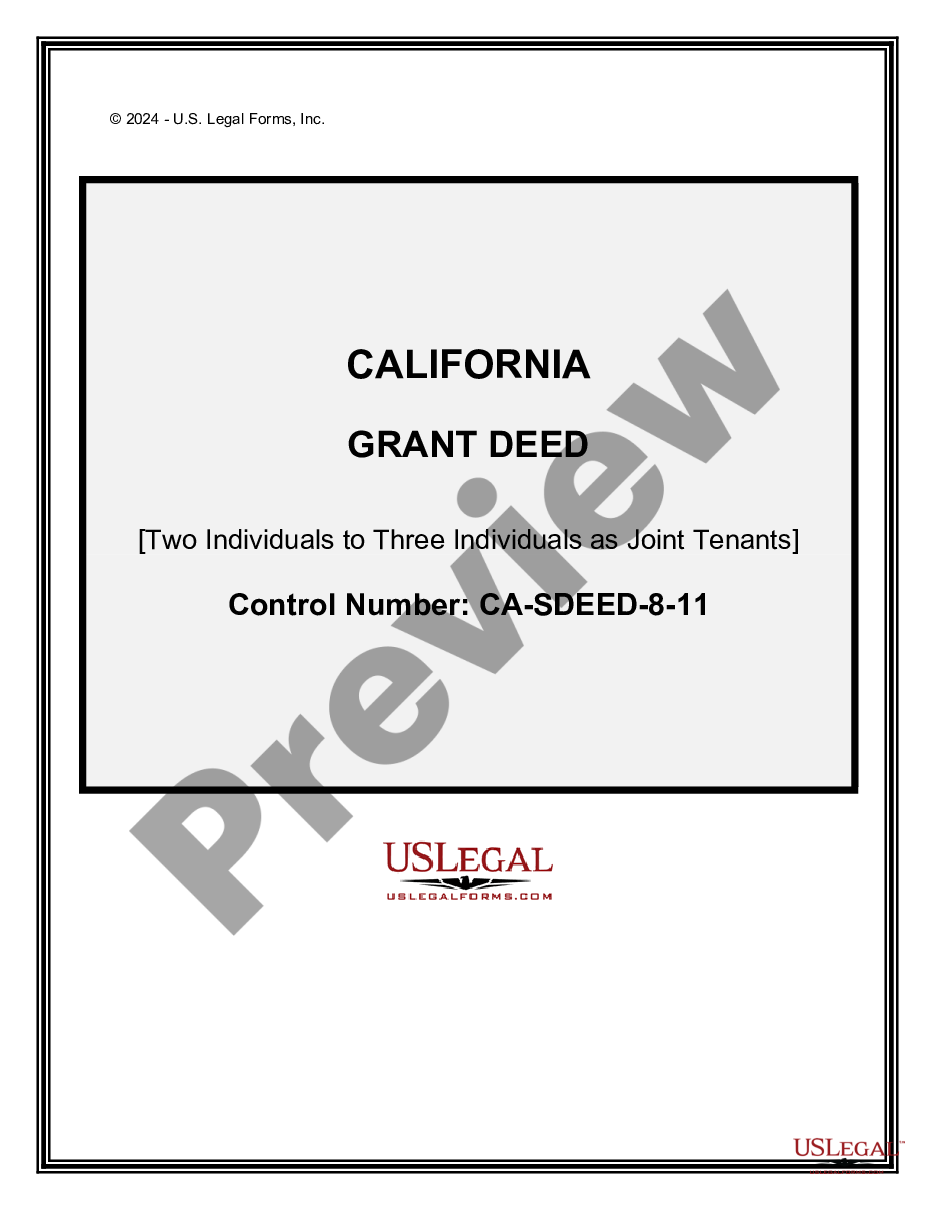
California Grant Deed - Two Individuals to Three Individuals as Joint Tenants
What is this form?
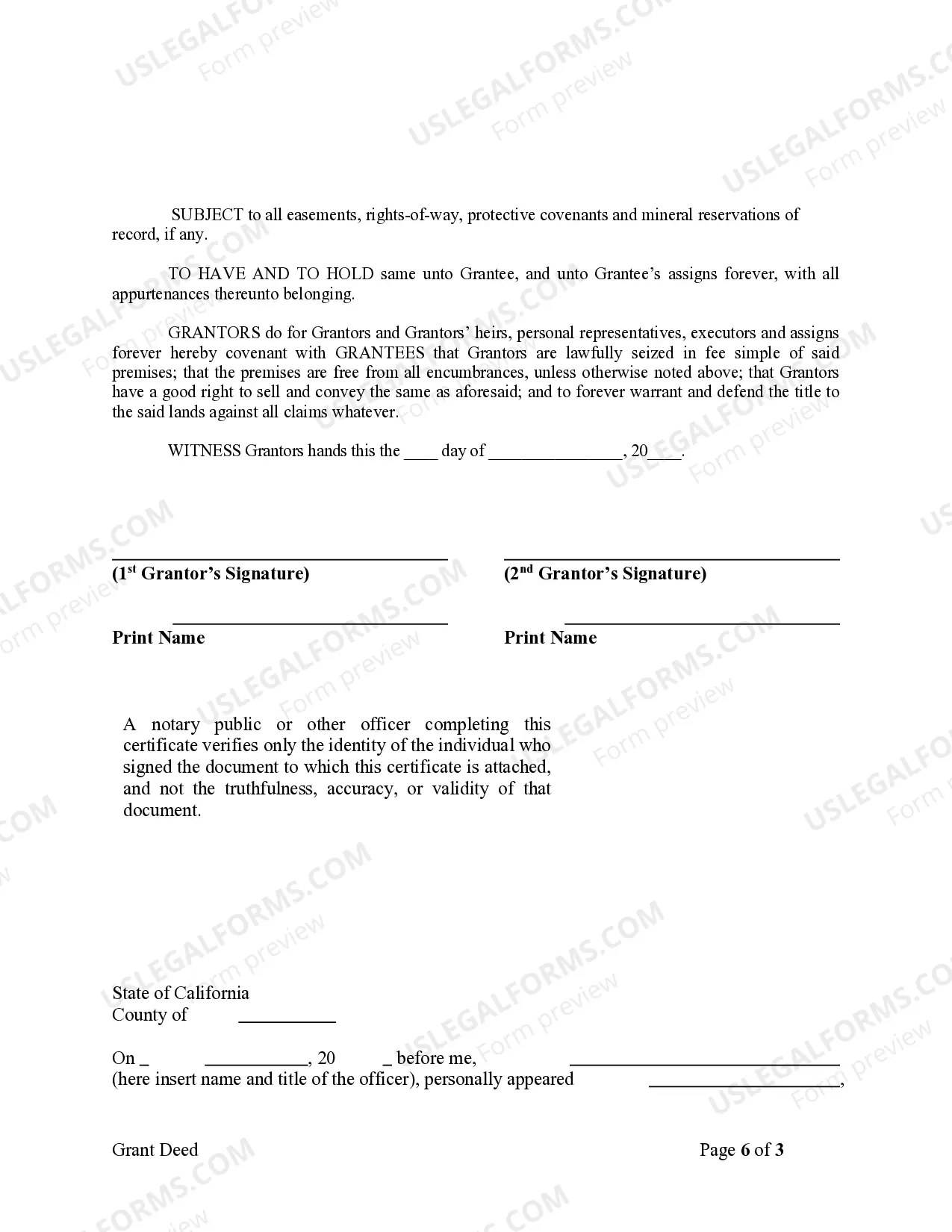
This Grant Deed is a legal document used to transfer property ownership from two individuals to three individuals as joint tenants. It establishes that all grantees hold equal rights to the property and clarifies their shared ownership. This form differs from other deeds, such as quitclaim or warranty deeds, by explicitly stating joint tenancy, which includes the right of survivorship among the owners.
What’s included in this form
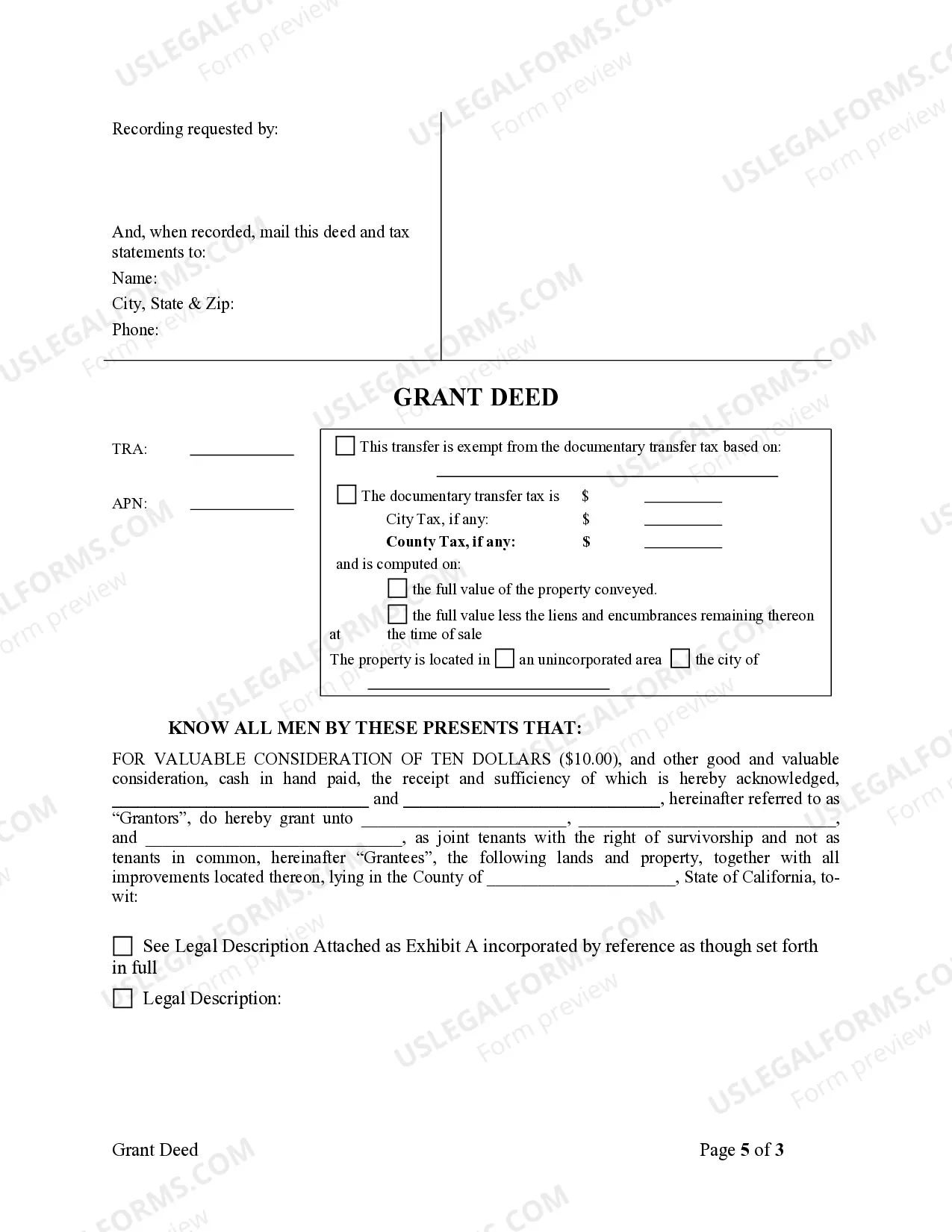
- Details of the grantors (the individuals transferring the property)
- Information about the grantees (the individuals receiving the property)
- The legal description of the property being transferred
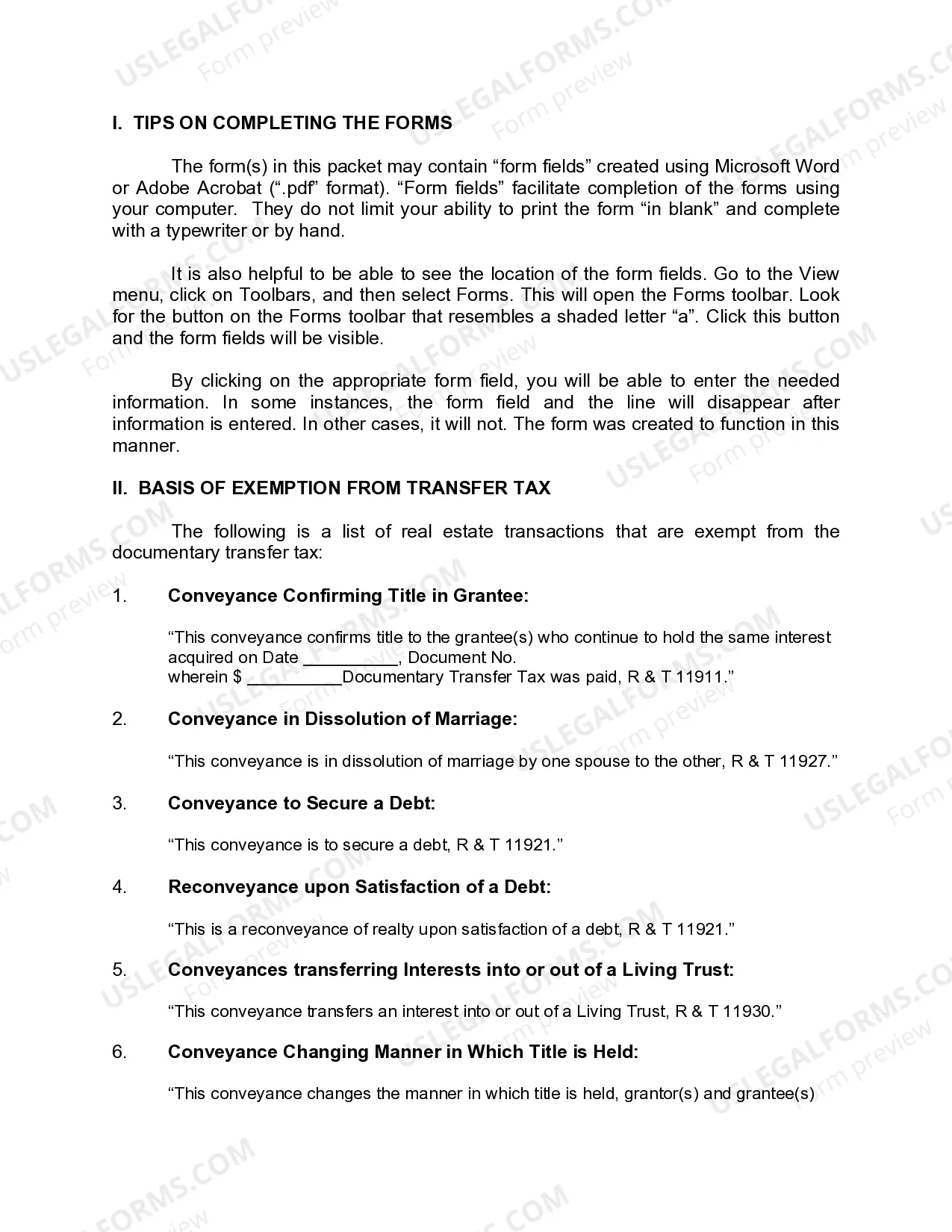
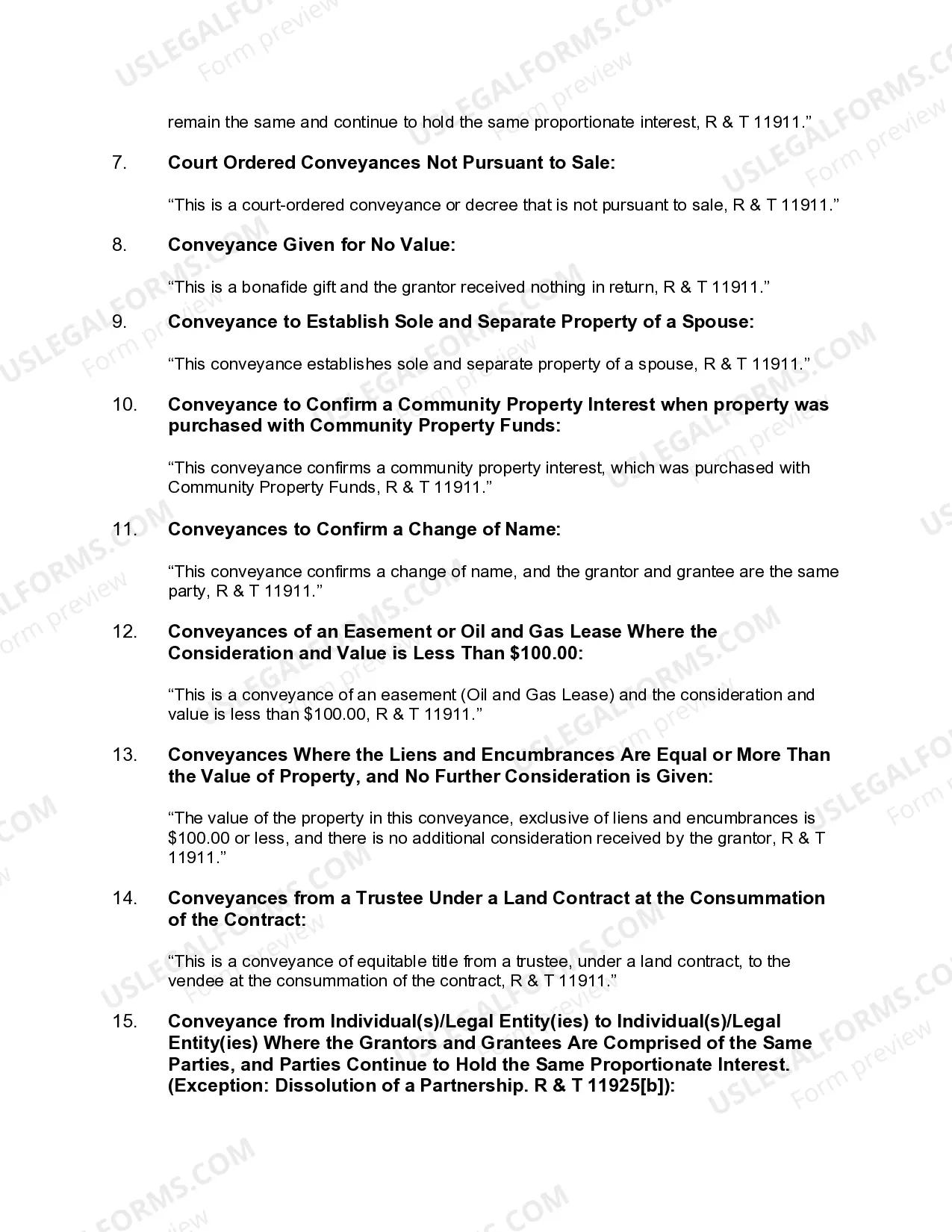
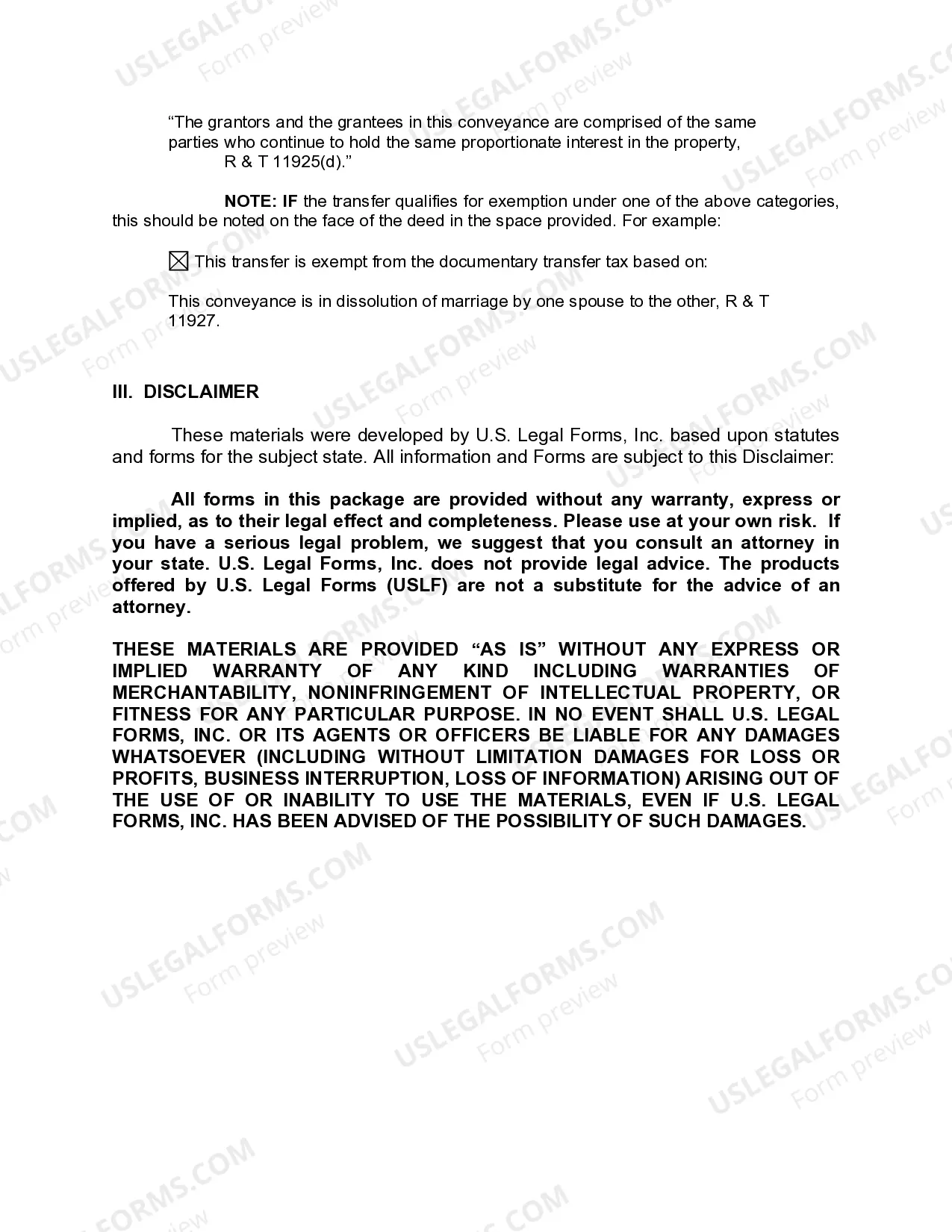
- Confirmation of any exemptions from documentary transfer taxes
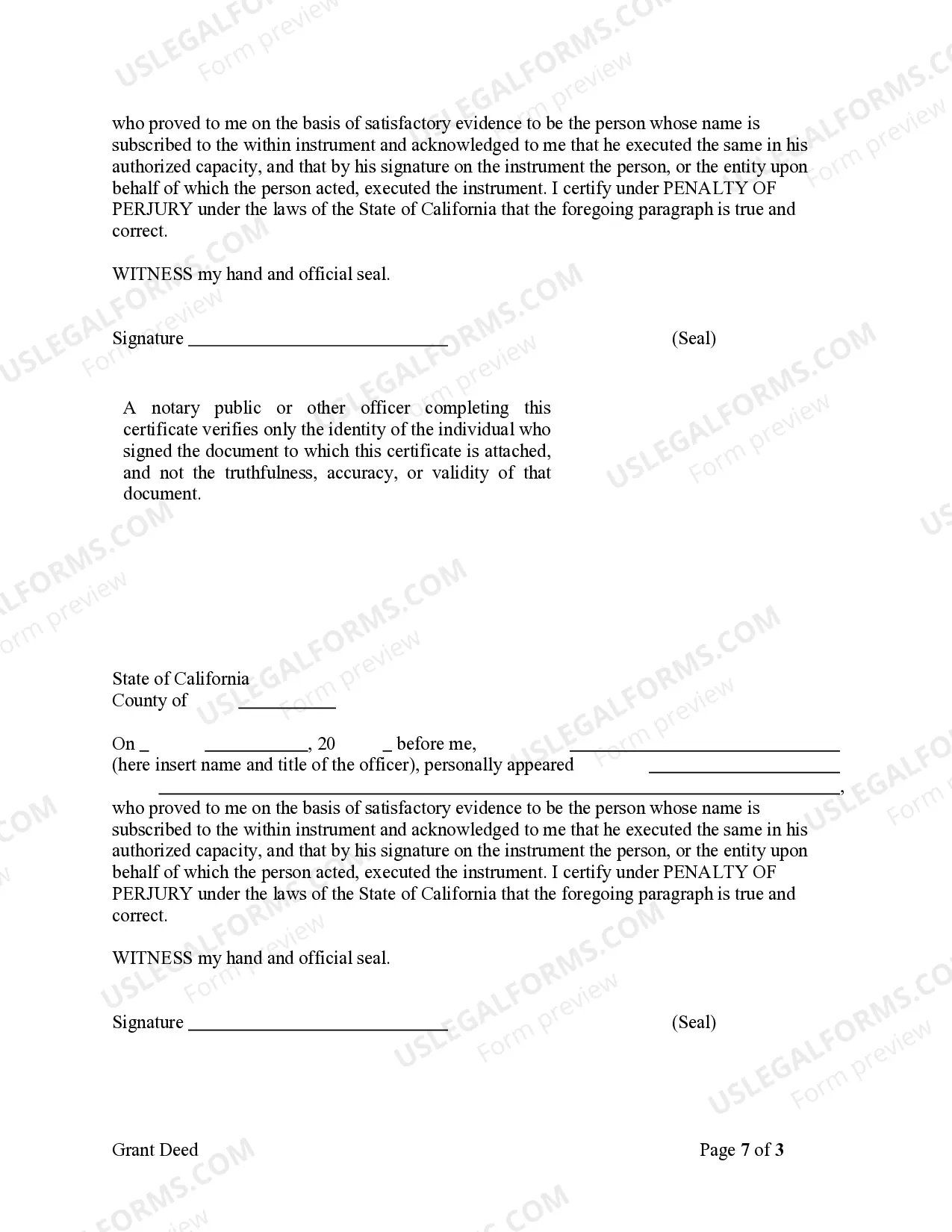
- Signatures of the grantors and any necessary witnesses



When to use this document
This form should be used when two individuals wish to transfer real estate to three individuals, allowing them to hold the property as joint tenants. It is commonly used in situations such as family property transfers, investments among friends, or to add additional owners to a property without changing the ownership structure significantly.
Who should use this form
- Individuals looking to transfer property ownership among family, friends, or partners
- Couples seeking to add more individuals to their joint property ownership
- Real estate investors planning to co-own properties
- Anyone wanting to ensure that property passes directly to the remaining owners upon death
How to prepare this document
- Identify the grantors and enter their full names and address.
- List the names and addresses of the three grantees receiving the property.
- Provide a legal description of the property being transferred.
- Indicate any exemptions from the documentary transfer tax, if applicable.
- Sign and date the deed in the presence of a notary public if required.
Notarization guidance
Notarization is required for this form to take effect. Our online notarization service, powered by Notarize, lets you verify and sign documents remotely through an encrypted video session, available 24/7.
Get your form ready online
Our built-in tools help you complete, sign, share, and store your documents in one place.
Make edits, fill in missing information, and update formatting in US Legal Forms—just like you would in MS Word.
Download a copy, print it, send it by email, or mail it via USPS—whatever works best for your next step.
Sign and collect signatures with our SignNow integration. Send to multiple recipients, set reminders, and more. Go Premium to unlock E-Sign.
If this form requires notarization, complete it online through a secure video call—no need to meet a notary in person or wait for an appointment.
We protect your documents and personal data by following strict security and privacy standards.

Make edits, fill in missing information, and update formatting in US Legal Forms—just like you would in MS Word.

Download a copy, print it, send it by email, or mail it via USPS—whatever works best for your next step.

Sign and collect signatures with our SignNow integration. Send to multiple recipients, set reminders, and more. Go Premium to unlock E-Sign.

If this form requires notarization, complete it online through a secure video call—no need to meet a notary in person or wait for an appointment.

We protect your documents and personal data by following strict security and privacy standards.
Common mistakes
- Failing to provide complete and accurate legal descriptions of the property.
- Not including all necessary grantees or misidentifying them.
- Overlooking signatures or not having the document notarized when required.
- Not indicating whether the transfer is exempt from transfer taxes if applicable.
Benefits of completing this form online
- Convenience of completing the form from anywhere with internet access.
- Editability to tailor the document as needed before finalizing.
- Access to templates drafted by licensed attorneys, ensuring legal accuracy.
- Fast and secure download for immediate use.
Looking for another form?



Form popularity
FAQ
Yes, joint tenancy in California automatically includes the right of survivorship. This means that if one owner passes away, their share of the property immediately transfers to the remaining joint tenants. It's a critical feature of joint tenancy, designed to simplify estate transfers without going through probate. Understanding this aspect can help you make informed decisions about your property ownership.
Yes, one tenant can terminate a joint tenancy in California by filing a legal request with the court or through mutual agreement. This process often requires an understanding of property laws and potential consequences for all parties involved. If you are considering this step, it may be helpful to seek professional guidance to navigate the legal procedures effectively.
When two individuals are on the deed, they generally share ownership of the property, based on the type of tenancy established. If the deed indicates joint tenancy, both have equal rights to the property with the right of survivorship. Alternatively, if it indicates tenancy in common, they each own a share that can be passed to heirs. Understanding the type of deed you have is crucial for estate planning and property management.
If one person wants to leave a joint tenancy in California, they can choose to sell or transfer their interest in the property. This action often changes the nature of ownership from joint tenancy to a tenancy in common. Additionally, the remaining tenants will need to consider how this change affects their rights and responsibilities. Legal advice can provide clarity on the implications of this decision.
Leaving a joint tenancy usually has significant consequences. When one individual departs, the joint tenancy is typically converted into a tenancy in common. This means that the remaining tenants retain ownership of their shares but do not have the right of survivorship regarding the departing individual's share. It’s essential to understand how this affects your property rights and consult with a legal expert if needed.
Yes, one person can break a two-person lease in California, but it comes with specific legal implications. When you sign a lease, you enter a binding agreement with the landlord and the other tenant. If you choose to leave, you may still be responsible for rent until the lease ends or until the landlord finds a new tenant. It's often wise to review your lease terms and consider discussing your situation with a legal expert to understand your options.
A California Grant Deed - Two Individuals to Three Individuals as Joint Tenants means that two people can legally transfer property to three people, who then share ownership equally. This type of deed creates a joint tenancy, allowing all owners to hold an equal share in the property. In the event of one owner's passing, their share automatically transfers to the remaining joint tenants, promoting seamless asset management. If you need guidance on this process, USLegalForms can provide the necessary documentation and support.
In California, specific rules govern joint tenancy ownership, which include equal ownership and the right of survivorship. All joint tenants must acquire their interest in the property at the same time and through the same grant deed. Moreover, any change to this structure, such as converting to tenants in common, requires proper legal documentation. Familiarizing yourself with these rules can lead to informed decisions when creating a California Grant Deed - Two Individuals to Three Individuals as Joint Tenants.
One notable disadvantage of joint tenancy ownership is that it can create challenges regarding individual control over the property. For instance, if one tenant wants to sell their share, all joint tenants must agree, which can lead to conflicts. Additionally, creditors of any joint tenant may place claims on the entire property, exposing it to financial risks. It is essential to weigh these factors before establishing a California Grant Deed - Two Individuals to Three Individuals as Joint Tenants.
The term 'joint tenants' on a grant deed indicates that two or more individuals hold an equal share of a property. When one joint tenant passes away, their share automatically transfers to the surviving tenant(s) under the right of survivorship. This arrangement provides a straightforward way for property transfer without going through probate. Understanding this can help you navigate your options when preparing a California Grant Deed - Two Individuals to Three Individuals as Joint Tenants.