California Grant Deed - One Individual to Five Individuals as Joint Tenants
About this form
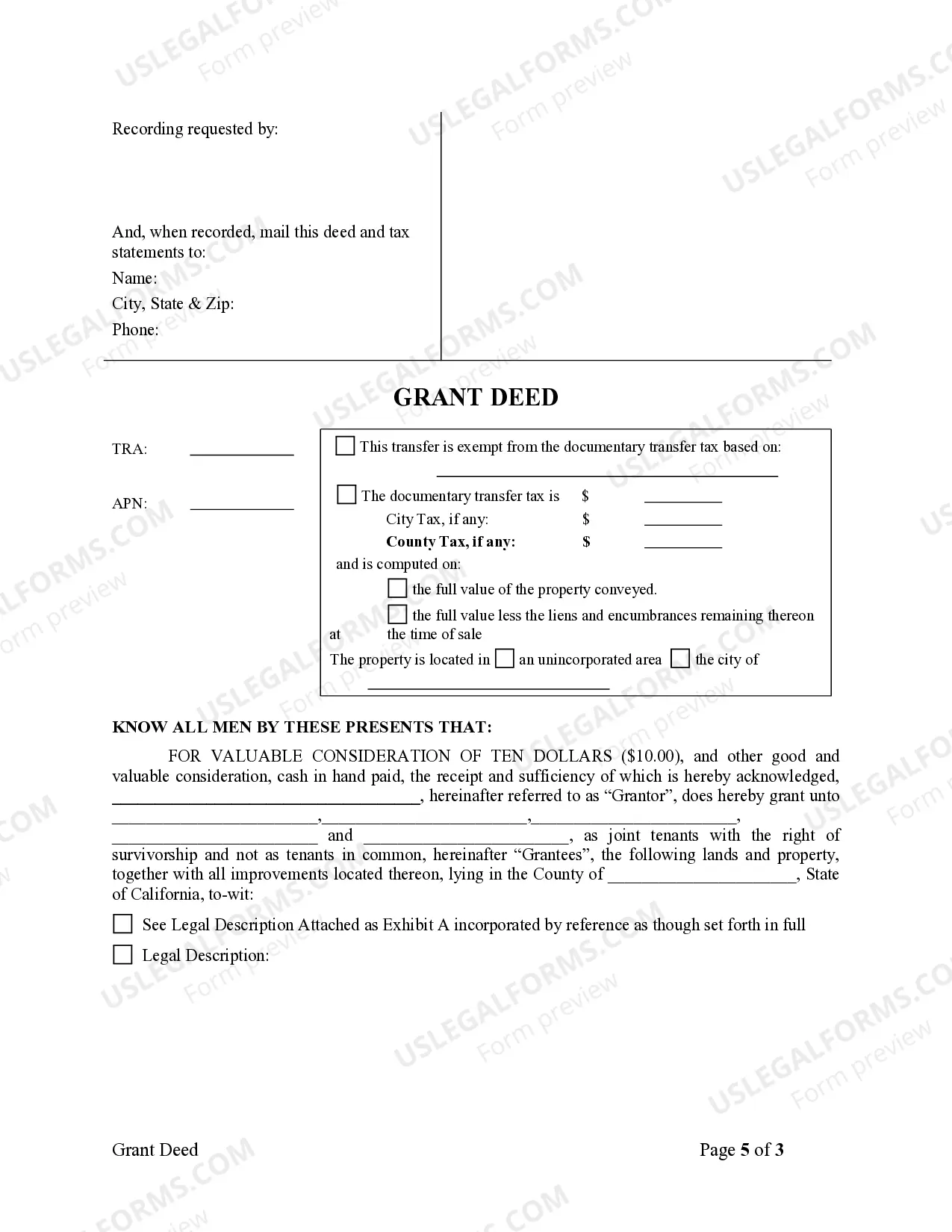
The Grant Deed - One Individual to Five Individuals as Joint Tenants is a legal document that facilitates the transfer of real property from one individual (the grantor) to five individuals who will hold the title as joint tenants. This form is unique because it not only confirms the ownership but also establishes that the co-owners will have rights of survivorship, meaning that if one owner dies, their share automatically passes to the surviving owners. This is a crucial distinction from other deeds that do not include this provision.
Form components explained
- Grantor details: Information about the individual transferring the property.
- Grantee details: Names and addresses of the five individuals receiving the property.
- Legal description of the property: A detailed description to identify the property being transferred.
- Joint tenancy clause: Specifies that the grantees will hold title as joint tenants with rights of survivorship.
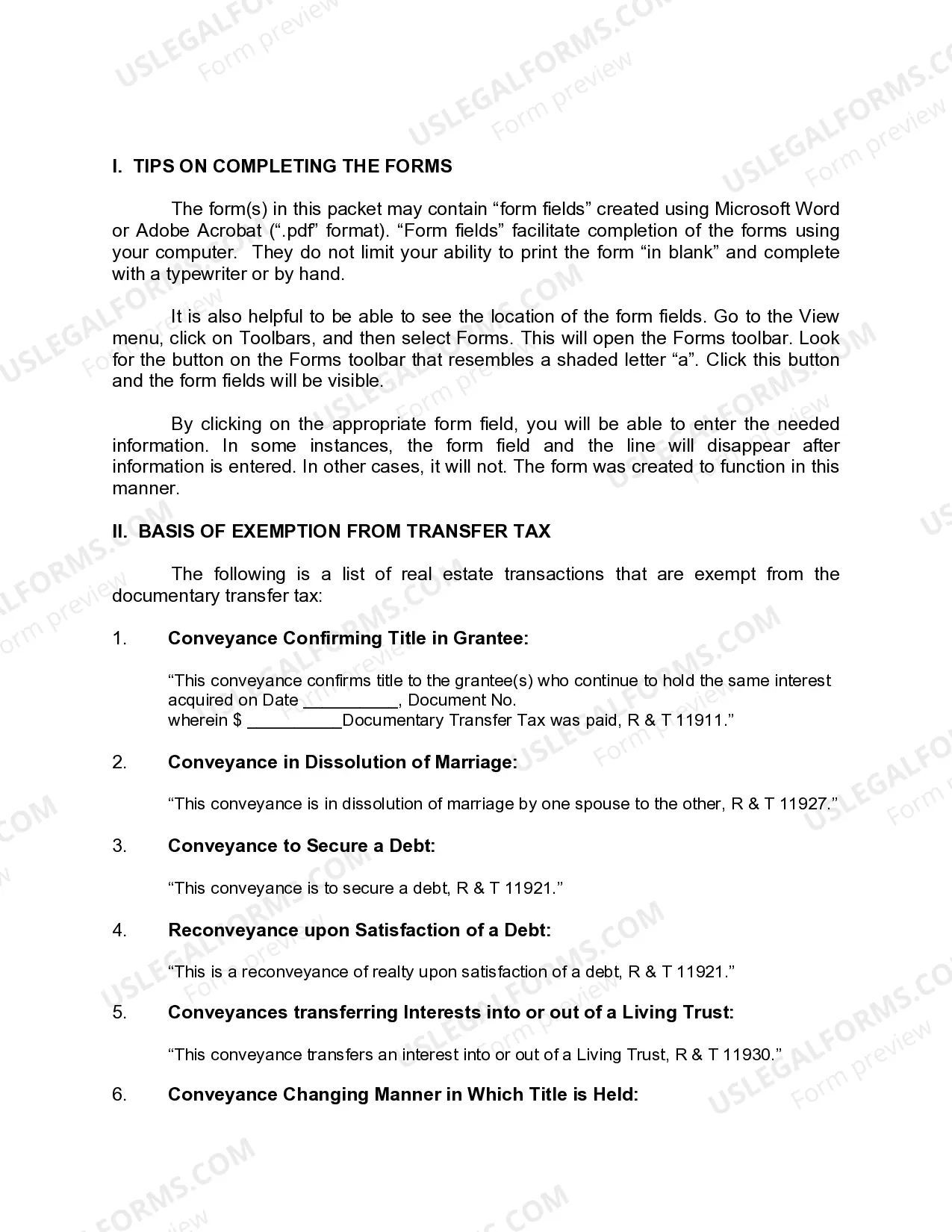
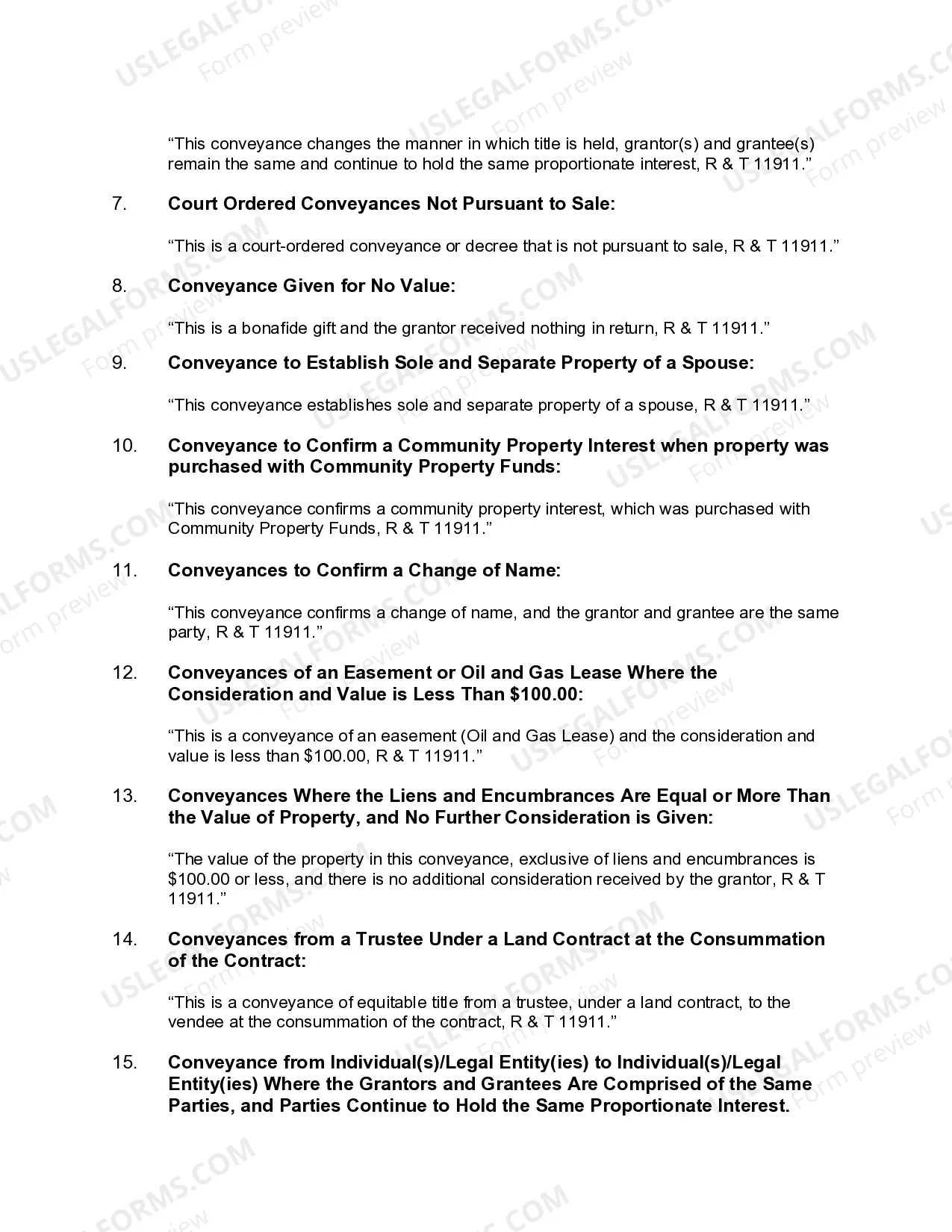
- Exemption notice: Space to indicate if the transaction is exempt from transfer tax.


When to use this form
This form is needed when an individual wishes to transfer property ownership to five persons, ensuring that they all hold it as joint tenants. It is particularly useful in family situations or close partnerships where there is an understanding that ownership will continue among the surviving parties without needing additional legal action after one owner's death.
Who needs this form
This form is suitable for:
- Individuals wishing to transfer property ownership to family members or close friends.
- Real estate owners looking for a simple and effective way to establish joint ownership.
- Anyone interested in ensuring rights of survivorship among co-owners to avoid probate complications.
Steps to complete this form
To complete the Grant Deed, follow these steps:
- Identify the parties: Fill in the names and addresses of the grantor and each grantee.
- Specify the property: Include a detailed legal description of the property being transferred.
- Enter relevant dates: Ensure all dates related to the property transfer are accurately filled in.
- Include the joint tenancy clause: Confirm that the grantees are holding title as joint tenants.
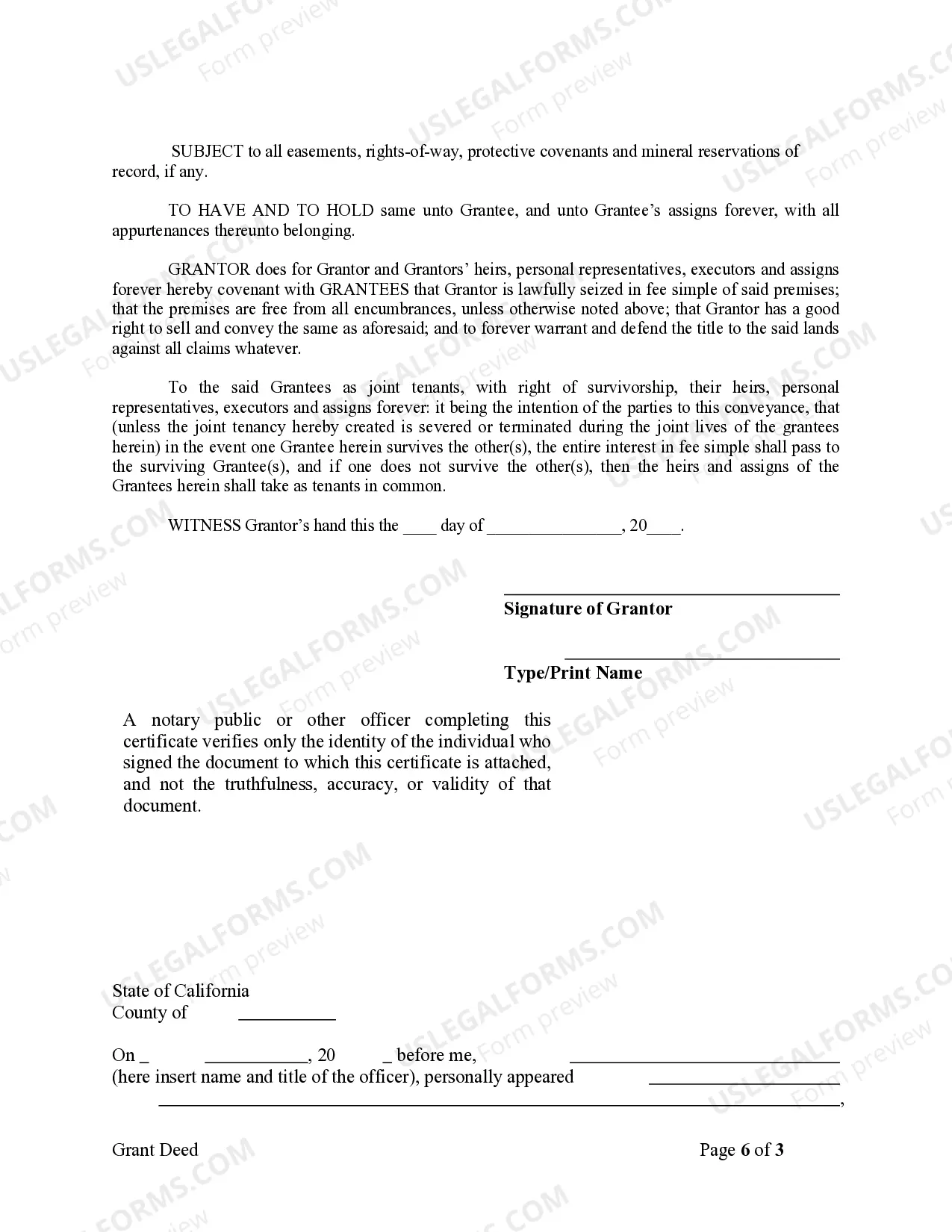
- Sign and date the form: The grantor must sign the form to validate the transfer.
Is notarization required?
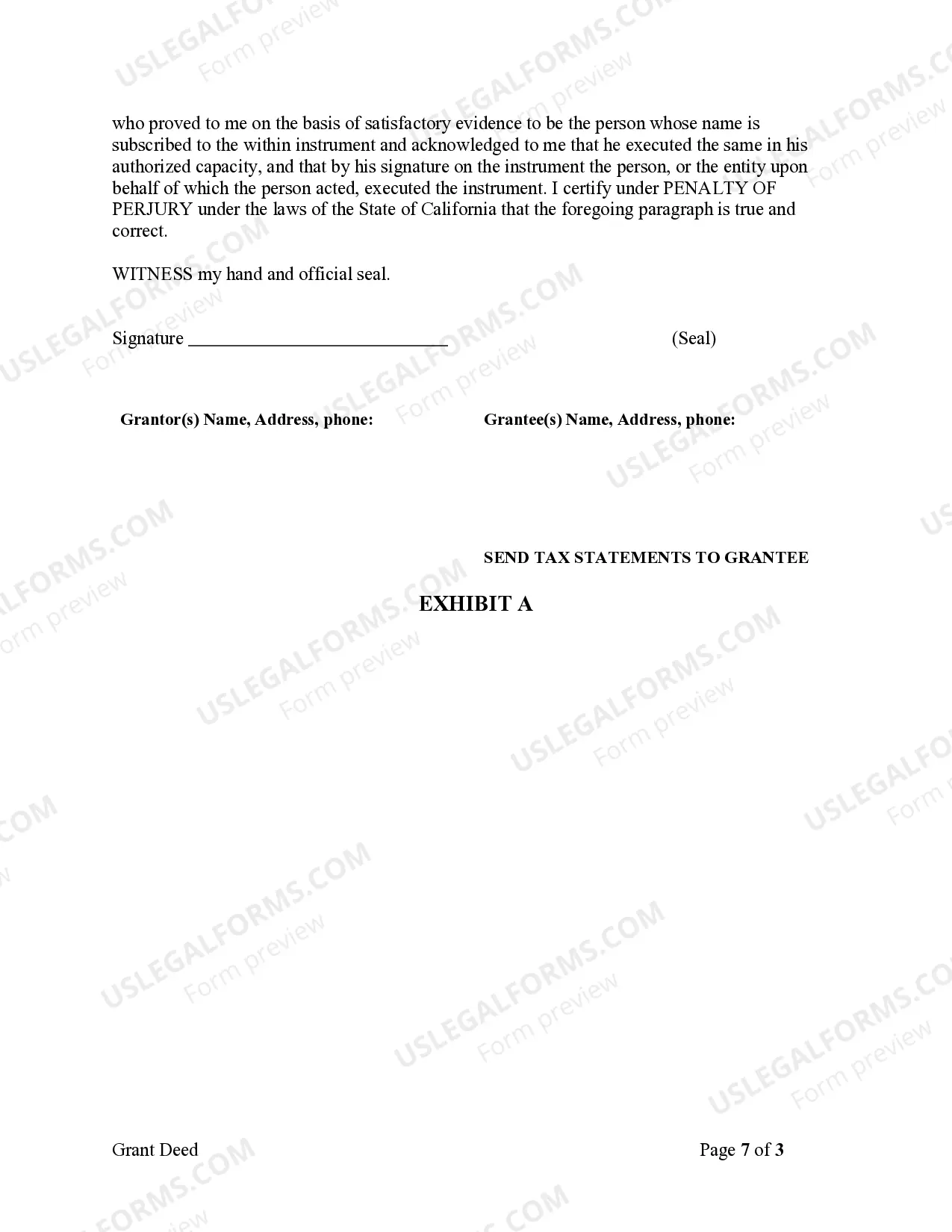
This form needs to be notarized to ensure legal validity. US Legal Forms provides secure online notarization powered by Notarize, allowing you to complete the process through a verified video call, available anytime.
Get your form ready online
Our built-in tools help you complete, sign, share, and store your documents in one place.
Make edits, fill in missing information, and update formatting in US Legal Forms—just like you would in MS Word.
Download a copy, print it, send it by email, or mail it via USPS—whatever works best for your next step.
Sign and collect signatures with our SignNow integration. Send to multiple recipients, set reminders, and more. Go Premium to unlock E-Sign.
If this form requires notarization, complete it online through a secure video call—no need to meet a notary in person or wait for an appointment.
We protect your documents and personal data by following strict security and privacy standards.

Make edits, fill in missing information, and update formatting in US Legal Forms—just like you would in MS Word.

Download a copy, print it, send it by email, or mail it via USPS—whatever works best for your next step.

Sign and collect signatures with our SignNow integration. Send to multiple recipients, set reminders, and more. Go Premium to unlock E-Sign.

If this form requires notarization, complete it online through a secure video call—no need to meet a notary in person or wait for an appointment.

We protect your documents and personal data by following strict security and privacy standards.
Common mistakes to avoid
- Failing to accurately identify the property with a complete legal description.
- Leaving out one or more grantees' details, which can lead to ownership disputes.
- Not including the joint tenancy clause, which is essential for rights of survivorship.
- Failing to sign and date the deed properly, leading to potential challenges in validity.
Benefits of using this form online
- Convenience: Easily fill out the form at your own pace from any location.
- Editability: Update the form as needed before finalizing the details.
- Reliability: Access professionally drafted templates created by licensed attorneys.
Legal use & context
- The grant deed establishes legal ownership and is enforceable in court.
- Understanding the rights of joint tenants is crucial for managing ownership after a co-owner's death.
- This form may affect property taxes and estate planning, so consider legal advice if necessary.
What to keep in mind
- Make sure to include all grantees' names and property details accurately.
- Understand the implications of joint tenancy and rights of survivorship.
- Consult local laws to ensure compliance with property transfer requirements.
Looking for another form?

Form popularity
FAQ
Yes, one person can break a two-person lease in California, but this typically requires a proper notice period. Depending on the lease terms, the departing tenant may be responsible for the remaining rent until a new tenant takes their place. Understanding the implications of a California Grant Deed - One Individual to Five Individuals as Joint Tenants can clarify ownership issues if such a situation arises.
Leaving a joint tenancy can lead to a change in ownership dynamics. If you depart from the arrangement, the remaining tenants assume full ownership of the property. Knowing the ramifications of a California Grant Deed - One Individual to Five Individuals as Joint Tenants can help you strategically plan your exit, ensuring all parties are aware of their rights.
If one person wants to leave a joint tenancy, they can choose to sell or transfer their share. Alternatively, they might request a formal partition of the property, allowing them to exit the arrangement. Utilizing a California Grant Deed - One Individual to Five Individuals as Joint Tenants can facilitate this process, ensuring the transaction complies with legal standards.
Yes, in California, joint tenancy comes with the right of survivorship. This means that when one tenant passes away, their share of the property automatically goes to the surviving joint tenants. This legal principle is significant when considering a California Grant Deed - One Individual to Five Individuals as Joint Tenants, as it impacts inheritance and property transfer.
Yes, one tenant can terminate a joint tenancy in California, but it requires specific actions. The tenant must file a legal action to partition the property or buy out the other co-owners. This process can be complex; however, understanding the California Grant Deed - One Individual to Five Individuals as Joint Tenants can help tenants navigate these situations smoothly.
To add a name to a grant deed in California, you should prepare a new grant deed that reflects the current owners and the name of the individual you wish to add. Make sure you are clear about the type of ownership, whether it's joint tenancy or another arrangement. Finally, after signing and notarizing the document, file it with the county recorder's office to make it official.
Joint tenants on a grant deed refers to the form of ownership where two or more individuals hold the title together, sharing equal rights to the property. This means that each joint tenant has an undivided interest in the entire property, rather than a specific portion. Furthermore, joint tenants also have the right of survivorship, allowing the property to pass directly to the remaining joint tenants upon one's death.
To add someone to a deed in California joint tenancy, you need to complete a new California Grant Deed. Designate the current owners and add the new owner's name as a joint tenant. It is essential to include all required details about the property and have the deed signed and notarized for it to take effect correctly.
A grant deed joint tenant means that two or more individuals share equal ownership of a property without the right of survivorship. This arrangement allows for the seamless transfer of ownership among the joint tenants if one passes away. Importantly, when using the California Grant Deed - One Individual to Five Individuals as Joint Tenants, all owners must hold equal shares of the property.
Filling out a California Grant Deed is straightforward if you follow the correct steps. First, state the names of the current owner and the new owners, ensuring to include as many as five individuals if needed. Then, describe the property clearly and include the county where it is located. You must also sign the deed, but remember to have it notarized for it to be legally binding.