Accounts Receivable Security Agreement
Overview of this form
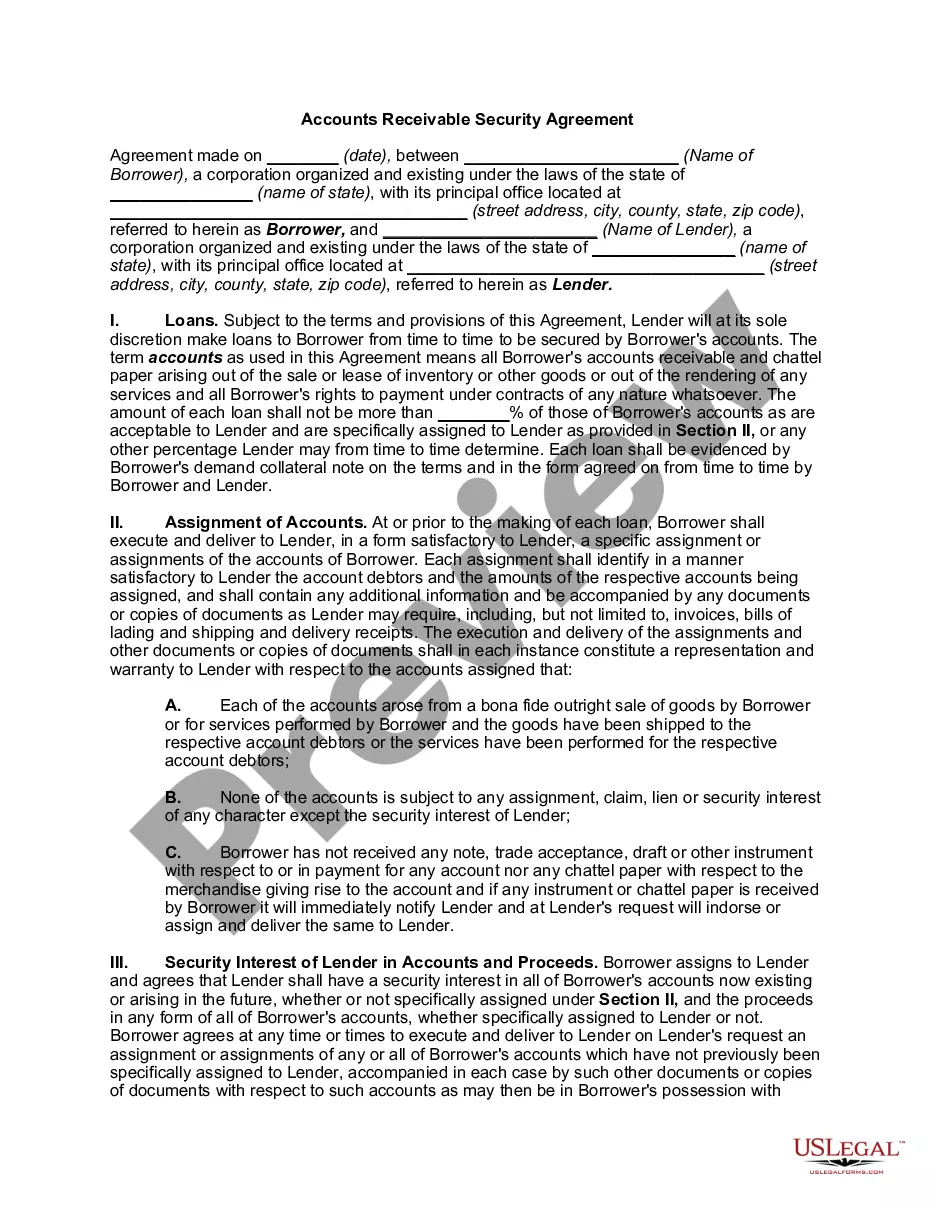
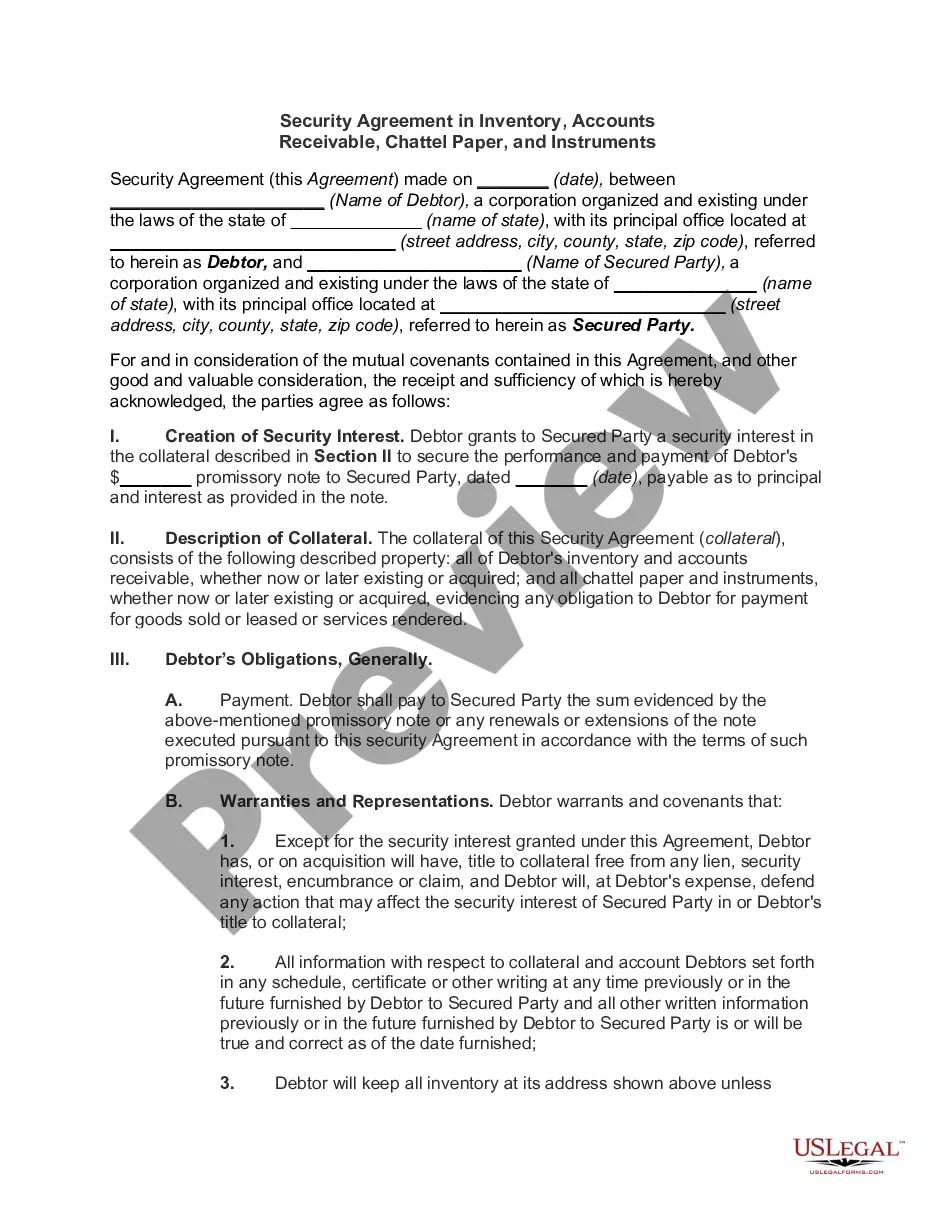
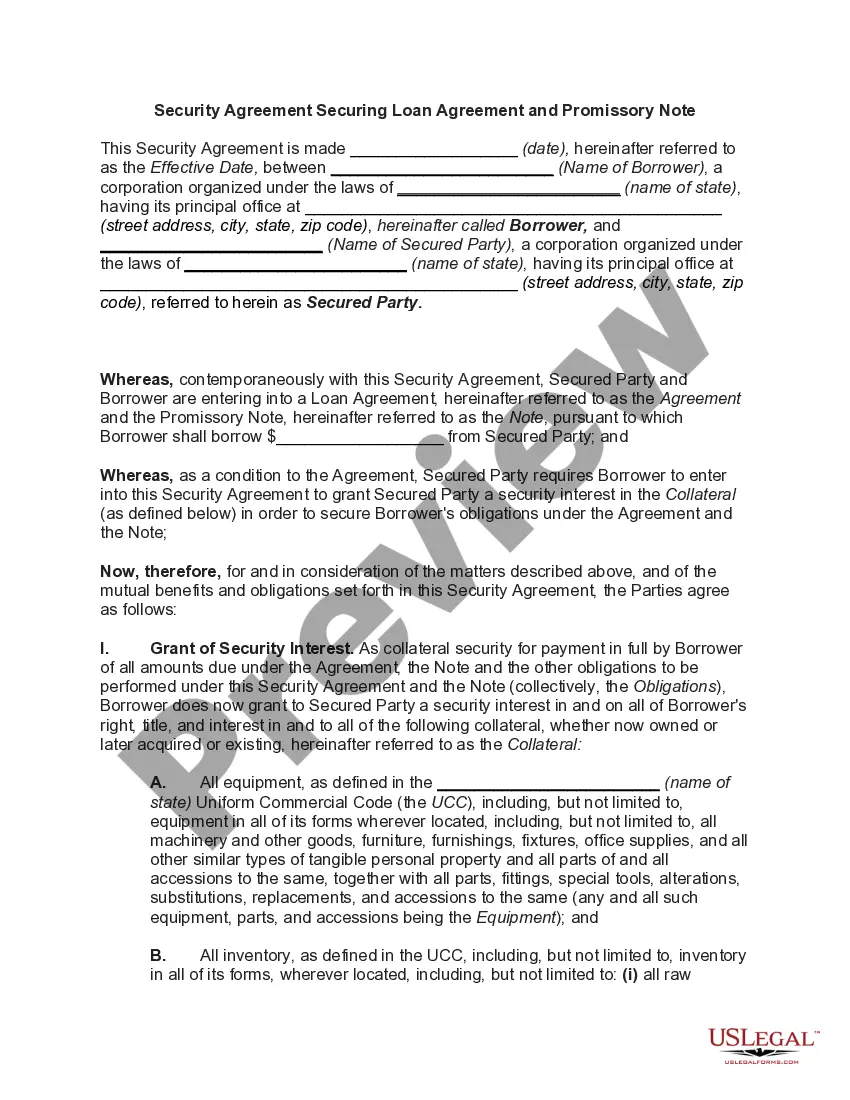
The Accounts Receivable Security Agreement is a legal document that establishes a security interest in accounts receivable to secure a loan or credit obligation. This agreement allows a borrower to use their receivables as collateral, offering protection to the lender in case of default. Unlike a mortgage or deed of trust on real estate, this agreement specifically pertains to personal property rights, as governed by Article 9 of the Uniform Commercial Code (UCC).
Form components explained
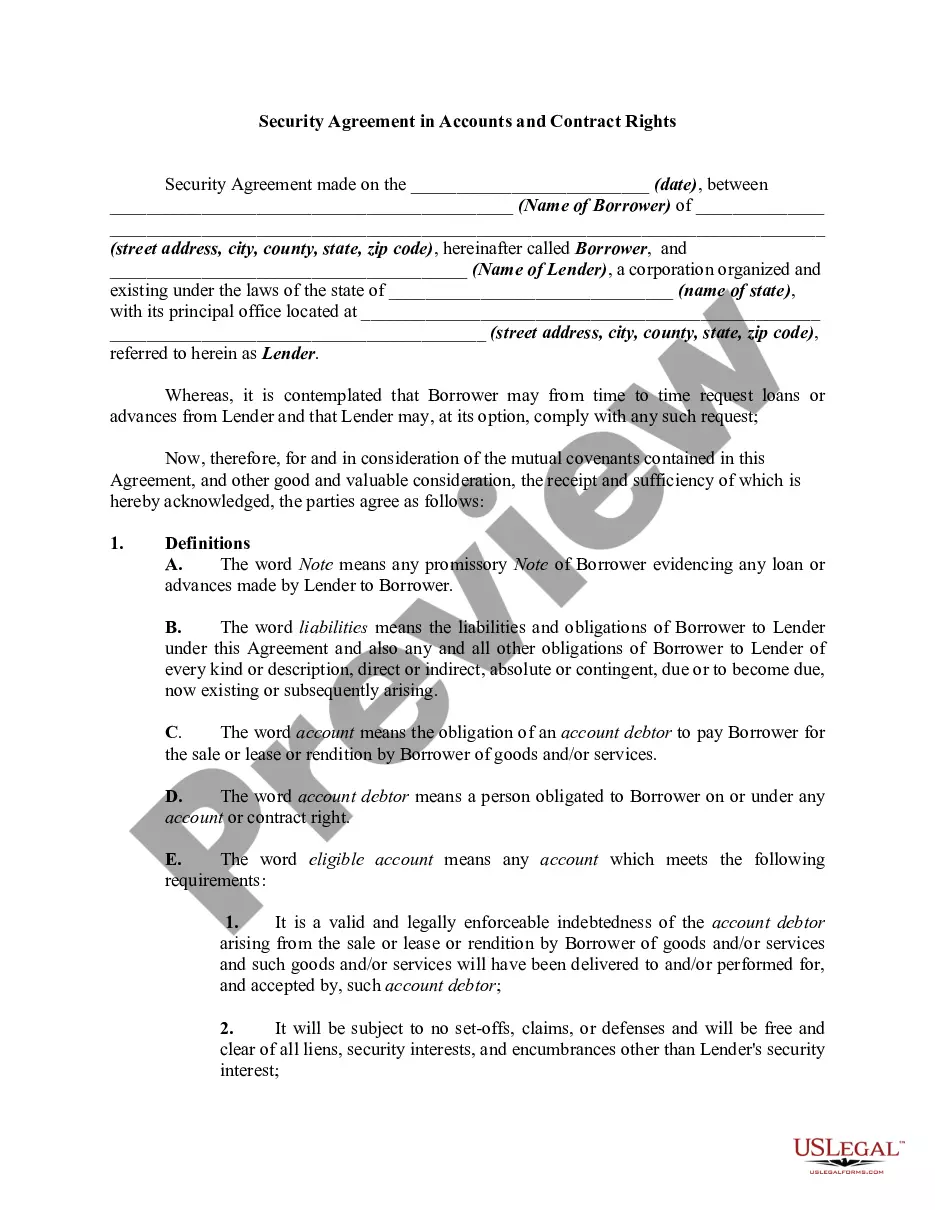
- Identification of Borrower and Lender, including their respective legal addresses.
- Details on loans made by the Lender to the Borrower and conditions for those loans.
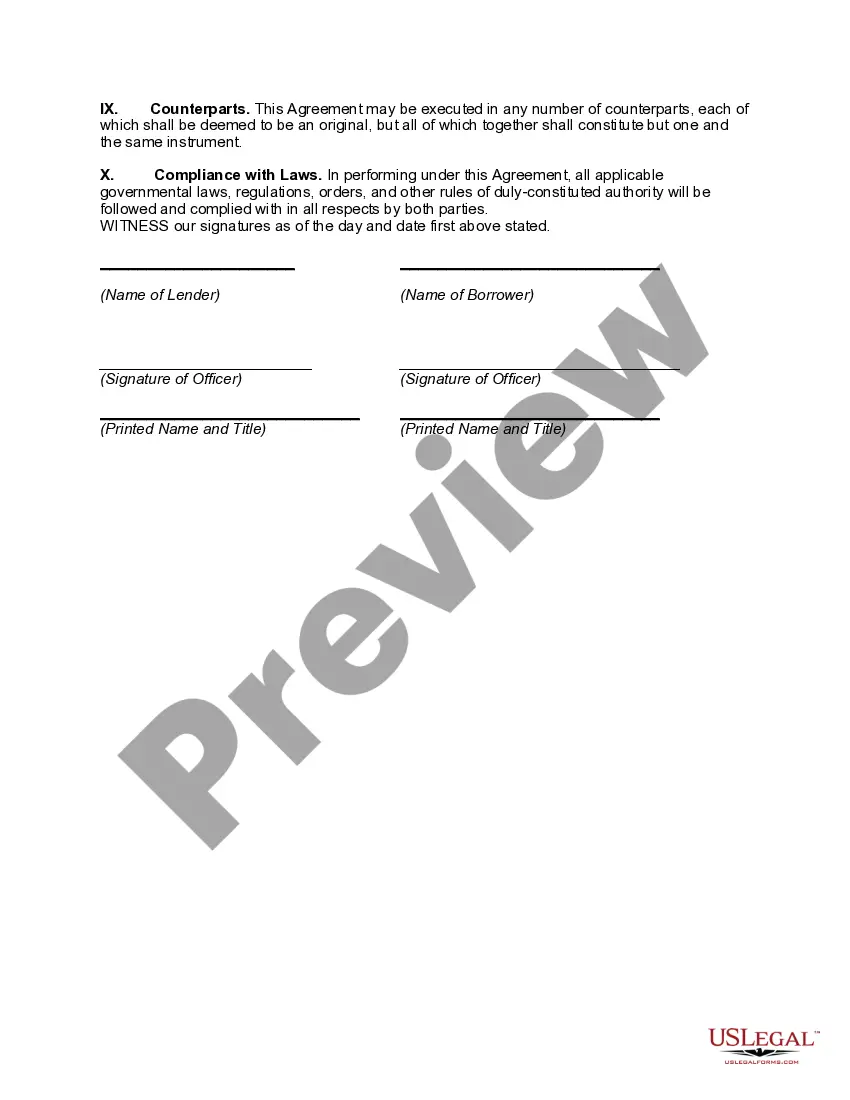
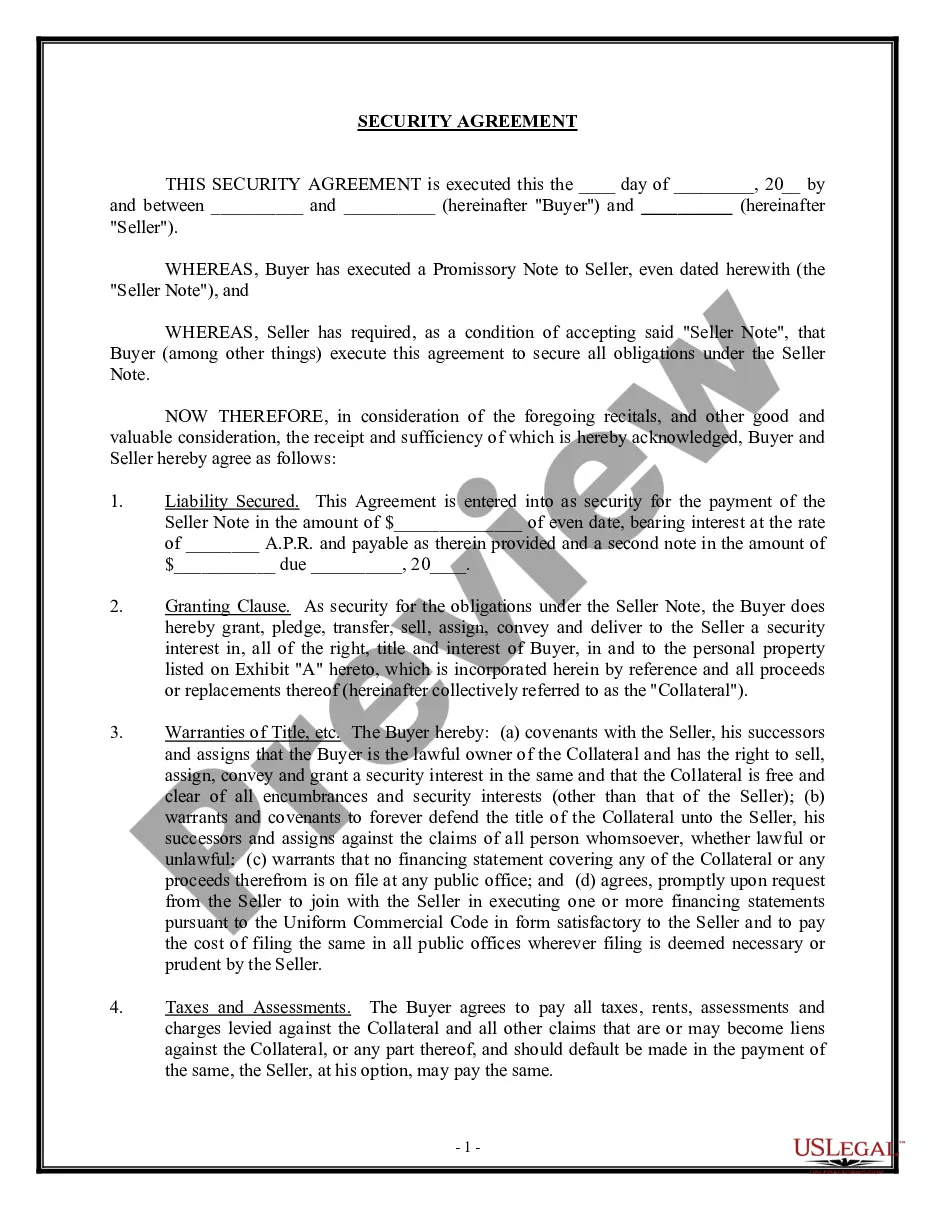
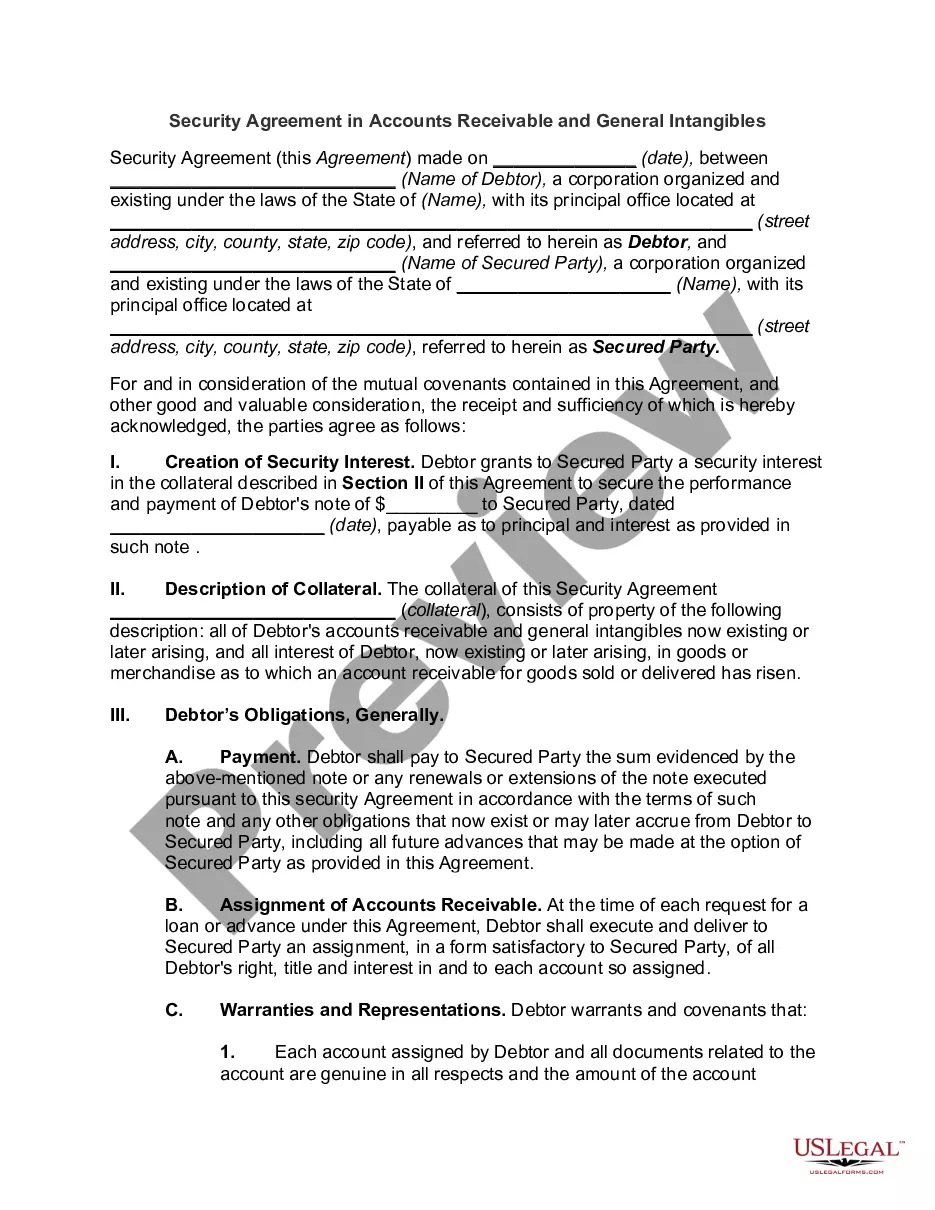
- Assignment of accounts receivable to the Lender for security interests.
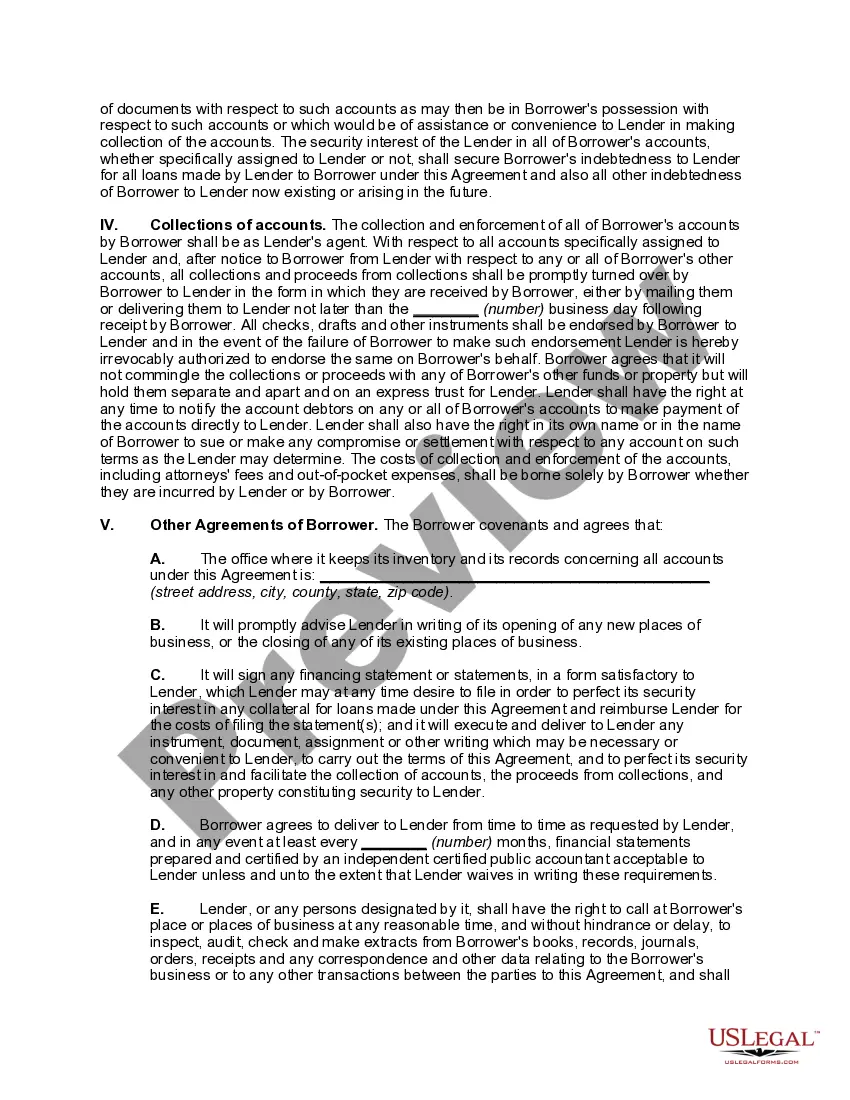
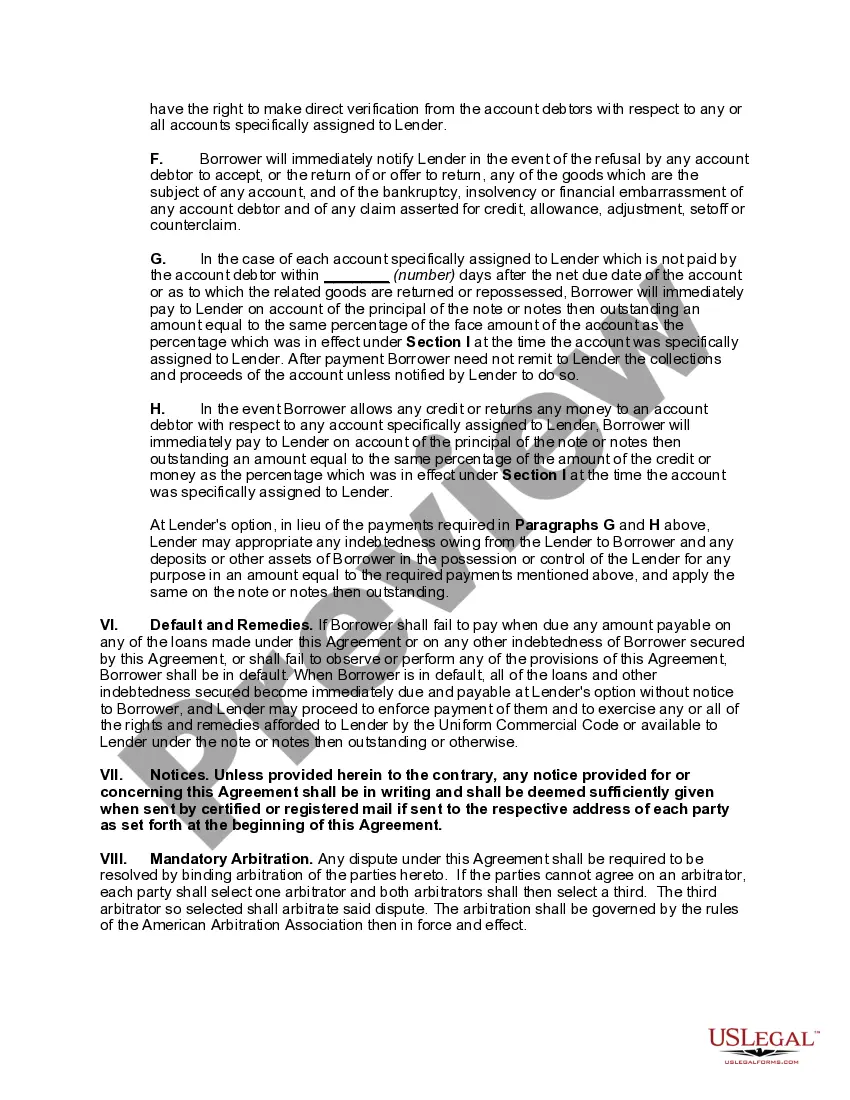
- Provisions for collections of assigned accounts and the handling of proceeds.
- Borrower's agreements regarding their business operations and financial reporting.
- Clauses addressing default and remedies available to the Lender.
When to use this form
This form is useful for businesses seeking financing using their accounts receivable as collateral. It is typically employed when a company needs reliable funding while maintaining control over their assets. Common scenarios include expanding operations, managing cash flow, and consolidating debts.
Who needs this form
- Businesses seeking loans or credit while leveraging their accounts receivable.
- Corporations looking to secure financing through their assets.
- Borrowers who need to formalize an agreement with a Lender for secured credit transactions.
Instructions for completing this form
- Identify the parties involved: Enter the legal names and addresses of the Borrower and Lender.
- Specify the loan terms: Fill in details regarding the amount and terms of the loans.
- Assign accounts receivable: Clearly list the accounts that are being assigned to the Lender.
- Enter required dates and signatures: Complete all necessary fields and obtain signatures from authorized officers.
- Review and retain copies: Ensure that both parties have copies of the signed agreement for their records.
Notarization requirements for this form
Notarization is not commonly needed for this form. However, certain documents or local rules may make it necessary. Our notarization service, powered by Notarize, allows you to finalize it securely online anytime, day or night.
Get your form ready online
Our built-in tools help you complete, sign, share, and store your documents in one place.
Make edits, fill in missing information, and update formatting in US Legal Forms—just like you would in MS Word.
Download a copy, print it, send it by email, or mail it via USPS—whatever works best for your next step.
Sign and collect signatures with our SignNow integration. Send to multiple recipients, set reminders, and more. Go Premium to unlock E-Sign.
If this form requires notarization, complete it online through a secure video call—no need to meet a notary in person or wait for an appointment.
We protect your documents and personal data by following strict security and privacy standards.

Make edits, fill in missing information, and update formatting in US Legal Forms—just like you would in MS Word.

Download a copy, print it, send it by email, or mail it via USPS—whatever works best for your next step.

Sign and collect signatures with our SignNow integration. Send to multiple recipients, set reminders, and more. Go Premium to unlock E-Sign.

If this form requires notarization, complete it online through a secure video call—no need to meet a notary in person or wait for an appointment.

We protect your documents and personal data by following strict security and privacy standards.
Common mistakes to avoid
- Failing to accurately identify all accounts receivable can lead to complications in enforcement.
- Omitting necessary signatures from authorized individuals can invalidate the agreement.
- Neglecting to review state-specific requirements may lead to non-compliance issues.
- Not keeping proper records of the assigned accounts can complicate collections.
Advantages of online completion
- Convenient access to legal forms saves time and effort.
- Editability allows for customization to meet specific business needs.
- Ensures reliability with legally vetted templates drafted by licensed attorneys.
Looking for another form?

Form popularity
FAQ
A security agreement is a document that provides a lender a security interest in a specified asset or property that is pledged as collateral. Security agreements often contain covenants that outline provisions for the advancement of funds, a repayment schedule, or insurance requirements.
A ?SECURITY AGREEMENT? is an agreement that. creates or provides for an interest in personal property. that secures payment or performance of an obligation.
Attachment is a necessary requirement of perfection of a security interest. So, the only answer choice that is not required is that the creditor take control of the collateral within 20 days.
An accounts receivable purchase agreement is a contract between a buyer and seller. The seller sells receivables to get cash up front, and the buyer has the right to collect the receivables from the original customer.
Certain specific requirements are required for the security agreement to form the foundation for a valid security interest, namely 1) it must be signed, 2) it must clearly state that a security interest is intended, and 3) it must contain a sufficient description of the collateral subject to the security interest.
HOW TO PROTECT YOUR ACCOUNTS RECEIVABLE WITH TRADE CREDIT INSURANCE Protect their accounts receivable against default risks. Extend competitive payment terms without worry. Allow extended market share by moving business deals abroad.
You can prepare your own security agreement using an online form, or you can consult an attorney to create one for you. Some key provisions in a security agreement include: Describing the collateral as accurately and as detailed as possible, so both the borrower and the lender agree upon the secured property.
A security agreement creates the security interest, making it enforceable between the secured party and the debtor. A UCC-1 financing statement neither creates a security interest nor does it alter its scope; it only gives notice of the security interest to third parties.