Security Agreement - Short Form
What this document covers
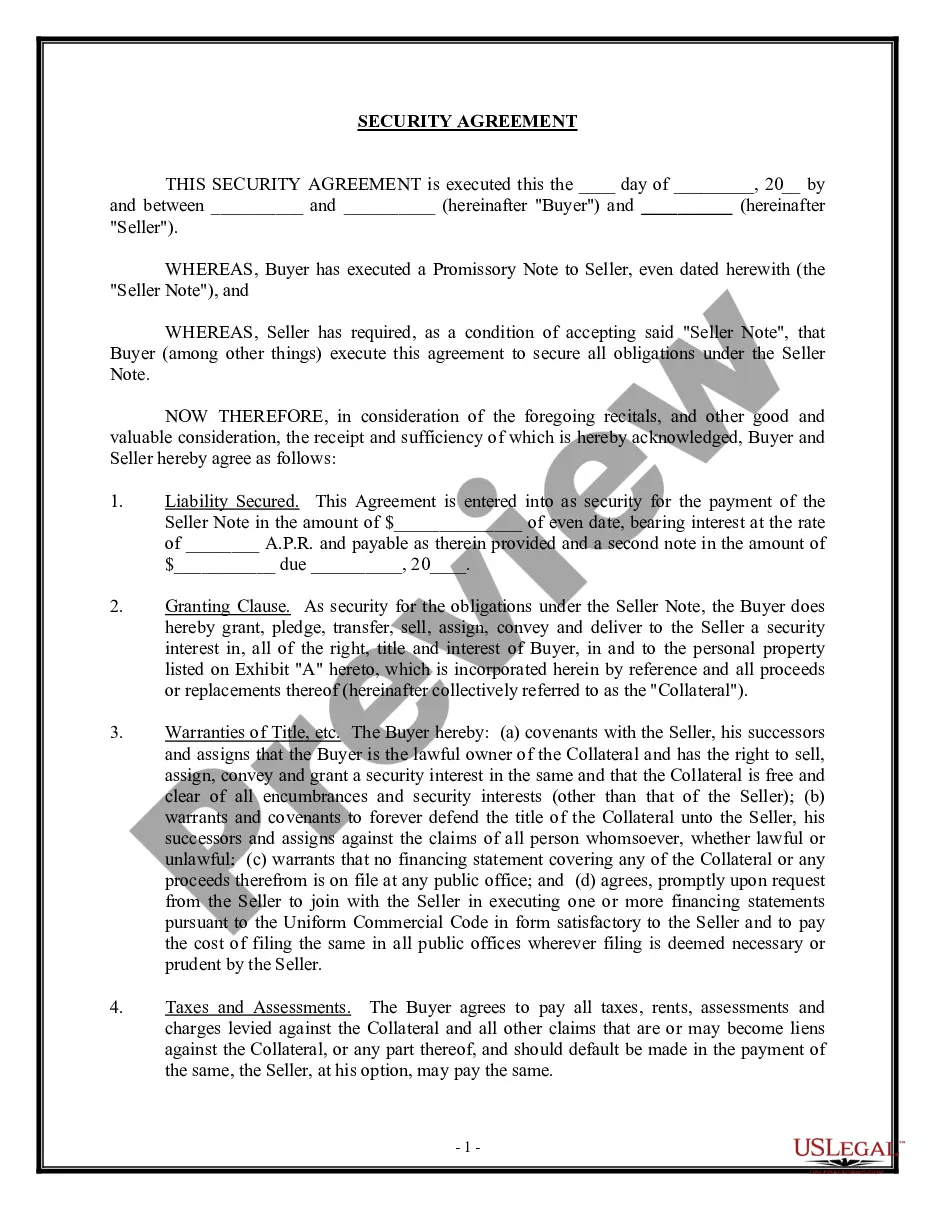
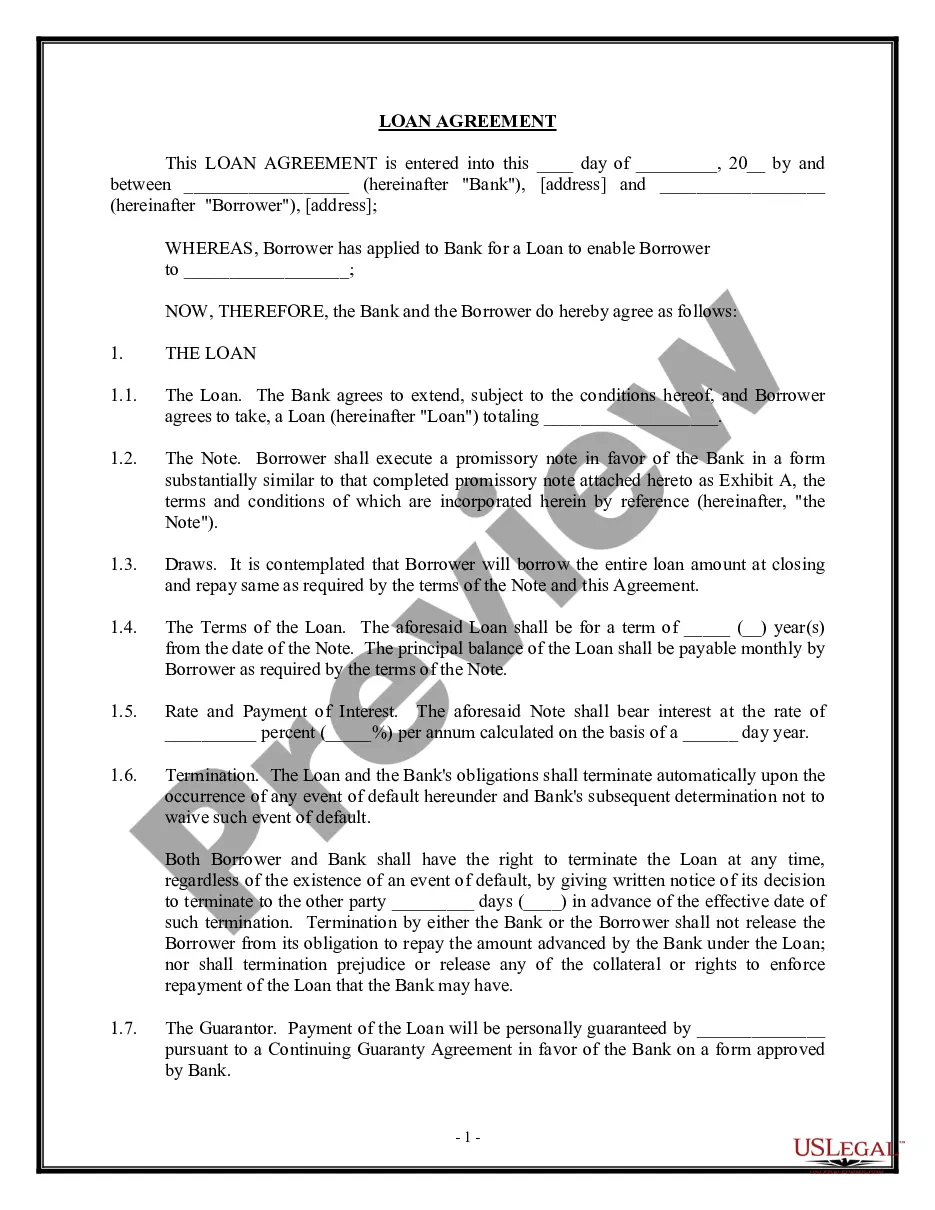
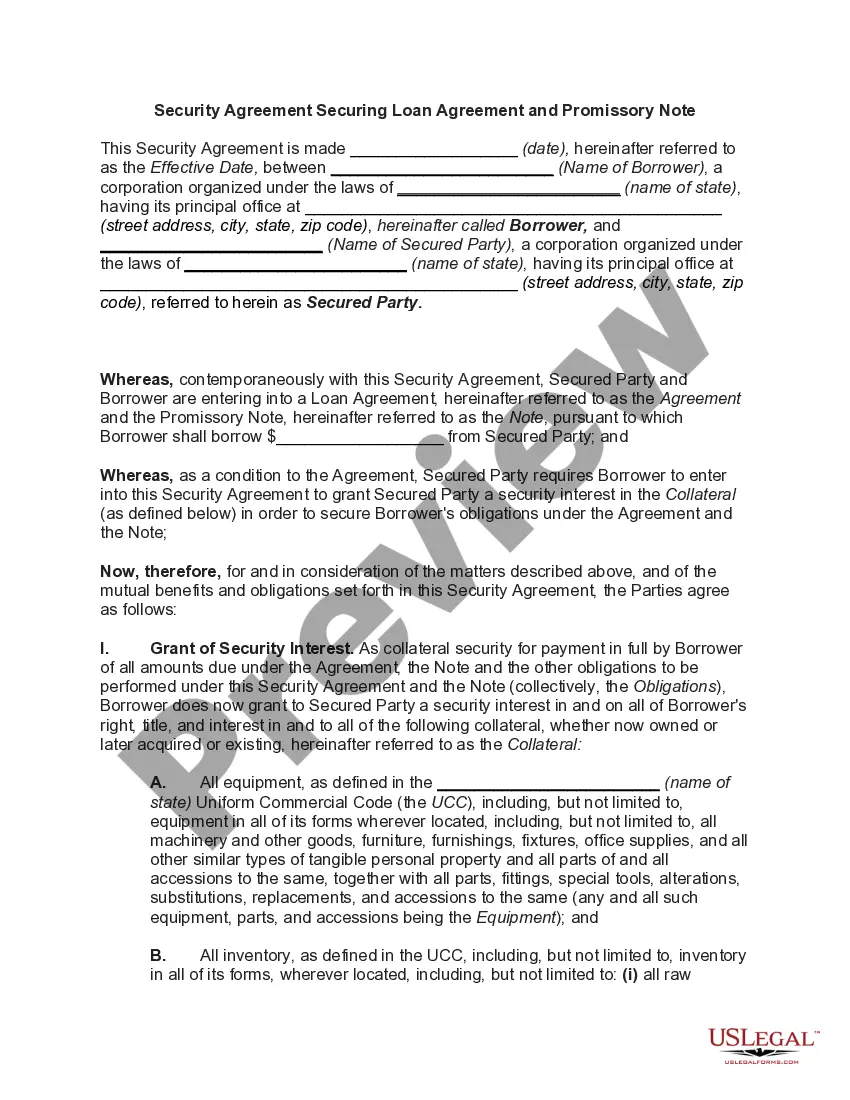
The Security Agreement - Short Form is a legal document used to secure a seller note by establishing a security interest in specific personal property. This form is particularly useful for a buyer when a seller requires collateral as assurance for payment obligations under the seller note. Unlike other agreements, this form is tailored for short transactions, making it efficient and straightforward for both parties involved.
What’s included in this form
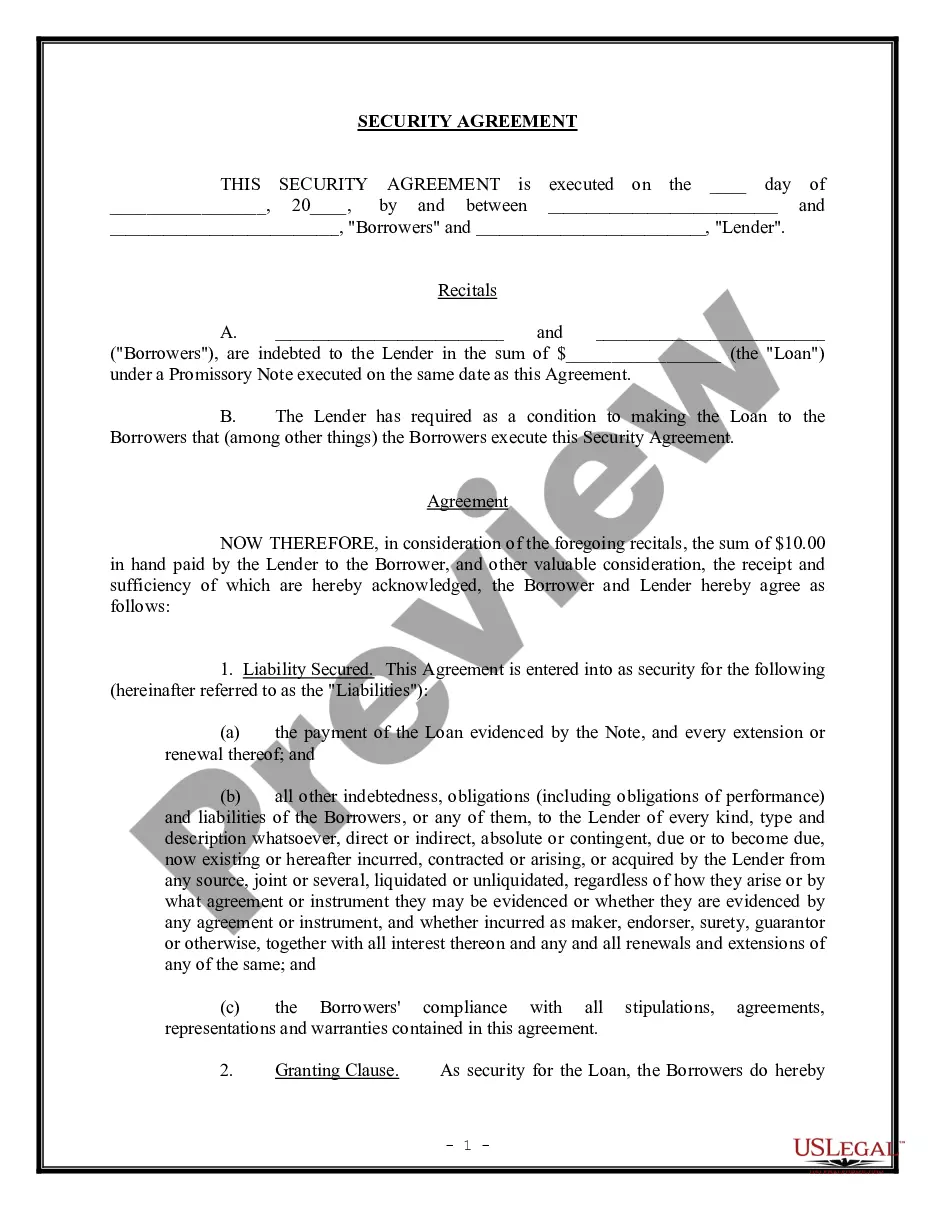
- Liability Secured: Specifies the amount and terms of the seller note.
- Granting Clause: Details the security interest granted to the seller.
- Warranties of Title: Asserts the buyer's ownership of the collateral and its freedom from encumbrances.
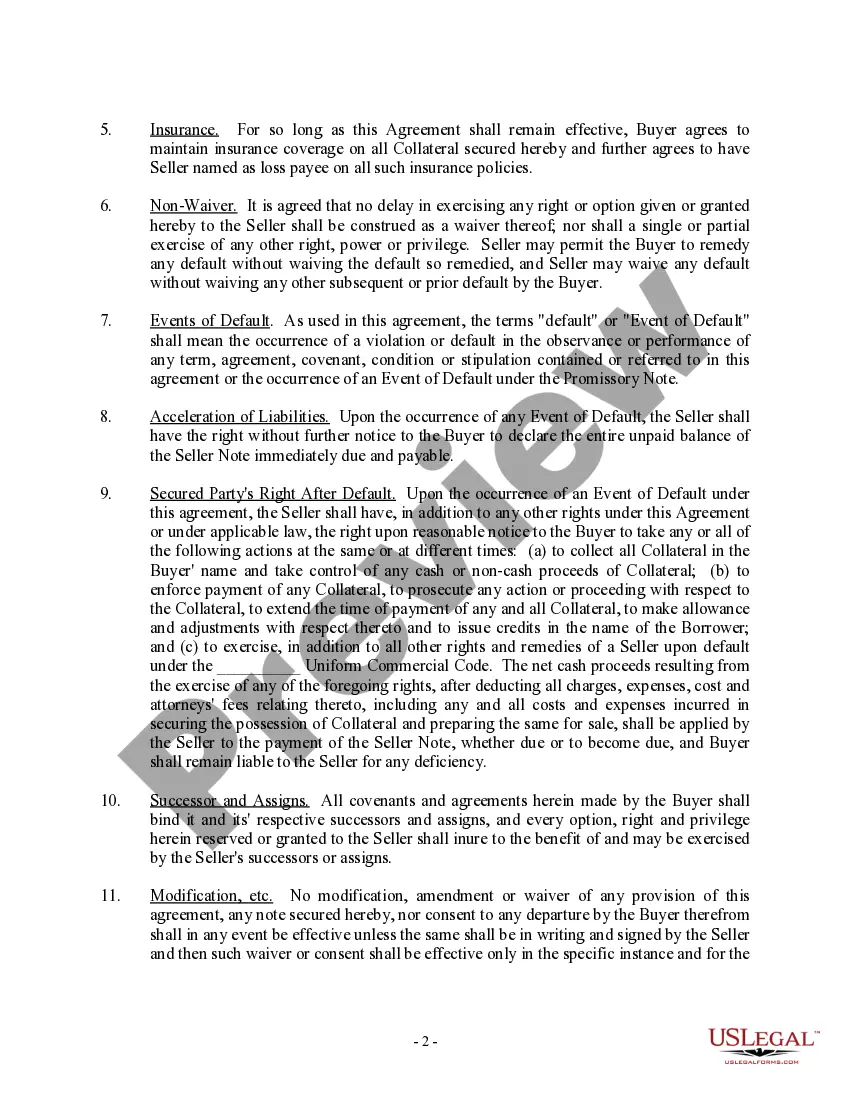
- Insurance Requirements: Mandates insurance coverage on the collateral with the seller noted as a loss payee.
- Default Events: Outlines conditions that constitute a default and remedies available to the seller.
When to use this document
This form should be used when a buyer is borrowing funds from a seller and is required to provide collateral to secure a seller note. This can occur in various transactions, such as purchasing business assets, equipment, or inventory where trust in repayment is necessary. It's beneficial for both parties to clarify terms and protect their interests.
Who needs this form
- Buyers seeking to secure a loan with collateral.
- Sellers who require assurance of payment for a seller note.
- Businesses engaging in transactions involving significant monetary exchanges with a requirement for security interests.
- Individuals with limited legal experience needing a straightforward agreement.
How to complete this form
- Identify the parties involved: complete the names and addresses of the buyer and seller.
- Specify the seller note details, including the amount borrowed and the interest rate.
- Detail the specific collateral by listing all personal property in the designated exhibit.
- Enter important dates, including the date of the agreement and any payment due dates.
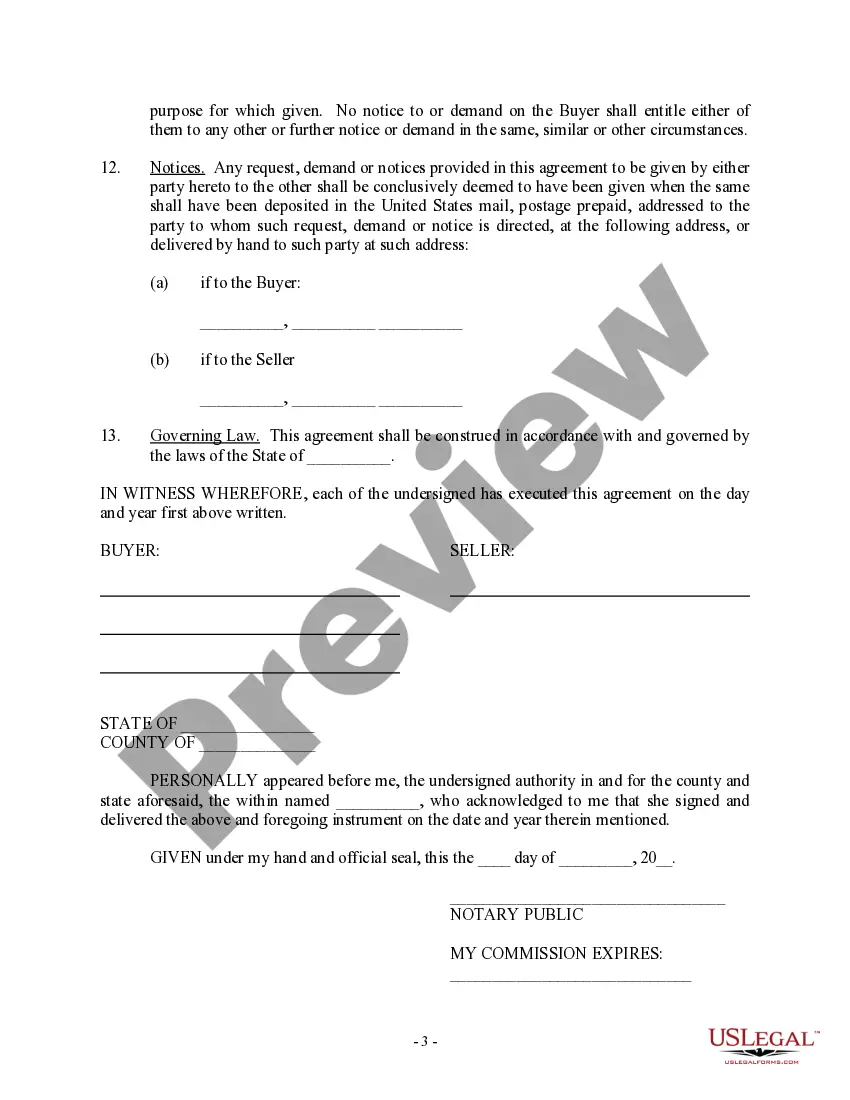
- Obtain signatures from both the buyer and seller to validate the agreement.
Notarization guidance
This form must be notarized to be legally valid. US Legal Forms provides secure online notarization powered by Notarize, allowing you to complete the process through a verified video call.
Get your form ready online
Our built-in tools help you complete, sign, share, and store your documents in one place.
Make edits, fill in missing information, and update formatting in US Legal Forms—just like you would in MS Word.
Download a copy, print it, send it by email, or mail it via USPS—whatever works best for your next step.
Sign and collect signatures with our SignNow integration. Send to multiple recipients, set reminders, and more. Go Premium to unlock E-Sign.
If this form requires notarization, complete it online through a secure video call—no need to meet a notary in person or wait for an appointment.
We protect your documents and personal data by following strict security and privacy standards.

Make edits, fill in missing information, and update formatting in US Legal Forms—just like you would in MS Word.

Download a copy, print it, send it by email, or mail it via USPS—whatever works best for your next step.

Sign and collect signatures with our SignNow integration. Send to multiple recipients, set reminders, and more. Go Premium to unlock E-Sign.

If this form requires notarization, complete it online through a secure video call—no need to meet a notary in person or wait for an appointment.

We protect your documents and personal data by following strict security and privacy standards.
Mistakes to watch out for
- Failing to accurately list collateral, leading to potential disputes.
- Omitting important signatures or dates, which can invalidate the agreement.
- Not providing clear terms for default, making enforcement difficult.
Benefits of using this form online
- Convenient access to legal forms without the need for in-person consultations.
- Editability allows users to customize the form according to their specific needs.
- Reliable templates drafted by licensed attorneys to ensure legal compliance.
Looking for another form?

Form popularity
FAQ
A Specific Security Agreement (formerly known as Chattel Mortgage) is an equipment financing option that allows businesses to own their equipment upon purchase. BOQ Equipment Finance Limited secures the loan by registering a charge over the goods.
Debtor's rights in collateral. In such cases, the business will sign a conditional sales contract, which is also considered a security agreement, and which, under UCC sales rules, will give the business the necessary rights in the purchased items to use them as collateral.
The trademark security agreement filed with the USPTO must specifically identify the trademarks, which is typically accomplished by attaching a schedule which lists the mark, the jurisdiction, registration number, registration date, and record owner.
By Practical Law Finance. This is a standard form of pledge agreement to be used in connection with a syndicated loan agreement. It is intended to create a security interest over equity interests and promissory notes owned by the grantors. The grantors are usually the borrower, its parent and its subsidiaries.
A General Security Agreement (GSA) is a contract signed between two parties a creditor (lender) and a debtor (borrower) to secure personal loans, commercial loans, and other obligations owed to a lender. General security agreements list all the assets pledged as collateral.
Pledge is a security interest in a chattel or in an in- tangible represented by an indispensable instrument, the interest being created by a bailment for the pur- pose of securing the payment of a debt or the perfor- mance of some other duty.
Security agreements and financing statements are often confused with one another. The primary difference is that the financing statement largely serves as notice that a creditor possesses security interest in the debtor's assets or property. The financing statement is not a contract.
An agreement typically used to create a security interest in equity interests (including capital stock, LLC interests, and partnership interests) and promissory notes. Under the UCC, a pledge agreement is a security agreement.
A security agreement is a document that provides a lender a security interest in a specified asset or property that is pledged as collateral. Security agreements often contain covenants that outline provisions for the advancement of funds, a repayment schedule, or insurance requirements.