Real Estate Purchase Agreement
Understanding this form
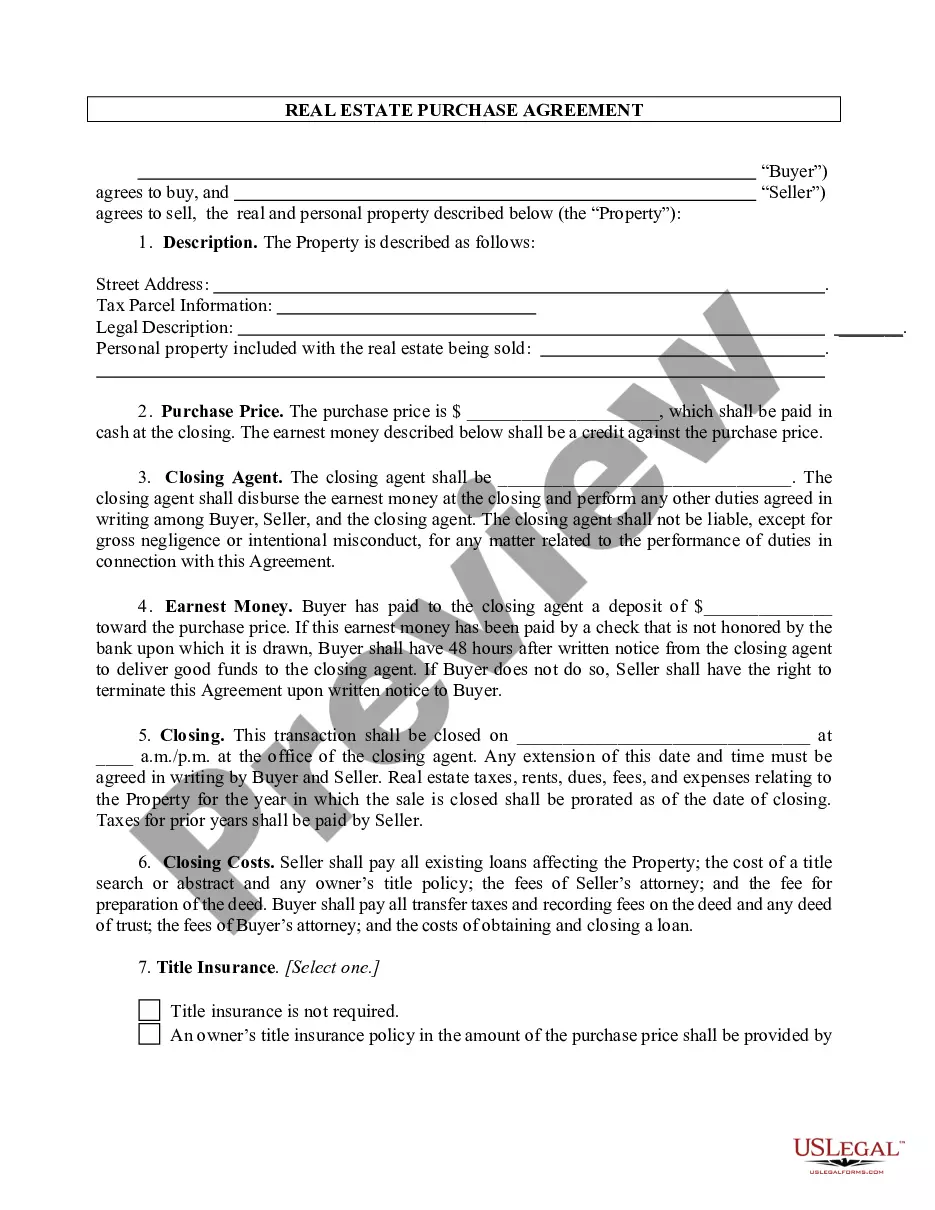
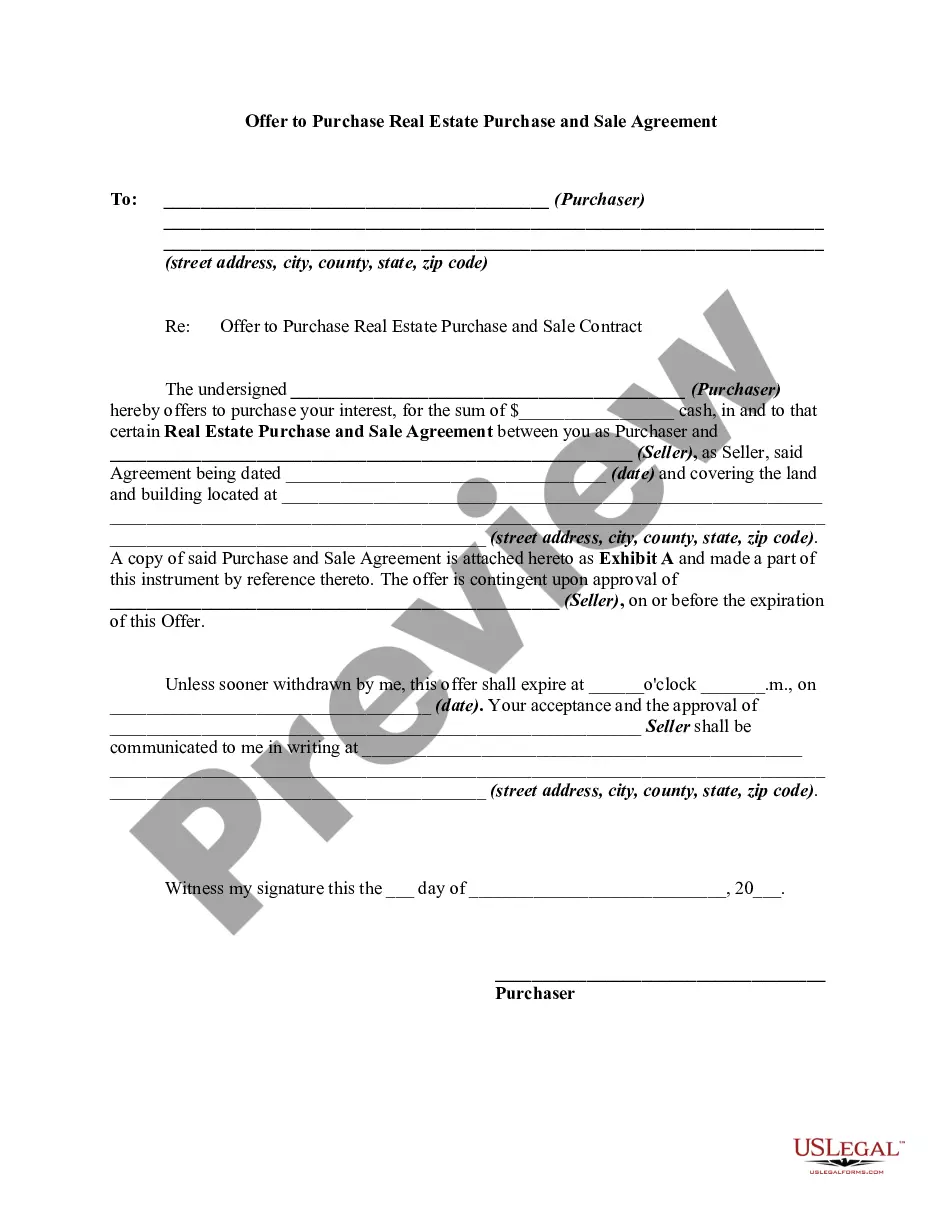
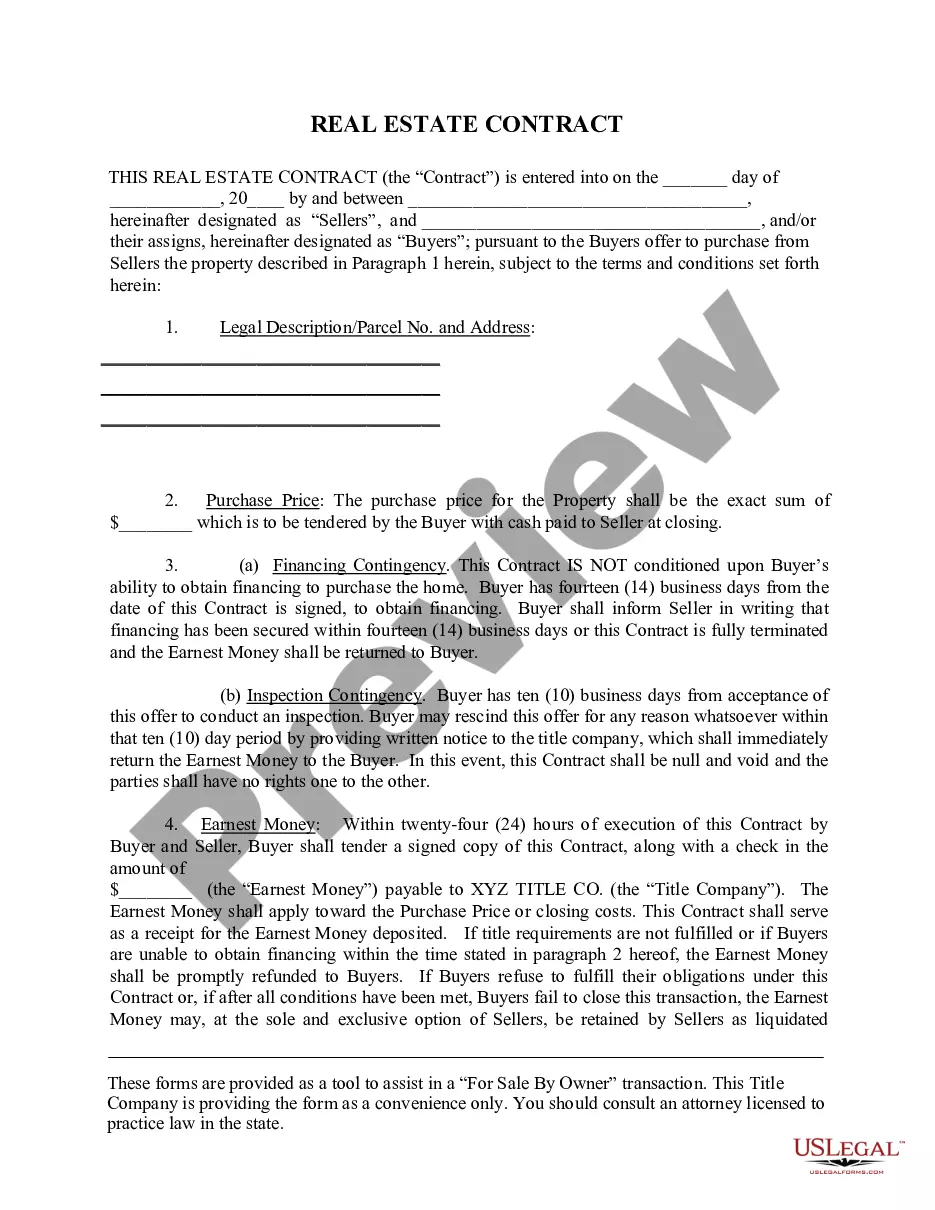
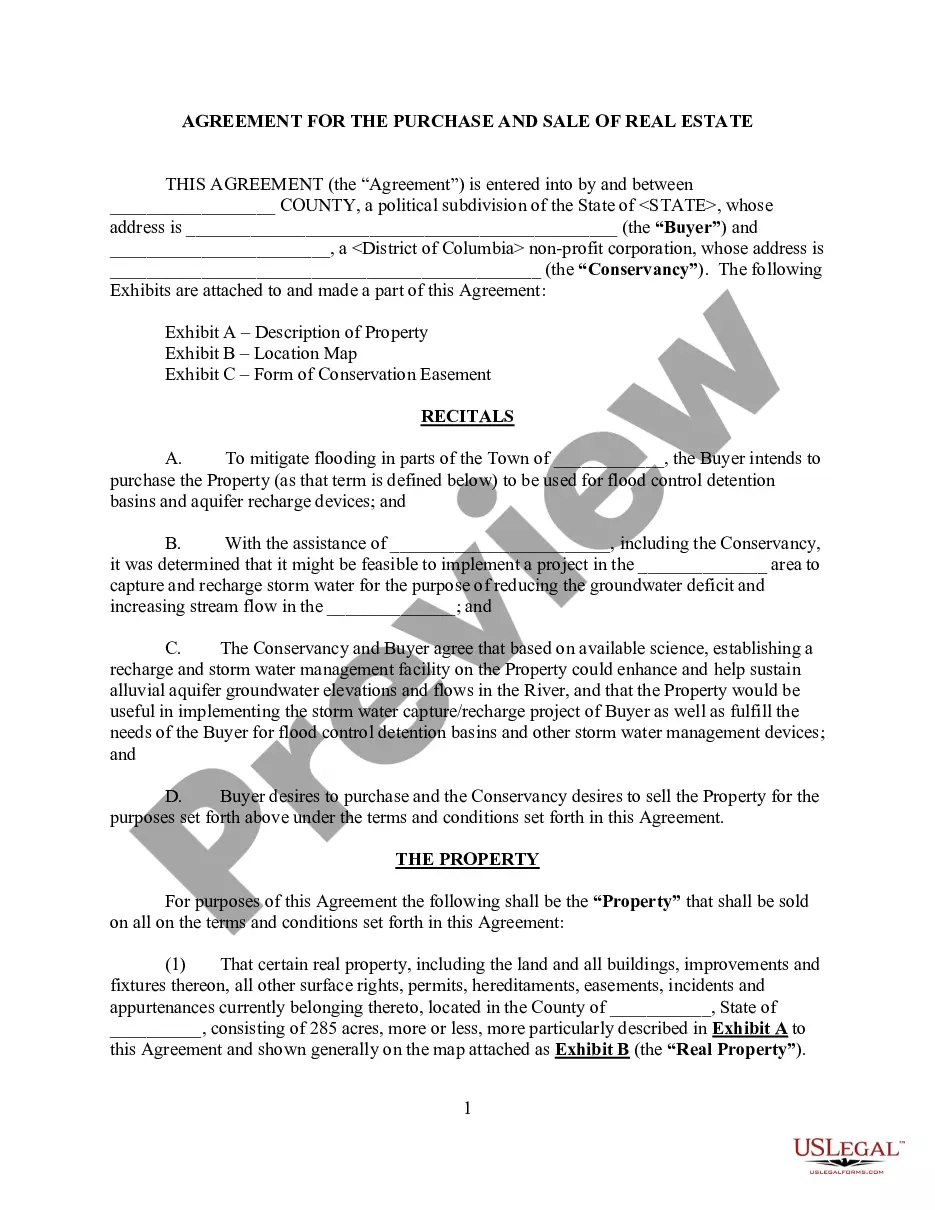
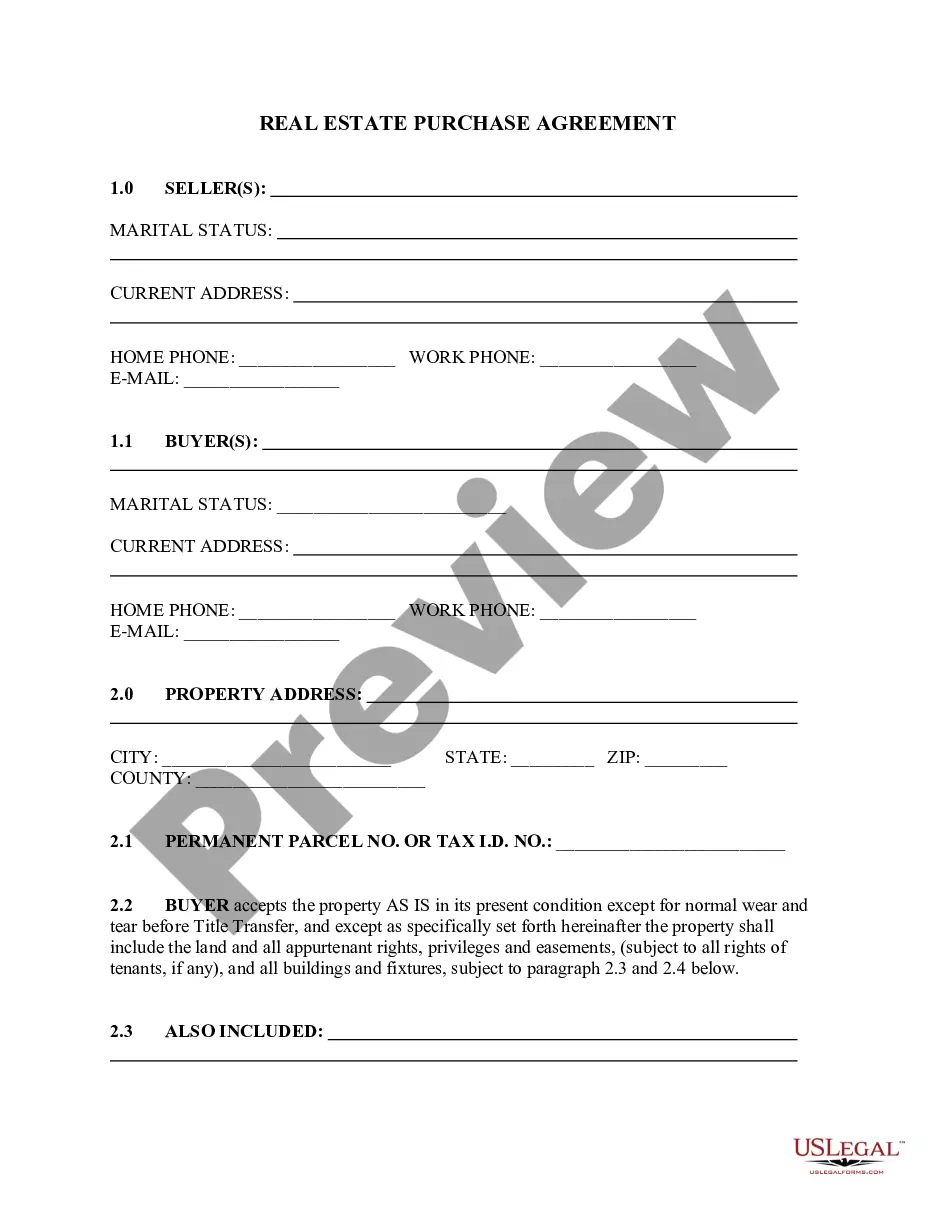
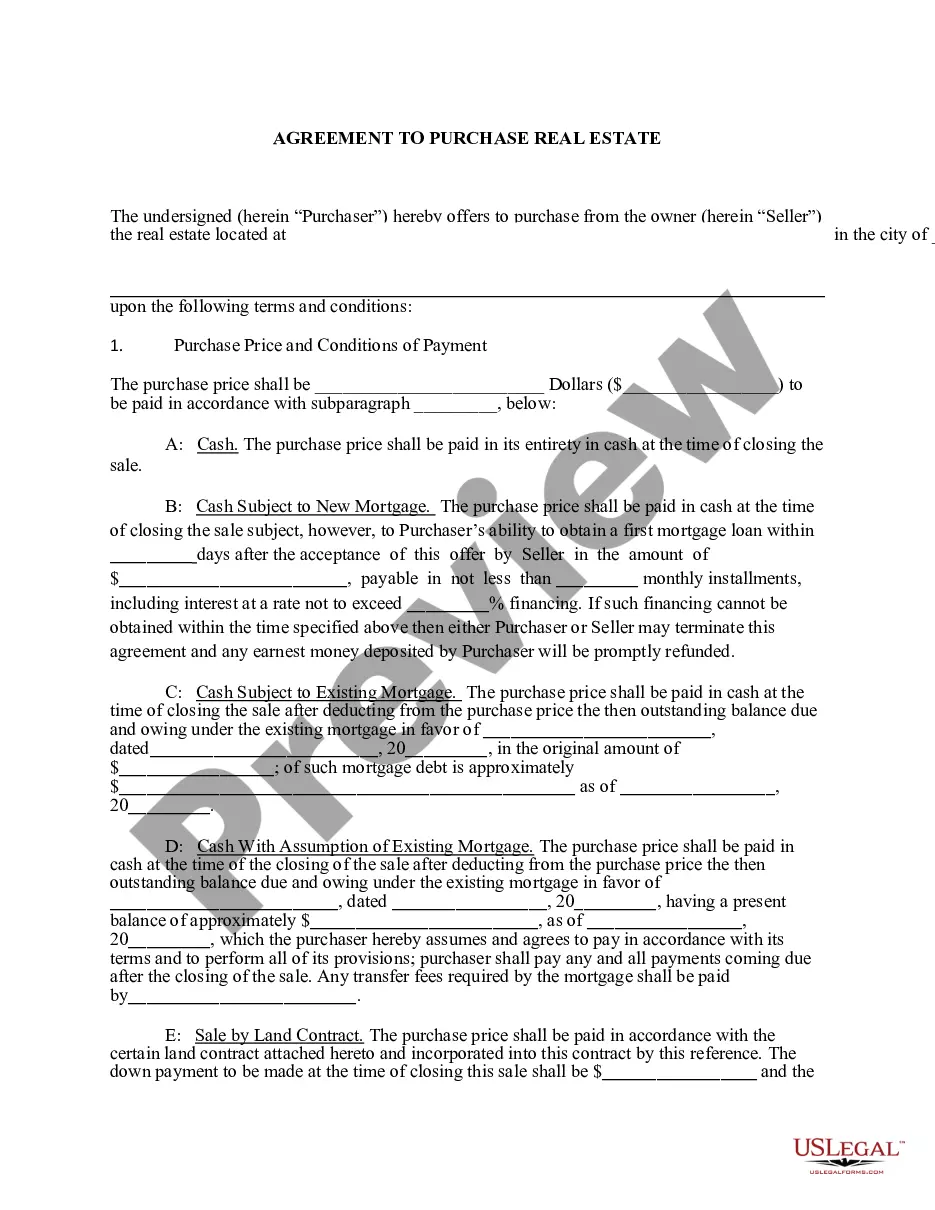
The Real Estate Purchase Agreement is a legal document that outlines the terms and conditions for the sale of real estate between a buyer and a seller. This form is particularly useful for individuals who choose to negotiate the purchase of a home without the assistance of a real estate agent. Unlike other agreements, this form allows customization to meet the specific needs of the parties involved, ensuring clarity and legality in the transaction.
Main sections of this form
- Property description, including address and legal details
- Purchase price and earnest money details
- Closing agent information and responsibilities
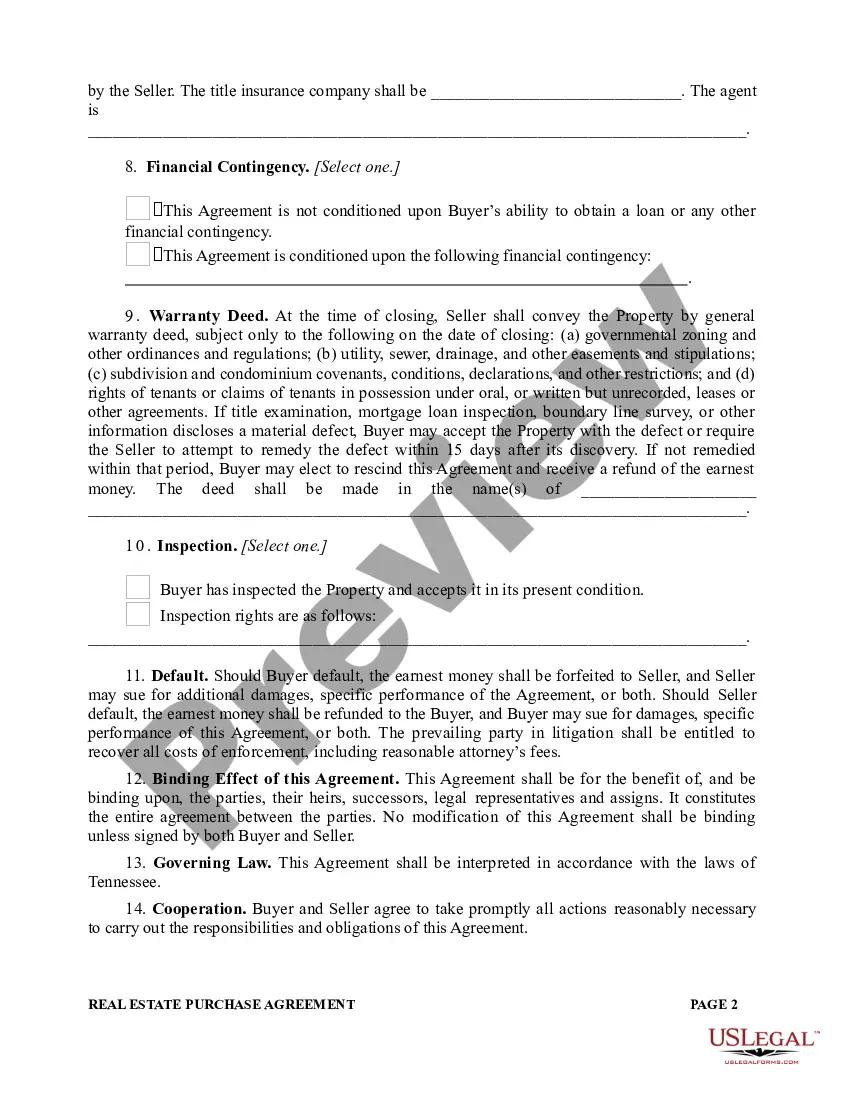
- Terms regarding closing costs and title insurance
- Inspection rights and conditions for default
- Governing law and binding effect of the agreement
When this form is needed
This form should be used when you are purchasing real estate directly from a seller without the help of a real estate agent. It is applicable in various situations, such as private sales, real estate auctions, or sales of properties that are not listed on the market. If you have already negotiated the sale terms with the seller, this form serves to formalize the agreement and protect your rights throughout the transaction.
Who can use this document
- Home buyers purchasing property without a real estate agent
- Property sellers looking to sell their property directly
- Individuals familiar with real estate transactions who want a clear agreement
- Anyone seeking a customizable legal document for real estate sales
How to complete this form
- Identify the parties involved: list the names of the buyer and seller.
- Specify the property: enter the address, tax parcel information, and legal description.
- Enter the purchase price and any earnest money deposits.
- Complete closing details: include the date, time, and closing agent information.
- Review clauses related to title insurance, financial contingencies, and property inspections.
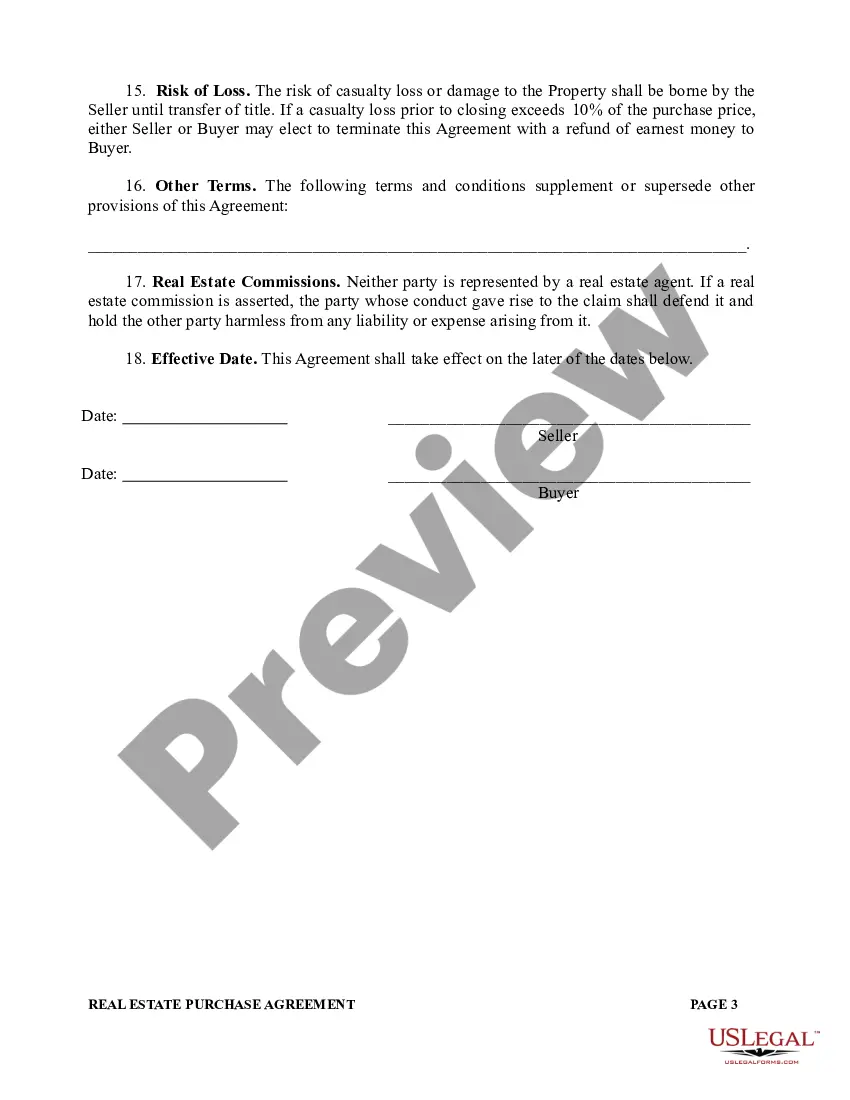
- Sign the agreement, ensuring all parties acknowledge the terms.
Notarization guidance
This form does not typically require notarization unless specified by local law. However, it is advisable to check with legal counsel or local regulations to ensure you meet all requirements for validity.
Get your form ready online
Our built-in tools help you complete, sign, share, and store your documents in one place.
Make edits, fill in missing information, and update formatting in US Legal Forms—just like you would in MS Word.
Download a copy, print it, send it by email, or mail it via USPS—whatever works best for your next step.
Sign and collect signatures with our SignNow integration. Send to multiple recipients, set reminders, and more. Go Premium to unlock E-Sign.
If this form requires notarization, complete it online through a secure video call—no need to meet a notary in person or wait for an appointment.
We protect your documents and personal data by following strict security and privacy standards.

Make edits, fill in missing information, and update formatting in US Legal Forms—just like you would in MS Word.

Download a copy, print it, send it by email, or mail it via USPS—whatever works best for your next step.

Sign and collect signatures with our SignNow integration. Send to multiple recipients, set reminders, and more. Go Premium to unlock E-Sign.

If this form requires notarization, complete it online through a secure video call—no need to meet a notary in person or wait for an appointment.

We protect your documents and personal data by following strict security and privacy standards.
Mistakes to watch out for
- Failing to accurately describe the property, leading to disputes.
- Neglecting to specify closing costs and responsibilities.
- Not addressing potential defaults or contingencies clearly.
- Forgetting to include signatures of both parties, rendering the agreement invalid.
Why use this form online
- Convenience: access and download the form anytime from anywhere.
- Editability: easily customize the form to fit your specific transaction needs.
- Reliability: templates are drafted by licensed attorneys to ensure legal compliance.
Looking for another form?
Form popularity
FAQ
As discussed above, a purchase agreement should contain buyer and seller information, a legal description of the property, closing dates, earnest money deposit amounts, contingencies and other important information for the sale.
The PSA includes details like earnest money needed, the closing date and specific contingencies the buyer and seller have agreed to. The PSA is where the seller and buyer agree on the terms for purchasing the home and sets the transaction in motion toward the closing.
At its most basic, a purchase agreement should include the following: Name and contact information for buyer and seller. The address of the property being sold. The price to be paid for the property. The date of transfer. Disclosures. Contingencies. Signatures.
Once you have signed the purchase agreement, you will need to apply for a loan. The loan application will ask for your financial information, including your income, debts, and assets. The lender will also pull your credit report. After you have applied for the loan, the lender will underwrite the loan.
When you buy a home on contract, the seller agrees to finance the purchase for you. This replaces going through a mortgage company but is much more rare and difficult to find. Once you settle on a price, you make monthly payments to the homeowner, who retains the title to the property until it's paid off.
A real estate purchase agreement is a legally binding agreement that governs the purchase and sale of a property. Made between a buyer and seller, it defines the terms of the transaction, and the conditions under which a sale will occur.
Put simply, a purchase agreement is a contract. This means that once it is signed, the language is fixed and is legally binding for buyer and seller. At its most basic, a purchase agreement should include the following: Name and contact information for buyer and seller. The address of the property being sold. Purchase Agreement Template: How to Draft an Agreement - .com ? blog ? how-to-draft-purcha... .com ? blog ? how-to-draft-purcha...
At its most basic, a purchase agreement should include the following: Name and contact information for buyer and seller. The address of the property being sold. The price to be paid for the property. The date of transfer. Disclosures. Contingencies. Signatures.
Typically, the buyer's agent writes up the purchase agreement. However, unless they are legally licensed to practice law, real estate agents generally can't create their own legal contracts. Instead, firms will often use standardized form contracts that allow agents to fill in the blanks with the specifics of the sale.