Arizona Superior Court Affidavit
About this form
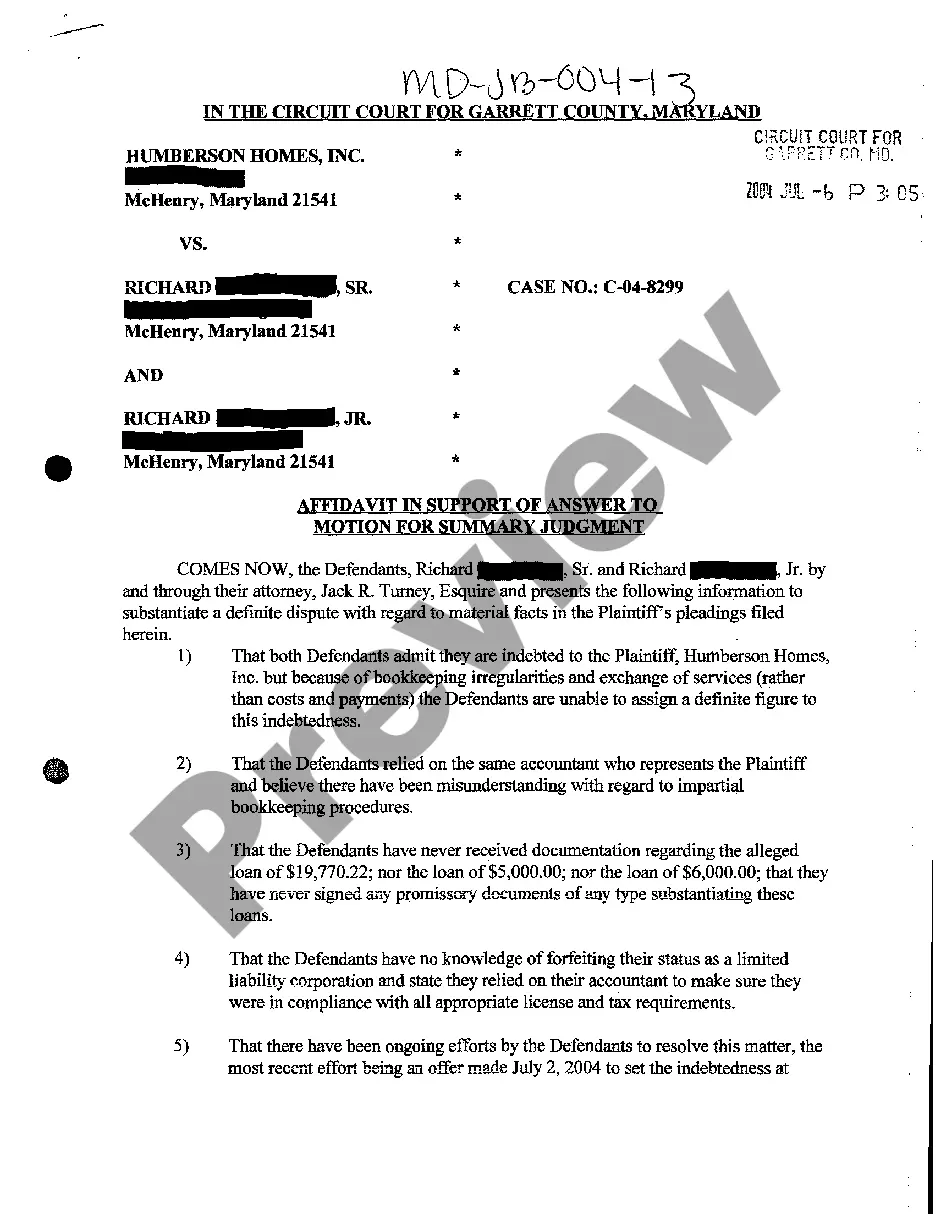
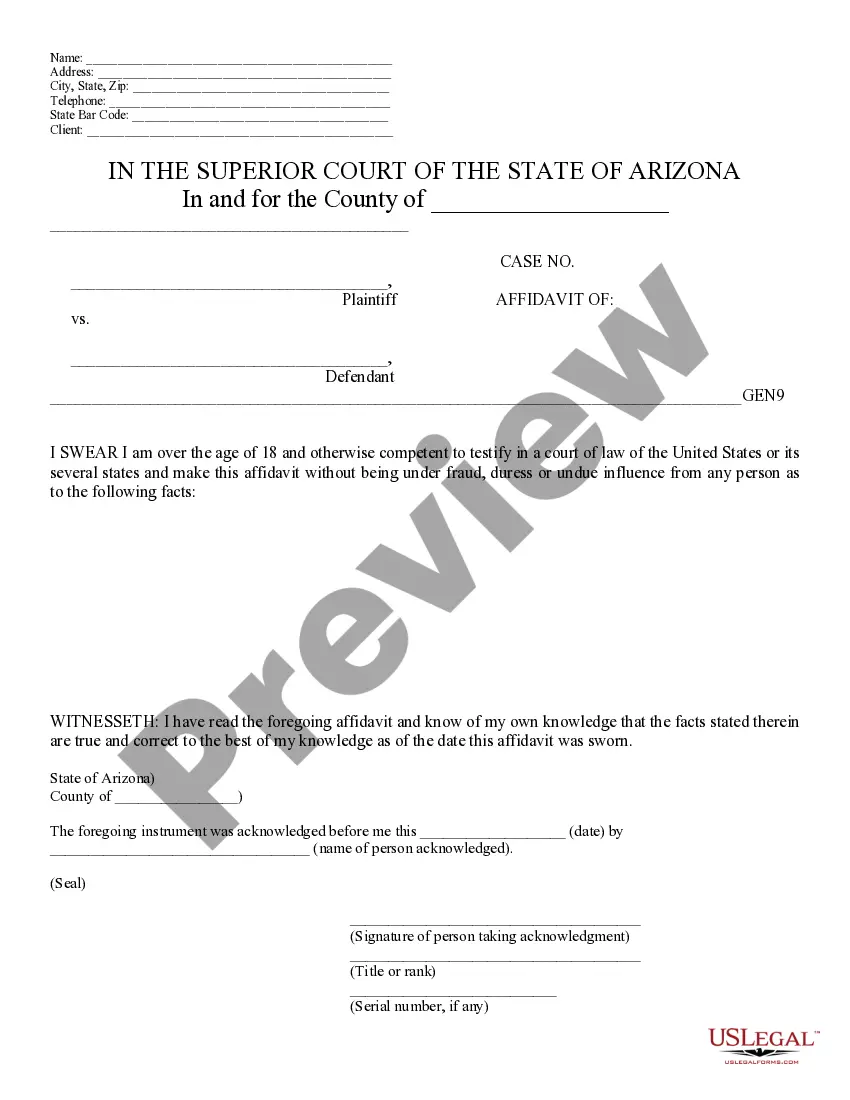
A Superior Court Affidavit is a sworn written statement made by an individual, known as the affiant, who asserts the accuracy of the content under oath. This document is often utilized in legal proceedings to provide testimony or evidence regarding a specific issue. Unlike other types of affidavits, a Superior Court Affidavit is formatted specifically for use in superior courts, ensuring that it adheres to jurisdiction-specific requirements.
What’s included in this form
- Address of the affiant.
- Contact information including telephone number.
- Case number and details for the related court case.
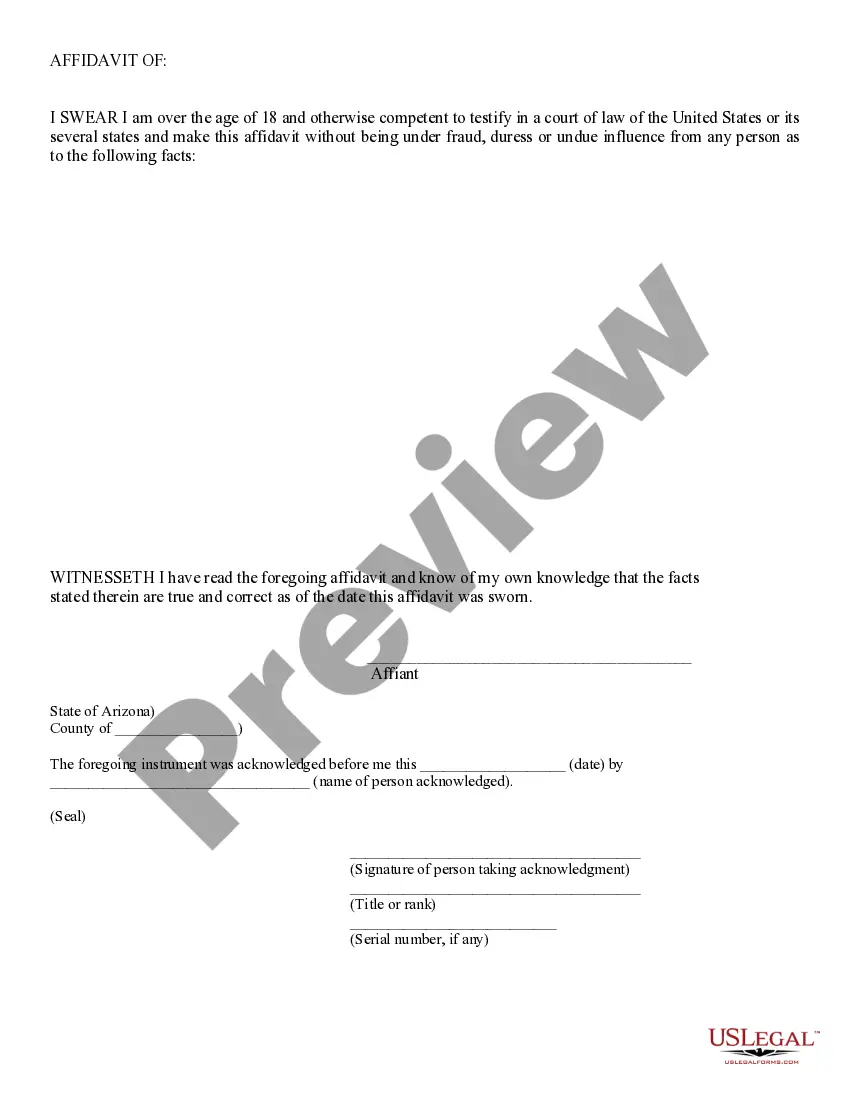
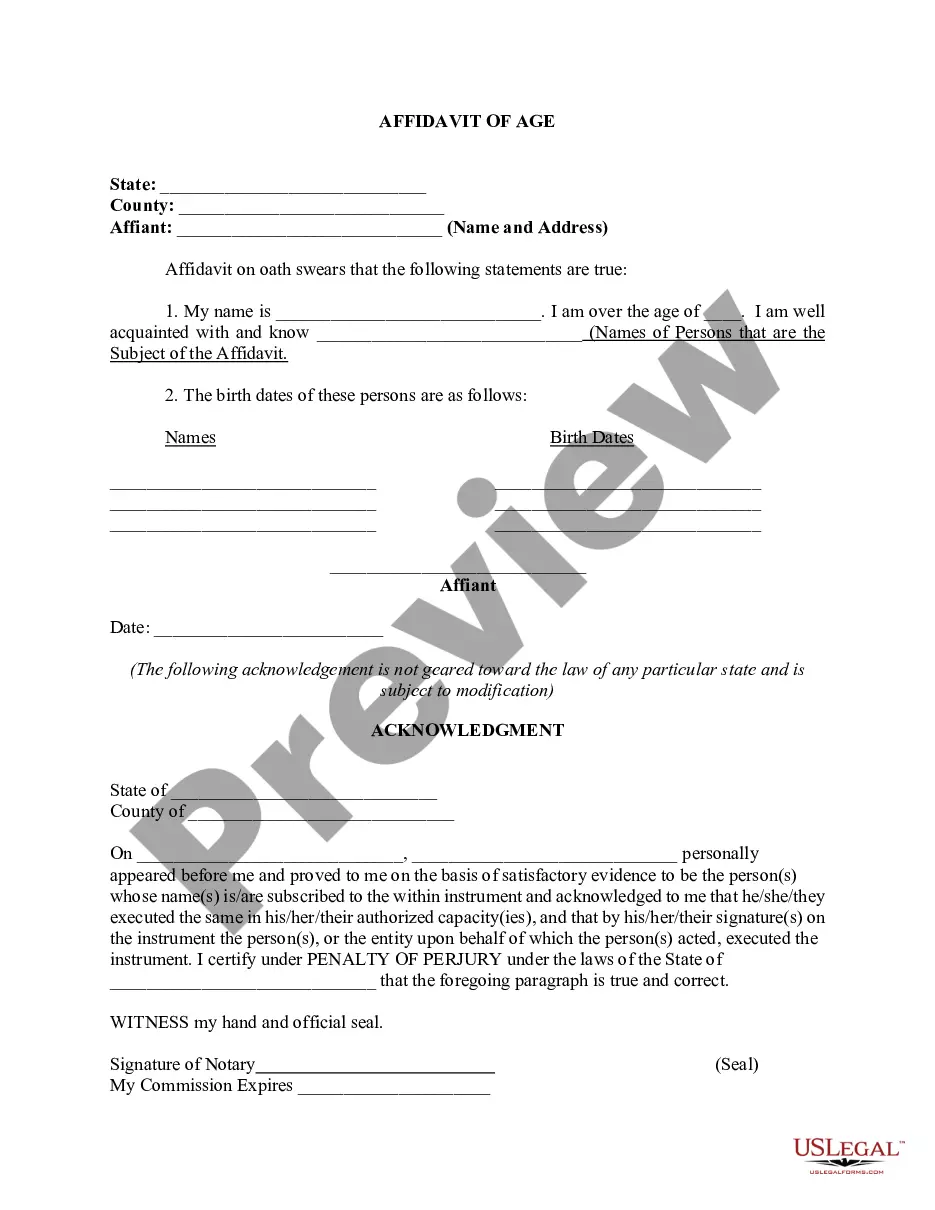
- A sworn statement attesting to the truth of the facts presented.
- Signature line for the affiant to declare the statement as true.
- Notary section for witnessing and validating the affidavit.

When to use this document
This form should be used when you need to provide a sworn statement regarding factual information in a legal matter being heard in a superior court. Common scenarios include cases related to family law, property disputes, or civil litigation where your testimony holds significant weight in the court's decision-making process.
Who this form is for
The following individuals should consider using the Superior Court Affidavit:
- Individuals involved in a legal dispute requiring sworn testimony.
- Parties providing evidence in family law cases, such as custody or divorce proceedings.
- Witnesses who must affirm the truthfulness of their statements in court.
- Anyone needing to document facts to support a claim or defense in court.
Completing this form step by step
- Identify the affiant by filling in the name and address.
- Provide the case number and relevant court details at the top of the form.
- Thoroughly read the affidavit and verify all statements are accurate and truthful.
- Sign the affidavit in the presence of a Notary Public.
- Complete the notary section, which includes their signature and seal.
Does this document require notarization?
This form must be notarized to be legally valid. US Legal Forms provides secure online notarization powered by Notarize, allowing you to complete the process through a verified video call.
Get your form ready online
Our built-in tools help you complete, sign, share, and store your documents in one place.
Make edits, fill in missing information, and update formatting in US Legal Forms—just like you would in MS Word.
Download a copy, print it, send it by email, or mail it via USPS—whatever works best for your next step.
Sign and collect signatures with our SignNow integration. Send to multiple recipients, set reminders, and more. Go Premium to unlock E-Sign.
If this form requires notarization, complete it online through a secure video call—no need to meet a notary in person or wait for an appointment.
We protect your documents and personal data by following strict security and privacy standards.

Make edits, fill in missing information, and update formatting in US Legal Forms—just like you would in MS Word.

Download a copy, print it, send it by email, or mail it via USPS—whatever works best for your next step.

Sign and collect signatures with our SignNow integration. Send to multiple recipients, set reminders, and more. Go Premium to unlock E-Sign.

If this form requires notarization, complete it online through a secure video call—no need to meet a notary in person or wait for an appointment.

We protect your documents and personal data by following strict security and privacy standards.
Common mistakes to avoid
- Failing to sign the affidavit in front of a notary.
- Omitting important case details or contact information.
- Providing false information, which could lead to legal penalties.
- Not reviewing the affidavit for accuracy before submission.
Why complete this form online
- Convinient access to legal templates anytime, anywhere.
- Edit and customize the form easily to fit your specific needs.
- Reliable formats that are legally compliant.
- Quick download, saving time compared to traditional methods.
Looking for another form?


Form popularity
FAQ
The Arizona Superior Court Affidavit is a sworn written statement by the affiant used as evidence in superior court proceedings. It is formatted specifically for Arizona superior courts to meet jurisdictional expectations. Use it when you need to present facts under oath in family law, property disputes, or civil litigation. The form includes the affiant’s address, contact info, case number, sworn statement, signature line, and a notary section.
The Arizona Superior Court Affidavit must include the affiant’s address and contact information, the related case number and court details, a sworn statement attesting to the truth of the facts, a signature line for the affiant, and a notary section for witnessing and validating the affidavit. Together, these elements ensure the document can be used as evidence in superior court.
Yes. The form includes a notary section for witnessing and validating the affidavit and a signature line for the affiant to declare the statement as true. The affiant’s signature confirms the sworn content, and the notary verifies the oath and signer’s identity. If unsure, consult a licensed attorney about notarization.
Use this affidavit when you need a sworn, factual statement to support your position in a matter heard by an Arizona superior court. It is suitable for family law, property disputes, or civil litigation where testimony under oath strengthens a claim or defense. Include the case number and ensure the information is accurate and complete.
The affiant—the person making the sworn statements—must sign the affidavit and swear to the truth of the facts presented. The form provides a signature line and an accompanying notary section to witness the oath and confirm the signer’s identity.
This form is formatted specifically for use in Arizona superior courts and adheres to jurisdiction-specific requirements. It includes a notary section and a layout aligned with superior court expectations, distinguishing it from generic affidavits used in other courts or contexts.