Workers Compensation Witness Report
What this document covers
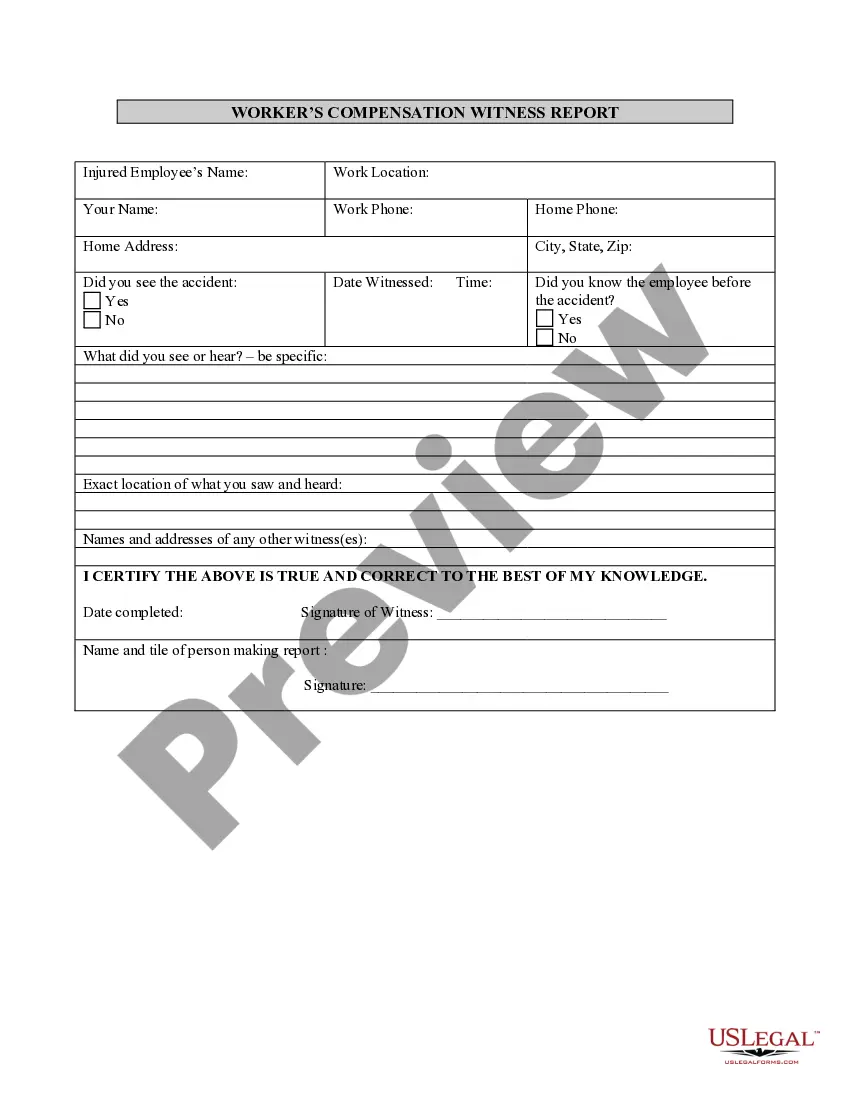
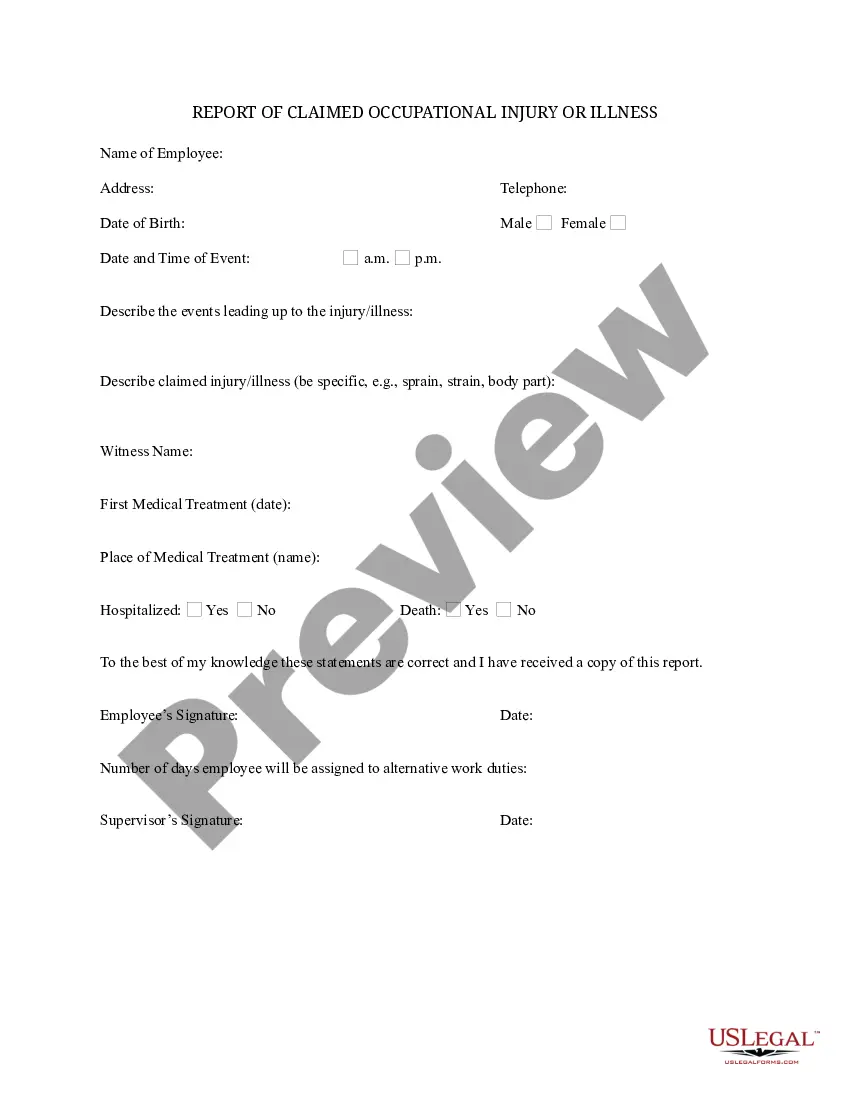
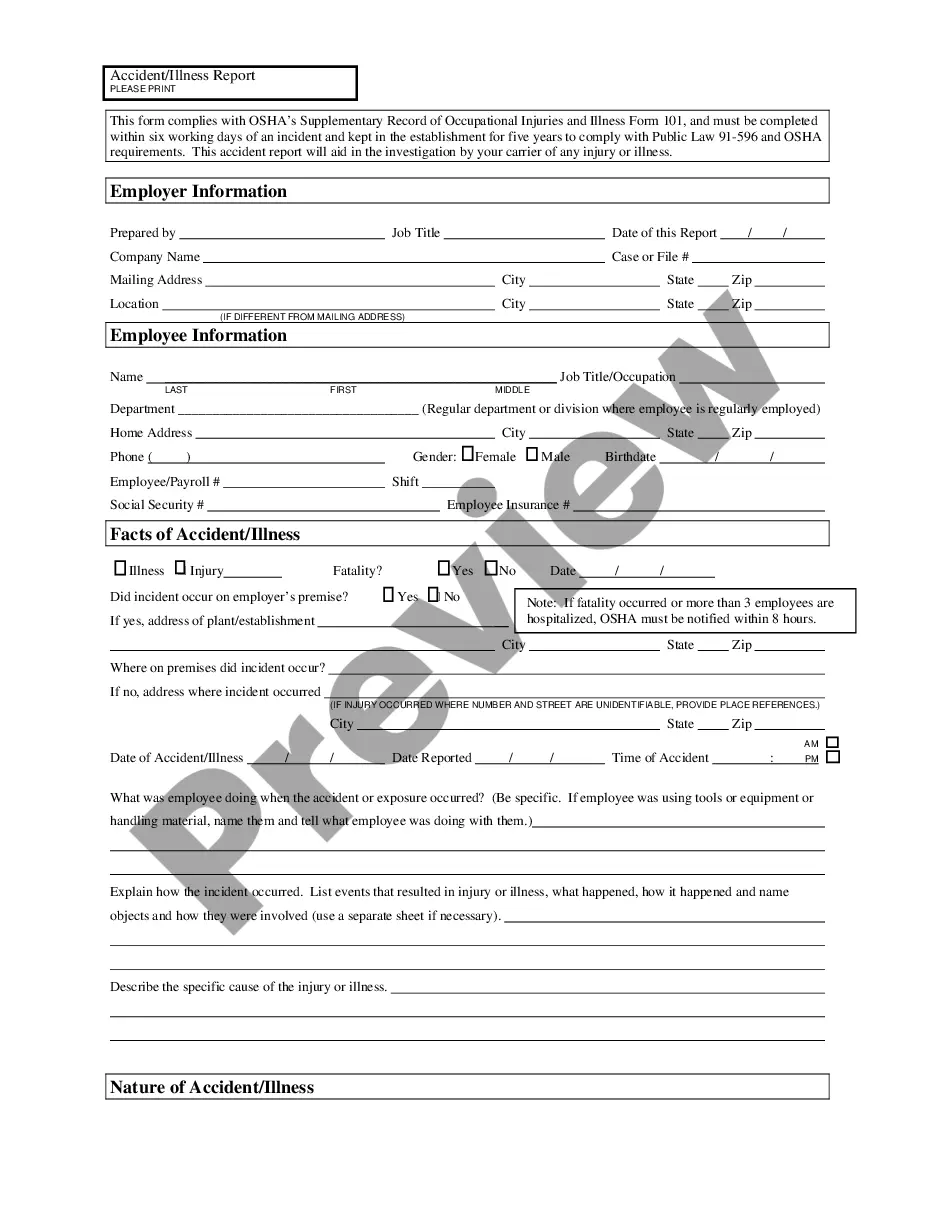
The Workers Compensation Witness Report is a legal document designed to record eyewitness testimonies regarding workplace injuries. This form serves to provide a detailed account from individuals who witnessed an incident, which can be crucial for resolving claims and ensuring that injured workers receive the compensation they deserve. Unlike other forms related to workplace injuries, this report specifically focuses on eyewitness perspectives, making it a vital tool in the workers' compensation process.
What’s included in this form
- Identification of the witness, including name and contact information
- Description of the work-related incident, including date, time, and location
- Detailed account of what the witness observed during the incident
- Signature of the witness to verify the accuracy of the information provided
Common use cases
This form should be used when an employee has experienced a work-related injury and there are witnesses who can provide testimony regarding the circumstances of the incident. It is essential during the workers' compensation claim process and may be required by insurance companies or legal representatives to support the injured worker's case.
Intended users of this form
- Witnesses who observed a workplace accident
- Employers seeking to gather comprehensive evidence for a workers' compensation claim
- Insurance adjusters requiring statements from witnesses for claims processing
Instructions for completing this form
- Begin by entering the name and contact information of the witness.
- Provide the date, time, and location of the workplace incident.
- Ask the witness to describe the events leading up to and following the injury in detail.
- Have the witness review all information for accuracy and sign the form.
- Submit the completed form as part of the workers' compensation claim process.
Notarization requirements for this form
In most cases, this form does not require notarization. However, some jurisdictions or signing circumstances might. US Legal Forms offers online notarization powered by Notarize, accessible 24/7 for a quick, remote process.
Get your form ready online
Our built-in tools help you complete, sign, share, and store your documents in one place.
Make edits, fill in missing information, and update formatting in US Legal Forms—just like you would in MS Word.
Download a copy, print it, send it by email, or mail it via USPS—whatever works best for your next step.
Sign and collect signatures with our SignNow integration. Send to multiple recipients, set reminders, and more. Go Premium to unlock E-Sign.
If this form requires notarization, complete it online through a secure video call—no need to meet a notary in person or wait for an appointment.
We protect your documents and personal data by following strict security and privacy standards.

Make edits, fill in missing information, and update formatting in US Legal Forms—just like you would in MS Word.

Download a copy, print it, send it by email, or mail it via USPS—whatever works best for your next step.

Sign and collect signatures with our SignNow integration. Send to multiple recipients, set reminders, and more. Go Premium to unlock E-Sign.

If this form requires notarization, complete it online through a secure video call—no need to meet a notary in person or wait for an appointment.

We protect your documents and personal data by following strict security and privacy standards.
Mistakes to watch out for
- Failing to include complete contact information for the witness.
- Omitting essential details about the incident or misrepresenting the sequence of events.
- Not having the witness sign the report, which can undermine its validity.
Why complete this form online
- Quick and easy access to the form allows for timely completion and submission.
- Editable format enables users to fill out the form accurately without errors.
- Ensures compliance with legal standards by using professionally drafted templates.
Looking for another form?
Form popularity
FAQ
A prospective employer has no right to ask whether you have had a previous workers' compensation claim. However, a prospective employer does have the right to know if you have an injury or medical condition that will impact on your ability to perform your work duties.
When Do Workers' Comp Investigators Follow You? Any time after you file a claim, an investigator may follow you or investigate you. You're more likely to be placed under investigation if you have a large claim, have filed claims before or if the insurance company has any reason to be concerned about fraud.
In California, can a background check reveal information about my workers' compensation claim history? Yes, it can. When an employee's claim goes through the state system or the Workers' Compensation Appeals Board (WCAB), the case becomes public record.
If you've been injured as a result of your work, you should be able to collect workers compensation benefits.Your employer or its workers' comp insurance company does not have to agree to settle your claim, and you do not have to agree with a settlement offer proposed by your employer or its insurance company.
Can workers comp tap your phone? The answer to this question is simple, YES. A workers comp might hire a private investigator, and the duty of this private investigator is to help companies find out when a particular worker is committing workers compensation fraud.
As a general rule of thumb, you should never discuss anything except the basic facts of the accident, including where it occurred, the date and time it occurred, what type of accident it was, and which body parts were injured.
What Is an Independent Medical Exam? What Happens at an IME? Exaggerating Your Symptoms. Lying About Symptoms You Don't Have. Leaving Out Past Injuries. Omitting Details About the Accident. Saying Negative Things About Your Employer.
Your employer may be able to spy on you during the course of your Worker's Compensation claim.Surveillance may be done, or your employer may utilize other resources such as video footage. One of the main reasons that an employer may decide to hire an investigator is if they believe your claim is fraudulent.
If you have an ongoing personal injury claim, insurance companies or Workcover claims insurers may hire private investigators to gather surveillance evidence on you at any time of your claim.