Easement Agreement and Damage Release for installation of Gas Processing and Treating Facility
What this document covers
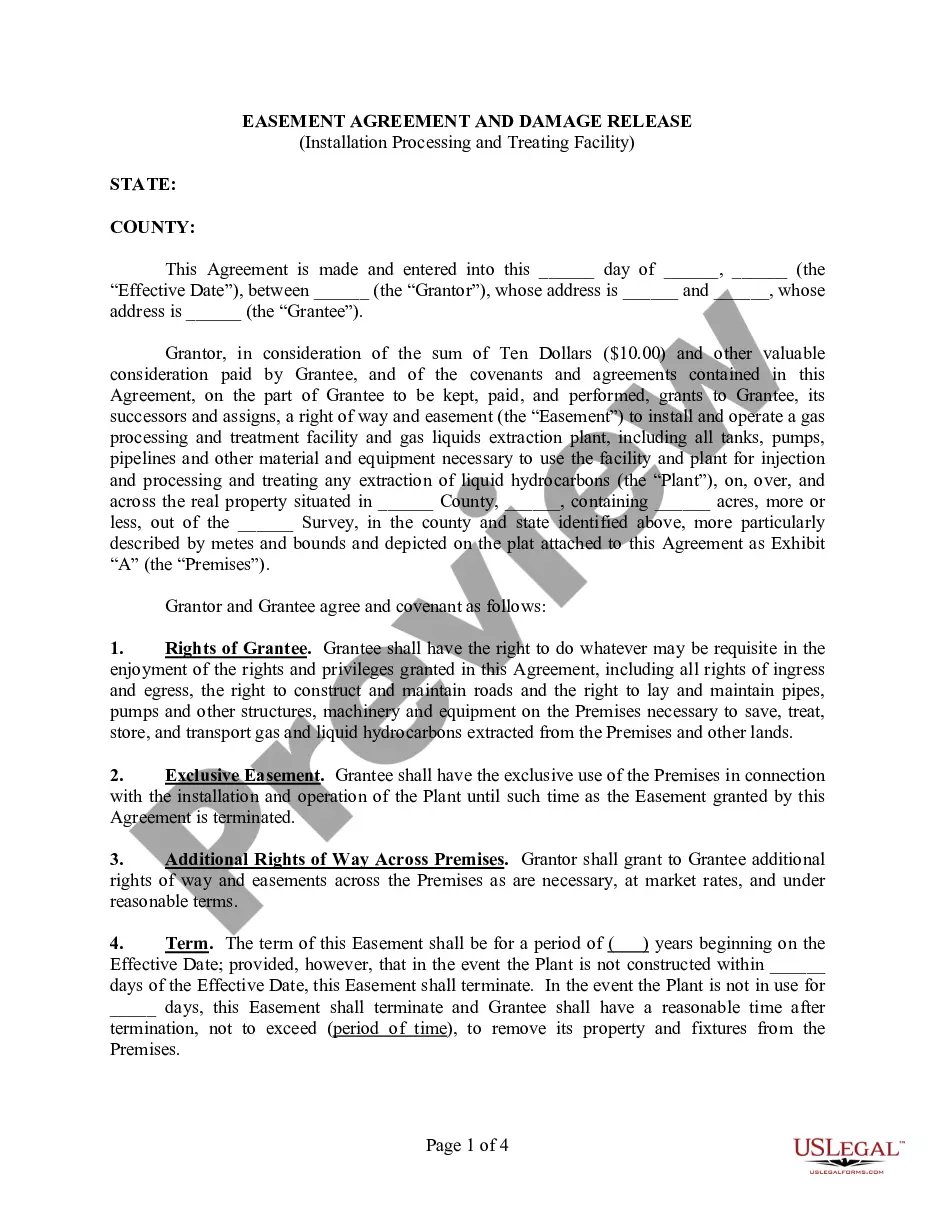
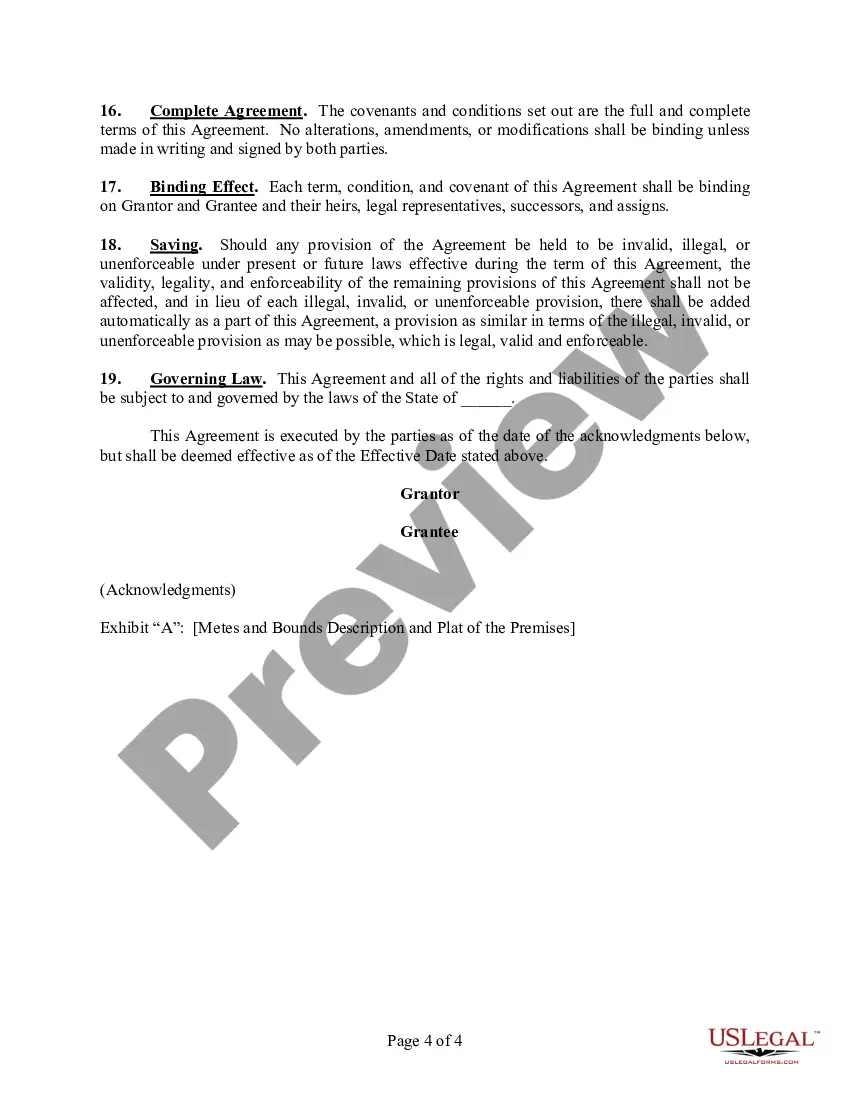
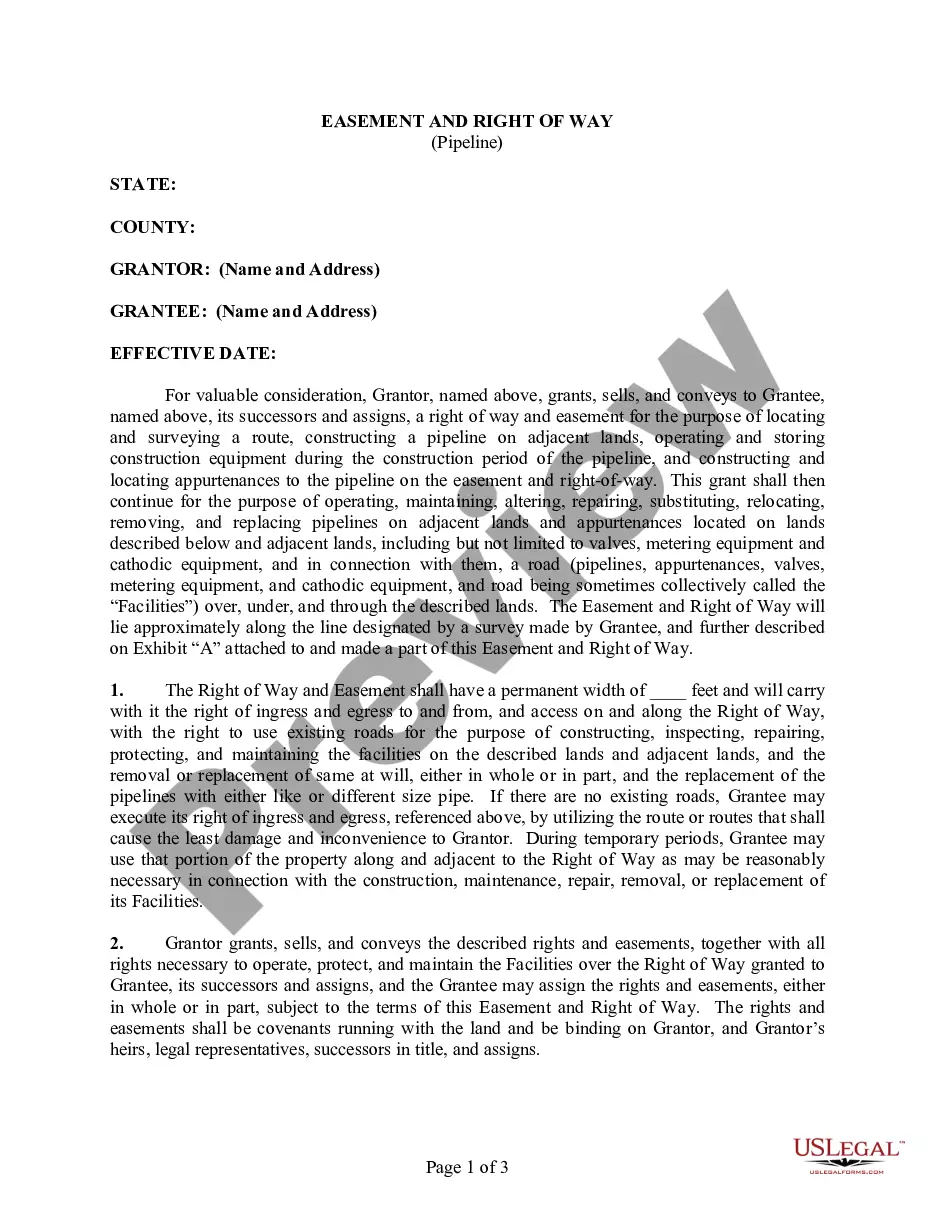
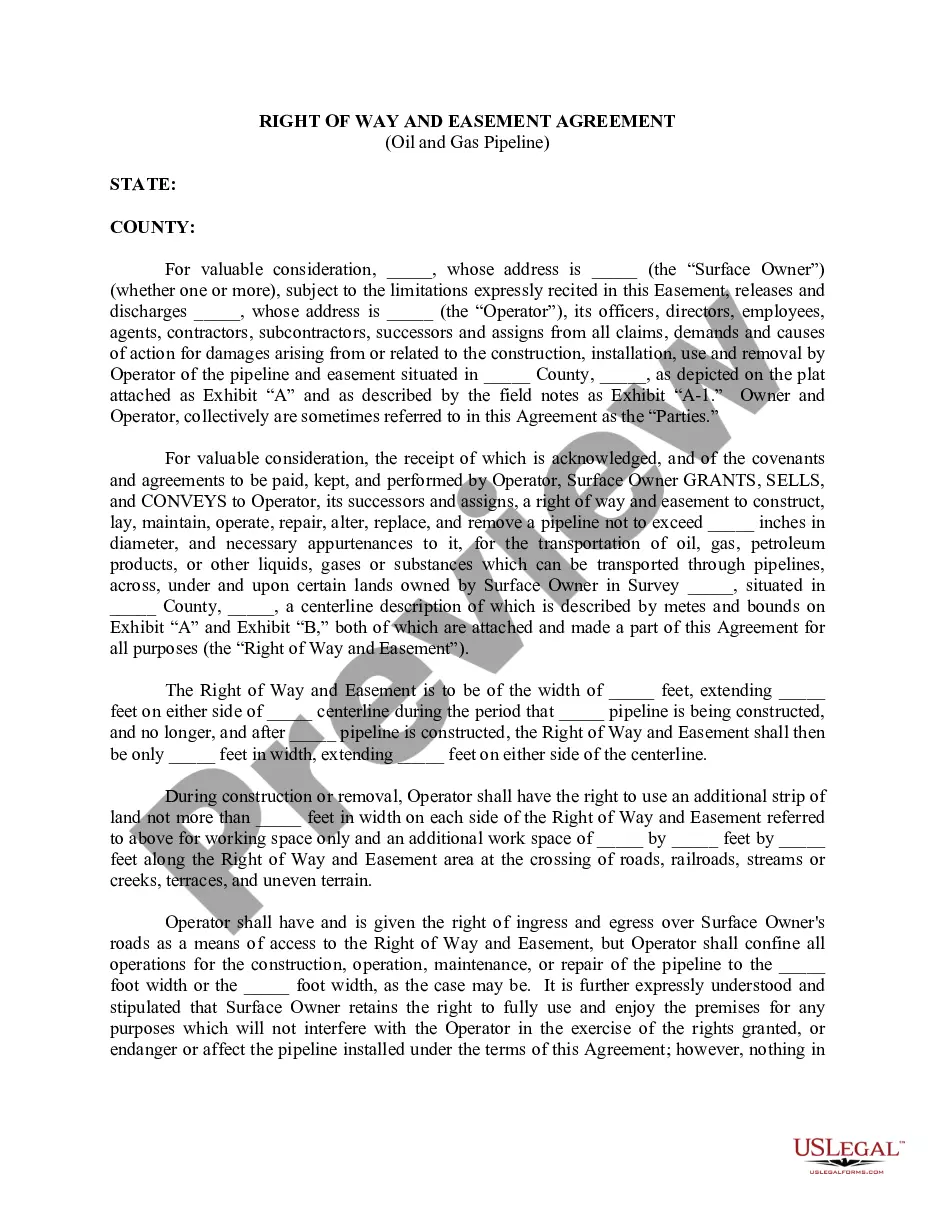
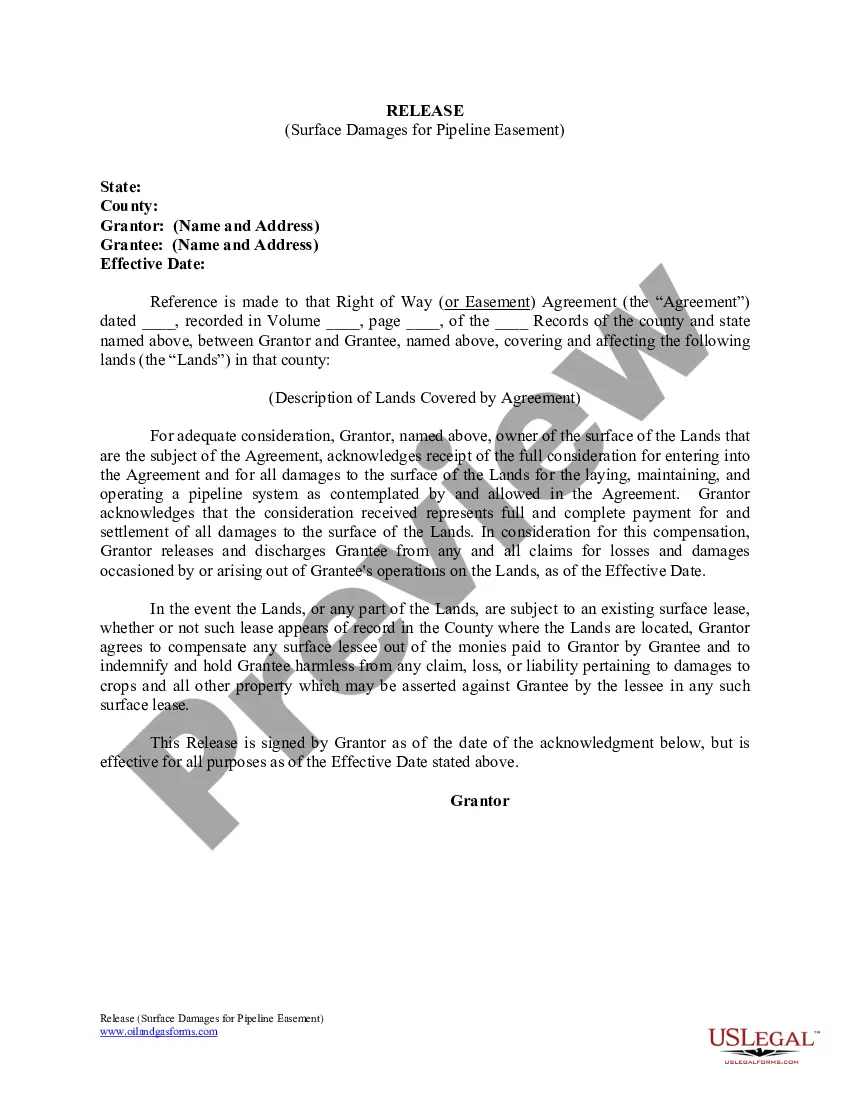
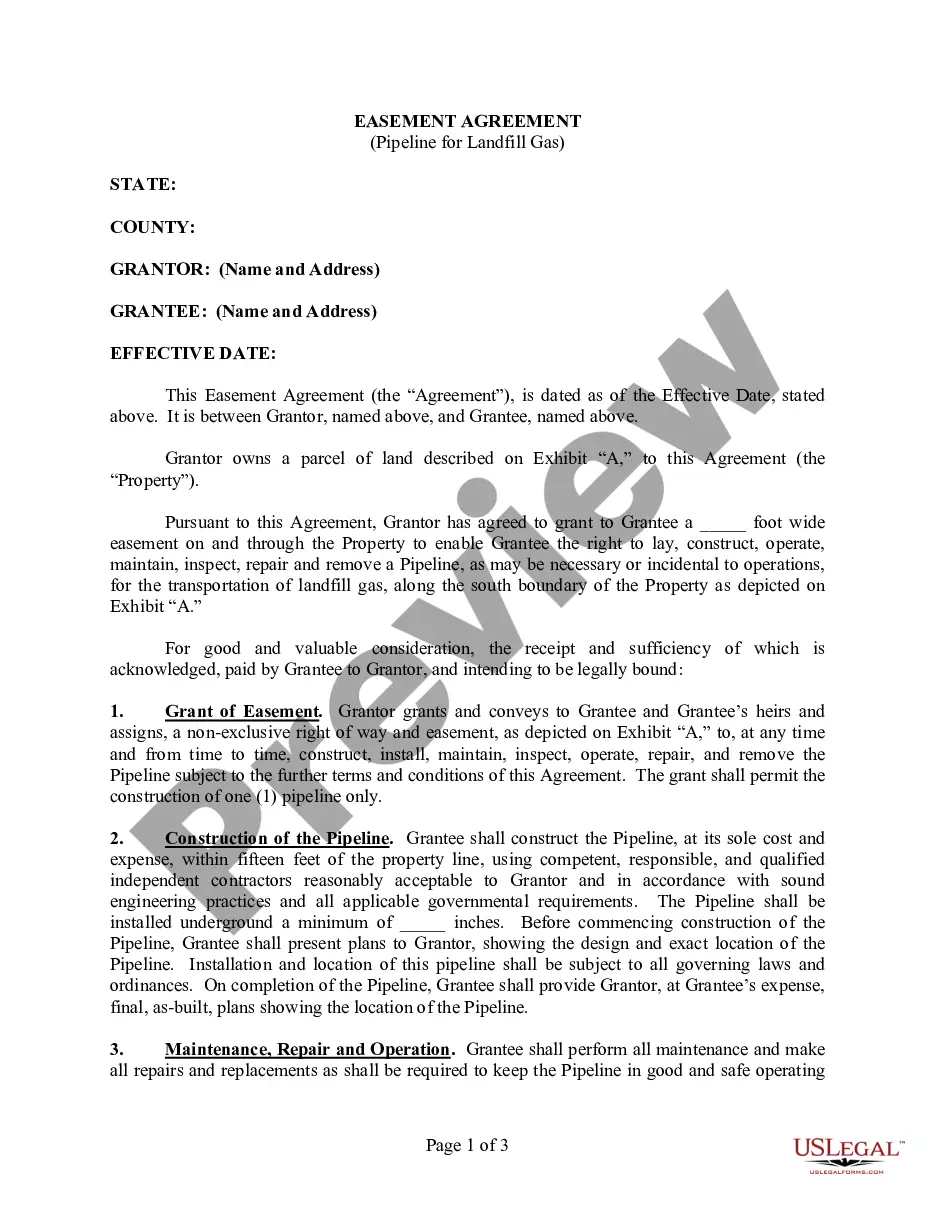
The Easement Agreement and Damage Release for installation of Gas Processing and Treating Facility is a legal document that grants the Grantee right of way and easement for the installation and operation of a gas processing facility on the Grantor's property. This form delineates the rights and responsibilities of both parties, distinguishing it from general easement agreements by specifically addressing gas-related operations, including the extraction of liquid hydrocarbons.
Main sections of this form
- Identification of parties: Names and addresses of the Grantor and Grantee.
- Right of way and easement specifications: Details about the easement for gas processing and treating facilities.
- Term of easement: Duration and conditions under which the easement is valid.
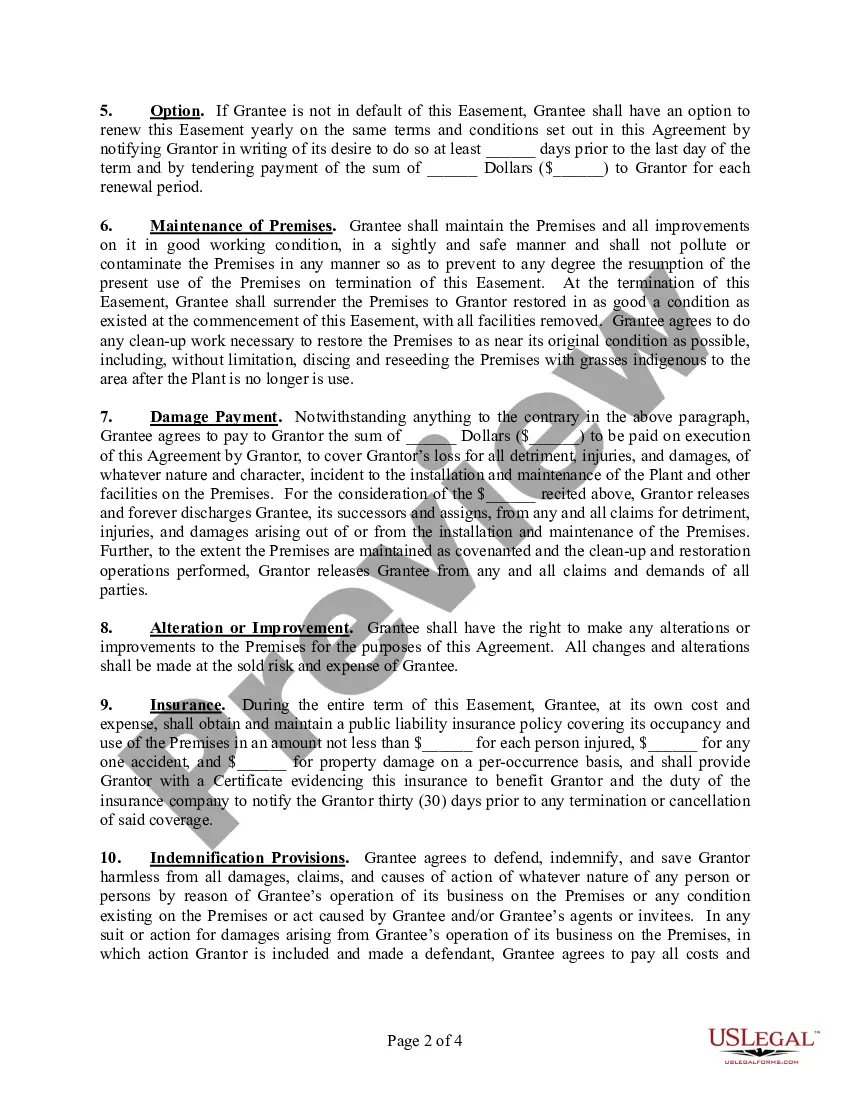
- Maintenance obligations: Guidelines for the Grantee to keep the premises in good condition.
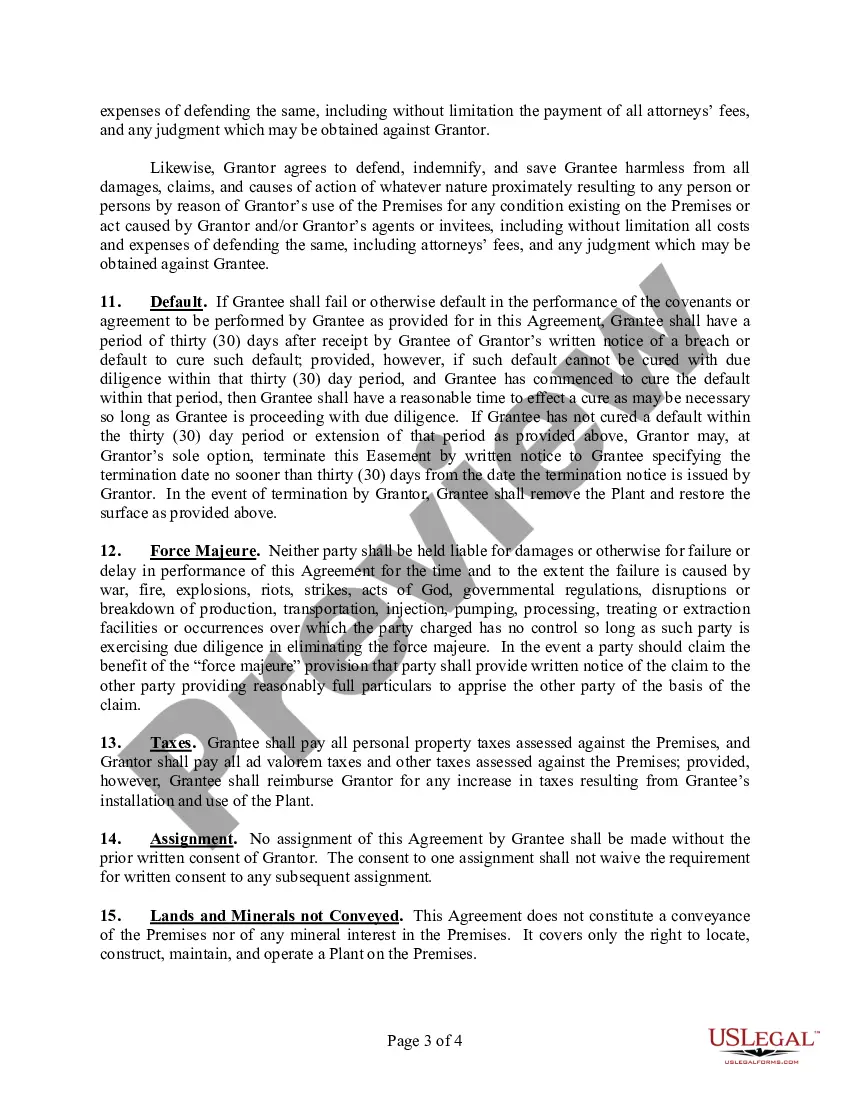
- Damage Payment clause: Agreement on compensation for potential damages related to the operation of the facility.
- Indemnification provisions: Responsibilities for legal claims arising from the use of the premises.
When this form is needed
This form should be used when a property owner (Grantor) wants to grant permission to another party (Grantee) to install and operate a gas processing facility on their property. It is appropriate for situations involving energy extraction, development of gas processing plants, or when negotiating the terms of land use for hydrocarbon processing, ensuring legal protection for both parties during the process.
Who should use this form
- Property owners looking to lease land for gas processing operations.
- Gas processing companies seeking to establish legal rights for facility installation and operation.
- Landowners engaged in negotiations involving gas extraction or processing agreements.
How to complete this form
- Identify the parties: Enter the names and addresses of both the Grantor and Grantee.
- Specify the property: Provide a legal description of the property, including size and location.
- Detail the easement terms: Indicate the duration of the easement and any terms regarding renewal.
- Outline responsibilities: Clearly state the maintenance obligations and damage compensation agreement.
- Include signatures: Ensure that both parties sign and date the document for validation.
Is notarization required?
To make this form legally binding, it must be notarized. Our online notarization service, powered by Notarize, lets you verify and sign documents remotely through an encrypted video session.
Get your form ready online
Our built-in tools help you complete, sign, share, and store your documents in one place.
Make edits, fill in missing information, and update formatting in US Legal Forms—just like you would in MS Word.
Download a copy, print it, send it by email, or mail it via USPS—whatever works best for your next step.
Sign and collect signatures with our SignNow integration. Send to multiple recipients, set reminders, and more. Go Premium to unlock E-Sign.
If this form requires notarization, complete it online through a secure video call—no need to meet a notary in person or wait for an appointment.
We protect your documents and personal data by following strict security and privacy standards.

Make edits, fill in missing information, and update formatting in US Legal Forms—just like you would in MS Word.

Download a copy, print it, send it by email, or mail it via USPS—whatever works best for your next step.

Sign and collect signatures with our SignNow integration. Send to multiple recipients, set reminders, and more. Go Premium to unlock E-Sign.

If this form requires notarization, complete it online through a secure video call—no need to meet a notary in person or wait for an appointment.

We protect your documents and personal data by following strict security and privacy standards.
Avoid these common issues
- Failing to clearly define the property boundaries and easement area.
- Not including specific terms regarding maintenance and restoration obligations.
- Ignoring state regulations that could impact the easement's enforceability.
- Forgetting to have both parties sign and date the document.
Advantages of online completion
- Convenience: Access the form anytime and download it instantly.
- Editability: Easily fill in the required information digitally.
- Reliability: Form templates are drafted by licensed attorneys, ensuring legal compliance.
Looking for another form?

Form popularity
FAQ
Give the document a simple title: Grant of Easement is sufficient. Identify the parties. You need to explain who the parties are to the agreement. The person granting the easement to his property is the Grantor and the person gaining access to the property is the Grantee.
Nine Essential Property Easement Agreement Considerations. Legal Description of Properties. Depiction of the Easement Area. Covenant Not to Disturb the Use of the Easement. Determination of Maintenance Obligations. Payment of Property Taxes.
An easement deed allows a party that is not the owner to use a portion of the land. It is a written agreement between two parties that spells out what part of the property is available for access and how it may be used. Since you are granting an easement to your land, you can set any terms and conditions you like.
Generally speaking, an easement is a more serious property right; it is the legal right to use someone else's land for a particular purpose. Easements are often recorded at the county clerk's office and encumber your property's title.Here, however, you probably do not need to take the step of granting an easement.
What is a Pipeline Easement? Generally, an easement is a legal interest that allows someone the right to use another's property for a certain purpose. A pipeline easement specifically gives the easement holder the right to build and maintain a pipeline on a landowner's property.
Easements are treated as a recovery of the basis of the property first, with any excess proceeds treated as capital gain, which is taxed at a lower rate than ordinary income. The basis of property that offsets an easement is limited to the basis of the affected acres or square footage.
How much money should landowners get when an oil or gas pipeline crosses their land? As it stands, landowners receive a one-time payment roughly based on the length of the pipeline, with rates varying from $5 to $50 per foot or more for a Marcellus or Utica shale pipeline right-of-way agreement.
An easement is a nonpossessory right to use and/or enter onto the real property of another without possessing it. It is "best typified in the right of way which one landowner, A, may enjoy over the land of another, B".
An easement is a limited right to use another person's land for a stated purpose. Examples of easements include the use of private roads and paths, or the use of a landowner's property to lay railroad tracks or electrical wires.