Mississippi Order Appointing Guardian Ad Litem
About this form
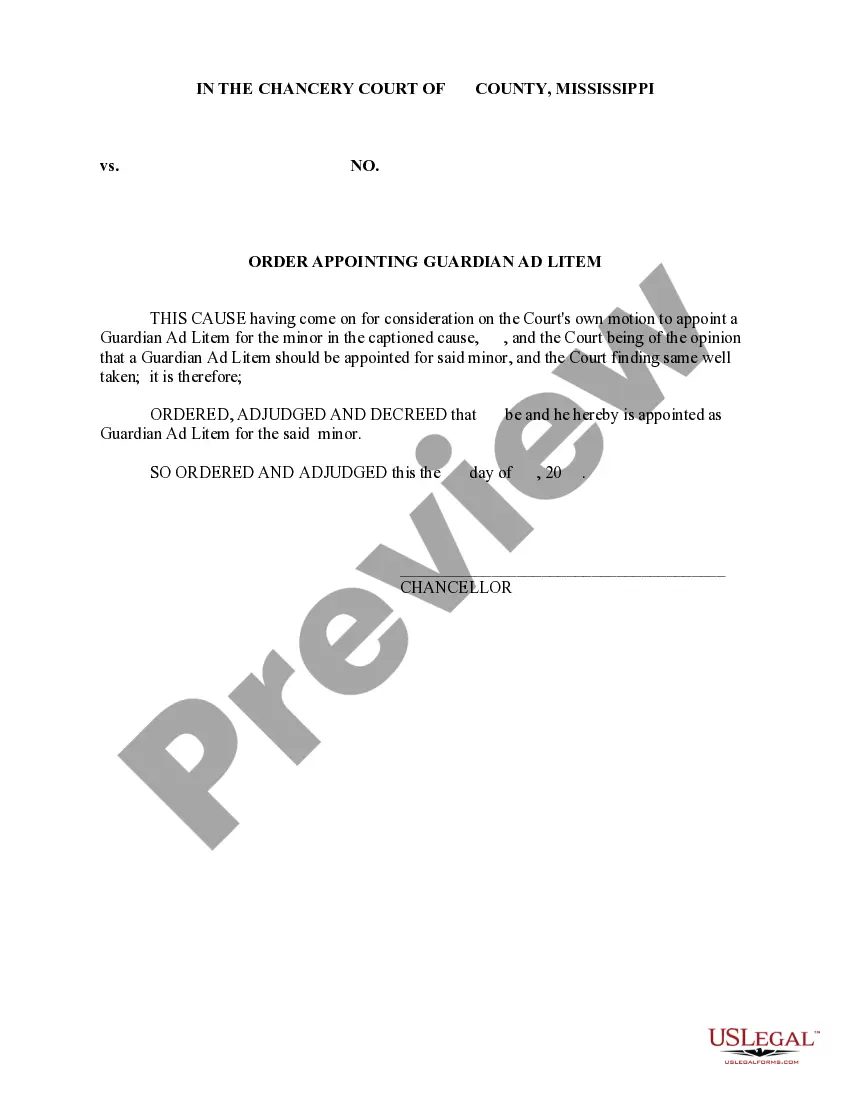
The Order Appointing Guardian Ad Litem is a legal document issued by a court that designates a specific individual, known as a Guardian Ad Litem, to represent the best interests of a minor in legal proceedings. This form is essential in cases where a minor's welfare is at stake, allowing for an impartial advocate to be appointed, ensuring that the minor's voice is heard. Unlike other guardianship documents, this order specifically emphasizes the Court's authority in selecting an advocate within the legal system.
Key components of this form
- Identification of the minor for whom the Guardian Ad Litem is appointed.
- The name and information of the Guardian Ad Litem being appointed.
- Judicial declaration affirming the need for a Guardian Ad Litem.
- Signatures of the judge and date, confirming the order's validity.


Situations where this form applies
This form should be used in situations where a minor is involved in legal matters and needs representation. Common scenarios include custody disputes, child abuse cases, or any legal proceedings where the minor's interests must be safeguarded. If a court determines that the minor cannot adequately represent their own interests, this order can be issued to appoint a knowledgeable advocate.
Who should use this form
Individuals or entities that may consider using this form include:
- Parents or legal guardians seeking to appoint a representative for a minor.
- Attorneys representing clients in family law cases involving minors.
- Court officials requiring a template for appointing a Guardian Ad Litem.
- Child welfare advocates involved in legal proceedings related to minors.
Instructions for completing this form
- Identify the minor for whom the Guardian Ad Litem is being appointed, including their name and any relevant case information.
- Specify the name and qualifications of the Guardian Ad Litem being appointed.
- Include a declaration of the court's rationale for the appointment.
- Ensure the form is dated and signed by the presiding judge.
Notarization guidance
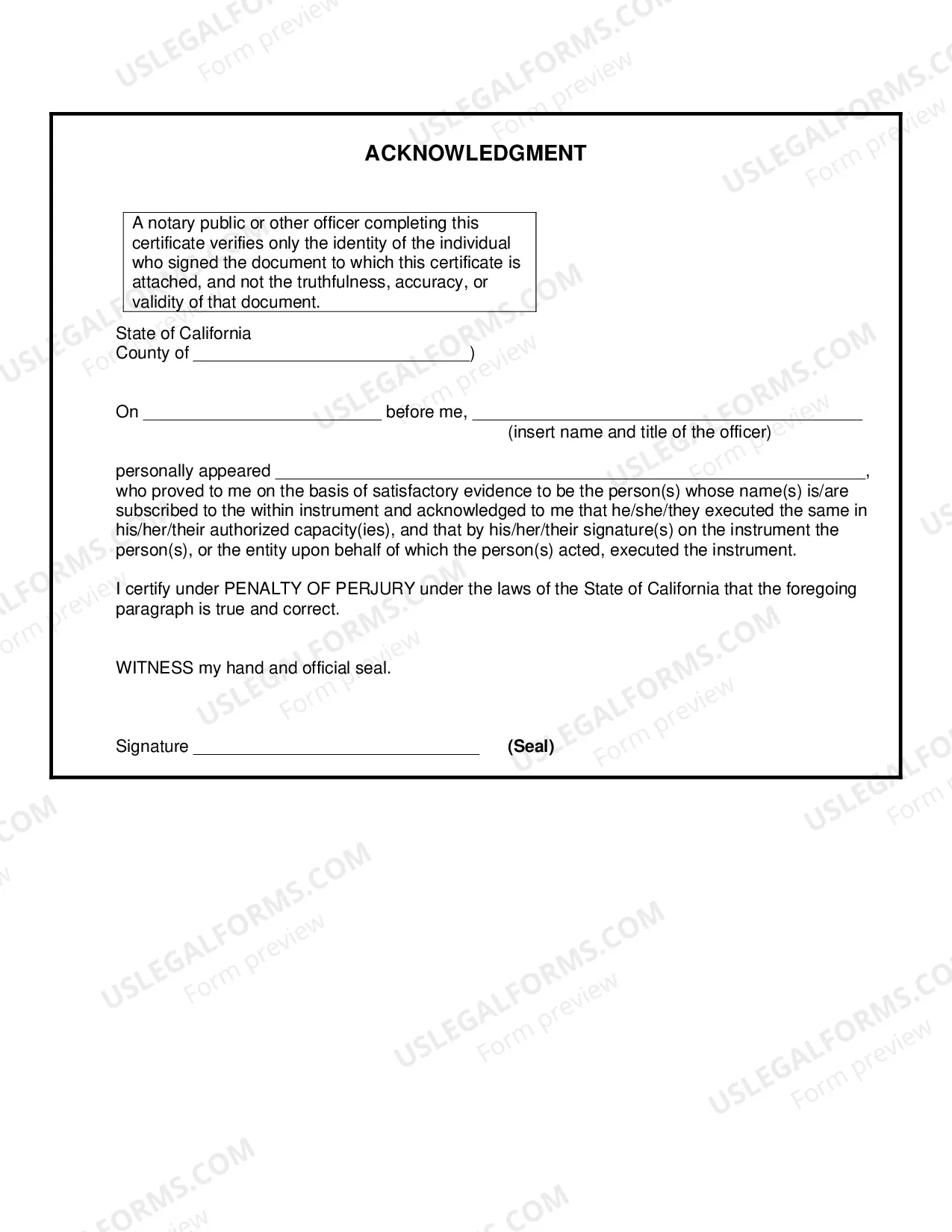
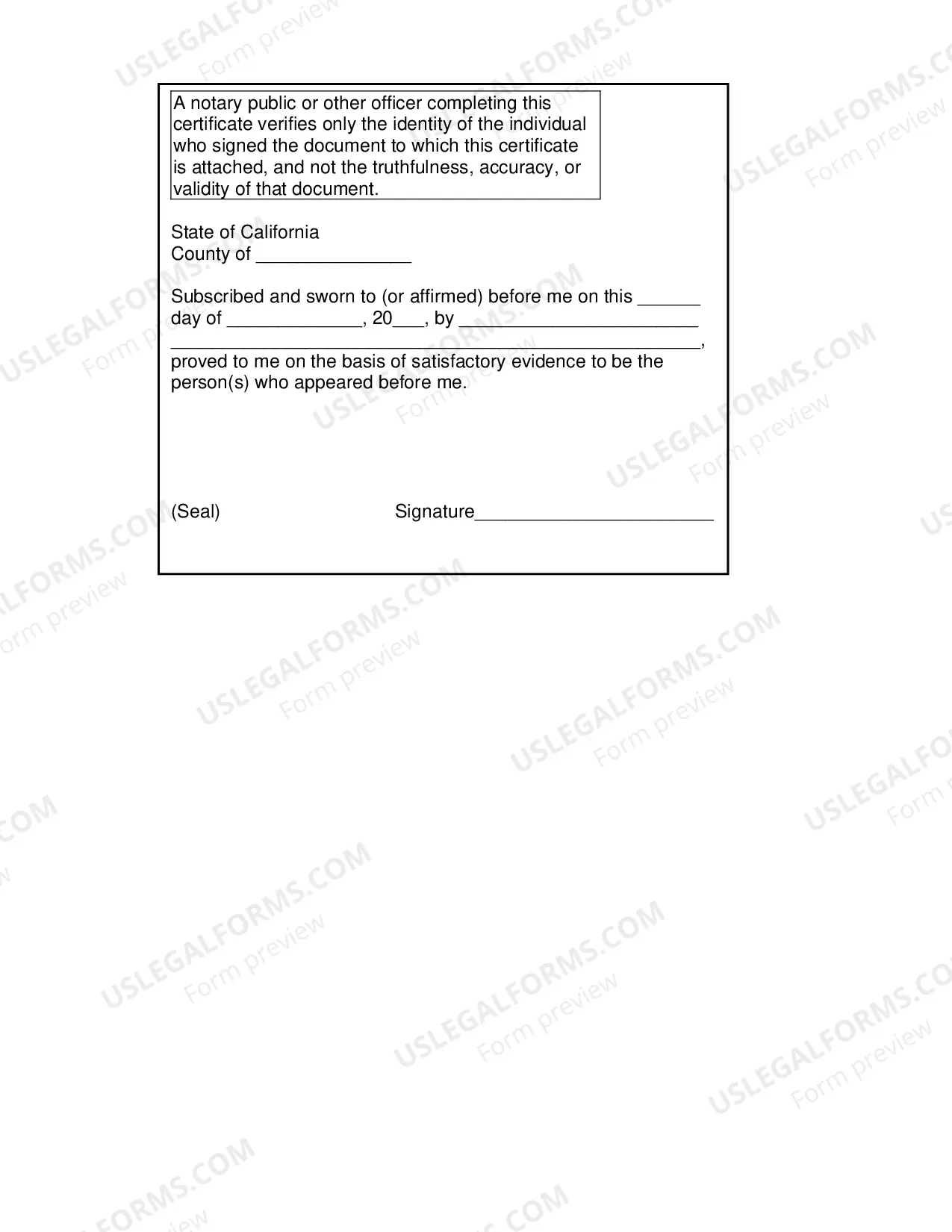
This document requires notarization to meet legal standards. US Legal Forms provides secure online notarization powered by Notarize, allowing you to complete the process through a verified video call, available 24/7.
Get your form ready online
Our built-in tools help you complete, sign, share, and store your documents in one place.
Make edits, fill in missing information, and update formatting in US Legal Forms—just like you would in MS Word.
Download a copy, print it, send it by email, or mail it via USPS—whatever works best for your next step.
Sign and collect signatures with our SignNow integration. Send to multiple recipients, set reminders, and more. Go Premium to unlock E-Sign.
If this form requires notarization, complete it online through a secure video call—no need to meet a notary in person or wait for an appointment.
We protect your documents and personal data by following strict security and privacy standards.

Make edits, fill in missing information, and update formatting in US Legal Forms—just like you would in MS Word.

Download a copy, print it, send it by email, or mail it via USPS—whatever works best for your next step.

Sign and collect signatures with our SignNow integration. Send to multiple recipients, set reminders, and more. Go Premium to unlock E-Sign.

If this form requires notarization, complete it online through a secure video call—no need to meet a notary in person or wait for an appointment.

We protect your documents and personal data by following strict security and privacy standards.
Mistakes to watch out for
- Failing to include all required case identifiers for the minor.
- Not ensuring that the appointed Guardian Ad Litem meets state qualifications.
- Leaving out the judge's signature, which renders the order invalid.
- Neglecting to adapt the language of the order to fit the specifics of the case.
Why complete this form online
- Easy access to a professionally drafted template tailored for legal use.
- Ability to edit and customize the form to fit specific legal circumstances.
- Availability of reliable resources to ensure proper completion and submission.
- Convenience of downloading and printing at your convenience.
Looking for another form?

Form popularity
FAQ
GALs are trained professionals and are usually attorneys. However, unlike your attorney, a Guardian Ad Litem serves as the child's advocate not the parents' during a divorce, custody, or paternity trial.
A guardian ad litem is a ward's legal advocate in a single court action.On the other hand, a guardian has overall legal authority to make personal and financial decisions for a child or incapacitated party, although the title may not be permanent.
Whether the court will assign a GAL to your case before the temporary hearing depends on your child custody and placement status and the purpose of the temporary hearing.As a practical matter, the court usually follows the GAL's recommendation, but that is not true in all case.
From and after January 1, 1999, in order to be eligible for appointment as guardian ad litem, such attorney or lay person must have received child protection and juvenile justice training provided by or approved by the Mississippi Judicial College within the year immediately preceding the appointment.
The guardian ad litem shall be paid a fee in the performance of duties pursuant to section 43-21-121(6) of the Mississippi Code. The court may order financially ableparents to pay for the reasonable fees of the guardian ad litem, or a portion thereof, pursuant to section 43-21-619 of the Mississippi Code.
Essentially, an Attorney ad Litem will act as a third attorney in the case. Conversely, a Guardian ad Litem is appointed to act as a friend or investigator/evaluator on behalf of the children's best interest.It is important to know the Guardian or Attorney ad Litem before having them appointed to your case.
The guardian ad litem ultimately makes a recommendation about what he or she thinks is in the best interest of the child.However, his or her basic duty is provide the court with necessary and unbiased information so that the just can make an informed decision about what is best for the child.
Often, though not always, the judge does agree with the guardian ad litem. Generally speaking, guardians ad litem are really well respected, and they're an important part of a custody case.Guardians ad litem are attorneys, too, but they're trained to deal with kids.