Sample Letter for Apology for Error in Advertisement
Overview of this form
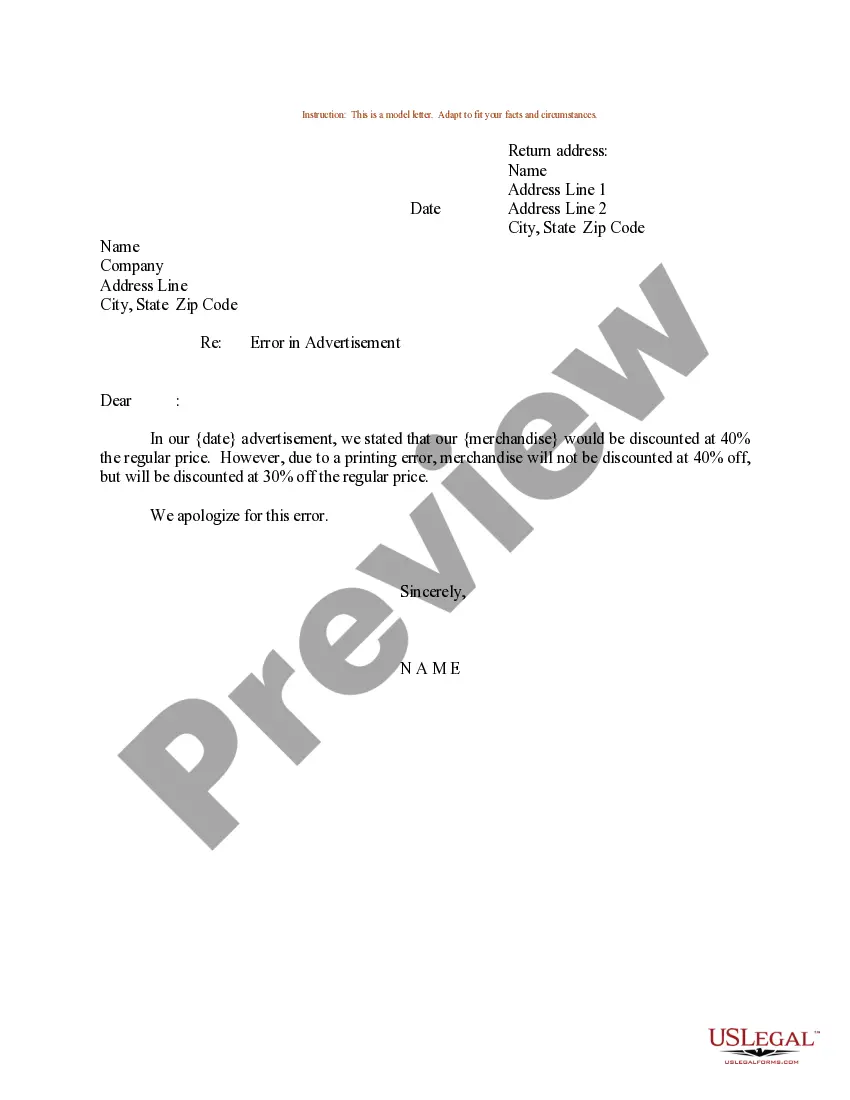
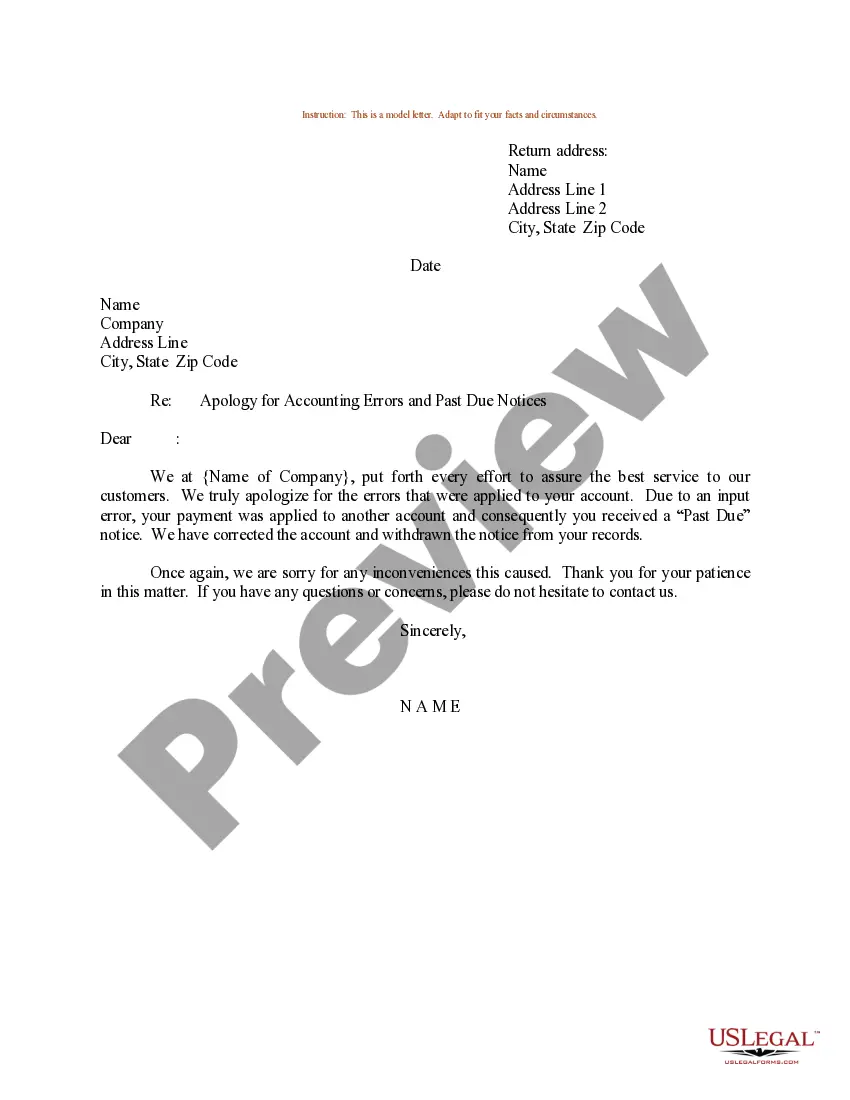
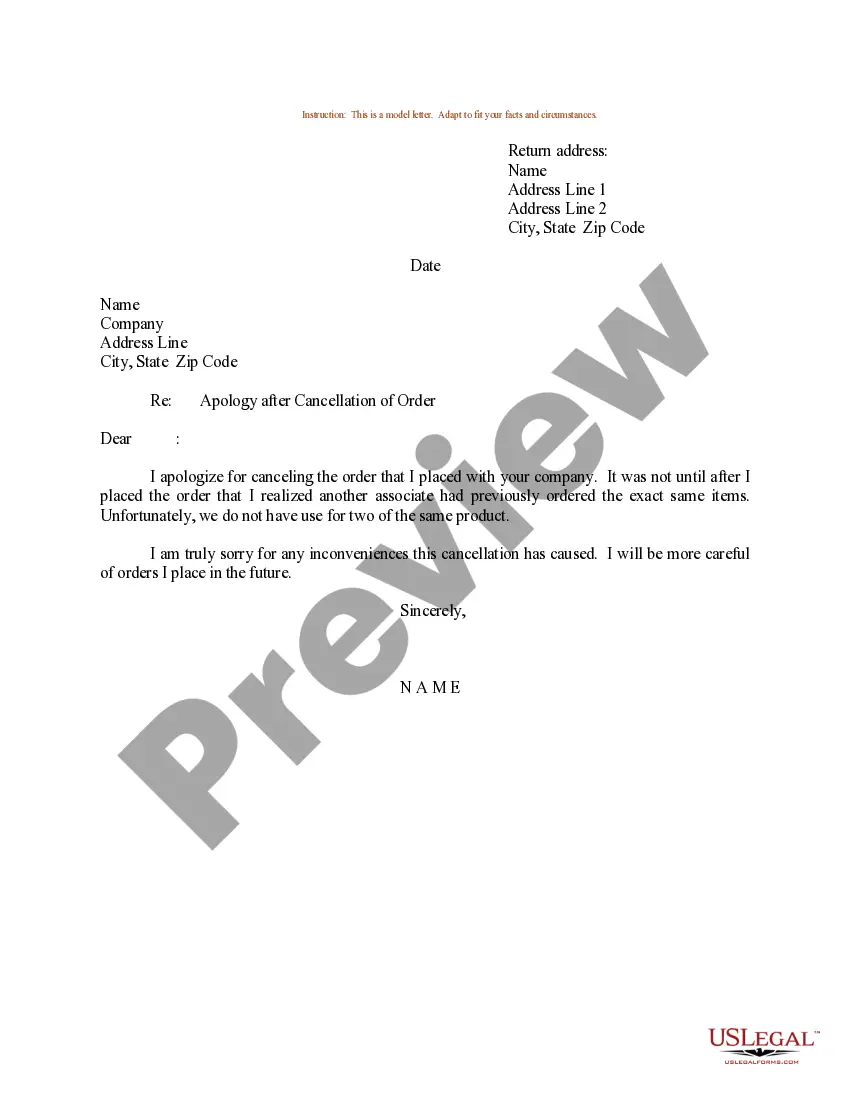
The Sample Letter for Apology for Error in Advertisement is a formal document used to acknowledge and apologize for mistakes in advertising content. This letter serves to maintain a good relationship with customers by addressing the error transparently and professionally. It differs from other types of correspondence by being specifically tailored to rectify advertising inaccuracies and reassure clients or consumers that corrections will be made.
What’s included in this form
- Return address: Includes your name and address details.
- Date: The date when the letter is written.
- Recipient information: Name and address of the individual or company receiving the letter.
- Subject line: Clearly states the purpose of the letter as an apology for an advertising error.
- Closing statement: A polite sign-off expressing sincerity.
Situations where this form applies
This form is essential when an advertisement contains errors that may mislead customers or clients. Situations include incorrect pricing, misleading terms, or incorrect product descriptions. Using this letter helps rectify the situation and demonstrate professionalism to your customers.
Who can use this document
- Business owners who advertise their products or services.
- Marketing professionals responsible for creating and disseminating advertisements.
- Customer service representatives who need to address complaints related to advertising errors.
Completing this form step by step
- Identify the parties: Write your name and address, followed by the recipient's name and address.
- Specify the date: Include the current date to indicate when the letter is sent.
- Write a clear subject line: State the purpose of the letter as an apology for the advertising error.
- Draft the body: Explain the nature of the error and express your sincere apology.
- Sign off: Conclude with a professional closing, followed by your name.
Is notarization required?
This form usually doesn’t need to be notarized. However, local laws or specific transactions may require it. Our online notarization service, powered by Notarize, lets you complete it remotely through a secure video session, available 24/7.
Get your form ready online
Our built-in tools help you complete, sign, share, and store your documents in one place.
Make edits, fill in missing information, and update formatting in US Legal Forms—just like you would in MS Word.
Download a copy, print it, send it by email, or mail it via USPS—whatever works best for your next step.
Sign and collect signatures with our SignNow integration. Send to multiple recipients, set reminders, and more. Go Premium to unlock E-Sign.
If this form requires notarization, complete it online through a secure video call—no need to meet a notary in person or wait for an appointment.
We protect your documents and personal data by following strict security and privacy standards.

Make edits, fill in missing information, and update formatting in US Legal Forms—just like you would in MS Word.

Download a copy, print it, send it by email, or mail it via USPS—whatever works best for your next step.

Sign and collect signatures with our SignNow integration. Send to multiple recipients, set reminders, and more. Go Premium to unlock E-Sign.

If this form requires notarization, complete it online through a secure video call—no need to meet a notary in person or wait for an appointment.

We protect your documents and personal data by following strict security and privacy standards.
Avoid these common issues
- Failing to proofread the letter for additional errors before sending.
- Not providing sufficient details regarding the error, leading to confusion.
- Using informal language, which may undermine the seriousness of the apology.
Benefits of completing this form online
- Convenient access: Download the form from anywhere, making it easy to address issues promptly.
- Editability: Customize the letter according to specific circumstances and recipient information.
- Reliability: Get a professionally drafted form that helps you maintain a good brand image.
Legal use & context
- This letter helps mitigate potential legal issues by formally addressing a mistake.
- Documenting the apology can be beneficial in case of complaints or disputes.
Main things to remember
- The form is intended for businesses to formally apologize for advertisement errors.
- Completing this letter can help preserve relationships with customers.
- Use clear, direct language to acknowledge the mistake and express regret.
Looking for another form?
Form popularity
FAQ
Acknowledgment. Being able to see how your actions impact others is key to making a sincere apology. Remorse and Empathy. Remorse is truly feeling bad for what you've done. Restitution.
The definition of a guideline is something used to define how a judgment or policy is made. An example of a guideline is all actors trying out for a part by performing a scene made popular by a famous actor.He considered the Ten Commandments more a guideline than a requirement.
A true apology does not overdo. It stays focused on acknowledging the feelings of the hurt party without overshadowing them with your own pain or remorse. A true apology doesn't get caught up in who's to blame or who "started it." Maybe you're only 14 percent to blame and maybe the other person provoked you.
Guidelines are Umbrellas of Behavior - many things fit under the umbrella. Rules are clearly stated actions that fit under the Guidelines. The Guideline of Be Kind can be followed by the Rules of: Say please and thank you.
1Say you're sorry. Not, I'm sorry, but . . . Just plain ol' I'm sorry.2Own the mistake. It's important to show the wronged person that you're willing to take responsibility for your actions.3Describe what happened.4Have a plan.5Admit you were wrong.6Ask for forgiveness.
1In this brief letter, you will explain the error and ask for review and correction. Your tone should be formal and courteous.2Introduce yourself and give your policy and claim number if it seems appropriate to you.3Explain the error.4Tell the reader how the error occurred.5Request the reader to fix it.
Explain what happened simply. While there's no need for a detailed play-by-play, your recipient does need some context about what happened. Acknowledge your error. Don't tiptoe around this. Apologize. Commit to doing better. Close gracefully.
: a line by which one is guided: such as. a : a cord or rope to aid a passer over a difficult point or to permit retracing a course. b : an indication or outline of policy or conduct.
An apology always has to be sincere and perceived as sincere by the other person, or it will fail, she says. The hardest way to acknowledge error is face to face, she says, but doing so gives the gravity of the situation its due. (Also, email is not a good tool where emotions are involved.)