Indemnity Provisions - Parties to the Indemnity
Overview of this form
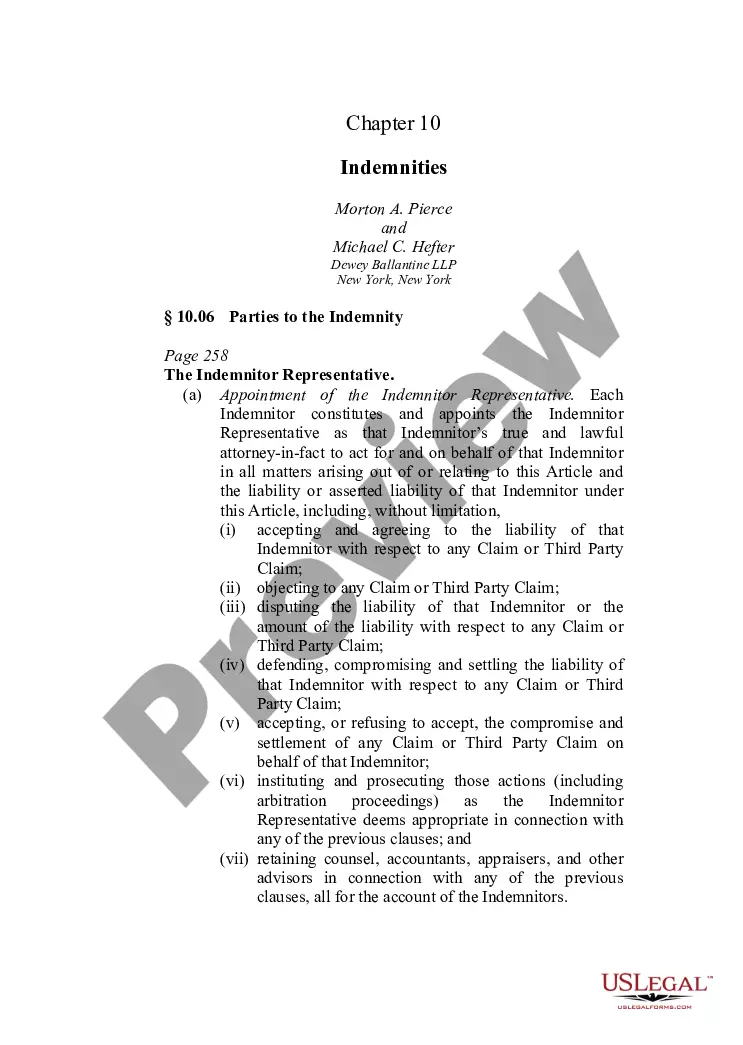
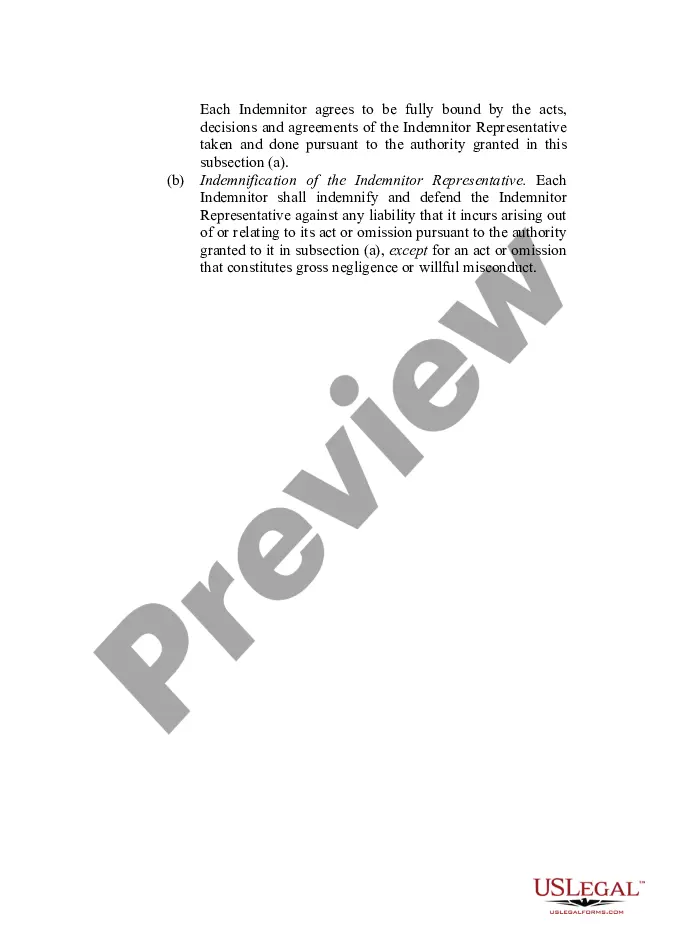
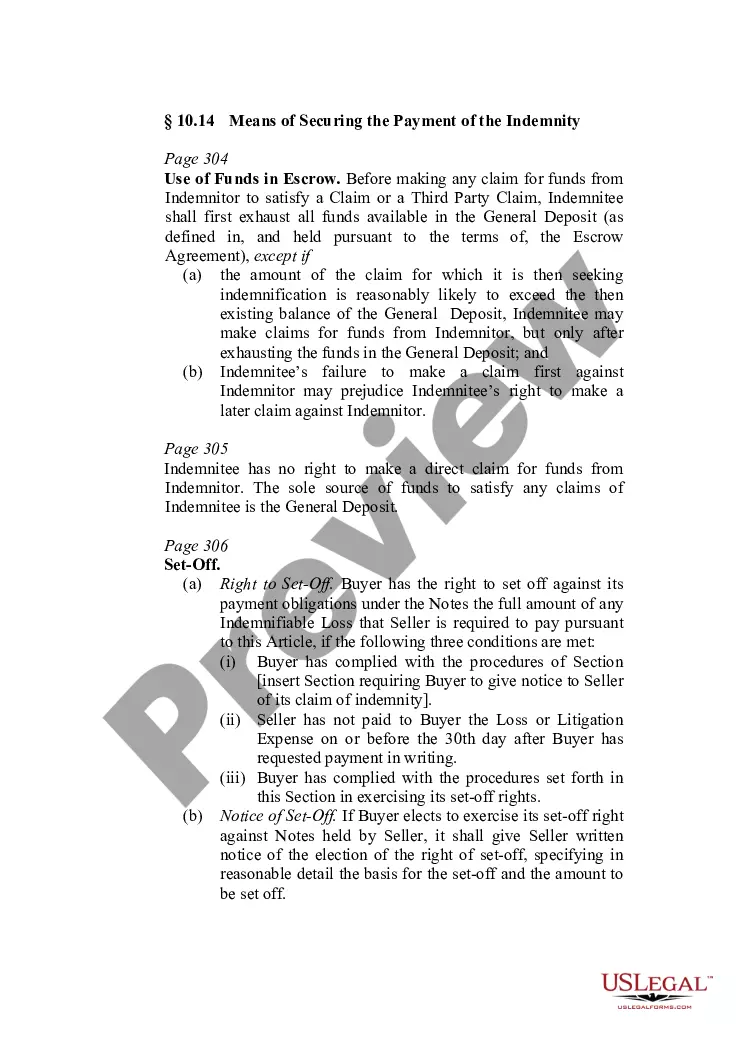
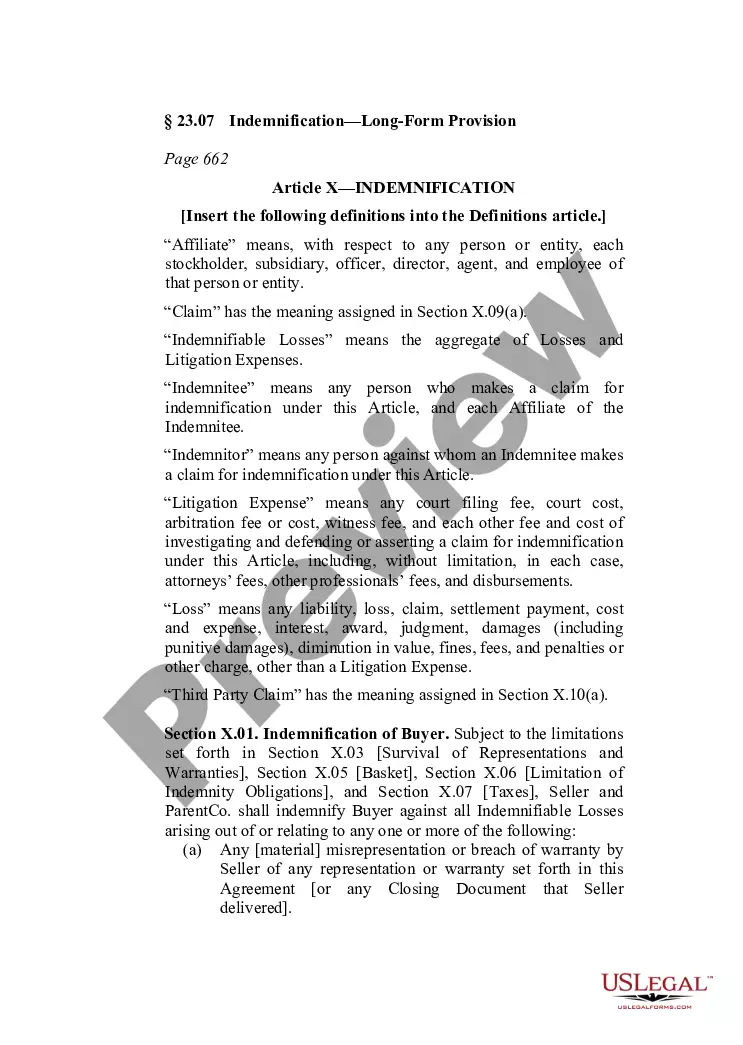
The Indemnity Provisions - Parties to the Indemnity form is designed to outline the roles and responsibilities of parties involved in an indemnity agreement. It includes essential clauses for appointing an Indemnitor Representative, who acts on behalf of the indemnitor in legal matters. This form ensures clarity on liabilities and empowers the appointed representative to handle claims efficiently.
Key parts of this document
- Appointment clause for the Indemnitor Representative.
- Powers granted to the Indemnitor Representative regarding claims.
- Indemnification responsibilities of the indemnitors towards the representative.
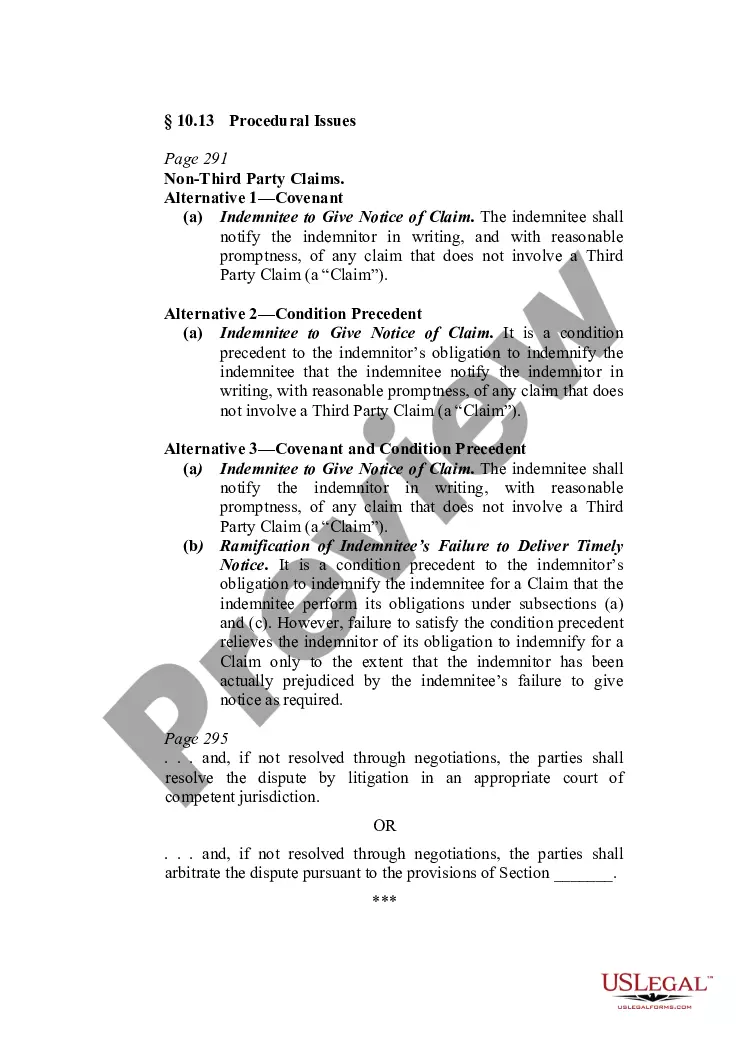
- Provisions detailing obligations of the representative in managing claims.
- Limitations on liability concerning gross negligence or willful misconduct.
Situations where this form applies
This form is useful in situations where parties enter into agreements that require the assumption of legal liabilities or risks. If you need to designate a representative to manage claims and defenses related to indemnity, this form should be used to establish clear authority and responsibility among the parties. It is particularly applicable in business contracts, construction agreements, or any situation where liability may arise from third-party claims.
Who should use this form
This form is intended for:
- Businesses and organizations engaging in contracts that involve indemnity provisions.
- Legal professionals drafting indemnity agreements for clients.
- Individuals needing to clarify roles in scenarios involving potential liabilities.
- Contractors and subcontractors in the construction industry.
How to prepare this document
- Identify all parties involved in the indemnity agreement.
- Designate an Indemnitor Representative with explicit authority outlined in the form.
- Clearly define the powers and limitations of the representative in managing claims.
- Review and include indemnification provisions for the representative.
- Ensure all parties sign the form to confirm their agreement to the terms laid out.
Does this document require notarization?
This form does not typically require notarization unless specified by local law. It is advisable to check local regulations to ensure compliance with any specific notarization requirements.
Get your form ready online
Our built-in tools help you complete, sign, share, and store your documents in one place.
Make edits, fill in missing information, and update formatting in US Legal Forms—just like you would in MS Word.
Download a copy, print it, send it by email, or mail it via USPS—whatever works best for your next step.
Sign and collect signatures with our SignNow integration. Send to multiple recipients, set reminders, and more. Go Premium to unlock E-Sign.
If this form requires notarization, complete it online through a secure video call—no need to meet a notary in person or wait for an appointment.
We protect your documents and personal data by following strict security and privacy standards.

Make edits, fill in missing information, and update formatting in US Legal Forms—just like you would in MS Word.

Download a copy, print it, send it by email, or mail it via USPS—whatever works best for your next step.

Sign and collect signatures with our SignNow integration. Send to multiple recipients, set reminders, and more. Go Premium to unlock E-Sign.

If this form requires notarization, complete it online through a secure video call—no need to meet a notary in person or wait for an appointment.

We protect your documents and personal data by following strict security and privacy standards.
Avoid these common issues
- Failing to clearly outline the powers of the Indemnitor Representative.
- Not addressing potential limitations on liability in the indemnification clauses.
- Overlooking the necessity of signatures from all parties involved.
- Using vague language that may lead to misunderstandings about responsibilities.
Benefits of completing this form online
- Convenience of immediate downloading and use without delays.
- Editability to tailor the form to specific needs and circumstances.
- Access to professionally drafted legal language by licensed attorneys.
Key takeaways
- The Indemnity Provisions - Parties to the Indemnity form helps define roles in indemnity agreements.
- Clear appointment and powers should be established for the Indemnitor Representative.
- Proper completion is essential to ensure all parties understand their responsibilities under the agreement.
Looking for another form?
Form popularity
FAQ
Company/Business/Individual Name shall fully indemnify, hold harmless and defend _______ and its directors, officers, employees, agents, stockholders and Affiliates from and against all claims, demands, actions, suits, damages, liabilities, losses, settlements, judgments, costs and expenses (including but not
Cross-Indemnity Agreement a form of indemnity that is often used in energy industry and chemical industry contracts.Therefore, each party obligates itself to indemnify the other for liabilities arising out of each other's acts or omissions.
Indemnity is compensation paid by one party to another to cover damages, injury or losses.An example of an indemnity would be an insurance contract, where the insurer agrees to compensate for any damages that the entity protected by the insurer experiences.
Transitive verb. 1 : to secure against hurt, loss, or damage. 2 : to make compensation to for incurred hurt, loss, or damage. Other Words from indemnify Synonyms Choose the Right Synonym Example Sentences Learn More about indemnify.
If there is no indemnification clause, then the parties will not be entitled to any contractual indemnification. This does not mean that a party may not be held liable towards another party in a court of law, it just means that contractually a party cannot claim compensation for specific damages or expenses.
Indemnified Party means any Person seeking indemnification from another Person pursuant to Article VIII. Indemnifying Party means any Person against whom a claim for indemnification is asserted by another Person pursuant to Article VIII.Third Party Rights Holder has the meaning set forth in Section 8.2.
In a mutual indemnification, both parties agree to compensate the other party for losses arising out of the agreement to the extent those losses are caused by the indemnifying party's breach of the contract. In a one-way indemnification, only one party provides this indemnity in favor of the other party.
Drafting of the indemnity clause An indemnifier must limit the amount of indemnities that is given while entering into a contract. An express obligation must be imposed so as to minimize the loss, and the duration of time in which the claim can be brought must be limited.
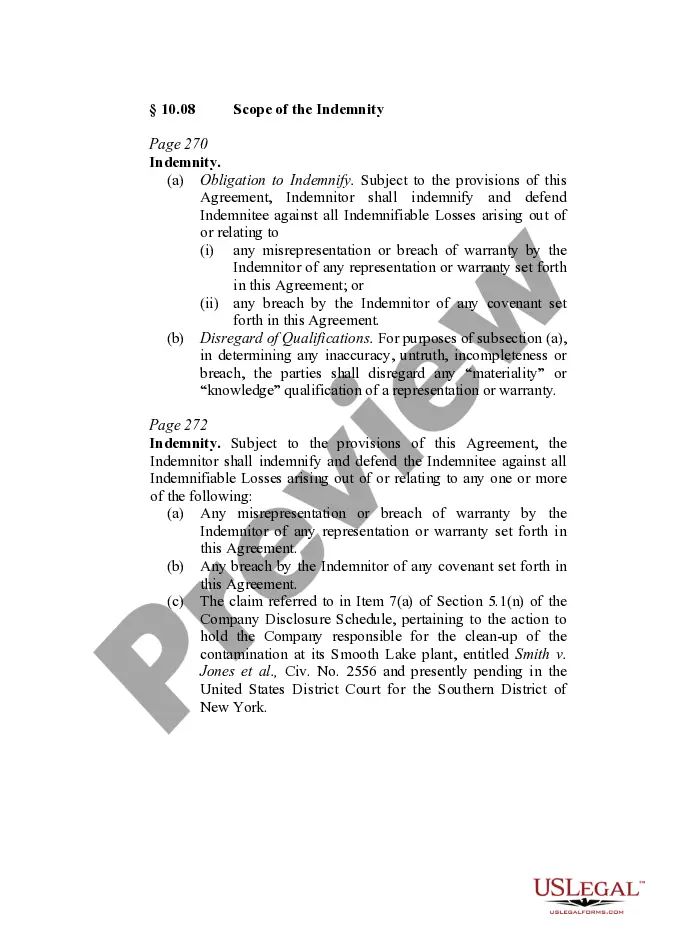
As discussed, an indemnity provision transfers risk from one party (called the indemnitee) to another party (called the indemnitor). Under an indemnity provision, the indemnitor agrees to reimburse the indemnitee for losses resulting from a claim or claims brought by a third-party.