Indemnification - Long-Form Provision
About this form
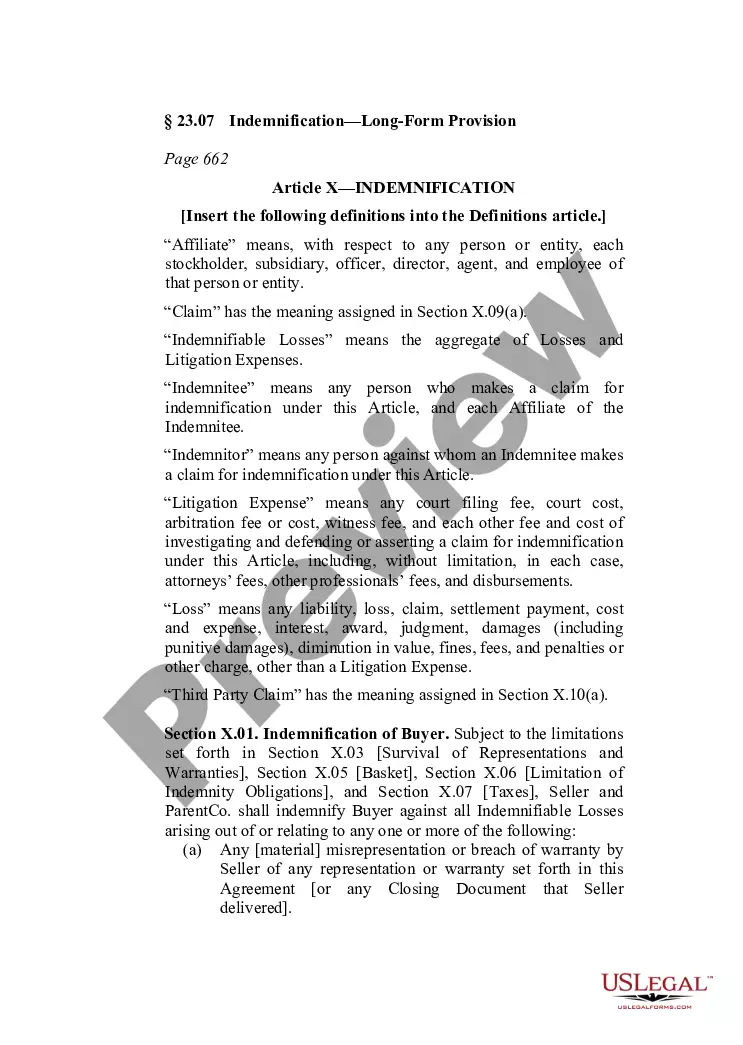
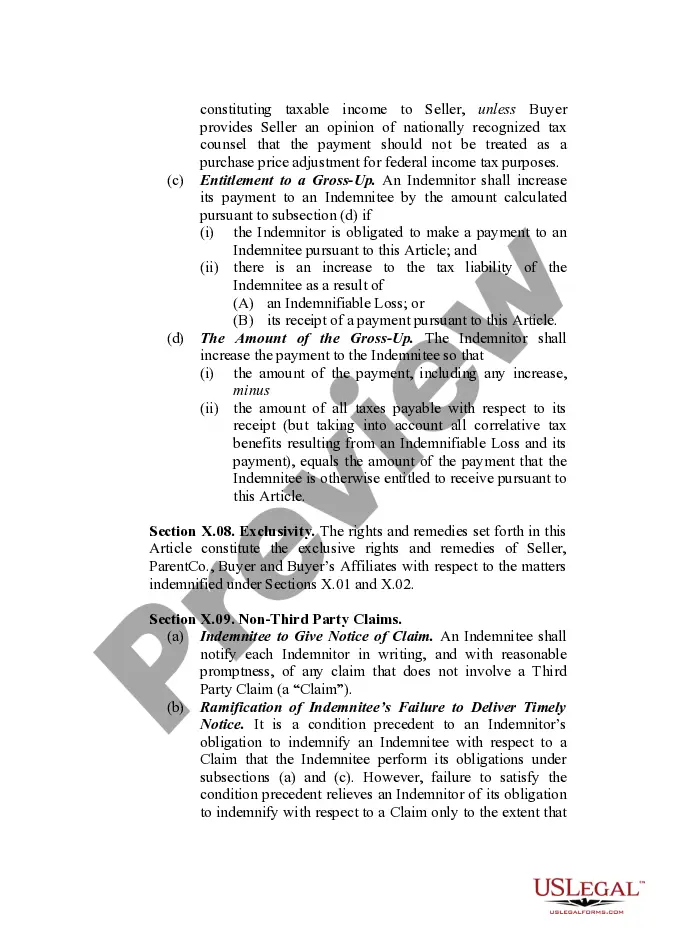
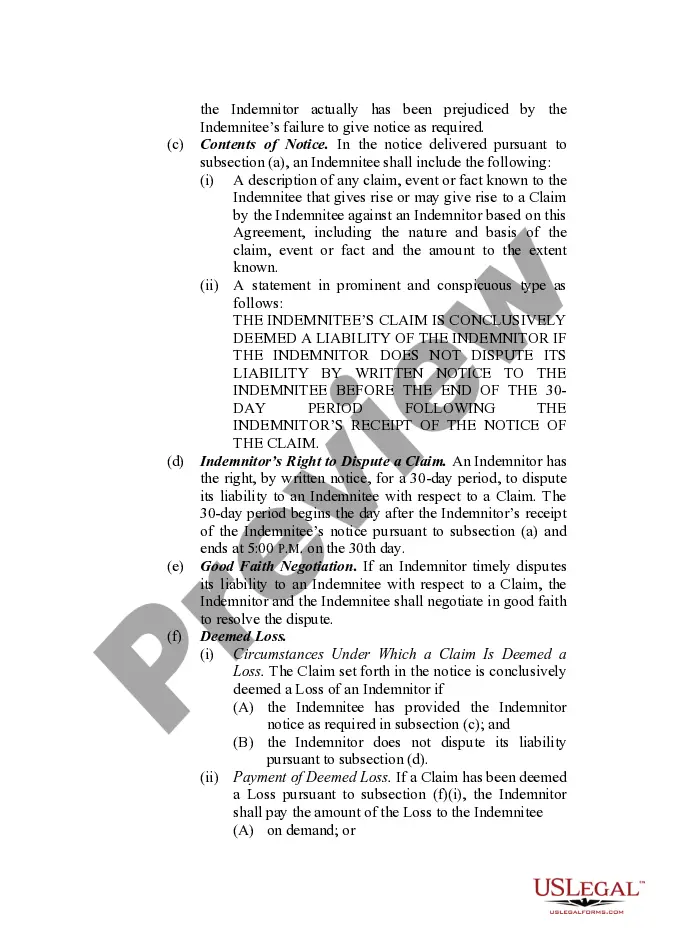
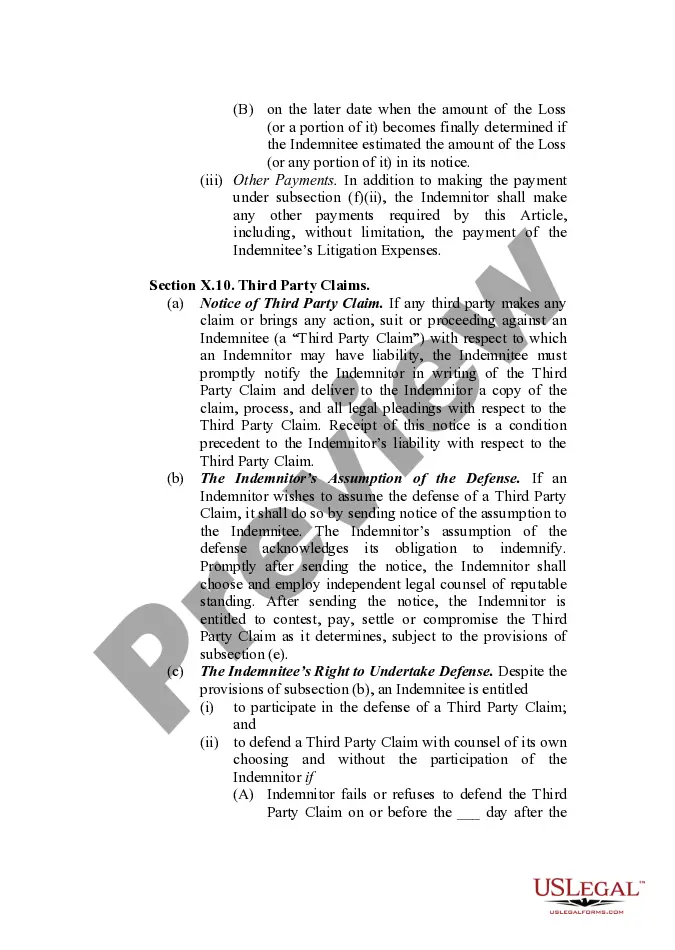
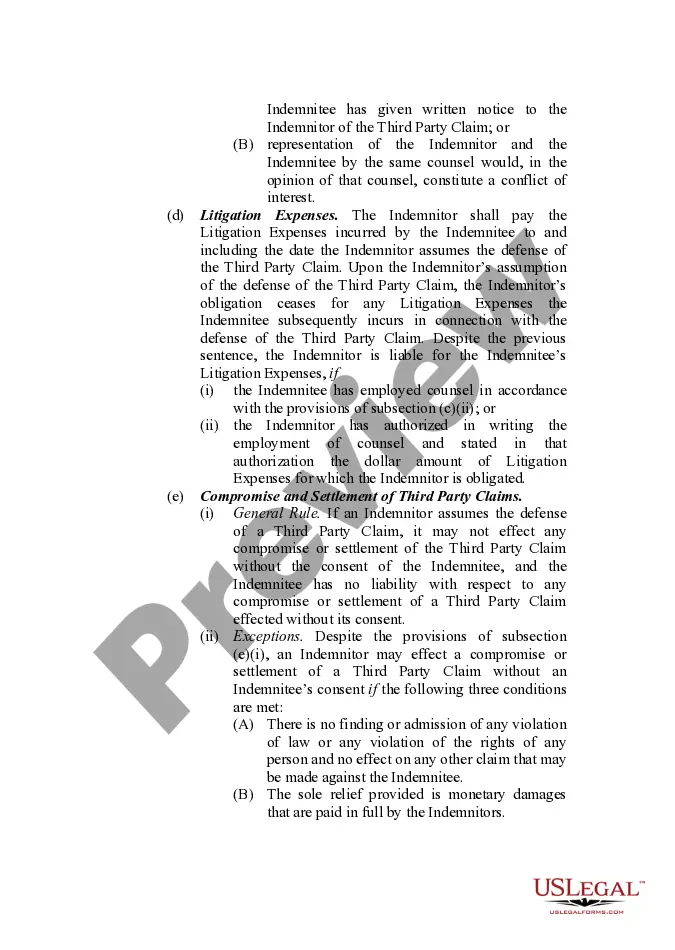
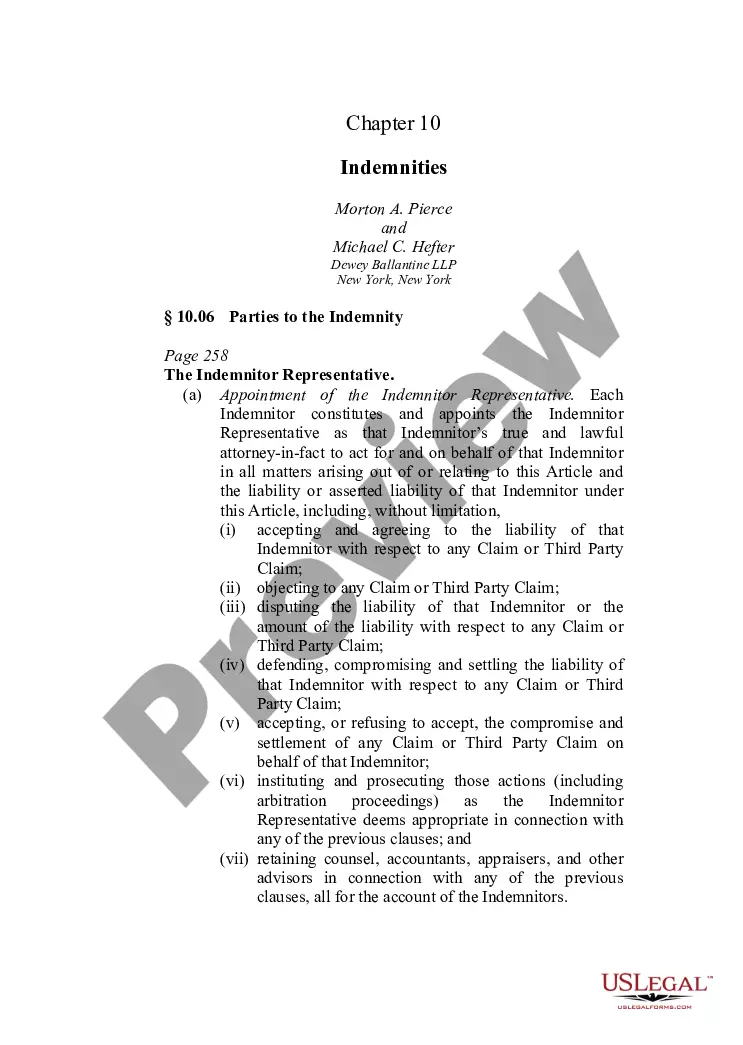
The Indemnification - Long-Form Provision is a legal document that provides a detailed framework for indemnification agreements between parties in a contract. This form outlines the specific terms under which one party agrees to indemnify another for certain losses and liabilities. It differs from simpler indemnification forms by including comprehensive definitions and procedural clauses, making it suitable for complex agreements that require clear delineation of responsibilities and liabilities.
Form components explained
- Definitions: Key terms related to indemnification, such as Indemnitee, Indemnitor, and Indemnifiable Losses.
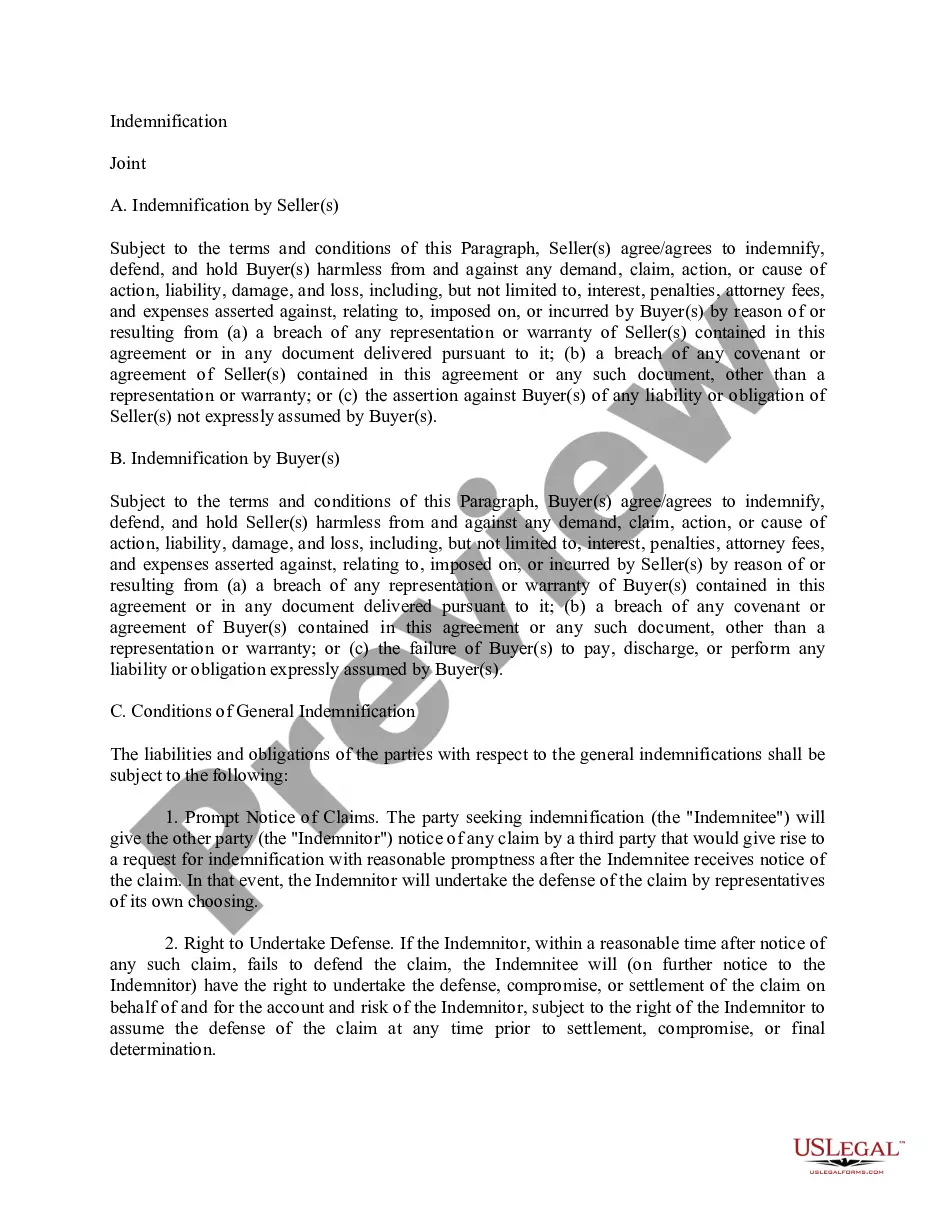
- Indemnification Clauses: Specifies the obligations of the seller and buyer in relation to indemnification.
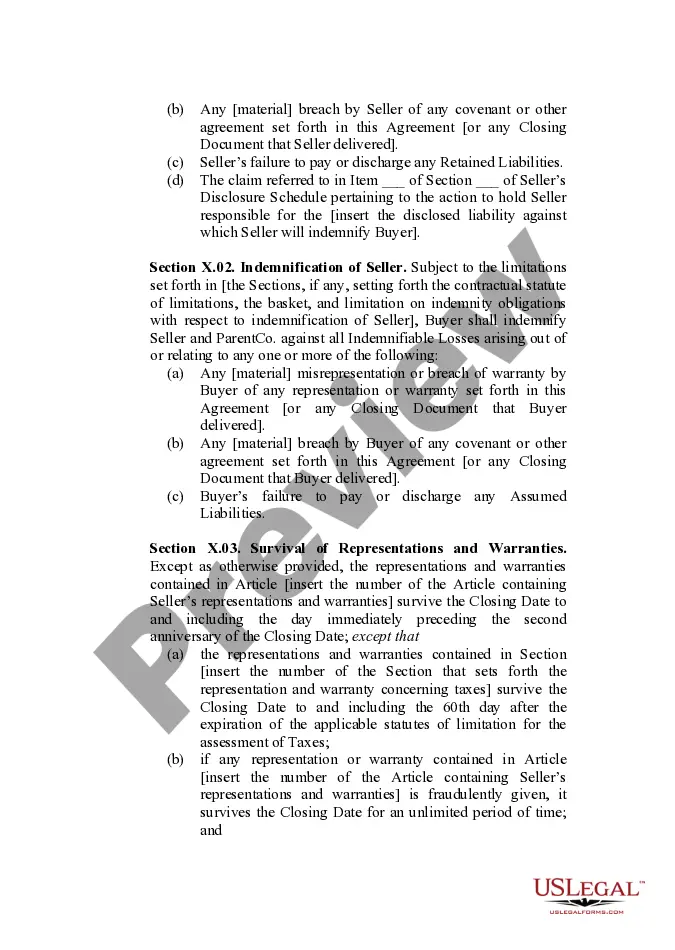
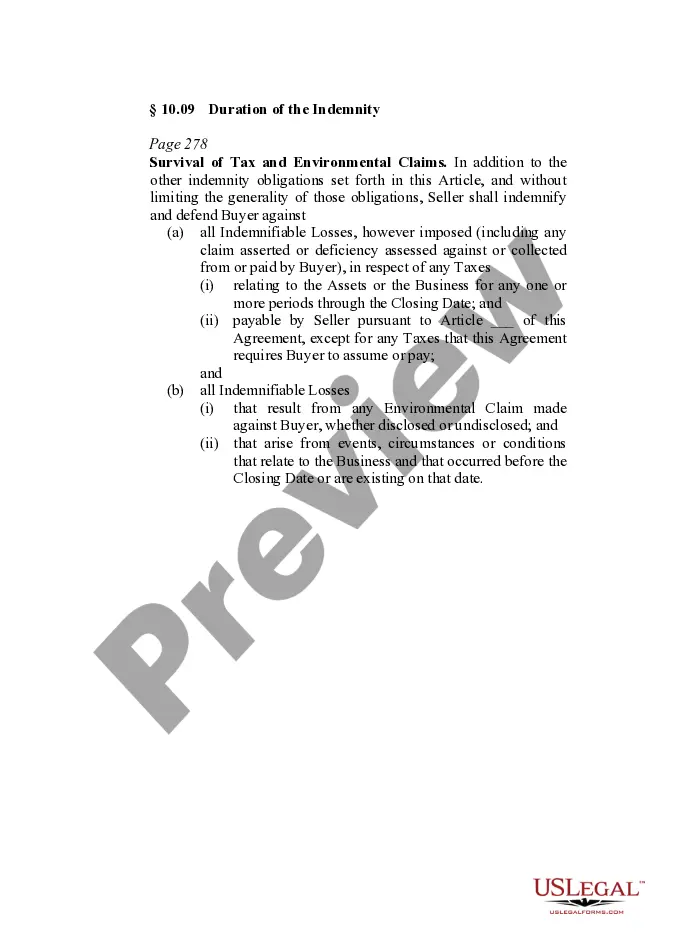
- Survival of Representations: Details how long representations and warranties survive after the closing date.
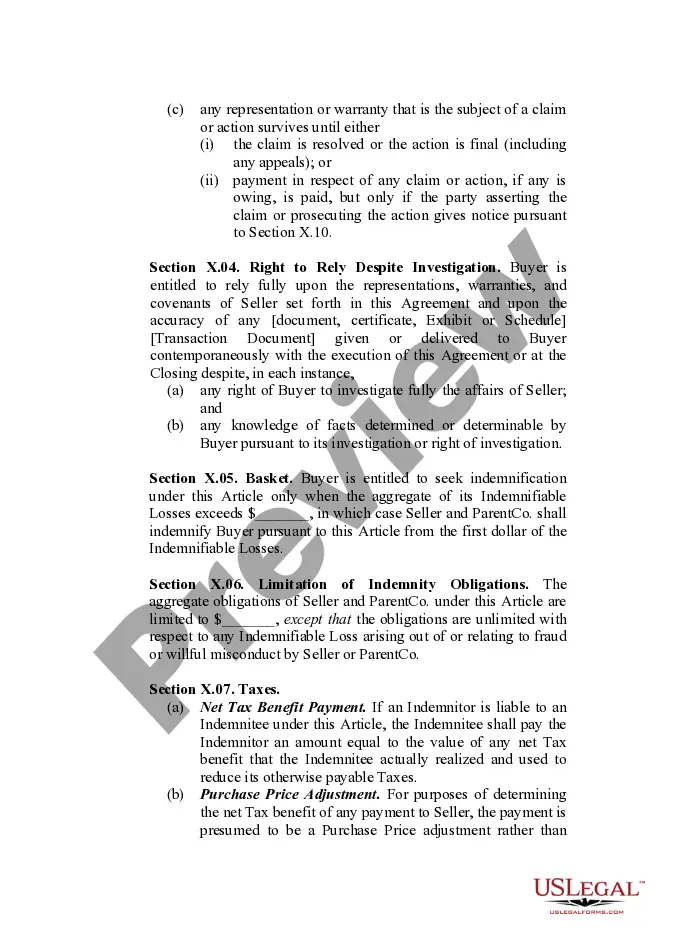
- Limitations and baskets: Outlines conditions under which claims can be made and the limits of indemnity obligations.
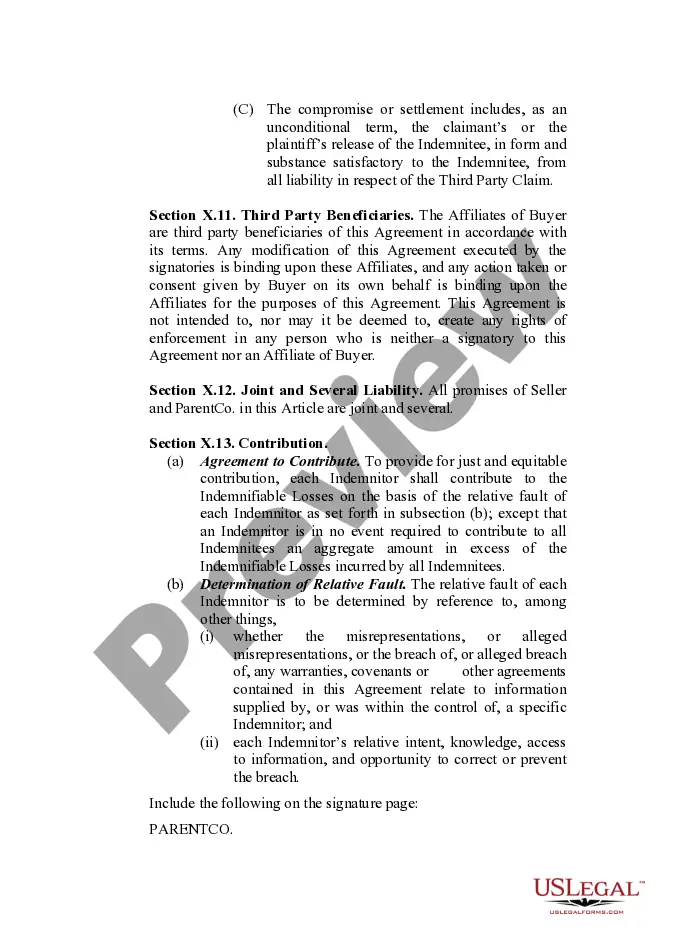
- Third Party Claims: Procedures for handling claims made by parties outside the contract.
When to use this form
This form is necessary in situations where businesses engage in transactions that could expose them to financial loss due to actions taken by the other party. Common scenarios include mergers, acquisitions, or any contractual agreements involving significant liabilities. If you are entering into a contract where indemnity is a concern, this long-form provision will help establish clear expectations and protections.
Who needs this form
- Business owners and managers engaged in contracts that involve substantial financial risk.
- Legal professionals drafting or reviewing contract agreements for indemnification clauses.
- Individuals representing parties in mergers, acquisitions, or complex commercial transactions.
Completing this form step by step
- Identify the parties involved: Clearly state the names and roles of the Indemnitor and Indemnitee.
- Complete all definitions: Fill in the necessary definitions, ensuring clarity on key terms involved in the indemnification process.
- Specify indemnity obligations: Outline the specific circumstances under which indemnification applies.
- Set limitations: Include any limitations of indemnity obligations and specify basket thresholds as needed.
- Review and finalize: Ensure all parties review the completed form before signing to avoid disputes.
Notarization guidance
In most cases, this form does not require notarization. However, some jurisdictions or signing circumstances might. US Legal Forms offers online notarization powered by Notarize, accessible 24/7 for a quick, remote process.
Get your form ready online
Our built-in tools help you complete, sign, share, and store your documents in one place.
Make edits, fill in missing information, and update formatting in US Legal Forms—just like you would in MS Word.
Download a copy, print it, send it by email, or mail it via USPS—whatever works best for your next step.
Sign and collect signatures with our SignNow integration. Send to multiple recipients, set reminders, and more. Go Premium to unlock E-Sign.
If this form requires notarization, complete it online through a secure video call—no need to meet a notary in person or wait for an appointment.
We protect your documents and personal data by following strict security and privacy standards.

Make edits, fill in missing information, and update formatting in US Legal Forms—just like you would in MS Word.

Download a copy, print it, send it by email, or mail it via USPS—whatever works best for your next step.

Sign and collect signatures with our SignNow integration. Send to multiple recipients, set reminders, and more. Go Premium to unlock E-Sign.

If this form requires notarization, complete it online through a secure video call—no need to meet a notary in person or wait for an appointment.

We protect your documents and personal data by following strict security and privacy standards.
Mistakes to watch out for
- Failing to define key terms, leading to ambiguity in the interpretation of the agreement.
- Omitting details about survival periods for representations and warranties.
- Not clarifying third-party claims process, which can result in misunderstandings and disputes.
Benefits of using this form online
- Easy access: Download the form instantly from any location.
- Editability: Customize sections to meet specific needs with ease.
- Reliability: Ensure the form is drafted according to current legal standards.
Looking for another form?
Form popularity
FAQ
Indemnity is defined by Black's Law Dictionary as a duty to make good any loss, damage, or liability incurred by another. Indemnity has a general meaning of holding one harmless; that is to say, that one party holds the other harmless for some loss or damage.
Company/Business/Individual Name shall fully indemnify, hold harmless and defend _______ and its directors, officers, employees, agents, stockholders and Affiliates from and against all claims, demands, actions, suits, damages, liabilities, losses, settlements, judgments, costs and expenses (including but not
Indemnity is compensation paid by one party to another to cover damages, injury or losses.An example of an indemnity would be an insurance contract, where the insurer agrees to compensate for any damages that the entity protected by the insurer experiences.
Indemnity is a comprehensive form of insurance compensation for damages or loss.Indemnity is a contractual agreement between two parties. In this arrangement, one party agrees to pay for potential losses or damages caused by another party.
Indemnify. hold harmless. defend.
To indemnify another party is to compensate that party for losses that that party has incurred or will incur as related to a specified incident.
A letter of indemnity (LOI) is a contractual document that guarantees certain provisions will be met, between two parties.The concept of indemnity has to do with holding someone harmless, and a letter of indemnity outlines the specific measures that will be used to hold a party harmless.
As discussed, an indemnity provision transfers risk from one party (called the indemnitee) to another party (called the indemnitor). Under an indemnity provision, the indemnitor agrees to reimburse the indemnitee for losses resulting from a claim or claims brought by a third-party.
Indemnification clauses are clauses in contracts that set out to protect one party from liability if a third-party or third entity is harmed in any way. It's a clause that contractually obligates one party to compensate another party for losses or damages that have occurred or could occur in the future.