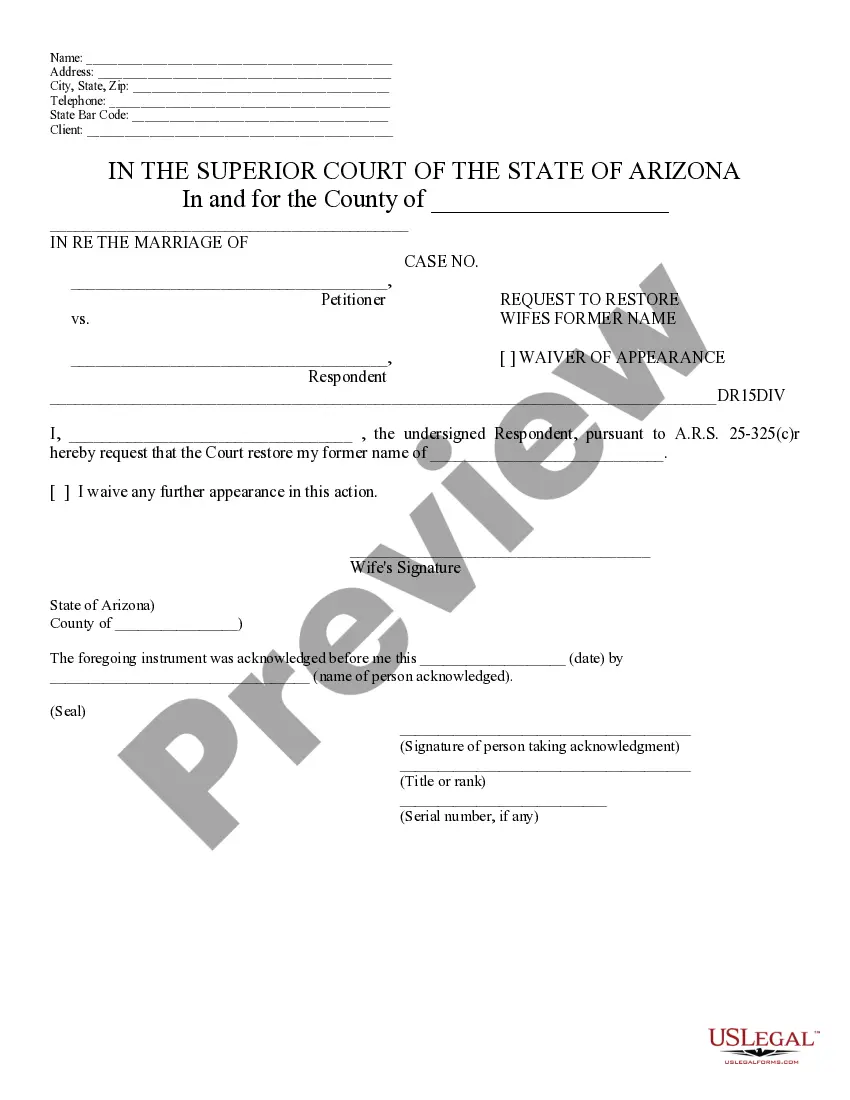
Oklahoma Divorce Worksheet and Law Summary for Contested or Uncontested Case of over 25 pages - Ideal Client Interview Form
Understanding this form
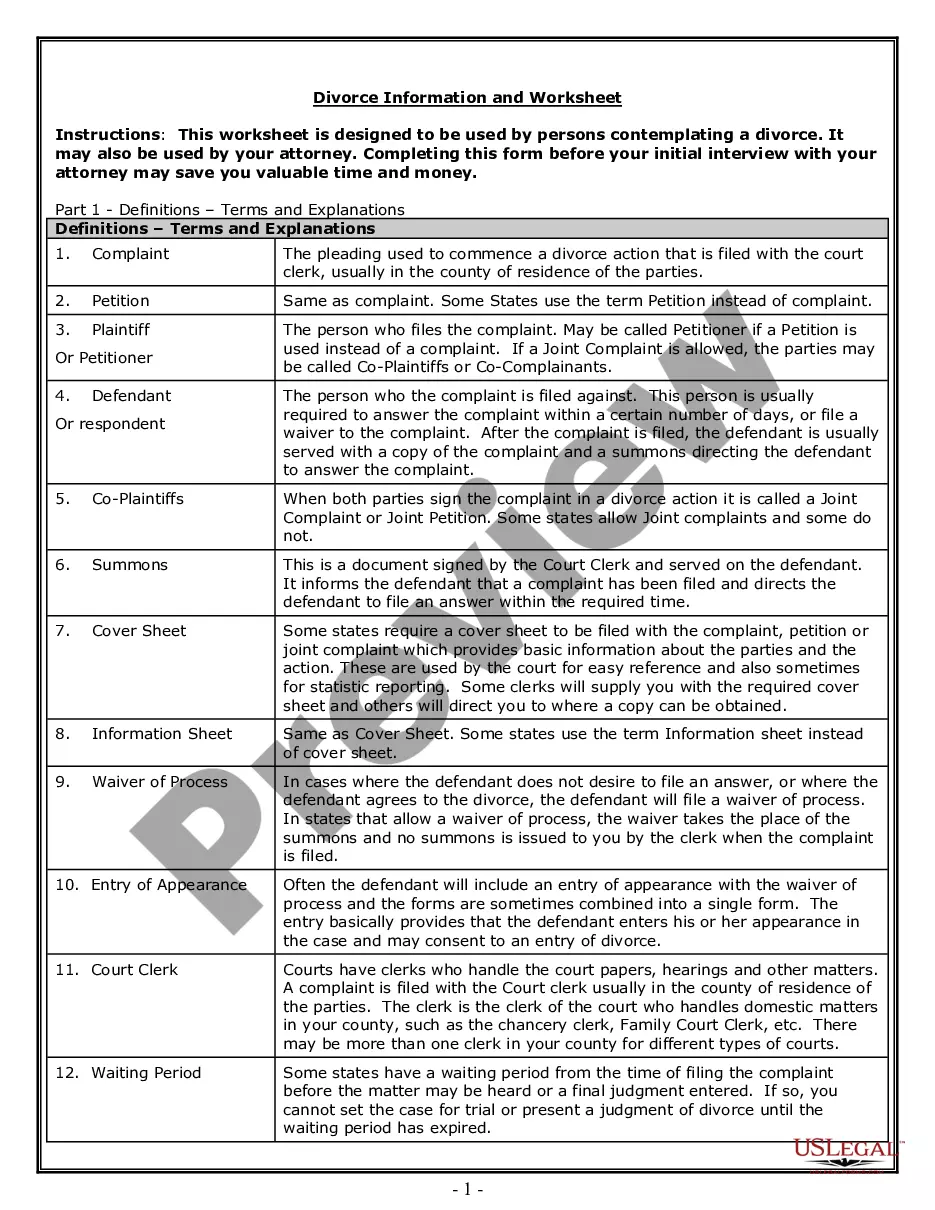
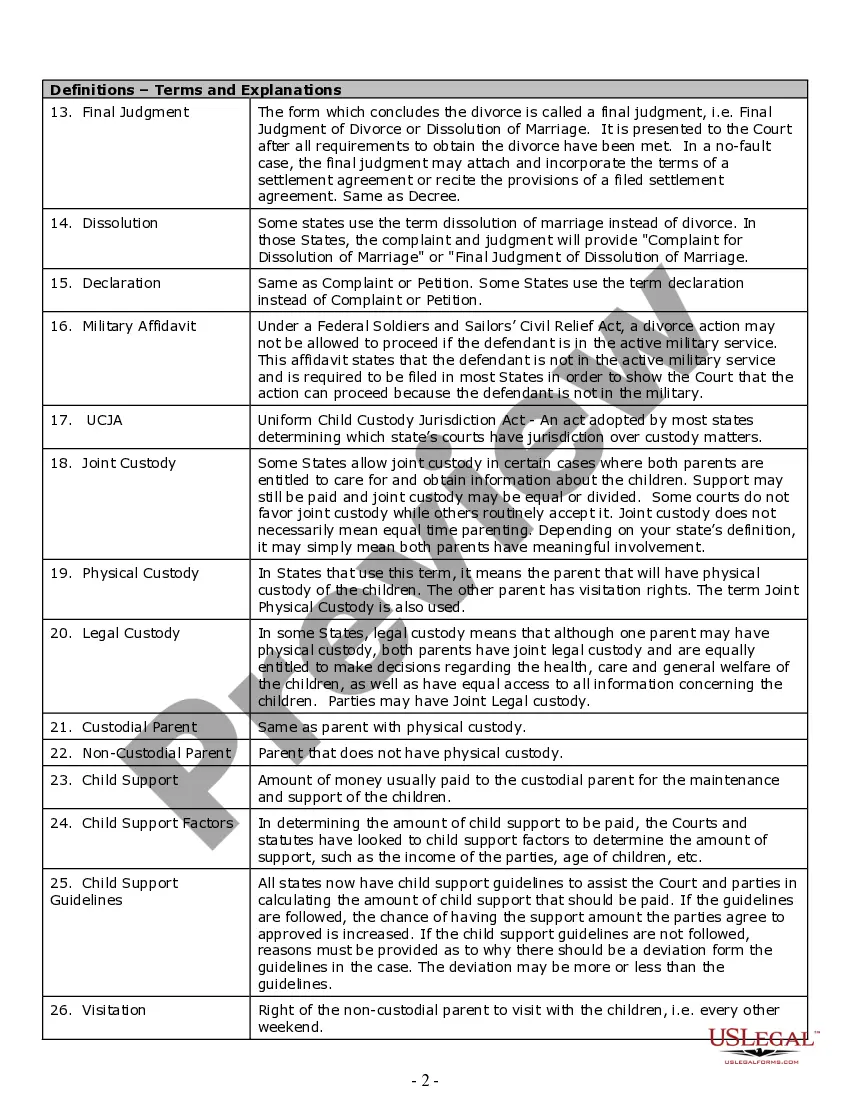
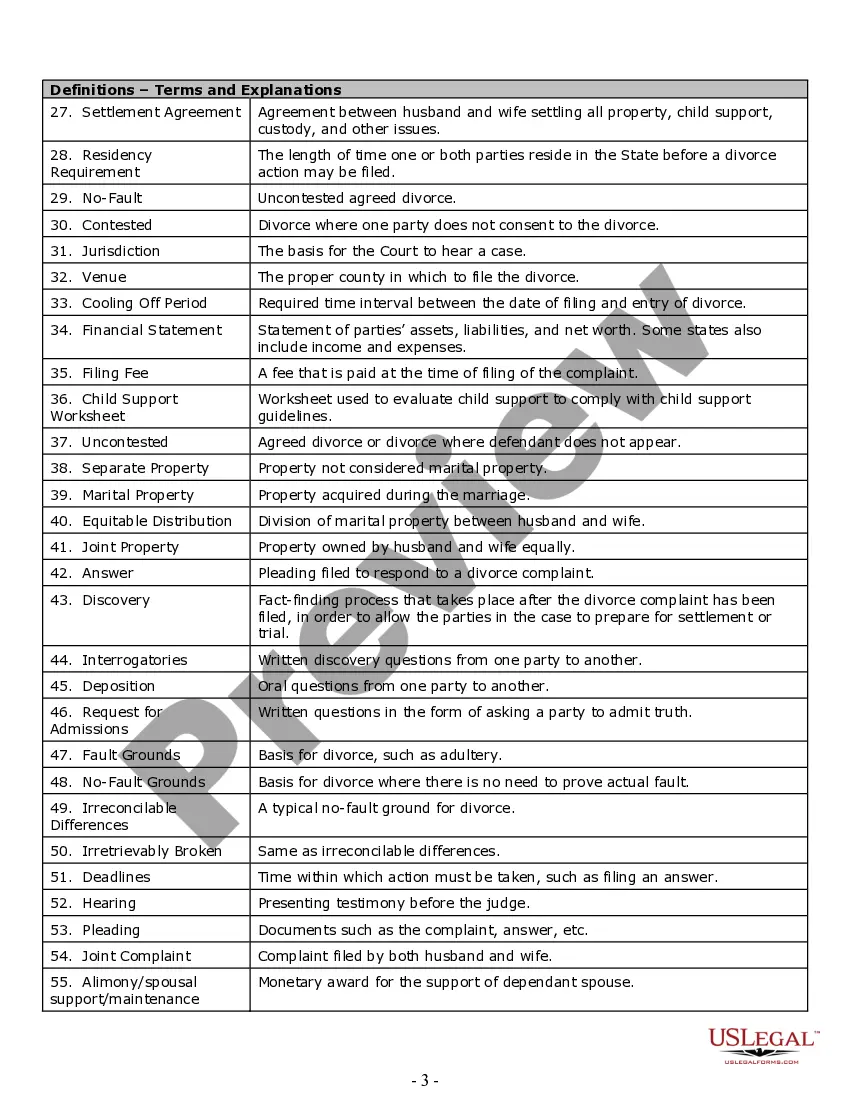
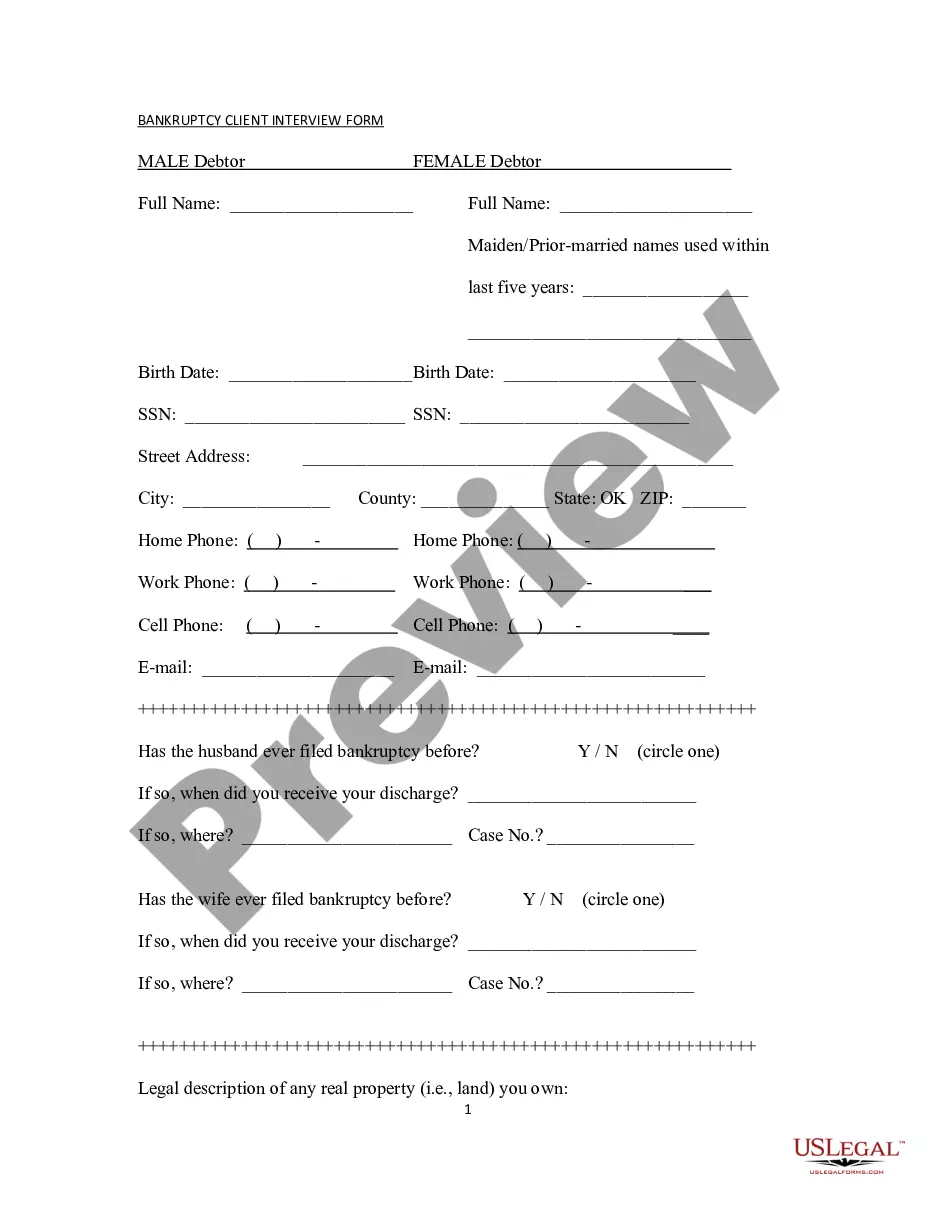
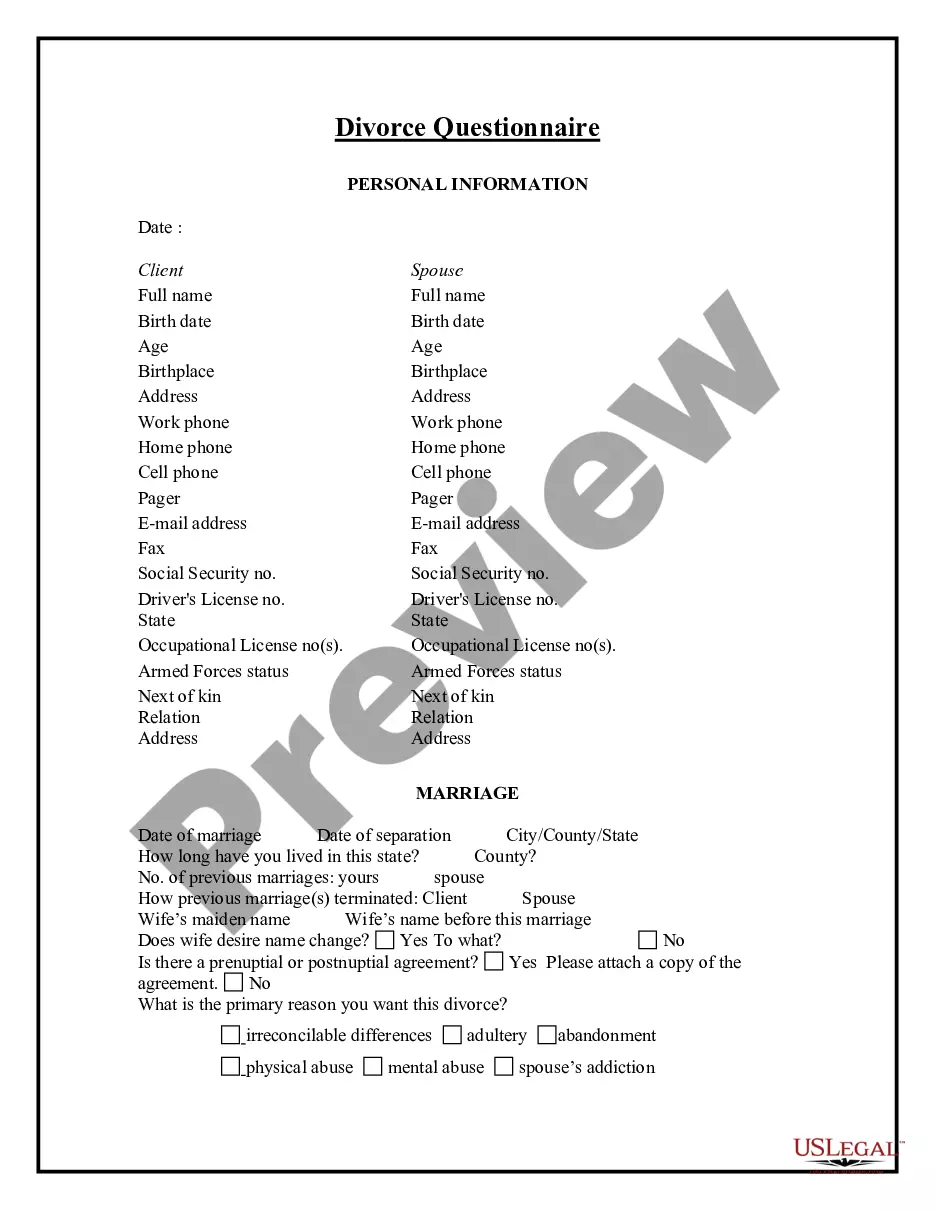
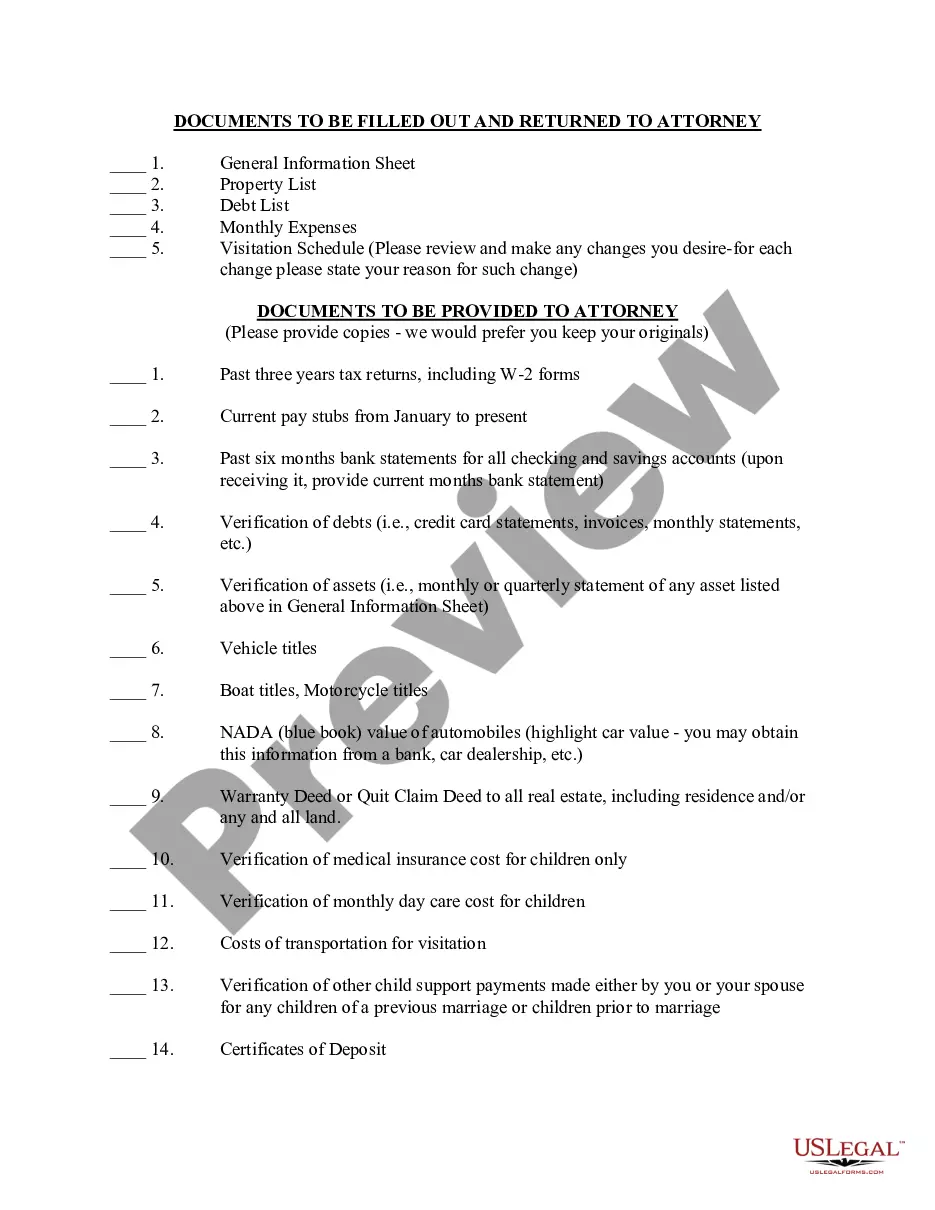
The Divorce Worksheet and Law Summary for Contested or Uncontested Cases is a comprehensive package designed to assist individuals contemplating divorce. It offers detailed information about divorce procedures, definitions of key legal terms, and worksheets to gather important personal and financial details. This form is particularly useful for both individuals preparing for an initial consultation with an attorney and those considering self-representation in divorce proceedings. Unlike simpler forms, this extensive worksheet provides a thorough overview, ensuring users are well-informed about their rights and responsibilities.
What’s included in this form
- Instructions for filling out the worksheet
- Definitions of important legal terms related to divorce
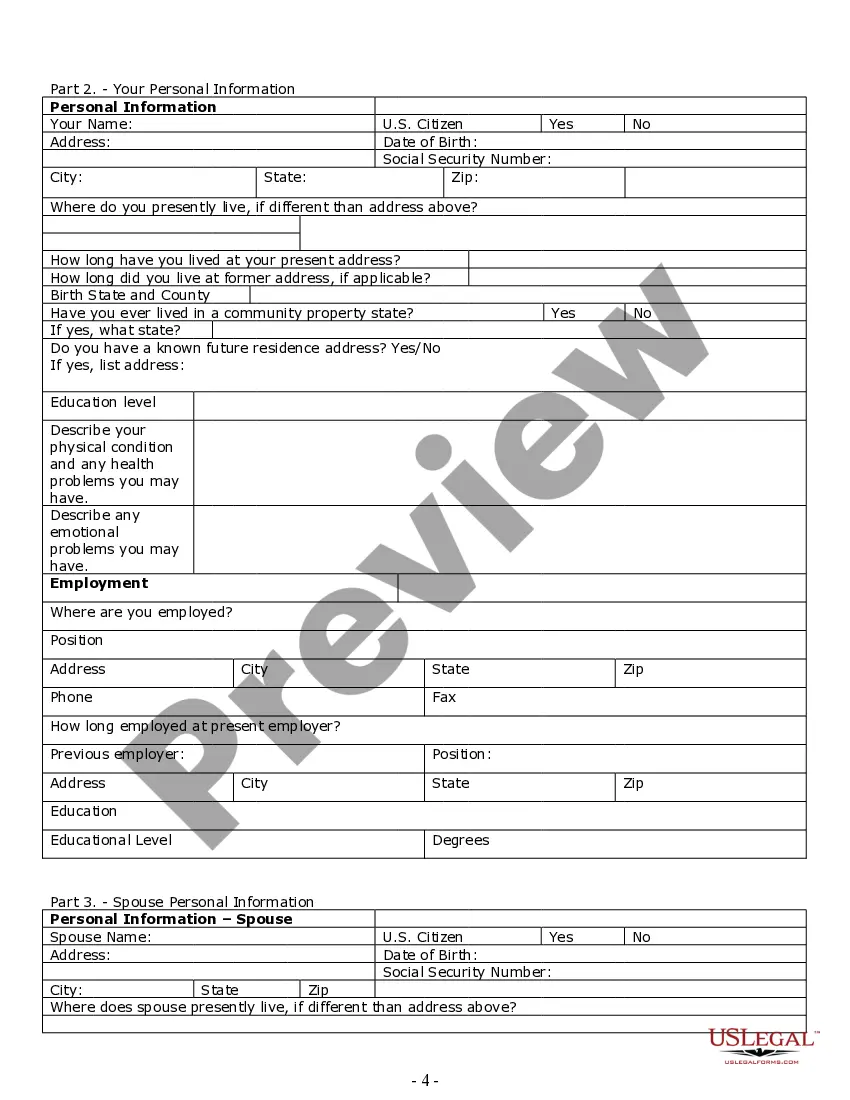
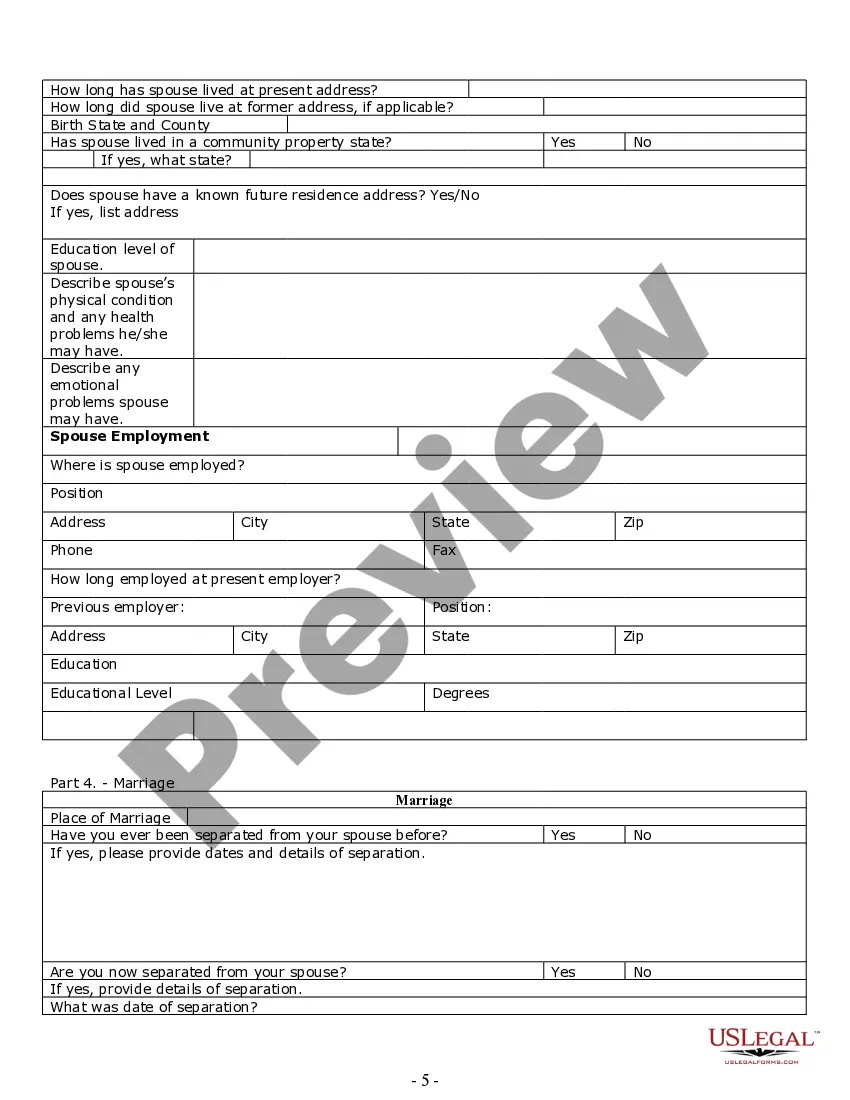
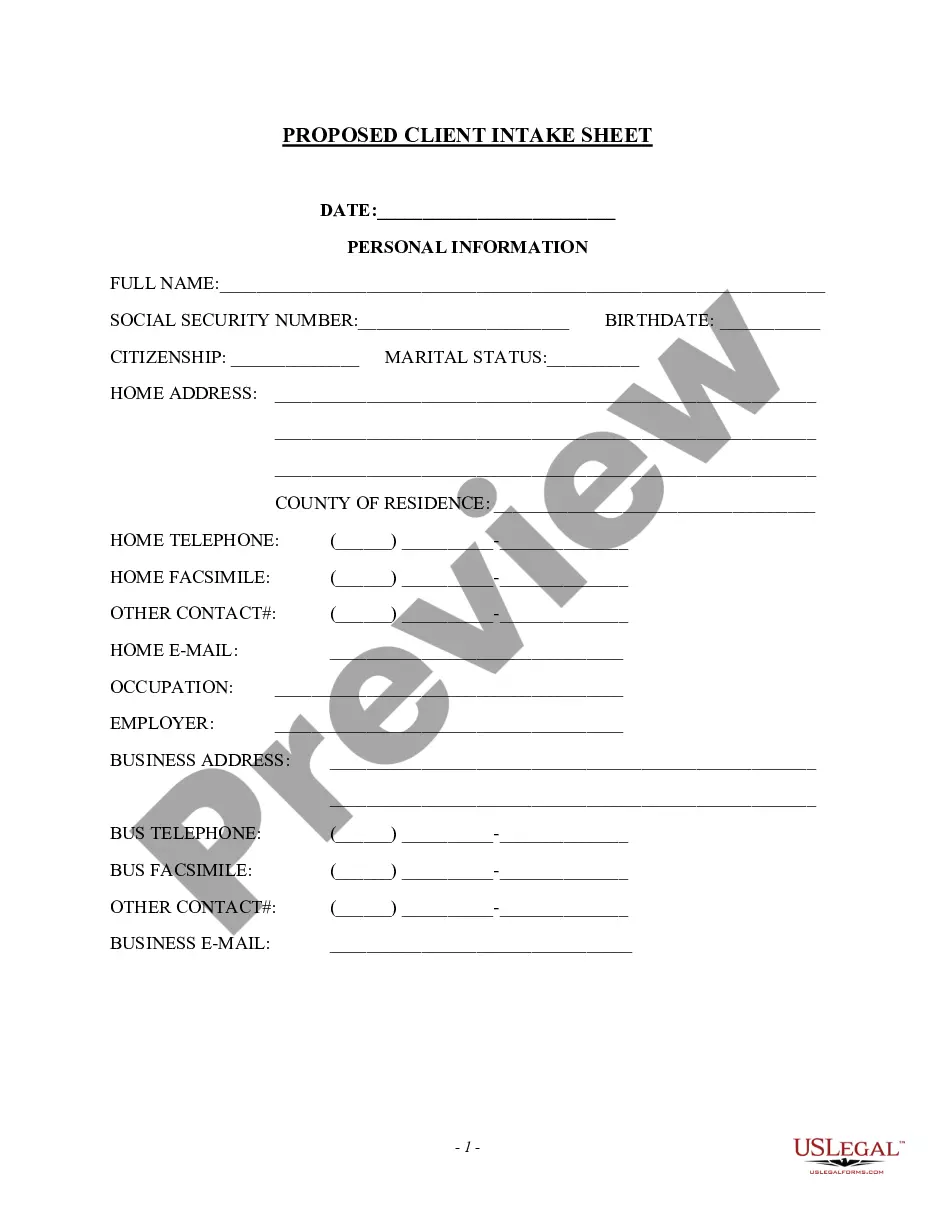
- Sections to document personal and spouse information
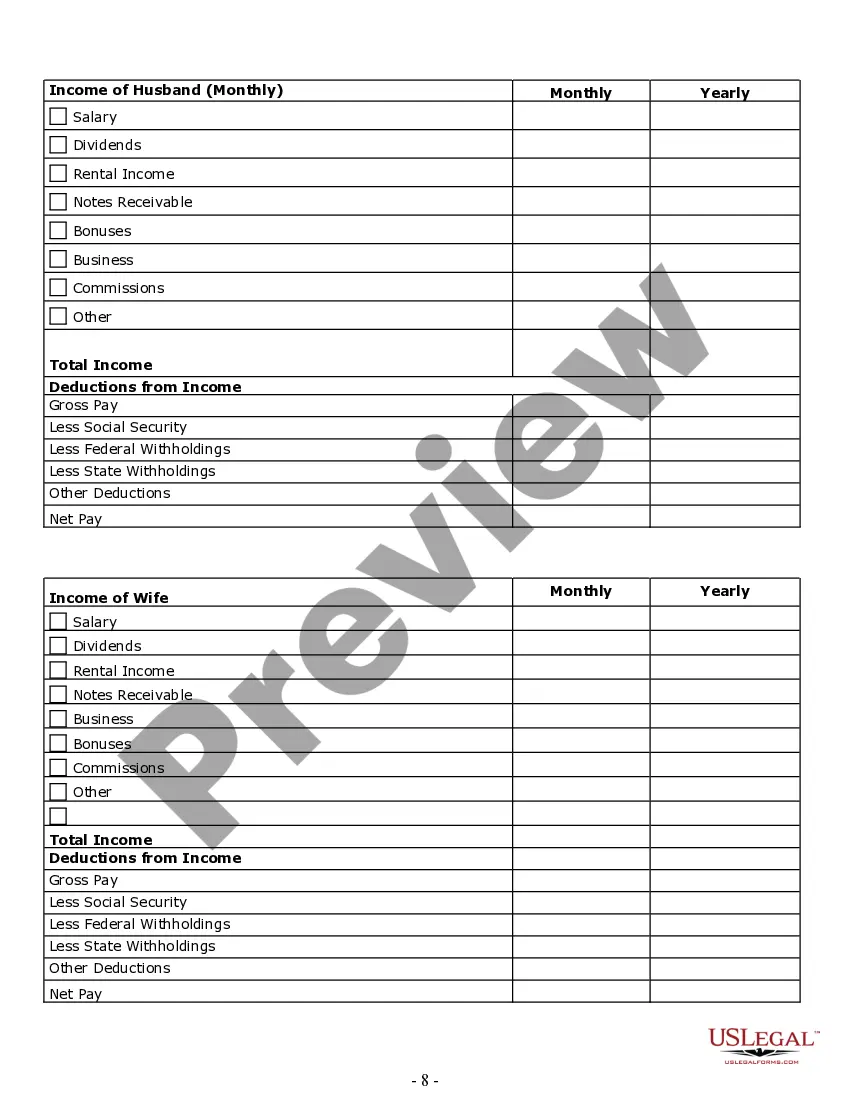
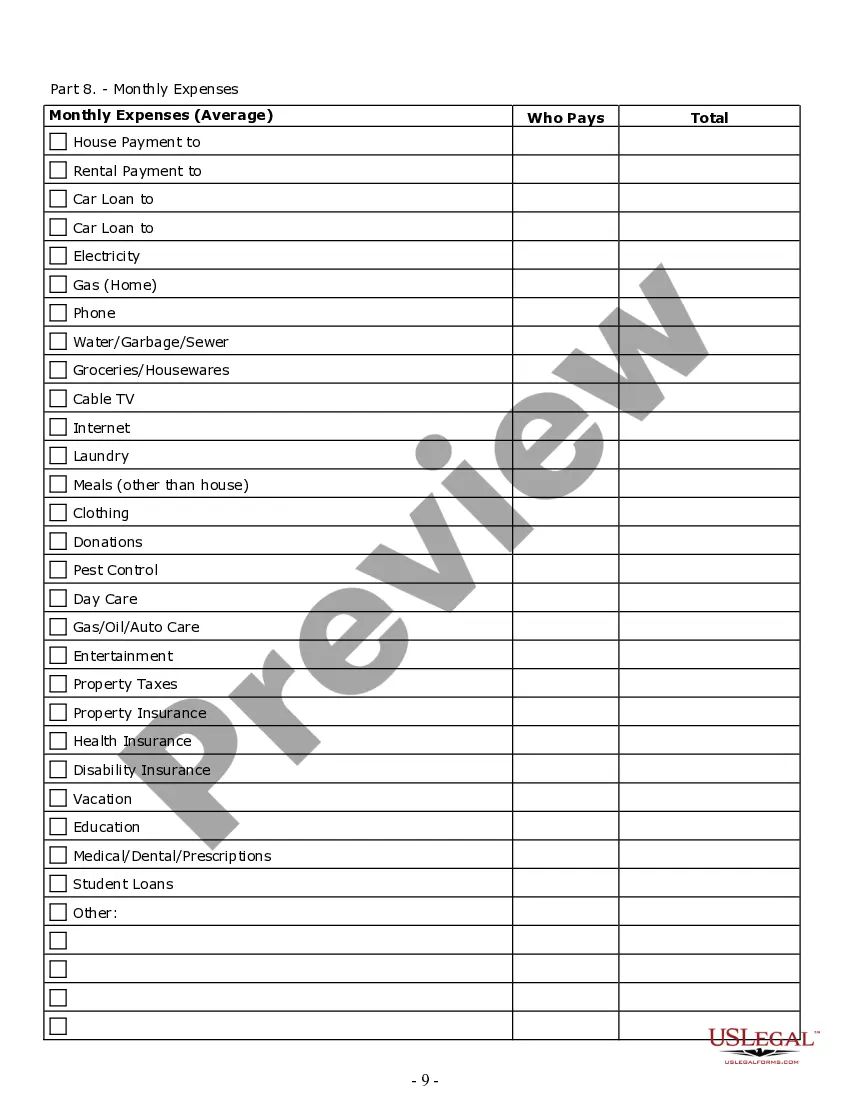
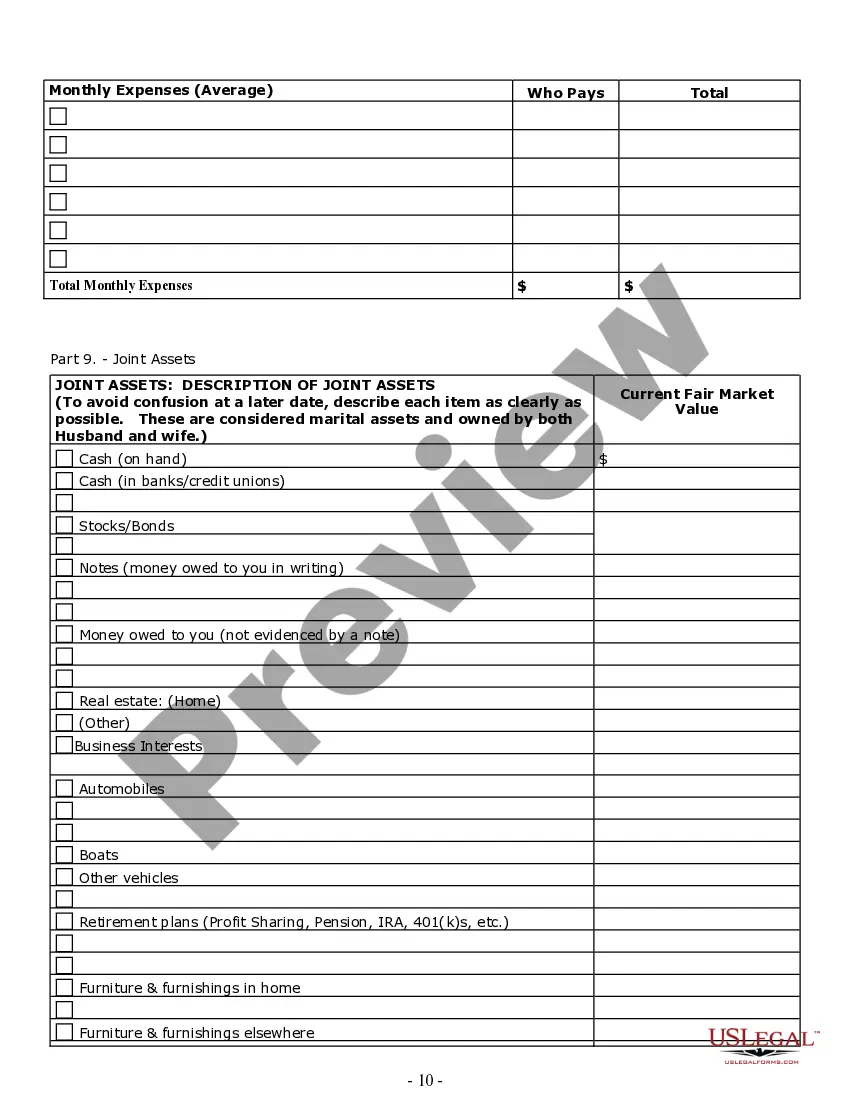
- Financial statements for assets, liabilities, and income
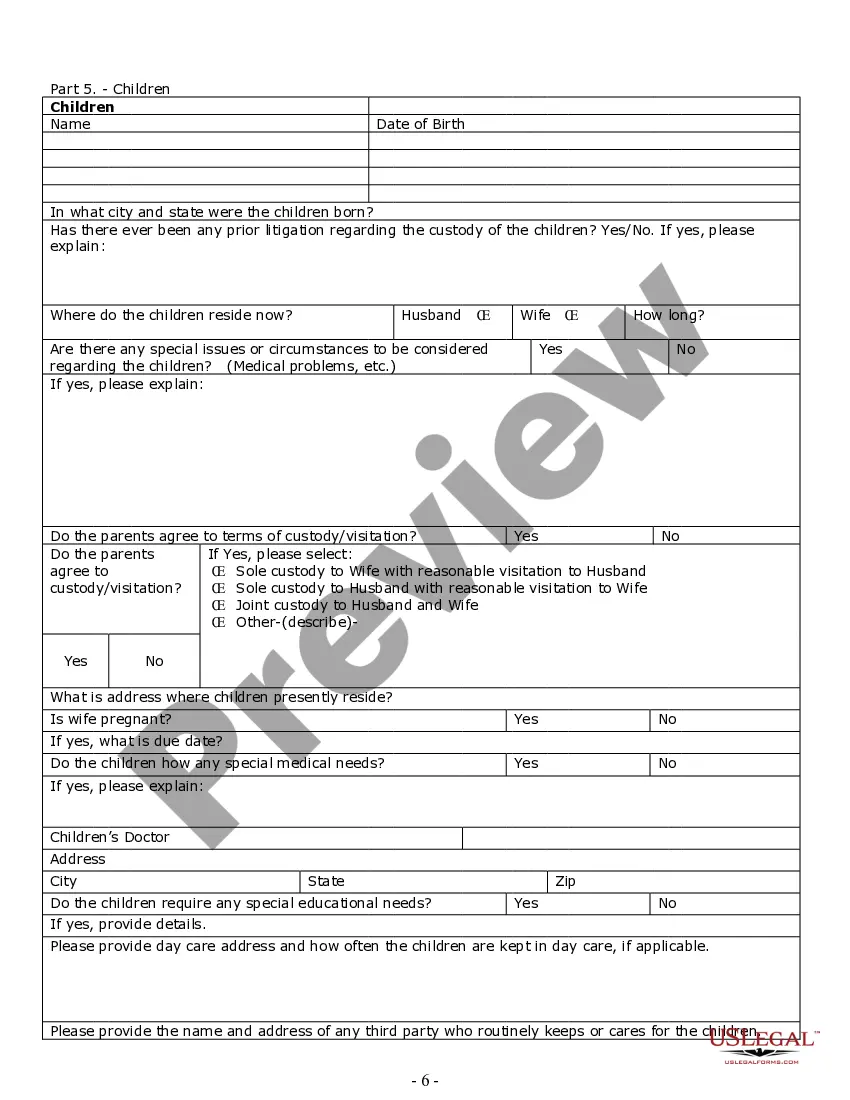
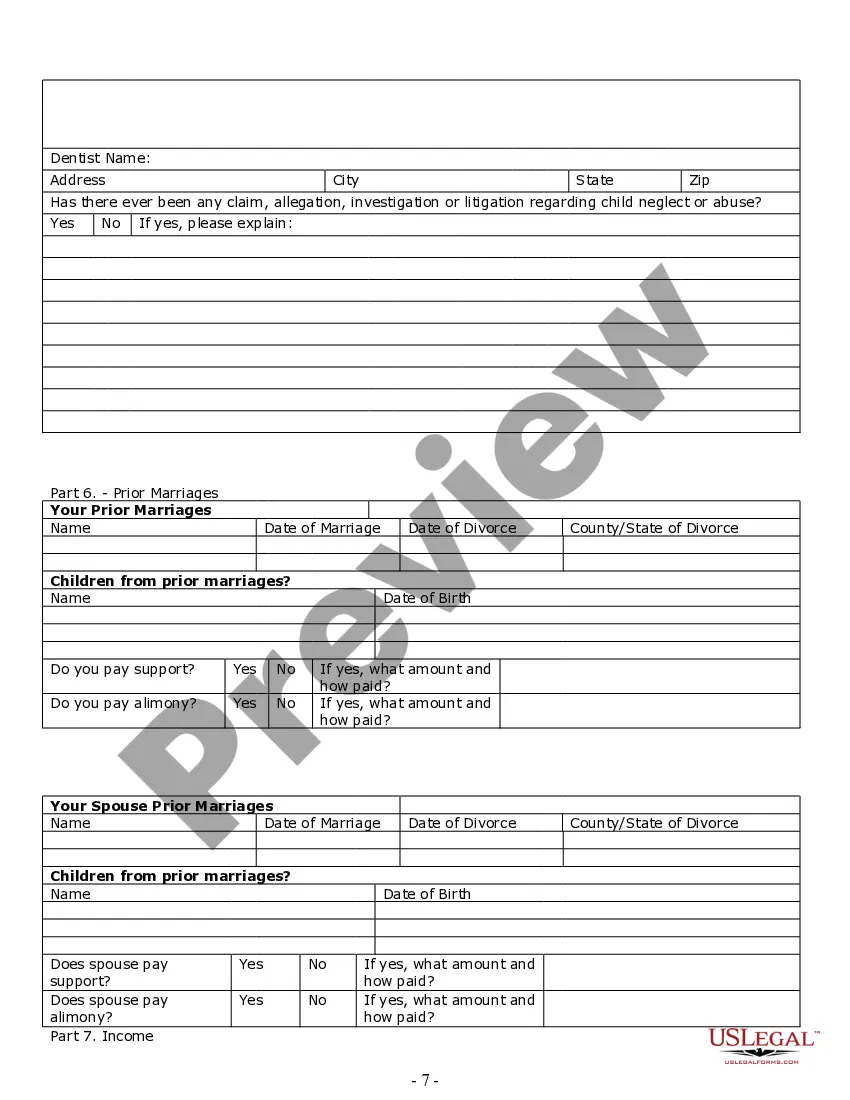
- Child custody and support worksheets
- Settlement agreement provisions and concerns


When to use this document
This form is ideal for individuals who are considering or are in the process of filing for divorce, whether their case is contested or uncontested. It is particularly beneficial in scenarios where extensive personal and financial documentation is required, such as in contested cases where disputes may arise over custody, support, and division of assets. Additionally, it serves as a preparatory tool for meetings with legal counsel and as an organizational document to clearly outline personal circumstances and needs.
Who should use this form
- Individuals contemplating divorce
- Clients preparing for an initial attorney consultation
- Those seeking to understand their legal rights related to divorce
- Persons in contested divorce cases requiring detailed documentation
- Individuals who want to self-represent in divorce proceedings
Steps to complete this form
- Begin by reading the instructions carefully to understand the purpose of each section.
- Fill out your personal information and that of your spouse, including contact details and residency history.
- Complete the financial sections by detailing your income, assets, and liabilities accurately.
- Document any children involved, including custody arrangements, support needs, and any special circumstances.
- Review the definitions of terms provided to ensure you understand the legal language used throughout the form.
- Discuss any completed worksheets with your attorney to ensure completeness and accuracy before submission.
Notarization requirements for this form
This form does not typically require notarization unless specified by local law. It is advisable to consult with a legal expert to confirm any local requirements regarding notarization of divorce-related documents.
Get your form ready online
Our built-in tools help you complete, sign, share, and store your documents in one place.
Make edits, fill in missing information, and update formatting in US Legal Forms—just like you would in MS Word.
Download a copy, print it, send it by email, or mail it via USPS—whatever works best for your next step.
Sign and collect signatures with our SignNow integration. Send to multiple recipients, set reminders, and more. Go Premium to unlock E-Sign.
If this form requires notarization, complete it online through a secure video call—no need to meet a notary in person or wait for an appointment.
We protect your documents and personal data by following strict security and privacy standards.

Make edits, fill in missing information, and update formatting in US Legal Forms—just like you would in MS Word.

Download a copy, print it, send it by email, or mail it via USPS—whatever works best for your next step.

Sign and collect signatures with our SignNow integration. Send to multiple recipients, set reminders, and more. Go Premium to unlock E-Sign.

If this form requires notarization, complete it online through a secure video call—no need to meet a notary in person or wait for an appointment.

We protect your documents and personal data by following strict security and privacy standards.
Avoid these common issues
- Failing to read instructions thoroughly before starting.
- Providing incomplete or inaccurate personal and financial information.
- Overlooking sections related to child custody, visitation, and support calculations.
- Not consulting with an attorney to clarify any terminologies or procedures.
Benefits of using this form online
- Convenient access to important legal documents from anywhere with an internet connection.
- Editable templates allow users to fill out and modify information as needed.
- Generated documents are drafted by licensed attorneys to ensure reliability and compliance with legal standards.
- Save time and money by preparing key information ahead of meetings with legal professionals.
Legal use & context
- This form serves as both a preparatory tool and a legal document for divorce proceedings.
- Completing this worksheet helps individuals understand their rights and obligations in divorce.
- It may be referenced during legal consultations and court proceedings.
What to keep in mind
- The Divorce Worksheet and Law Summary is essential for preparing for a divorce.
- Completing this form can facilitate better communication with your attorney.
- Accurate and complete information is crucial for effective legal representation.
Legal terms and meanings
- Complaint: The document filed to initiate a divorce action.
- Petition: A term used in some states instead of a complaint.
- Custody: The legal right to make decisions about a child's upbringing.
- Alimony: Financial support paid to a spouse after divorce.
Looking for another form?




Form popularity
FAQ
Discuss Your Desires With Your Spouse. Get a Real Estate Appraisal. Calculate Assets of Significant Value. Check Kelley Blue Book for Vehicle Values. Add Up Bank Accounts and Financial Assets. Evaluate a Business.
Personal bank accounts, shared accounts, retirement accounts, and credit cards. Real estate properties, any vacation homes, income properties, and land. Cars, trailers, boats, motorcycles, and other vehicles.
At the end of a month, add up all of your weekly expenses by category to get a monthly total for each category. Then add all the months' totals and divide by the number of months to get an average monthly total for each expense.
Because California law views both spouses as one party rather than two, marital assets and debts are split 50/50 between the couple, unless they can agree on another arrangement.
The legal definition of an asset in a divorce is anything that has a real value. Assets can include tangible items that can be bought and sold such as cars, properties, furniture, or jewelry. Collectables, art, and memorabilia are frequently over looked assets because their value is often hard to ascertain.
What is a Divorce Worksheet? This worksheet is intended to organize personal and financial information about you and your spouse to assist you in preparing for a divorce. It can be prepared before or after you have an initial meeting with a lawyer who is assisting you with your divorce.
In California, there is no 50/50 split of marital property. When a married couple gets divorced, their community property and debts will be divided equitably. This means they will be divided fairly and equally.
At divorce, community property is generally divided equally between the spouses, while each spouse keeps his or her separate property. Equitable distribution. In all other states, assets and earnings accumulated during marriage are divided equitably (fairly), but not necessarily equally.