Sample Letter for conveying Statement of Services for past due or delinquent account
What this document covers
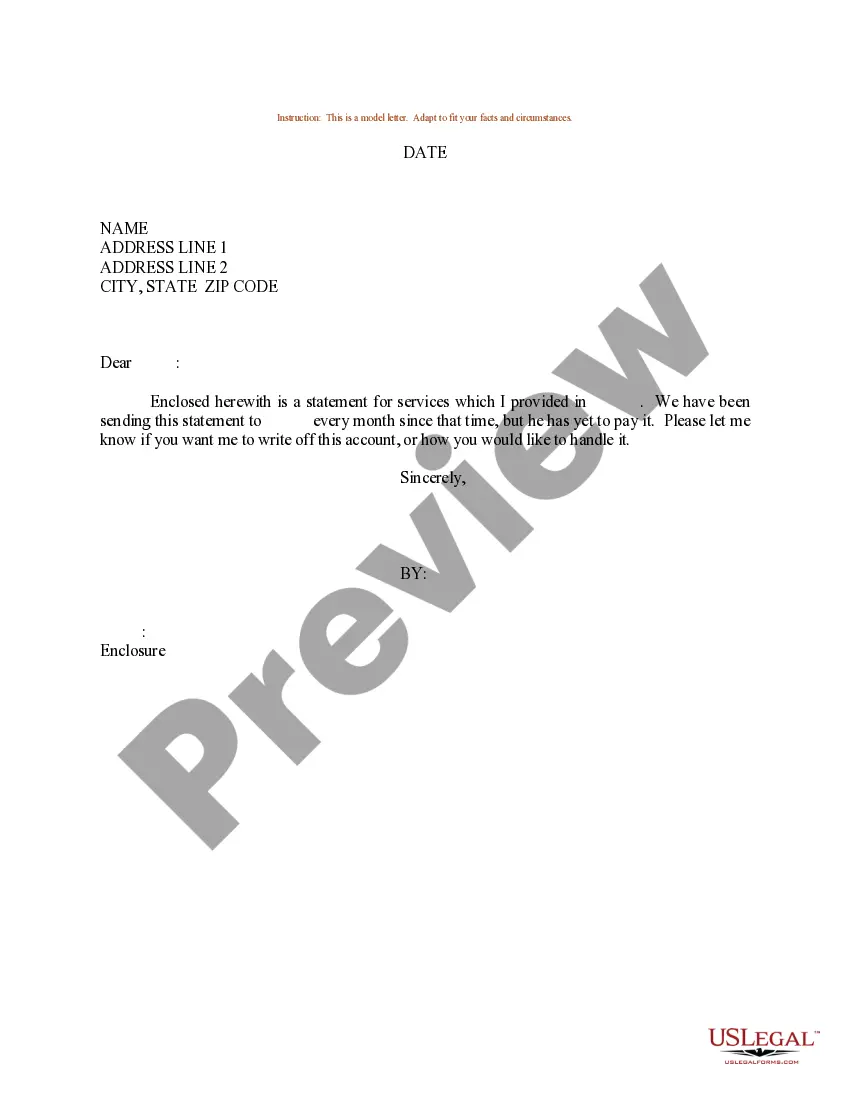
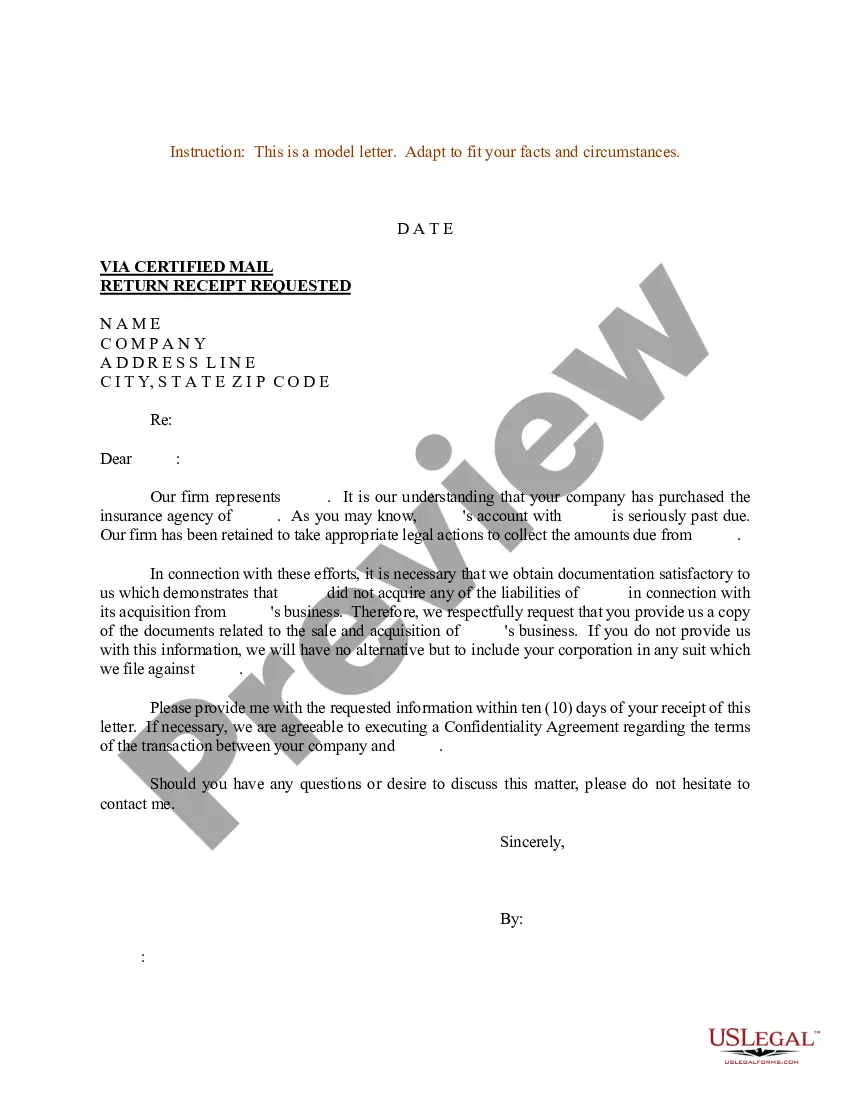
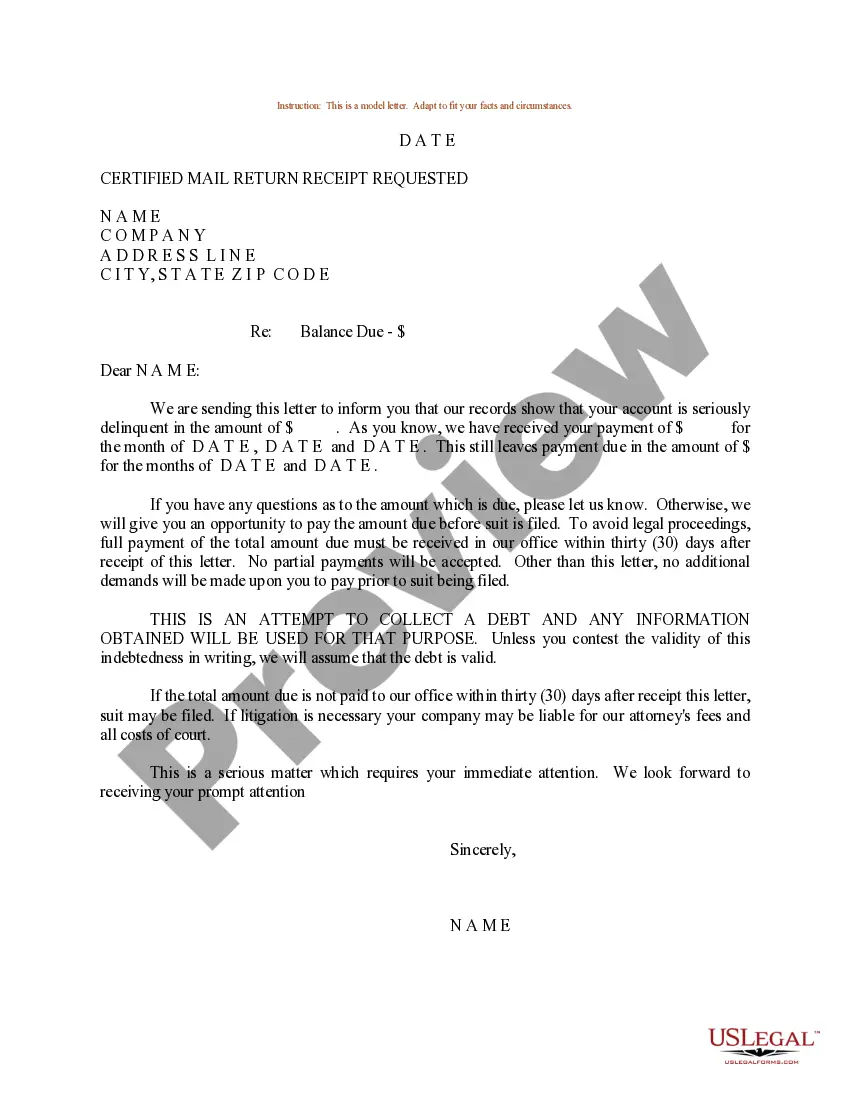
This form is a sample letter for conveying a statement of services related to a past due or delinquent account. It serves as a formal notification to the debtor regarding their outstanding balance and the services rendered. Unlike other notices, this sample letter is specifically designed to fulfill communication needs in collections and is formatted to present essential details clearly and professionally.
Key components of this form
- Date: The date when the letter is sent.
- Name: The name of the recipient.
- Address Line 1: The first line of the recipient's address.
- Address Line 2: The second line of the recipient's address (if applicable).
- City, State, ZIP Code: The complete address of the recipient, ensuring proper delivery.
Common use cases
This form should be used when a creditor needs to remind a debtor of a past due balance for services provided. It's suitable for businesses, service providers, or any individual who has rendered services and is awaiting payment. This letter can help initiate communication before pursuing further collections measures.
Who needs this form
- Businesses that offer services on credit and need to remind clients of overdue payments.
- Freelancers or independent contractors seeking payment for completed work.
- Property managers notifying tenants of delinquent accounts related to services rendered.
- Nonprofits or organizations providing services that need a clear record of outstanding payments.
Steps to complete this form
- Identify the date of sending the letter.
- Enter the recipient's full name.
- Input the complete address, including city, state, and ZIP code.
- Clearly state the amount due for services provided.
- Optionally include a deadline for payment to encourage a swift response.
Is notarization required?
This form does not typically require notarization unless specified by local law. It is generally sufficient for communication and record-keeping purposes.
Get your form ready online
Our built-in tools help you complete, sign, share, and store your documents in one place.
Make edits, fill in missing information, and update formatting in US Legal Forms—just like you would in MS Word.
Download a copy, print it, send it by email, or mail it via USPS—whatever works best for your next step.
Sign and collect signatures with our SignNow integration. Send to multiple recipients, set reminders, and more. Go Premium to unlock E-Sign.
If this form requires notarization, complete it online through a secure video call—no need to meet a notary in person or wait for an appointment.
We protect your documents and personal data by following strict security and privacy standards.

Make edits, fill in missing information, and update formatting in US Legal Forms—just like you would in MS Word.

Download a copy, print it, send it by email, or mail it via USPS—whatever works best for your next step.

Sign and collect signatures with our SignNow integration. Send to multiple recipients, set reminders, and more. Go Premium to unlock E-Sign.

If this form requires notarization, complete it online through a secure video call—no need to meet a notary in person or wait for an appointment.

We protect your documents and personal data by following strict security and privacy standards.
Common mistakes
- Failing to include the date, which can lead to confusion about when the letter was sent.
- Omitting the recipient's address, making it difficult for delivery.
- Not specifying the exact amount due, which can cause misunderstandings.
- Neglecting to provide a clear call to action or due date for the payment.
Benefits of completing this form online
- Convenience: Download and customize the form quickly from any device.
- Editability: Easily fill in personal details and modify the content as needed.
- Reliability: Use a professionally drafted template that adheres to legal standards.
- Time-saving: Complete the letter in minutes rather than drafting from scratch.
Legal use & context
- This letter serves as formal documentation of the debt owed.
- It may be used as evidence in further collection proceedings if necessary.
- Remember that debt collection laws vary by state, so ensure compliance with local regulations.
Quick recap
- This form aids in the formal request for payment for past due accounts.
- It provides clarity about the services rendered and the amounts owed.
- Utilizing this letter can help facilitate prompt payment resolution.
Looking for another form?

Form popularity
FAQ
A clear subject line detailing what the email is about. An opening line that's warm. State the purpose of the email in a non-harassing tone (include amount owed, invoice number, and due date) Inquire about the progress of the invoice.
A clear subject line detailing what the email is about. An opening line that's warm. State the purpose of the email in a non-harassing tone (include amount owed, invoice number, and due date) Inquire about the progress of the invoice. Include a copy or link to the invoice for prompt payment.
Check the Client Received the Invoice. Send a Brief Email Requesting Payment. Speak to the Client By Phone. Consider Cutting off Future Work. Research Collection Agencies. Review Your Legal Options.
The company's name and address. The recipient's name and address. The date the letter is being written. Reference of the letter. State the amount owed. Indicate that the payment has not yet been received. Give payment methods available.
As such, your first past due letter should be firm, but still cordial. Use more formal language to signify your serious intention, and to prevent the late payment as becoming a personal issue. To avoid defensiveness or tension, broach the issue delicately by saying your account with us now appears as past due.
Your company name and address. recipient's name and address. today's date. a clear reference and/or any account reference numbers. the amount outstanding. original payment due date. a brief explanation that no payment has been received.
A few more observations: Ask for the payment simply and be straightforward. Tell them you have included the invoice as part of the email and how you want to be paid. The conclusion is polite and lets them know that you'd love to work more with them in the future.
Ask for the payment simply and be straightforward. Tell them you have included the invoice as part of the email and how you want to be paid. The conclusion is polite and lets them know that you'd love to work more with them in the future. This script also uses the exclamation point very strategically.
Your company name and address. recipient's name and address. today's date. a clear reference and/or any account reference numbers. the amount outstanding. original payment due date. a brief explanation that no payment has been received.