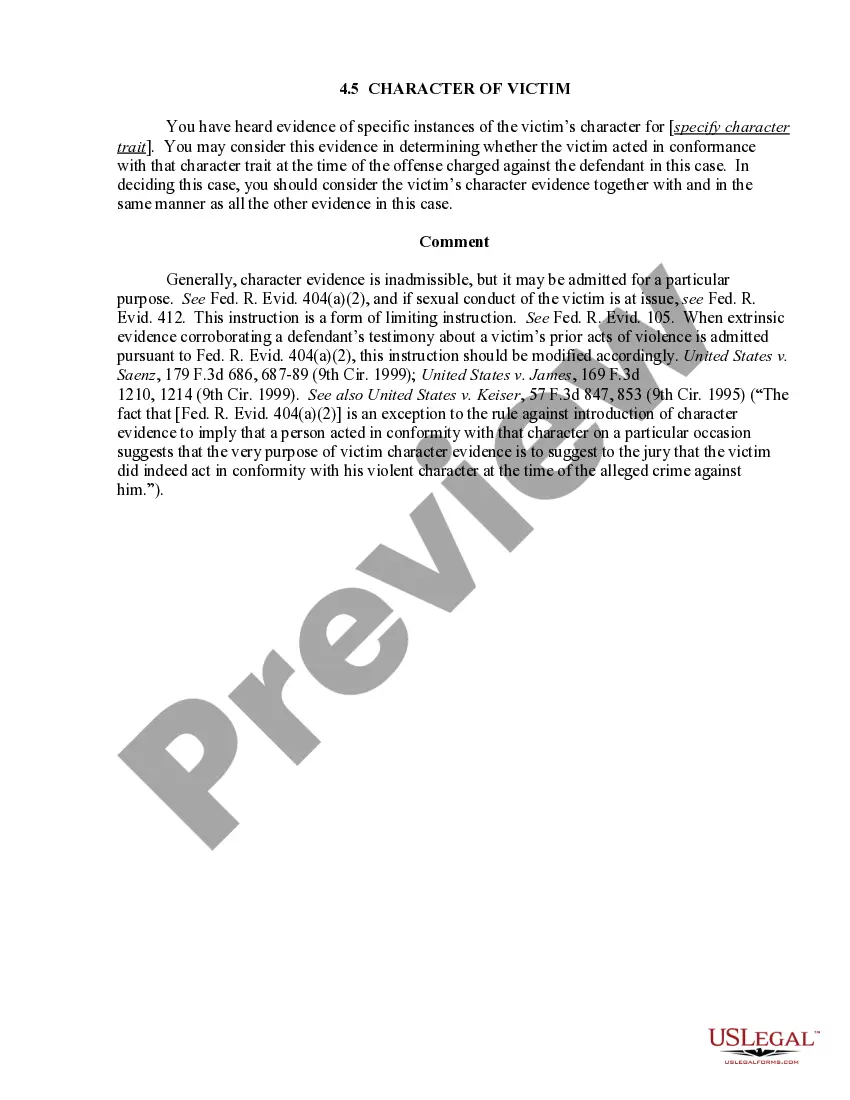
4.5 Character of Victim

Is notarization required?
Notarization is generally not required for this form. However, certain states or situations might demand it. You can complete notarization online through US Legal Forms, powered by Notarize, using a verified video call available anytime.
Get your form ready online
Our built-in tools help you complete, sign, share, and store your documents in one place.
Make edits, fill in missing information, and update formatting in US Legal Forms—just like you would in MS Word.
Download a copy, print it, send it by email, or mail it via USPS—whatever works best for your next step.
Sign and collect signatures with our SignNow integration. Send to multiple recipients, set reminders, and more. Go Premium to unlock E-Sign.
If this form requires notarization, complete it online through a secure video call—no need to meet a notary in person or wait for an appointment.
We protect your documents and personal data by following strict security and privacy standards.
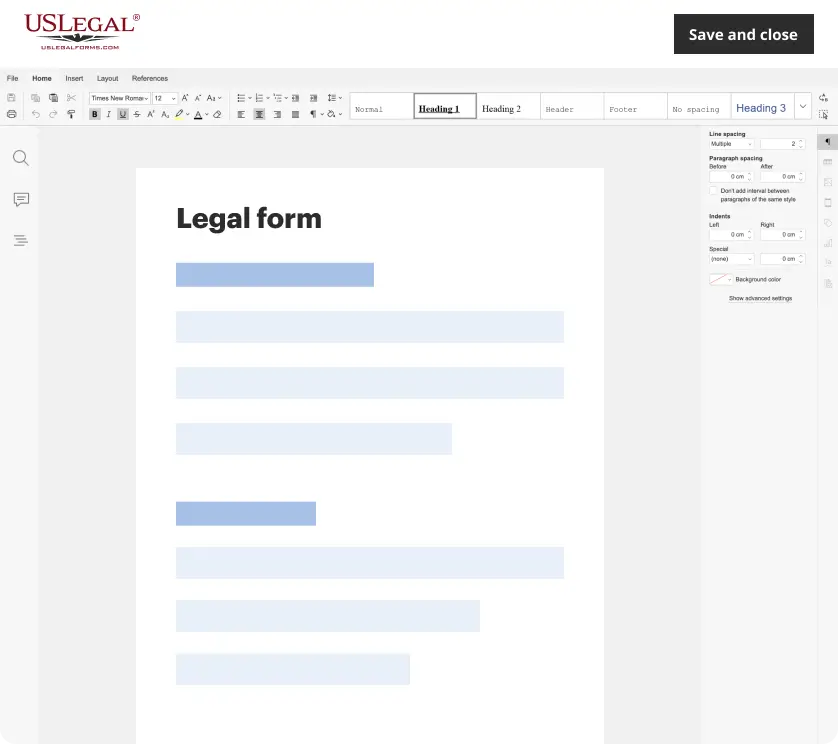
Make edits, fill in missing information, and update formatting in US Legal Forms—just like you would in MS Word.
Download a copy, print it, send it by email, or mail it via USPS—whatever works best for your next step.
Sign and collect signatures with our SignNow integration. Send to multiple recipients, set reminders, and more. Go Premium to unlock E-Sign.

If this form requires notarization, complete it online through a secure video call—no need to meet a notary in person or wait for an appointment.

We protect your documents and personal data by following strict security and privacy standards.
Looking for another form?
Form popularity
FAQ
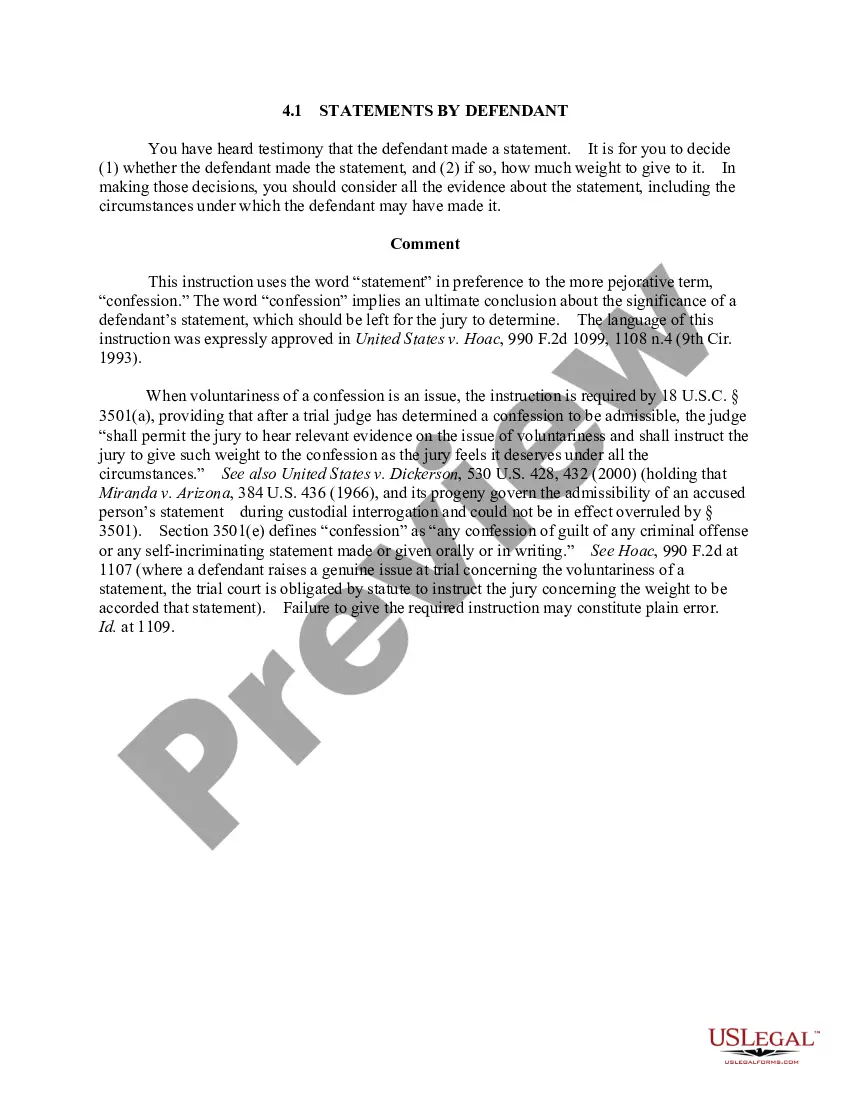
Character of victim. The accused may offer evidence of a pertinent trait of character of the victim that is material to the crime. After the accused places the victim's character in issue, the prosecutor may offer rebuttal evidence on that same trait.
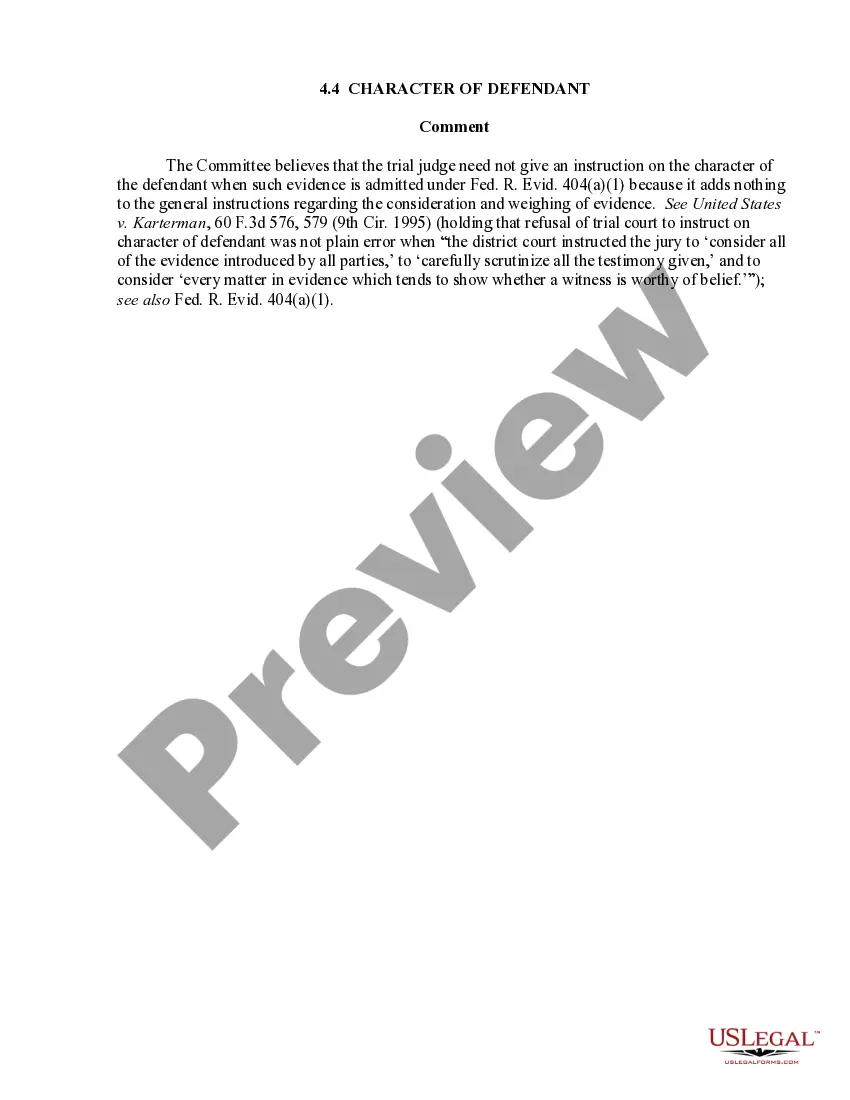
For example, in a fraud case, the criminal defendant is may call witnesses to testify that he's an honest person. In a trial for a violent crime such as homicide, battery, or assault, he may bring witnesses to testify that he's a peaceful person. Note, though, that the character evidence still must be relevant.
Character evidence is evidence on an individual's personality traits, propensities, or moral standing. Generally, under the common law character evidence is inadmissible in criminal cases unless the defendant raises the issue first.
There are essentially three types of evidence that show a person's character: specific acts by the person, lay opinion about the person, and the person's reputation in the community. The admissibility of these different types of character evidence depends on the theory for which the evidence is offered.
Character evidence is evidence on an individual's personality traits, propensities, or moral standing. Generally, under the common law character evidence is inadmissible in criminal cases unless the defendant raises the issue first. The U.S. Supreme Court in Michelson v.
Methods of proving character. (a) Reputation or opinion. ? In all cases in which evidence of character or a trait of character of a person is admissible, proof may be made by testimony as to reputation or by testimony in the form of an opinion.
(a) Character evidence generally. ? Evidence of a person's character or a trait of his character is not admissible for the purpose of proving that he acted in conformity therewith on a particular occasion, except: (1) Character of accused.
Rule 405 - Methods of Proving Character (a) By Reputation or Opinion (1)In General. When evidence of a person's character or character trait is admissible, it may be proved by testimony about the person's reputation or by testimony in the form of an opinion.